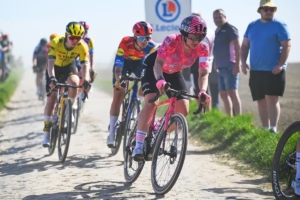
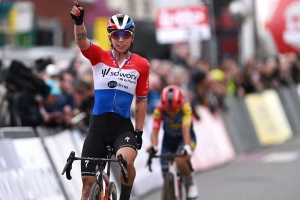
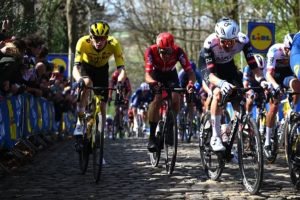
Lizzie Deignan’s career sits at the centre of modern British women’s cycling. She was the rider who turned promise into major international one-day victories, then turned those victories into a legacy that stretched beyond results alone. By the time she retired in July 2025, she had won the world road race title, Olympic silver, the Tour of Flanders, Paris-Roubaix Femmes, Liège-Bastogne-Liège, Strade Bianche, Omloop Het Nieuwsblad, two editions of Trofeo Alfredo Binda, two editions of the Women’s Tour and multiple British titles. That haul made her the most successful British Classics rider of her generation.
What made Deignan especially important was that she was never only a finisher, only a climber or only a rider for one type of course. She could sprint from reduced groups, survive hard climbs, read tactical finales and carry leadership pressure in a way that made her central to the races that defined the 2010s and early 2020s. Within the wider women’s cycling history hub, she belongs alongside figures like Marianne Vos, Annemiek van Vleuten and Anna van der Breggen as one of the riders who helped make women’s one-day racing feel truly global and commercially significant.
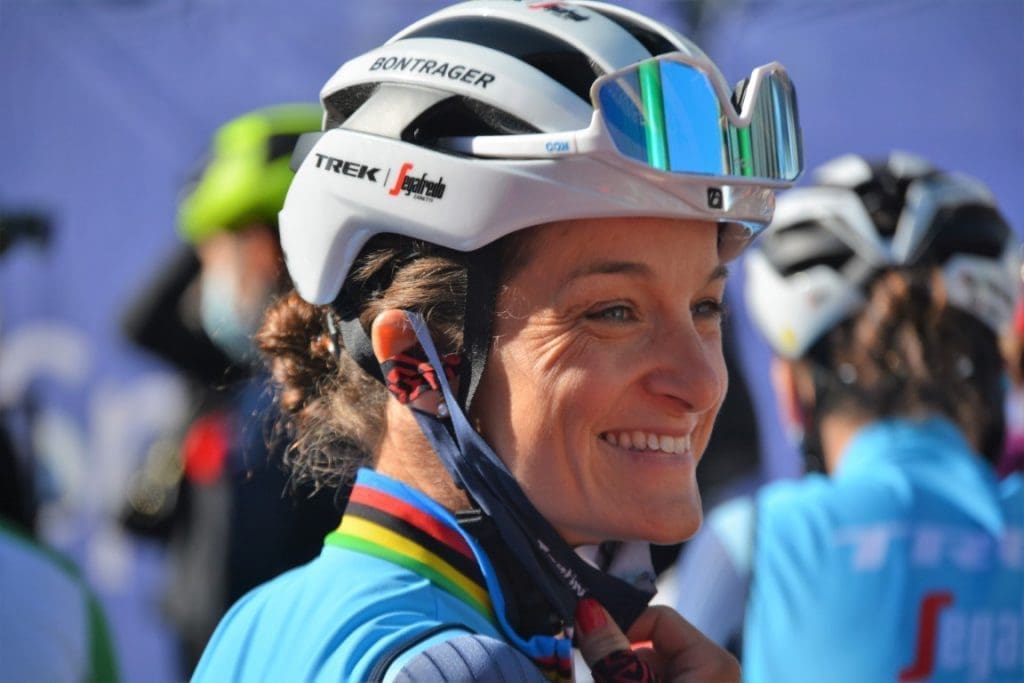
Before the biggest wins, Lizzie Deignan came through track and road together
Deignan, born Elizabeth Armitstead on the 18th December 1988 in Otley, did not begin as only a road rider. Her early years were shaped by both road and track, which is important because it helps explain the rider she became later. She won a world title on the track as part of Great Britain’s team pursuit squad in 2009 and took silver medals at the 2010 Track World Championships, while also beginning to establish herself on the road.
She turned professional on the road in 2008 with Team Halfords Bikehut, then moved into Europe with Lotto-Belisol for 2009. Those early professional seasons already showed the pattern that would define her career. She won the British Under-23 title, finished second in the senior nationals, took the youth classification at the Giro Rosa and looked immediately comfortable in a race calendar that demanded versatility rather than simple specialisation.
The first breakthrough years
By 2010, Deignan was already moving towards the top level on the road. Riding for Cervélo, she won three stages of the Tour de l’Ardèche and a stage of the Route de France, while also taking silver medals at the Commonwealth Games and finishing ninth at the World Championships road race. Those are the sort of results that show a rider’s depth before the biggest victories arrive. She was already capable of lasting through hard races and still delivering when the pressure rose.
The first clear Classics breakthrough came in 2012. Deignan won Gent-Wevelgem Women history, previous winners and greatest moments and Omloop van het Hageland history, previous winners and greatest moments, then went to the London Olympics and won silver in the road race behind Marianne Vos. It was the moment Deignan became a major British sporting figure rather than simply a strong rider inside the peloton.
From top rider to one-day star
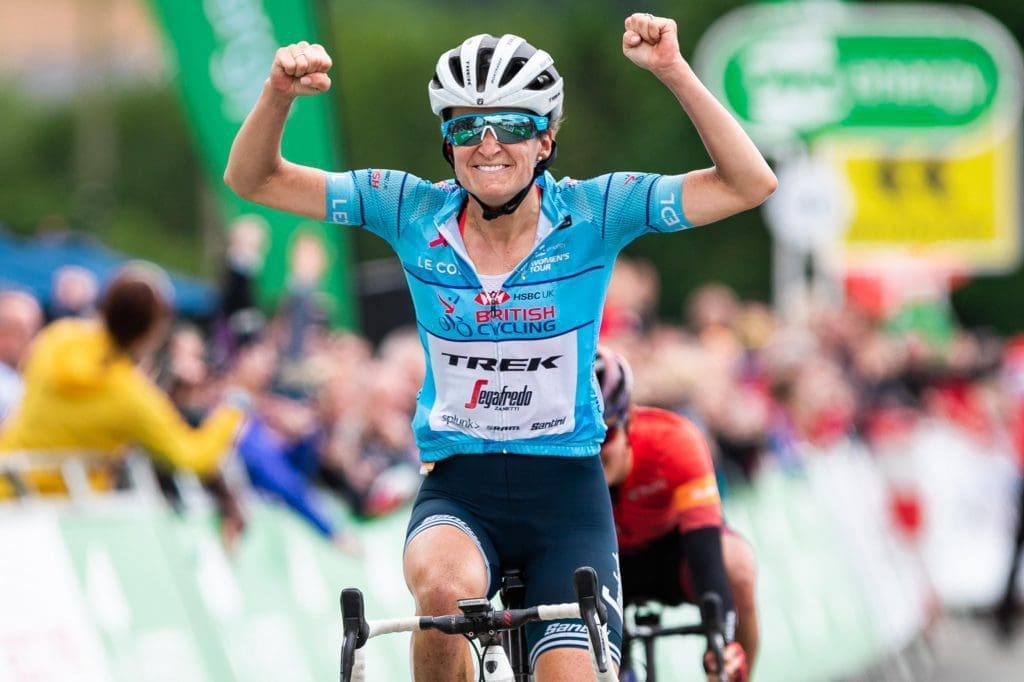
The years from 2013 to 2015 saw Deignan become one of the most consistent one-day riders in the world. In 2014 she won Ronde van Drenthe history, previous winners and greatest moments, retained her strength in the biggest spring races and won the overall UCI Women’s Road World Cup with a race to spare. That mattered because the World Cup title was the clearest measure of season-long excellence in the top one-day races. It meant she was not simply peaking for one or two events. She was one of the best every time the calendar got serious.
Then came 2015, the season that turned her from a major rider into a defining one. She won Trofeo Alfredo Binda history, previous winners and greatest moments, the Philadelphia Cycling Classic, GP de Plouay and the Ladies Tour of Qatar, then won the World Championships road race in Richmond. That rainbow jersey remains the clearest single image of her peak and places her firmly inside A brief history of the road cycling world championships. It was the year her consistency, race craft and finishing speed all aligned.
2016 and the greatest Classics spring of her career
If 2015 made Deignan a world champion, 2016 made her the peloton’s most complete one-day rider. She won Omloop Het Nieuwsblad Women history, previous winners and greatest moments, Strade Bianche Women history, previous winners and greatest moments, Trofeo Alfredo Binda history, previous winners and greatest moments again, and the Women’s Tour of Flanders history, previous winners and greatest moments. That is an extraordinary run in itself, because it spans cobbles, white roads, reduced sprints and tactical Monument-style racing.
The Tour of Flanders win especially matters. It places Deignan among the most important riders in the history of the race and confirms that she could do more than finish from a selective group. She could also shape the hardest one-day races and win them when the course demanded endurance and control. That spring probably remains the clearest answer to the question of what kind of rider Lizzie Deignan really was: an all-round Classics specialist in the truest sense.
What kind of rider was Lizzie Deignan?
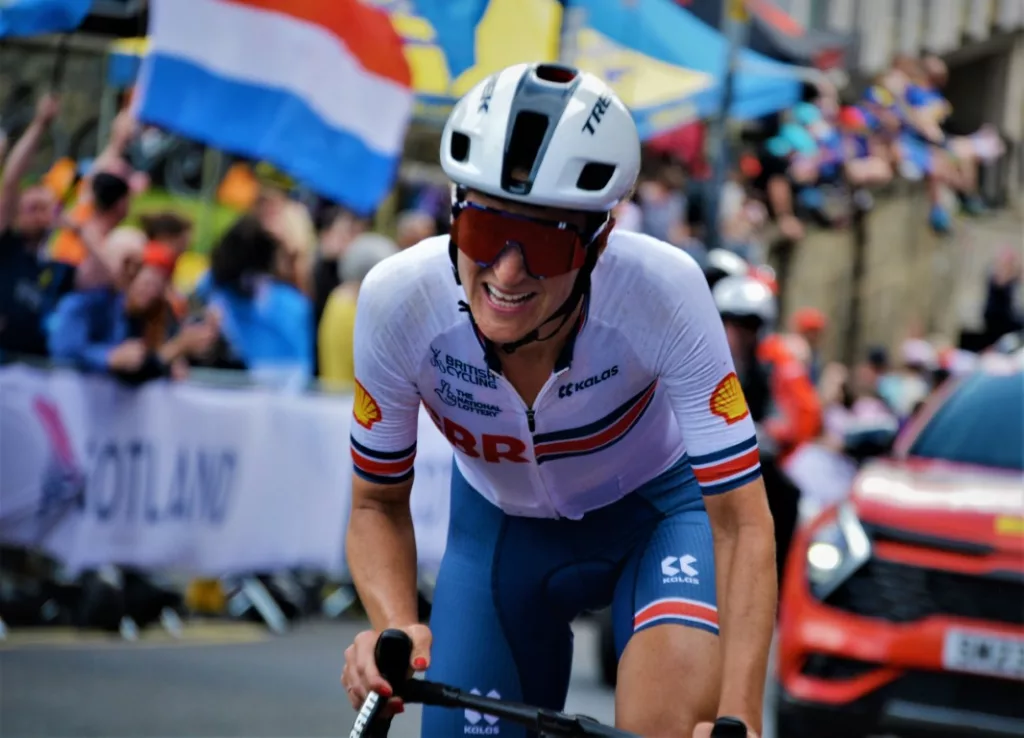
Deignan was not a pure sprinter, though she had a strong finishing kick. She was not a pure climber either, though she could survive hard uphill races and even win them. She was a rider who excelled in selective one-day racing, particularly when the route was hard enough to thin the field and tactical enough to reward judgement. That is why her palmarès spreads across Omloop Het Nieuwsblad Women history, previous winners and greatest moments, Women’s Tour of Flanders history, previous winners and greatest moments, Liège-Bastogne-Liège Femmes history, previous winners and greatest moments, Strade Bianche Women history, previous winners and greatest moments and Trofeo Alfredo Binda history, previous winners and greatest moments.
That breadth is a big part of her legacy. Riders who win one shape of race can still be great, but riders who can win across several of the spring’s defining tests become much harder to replace. Deignan was one of those.
The years after the rainbow jersey
Deignan remained at a very high level after 2016, even if the win count in 2017 did not quite match the year before. She won the British national title again, took the Tour de Yorkshire and GP de Plouay, and finished second in Amstel Gold Race, Flèche Wallonne and Liège-Bastogne-Liège. Those results matter because they show how she shifted from being the rider who suddenly arrived at the top to one of the constants of the sport. Even in seasons without a flood of victories, she remained one of the key names in the biggest races.
Then came another major turning point. In 2018 she stepped away from racing because of pregnancy, returning in 2019. This is a crucial part of her history because it changed not only her own career but also the way women’s cycling thought about motherhood and elite performance. After coming back, she won the overall at the Women’s Tour in 2019, which was already a strong statement. But the biggest answer to doubts about her post-pregnancy level came the following year.
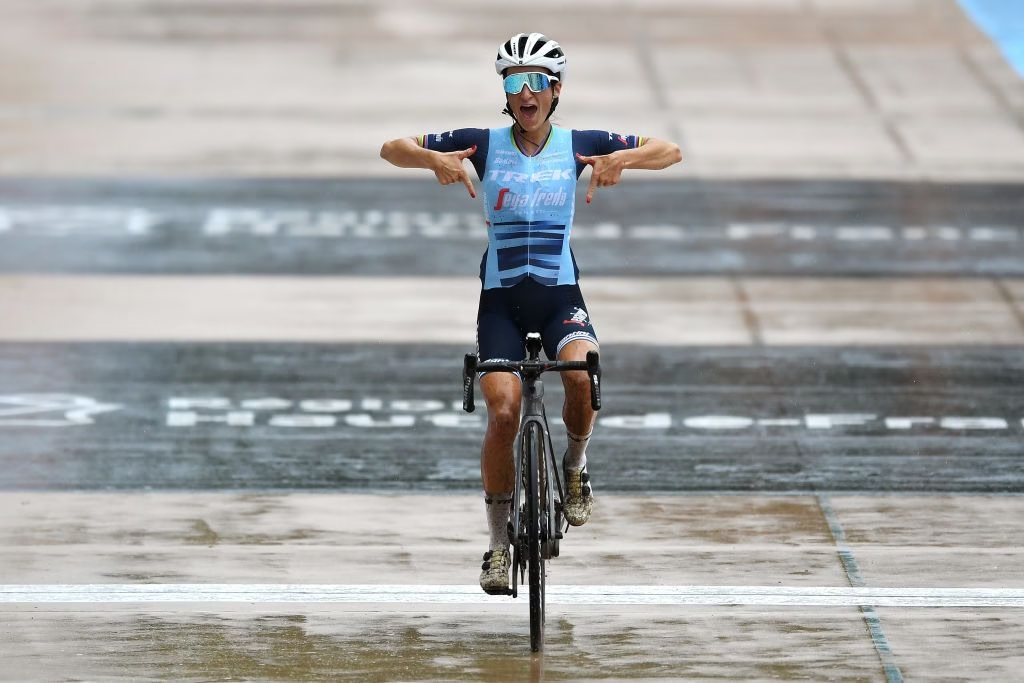 Photo Credit: Getty
Liège 2020 and Paris-Roubaix 2021 – the second peak
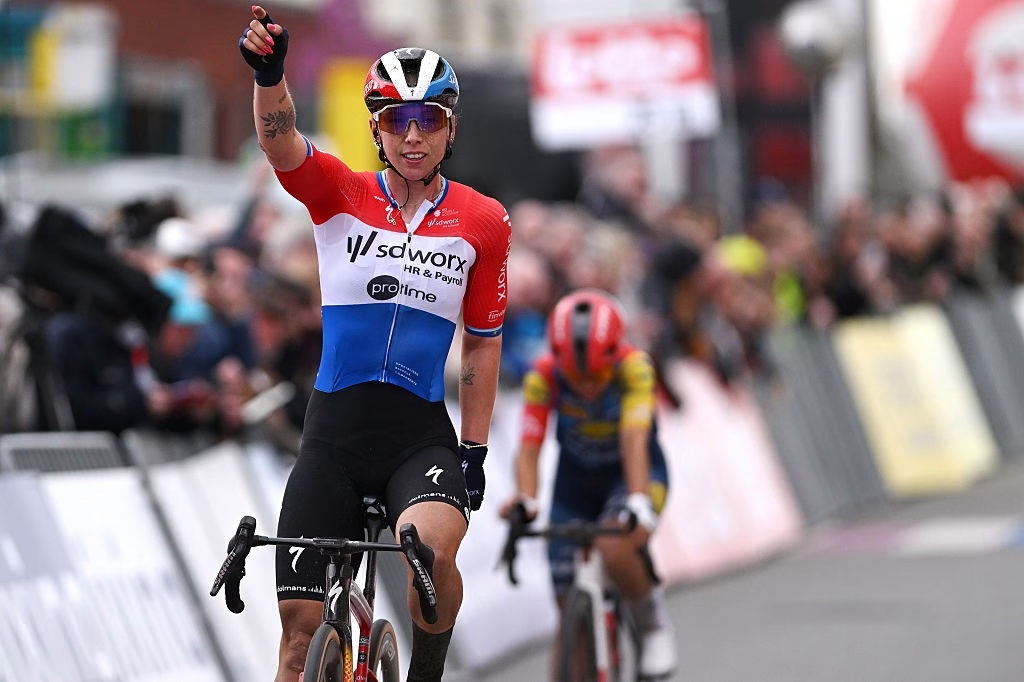
In 2020 Deignan won Liège-Bastogne-Liège Femmes history, previous winners and greatest moments and GP de Plouay, proving she remained one of the sharpest one-day riders in the world after becoming a mother. Then in 2021 she won Paris-Roubaix Femmes history, previous winners and greatest moments, soloing from 82 kilometres out in the inaugural edition. That victory instantly became one of the defining rides of modern women’s cycling and remains one of the signature moments in any history of the race.
That Roubaix win matters for more than just prestige. It changed how Deignan should be understood historically. Before that, she was already a world champion and a major Classics rider. After Roubaix, she also became the first woman to write her name into the modern history of one of the sport’s most mythic races. That moved her from elite rider to historical landmark.
The final years – leadership, family and the road to retirement
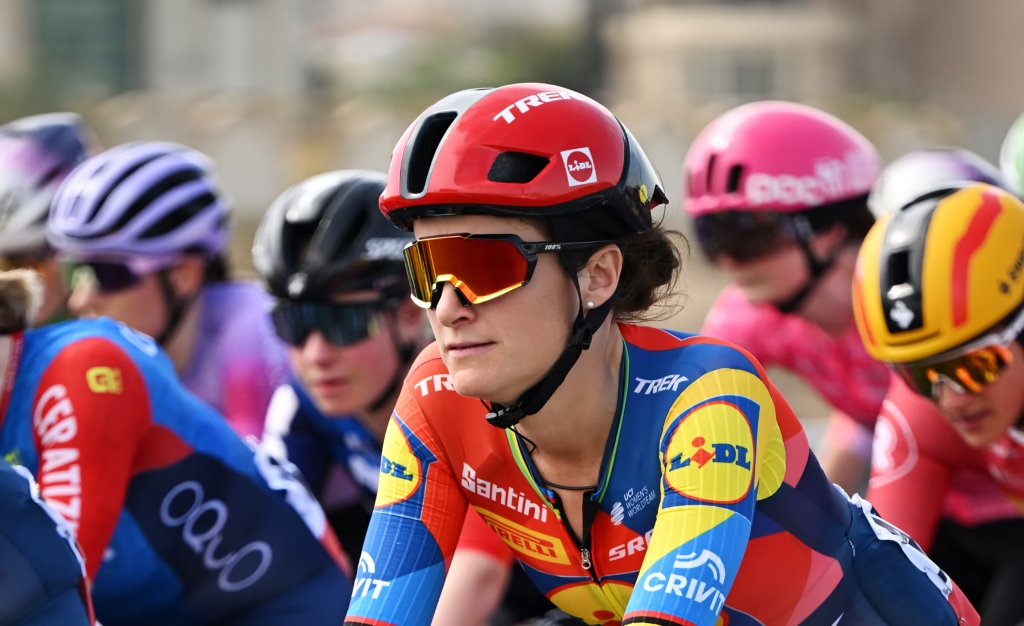
Deignan missed the 2022 season because of a second pregnancy, then returned again in 2023. By that point her role had shifted in an important way. She no longer saw herself as the rider she once was and had become more of a domestique and mentor at Lidl-Trek. That evolution matters because it gave the later phase of her career a different kind of value. She was still useful not only for results, but for leadership and race craft inside one of the strongest structures in the peloton.
In 2024 she won the mountains classification at the Tour of Britain Women and rode her fourth Olympic Games for Great Britain in Paris. In November 2024, Lidl-Trek announced that 2025 would be her final season. Then, in July 2025, she announced she was expecting her third child and retired immediately rather than finishing the full season. That means her career did not end with a ceremonial last race in the way originally planned, but it still closed with the sense of a rider choosing life on her own terms rather than drifting past her moment.
What comes after racing
Deignan’s post-racing life is still only beginning, but one thing is already clear: she is likely to remain important to women’s cycling. Even before retirement, she had already moved towards a mentoring role within Lidl-Trek.
That feels fitting. Deignan’s impact was never just statistical. She mattered because she showed what a British rider could do in the biggest Classics, because she helped normalise elite motherhood in the peloton, and because she combined high performance with a public voice strong enough to shift how the women’s side of the sport was seen. What exactly her formal second career becomes remains to be seen, but her influence is not in doubt.
-
 Photo Credit: Getty

Why Lizzie Deignan still matters
Deignan matters because she helped define an era. She won the biggest races, yes, but she also bridged several important changes in women’s cycling: the move from track and road crossover to clearer road specialisation, the commercial rise of the Classics, and the growing visibility of riders returning after pregnancy. In a historical series that includes Annemiek van Vleuten: the full story of one of women’s cycling’s defining champions, Marta Bastianelli: the full story of one of women’s cycling’s great second acts and Chantal van den Broek-Blaak: the full story of one of women’s cycling’s great cobbled racers, Deignan stands out as the defining British one-day rider of the era.
She also matters because her career was unusually complete. She was a world champion, Olympic medallist, Monument winner, stage race winner and pioneer in what a return from motherhood could look like at the highest level. That is why she will remain central to the sport’s history long after the results themselves fade from weekly memory.
Lizzie Deignan career highlights
- World road race champion in 2015
- Olympic road race silver medallist at London 2012
- Winner of the 2016 Tour of Flanders
- Winner of Paris-Roubaix Femmes in 2021
- Winner of Liège-Bastogne-Liège Femmes in 2020
- Winner of Strade Bianche in 2016
- Winner of Omloop Het Nieuwsblad in 2016 and Trofeo Alfredo Binda in 2015 and 2016
- Two-time winner of the Women’s Tour, in 2016 and 2019
- Retired with immediate effect in July 2025 after announcing a third pregnancy