A bike lock that is easy to carry can be more useful than a much tougher one left at home. But a compact, wearable D-lock and an angle-grinder-resistant model are designed to defeat rather different threats. The Hiplok DX and Litelok X1 put that trade-off into focus: £79.99 buys a Diamond-rated everyday lock with a wearable clip, while £169.99 buys a larger armoured shackle with independently tested resistance to power tools.
Both products are credible security choices, and neither should be judged solely by the word Diamond printed on its packaging. Certification, grinding resistance, fit around the actual parking stand, carrying weight and the value of the bicycle all matter. This comparison is based on current manufacturer specifications, UK buying options and independent tests, not a claim that ProCyclingUK has physically attacked either lock.
Hiplok DX vs Litelok X1 specifications
| Feature | Hiplok DX | Litelok X1 |
|---|---|---|
| Current UK manufacturer price | £79.99 | £169.99 |
| Claimed weight | About 1.1kg | About 1.7kg |
| Internal shackle area | 85 × 150mm | Approximately 101 × 197mm |
| Sold Secure Pedal Cycle rating | Diamond | Diamond |
| Sold Secure Powered Cycle rating | Gold | Diamond |
| Construction | 14mm hardened-steel shackle with double deadlock | Barronium-armoured hardened-steel shackle |
| Carrying method | Clip + Ride for clothing or bag strap | Lock-specific frame mounting and carry options |
| Best-known strength | Compact high-security commuting convenience | Resistance to angle-grinder cutting |
The prices above were checked on the manufacturers’ UK product pages in November 2026. Hiplok’s DX page offered the black and orange variants with an Add to Cart option; Litelok’s standard bicycle X1 was listed at £169.99. Retailer discounts, bundles and exact stock can change, and a DX+ with cable is not identical to the plain DX. Similarly, the X1 Mini, X1 Plus and X1 Moto versions should not be substituted for the standard X1 when comparing dimensions or price.
Both are Diamond-rated, but they aren’t equally armoured
For ordinary pedal cycles, both locks hold Sold Secure Diamond, the highest pedal-cycle category. That is a meaningful assurance that neither is a decorative commuter accessory. But the DX is rated Powered Cycle Gold, whereas the X1 reaches Powered Cycle Diamond. This distinction matters especially for owners of valuable e-bikes, whose insurance arrangements may specify a particular type or standard of lock.
The DX uses a 14mm hardened-steel shackle, double deadlocking and anti-rotation features. Hiplok’s rubber-covered keyway and replaceable coded keys are useful everyday details, while the shackle is compact enough to sit close to a frame and a typical Sheffield stand. It represents a sophisticated version of the conventional D-lock approach, not a dedicated high-resistance grinder design.
Litelok uses its Barronium armouring around a hardened-steel core. The aim is to erode cutting discs and make battery-powered grinding a much slower and more demanding job. This technology adds material and weight. Its value is clearest when the likely threat involves a thief carrying a portable angle grinder, rather than someone trying to snatch an unlocked bike outside a café.
Security certifications identify a tested standard; they do not rank every lock of that grade by the time required to cut through it. Two locks with pedal-cycle Diamond certificates can still differ substantially in resistance to a particular power tool. Buyers should also check the exact requirements of their own insurance policy, including where and how the frame must be secured.
Independent grinder testing gives the X1 its strongest argument
There is a substantial body of independent testing for the Litelok X1. BikeRadar’s earlier dedicated destructive review recorded 17 minutes and 20 seconds to cut through one side under that publication’s particular tool setup, with repeated disc changes and significant damage to the grinder. A later comparative test used a different protocol and produced a much shorter measured time. That variation is important: a laboratory or editorial cutting time is not a forecast of exactly how a theft will unfold.
Cyclingnews separately tested the X1 and found that cutting discs were rapidly degraded by its armoured shackle. Road.cc has also praised the X1 for providing meaningful grinder resistance at a more manageable price than the heaviest specialist locks. The independent evidence supports the claim that this is a lock specifically engineered to slow a powered cutting attack.
There is no credible controlled head-to-head grinder test of these exact two products, under the same conditions, in the evidence reviewed for this article. It would be misleading to invent a number of seconds for the DX or claim that the X1 lasts a precise multiple longer. The defensible conclusion is narrower: the X1 has a specialised composite armouring system and directly measured power-tool resistance, whereas the DX’s appeal lies in its high security rating, compactness and everyday usability.
A thief may also attack the anchor, remove unsecured wheels or use leverage against an inadequately placed shackle. No anti-grinder construction makes a poor parking stand safe. Whichever lock you choose, secure the frame to a fixed object that cannot simply be lifted or unscrewed, and consider how the wheels and removable components are protected.
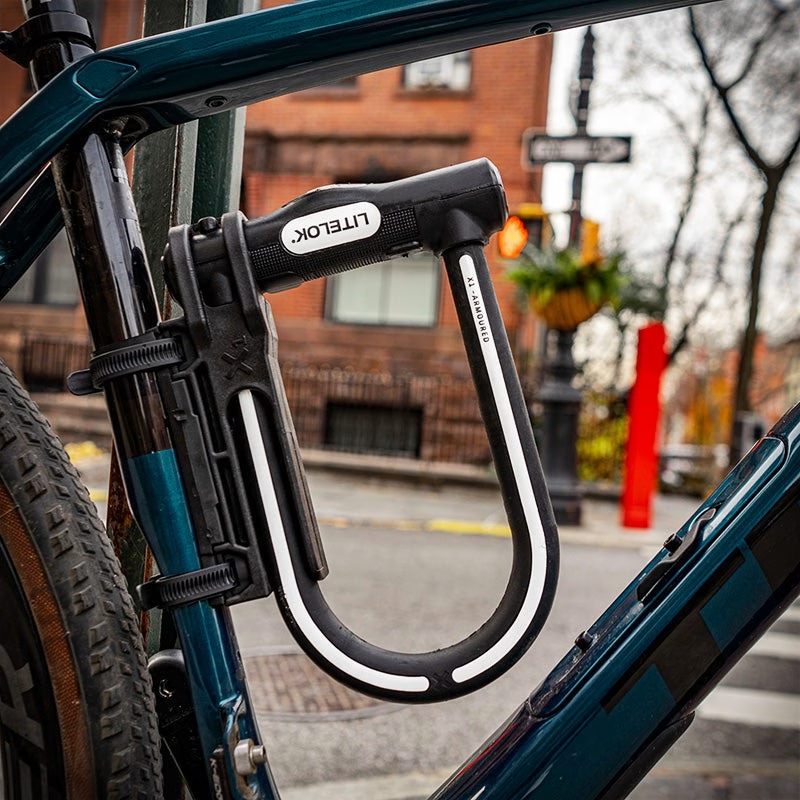 Photo Credit: Litelok
Why the DX may be the better commuter lock
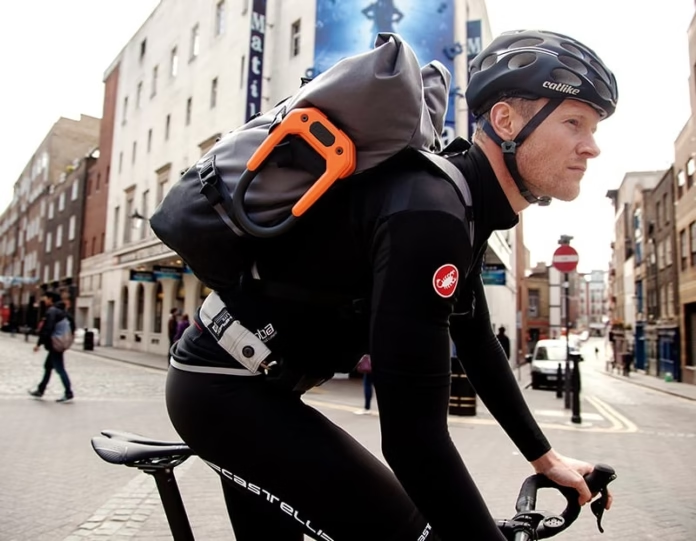
At around 1.1kg, the DX is roughly 600g lighter than the X1. That difference matters when the lock accompanies every journey to the shops, railway station, office or gym. You can put it in a bag, but Hiplok’s Clip + Ride system also allows it to attach to a suitable belt or bag strap. It removes the need for a large conventional bracket on the bike.
Cyclingnews’s independent review found the clip practical and the key mechanism smooth, while also noting that the design is less convenient when thick winter clothing covers the waistband. That is a useful reminder for British commuting. A lock marketed as wearable may feel less natural when the rider has a long waterproof jacket, bulky backpack or clothing without a suitable belt.
The DX’s small size is also a strength at a purpose-built bike rack. Its 85 × 150mm opening can fit tightly around a frame and Sheffield stand, leaving little spare space for a leverage attack. But the same small opening becomes a limitation around broad posts, unconventional racks, cargo bikes or a very wide frame. A small lock that cannot reach the fixed object provides no protection at all.
This is worth checking in advance, particularly for cyclists who park at different destinations. Look at the stand you use most often and whether the DX can safely enclose the frame and fixed object, ideally with a wheel. It is unreasonable to assume that a Diamond rating solves the practical problem of a shackle that does not fit.
The X1 offers more locking reach
The standard X1’s quoted internal space is around 101 × 197mm, noticeably larger than the DX. That extra reach gives more freedom around fixed racks and some frame-and-wheel combinations. It is not infinitely flexible, and using an oversized opening can leave more room for tools if the lock is poorly positioned, but it is generally more accommodating at awkward parking points.
BikeRadar liked the X1’s secure mounting system and considered it stable on the bike. Still, a 1.7kg D-lock takes up space and can be awkward on an aero road bike, frame with limited bottle-cage clearances or light gravel machine. A mount should be checked for compatibility with the particular frame rather than assumed to work on any bicycle.
If you cycle with a pannier, carry a backpack or leave a lock at a regular workplace, the additional mass is easier to accommodate. A destination lock can justify a different set of priorities from the lock you bring on a fast club ride where the only planned stop is for coffee.
 Photo Credit: Hiplok
The £90 difference is a meaningful security decision
The manufacturer’s £79.99 and £169.99 prices create a £90 gap. Spending the extra can be rational for a high-value road bike, e-bike or cargo bike left for longer periods in a theft-prone area. An angle grinder is a serious threat to ordinary hardened-steel locks, and the X1 has much stronger independent evidence specifically addressing that attack.
The DX remains good value for a rider who wants certified security without the premium price and added bulk. Its Diamond pedal-cycle certification and convenient carrying system make it appropriate for many urban journeys, assuming the parking points fit. The savings could be spent on a secondary lock for a vulnerable wheel, improved home storage or a more substantial fixed anchor.
A useful buying exercise is to match the lock to the length and location of typical stops. Five minutes outside a busy café, thirty minutes at a supermarket and several hours outside a station are different exposures. Local theft patterns matter too. The more likely a determined, equipped thief is to target the bike, the stronger the argument for the armoured X1 becomes.
What about protecting the rest of the bike?
A D-lock protects what it actually encloses. If you use it only around a wheel, the frame may be stolen. If it holds the frame alone, a removable wheel can still disappear. The best arrangement is a strong fixed point, the frame through the main lock and a suitable additional method for exposed wheels or accessories.
Neither lock is a replacement for a secure home garage or shed, particularly when expensive bikes are stored overnight. A proper ground or wall anchor, multiple locks and removing the easiest access routes can make a larger difference than choosing between two certified products. Our bike shed and garage security guide discusses these wider measures.
For cyclists shopping primarily on insurance requirements, the correct process is to identify the policy’s minimum Sold Secure category, inspect the wording about the locking point and then choose a model you can actually use in the required way. A high rating alone will not compensate for leaving the bicycle in breach of its insurance conditions.
Which is the better choice for UK cycling?
Choose the Hiplok DX when you need a well-certified lock to carry every day, your usual parking uses narrow, fixed stands and you value a compact product that costs under £80 at its manufacturer’s current listed price. Its lightness and Clip + Ride system are genuine advantages, and independent riding tests have found it straightforward to use. The main trade-offs are the restricted opening and the lack of specialised grinder-resistant armour.
Choose the Litelok X1 when the likely theft threat is more serious, especially if your bicycle will spend hours unattended or an e-bike insurer requires a powered-cycle Diamond rating. The extra £90 and 600g buy a different level of resistance to disc cutting, supported by independent attack tests. The X1 also offers a larger internal opening for trickier parking points.
These recommendations are not inconsistent with our X1 versus X3 comparison, which asks whether even greater grinder resistance is worth paying for, or our X3 versus Hiplok DX article, which compares the extremes of portability and maximum security. This pairing is about whether an everyday commuter should spend £90 to move from conventional high-security steel to specialist anti-grinder armour.
Read our individual Litelok X1 long-term review and Hiplok DX review for more context. The current exact models can be checked at Hiplok UK and Litelok UK. These are direct, non-affiliate product links. This comparison is based on independent published evidence rather than ProCyclingUK’s own destructive testing.
-
 Photo Credit: Hoebele / Wikimedia Commons (CC BY-SA 4.0)