Milano-Sanremo 2026 looks like the same old Monument in one sense, long, flat for hours, then suddenly compressed into a handful of decisive kilometres. In another, it feels sharper than ever. The route is back up to 298km from Pavia to Sanremo, the Cipressa has become even more dangerous in tactical terms after how aggressively it was raced in 2025, and the usual uncertainty around Via Roma now sits on top of a startlist packed with riders who can win in very different ways.
The central story is obvious enough. Tadej Pogačar is still trying to win the Monument that keeps resisting him, while Mathieu van der Poel arrives again as the rider most obviously capable of matching and spoiling that plan. But that duel is only the first layer. Filippo Ganna has gone close often enough to sit just beneath the top line of favourites, Wout van Aert returns with belief after Tirreno-Adriatico, and Tom Pidcock looks exactly the sort of rider who could turn a selective Poggio into something unpredictable.
If you want the route logic behind these names first, ProCyclingUK’s Milano-Sanremo 2026 route guide and Beginner’s guide to Men’s Milano-Sanremo 2026 are the natural place to start.
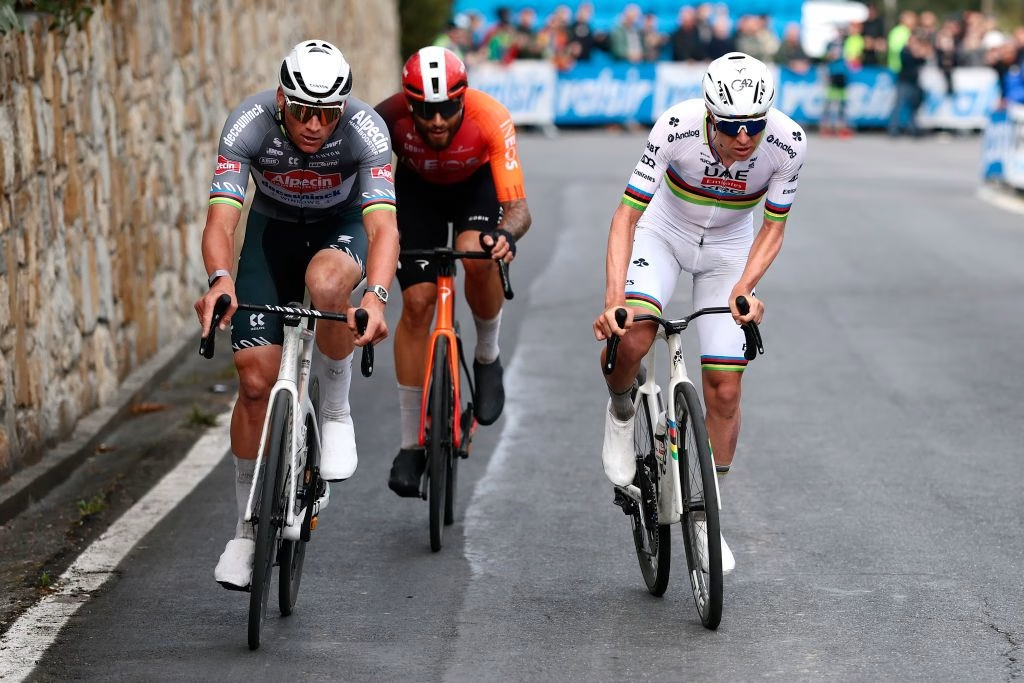 Photo Credit: Getty
The headline favourite
Tadej Pogačar
Everything about the race still points back to Pogačar. He has improved year by year in Milano-Sanremo, finishing fifth, then fourth, then third in both 2024 and 2025, and his team are again shaping their plan around making the Cipressa hard enough to strip the race down before the Poggio.
That is why Pogačar starts as the rider everyone else has to solve. He is not the fastest in a reduced sprint, and he is not the rider who wants to wait for Via Roma. But if the Cipressa is raced at full violence again, he is the one most likely to turn that moment into a winning race rather than merely a selective one. The gap between favourite and winner is still wider here than in other Monuments, but he remains the clearest first pick.
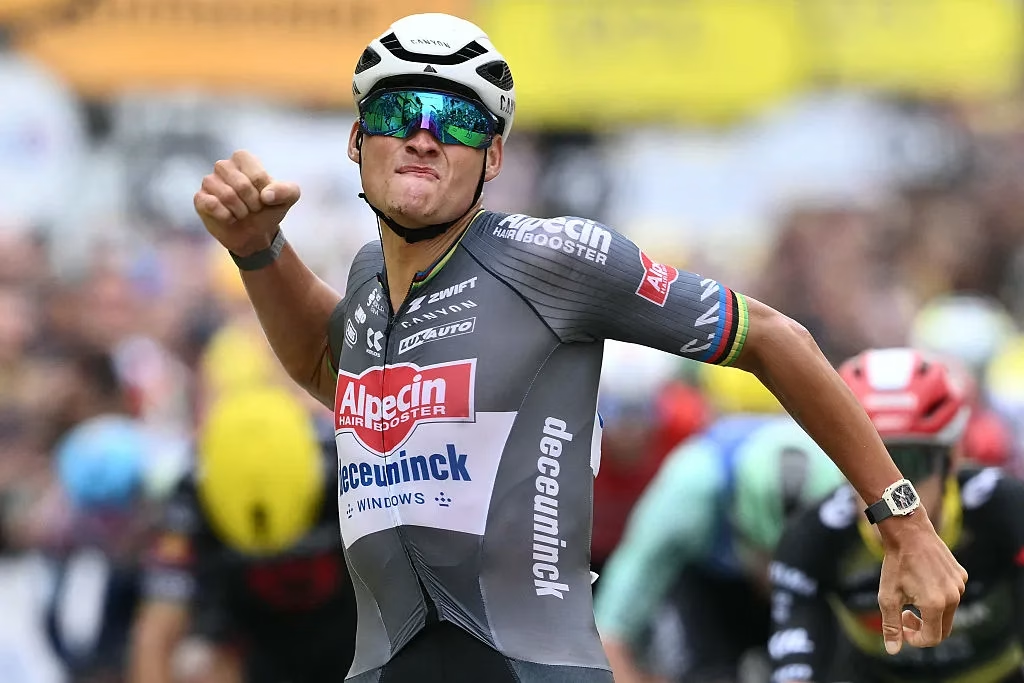 Photo Credit: Getty
The man most likely to stop him
Mathieu van der Poel
If Pogačar is the rider who wants the race torn open, Van der Poel is the rider best equipped to live inside that chaos and still finish it off. He has already won Milano-Sanremo twice, in 2023 and 2025, and his recent form again looks exactly right for this race.
Van der Poel remains the rider who has repeatedly found the answer to Pogačar’s Sanremo problem. He can follow the hardest acceleration on the Cipressa or Poggio, descend with absolute conviction, and still win from a tiny group if the race comes back together slightly. That combination is rare enough in any Monument. In this one, it is almost the ideal profile.
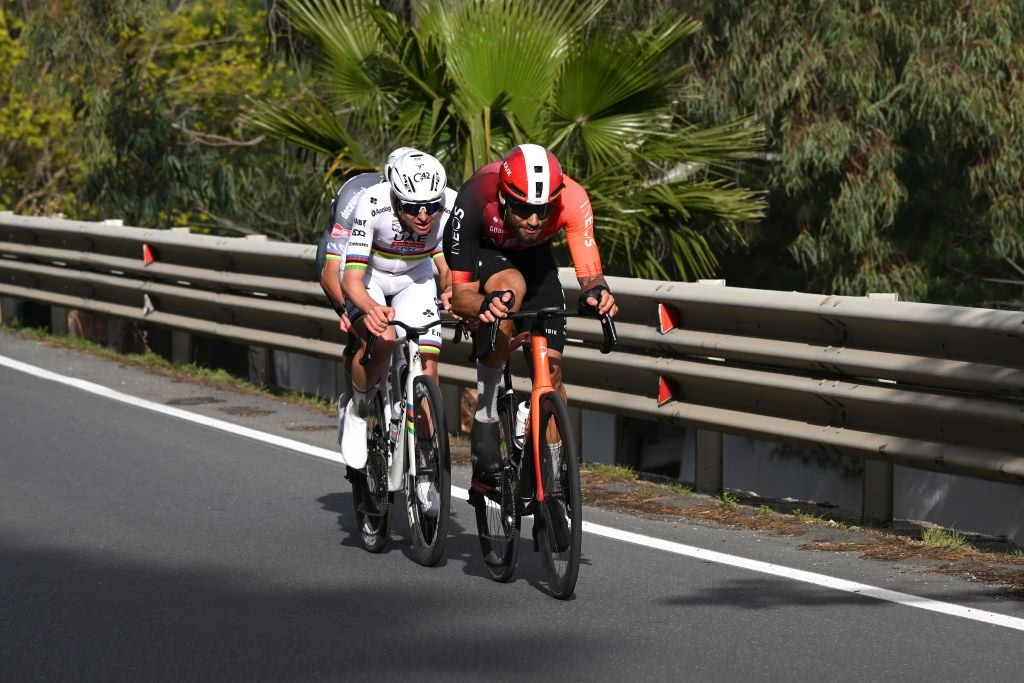 Photo Credit: Getty
The strongest next line of contenders
Filippo Ganna
Ganna’s case is straightforward. He has already been second in 2023 and 2025, and this route suits the way he can turn a selective race into a pure power exercise if he crests the Poggio in touch. He is also one of the few riders who can afford a slightly bigger gap than others and still imagine closing it on the run to Sanremo.
The problem, as ever, is that Sanremo rarely rewards pure logic. Ganna needs the race hard enough to eliminate most of the fast finishers, but not so explosive that Pogačar and Van der Poel can simply jump clear for good. That is a narrow tactical window. Still, he has lived in it before.
Wout van Aert
Van Aert’s name sits slightly further back than it would in some past editions, but that may actually suit him here. He won Milano-Sanremo in 2020 and finished third in 2023, so there is nothing theoretical about his chances.
That feels about right. Van Aert is not the obvious first favourite because his spring has not carried the same dominant feel as Pogačar’s or Van der Poel’s. But Sanremo is exactly the sort of Monument where he does not need to be the strongest rider in a straight line. He needs to still be there after the Poggio, with enough left to exploit hesitation or win from a small group.
Tom Pidcock
Pidcock is one of the most interesting names in the race because his profile makes so much sense for the route. He arrives off a timely win at Milano-Torino, but more importantly he remains exactly the sort of rider Sanremo tends to reward, punchy on the climb, fearless on the descent and opportunistic when the race becomes tactically unstable.
That sounds about right for his place in the hierarchy. Pidcock’s climbing punch and descending skill make him easy to picture over the Poggio in the front group. The harder question is whether he arrives there in exactly the right place when the race lights up. If he does, he is one of the riders who can turn this from a duel into something much more complicated.
The fast finisher still very much in play
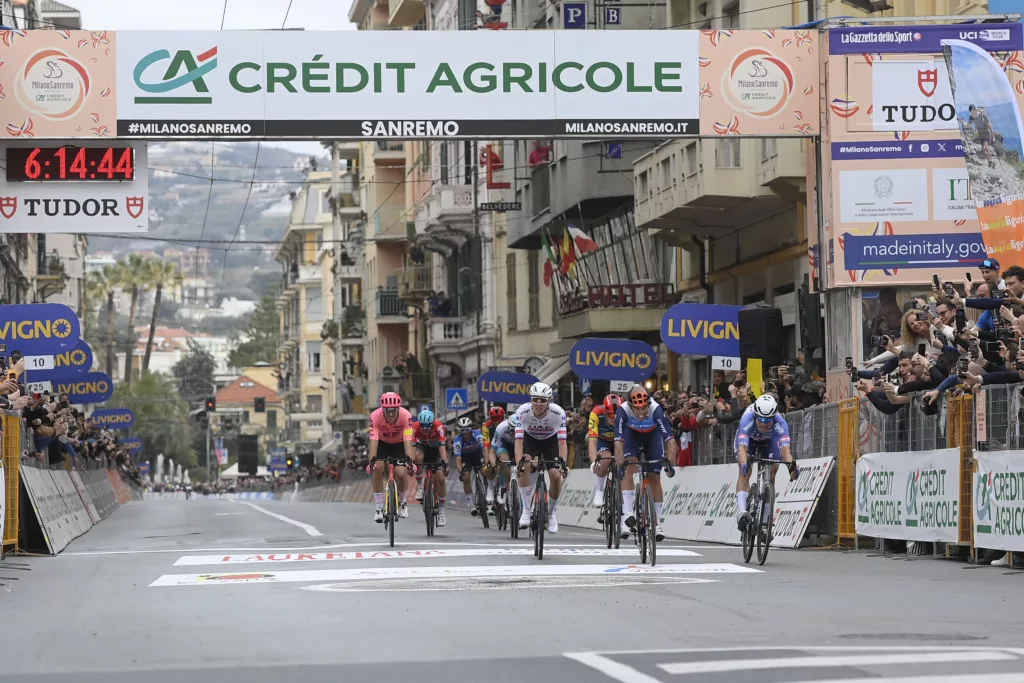
Jasper Philipsen
Philipsen won this race in 2024, but he has gone into 2026 striking a more cautious tone, suggesting he may take on a more defensive role depending on how the race unfolds. That reflects the current Sanremo reality more than false modesty. When the Cipressa is raced as hard as UAE want, the sprinters’ margin for survival narrows quickly.
Still, dismissing Philipsen would be a mistake. He has already shown he can win this race when the shape is right, and he comes in off a timely win at Nokere Koerse. If Van der Poel and Pogačar neutralise each other just enough, or if Alpecin can hold more cards in the front group than anyone else, Philipsen remains one of the most dangerous finishers left.
The race’s awkward middle ground
This is often where Milano-Sanremo becomes most interesting. Riders who are not the very top favourite, but who fit the race perfectly, can become far more dangerous than their odds suggest. Ganna and Pidcock clearly sit in that category, but so do a few others depending on how the race breaks.
Isaac del Toro is the obvious in-house danger for UAE. He arrives in strong form and could become more than a domestique if the race breaks in a strange way or if Pogačar is forced to gamble earlier than ideal. That matters because Sanremo is often won by the team that can keep the race tactically messy for longest.
One team whose outlook has changed
Lidl-Trek
Ordinarily, Lidl-Trek would sit prominently in a preview like this because Milano-Sanremo has often looked close enough to their strengths to keep them in the main conversation. This year, though, the picture has shifted sharply. Jonathan Milan is out through illness, and Mads Pedersen was already highly unlikely after his earlier crash and recovery timetable, but seems to now be racing.
That leaves Lidl-Trek without the obvious front-rank card they might otherwise have brought. They can still be useful and visible in the race, but the loss of Milan, on top of Pedersen’s interupted preparation, removes one of the most obvious sprint and reduced-group winning options from the whole Monument.
The shape of the race decides the preview
Sanremo always resists neat ranking because it is really several races disguised as one. If UAE make the Cipressa ferocious and Pogačar gets separation, then the preview narrows quickly to whether Van der Poel or perhaps Ganna can go with him. If the Poggio becomes the first true launch point, then Van der Poel, Van Aert, Pidcock and Ganna all look more live. If enough riders survive and the final group hesitates, then Philipsen suddenly becomes much more dangerous than he looked five kilometres earlier.
That is the beauty of this race, and also the frustration of trying to preview it. The route is famous for staying open. In 2026, with Pogačar again chasing the missing Monument, Van der Poel again arriving in ideal condition, and several other genuine winning profiles behind them, that openness feels especially sharp.
Prediction tier
Top favourites
Tadej Pogačar, Mathieu van der Poel
Closest challengers
Filippo Ganna, Wout van Aert, Tom Pidcock
Still very live if the finale bends their way
Jasper Philipsen, Isaac del Toro
For more on how the race is likely to unfold, ProCyclingUK’s Milano-Sanremo 2026 route guide, How to watch Milano-Sanremo 2026 in the UK and Milano-Sanremo 2026 team-by-team guide are the best next reads.