
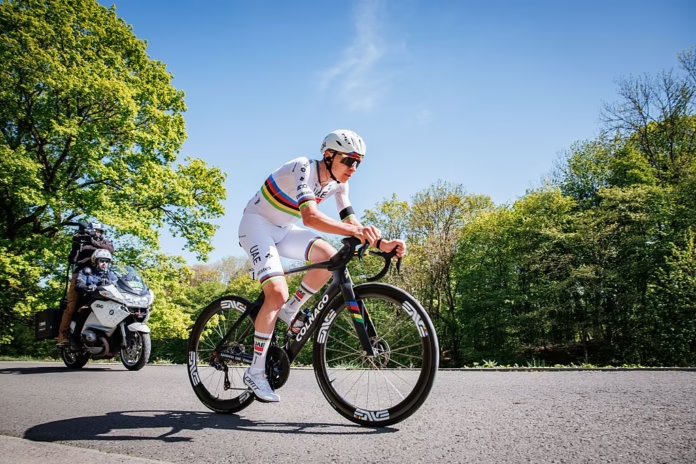
The Men’s Tour de Suisse 2026 continues on Thursday, 18th June, with a second stage around Locarno that looks easier on paper than the Sondrio opener but still carries enough late difficulty to keep the race unpredictable. Stage 2 starts and finishes in Locarno, covering 157.7km with 2,110m of climbing, and the route should again favour riders who can handle short climbs, technical positioning and a reduced finish.
After the demanding opening stage in Sondrio, this is not a full reset for the peloton. The stage is officially rated as a hilly 2/5 day, but the decisive section comes late, with two climbs before the drop back towards Locarno and the run-in through Ascona. That makes a conventional bunch sprint unlikely unless the race is controlled more carefully than the route suggests.
The bigger picture also matters. The 2026 Tour de Suisse has only five stages, with a 23.8km time-trial in Aarburg on stage 4 and a tough final mountain stage in Villars-sur-Ollon on stage 5. Riders cannot treat stage 2 as filler. A split, late attack or poorly judged chase could still change the GC picture before the race reaches its obvious decisive points.
For more background on the route, see our Men’s Tour de Suisse 2026 full route guide, the full start list for Men’s Tour de Suisse 2026, our Men’s Tour de Suisse 2026 team-by-team guide and our Men’s Tour de Suisse 2026 contenders preview.

Tour de Suisse 2026 stage 2 route
Stage 2 begins in Locarno and initially follows the lake towards Tenero. From there, the route climbs over Monte Ceneri towards Lugano before looping back towards Locarno. The middle part of the stage stays largely at mid-altitude, which should make the day more attritional than mountainous.
Monte Ceneri is not a major Alpine obstacle, but it can still influence the race if the pace is high. At 157.7km, stage 2 is longer than the opening day, and the accumulated effort from constant rolling roads could make the final climbs more selective than the headline difficulty rating suggests.
The decisive section comes close to the finish. Shortly before Tenero, the riders face a climb of around three kilometres, followed by a short descent and another climb of just under 1.5km, which is steep in places. From there, the route descends towards Locarno and continues via Ascona before the finish.
That final structure is important. The climbs are close enough to the line to encourage attacks, but the descent and flatter run-in also give chasing riders a chance. It is a stage that could be won by a small group, a late attacker or a versatile fast finisher who survives the final selection.
What kind of rider can win in Locarno?
Stage 2 suits riders who can climb hard for short periods and still finish quickly after a selective finale. It is not a pure sprinter’s stage, but it is also not difficult enough to automatically hand control to the high-mountain climbers.
The ideal winner needs punch, positioning and timing. The first late climb can soften the group, the second can create the winning move, and the descent back towards Locarno can reward riders who are willing to commit before the final flat section. A rider who waits too long may find the strongest attackers already gone. A rider who attacks too early may be caught by a group with enough firepower behind.
That makes Mathieu van der Poel, Tom Pidcock, Marc Hirschi, Romain Grégoire and Thibau Nys obvious names for this type of stage. All can handle punchy terrain, all can make use of short climbs, and all have a way to win if the front group is reduced but not fully broken apart.
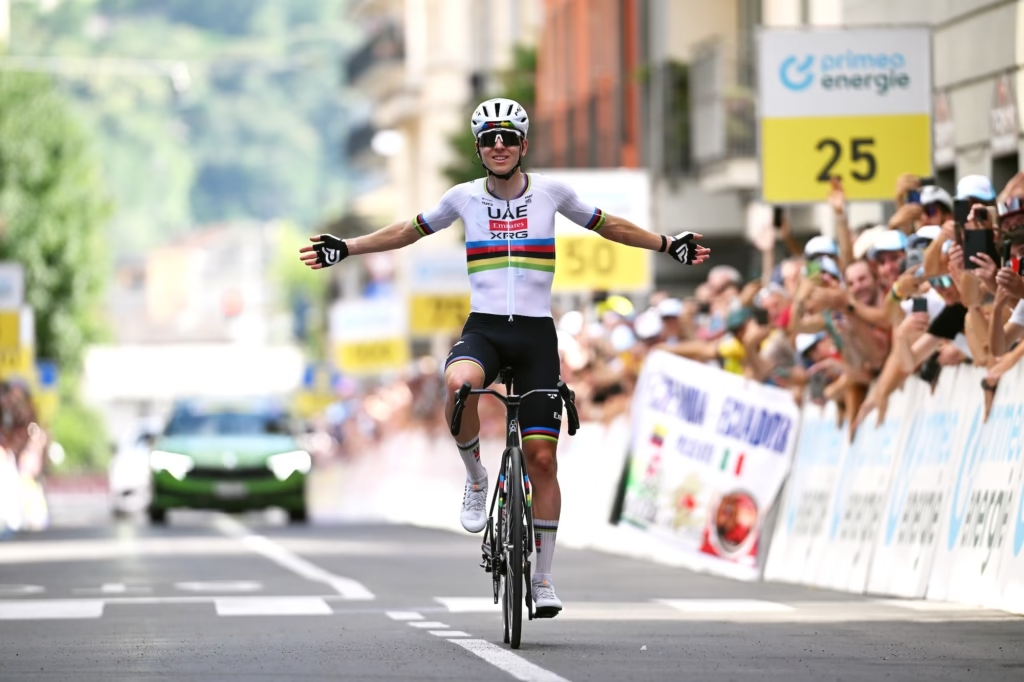
Tadej Pogačar remains central to the stage as well, especially if the race is already tilted around him after Sondrio. The Locarno finale is not a long climbing test, but it is still the kind of terrain where he can attack, follow or simply make everyone else think twice.
Why stage 2 matters for the GC
Stage 2 is unlikely to create the biggest gaps of the 2026 Tour de Suisse, but it can still shape how the favourites reach the weekend. The time-trial and final mountain stage remain the clearest GC checkpoints, yet the shortened five-day format gives every stage more weight.
The main GC riders will need to stay alert through the final 30km. A poor position before the late climbs could be costly, especially if the front of the race splits over the shorter, steeper sections. Losing time on a hilly stage like this would be frustrating because there are so few chances left to recover.
For Pogačar, stage 2 may be about control as much as attack. If he already has a GC advantage, UAE Team Emirates-XRG can decide whether to keep the day tight or allow a breakaway to take pressure off. If the race is still close, the final climbs give him another chance to test rivals without needing a full mountain stage.
For Primož Roglič, Richard Carapaz, Antonio Tiberi, Enric Mas, Ilan Van Wilder and Max Poole, the key is avoiding unnecessary damage. None of them needs to win in Locarno, but all need to be on the right side of the split if the Classics riders and puncheurs turn the finale into a series of accelerations.
Tadej Pogačar
Tadej Pogačar remains the rider everyone else has to measure themselves against. Stage 2 is not the hardest day of the race, but the finale gives him plenty of ways to influence it.
The late climbs are short enough to suit explosive riders, and Pogačar is rarely passive on terrain like this. If UAE Team Emirates-XRG decide to make the race hard, the group could shrink quickly before the descent back towards Locarno. If they prefer control, Pogačar can still mark the most dangerous moves and let the stage lean towards a reduced sprint or late attack.
The tactical question is whether he needs to spend energy. With the Aarburg time-trial and Villars-sur-Ollon mountain stage still ahead, Pogačar does not have to chase every stage win. But if the opportunity appears, stage 2 is exactly the kind of day where he can gain time almost by accident, simply because the finale rewards his instincts.
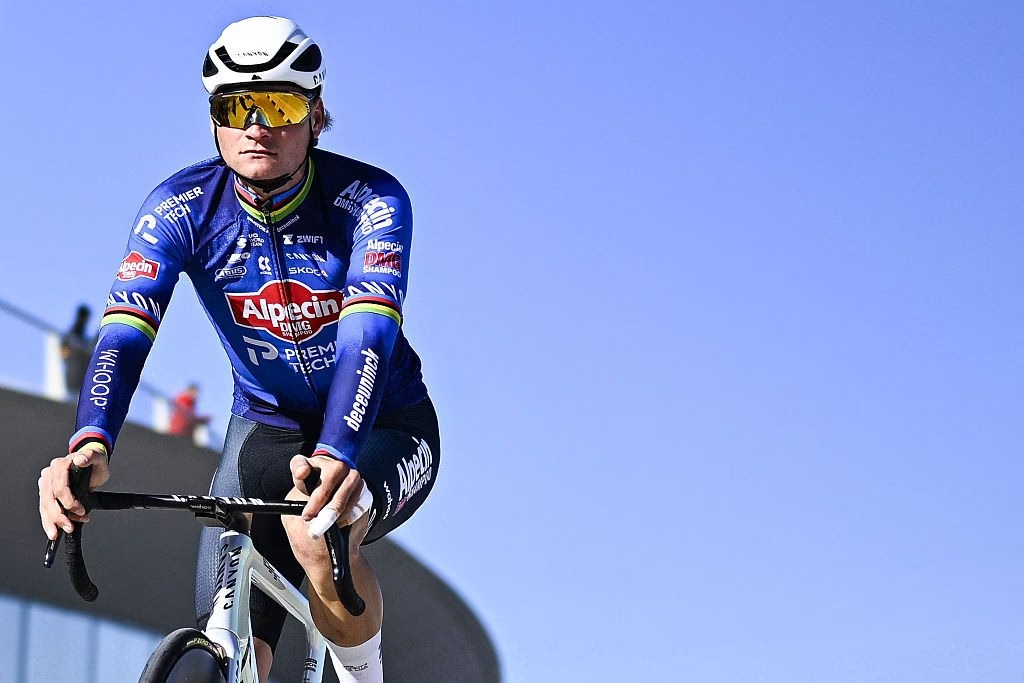 Photo Credit: Getty
Mathieu van der Poel
Mathieu van der Poel looks like one of the best stage-specific fits for Locarno. The route is hard enough to remove some sprinters but not so mountainous that pure climbers should dominate. That is his kind of terrain.
The late climbs give Van der Poel a platform to attack, but they also give him a route to a reduced sprint if the front group comes back together. He does not need the stage to become a GC battle. He needs it to become sharp, tactical and selective enough to leave him with a smaller group.
Alpecin-Premier Tech may have to judge the chase carefully. If the breakaway is strong, they may need help. If UAE Team Emirates-XRG or another GC team makes the climbs hard, Van der Poel needs to stay close enough to use his finish. The balance suits him, but only if the race does not become too GC-heavy.
Tom Pidcock
Tom Pidcock should be one of the most interesting riders on stage 2. The Locarno route rewards technical confidence, repeated accelerations and timing, all of which suit him well.
If the final climbs are raced aggressively, Pidcock has the punch to follow the best moves. If the descent becomes important, he has the handling skills to make a small gap more dangerous. And if the front group is reduced but still together, he has enough speed to matter in the finish.
For Pinarello-Q36.5, this is the sort of stage where Pidcock can test himself without needing to commit to a long mountain move. He may not want the race to become purely about Pogačar and the GC teams, so an earlier attack or counter-move in the final 15km could be his best route.
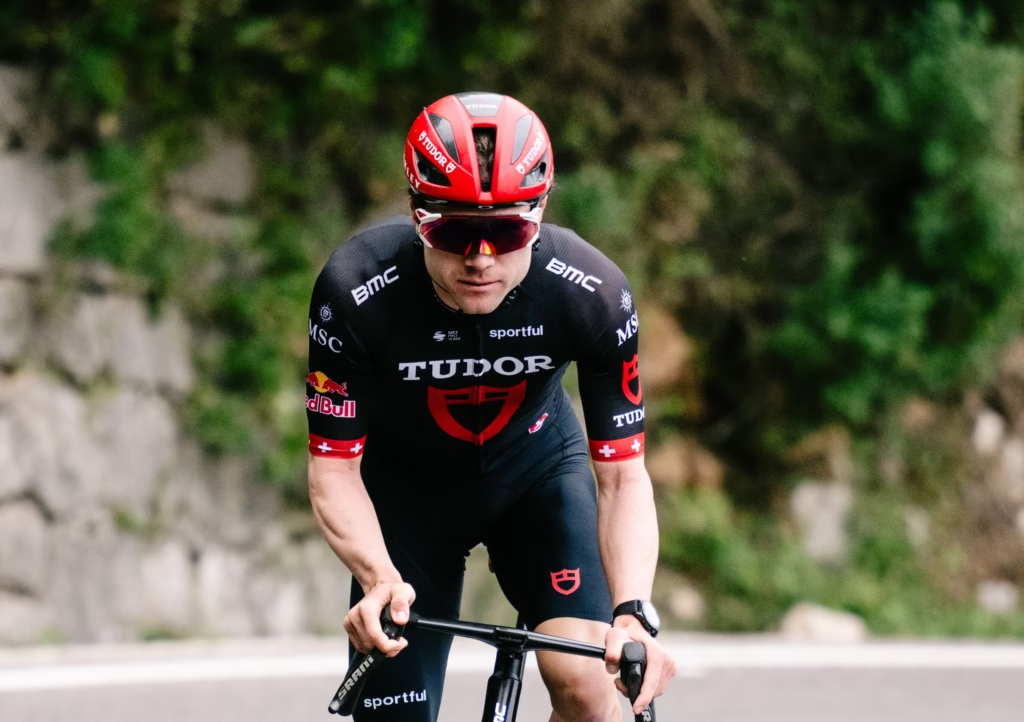 Photo Credit: Getty
Marc Hirschi
Marc Hirschi is another rider who fits the Locarno finale neatly. Short, steep climbs, a selective run-in and a likely reduced front group all suit his strengths.
Hirschi is at his best when the finish is too hard for sprinters but not quite hard enough to become a pure climbing contest. Stage 2 has that profile. The question is whether Tudor Pro Cycling Team can place him well before the final climbs and whether the GC favourites give riders like him enough freedom.
If the biggest names hesitate, Hirschi is exactly the kind of rider who can make a decisive move over the top of the final climb or position himself for a reduced sprint. He may be one of the more realistic stage-winning options if the GC contenders cancel each other out.
Romain Grégoire
Romain Grégoire should also be close to the front of the stage 2 conversation. The stage suits an aggressive rider with punch, finishing speed and the confidence to race from a reduced group.
For Groupama-FDJ United, Locarno is a useful opportunity. Grégoire does not need the hardest mountain terrain to become relevant. He needs a finale where positioning and timing create the selection, and stage 2 offers exactly that.
His best chance may come if the final climb produces a front group rather than a solo move. In that scenario, Grégoire has the speed to finish the job, especially if the pure sprinters have been distanced and the GC favourites are more focused on each other than the stage win.
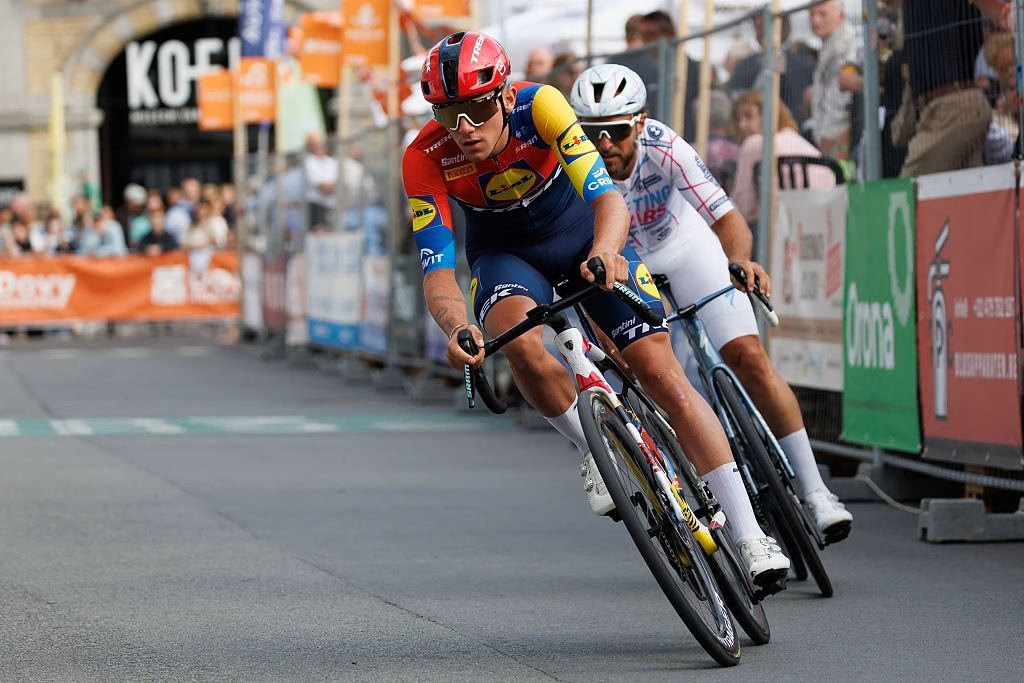 Photo Credit: Getty
Thibau Nys
Thibau Nys is a natural fit for stage 2 if the race lands in the right balance. The climbs are short, the finale is punchy, and the finish could come from a reduced group rather than a long-range mountain selection.
For Lidl-Trek, this is one of the stages where Nys could be a genuine card. He has the acceleration for steep ramps and enough finishing speed if the group remains small. The challenge is surviving any heavier GC pressure before the final kilometres.
If the climbs are ridden at a Classics-style tempo rather than a full GC tempo, Nys becomes very dangerous. If Pogačar or the high-mountain riders make it brutal, his chances become more complicated.
Primož Roglič
Primož Roglič may not need stage 2, but stage 2 could still suit him if the finale becomes selective. The short climbs and reduced-group dynamic are familiar territory for a rider who has built much of his career on timing, positioning and late accelerations.
The wider GC picture may make Red Bull-BORA-hansgrohe more conservative. Roglič’s bigger targets are likely the time-trial and final mountain stage, but he cannot afford to be caught behind if the race splits. If he is in the front group after the final climb, bonus seconds or a small gap could still become useful.
Roglič is probably not the most obvious stage-winning pick, but he remains a dangerous rider whenever a punchy finish meets a GC context.
Other riders to watch
Richard Carapaz is unlikely to treat stage 2 as a target in itself, but he will need to stay attentive if the race becomes selective. EF Education-EasyPost may prefer harder climbing days, yet the Locarno finale is not a place to drift too far back.
Antonio Tiberi and Enric Mas are in a similar position. Both need to stay safe, follow the right group and avoid losing time before the more obvious GC stages. The same applies to Ilan Van Wilder, Max Poole and Nairo Quintana.
Lenny Martínez is worth watching if the final climbs are ridden hard enough to favour lighter, punchier climbers. Kaden Groves and Jasper Philipsen are harder to place. If the stage is controlled and the final climbs do not break the race apart, they could still be involved, but the official route character suggests the day may be too awkward for a full sprint finish.
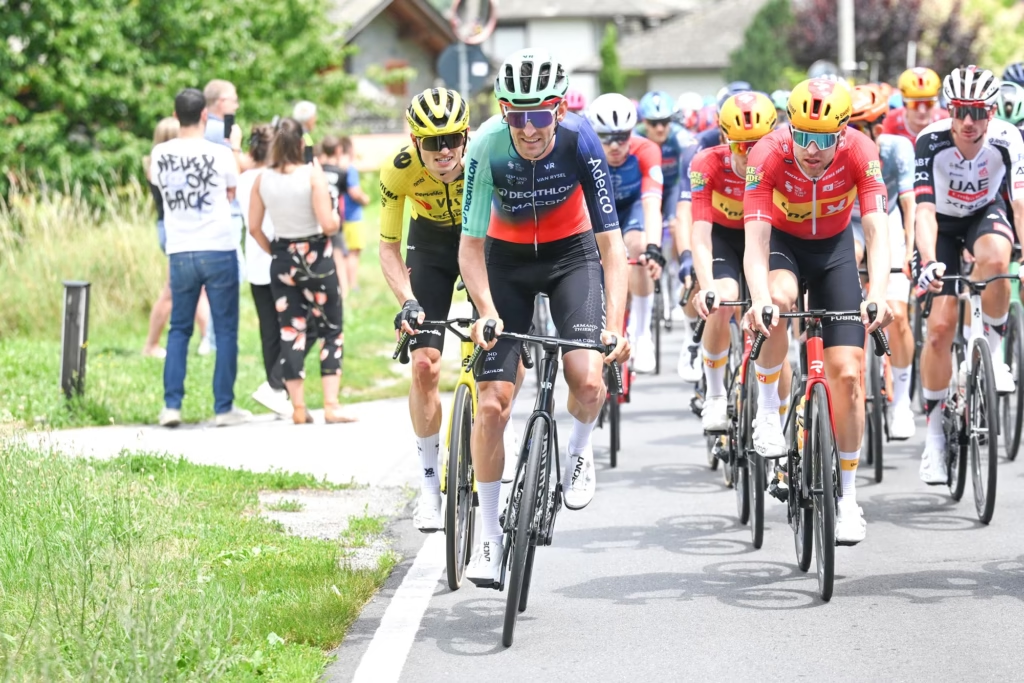
Race tactics
The first half of the stage should give breakaway riders a chance to establish themselves. The route is not flat, but it is not so hard early on that the peloton has to be immediately selective. Teams with stage-winning ambitions will need to decide how much freedom to allow.
The chase should become more serious as the race loops back towards Locarno. Monte Ceneri is not the decisive obstacle, but it can add fatigue and reduce the number of teams with enough riders left to control the finale. That could be important if a strong breakaway has survived deep into the stage.
The final 15km should decide the stage. The climb before Tenero can weaken the group, the shorter steep climb can create the move, and the descent towards Locarno gives attackers a chance to hold their gap. If the favourites hesitate, a solo rider or small group can stay away. If teams still have numbers, a reduced sprint becomes more likely.
UAE Team Emirates-XRG may decide the shape of the day. If they ride defensively, stage hunters and Classics riders get more room. If they lift the pace late, the GC contenders could dominate the finale again.
Prediction
Stage 2 looks well suited to Mathieu van der Poel. It is hard enough to remove many pure sprinters, but not so hard that the high-mountain climbers should automatically decide the race. The short late climbs, descent and run-in towards Locarno all give him a clear route to victory from either a reduced group or a late attacking move.
Pogačar remains the biggest danger because he can turn almost any hilly stage into a GC test. Pidcock, Hirschi, Grégoire and Nys all fit the terrain well, while Roglič becomes a threat if the stage compresses into a small group of favourites.
The key question is whether stage 2 becomes a stage-hunters’ day or another GC-controlled selection. If the race opens up, Van der Poel looks like the best pick. If UAE Team Emirates-XRG make it hard, Pogačar could again pull the stage towards the overall contenders.

