
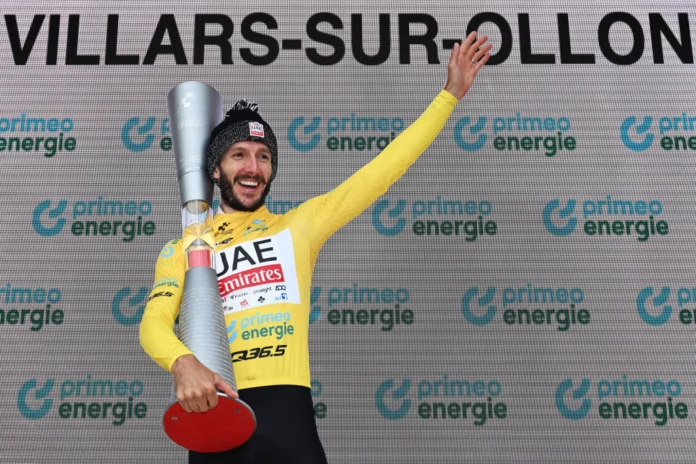
The Men’s Tour de Suisse 2026 has the feel of a compressed general classification test rather than a traditional week-long Swiss stage race. The new five-day format removes almost all of the old padding, giving the contenders a hilly opener in Sondrio, two rolling Swiss stages, a 23.8km individual time trial in Aarburg and a final mountain stage around Villars-sur-Ollon with more than 4,000 metres of climbing.
That structure changes the way the race should be read. A rider cannot wait until the weekend to start racing. The opening stage is already selective, the middle days are awkward enough to punish hesitation, the time trial gives the specialists a clear opportunity, and the final stage is hard enough to overturn everything. It is a short race, but not a soft one.
The start list gives the race real weight. Tadej Pogačar, Primož Roglič, Tom Pidcock, Richard Carapaz, Antonio Tiberi, Lenny Martínez, Enric Mas, Afonso Eulálio, Max Poole, Ilan Van Wilder, Marc Hirschi, Romain Grégoire and Mathieu van der Poel all bring different kinds of threat. Some are realistic overall contenders. Some may be better stage hunters. Some are using the race as a final test before the Tour de France 2026, but the route is difficult enough that nobody can simply ride through it anonymously.
For wider race context, our Men’s Tour de Suisse 2026 full route guide breaks down all five stages, while the full start list for Men’s Tour de Suisse 2026 covers the current team line-ups. The Men’s Tour de Suisse 2026 team-by-team guide also explains how the main squads are set up, while the beginner’s guide to Men’s Tour de Suisse 2026 gives newer fans the wider context around the race.
What kind of rider can win Men’s Tour de Suisse 2026?
The 2026 route favours a complete rider. The winner needs to climb well, handle hilly racing from the opening day, avoid losing time on technical roads, and produce a strong individual time trial before the final mountain stage.
Stage 1 around Sondrio is not a gentle introduction. With 144km and 2,455m of climbing, it should already put pressure on weaker teams and riders still short of sharpness. Stage 2 in Locarno and stage 3 in Bad Ragaz are less mountainous, but they are not passive either. The race will keep moving through punchy terrain before the weekend.
The decisive shift comes on stage 4 in Aarburg. The 23.8km individual time trial is fast and technical enough to matter, especially in a five-day race where there are fewer chances to recover losses. A climber who gives away 45 seconds there may need an aggressive final day. A time triallist who gains time still has to survive Villars-sur-Ollon.
Stage 5 is the final judge. The Villars-sur-Ollon circuit is 151.1km with 4,226m of climbing, making it the queen stage and the obvious place for the race to explode. That final day should suit elite climbers, but the overall winner will need to arrive there close enough after the time trial and resilient enough after four previous days of racing.
For readers comparing the race with other major June preparation events, the men’s cycling route guide hub collects the key route guides across the season.
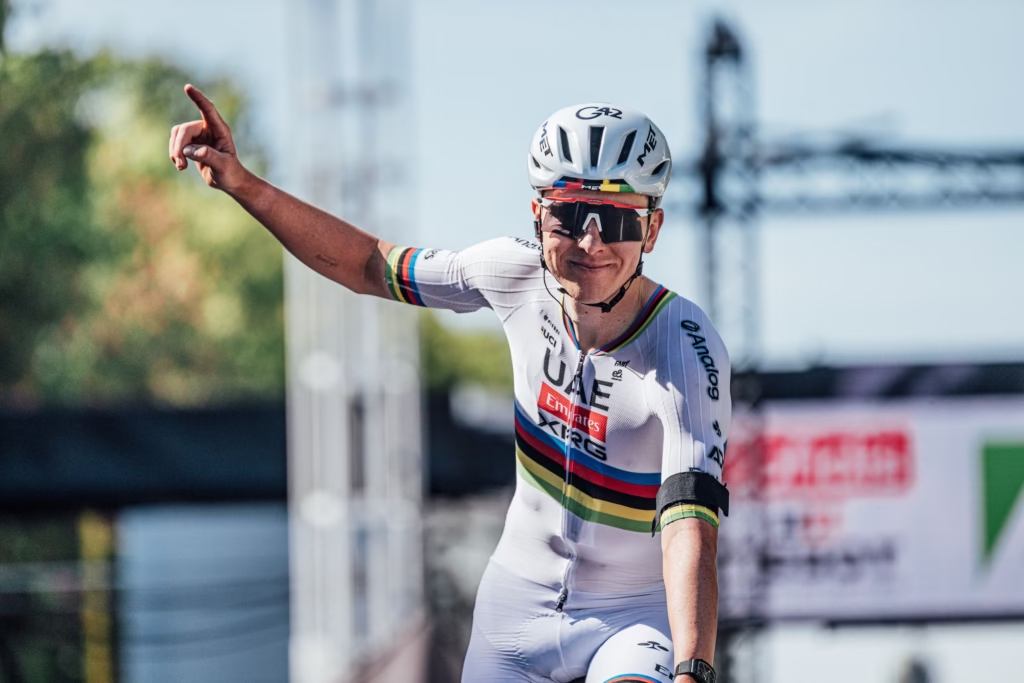
Tadej Pogačar – UAE Team Emirates-XRG
Tadej Pogačar is the obvious favourite. The route gives him several ways to win: stage 1’s hilly circuit in Sondrio, the punchier middle stages, the Aarburg time trial and the final mountain stage in Villars-sur-Ollon. Few riders in the race can match that range.
The five-day format may even suit him. Pogačar rarely needs a long race to ride himself into form. If he is already sharp, the opening stage gives him an immediate platform to test rivals, and the lack of a long settling-in period means he can put others under pressure before the race has fully found a rhythm.
UAE Team Emirates-XRG also bring the right support structure. Brandon McNulty gives the team another rider who can time trial, climb and be used tactically. Mikkel Bjerg and Nils Politt bring power for control and positioning, while Felix Grossschartner, Domen Novak and Marc Soler add climbing depth around the final stage.
The question is not whether Pogačar has the tools to win. He clearly does. The only uncertainty is how he chooses to use the race. If he treats it as a serious overall target, he is the rider everyone else has to beat. If he rides with one eye on July, the door opens slightly, but even a controlled Pogačar is hard to contain on a route this varied.
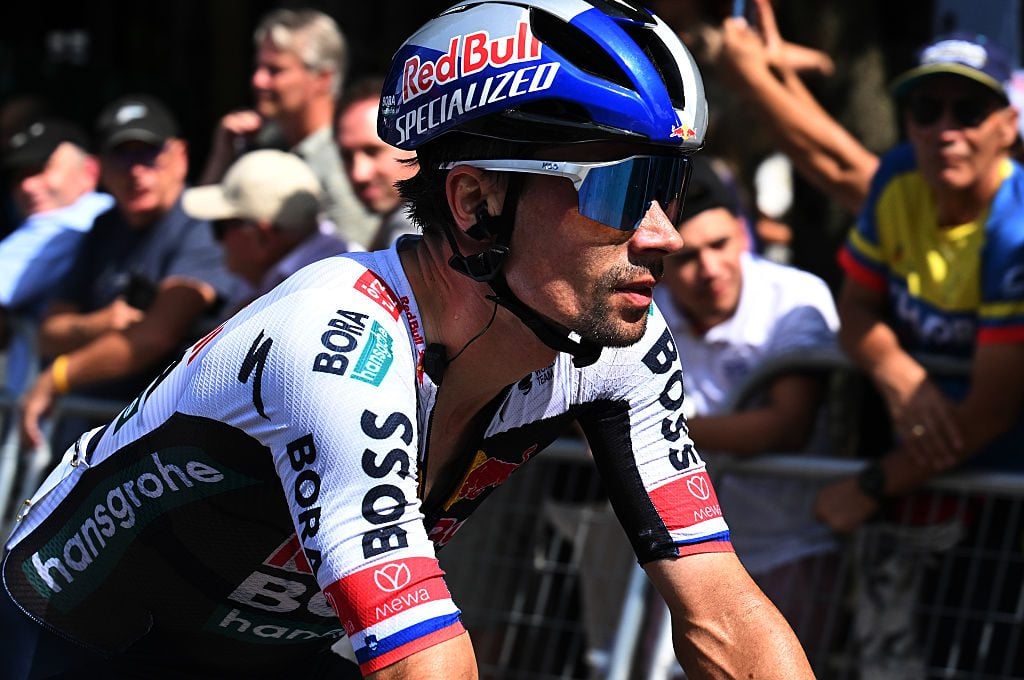 Photo Credit: Getty
Primož Roglič – Red Bull-BORA-hansgrohe
Primož Roglič is the most obvious challenger to Pogačar because the route rewards exactly the qualities that have defined much of his stage-racing career. He can time trial, he can climb, he is comfortable in short intense stage races, and he understands how to take time without needing chaos.
The Aarburg time trial is particularly important for him. Roglič does not need to win it outright, but he does need to use it as a platform. If he can stay close to Pogačar through the opening hilly stages and then gain or limit losses in the time trial, the final stage to Villars-sur-Ollon becomes a direct GC fight.
Red Bull-BORA-hansgrohe have a useful team around him. Aleksandr Vlasov gives them a second climbing option, while Finn Fisher-Black, Giovanni Aleotti, Alexander Hajek, Emil Herzog and Frederik Wandahl offer support across the rolling and mountain days. The team does not look built purely for a single leader’s procession, but it gives Roglič enough depth to stay protected.
The tactical question is whether Roglič can make the race uncomfortable for Pogačar before Villars-sur-Ollon. Waiting for the final climb may not be enough if UAE control the time trial and early stages. His best route to victory is a clean week, a strong TT and then a decisive final climb where he can turn the race into a direct head-to-head.
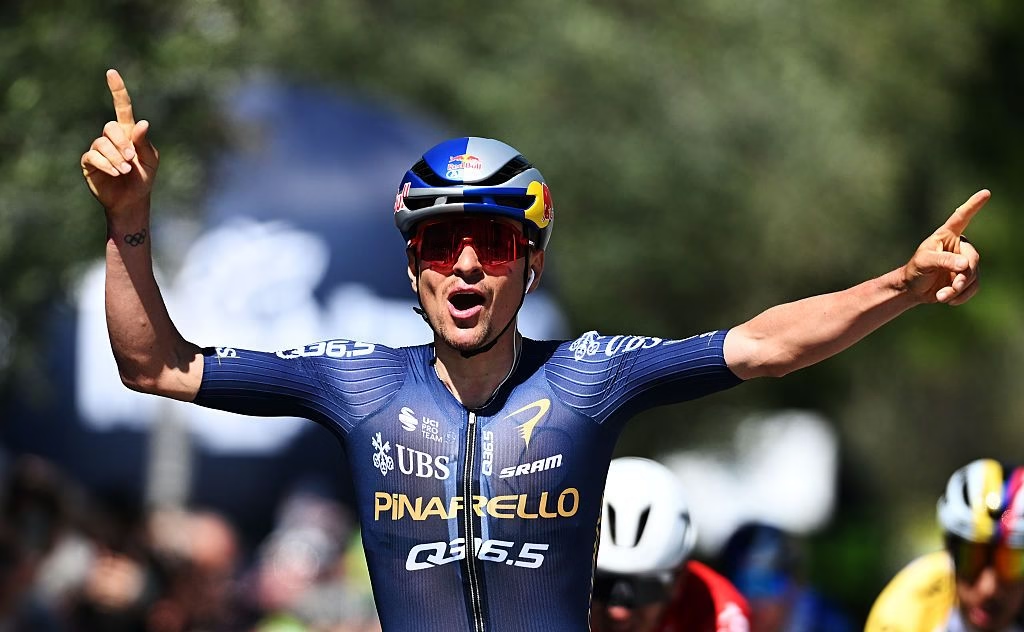 Photo Credit: Getty
Tom Pidcock – Pinarello-Q36.5 Pro Cycling Team
Tom Pidcock gives the race one of its most interesting storylines. He is not the obvious favourite for the overall, but the route gives him enough varied terrain to be dangerous, especially if he can get through the time trial without losing too much ground.
The opening stages should suit him well. Sondrio’s hilly circuit, the rolling roads around Locarno and the tactical stage around Bad Ragaz all fit a rider who can climb sharply, descend well and handle repeated changes of pace. Pidcock does not need a pure mountain stage to make an impact. He can create damage on awkward roads where others are still waiting for the obvious GC moment.
The issue is the Aarburg time trial. At 23.8km, it is long enough to create real gaps. Pidcock has improved in stage races, but he still needs to limit losses against the strongest time triallists and GC specialists. If he comes out of stage 4 within range, Villars-sur-Ollon gives him a genuine podium chance.
Pinarello-Q36.5 Pro Cycling Team should give him freedom. Quinten Hermans, Xandro Meurisse and Fred Wright offer useful support and stage-hunting options, while Pidcock is clearly the rider with the highest GC ceiling. A podium would be a strong result. A stage win would not be a surprise. Overall victory would require a near-perfect week, but the route gives him enough uncertainty to stay in the conversation.
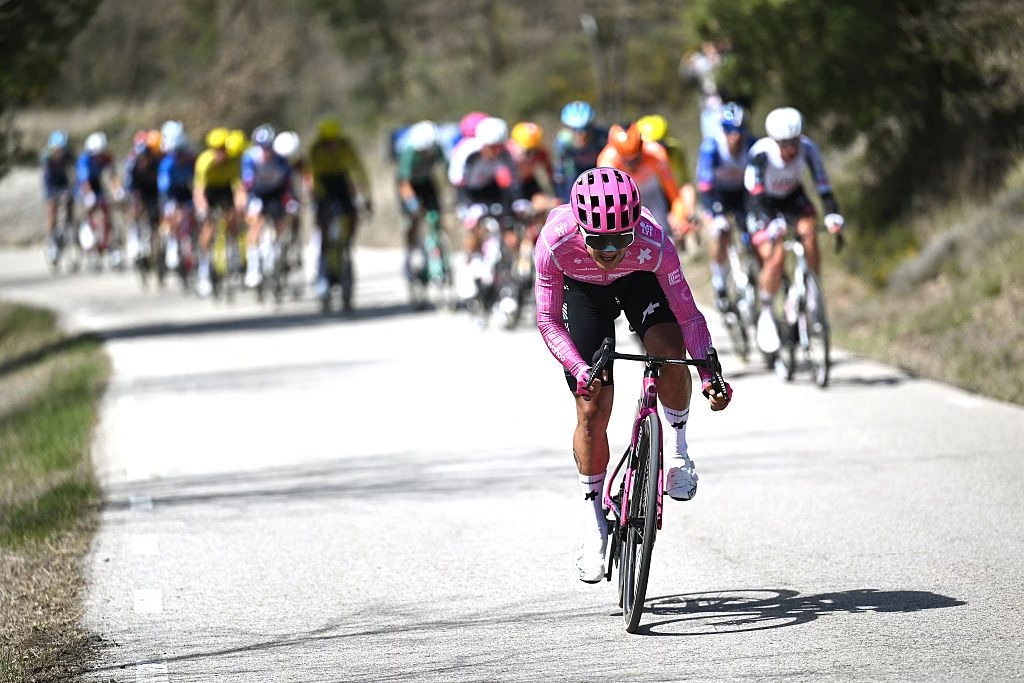 Photo Credit: Getty
Richard Carapaz – EF Education-EasyPost
Richard Carapaz is one of the riders most likely to animate the race if it becomes tactical. The condensed format may suit him because there is little time for conservative riding. If he loses seconds in the time trial, he will not have a long week to recover them gradually. He will have to attack.
That could make Carapaz one of the most entertaining contenders. Stage 5 to Villars-sur-Ollon gives him the best chance to turn the race upside down, but he may also use the earlier hilly stages to apply pressure. The race is short enough that a well-timed move on stage 1 or stage 3 could matter far more than it would in a normal eight-day edition.
EF Education-EasyPost also have useful support. Kasper Asgreen brings power and experience, Vincenzo Albanese gives the team a fast and aggressive option for mixed stages, while Lukas Nerurkar and Luke Lamperti add different kinds of road-stage threat. Carapaz will not necessarily have the same level of mountain train as UAE or Red Bull-BORA-hansgrohe, but he rarely needs a traditional train to make a race difficult.
His challenge is the time trial. If he loses too much in Aarburg, he may be forced into a stage-hunting role. If he stays close, Villars-sur-Ollon becomes a major opportunity. Carapaz at his best is still one of the hardest riders in the peloton to control when a mountain stage starts to open up.
Antonio Tiberi – Bahrain Victorious
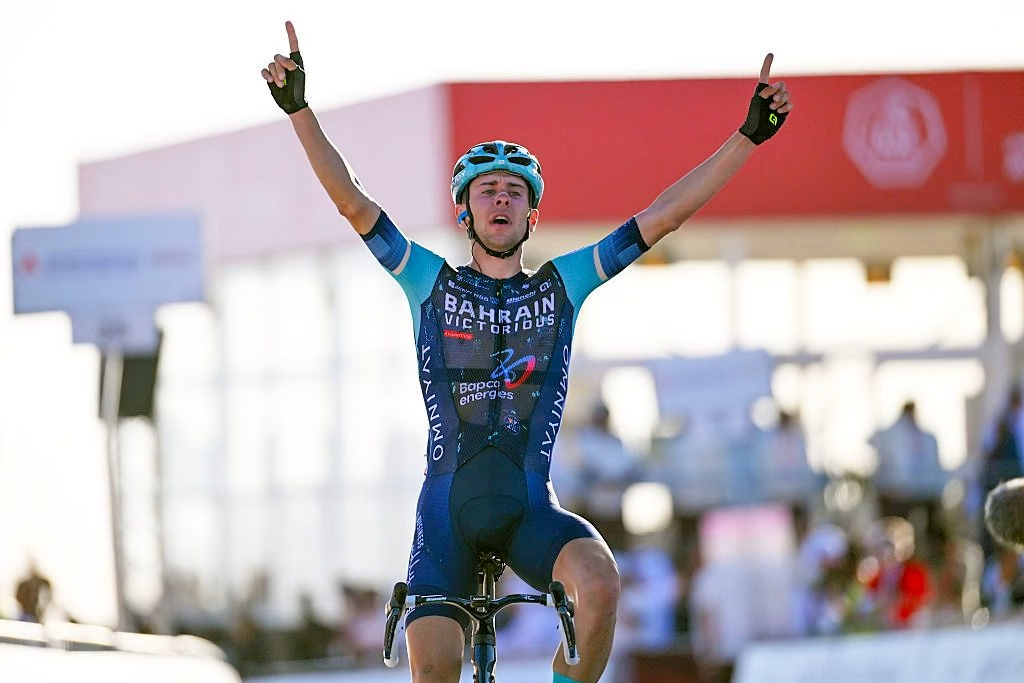
Antonio Tiberi may be one of the best route fits outside the two Slovenians. He can climb, he can time trial, and he has the temperament for a race where every stage carries GC danger.
The Aarburg time trial should suit him better than many of the pure climbers. That matters because stage 5 is not the only decisive day. A rider who can take time or hold position on stage 4 will start the queen stage with tactical freedom rather than desperation. Tiberi’s best path to the podium is likely a steady first three stages, a strong time trial, then controlled climbing at Villars-sur-Ollon.
Bahrain Victorious bring one of the most interesting teams in the race. Lenny Martínez is a genuine climbing weapon, Afonso Eulálio arrives with the credibility of a breakthrough Grand Tour rider, and Attila Valter adds strength across rolling and mountain terrain. Alec Segaert’s time-trial ability may also matter for pacing and stage ambitions, even if the GC fight is likely built around Tiberi and Martínez.
The question is leadership. Tiberi looks the more complete GC option across this specific route, while Martínez may be more explosive on the final day. Bahrain can use that as an advantage if they are flexible. If Tiberi is well placed after the time trial, he should be treated as a serious podium contender.
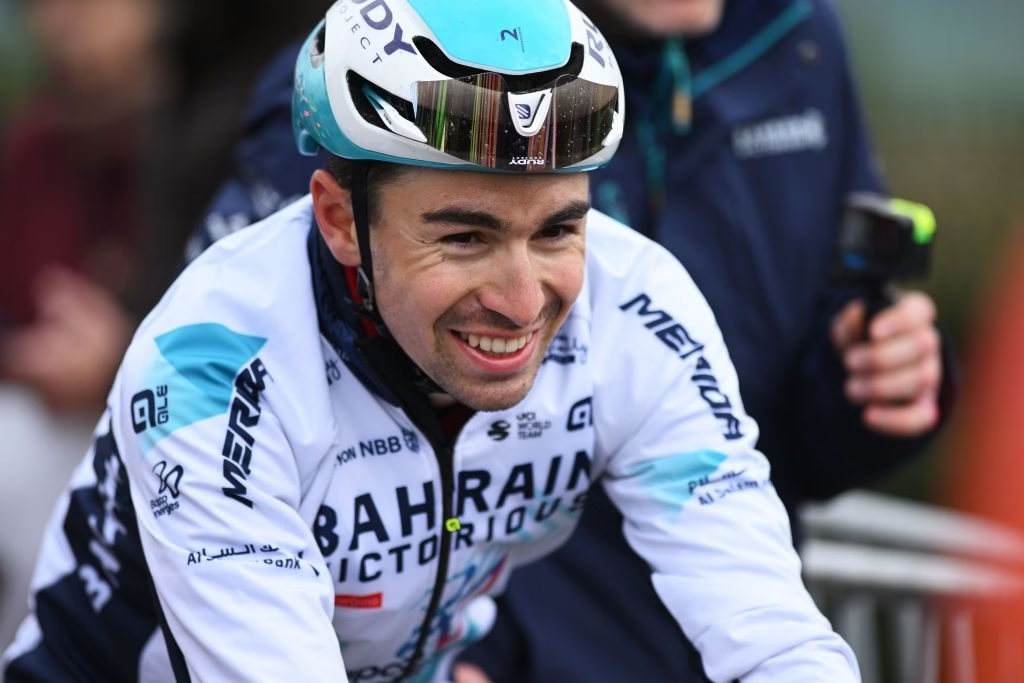 Photo Credit: Getty
Lenny Martínez – Bahrain Victorious
Lenny Martínez may not be as well suited to the Aarburg time trial as Tiberi, but the final stage around Villars-sur-Ollon keeps him firmly in the conversation. The queen stage is hard enough for a pure climber to change the race, especially if other contenders have spent too much energy defending earlier in the week.
Martínez’s best chance is to stay within range through the first four days, then race aggressively on stage 5. He does not want a controlled final climb where Pogačar, Roglič and the time triallists are simply marking each other. He needs a harder, messier mountain stage, with attacks before the final selection and enough elevation to expose riders who are relying on TT gains.
Bahrain’s depth helps him. If Tiberi is also high on GC, the team can create a two-pronged problem for rivals. Tiberi can protect the overall position, while Martínez can attack. That kind of split leadership can be awkward, but on a short race with one huge final day, it may be the best way to challenge stronger individual favourites.
A podium is possible if the time trial damage is manageable. A stage win on the final day may be even more realistic.
Afonso Eulálio – Bahrain Victorious
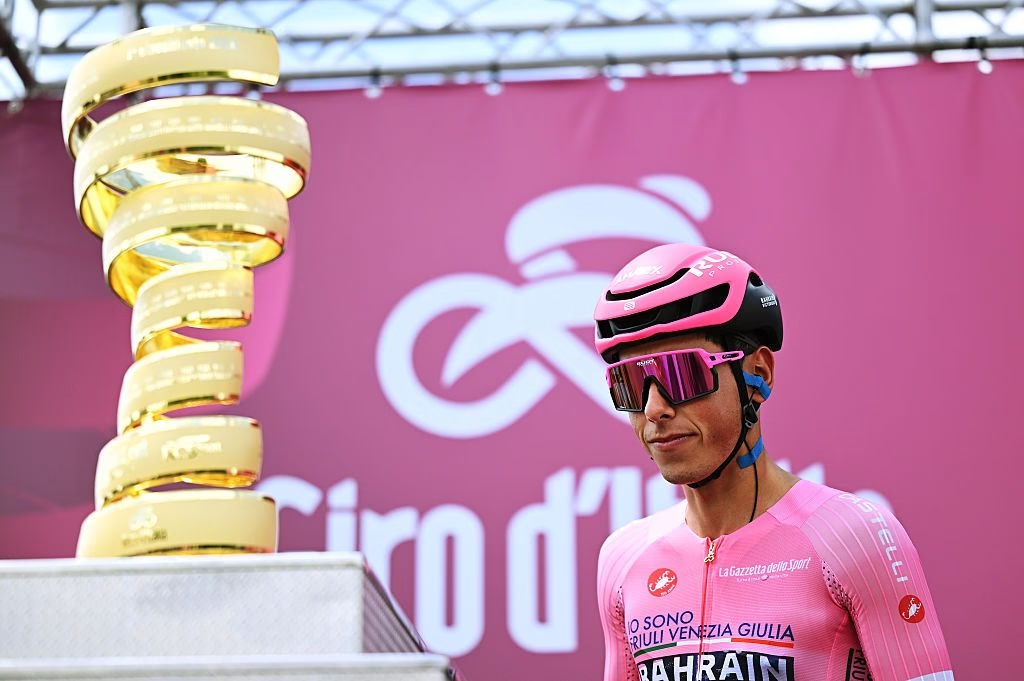
Afonso Eulálio gives Bahrain another intriguing card. After his breakthrough at the Giro d’Italia, where he finished sixth overall and won the young rider classification, he now arrives at Tour de Suisse with a different kind of attention around him.
The question is how much leadership he receives. With Tiberi and Martínez also in the team, Eulálio may start as part of a deep GC structure rather than the protected number one. That can still work in his favour. If rivals focus on the bigger names, he may have room to follow moves, climb into a strong GC position or take responsibility if the race begins to shift.
The route is not simple for him. Stage 4’s time trial will be important, and the opening hilly stages require concentration. But the final mountain stage gives him terrain where he can show whether the Giro was a one-off breakthrough or the start of a consistent top-level GC profile.
Bahrain may have the strongest collective GC depth in the race outside UAE. Eulálio is part of that. Even if he does not begin as the main leader, he could end the week as one of their most important riders.
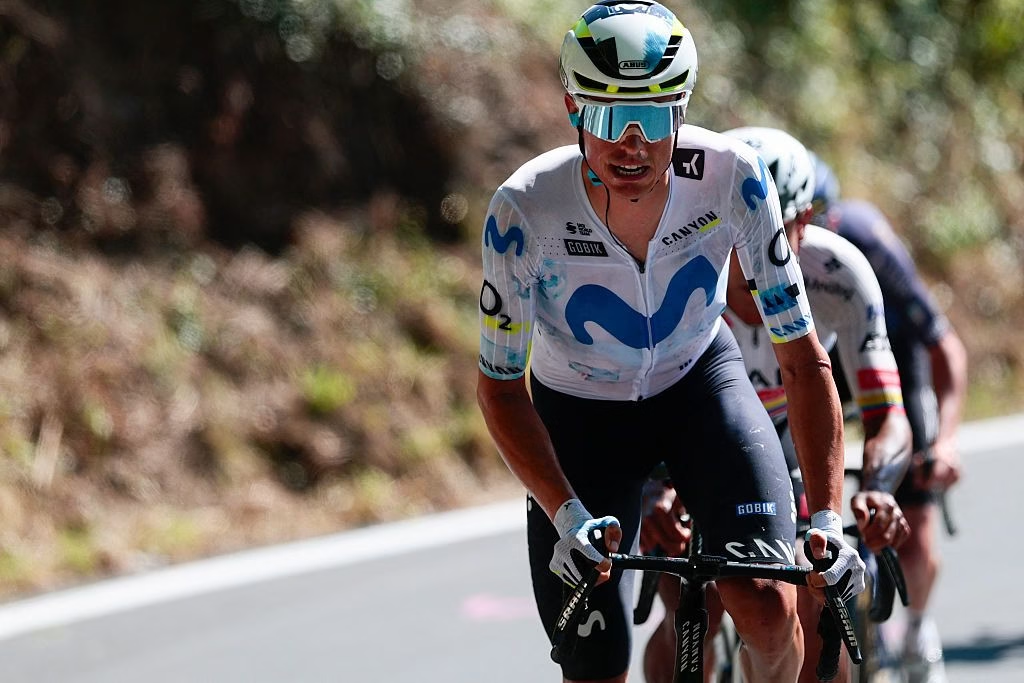 Photo Credit: Getty
Enric Mas – Movistar Team
Enric Mas has the climbing pedigree to be a factor, but the route asks awkward questions of him. The final mountain stage suits him far more than the Aarburg time trial, which means his race may depend on limiting damage before Villars-sur-Ollon.
The compressed format is both a problem and an opportunity. It is a problem because there are fewer mountain days where Mas can gradually apply pressure. It is an opportunity because one huge final stage could still overturn the race if the gaps after the time trial are not too large.
Movistar have useful depth with Nairo Quintana, Javier Romo, Roger Adrià, Orluis Aular and Pelayo Sánchez. That gives the team options for stage hunting and mountain support, but the overall challenge is simple: they need to keep Mas close enough for stage 5 to matter.
If the final day becomes a pure climbing race, Mas can still move up. If the race is decided by all-round balance across all five stages, he may find it harder to match riders with stronger time trials.
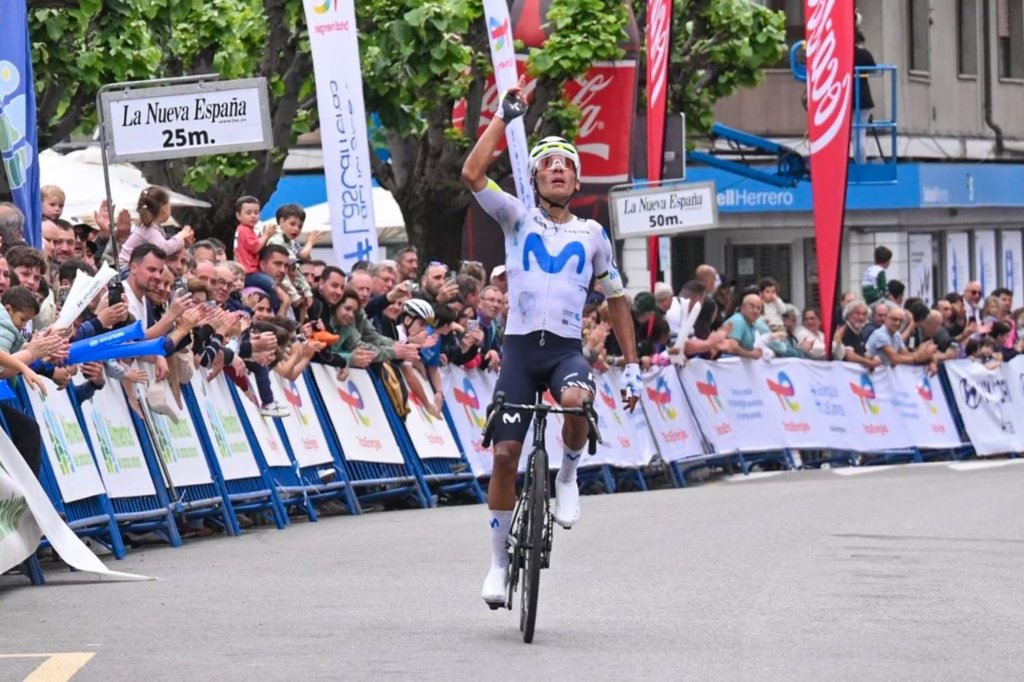 Photo Credit: Getty
Nairo Quintana – Movistar Team
Nairo Quintana adds experience and climbing depth to Movistar’s line-up. He is unlikely to be the strongest overall contender in a race shaped partly by a 23.8km time trial, but he remains relevant because stage 5 is so demanding.
Quintana’s best role may be tactical. He can support Mas, attack early on the final mountain stage, or become a stage-winning option if he is given freedom. On a Villars-sur-Ollon route with more than 4,000m of climbing, experience still matters. Knowing when to move, when to save energy and when to let others chase can make a difference.
He may also be valuable in shaping the race even if he does not finish on the podium. Movistar need to make the final stage hard enough to reduce the impact of the time trial. Quintana is one of the riders who can help them do that.
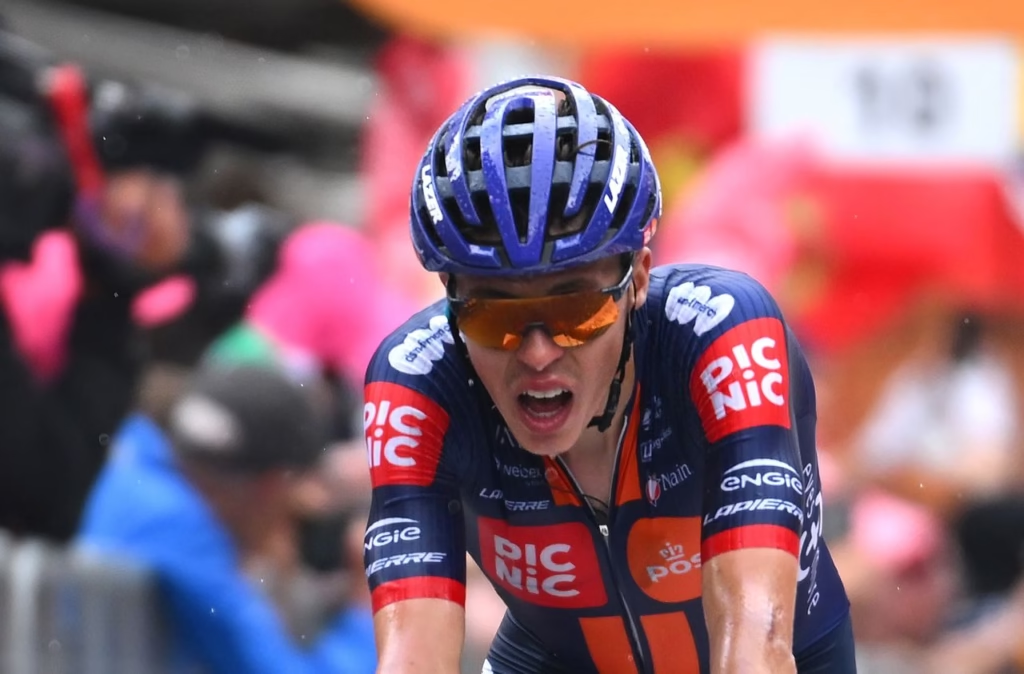 Photo Credit: Getty
Max Poole – Team Picnic PostNL
Max Poole is one of the most interesting younger GC options in the race. The route gives him a proper test without stretching the race across eight days, and the final stage should suit his climbing ability.
The first three road stages will be about survival and positioning. Poole cannot afford to lose cheap time in Sondrio, Locarno or Bad Ragaz. The time trial will then decide whether he goes into Villars-sur-Ollon as a serious GC rider or a stage-hunting climber.
Team Picnic PostNL bring Matthew Dinham and Chris Hamilton as useful support, while Oliver Peace, Björn Koerdt, Sean Flynn and Mattia Gaffuri add depth. The team may not dominate the race, but they have enough to help Poole stay in the right places.
A top-10 overall would be a realistic target. A top-five would be a very strong week. The final stage gives him a route to climb past riders who are better against the clock but less comfortable in the high mountains.
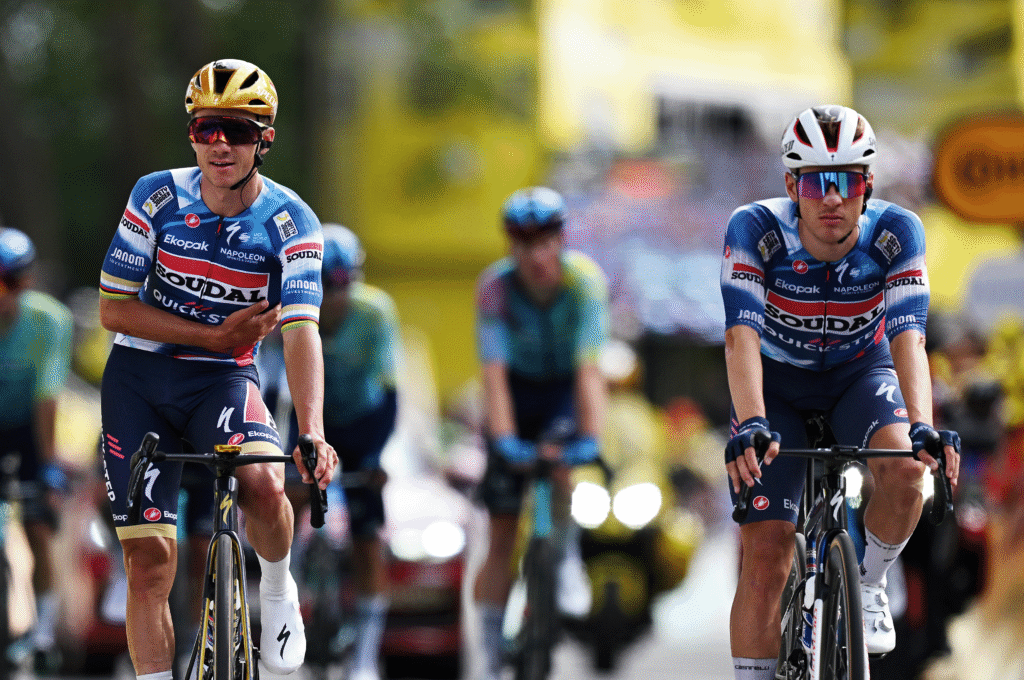 Photo Credit: RCS
Ilan Van Wilder – Soudal – Quick-Step
Ilan Van Wilder is another rider who should like the balance of this route. He has enough time-trial ability to make stage 4 an opportunity rather than a problem, and he can climb well enough to survive a hard final stage if he is in good form.
Soudal – Quick-Step do not arrive with the most obvious GC favourite, but Van Wilder gives them a credible overall option. The race’s shorter format may help him because consistency across five days can be enough for a strong final result if others make mistakes.
Maximilian Schachmann, Louis Vervaeke, Jonathan Vervenne and Gil Gelders add useful support and flexibility. Alberto Dainese gives the team a different route on faster days, but Van Wilder is the rider most likely to matter on GC.
The key question is whether he can match the pure climbers on stage 5. If he takes time in Aarburg and limits losses at Villars-sur-Ollon, he can finish high overall. Winning the race looks difficult, but a top-five is within reach if the favourites cancel each other out.
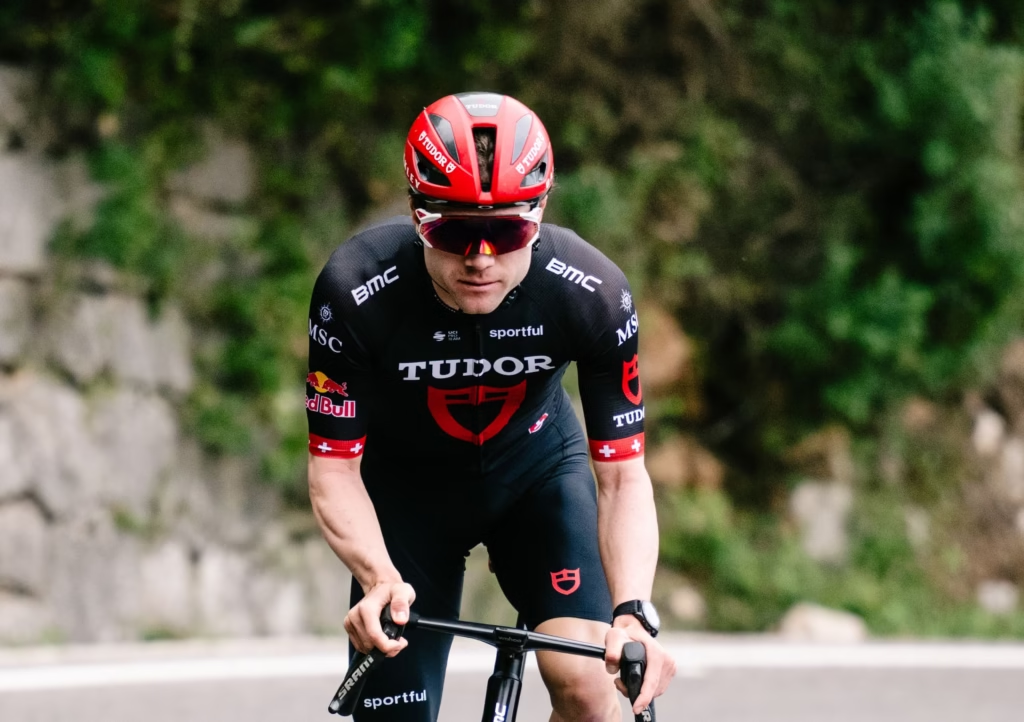 Photo Credit: Getty
Marc Hirschi – Tudor Pro Cycling Team
Marc Hirschi brings home interest and stage-winning danger, even if the overall classification may be a harder target. The route has several stages where his punch and tactical sense can matter, especially the hilly opener in Sondrio and the rolling stages before the time trial.
The final mountain stage may be too hard for him to win the overall against the best climbers, but that does not make him a sideshow. A strong stage result or a day in the leader’s jersey would be a major outcome for Tudor Pro Cycling Team, especially on home roads.
Hirschi’s best chance is to make the race messy before it becomes a pure GC contest. He can attack where others hesitate, use his finishing speed from small groups, and take advantage if the main favourites are watching each other. He may not want the race reduced to Pogačar, Roglič and the pure climbers on the final mountain stage.
Tudor also bring useful options around him, including Marco Brenner and Marius Mayrhofer. For them, this race is about visibility, stage wins and Swiss impact. Hirschi is the rider most likely to deliver that.
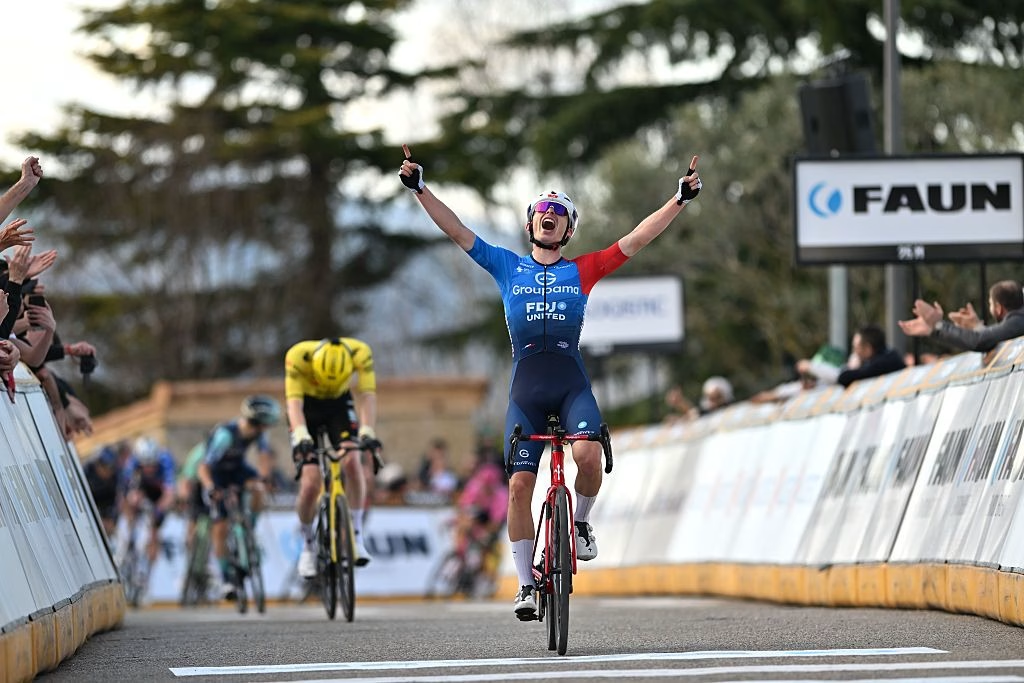 Photo Credit: Getty
Romain Grégoire – Groupama-FDJ United
Romain Grégoire is not the safest GC pick, but he is one of the more dangerous riders on the hilly stages. The opening three days are exactly the kind of terrain where he can take time, chase a stage win or force the favourites to respond earlier than they want.
The Sondrio opener could suit him particularly well if the race comes down to a reduced group rather than a pure GC selection. Stage 2 and stage 3 also give him chances to race aggressively before the time trial and final mountain stage tilt the race towards more complete GC riders.
Groupama-FDJ United bring Valentin Madouas, Rémi Cavagna, Lorenzo Germani, Ewen Costiou and Clément Russo, which gives them flexibility. Cavagna can be important in the time trial and flat control, Madouas gives strength across hilly terrain, while Costiou and Germani can support harder days.
For Grégoire, the overall may depend on how well he handles stage 4 and stage 5. A stage win looks more realistic than the final podium, but he has enough quality to stay high on GC if the race is selective without becoming purely mountainous too early.
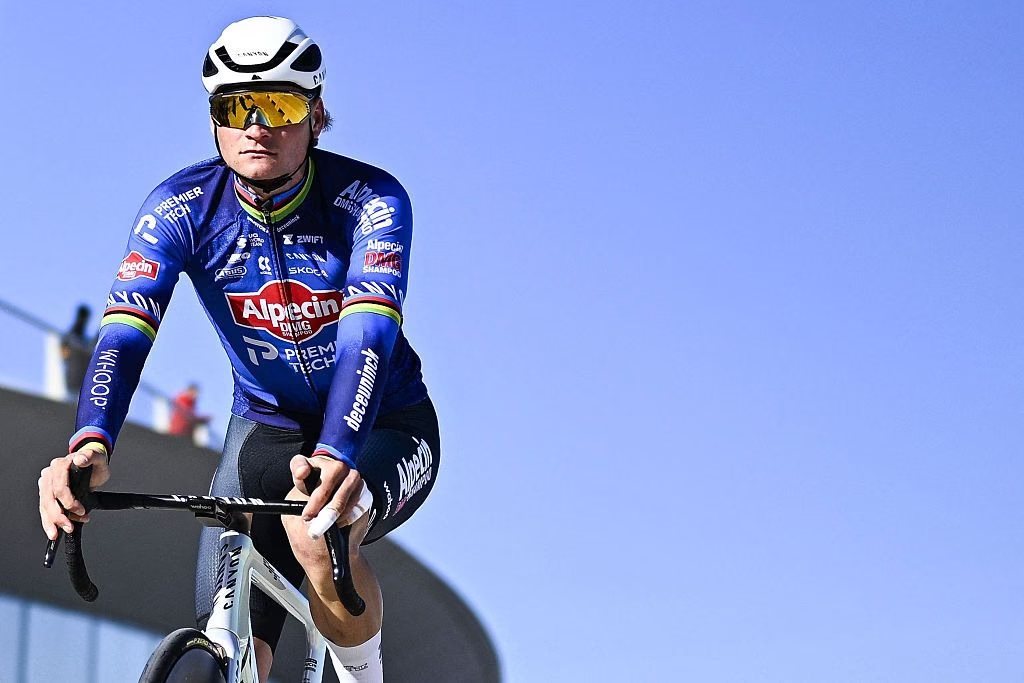 Photo Credit: Getty
Mathieu van der Poel – Alpecin-Premier Tech
Mathieu van der Poel is not a likely overall winner, but he is impossible to ignore. The route is too hard for a simple sprint plan and too mountainous for him to be a straightforward GC favourite, but the opening three stages give him real opportunities.
Stage 1 in Sondrio looks especially interesting. A hilly circuit, technical roads and a reduced-group finish would put Van der Poel firmly in the frame. The same applies to Locarno and Bad Ragaz if the race becomes tactical rather than controlled by GC teams.
Alpecin-Premier Tech also have Kaden Groves and Jasper Philipsen listed, which gives the team sprint firepower despite the route’s difficulty. That could matter on the faster or less selective days, but Van der Poel is the rider who can turn the race away from predictable patterns.
He is more of a stage contender than a GC contender. But in a five-day race, a rider like Van der Poel can still shape the overall by winning early, forcing teams to chase, or making the first half of the race harder than the pure climbers would like.
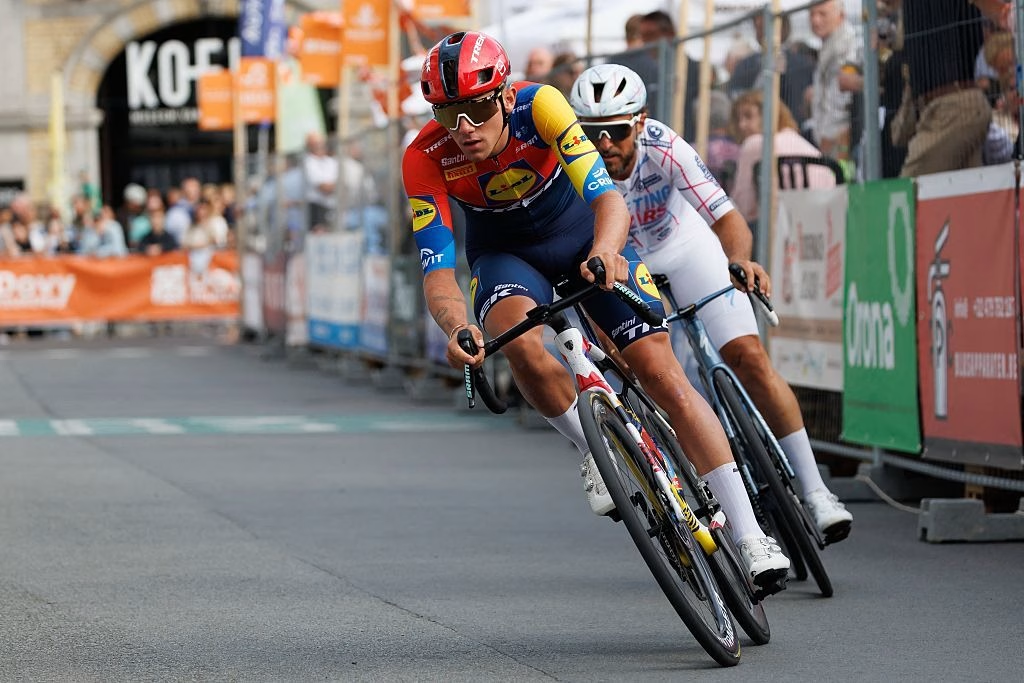 Photo Credit: Getty
Thibau Nys – Lidl-Trek
Thibau Nys is another rider who belongs more in the stage-winning conversation than the pure GC fight, but the 2026 Tour de Suisse route gives him plenty to work with. The opening stage in Sondrio and the rolling Swiss days are exactly the kind of terrain where his punch can make a difference.
Lidl-Trek have other options too. Mathias Vacek gives them time-trial strength and all-round depth, Sam Oomen and Patrick Konrad add climbing experience, while Andrea Bagioli and Bauke Mollema offer stage-hunting range. That makes Lidl-Trek one of the teams most capable of making the race awkward rather than simply following the biggest GC favourites.
For Nys, the issue is the final weekend. The Aarburg time trial and Villars-sur-Ollon queen stage are likely to push the overall towards stronger climbers and time triallists. But before then, he can be one of the most dangerous riders in the race.
A stage win would be the obvious target. If he reaches the right reduced group on stage 1, he will be very hard to beat.
Who are the strongest teams?
UAE Team Emirates-XRG look strongest on paper because they combine the outstanding favourite with a deep support structure. Pogačar alone would make them the team to beat, but McNulty, Bjerg, Grossschartner, Politt, Novak and Soler give them control, climbing support and tactical flexibility.
Red Bull-BORA-hansgrohe have a clear GC leader in Roglič and useful secondary options, especially Vlasov and Fisher-Black. They may not have the same overall depth as UAE, but they have enough to keep Roglič positioned and protected.
Bahrain Victorious are the most intriguing collective. Tiberi, Martínez and Eulálio give them three different GC cards, and that could be very useful on a short, volatile route. If they race passively, they may simply finish with several riders in the top 15. If they race aggressively, they could put pressure on teams with one clear leader.
Movistar bring mountain depth through Mas and Quintana, while EF Education-EasyPost have Carapaz as the rider most likely to disrupt a controlled race. Team Picnic PostNL, Soudal – Quick-Step, Lidl-Trek, Groupama-FDJ United and Tudor all have riders capable of winning stages and affecting the GC picture, even if outright victory looks harder.
The Men’s Tour de Suisse 2026 team-by-team guide gives a fuller breakdown of how each squad is likely to approach the week.
Which stages will shape the GC battle?
Stage 1 in Sondrio matters because it can immediately remove riders from contention. It is hilly enough to create small gaps, but its bigger impact may be psychological. Anyone struggling on day one will have very little time to recover.
Stage 4 in Aarburg is the most controlled GC test. The 23.8km individual time trial should separate riders who are otherwise closely matched on the climbs. Pogačar, Roglič, Tiberi, Van Wilder and McNulty should all see it as an opportunity, while riders such as Mas, Martínez and Carapaz need to avoid serious losses.
Stage 5 in Villars-sur-Ollon is the queen stage and the final judge. With 151.1km and 4,226m of climbing, it is hard enough for the strongest climbers to overturn the time trial gaps. It also comes with no stage left afterwards, so there is no reason to save anything.
The race may look like it comes down to the time trial and the final mountain stage, but that would be too simple. The opening three road stages can still create traps, and the new five-day format means every small mistake becomes more expensive.
Why Tour de Suisse matters before the Tour de France
Tour de Suisse has always had a different character from the French preparation races. It is often more jagged, less predictable and more shaped by technical roads, mixed weather and shifting terrain. In 2026, the shorter format makes it even sharper.
For Tour de France contenders, this is not just a training block. It is a final public check on climbing legs, time-trial rhythm, team support and race sharpness before July. The Tour de France 2026 route analysis shows why that matters, with a route that includes an early Pyrenean block, a mid-race time trial and a brutal final Alpine weekend.
That makes Suisse a useful form line, but not a perfect predictor. Some riders will be close to peak condition. Others will still be building. The race will tell us who is already sharp, who has the team depth to control difficult terrain, and who may still have work to do before the Tour de France begins.
For UK viewers following the race live, the Men’s Cycling TV Guide Hub collects the main broadcast guides across the season, including the Tour de Suisse and Tour de France coverage.
Men’s Tour de Suisse 2026 prediction
Tadej Pogačar is the clear favourite. He has the climbing, time-trial ability, team strength and tactical range to win the race in several different ways. If he rides at anything close to his normal level, he should be very difficult to beat.
Primož Roglič looks like the strongest direct challenger. He has the right skill set for a short, intense stage race and should be able to use the Aarburg time trial as a platform before Villars-sur-Ollon. If Pogačar is slightly below his best or riding with July in mind, Roglič is the most obvious rider to take advantage.
Tom Pidcock, Richard Carapaz and Antonio Tiberi form the next tier. Pidcock has the versatility and aggression for the hilly stages, Carapaz has the attacking instinct for the mountains, and Tiberi has the balance of time-trial strength and climbing that this route demands. Lenny Martínez, Enric Mas, Afonso Eulálio, Max Poole and Ilan Van Wilder are also realistic top-five or top-10 threats depending on how the time trial shapes the race.
The most likely outcome is a Pogačar victory built through controlled aggression rather than one huge attack. But the five-day format gives the race enough tension to keep it interesting. One poor time trial, one missed split, or one aggressive final mountain stage could quickly turn a simple-looking favourite’s race into a much more complicated Swiss battle.
Top 3 Prediction
⦿ Tadej Pogačar
⦿ Primož Roglič
⦿ Tom Pidcock

