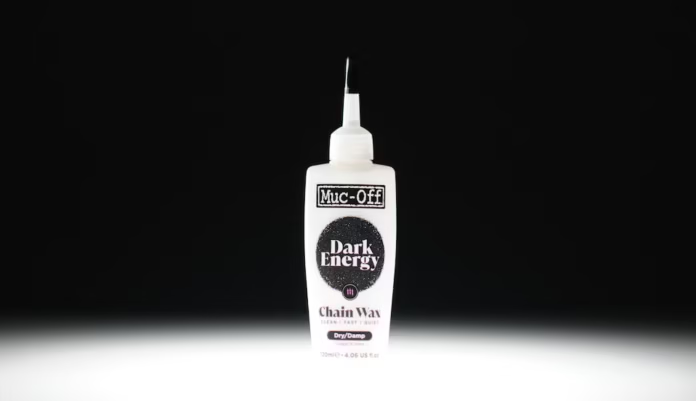
Muc-Off Dark Energy Chain Wax is the British brand’s answer to the growing popularity of drip-on wax lubricants. Rather than asking riders to remove a chain, melt wax and run a full immersion system, it is designed to be applied from a bottle like a conventional lube, then left to cure into a dry film. That makes it immediately attractive to riders who want a cleaner drivetrain without turning chain care into a workshop project.
The interesting part is that the evidence is not completely tidy. Muc-Off’s laboratory work and third-party tribology testing point towards very low friction and low wear, while several independent road tests have praised its smoothness and clean running in dry conditions. Wet-weather durability is where the picture becomes much less convincing, which matters far more to a British rider than a headline laboratory number.
This article contains affiliate links. ProCyclingUK may earn a commission if you buy through them, at no extra cost to you. You can check the current Muc-Off Dark Energy Chain Wax price and availability here.
Muc-Off Dark Energy Chain Wax specifications
| Type | Drip-on chain wax |
| Intended use | Road, gravel and mountain biking |
| Recommended conditions | Dry, dusty and damp |
| Sizes | 50ml and 120ml |
| UK list price | £15 for 50ml at the time of writing |
| Cure time | At least 12 hours, ideally 24 hours in cooler conditions |
| Formula | PFAS- and PTFE-free wax blend including plant-derived wax |
| Preparation | Chain and drivetrain must be thoroughly clean and dry |
Dark Energy is a liquid wax rather than a traditional oil-based lubricant. Muc-Off says the final formula followed four years of development, more than 90 formulations, over 8,500 hours of laboratory and independent machine testing and more than 100,000km of riding by its own testers and professional teams. Those are manufacturer figures, but the brand has also published third-party dynamometer and tribology work rather than relying entirely on internal claims.
The product is intended to sit between full immersion waxing and normal bottled lube. If you are still deciding whether a wax system makes sense at all, our guide to the benefits and drawbacks of waxed chains explains the trade-offs before you start changing your maintenance routine.

Dry-weather performance is the strongest part of the case
Muc-Off’s own controlled testing puts Dark Energy among the lowest-friction drip waxes it has measured. In one full-tension dynamometer protocol it recorded 4.96 watts of drivetrain loss, narrowly ahead of Smoove in that particular test. Independent dynamometer work carried out for Muc-Off also placed it towards the efficient end of the field, while separate tribology testing reported strong wear performance.
Those figures are useful, but they are not the same thing as saying every rider will feel a measurable speed increase. The more practical takeaway is that Dark Energy appears to do the basic dry-weather job very well. Independent testers repeatedly describe smooth shifting, low drivetrain noise and a chain that stays much cleaner than it would on a conventional wet lubricant.
That aligns with what you would expect from a competent wax emulsion. Once the carrier has dried, there is far less sticky oil on the outside of the chain to collect grit. For riders who hate black chainring marks on clothing, greasy hands when removing a wheel or the paste that forms around jockey wheels after dusty rides, that cleanliness can be as important as marginal friction savings.
Dark Energy is not completely residue-free. Velomotion’s testing noted some grey build-up after hot-weather riding, while Bicycling Australia found that the chain collected more road grime than an immersion-waxed setup. That does not make the product unusually dirty for a drip wax, but it is worth keeping expectations realistic. A bottled wax is convenient partly because it compromises between the cleanliness of hot wax and the simplicity of a normal lube.
If that sounds like the type of maintenance routine you want, you can see the current Dark Energy sizes and availability through Muc-Off.
The weak point is wet-weather durability
This is where the review becomes much more relevant to UK riders. Muc-Off describes Dark Energy as suitable for dry, dusty and damp conditions, and its development material says test riders reported useful performance in damp weather. The company also makes it clear, however, that this is not a product intended for sustained wet riding and advises cleaning and reapplying after a wet ride.
The most critical independent findings go further than that. road.cc found that relatively modest water exposure could strip the wax quickly, with the chain becoming noisy in under 50km on some wet rides. In completely dry conditions the same test saw better longevity, but the chain still became noticeably louder after a little over 100km. That is a long way from the kind of fit-and-forget behaviour riders might associate with a heavy wet lube.
Velomotion also found a clear deterioration after several hours on wet and dirty roads, with visible contamination building around the drivetrain. Bicycling Australia’s conclusion was more positive overall, but it still placed the product squarely in the dry-to-damp category rather than recommending it to riders who regularly deal with wet and muddy conditions.
That distinction matters. Dark Energy does not appear to be a bad wax because it dislikes prolonged water exposure. Most wax products are vulnerable there. The issue is whether its price and performance make sense for the conditions you actually ride in. A summer road bike, dry gravel bike or race setup is a much more natural home than a year-round commuter that sees salted roads and steady winter rain.
For a broader look at choosing the right product for different conditions, our bike chain lubrication guide explains where wax, dry lube and wet lube each make the most sense.

Preparation is easy to understand, but it is not optional
Drip waxes are often sold as the easy route into waxing, but they still punish poor preparation. Muc-Off instructs users to clean the chain, cassette, chainrings and pulley wheels thoroughly and let everything dry before application. A new chain needs its factory grease removed. The bottle then needs a proper shake before wax is applied to each link, with two complete passes of the chain recommended.
The drying time is equally important. Muc-Off specifies at least 12 hours and recommends closer to 24 hours in cooler climates. Applying it immediately before a ride defeats much of the point because the carrier needs time to evaporate and leave the wax film in place.
Once the system is established, routine maintenance is simple. In dry conditions, wipe the chain when it starts to become noisy and reapply. If it gets properly wet, Muc-Off recommends cleaning and rewaxing rather than simply adding another layer over a contaminated chain. Our Squirt Chain Lube review is useful context here because it shows the same basic trade-off from a more established wax emulsion: cleaner running in exchange for more disciplined preparation and shorter wet-weather intervals.
Cost is another consideration. One independent test used roughly a third of a 50ml bottle during the initial application, which makes Dark Energy less economical than a well-managed immersion-wax rotation. The counterpoint is convenience. You do not need a wax pot, several chains or a routine built around removing and reheating chains. For travelling, racing or riders who simply do not want that level of workshop involvement, the extra product consumption may be a reasonable price to pay.
How Dark Energy compares with other wax lubes
Dark Energy enters a mature part of the market rather than creating a new one. Squirt remains cheaper and has years of real-world use behind it. Silca Super Secret is one of the obvious premium rivals, while Smoove has a strong reputation for longevity among riders who accept the preparation and cure requirements.
Muc-Off’s argument is that Dark Energy combines efficiency, low wear and practical durability in one formula. The controlled testing gives that claim some substance, particularly on friction and wear. What stops it being an automatic recommendation is the gap between those laboratory results and some wet-road tests. A chain wax can be extremely efficient in a clean dynamometer and still be inconvenient on a damp February club ride.
That makes Dark Energy easier to recommend to riders who already understand wax maintenance. If you know you are going to clean the chain properly, allow a full cure and reapply after wet rides, it offers a credible high-performance option without the faff of immersion waxing. If you want one bottle that can be thrown onto a dirty chain and forgotten about through winter, this is the wrong category of product.
Who should buy Muc-Off Dark Energy Chain Wax?
Dark Energy makes the most sense for road, gravel and MTB riders who put drivetrain cleanliness high on the list and mainly ride in dry or mixed conditions. It also suits racers who want a wax-based drivetrain without maintaining several immersion-waxed chains, and riders who travel with their bike and would rather carry a small bottle than a complete hot-wax setup.
It makes less sense for year-round commuters, riders who routinely train in sustained rain, or anyone unwilling to strip factory grease from a new chain and wait overnight before riding. A conventional wet lube is messier, but it remains easier to live with when outright water resistance matters more than cleanliness.
The 50ml bottle is not especially expensive for a specialist wax, but consumption can be higher than some riders expect during the initial setup. Before buying, it is worth deciding whether you are paying for ultimate economy or for an easier way into a clean wax drivetrain. If the latter is the priority, you can check the current Muc-Off Dark Energy Chain Wax price here.
Verdict
Muc-Off Dark Energy Chain Wax has a stronger technical case than its slightly theatrical name suggests. There is credible evidence that it can run efficiently and reduce wear, and independent road testing largely supports the claims around smooth shifting, low noise and a cleaner drivetrain in dry conditions. It is also much easier to integrate into normal bike maintenance than a full immersion-wax routine.
The limitation is British weather. Independent testing has shown that water can shorten its useful life quickly, and that makes Muc-Off’s dry-to-damp positioning important rather than incidental. It should be treated as a performance-focused drip wax for riders who accept regular cleaning and reapplication, not as an all-weather replacement for a robust wet lube.
For a summer road bike, race bike or cleaner-running gravel setup, Dark Energy is a credible option with good evidence behind it. For winter mileage, commuting and repeated wet rides, there are easier products to live with. That is a narrower recommendation than Muc-Off’s marketing might imply, but it is also a useful one: Dark Energy is worth considering if your riding conditions actually suit what a drip wax does best.