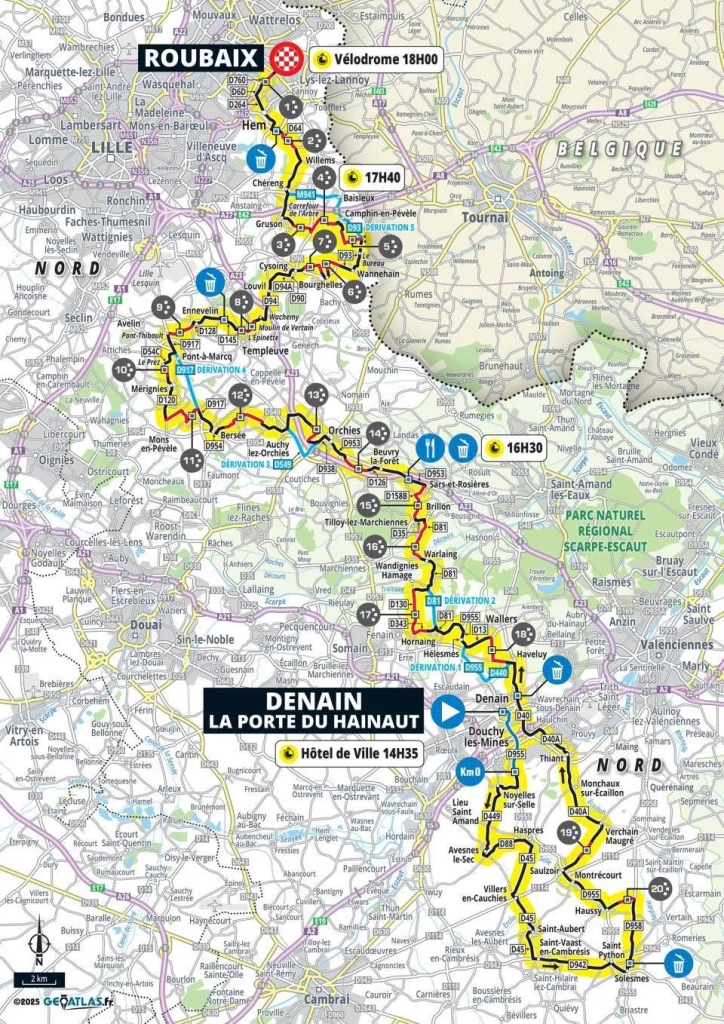
Paris-Roubaix Femmes 2026 looks like the hardest edition of the race so far. The identity of the event has not changed, it still starts in Denain and finishes in the Roubaix velodrome, but the route has been made more demanding by removing the old opening loops and replacing them with a more direct, tougher run into the cobbles. The result is a 148.5km race with 33.7km of pavé across 20 sectors, up from 29.2km in 2025.
For a race that is already defined by stress, positioning and attrition, that change could be significant. Paris-Roubaix Femmes has often been brutal enough once the riders hit the key sectors, but in 2026 the race should start asking harder questions earlier. The organisers have added three new cobbled sectors, Haussy, Saulzoir and Haveluy à Wallers, with Haveluy looking particularly important.
If you are reading this alongside the broader build-up, it naturally sits with the Beginner’s guide to Paris-Roubaix Femmes 2026 and the wider spring Classics coverage on ProCyclingUK.
A tougher route without changing the race’s core identity
The race still starts in Denain and ends with the famous lap of the Roubaix velodrome. That part of the formula remains intact. What has changed is how the peloton gets from one to the other. The women’s route no longer includes the opening loops around Denain and instead heads further south to pick up extra cobbles earlier in the day.
That gives Paris-Roubaix Femmes 2026 a slightly different shape from the outset. Previous editions often had a longer feeling-out phase before the real damage began. This time, the race should get to the point more quickly. Even if the decisive moments still come later, the riders are likely to arrive at those better-known sectors with more fatigue in their legs and fewer team-mates around them. That should make the whole race feel more compressed and more severe.
The three new sectors
The headline route story is the addition of Haussy, Saulzoir and Haveluy à Wallers. Haveluy is the most eye-catching of the three. It is a 2.5km sector and arrives far earlier than some of the race’s more famous late sectors, which means it may not decide the winner on its own, but it could do a lot to shape the race.
That does not mean Haveluy will automatically decide the race. Paris-Roubaix is rarely that neat. But it does mean the peloton reaches an important level of danger and stress much earlier than before. On a dry day, that can stretch the race sooner. On a wet day, it can create immediate disorder. Either way, it should make it harder for teams to keep a full lead group together deep into the route.
The route still converges with the familiar Roubaix finale
After those early additions, the women’s race rejoins the established route for the final 17 sectors. That means the closing structure remains familiar, even if the riders get there in a rougher state than before. The best-known stretches are still the ones that sit closest to the finish and carry the highest status.
The key sectors again include Hornaing à Wandignies, Camphin-en-Pévèle, Mons-en-Pévèle and Carrefour de l’Arbre. That late structure is why the race still feels recognisably like Paris-Roubaix Femmes, even with the changes. It is not just a case of adding random cobbles to make the numbers bigger. The organisers have preserved the core finale, which means the race should still build towards the same kind of decisive run through the last major sectors before the velodrome.
That also makes this guide a natural companion to your Paris-Roubaix Femmes 2026 contenders preview if you are building out the full race package.
Which sectors should matter most?
Haveluy à Wallers
Among the new additions, Haveluy is the one to watch most closely. It arrives earlier than the race’s most famous sectors, but it is serious enough to start the thinning-out process in a meaningful way. If the bunch is nervous, or if the weather makes traction and positioning more difficult, this could be the point where the race stops feeling controlled and starts feeling like Roubaix proper.
Hornaing à Wandignies
Hornaing is still one of the defining sectors of the women’s race. It is long, hard and usually far enough from the finish to be more about wearing riders down than producing a final winning move. But that kind of sector is often where teams lose their depth and riders begin to feel the race slipping away. In a tougher 2026 edition, Hornaing may bite even harder because the peloton will already have gone through more cobbles before reaching it.
Mons-en-Pévèle
Mons-en-Pévèle remains one of the clearest points where the race can break apart among the biggest contenders. It is never just about power. It is about entering well, keeping momentum and avoiding the kind of problem that can end a race instantly. If a favourite is under pressure there, there is often very little chance to recover fully afterwards.
Camphin-en-Pévèle
Camphin is one of the last places where a rider can force the race before Carrefour de l’Arbre. It is not always the decisive moment, but it often sets up what comes next. A rider or team that is still strong there can use it to apply pressure before the final, most famous test.
Carrefour de l’Arbre
Carrefour de l’Arbre remains the great late verdict. It is still the stretch most likely to decide who arrives at the velodrome with a realistic chance of winning. If a rider is alone after Carrefour, she has a real chance of staying clear. If a small group emerges, that group is usually racing for the win.
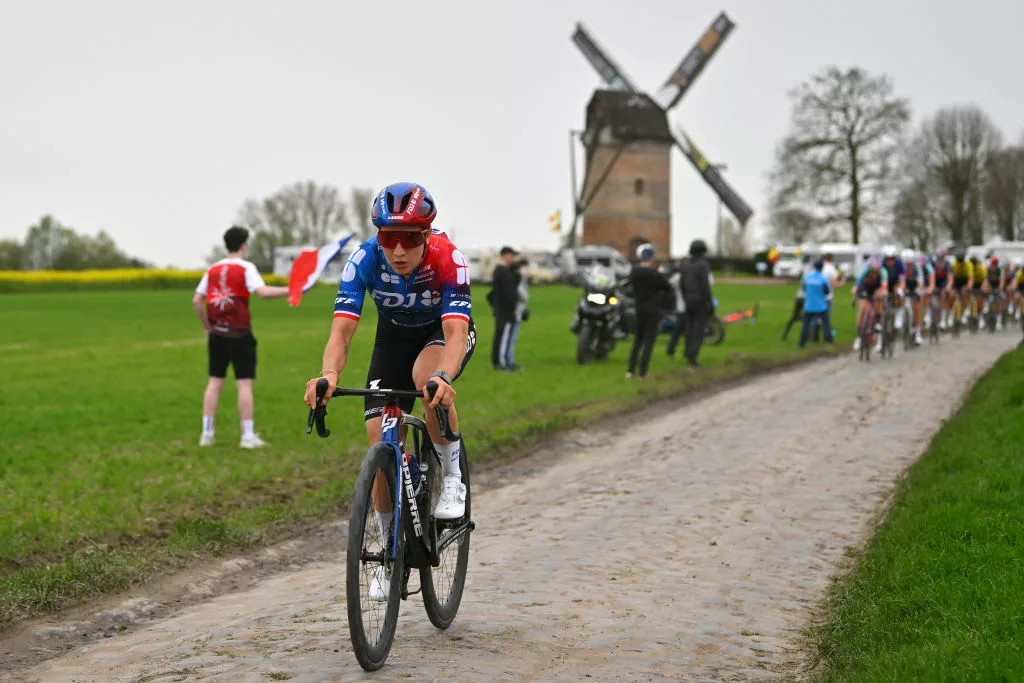 Photo Credit: Getty
What kind of race should this create?
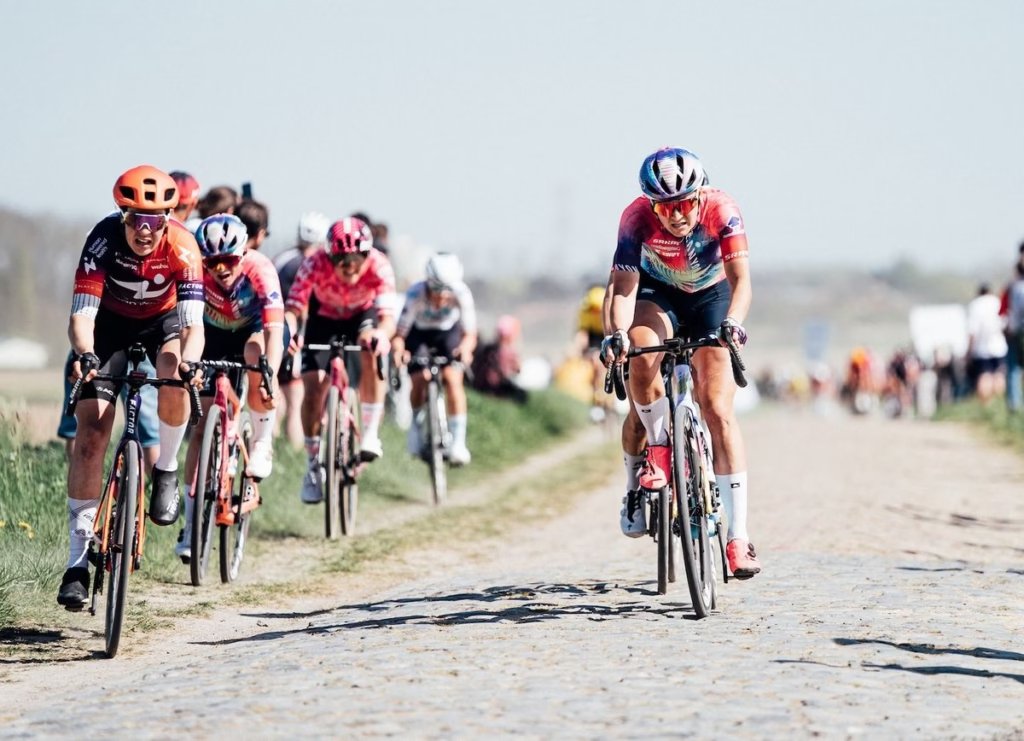
Paris-Roubaix Femmes was already a race where the strongest riders often emerged through attrition rather than one explosive move. The 2026 route should lean even further in that direction. More cobbles, fewer easy kilometres early on and a tougher run into the established finale all point towards a race where fatigue plays a bigger role.
That should favour riders and teams with depth, calm positioning and the ability to keep adapting as the race breaks apart. Pure speed is still useful, especially if a small group reaches Roubaix together, but this route looks slightly less forgiving for riders who just want to survive the cobbles and sprint at the end. The race already punished one-dimensional specialists. In 2026, it may do so even more clearly.
Why the changes could be important tactically
The removal of the Denain loops sounds simple, but tactically it alters the feel of the whole day. Those opening kilometres previously gave the bunch a little more room to settle. Now the race should get to meaningful terrain sooner, and that changes how teams need to think about control. It may also make it harder for squads to keep their sprinter-protector structure intact for as long as they would like.
It could also encourage earlier aggression. If a team believes the race is going to explode sooner, there is more reason to fight hard for position well before the most famous sectors. That does not guarantee earlier attacks, but it does increase the chance of splits, stress and mechanical trouble shaping the race long before Carrefour de l’Arbre.
That makes this route guide a useful bridge between the broader overview in your Beginner’s guide to Paris-Roubaix Femmes 2026 and any race-day live viewing piece you run closer to the event.
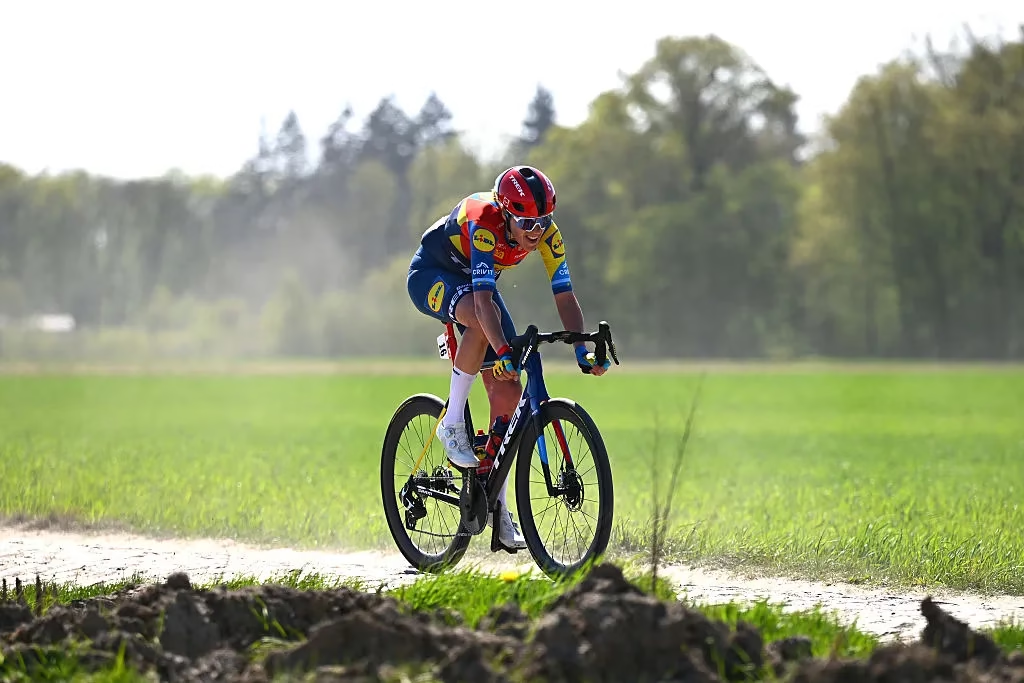 Photo Credit: Getty
The velodrome still gives the race its final theatre
For all the route changes, the finish remains the same. The women still head into the Roubaix velodrome, and that keeps the race’s most iconic closing image intact, one final lap, one last tactical calculation, and then the line.
That finish is part of why Paris-Roubaix Femmes holds its identity so well. However much the route evolves, the velodrome ensures the race still ends with the same strange mix of exhaustion, relief and drama that defines Roubaix.
Final view on the 2026 route
Paris-Roubaix Femmes 2026 does not reinvent the race, but it does make it harsher. The organisers have not tampered with the essential finale. Instead, they have made the route more demanding before the peloton reaches it. That is a smart way to toughen the event without losing what already works.
The headline numbers tell part of the story: 148.5km, 20 cobbled sectors, and 33.7km of pavé. But the more important point is what those numbers are likely to do to the race shape. Riders should hit the key late sectors more tired, more exposed and with fewer team-mates left to help. If that happens, Paris-Roubaix Femmes 2026 has every chance of being the most selective edition yet.