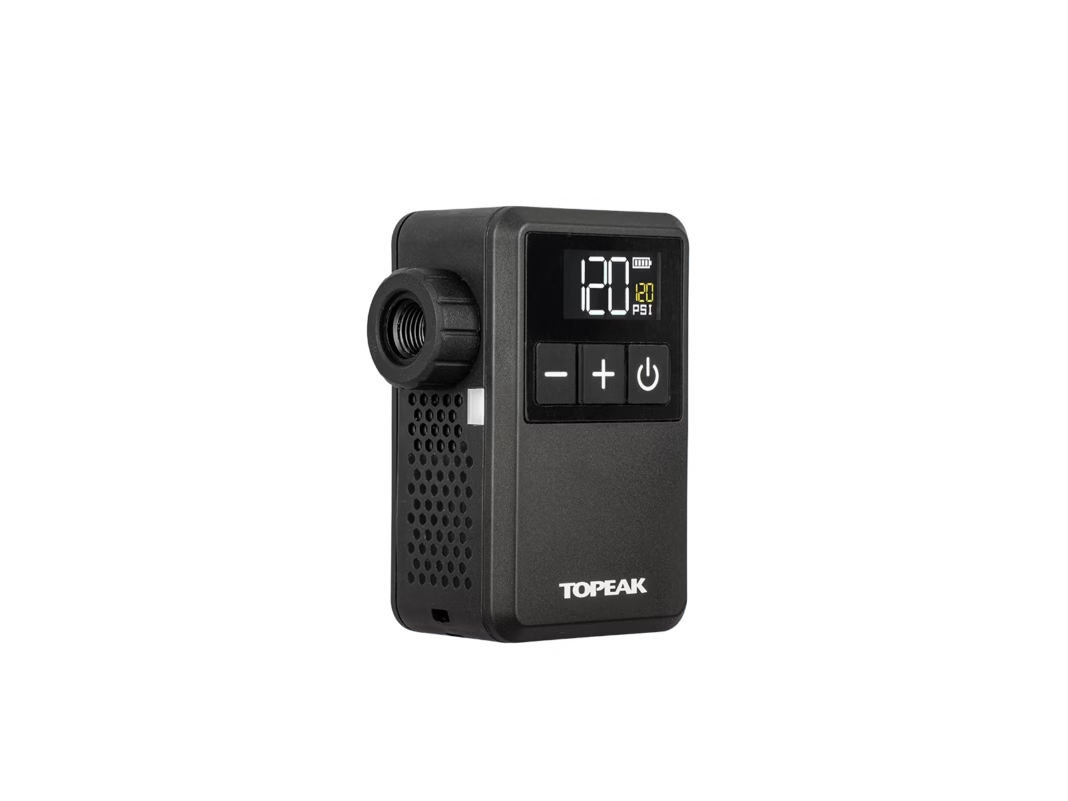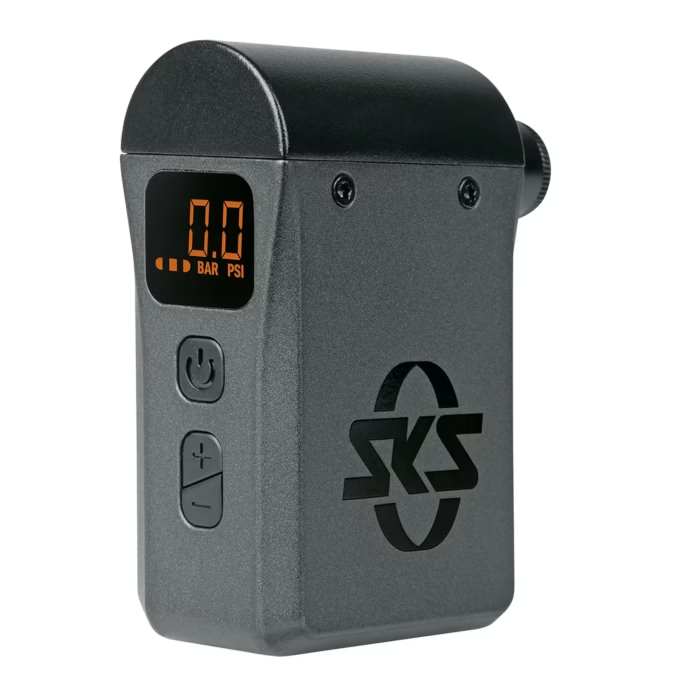
The SKS EMP arrives in a crowded market for rechargeable mini pumps, but it has a sensible argument in its favour: it concentrates on the things that matter at the roadside rather than chasing the smallest possible dimensions. There is a digital pressure display, automatic shut-off, a quoted 120psi maximum and an extension hose that makes the pump safer to use with TPU valve stems.
SKS quotes a bare weight of 151g and enough battery capacity for three complete 700×28 tyre inflations. Independent testing by road.cc broadly backs those figures, including three road-tyre inflations on one charge and pressure readings that closely matched a separate gauge. That gives the EMP a stronger practical case than its specification sheet alone suggests, although it is neither the lightest nor cheapest electric pump available.
The £84.88 UK price also puts it into direct competition with established rechargeable inflators from Muc-Off, Cycplus and Magicshine. The question is therefore less about whether the EMP works and more about whether its combination of accuracy, battery life and accessories is worth carrying instead of a manual mini pump or CO2 cartridges.
This article contains affiliate links. ProCyclingUK may receive a commission from qualifying purchases. The SKS EMP is currently available from Tredz Cycles, where the exact UK listing was £84.88 when checked.
SKS EMP specifications
Maximum pressure: 8.3 bar / 120psi
Weight: 151g pump only
Dimensions: 83 x 33 x 52mm
Battery: 500mAh, 7.4V rechargeable
Charging: USB-C, approximately 25 minutes
Claimed capacity: up to three 700×28 tyre inflations per charge
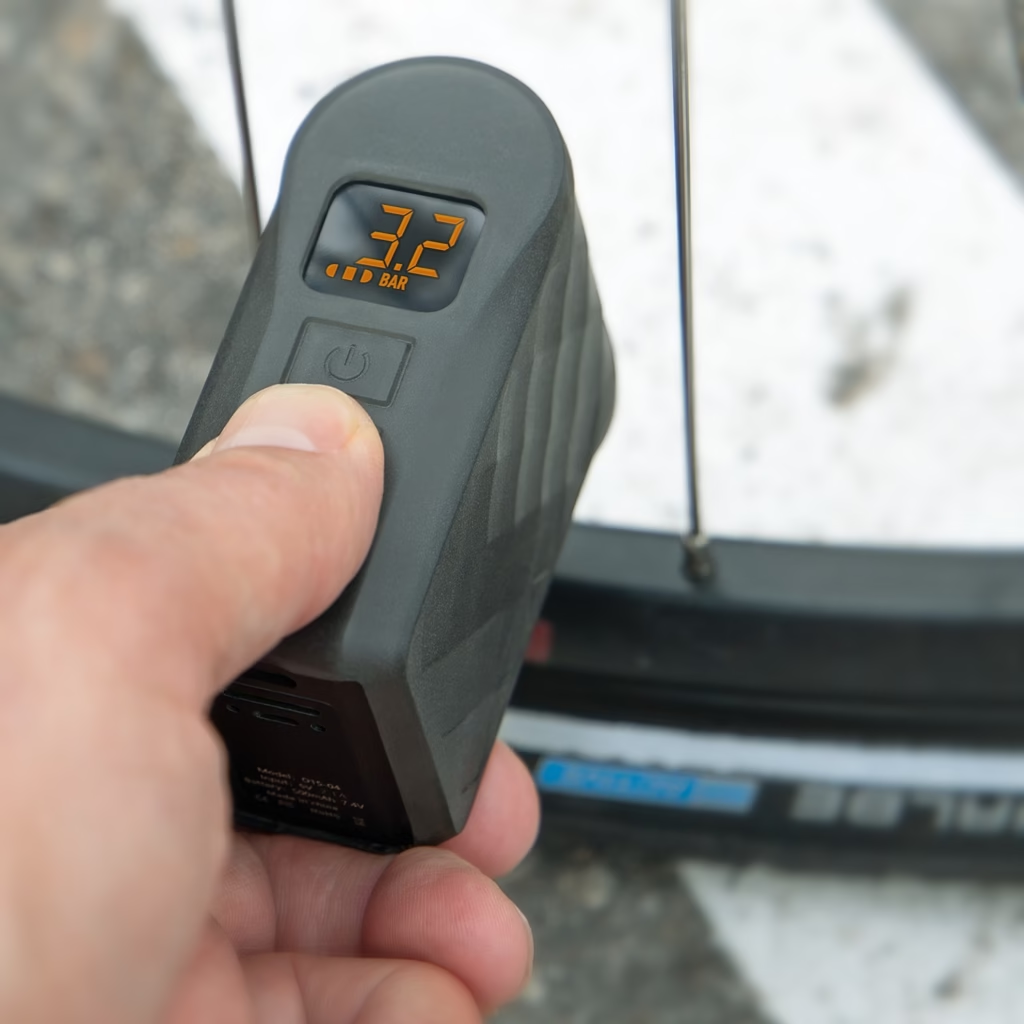
Gauge: digital, bar or PSI
Pressure control: adjustable target pressure with auto-stop
Valves: Presta, Schrader and Dunlop via reversible head
Included: extension hose, silicone sleeve, USB cable and storage bag
The battery claim stands up better than most headline figures
Electric mini pumps tend to make impressive claims about pressure and capacity, but the useful number is how many real tyres they can inflate before the battery gives up. SKS says the EMP will manage three 700×28 tyres on a charge. In road.cc’s independent test, it did exactly that, taking each tyre to 72.5psi with some charge remaining. Each inflation took about a minute.
That result matters because three full road-tyre inflations give considerably more margin than a single emergency use. A puncture may require a second attempt if a tube is pinched during installation or a tubeless repair fails to seal first time. There is still a finite battery reserve, but the EMP is not operating on such a narrow margin that one mistake automatically leaves the rider stranded.
Larger tyres naturally consume more of that reserve. The same test managed two 650×42 gravel tyres to 40psi in around 90 seconds each, before the pump ran out part-way through a third. That is a more useful guide for gravel riders than the road-specific three-inflation claim. Anyone expecting repeated high-volume MTB inflation should still view a compact electric pump as an emergency tool rather than a substitute for a workshop or track pump.
There is already a useful point of comparison on ProCyclingUK. The Cycplus AS2 Pro mini-pump takes the same rechargeable approach, showing how quickly this category has developed beyond novelty status.
Pressure accuracy and auto-stop are the EMP’s strongest features
The EMP lets the rider select a target in either PSI or bar, remembers the previous setting and stops automatically when it reaches the chosen pressure. That is more useful than it sounds at the roadside. With a conventional mini pump, reaching a precise road pressure normally means either carrying a separate gauge or relying on feel. With CO2, control can be even less precise.
Road.cc compared the EMP’s readings with a Topeak SmartGauge D2 and reported close agreement across multiple pressures. It also reached 120psi with a 23mm road tyre, confirming that the headline maximum is not merely an unreachable laboratory number. Modern road riders rarely need anything close to 120psi, but the headroom is useful evidence that the motor is not struggling near typical road pressures.
For riders less familiar with the differences between valve standards, our guide to pumping up a bike tyre and identifying valve types covers the basics. The EMP’s reversible head handles the common Presta and Schrader standards, while SKS also lists Dunlop compatibility.
The extension hose is more important than it first appears
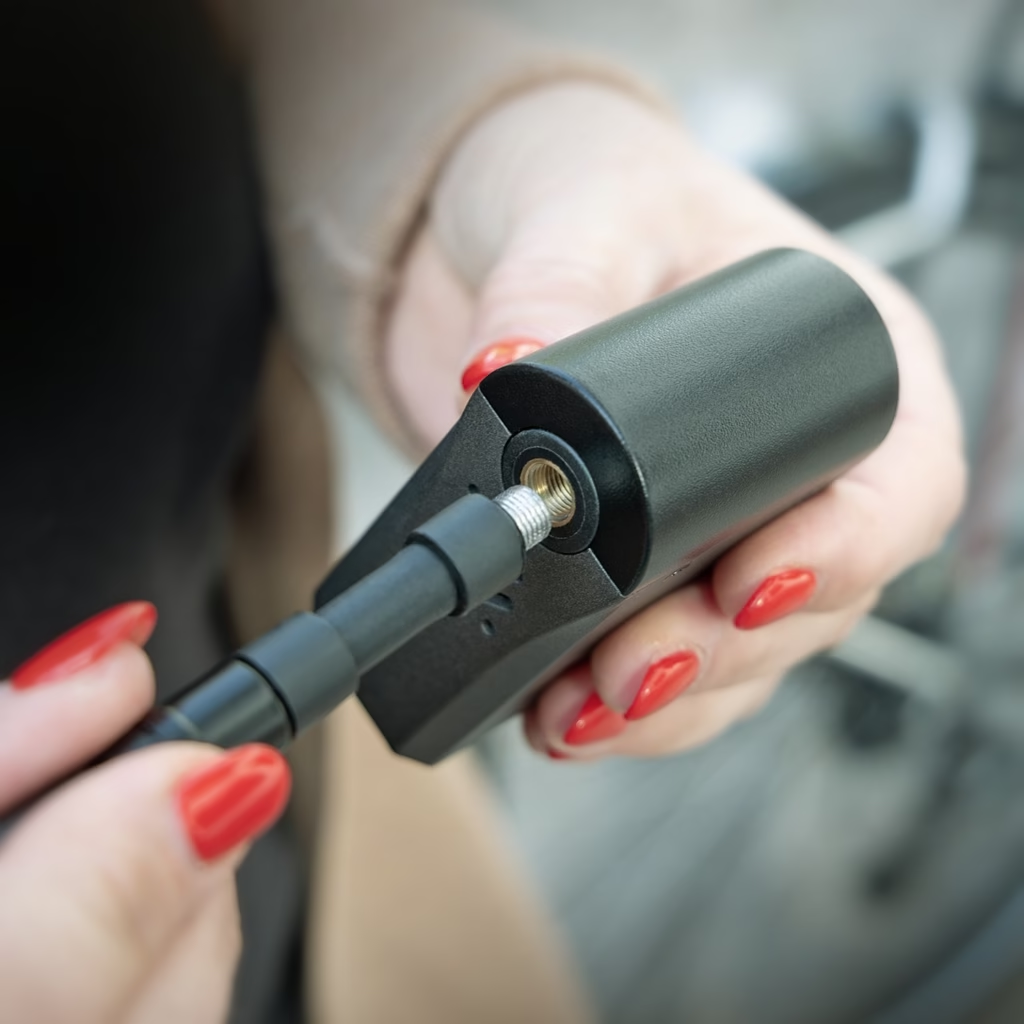
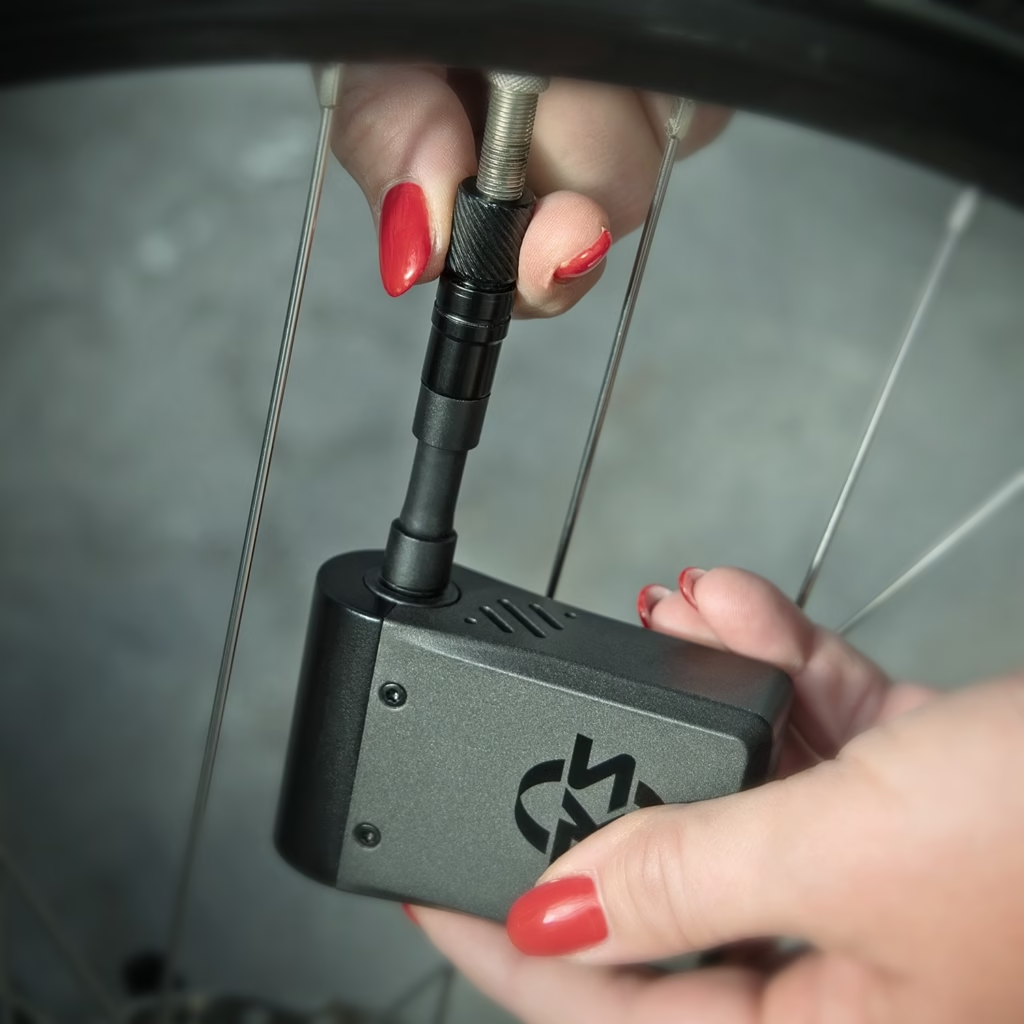
Compact electric pumps generate heat. SKS supplies a silicone sleeve for that reason, but the extension hose is arguably the more important accessory. Rather than placing the hot pump body directly against the valve, the hose moves the heat source away and provides a screw-on connection.
That is particularly relevant for TPU inner tubes, where plastic valve stems can be vulnerable to heat. SKS specifically recommends the extension for TPU tubes, and road.cc also highlighted it as a useful inclusion. ProCyclingUK’s TPU inner tube guide explains the wider advantages and limitations of the material.
The hose adds a little weight and another small component to carry, but this is a case where the accessory is worth keeping with the pump. Road.cc measured the bare unit at the claimed 151g, around 182g with the silicone sleeve and pump head, and roughly 195g when the extension hose is added. The EMP is still compact enough for a jersey pocket or saddle bag, but comparisons based solely on the headline 151g figure do not describe the complete roadside setup.
It is compact, but not an ultralight option
The EMP measures 83 x 33 x 52mm. That is small enough to disappear into a typical ride kit, but competitors have pushed below its weight. Road.cc measured the Truflo Electron at around 120g and the Magicshine Airro at 145g. Riders building the lightest possible emergency kit can therefore do better.
The trade-off is that SKS includes a display, automatic pressure control, protective sleeve, hose and storage bag. Those additions make the EMP feel more like a complete inflation system than a minimalist compressor. For many riders, saving 20 or 30 grams is less useful than knowing the pump can deliver a repeatable pressure and has enough battery for another attempt.
The current Ribble listing for the SKS EMP includes the extension hose, silicone sleeve, USB-C cable and storage bag, so there are no obvious accessories that need to be added immediately.
Where the SKS EMP falls short
The first limitation is price. At around £85 in the UK, the EMP costs considerably more than a good manual mini pump and sits above some rechargeable rivals. Ribble lists the Truflo Electron at £49.99, for example. The SKS therefore needs its pressure control, proven battery capacity and supplied hose to matter to the buyer.
The second is the basic weakness shared by every battery-powered emergency pump. A manual pump does not need charging. The EMP is only useful if its battery has been maintained, and SKS advises fully recharging it at least once a month. Riders who leave a repair kit untouched through winter and expect it to work six months later need to add battery condition to their pre-ride checks.
Heat is another consideration. The silicone cover and hose mitigate it rather than eliminate it, and compact compressors need time to cool during repeated use. This is not the tool for repeatedly seating large tubeless tyres in the workshop. It is primarily a compact way to restore riding pressure after a roadside repair.
There is also less independent long-term evidence than for older rivals. The strongest detailed test currently available is positive, and a smaller user test reported similarly accurate pressure and four 23mm tyre inflations to 6 bar with cooling intervals. However, there is not yet a large body of long-duration testing showing how the battery performs after a year or two of regular charge cycles.
Electric pump, manual pump or CO2?
The EMP makes most sense when convenience and pressure control matter more than absolute simplicity. Compared with CO2, it can be used repeatedly, lets the rider select a target pressure and does not require disposable cartridges. It is also easier to practise with at home without consuming anything.
A conventional mini pump remains harder to beat for reliability. It will work after months at the bottom of a saddle bag and can keep inflating tyres indefinitely, provided the rider is prepared to do the work. For touring and remote riding, that independence from a battery is still valuable.
The strongest case for the EMP is therefore normal road, gravel and club riding where a rider wants fast roadside inflation and is already accustomed to charging electronic equipment. It also works neatly alongside the basic tools and spares every rider should carry, replacing the conventional pump or CO2 element rather than the rest of the repair kit.
Who should buy the SKS EMP?
Road riders are the clearest audience. The EMP has enough pressure for virtually any current road setup, and the independent three-inflation result provides useful battery margin. Gravel riders can use it effectively too, although larger tyre volumes reduce the number of full inflations available.
It is particularly attractive to riders using TPU tubes because SKS has thought about the heat issue and supplied the extension hose in the box. Riders who dislike CO2 cartridges but also dislike the effort of a tiny manual pump have an obvious reason to consider it.
Weight-focused riders can find lighter electric inflators, while anyone heading far from help may still prefer the certainty of a manual pump. At £84.88, value also depends on how much the digital gauge and automatic shut-off matter. If those features are appealing, you can check the current SKS EMP price and availability at Tredz Cycles.
Verdict
The SKS EMP is not trying to win the electric mini-pump market through one spectacular number. It is reasonably light rather than the lightest, powerful enough rather than uniquely powerful, and competitively priced rather than cheap. Its appeal comes from how those elements work together.
The most encouraging evidence is that the practical claims checked independently have held up. The 151g bare weight is accurate, three 700×28 inflations are achievable, 120psi is genuinely within reach and the digital pressure reading has compared closely with a separate gauge. The extension hose also addresses one of the more important concerns around using compact electric pumps with TPU valve stems.
There are reasons to stay conventional. The complete carry weight is closer to 200g once the useful accessories are included, the battery needs periodic charging and cheaper alternatives exist. Long-term battery durability is also less established than the immediate inflation performance.
For riders comfortable adding one more rechargeable device to their kit, though, the EMP looks like a well-resolved roadside tool rather than a gadget looking for a purpose. The SKS EMP at Tredz Cycles is the relevant UK option for checking current stock and pricing.