The Tour de France Femmes avec Zwift will cross the sea for the first time in its history in 2027, launching with three stages in England. Coming one month after the men’s Tour de France Grand Départ in Great Britain, it is a bold double-header that puts British roads and British crowds at the centre of cycling’s biggest fortnight, twice over.
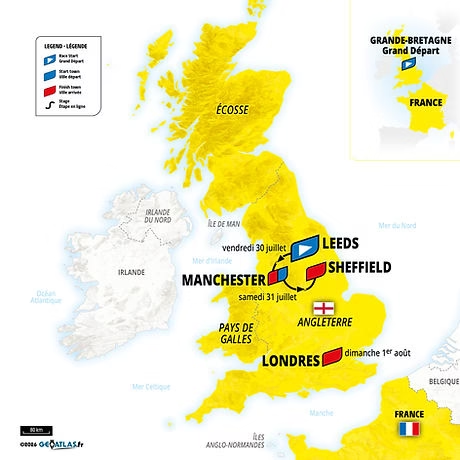
Leeds hosts the opening stage on 30th July 2027, before the race heads across to Manchester and Sheffield, then concludes its English trilogy in London with a decisive time trial. The organisers have framed the route as both a celebration of the region’s cycling heritage and a promise of intense racing, with terrain that should test sprinters, puncheurs and time trial specialists alike.
At a glance: 2027 Tour de France Femmes stages in England
- Stage 1: Leeds to Harrogate, opening-day nerves and a likely fast finish for the first yellow jersey
- Stage 2: Manchester to Sheffield via Snake Pass, the most selective day and the most obvious opportunity for time gaps on the road
- Stage 3: London, an individual time trial to settle the first general classification of the 2027 Tour de France Femmes avec Zwift
Why Leeds, Manchester, Sheffield and London make sense for this race
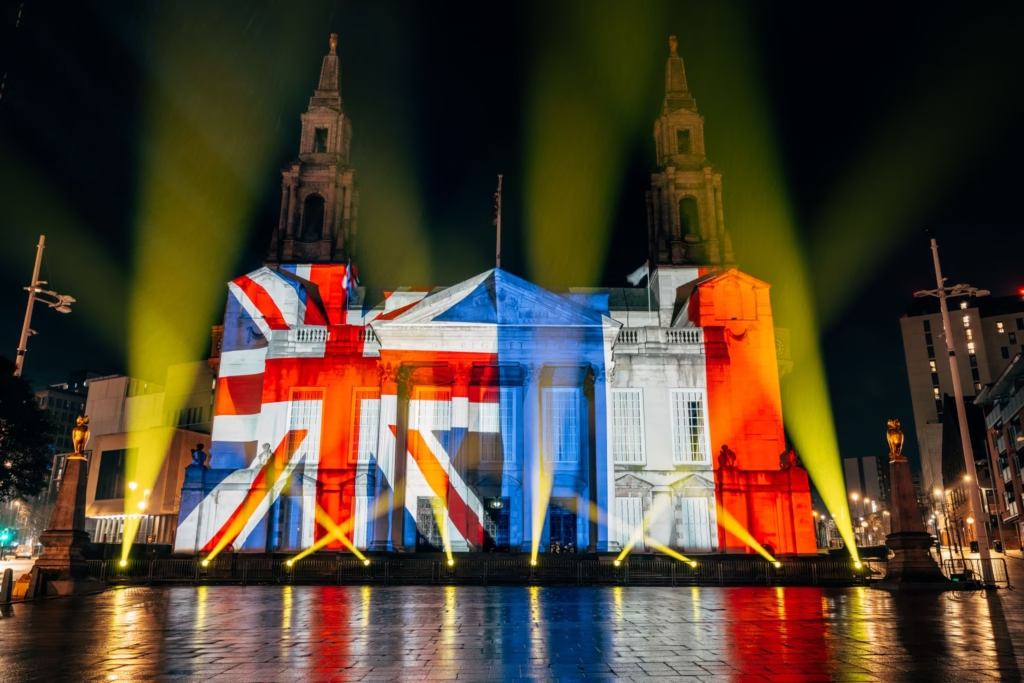
Stage 1: Leeds to Harrogate, Yorkshire’s Tour history returns
Leeds is already proven as a Tour start city. It hosted the men’s Tour de France Grand Départ in 2014, when the opening stage finished in Harrogate and Marcel Kittel sprinted into the maillot jaune. That reference is doing more than adding colour. It tells you how the organisers see day one: not ceremonial, but high-speed and high-stakes.
Yorkshire’s women’s cycling heritage is also central to the narrative. Harrogate is linked to Millie Robinson, while the county is inseparable from Beryl Burton, one of the most influential pioneers of British and world cycling. More recently, Yorkshire has produced Lizzie Deignan, a rider whose career has been defined by major victories and a lasting impact on the sport, and Cat Ferguson, positioned here as the next local talent for fans to rally around.
From a racing perspective, the first stage does not need a major climb to create gaps. Grand Départ days are defined by stress, positioning, and momentum. If the finish is set up for a sprint, it will still be a difficult sprint, fought for through narrowings, corners and constant jostling for the front.
Marion Rousse, Director of the Tour de France Femmes avec Zwift, underlined exactly why this choice matters in the announcement: “The United Kingdom has played an important role in the history of women’s cycling, with champions such as Lizzie Armitstead-Deignan. Starting the Tour de France Femmes avec Zwift in Leeds is a strong choice, closely linked to this heritage and to the enthusiasm of a public that knows and loves the Tour.”
Stage 2: Manchester to Sheffield via Snake Pass, where the race can turn
Manchester is framed as the institutional home of British Cycling, and the route’s proximity to the velodrome, a venue tied to landmark performances since 1994, adds a layer of sporting gravity. The organisers also point to a modern sprint lineage, referencing Sarah Storey as an icon, and linking the city’s high-performance identity to the current elite sprint era through Lorena Wiebes and Charlotte Kool.
The key sporting point, though, is the day’s shape. Crossing Snake Pass and finishing in Sheffield gives teams a natural platform to do damage. It is the kind of stage where a reduced group finish is plausible, especially if the tempo is high and the strongest teams decide to make it hard early.
The organisers explicitly connect Sheffield to the 2014 men’s Tour, when stage 2 ended with Vincenzo Nibali’s late attack and a change of overall leader. In 2027, the finish is approached in the opposite direction, but the message is clear: this is the day when the yellow jersey can come under real pressure.
This is not just a climbers’ day. Stages like this often suit riders who can repeat hard efforts, handle rolling terrain at speed, and still have the punch to attack late or defend a narrow lead heading into the time trial. If the wind and road layout play a role, the selection can be even sharper, but the stage already has enough terrain to be decisive on legs alone.
Stage 3: London time trial finale
The final stage in London will be an individual time trial, a significant departure from the sprint-style city circuits seen in previous Grand Départs. This choice ensures that the first general classification of the 2027 Tour de France Femmes avec Zwift will be settled against the clock in one of the world’s most recognisable cityscapes.
London has a long history with the Tour, from Fabian Cancellara’s prologue dominance in 2007 to Marcel Kittel’s sprint win in 2014. Now, that same backdrop will test riders’ pacing and power over a solo effort. For time trial specialists, it’s an ideal early-season proving ground; for GC contenders, it adds strategic depth. Riders will need to balance aggression in Sheffield with precision here, as even a handful of seconds could decide the yellow jersey before the race heads to the continent.
The decision also connects neatly with British cycling culture: the country’s long association with time trialling, from Beryl Burton’s legendary records to the modern era of Wiggins, Dowsett, and Storey, gives this format a particular resonance.
The storylines the organisers are deliberately setting up
This announcement is structured around a few clear themes, and they hint at how the opening weekend is meant to feel.
- Yorkshire is being positioned as both a historic heartland and a modern talent factory, linking pioneers like Burton to modern champions like Deignan and to the emerging profile of Ferguson.
- Manchester stands for Britain’s high-performance identity, with a direct line drawn from track success and infrastructure to today’s road racing scene.
- Sheffield is an unpredictable day, terrain built for puncheurs and opportunists, setting up drama before the time trial.
- London’s individual time trial provides both closure and clarity, rewarding all-rounders and precision riders.
Rousse captured the ambition in one line that reads like a mission statement: “These stages clearly reflect the race’s ambition: to continue growing women’s cycling and to inspire future generations.”
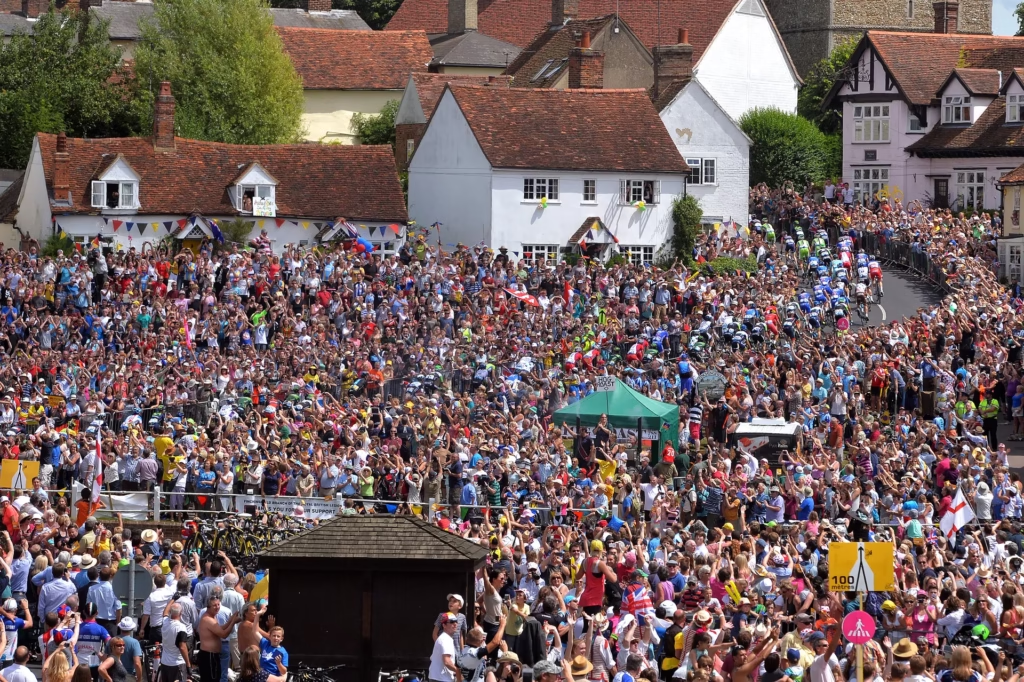
‘Joy’ aims to turn a Grand Départ into a wider cycling legacy
Alongside the route reveal, organisers announced Joy, a social impact programme intended to sit at the heart of the 2027 Grand Départ. Its goals are broad and politically relevant: tackling inactivity, improving mental wellbeing, supporting communities to thrive, and helping to make Britain “more productive and prosperous through cycling.”
A women’s Tour start arriving one month after the men’s Grand Départ creates rare momentum. If Joy is built around visible, local participation projects, it can turn a three-day sporting showcase into something that lasts beyond the barriers. What is not yet clear is how success will be measured or which partners will deliver the work on the ground.
UK Sport Minister Stephanie Peacock emphasised that reach: “These routes will reach places few other events can and give people another reason to be proud of where they live. All over the country, they’ll see world-class cyclists pass through their towns, down their high streets and maybe even right past their front doors. Events like the Tour de France and Tour de France Femmes avec Zwift bring communities together, boost local economies and inspire more people to discover the benefits of sport.”
What this could mean for racing in the first week
This is the kind of Grand Départ that can shape the race early, even without a mountain-top finish.
Stage 1 should be nervous and fast, with a first yellow jersey likely decided by speed, organisation, and who stays out of trouble. Stage 2 is where the Tour can bite back, offering terrain that encourages teams to force a selection and attackers to take risks. Stage 3 in London shifts the spotlight to time trial specialists, where precision pacing and handling under pressure will determine who wears yellow when the race crosses the Channel.
If the organisers get what they want, England in 2027 will not simply host the Tour de France Femmes avec Zwift. It will start it with urgency, atmosphere, and a route that honours British cycling’s past while shaping its future.