
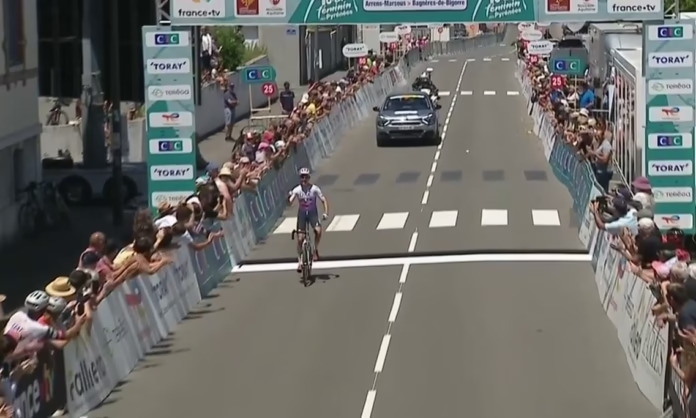
The Tour Féminin International des Pyrénées 2026 reaches its final stage on Sunday, 14th June, with the race heading from Nay to Jurançon over 114.4km. After the Tourmalet-shaped selection of stage 2, this is no longer about discovering who can climb. It is about whether anyone can still disrupt Paula Blasi and UAE Team ADQ before the finish.
Stage 2 did exactly what it was expected to do, only more decisively. Blasi attacked the race on the mountain day and finished alone in Bagnères-de-Bigorre, with Dominika Wlodarczyk and Juliette Berthet among the closest chasers at 1:45. That gives Blasi a commanding position before Jurançon, while also leaving UAE Team ADQ with more than one rider in the decisive GC picture.
The final stage is not as mountainous as the Tourmalet day, but it is not straightforward. The route is constantly rolling, with repeated short climbs, narrow roads and enough elevation to make control difficult. It is exactly the kind of stage where a strong team can defend, but only if it stays organised from the start.
For wider race context, see our Tour Féminin International des Pyrénées 2026 full route guide, Tour Féminin International des Pyrénées 2026 contenders preview, Tour Féminin International des Pyrénées 2026 stage 2 preview and Tour Féminin International des Pyrénées 2026 stage 2 live viewing and start time update.
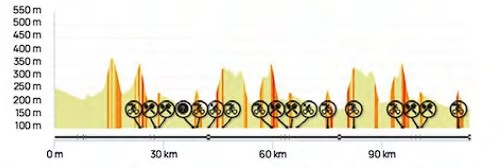
Tour Féminin International des Pyrénées 2026 stage 3 route
Stage 3 runs from Nay to Jurançon, with the finish coming after 114.4km of rolling roads in the Pyrénées-Atlantiques. The profile is very different from stage 2. There is no Tourmalet and no single climb that should decide everything on its own, but the route still carries enough difficulty to create a nervous final day.
The stage includes around 1,500 metres of climbing, depending on the route measurement, and the difficulty comes from repetition. Short climbs, descents, bends and changes in rhythm can all make the peloton hard to control, especially if the race is aggressive from the opening hour.
That gives the stage two possible patterns. UAE Team ADQ can try to keep the race steady, control the dangerous moves and protect Blasi’s lead. Or the riders behind can force a more chaotic day, sending attacks early, isolating the leader and trying to make the final stage less predictable.
The finish in Jurançon also gives the race a punchy final setting rather than a flat procession. The GC may look heavily tilted towards Blasi, but this is not a stage where she can simply sit behind a full train and wait for the line.
How stage 2 changed the race
Stage 2 was the decisive mountain day and Blasi made it count. After the opening sprint stage in Mourenx, the Tourmalet stage was always expected to split the field. It did more than that. Blasi moved from contender to clear race leader, while Wlodarczyk and Berthet emerged as the riders most likely to challenge the podium order.
UAE Team ADQ now have the strongest position in the race. Blasi has the lead, Wlodarczyk is close enough to be a tactical card, and Federica Venturelli’s stage 1 podium already showed the team’s depth across different terrain. That gives them options on the final day. They can defend through numbers, follow attacks with Wlodarczyk, and keep Blasi sheltered until the hardest moments.
For FDJ United-SUEZ, Juliette Berthet remains the main GC weapon. Her stage 2 ride kept her in the race, but she now needs more than simply following. Marie Le Net and Franziska Koch had both been prominent after stage 1, and the team may need to use that strength earlier if they want to put UAE Team ADQ under pressure.
The big disappointment from stage 2 was that Usoa Ostolaza did not turn her race history into a decisive move. Laboral Kutxa-Fundación Euskadi still have the kind of rider who can animate stage 3, but the route to overall victory has narrowed.
Why stage 3 can still matter
The final stage is not hard enough to make a full GC reset likely, but it is awkward enough to punish complacency. That is the important distinction.
A rider with a large lead can usually survive a day like this if her team stays calm and keeps the race within reach. But if multiple teams attack in rotation, a rolling stage can become harder to manage than a single summit finish. There are more places for small groups to slip away, more chances for a badly positioned leader to be caught behind, and more tactical decisions for the defending team to make.
The first question is whether FDJ United-SUEZ and Laboral Kutxa-Fundación Euskadi believe the race is still winnable. If they do, they cannot leave everything until the final kilometres. They need to create pressure early enough to make UAE Team ADQ work.
The second question is whether riders slightly lower on GC are willing to gamble. For riders outside the podium places, stage 3 may be the best chance to turn a solid week into a result. That could bring names like Karoline Perekitko, Ema Comte, Clémence Latimier or Emily Dixon into the day’s attacking pattern.
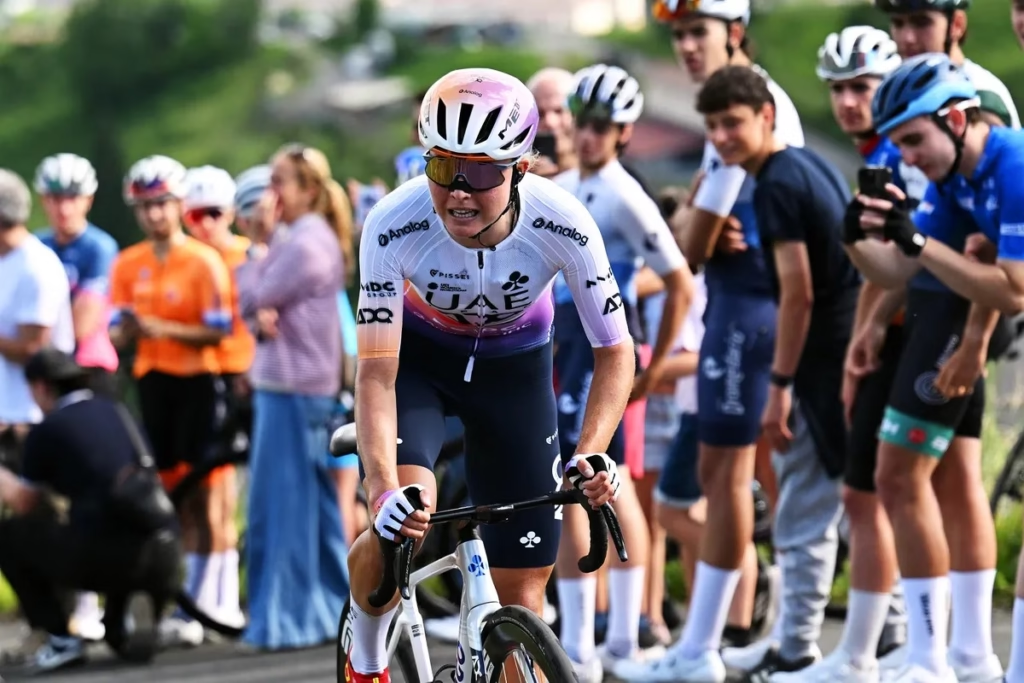 Photo Credit: Getty
Paula Blasi
Paula Blasi starts stage 3 as the rider in control of the race. After winning La Vuelta Femenina earlier in the season, she already carried the strongest climbing reputation in the field, and stage 2 confirmed that status.
Her task on stage 3 is different. She does not need to win again. She needs to avoid being isolated, follow the right moves and stay close enough to the riders who can still threaten the GC. That is a different kind of pressure, especially on a rolling final day where attacks may come before the obvious finale.
Blasi’s advantage is that she is not defending alone. UAE Team ADQ have Wlodarczyk as both a teammate and a GC card, and that changes how rivals have to attack. If Wlodarczyk follows a dangerous move, UAE can make other teams chase. If Blasi is forced to respond herself, she has already shown she has the legs to do so.
The only real danger is a tactical one. If the race becomes scattered, with riders up the road and no single team willing to chase, Blasi could find herself having to make repeated decisions. Still, on the evidence of stage 2, she is the clear favourite to win the overall.
Dominika Wlodarczyk
Dominika Wlodarczyk gives UAE Team ADQ an important second option. She was one of the closest riders to Blasi on stage 2, and that makes her valuable in two ways. She can protect the leader, but she can also follow dangerous moves without forcing UAE to commit immediately.
That matters on a stage like Nay to Jurançon. If FDJ United-SUEZ or Laboral Kutxa-Fundación Euskadi attack early, Wlodarczyk can be the rider who marks the move. If she gets up the road, it forces other teams to think carefully. Chasing Wlodarczyk may simply help Blasi. Letting her go may strengthen UAE’s grip on the race.
Her own stage-winning chances are also real. If a small group goes clear and Blasi is safe behind, Wlodarczyk could have freedom to chase the stage while protecting the team’s overall position.

Juliette Berthet
Juliette Berthet is the clearest non-UAE challenger after stage 2. She climbed well enough to stay in the decisive conversation and now needs to decide whether to ride for the podium or try to unsettle the whole race.
The route to Jurançon is not ideal for a pure climbing raid, but it does suit a rider willing to go early with support. FDJ United-SUEZ cannot simply wait for UAE Team ADQ to make the race. They need to use the rolling terrain, especially if they have riders close enough to help in a break or bridge across later.
Berthet’s best scenario is a selective race where Blasi has to respond more than once. A single late attack may not be enough. A hard stage with repeated accelerations could bring the gap down if UAE Team ADQ are forced to use riders early.
The more conservative option is to defend her podium position, but that would leave the overall almost entirely in Blasi’s hands.
Usoa Ostolaza
Usoa Ostolaza came into the race with the best history in this event, having won it twice before, but stage 2 left her needing something more inventive on the final day. The Tourmalet stage was the obvious place for her to move. Stage 3 gives her a different kind of opportunity.
Laboral Kutxa-Fundación Euskadi are at their best when they can make races uncomfortable rather than predictable. Ostolaza may need to attack before the final selection, or use teammates to force UAE Team ADQ into chasing across the rolling middle of the stage.
The difficulty is the size of the gap. Without a major summit finish, it is hard to take large time back in a controlled race. But if the stage becomes fragmented, Ostolaza is exactly the kind of rider who can benefit. She knows how to race this event and should not be written off simply because the Tourmalet stage did not deliver the move she wanted.

Karoline Perekitko
Karoline Perekitko remains one of the riders who can shape stage 3. She was not in the front chasing group with Wlodarczyk, Berthet and the others on stage 2, but she is still strong enough on rolling and hilly terrain to become involved if the race opens.
For Winspace Orange Seal, the final stage is a chance to race aggressively rather than simply defend a placing. Perekitko has the climbing strength to go in a dangerous move and the durability to stay involved if the stage becomes stop-start.
Her best chance may come from distance. If the GC teams mark each other, a rider like Perekitko can use that hesitation. Stage 3 is the kind of day where a committed attacker can get clear while the favourites look at one another.
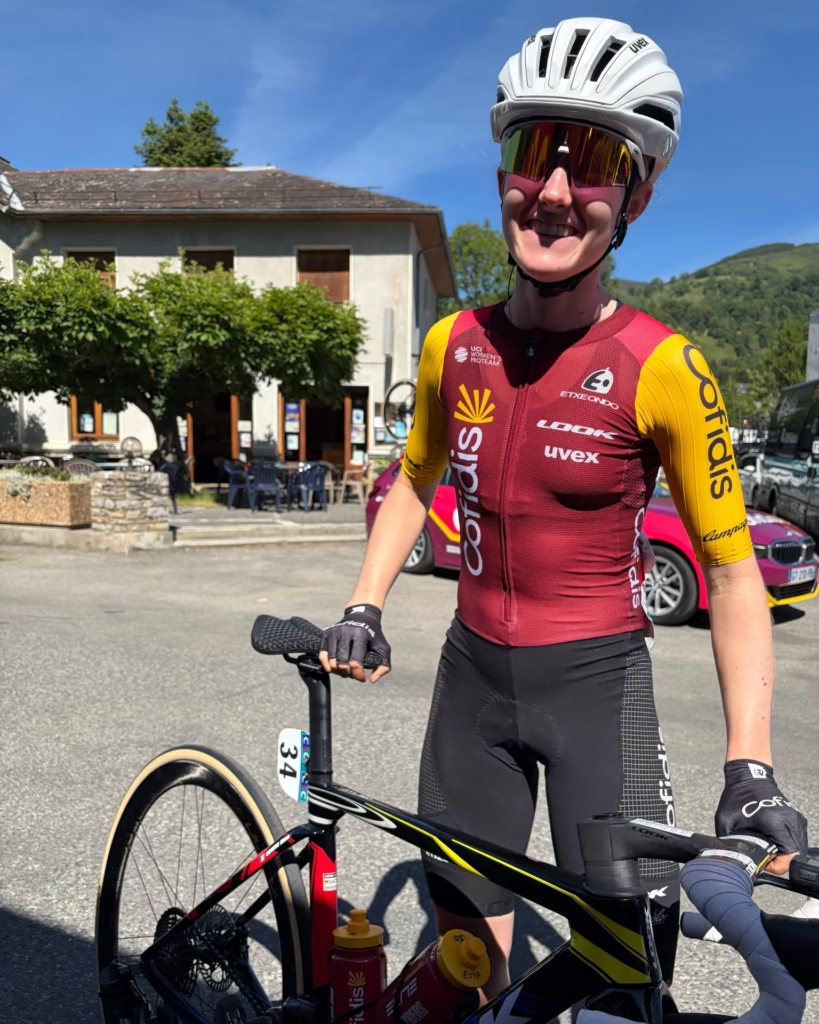
Ema Comte, Clémence Latimier and Emily Dixon
Ema Comte, Clémence Latimier and Emily Dixon were part of the group that finished behind Blasi on stage 2, and that makes them important final-day names. They may not all be obvious overall winners, but they have shown enough climbing condition to be dangerous on a rolling stage.
Their tactical value is that they may have more freedom than the biggest GC names. If UAE Team ADQ are focused on Berthet, Ostolaza and the riders closest to Blasi, someone slightly further down the order can attack earlier and force a response.
Comte and Latimier give the French domestic teams a strong reason to be visible on the final day, while Dixon’s ride on stage 2 suggests she can survive difficult terrain. On a stage without one single decisive climb, that kind of resilience matters.
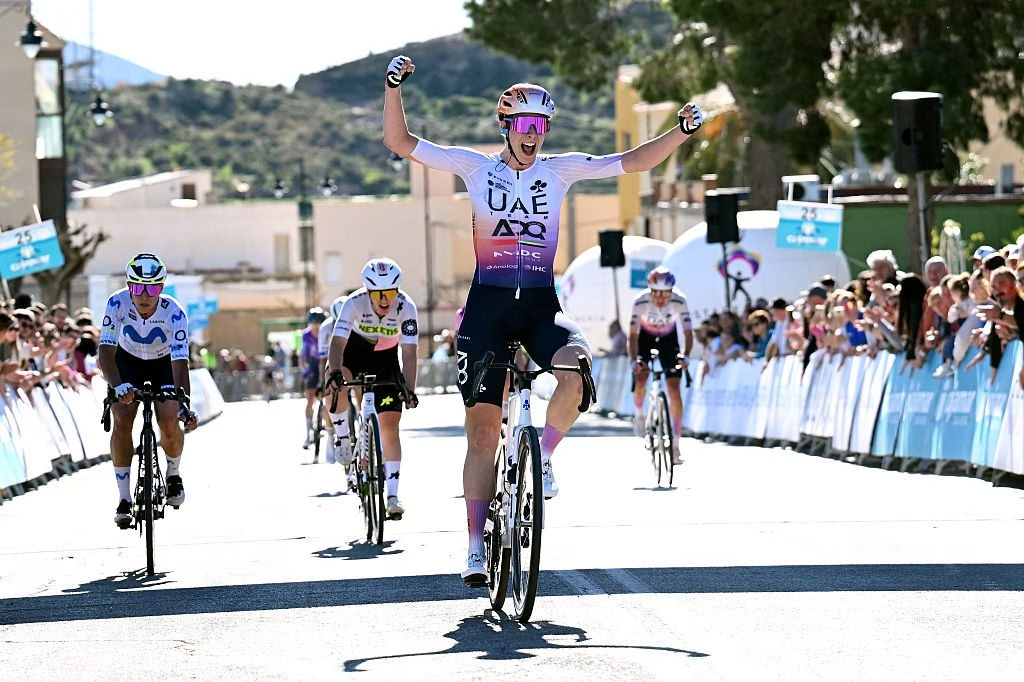
Federica Venturelli and the UAE Team ADQ support
Federica Venturelli’s stage 1 podium was important because it showed that UAE Team ADQ were not relying only on Blasi. She may not be the rider expected to control the steepest climbs, but her presence across the race gives UAE more stability.
On stage 3, Venturelli’s job is likely to be defensive. She can help keep Blasi positioned, follow early moves if required and reduce the pressure on Wlodarczyk. That matters because a final stage like this can become difficult to manage if the leader’s team is forced to chase too early.
UAE Team ADQ’s biggest strength is that they can cover more than one version of the race. If it is controlled, Blasi should be safe. If it is aggressive, Wlodarczyk can follow. If it becomes tactical, Venturelli and the rest of the team can help keep the race from slipping away.
Could the stage end in a sprint?
A reduced sprint is possible, but a full bunch sprint looks unlikely if the GC teams race properly. The repeated climbs and final-day pressure should thin the field, even if no decisive GC attack sticks.
Martina Alzini won stage 1 and remains one of the fastest riders in the race, but the stage 3 profile is far less comfortable for a pure sprint outcome. If she survives in the front group, she becomes dangerous again, but the most likely sprint scenario is a reduced group rather than a full peloton.
Marie Le Net, Franziska Koch, Federica Venturelli and other durable riders could also become relevant if the stage stays together. The question is whether UAE Team ADQ want that kind of finish. If Blasi is safe, they do not need to chase every attacker. That may make it easier for a small group to decide the stage.
-
 Photo Credit: David Pintens / BELGA MAG/AFP via Getty Images
 -
Photo Credit: BELGA MAG/AFP via Getty Images
Tactical outlook
The race should be shaped by UAE Team ADQ’s control and everyone else’s willingness to challenge it. If the first hour is steady, Blasi’s chances of winning the overall increase significantly. If attacks begin early, the day becomes much more interesting.
FDJ United-SUEZ and Laboral Kutxa-Fundación Euskadi have the clearest reasons to animate the stage. They need to make UAE Team ADQ work before the finale, not simply wait for the last climb or last few kilometres. Winspace Orange Seal and the French continental teams can also benefit from a more open race, especially if they are chasing stage success rather than overall victory.
The danger for the challengers is that Wlodarczyk gives UAE Team ADQ an answer to almost every move. If she follows an attack, rivals may hesitate. If they hesitate, Blasi remains protected. That is why the best chance of unsettling UAE may be through repeated pressure rather than one obvious attack.
Expect a fast, nervous final stage with an early break, several attempts to bridge on the rolling climbs, and UAE Team ADQ trying to keep the race close enough for Blasi to finish the job.
Prediction
Paula Blasi is the clear favourite to win the overall, but stage 3 may not necessarily go to the race leader. UAE Team ADQ do not need to chase a stage win if the general classification is secure, and that opens the door for an attacking rider to take the day.
Juliette Berthet and Usoa Ostolaza have the strongest reasons to attack, but both may be watched too closely. That could allow Dominika Wlodarczyk to turn UAE Team ADQ’s defensive strength into another stage result, especially if she follows the right move and Blasi is safe behind.
Prediction: Dominika Wlodarczyk to win stage 3 from a reduced attacking group, with Paula Blasi securing the overall victory in Jurançon.

