
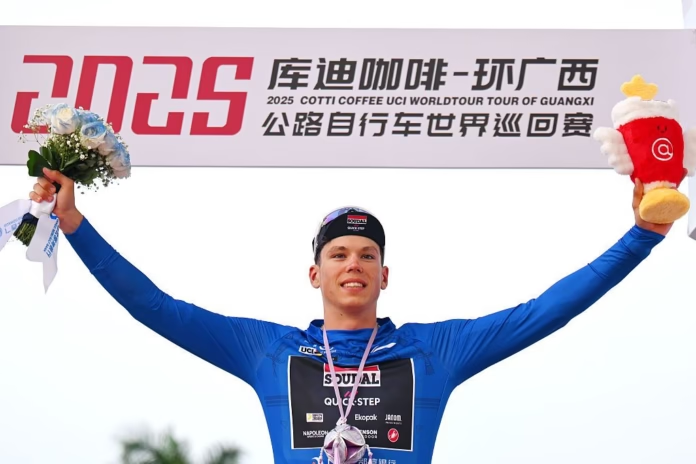
The Tour of Guangxi 2026 takes place from 13 to 18 October, closing the men’s UCI WorldTour season with six days of racing in southern China. Since joining the WorldTour in 2017, the race has developed a clear identity: plenty of opportunities for sprinters, enough climbing to keep the general classification open and one late uphill test that often decides the overall winner.
It is also unusual because of where it sits in the calendar. Most of the season’s biggest objectives have already been completed by mid-October. The Tour de France, Giro d’Italia, Vuelta a España, World Championships and major one-day Classics are all behind the peloton, leaving Guangxi as the final WorldTour stage race and the last chance to take a victory at the sport’s top level.
The detailed 2026 stage routes have not yet been published. The UCI has confirmed the race for 13-18 October and current calendars list six stages, so this guide focuses on the race’s established format, recent history and what to expect once the full route is released.
Tour of Guangxi 2026 at a glance
Dates: 13-18 October 2026
Country: China
Region: Guangxi
Race type: Men’s stage race
UCI level: UCI WorldTour, 2.UWT
Stages: Six
2026 route: Detailed route to be confirmed
First edition: 2017
2025 winner: Paul Double
The race is part of the men’s UCI WorldTour, which means WorldTeams are at the centre of the start list alongside invited ProTeams and, depending on the year’s selection, domestic representation.
What is the Tour of Guangxi?
The Tour of Guangxi is a professional stage race held in the Guangxi Zhuang Autonomous Region in southern China. It was launched in 2017 and entered the UCI WorldTour immediately, making it one of the newest races at the highest level of men’s road cycling.
The race was absent from the calendar between 2020 and 2022 during the disruption caused by the Covid-19 pandemic, before returning in 2023. Since then it has resumed its role as the final event of the men’s WorldTour season.
Guangxi is known for limestone karst scenery, subtropical landscapes and large modern cities, giving the race a very different setting from the European stage races that dominate much of the season. It is also a large region, so the event can combine flat urban stages with more rolling inland terrain.
What is the Tour of Guangxi route usually like?
The full 2026 route has not yet been announced, but the recent formula is well established. The race normally includes several stages suited to sprinters, a number of rolling days where breakaways or strong classics-style riders can become involved, and one uphill finish that carries most of the general classification weight.
In 2025 the race covered more than 1,000 kilometres across six stages. Paul Magnier won the opening four stages, showing how much the race can reward a dominant sprinter, before Paul Double took control of the general classification on the uphill finish to Nongla.
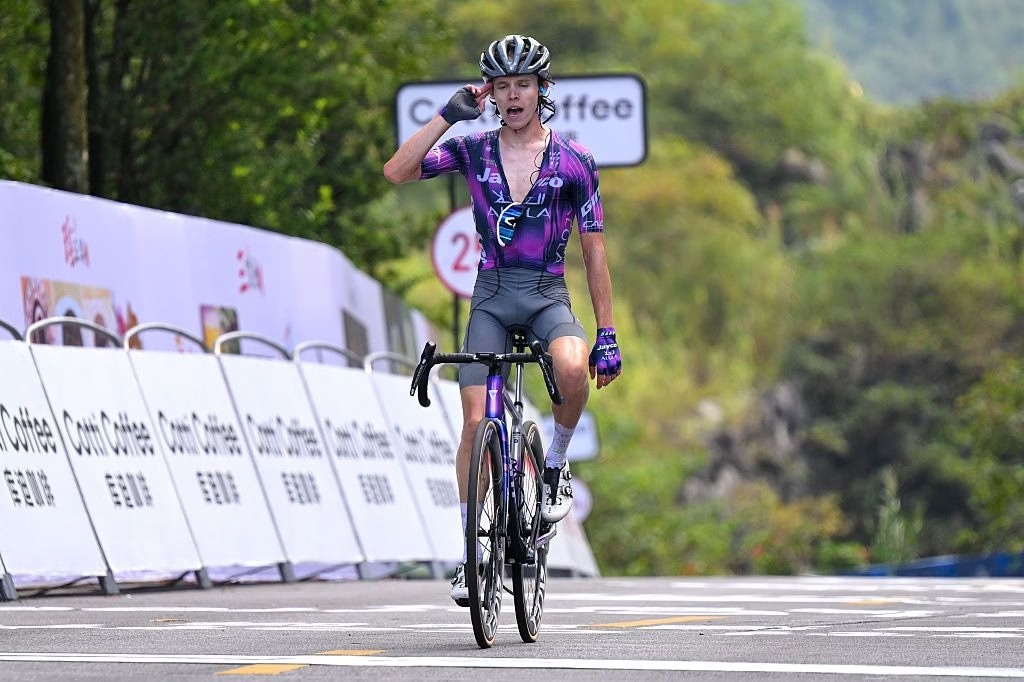
Nongla has become closely associated with the race because its short finishing climb can create just enough separation to decide the overall standings. It is not the sort of mountain where Grand Tour climbers usually take minutes from one another. Instead, riders need explosive climbing power and good positioning because the decisive gaps can be measured in seconds.
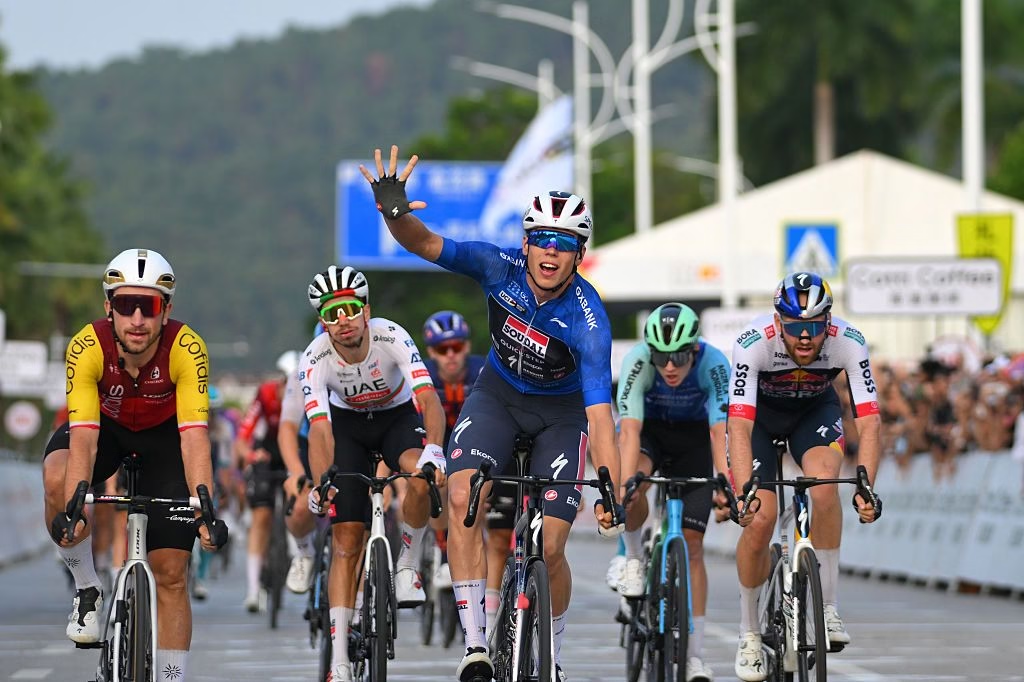 Photo Credit: Getty
Is the Tour of Guangxi a sprinters’ race?
For stage wins, often yes. Few WorldTour stage races offer so many realistic opportunities for fast finishers, particularly when the route avoids long mountain passes and major time trials.
That does not mean a sprinter usually wins the general classification. The uphill finish has repeatedly created enough of a gap to put a climber or punchy stage racer into the leader’s jersey. The key distinction is that Guangxi can be a sprinter-heavy race without being a sprinter-dominated GC race.
The 2025 edition illustrated that perfectly. Magnier won four consecutive stages, but Double’s victory on the queen stage gave him the overall lead and eventually the race title. A rider can dominate the stage results without controlling the final classification.
Recent Tour of Guangxi winners
2025: Paul Double
2024: Lennert Van Eetvelt
2023: Milan Vader
2019: Enric Mas
2018: Gianni Moscon
2017: Tim Wellens
There were no editions in 2020, 2021 or 2022. Despite the interrupted history, the winners list already shows the type of rider the race tends to favour: strong all-round stage racers who can climb sharply, stay out of trouble on fast stages and take advantage of a short decisive finish rather than relying on long mountain passes.
How is the general classification usually decided?
The overall race is based on accumulated time across all six stages, as with any stage race. What makes Guangxi distinctive is that the route often offers relatively few places to create large gaps.
That makes the uphill finish particularly important. A rider who loses 20 or 30 seconds there may have no realistic opportunity to recover the time elsewhere. Bonus seconds can also matter, especially when several contenders are closely matched on the climb.
Teams therefore have two different jobs during the week. They must protect their GC rider through the fast stages, keeping them away from crashes and splits, while also preserving enough support for the decisive climbing day. One badly timed mechanical or positioning error can undo several days of otherwise quiet racing.
Why do sprinters target the race?
By October, pure sprinters have relatively few major opportunities left. Guangxi can offer multiple chances in a single week, making it attractive both to established winners and younger riders trying to finish the season with a breakthrough result.
The roads are often broad and the race has frequently produced controlled finales, which encourages teams to bring organised lead-out trains. At the same time, late-season fatigue can make those trains less predictable than they were in May or July. A team that still has motivation and several fresh riders can therefore gain a significant advantage.
Why is the Tour of Guangxi important?
The most obvious reason is its WorldTour status. Victories and overall placings carry valuable UCI points, and the race gives teams one final opportunity to add to their season totals.
Its position in China also matters. The WorldTour is overwhelmingly European for much of the year, so Guangxi extends the calendar geographically and gives sponsors exposure in an important cycling and consumer market. For the sport itself, it provides a top-level race in a region where professional road cycling is still developing.
For riders, the timing creates a mixture of motives. Some are chasing one last win, some are helping teammates, some are building momentum ahead of a move to a new team and others simply want to finish a long season strongly. That can produce racing that feels less scripted than the better-drilled stage races earlier in the year.
What classifications are contested?
The general classification is the main prize, but recent editions have also included points, mountains, young rider and team classifications. The points competition naturally suits sprinters because of the number of fast finishes, while the mountains jersey can reward breakaway riders willing to target smaller classified climbs throughout the week.
The young rider classification can be particularly relevant in Guangxi because teams often bring emerging riders rather than sending every established Grand Tour leader to the final race of the season.
-
 Photo Credit: quentinphotographiebe
 -
 Photo Credit: Getty


What happened in 2025?
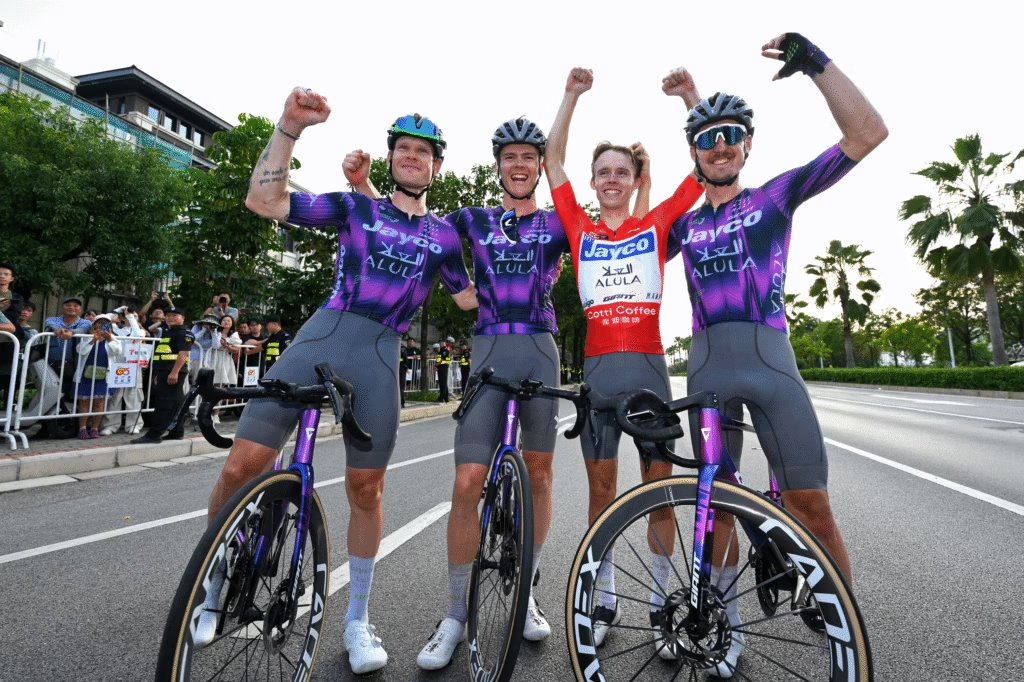
The 2025 Tour of Guangxi produced one of the clearest examples of the race’s two competing stories. Paul Magnier was the dominant sprinter, winning the first four stages in succession, but the overall race changed on stage 5.
Paul Double attacked on the climb to Nongla and took a solo victory, moving into the overall lead. He carried that advantage through the final stage to become the first British winner of the race, ahead of Victor Lafay and Jhonatan Narváez.
That pattern is worth remembering when watching the 2026 edition. Early sprint wins may dominate the headlines, but the riders aiming for the red leader’s jersey are often waiting for one specific stage.
What should you watch for in 2026?
The first major update will be the full route announcement. Until stage towns, distances and profiles are confirmed, it is too early to say exactly how many sprint opportunities there will be or whether the traditional GC formula has changed.
Once the route is known, the key question will be where the race can create meaningful time gaps. If there is again one clear uphill finish, teams will build much of their strategy around protecting their leader until that day. If the organiser adds more climbing or a harder rolling stage, the overall battle could become less concentrated.
The start list will matter just as much. Guangxi often combines top-level sprinters with riders who have had quieter seasons or are looking for a final result before winter. That makes it a race where established names and late-season surprises can sit comfortably alongside each other.
ProCyclingUK has covered the race since its early years, including the 2019 Tour of Guangxi. The 2026 route, start list and viewing details will become much more important as the race approaches in October.

