
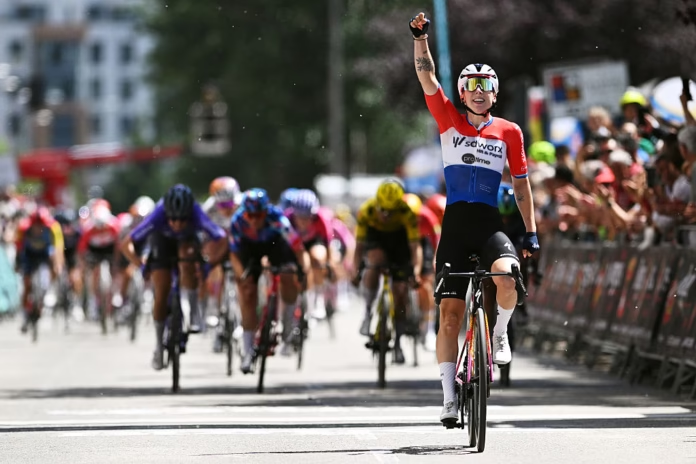
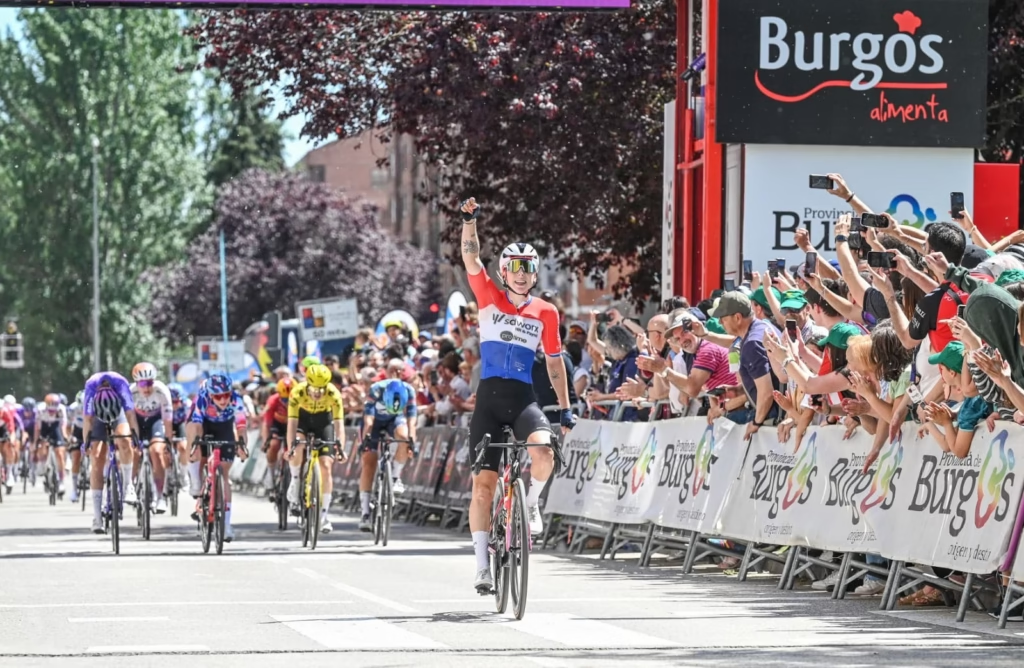
Vuelta a Burgos Feminas 2026 continues on Friday, 22nd May with stage 2 from Castrojeriz to Bodegas Viña Pedrosa in Pedrosa de Duero. After Lorena Wiebes dominated the opening sprint in Burgos Gamonal, the second stage gives the fast finishers another opportunity, but with enough rolling terrain and exposed roads to keep the race from feeling completely routine.
The stage is 122km long and runs through the wine country of Burgos province, with the finish at Bodegas Viña Pedrosa giving the day its “Patrimonio Enológico” identity. It is not a major climbing stage, but the route still has enough changes of direction, narrow roads and late tension to make positioning important. If the sprint teams remain organised, another fast finish is the most likely outcome.
For UK viewers, this is another lunchtime-to-afternoon watch. The real start is scheduled for 11:42 BST, with the finish expected between 14:36 and 14:54 BST, depending on race speed. RTVE’s live programme is scheduled from 13:30 BST, which should cover the final hour and the approach to Pedrosa de Duero.
When does Vuelta a Burgos Feminas 2026 stage 2 start?
Stage 2 takes place on Friday, 22nd May.
The route runs from Castrojeriz to Bodegas Viña Pedrosa in Pedrosa de Duero over 122km. The neutralised start is scheduled for 11:33 BST, with the real start at 11:42 BST.
The expected finish window is between 14:36 and 14:54 BST. The organiser’s most likely schedule, based on a 40km/h average, puts the finish at around 14:45 BST.
How to watch Vuelta a Burgos Feminas 2026 stage 2 in the UK
UK viewers should check HBO Max and TNT Sports for live coverage and race updates. TNT Sports has a dedicated Vuelta a Burgos Feminas calendar, while HBO Max is now the main streaming home for Warner Bros. Discovery cycling coverage in the UK and Ireland.
RTVE Play is also listing live Spanish-language coverage from 13:30 BST. That is the most useful time marker for viewers who want the final hour, although UK access can depend on rights restrictions on the day.
What time should UK viewers tune in?
The best time to tune in is from around 13:30 BST, when RTVE’s listed live coverage begins. That should bring viewers into the decisive part of the stage, with the breakaway situation already established and the sprint teams preparing for the final run through Roa de Duero and Pedrosa de Duero.
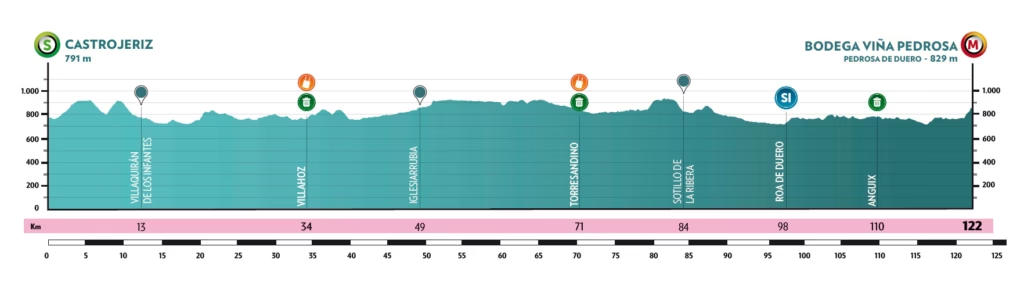
The final 50km should be worth following if the breakaway has built a meaningful gap. The race passes through Torresandino with around 51km remaining, then heads towards Villatuelda, Terradillos de Esgueva, Sotillo de la Ribera and Roa de Duero before reaching Pedrosa de Duero. From that point, the stage loops out and returns to the finish at Bodegas Viña Pedrosa.
For viewers short on time, the final 30 minutes should be the essential watch. That should cover the last approach through Roa de Duero, the final kilometres into Pedrosa de Duero and the sprint or late attacking move that decides the stage.
The stage 2 route
Stage 2 begins in Castrojeriz and finishes at Bodegas Viña Pedrosa in Pedrosa de Duero. The route runs through the Burgos countryside and wine region, giving the stage a different feel from the city-based opening day.
The profile is not severe, with around 1,035 metres of climbing across 122km. That makes it manageable for the sprinters, but not completely flat. The stage rises and falls enough to make a fully controlled bunch sprint slightly more complicated, especially if the wind is present across the more open sections.
The most important section comes late. The riders pass through Roa de Duero with around 24km remaining, then go through Pedrosa de Duero before looping out towards Boada de Roa, Quintanamanvirgo and Anguix. They then return towards Roa de Duero and Pedrosa de Duero for the finish.
The final 3km are relatively straightforward in layout, with a 300-metre finishing straight. The road is not especially wide, so positioning before the final kilometre will matter. A sprinter who has to start the final push too far back may struggle to find room.
Why stage 2 should suit another sprint
Stage 2 gives the sprinters another strong chance because the climbs are not difficult enough to split the race decisively. After Wiebes’ stage 1 win, Team SD Worx-Protime will have a clear reason to defend the leader’s jersey and keep the race under control.
That makes Wiebes the obvious reference point again. She has already shown that she is the fastest rider in the race when delivered properly, and stage 2 gives her team another route to a controlled finish. The slightly uphill nature of the final kilometre should not be a major problem for a rider with her power.
Elisa Balsamo and Georgia Baker will be looking for a cleaner route to the line after finishing behind Wiebes on the opening day. Chiara Consonni, Shari Bossuyt, Carys Lloyd and Babette van der Wolf also remain dangerous if the sprint becomes more chaotic or if the final approach disrupts the main lead-outs.
Why the stage is not completely automatic
The danger for the sprint teams is that the day gives attackers just enough encouragement. The road is not mountainous, but it is long enough and open enough for a breakaway to force a chase. If the bunch hesitates after stage 1, or if several teams decide they do not want to spend riders too early in the race, the front group could stay away deeper into the finale than expected.
Wind could also change the stage. The route through Burgos province has exposed sections, and even a moderate crosswind can make positioning stressful. If the bunch splits, the stage could quickly become more complicated for any sprinter caught on the wrong side of the move.
The GC riders will not be looking to attack here, but they still need to stay alert. Stage 2 is the kind of day where seconds are more likely to be lost through a split, crash or positioning mistake than through a deliberate climbing move.
What the race leader needs to do
Wiebes starts stage 2 with the leader’s jersey after her stage 1 victory. Her task is straightforward but not effortless: stay protected, avoid trouble, and give SD Worx-Protime the option of sprinting again if the race comes back together.
Defending the jersey through stage 2 should suit her team. They do not need to make the race hard. They simply need to control the breakaway, manage the exposed sections and keep Wiebes well placed for the final kilometres.
The bigger question is how much work they want to do. With harder stages still to come, SD Worx-Protime may not want to carry the whole chase alone. That could give other sprint teams a chance to share responsibility if they believe they can beat Wiebes at the finish.
-
 Photo Credit: Cor Vos
What kind of rider can win stage 2?
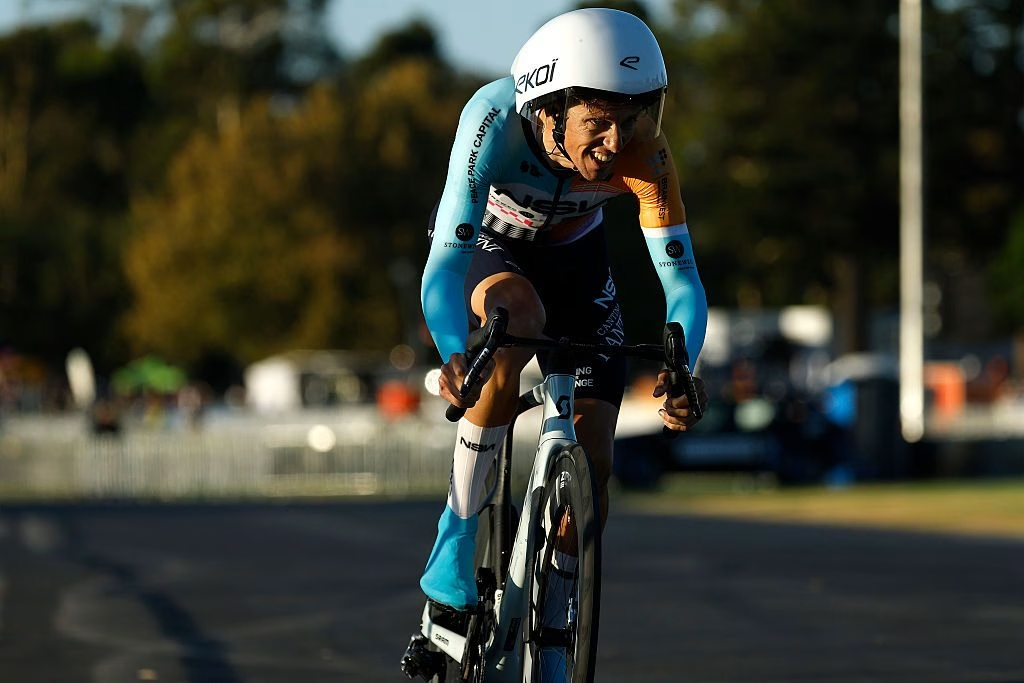
The most likely winner is a sprinter with enough strength to cope with a rolling day and enough team support to stay near the front late on. A full bunch sprint is possible, but a slightly reduced group would not be a surprise if the pace or wind makes the day more demanding.
Wiebes is the clear favourite after stage 1. Balsamo has the speed and experience to challenge if she gets a cleaner run. Consonni is another obvious threat if the sprint is less controlled and more about timing. Baker’s opening-stage podium also makes her one to watch, especially if the sprint becomes a long, power-based effort.
Lloyd gives Movistar a strong option if the finale is slightly uphill or disrupted, while Van der Wolf gives EF Education-Oatly a route into the sprint. Bossuyt is also interesting because she can handle a hard day and still finish quickly from a reduced group.
Prediction
Stage 2 should again favour the sprinters, but the route is not quite as simple as the distance and profile suggest. The exposed roads, rolling terrain and relatively narrow final approach could all make the last hour tense.
If the peloton controls the breakaway, Wiebes is the rider to beat. She has the jersey, the team and the finishing speed to double up. The most realistic challengers are Balsamo, Consonni, Baker and Lloyd, especially if the sprint is less clean than stage 1.
Prediction: Lorena Wiebes to win again in Pedrosa de Duero, extending her overall lead before the race moves towards more selective terrain on stage 3.

