

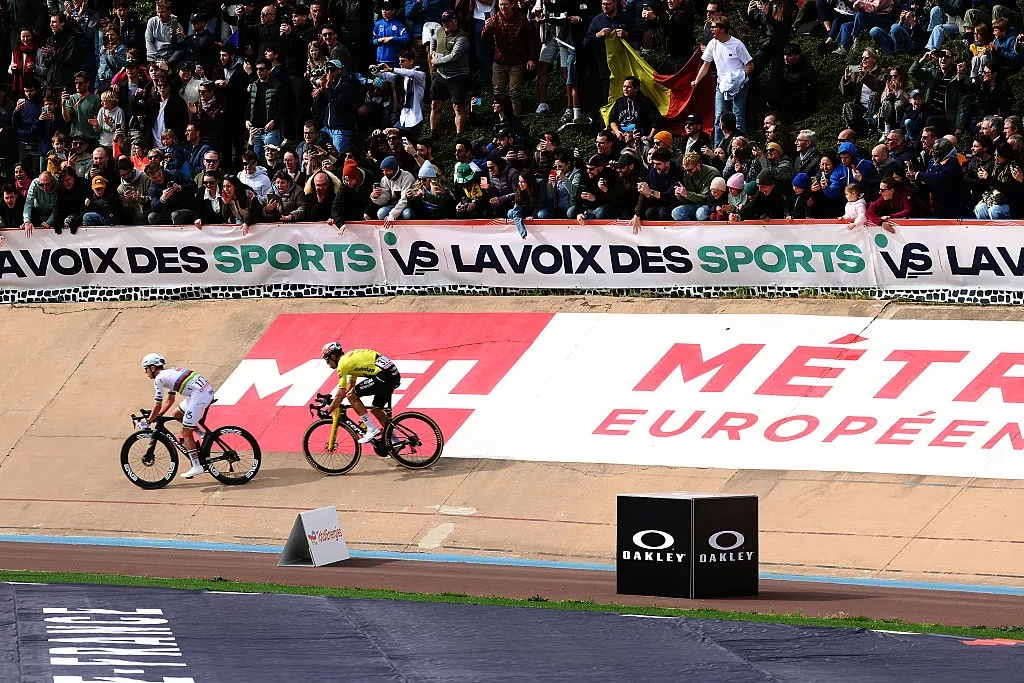
Wout van Aert did not just win Men’s Paris-Roubaix 2026. He changed the emotional and sporting shape of the spring. His sprint victory over Tadej Pogačar in the Roubaix Velodrome gave him his first cobbled Monument, his second Monument overall, and a result that finally shifted the conversation around his career from near-misses to one of the sport’s biggest one-day prizes.
That matters because Paris-Roubaix is not a race that hands out symbolic wins. It is too chaotic, too physical and too dependent on strength under pressure for that. When a rider wins here against Pogačar, with Mathieu van der Poel also still in the race deep enough to matter, the result carries beyond one Sunday in northern France. It forces a rewrite of the season narrative.
For readers coming to this from the wider spring package, this sits naturally alongside ProCyclingUK’s Men’s Paris-Roubaix 2026 contenders preview, Men’s Paris-Roubaix 2026 team-by-team guide, Men’s Paris-Roubaix 2026 route and cobbled sectors guide and How to watch Paris-Roubaix 2026 in the UK.
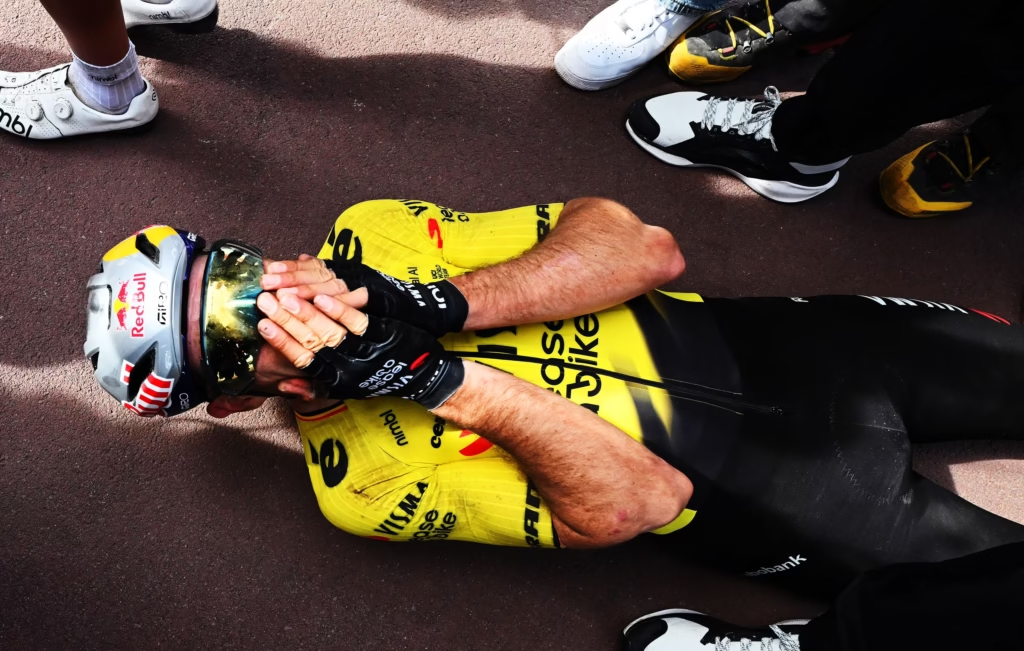 Photo Credit: Getty
Van Aert has finally changed the biggest line in his Classics story
The simplest conclusion is also the most important one. Van Aert is no longer the rider discussed mainly through what almost happened in Roubaix. He has now won it.
He was not gifted the race by a lucky move or by others looking at each other too long. He survived the decisive selection, handled the pressure of racing with Pogačar in the final, and then delivered when the finish demanded absolute commitment.
That changes how the rest of 2026 will be read around him. A rider can be respected without being feared. Van Aert now moves fully into the second category again. Teams will no longer see him only as someone who can make the final. They will have to treat him as someone who can finish the biggest races off himself.
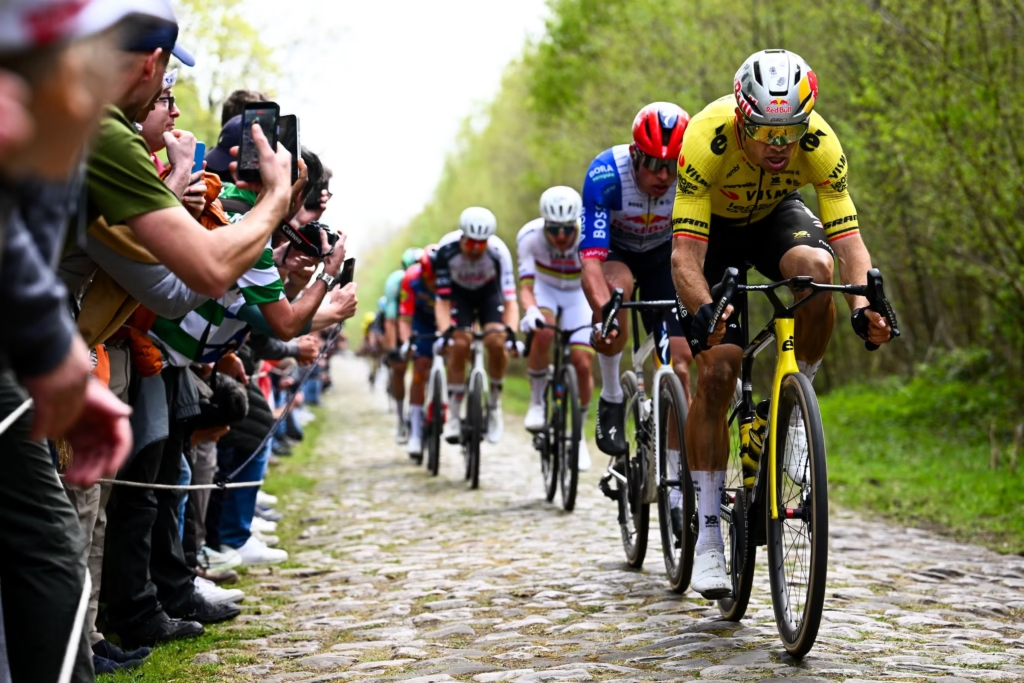 Photo Credit: Getty
Pogačar confirmed he is reshaping even the races he has not yet won
Tadej Pogačar finished 2nd again, but the bigger point is that he has made Paris-Roubaix part of his normal range. He was strong enough to be clear with Van Aert deep into the race, had the confidence to keep forcing the issue, and still made the velodrome as one of the last two riders standing.
That matters for the season because Pogačar is still setting the terms of the sport even in defeat. He has already won Milano-Sanremo and the Tour of Flanders this spring, and Roubaix showed again that the list of races where he can realistically win is now almost absurdly broad. He did not complete the Monument set here, but he still made the race narrower and harder for everyone else simply by being there.
Van der Poel’s spring is still elite, but the tone has shifted
Mathieu van der Poel still came out of Roubaix looking like one of the defining riders of the spring, but the tone around his season has changed slightly. He arrived chasing a fourth straight Paris-Roubaix win and the outright record, and instead saw Van Aert take the race while Pogačar again proved impossible to shake from the very top level of the Classics.
That does not diminish Van der Poel’s status. It does, however, change the balance. The cobbled season no longer feels centred only on whether anyone can stop him. It now feels like a three-way struggle in which the margins between Van der Poel, Pogačar and Van Aert are smaller, more situational and more tactical than they once looked.
Men’s Paris-Roubaix 2026 made the top of the sport look broader, not narrower
One of the most interesting effects of Roubaix is that it widened the story at the top rather than reducing it to one obvious order. Van Aert won. Pogačar was again right there. Van der Poel still looked strong enough to matter despite setbacks. Jasper Stuyven took 3rd, which added another reminder that the race can still reward riders just behind the headline trio if the day becomes unstable enough.
That is healthy for the season because it stops the spring from feeling solved. There is now no clean answer to who owns the cobbled Monuments. Van der Poel still has the pedigree. Pogačar has the broadest ceiling in the sport. Van Aert now has the breakthrough result that had been missing. Roubaix did not settle the hierarchy. It complicated it.
The race also underlined how much luck still rules the cobbles
Paris-Roubaix is always a race of strength and nerve, but this edition was also a reminder that luck still holds real power on the cobbles. Mechanical trouble and bike changes affected major riders, and that shaped the rhythm of the race as much as any tactical decision.
That matters for the rest of the season because Paris-Roubaix still resists clean interpretation. It rewards power, yes, but also resilience to disruption. A rider can be the best in the race and still lose something decisive to timing, equipment or road position. That makes the result meaningful without making it absolute.
-
 Photo Credit: Billy Ceusters / Getty Images

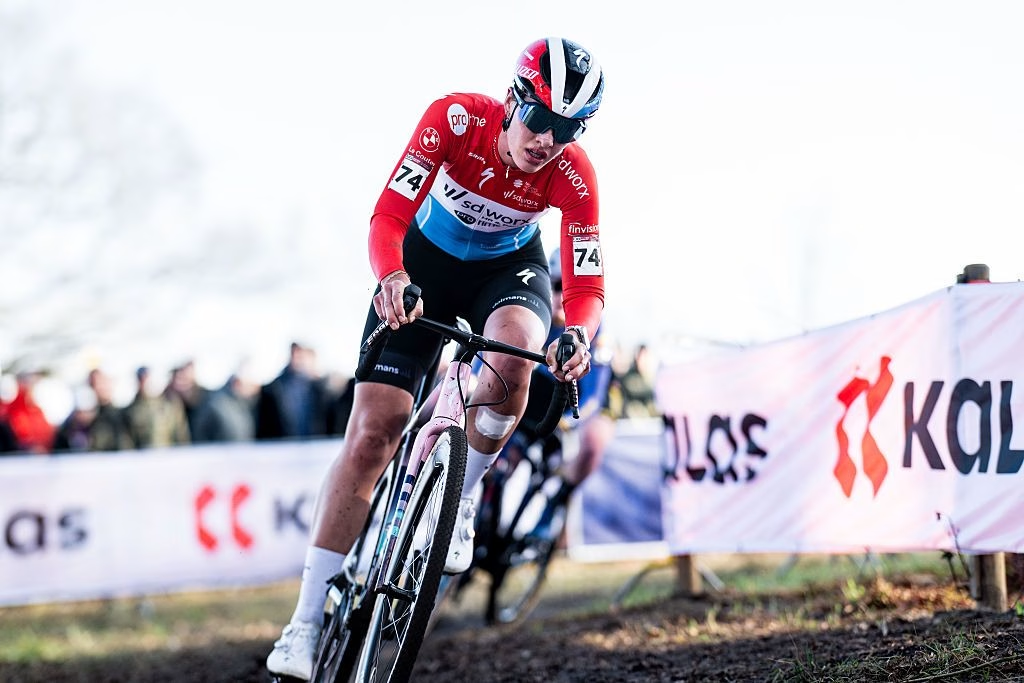
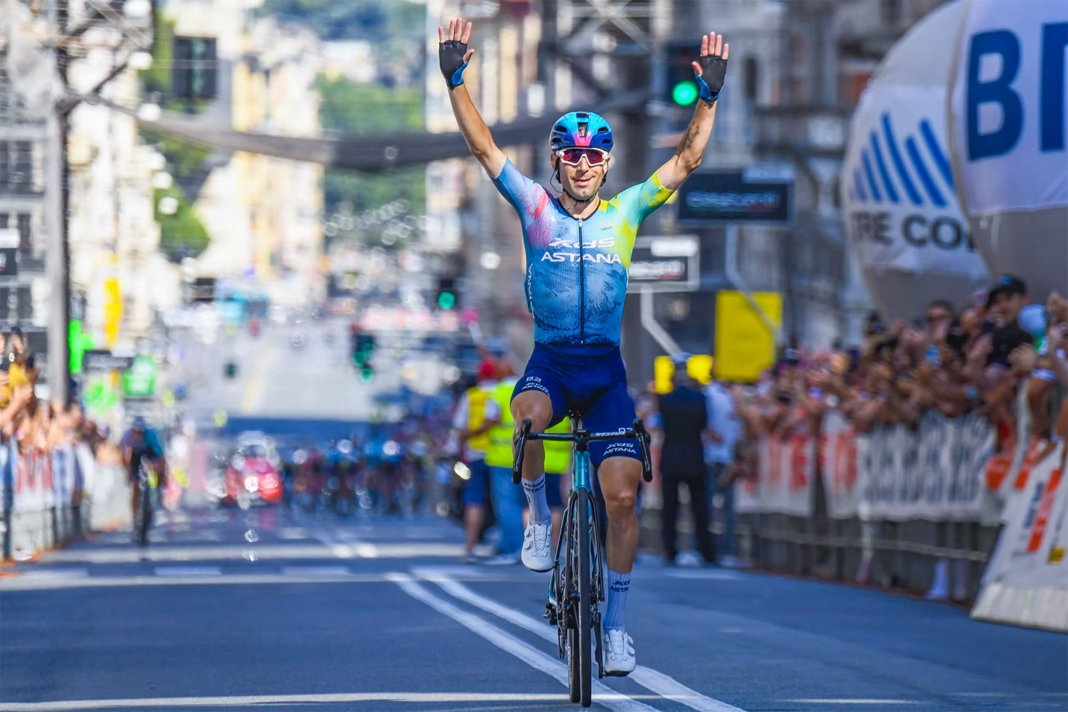
The emotional weight of the win changes how 2026 will be remembered
Van Aert’s victory also carried a deeper emotional force than a straightforward Monument breakthrough. This was not only a prestigious win. It felt like the release of years of pressure, expectation and repeated close calls in the biggest races.
Season-defining victories are not only about rankings and palmarès. Sometimes they change the emotional temperature of a year. This was one of those wins. It gave the spring a result people will remember not just because of who beat whom, but because of what it meant for the rider who finally got there.
What it means for the rest of 2026
Above all, Men’s Paris-Roubaix 2026 made the men’s season feel richer at the top. Van Aert’s victory means the sport’s biggest one-day races are no longer being shared only between the same familiar hands this spring. Pogačar remains the broadest force in the sport. Van der Poel remains central to every cobbled conversation. But Roubaix gave Van Aert a result powerful enough to change the emotional and tactical balance between all three.
That is good for the season because it sharpens every major race that follows. The question is no longer only whether Pogačar can be stopped, or whether Van der Poel still rules the cobbles. It is also whether Van Aert’s Roubaix finally marks the point where one of the sport’s strongest riders begins turning presence into control.
For more around the same race week, this also pairs well with ProCyclingUK’s Men’s Paris-Roubaix 2026 contenders preview, Men’s Paris-Roubaix 2026 team-by-team guide, A brief history of Paris-Roubaix and the broader Men’s cycling history, races, riders and teams hub.

