VO2 max is the maximum amount of oxygen your body can take in, transport and use during very hard exercise. In cycling it is a useful measure of aerobic capacity, but it is not a complete score of how good a rider you are. Two cyclists with similar VO2 max values can perform very differently because efficiency, threshold power, durability, body mass and race skills all matter too.
VO2 max is usually expressed as millilitres of oxygen per kilogram of body weight per minute, written as ml/kg/min. The figure is most useful when you understand how it was measured, how it changes over time and how it relates to the power you can actually sustain on the bike.
What does VO2 max mean in cycling?
When exercise intensity rises, your muscles need more oxygen to produce energy aerobically. VO2 max represents the upper limit of that oxygen-processing system. A higher value generally gives a rider more aerobic capacity to work with, particularly during long climbs, hard attacks and sustained efforts above threshold.
That does not mean the rider with the highest VO2 max automatically wins. Cycling performance depends on how much power you can produce for a given oxygen cost, how close to your maximum you can ride for a long time and how well you maintain those abilities after several hours. This is why VO2 max, FTP and real-world power data answer different questions.
How is VO2 max measured?
The most direct method is a laboratory test using a metabolic cart. You ride an indoor bike while the workload increases in stages or ramps and wear a mask that measures the oxygen and carbon dioxide in your breath. The test continues until you reach a very high intensity, allowing the system to calculate the maximum oxygen uptake achieved.
This is the reference method because it measures respiratory gases directly rather than estimating VO2 max from another metric. The exact result can still vary with the test protocol, equipment, fatigue, training status and how hard you are able to push on the day.
Can a watch or bike computer estimate VO2 max?
Yes. Many cycling computers and sports watches estimate VO2 max using heart rate, power, speed and your recent training data. These estimates can be useful for tracking trends, particularly if you use the same device and sensors consistently.
They are not the same as a laboratory measurement. A device is inferring oxygen uptake from other data, so changes in heart-rate accuracy, power-meter calibration, temperature, fatigue and the type of rides you record can all affect the result. Treat the number as a trend rather than a diagnosis of fitness.
What is VO2 max power?
Cyclists often care more about the power associated with VO2 max than the oxygen number itself. In practice, VO2-focused intervals are usually hard efforts lasting several minutes, performed at an intensity that drives oxygen uptake towards its maximum.
There is no single wattage that works for everyone. Coaches may prescribe VO2 intervals from recent test data, critical power, maximal aerobic power or percentages of FTP, but the correct intensity is the one that produces the intended physiological load while still allowing the session to be completed with good form.
How does VO2 max relate to FTP?
VO2 max describes aerobic capacity. FTP is an estimate of the power you can sustain around your functional threshold. They are related, but they are not interchangeable.
A rider can improve FTP without a dramatic change in VO2 max by becoming more efficient or increasing the percentage of aerobic capacity they can sustain. Equally, raising VO2 max can create more headroom for threshold power to improve later. That is why good training plans use different types of work rather than chasing one metric all year.
Can you improve VO2 max through cycling?
VO2 max can respond to training, particularly when a rider is relatively untrained or introduces a new stimulus. Hard aerobic intervals are commonly used to target it, but endurance volume, recovery and overall consistency still matter because high-intensity sessions only work when you can absorb them.
A typical VO2-focused session might use repeated efforts of roughly three to five minutes with recovery between them. Shorter intervals can also work when arranged to keep oxygen demand high. The exact structure depends on experience, training phase and how much high-intensity work you can recover from.
More is not automatically better. VO2 sessions are demanding, and adding them on top of an already hard week can reduce the quality of the work or leave you too fatigued for the rest of your training. If you are planning your own programme, build the hard sessions around the riding you actually need to perform rather than chasing a wearable score.
Why body weight changes the number
The commonly quoted VO2 max figure is relative to body mass. That is useful for weight-bearing sports and climbing because it allows comparisons in ml/kg/min, but it also means the number can change if body weight changes even when absolute oxygen uptake does not.
For cycling, especially on flatter terrain, absolute power and aerodynamic drag can matter more than a relative VO2 max figure. On steep climbs, power-to-weight becomes more important. This is another reason not to treat one physiological number as a complete performance ranking.
What is a good VO2 max for a cyclist?
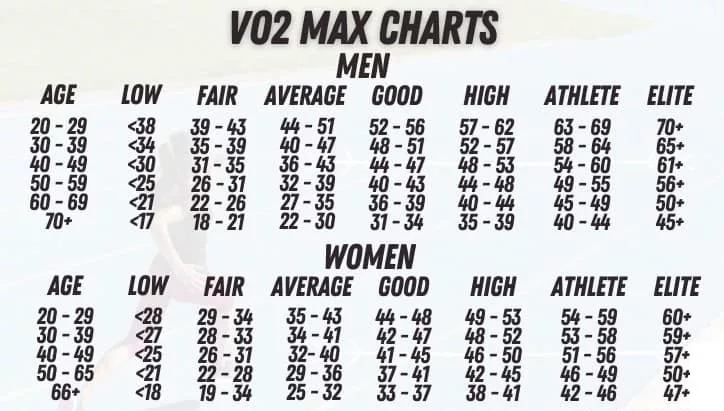
There is no single useful cut-off because VO2 max varies with age, sex, training history, genetics and test method. Recreational cyclists can have very different values and still ride at similar speeds depending on threshold power, efficiency and body mass.
For your own training, the direction of travel is usually more useful than comparing yourself with elite riders. If the same testing method shows your VO2 max rising while your power and repeatability improve, that is useful information. If the number changes but your riding performance does not, the estimate deserves more caution.
How useful is VO2 max for everyday cyclists?
VO2 max is useful as one piece of the picture. It can help explain your aerobic ceiling, show whether a training block is creating a response and provide context for threshold and power data. It is less useful when treated as a league table or as proof that one cyclist should be faster than another.
If your main goal is pacing training sessions and tracking sustainable power, start with our guide to what FTP means in cycling. VO2 max then becomes easier to understand as the aerobic ceiling above that threshold rather than a replacement for it.