
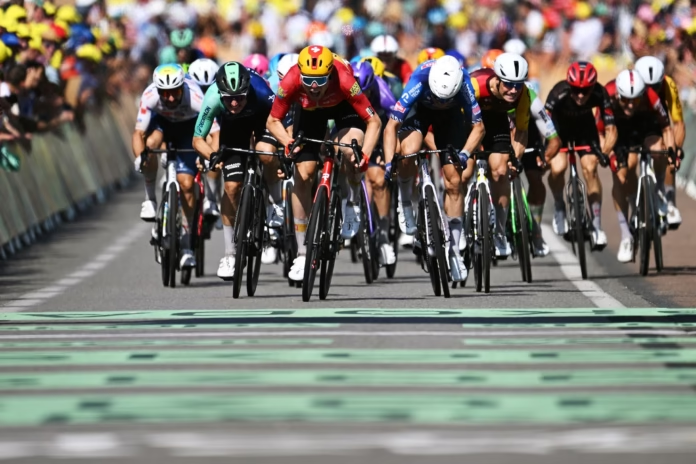
Cyclists ride in a peloton because riding together is dramatically easier than riding alone.
That is the simplest explanation, but it only tells part of the story. The peloton is not just a large group of riders travelling in the same direction. It is the central tactical structure of road racing, allowing riders to save energy, protect team leaders, control breakaways, prepare sprints and survive long races that would be far more demanding if everyone rode individually.
For a beginner watching cycling, the peloton can sometimes look almost passive. Riders chat, move around the bunch and allow a breakaway several minutes up the road. Then, apparently without warning, the speed rises and the whole race changes.
That shift happens because the peloton is constantly balancing two things: energy conservation and tactical control.
What is a peloton?
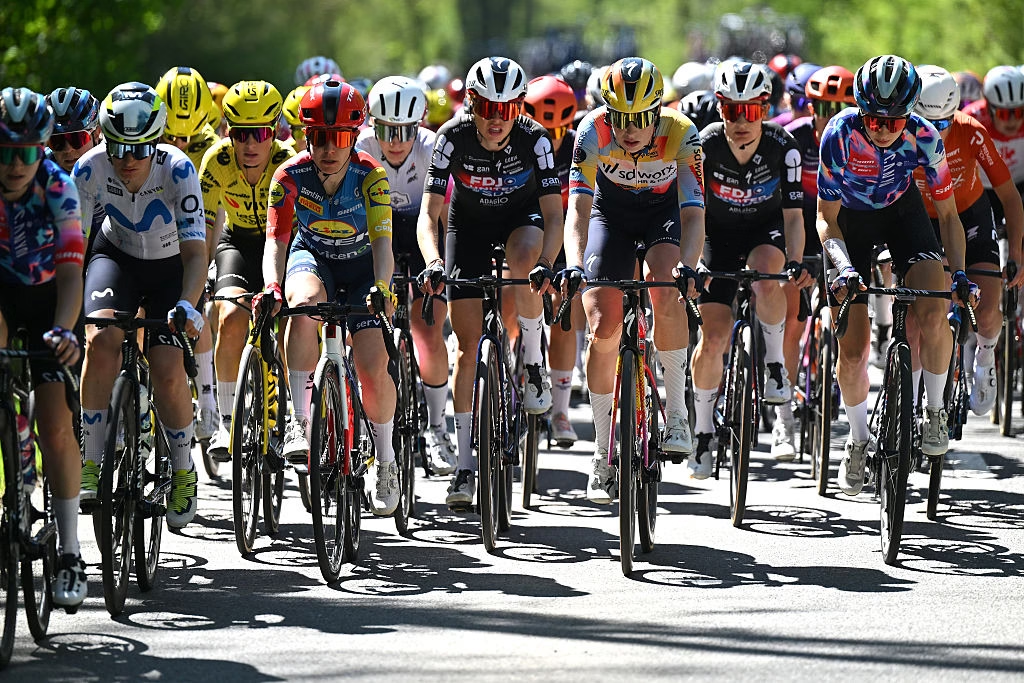
The peloton is the main group of riders in a road race.
The word comes from French and effectively means a group or platoon. In cycling, it refers to the largest organised bunch riding together behind any breakaway riders.
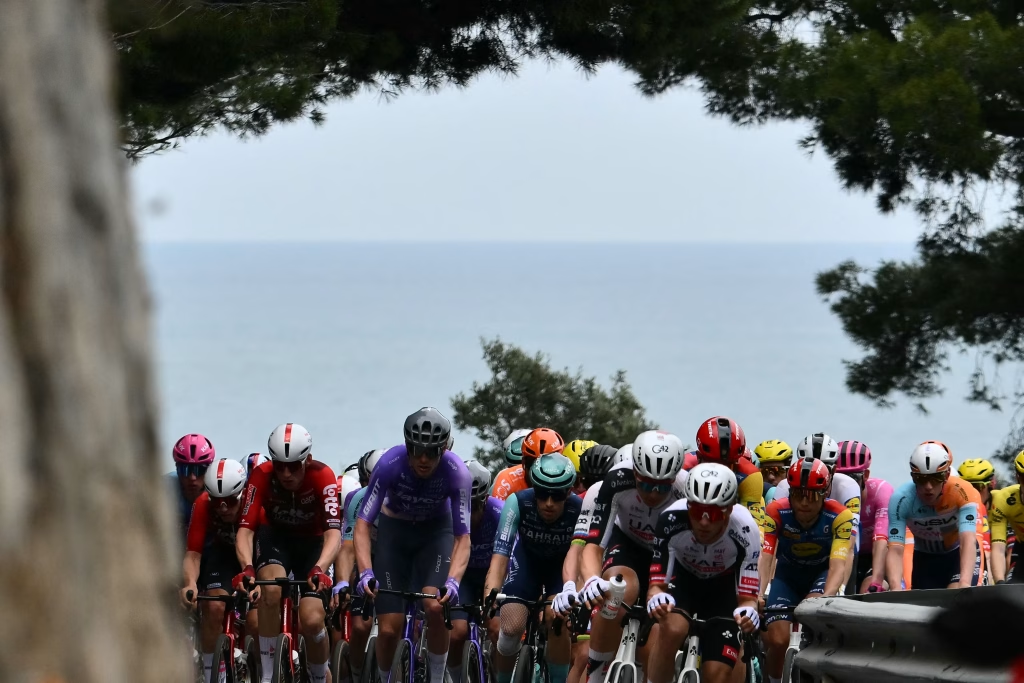
A peloton can contain almost the entire race at the start of a stage or become much smaller after climbs, crosswinds or repeated attacks. Sometimes 150 riders are together. Later, the main group may contain only 30. On especially chaotic days the race can split into several groups and there may be no obvious single bunch at all.
The important point is that riders are not simply travelling together for convenience. They are using each other to reduce aerodynamic drag and conserve energy.
A rider or group that escapes from the peloton forms a breakaway. Our guide to what a breakaway is in the Tour de France explains why those groups form and when the bunch is likely to chase them.
Drafting is the main reason cyclists ride together
The biggest force a cyclist has to overcome on flat roads is air resistance.
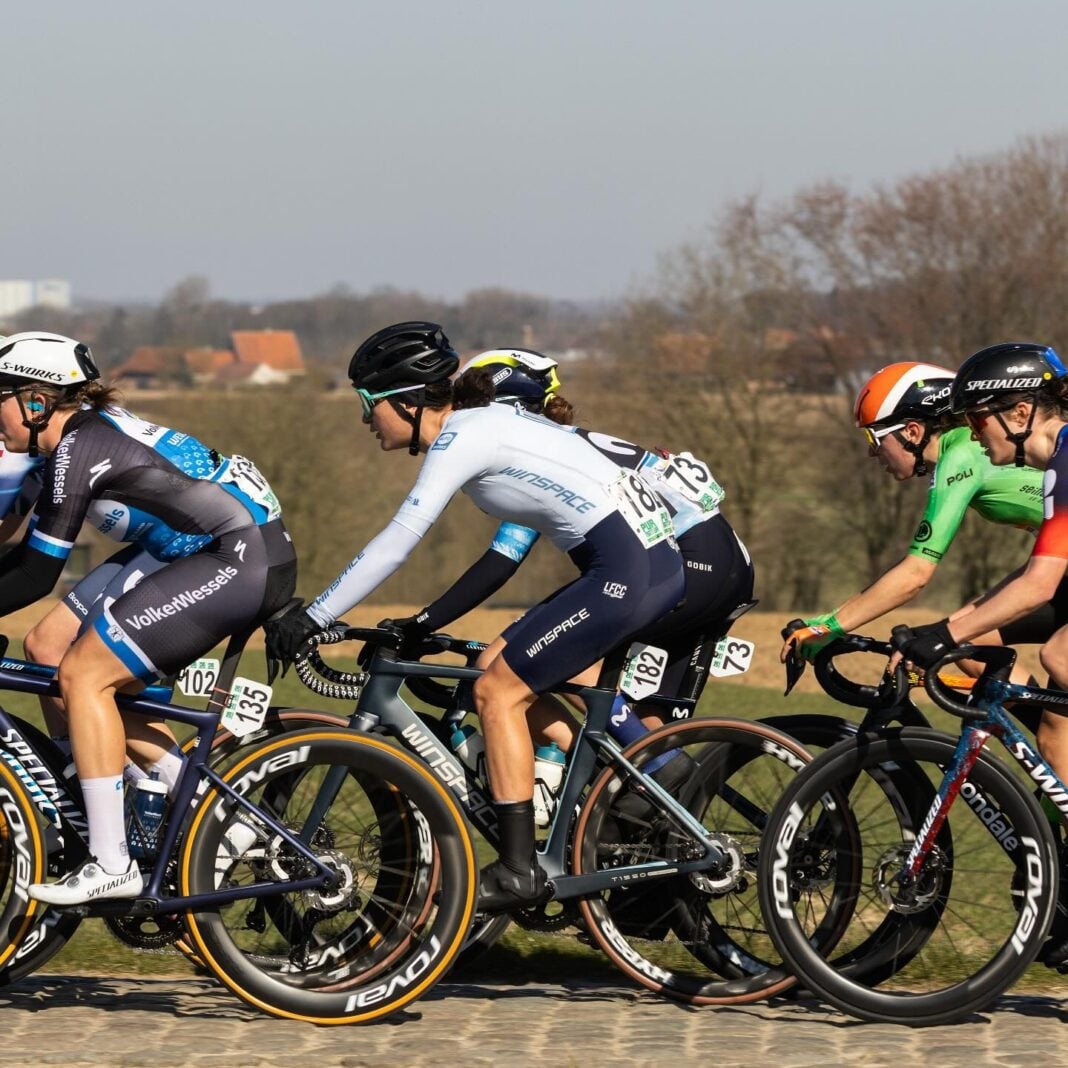
When a rider sits behind another cyclist, the rider in front pushes through the air first and creates an area of reduced aerodynamic resistance behind them. The following rider can therefore maintain the same speed while using less energy.
That is drafting.
The effect becomes increasingly important as speed rises. At professional race speeds, sitting inside a peloton can save a substantial amount of energy compared with riding alone at the same pace.
The exact saving changes with speed, wind direction, bunch position and how tightly the riders are packed together, but the basic principle is simple: the rider exposed at the front does more work than the rider sheltered behind.
That is why road cycling is fundamentally different from an individual endurance sport such as running. Where you ride can be almost as important as how strong you are.
Riding in the middle can be much easier than riding at the front
Imagine a peloton travelling at 45km/h on a flat road.
A rider at the front has to push through the full airflow. Someone several rows behind is sheltered by the riders ahead and beside them. Both are travelling at exactly the same speed, but they are not producing the same amount of power.
That difference is what allows a peloton to travel quickly for hours without every rider becoming completely exhausted.
Professional riders can spend long sections of a race relatively deep in the bunch, saving energy for the moments that actually matter. A team leader hoping to attack on the final climb does not want to spend the first 150km pushing air unnecessarily.
Their teammates are there to prevent that.
The front rider pays the aerodynamic cost
Drafting is not free for everybody.
Someone still has to lead the group.
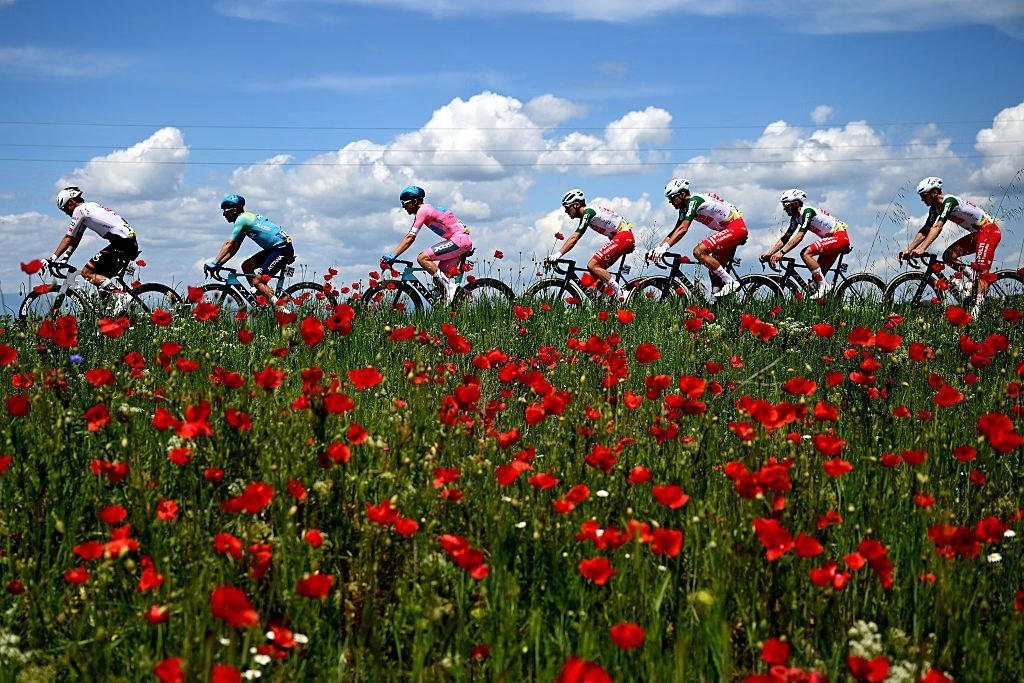
That rider takes the largest share of the aerodynamic resistance and generally needs to produce more power to hold the speed. This is why riders in small breakaways rotate, with one rider taking a turn at the front before moving aside and dropping back into the shelter of the group.
Each rider spends some time exposed and some time recovering.
The same basic principle applies inside the peloton, although the work is distributed much less evenly because teams have different objectives.
A domestique may deliberately spend a long time at the front while their leader sits safely behind. Our guide to what a domestique does at the Tour de France explains why riders sacrifice their own energy in this way.
Why does the peloton sometimes let a breakaway go?
This is one of the first things that seems strange to new cycling fans.
A small group attacks. Nobody immediately chases. The gap grows to one minute, then three, then five.
Why would the peloton allow that?
Because catching a harmless breakaway immediately would often waste energy for no reason.
Teams look at who has escaped and decide whether the move threatens their objectives. If the riders are far behind in the general classification and unlikely to affect the main jerseys, the peloton may be happy to let them ride ahead.
That can actually make the race easier to control. Instead of dozens of riders repeatedly attacking, a small break establishes itself and the bunch settles down.
The breakaway becomes a known problem rather than constant chaos.
Not every breakaway is equally dangerous
The key question is always who is in the move.
If a rider is 40 minutes behind the overall leader, letting them gain five minutes usually creates no GC danger.
If a rider only 30 seconds behind attacks, the reaction can be immediate.
That rider becomes the virtual race leader as soon as the gap grows beyond their deficit.
This is why GC teams can look completely relaxed about one breakaway and panic about another. They are not simply reacting to the size of the gap.
They are reacting to the riders inside it.
The same logic applies in one-day races. A team may allow relatively harmless riders into an early move but become far more nervous if a proven Classics winner attacks later.
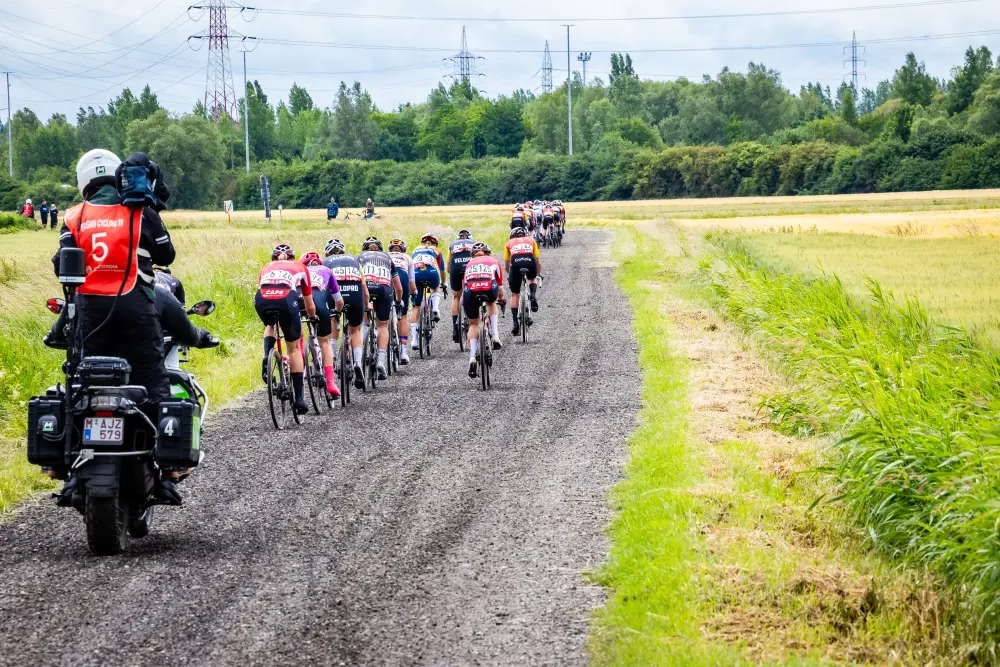 Photo Credit: Gregory Van Gansen
The peloton can control a break without catching it immediately
Professional teams are extremely good at managing time gaps.
A break may be allowed four or five minutes ahead while one or two teams ride steadily on the front of the peloton. The aim is not to catch the attackers immediately. It is to keep them within a range where they can be caught later.
If the peloton rides too hard too early, it wastes domestiques.
If it rides too slowly, the break may become impossible to catch.
This creates one of the central calculations in road racing: how much time can we give them, how much road is left and how many riders will be available to chase later?
The answer changes continually as the stage develops.
Why can the peloton catch riders who look so far ahead?
A five-minute breakaway advantage can look enormous on television.
Over a long stage, it often is not.
The riders ahead have spent hours exposed to the wind and taking turns at the front. Later in the stage, they may also begin conserving energy or attacking each other as thoughts turn from staying away to actually winning.
Behind them, the peloton may still have fresh domestiques who spent most of the day drafting.
Once those riders begin chasing at full speed, the gap can disappear very quickly.
A commonly used rule of thumb is that a motivated peloton can recover roughly a minute for every 10km under favourable conditions, although actual races vary enormously depending on terrain, wind, group size and cooperation.
Why does nobody just attack from the start and stay away?
Sometimes they do.
Usually it fails.
A lone rider attacking the peloton has to overcome the full aerodynamic drag while the entire bunch behind benefits from drafting. Even if the attacker is exceptionally strong, that is an awful energy equation over several hours.
The peloton can often match the rider’s speed while each individual inside the bunch works significantly less.
Successful long-range attacks therefore require something else to change. The peloton may hesitate, rival teams may refuse to chase, the terrain may make organisation difficult or the attacker may have companions to share the work.
Drafting gives the peloton its structural advantage.
Tactics decide whether it actually uses it.
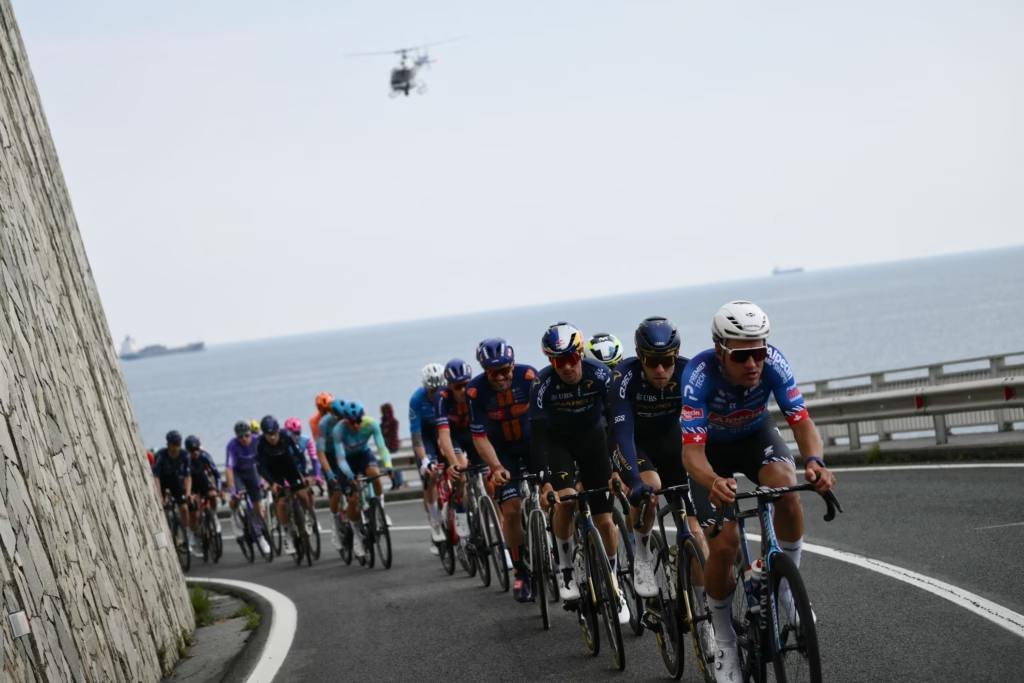
Why do riders attack if drafting is so valuable?
Because eventually somebody has to create separation.
A rider cannot win by staying anonymously in the bunch forever.
Climbers attack when the gradient reduces the value of drafting. Classics riders attack on hills, cobbles or narrow roads because those conditions make the peloton harder to organise. GC contenders attack when rivals look vulnerable, while breakaway riders attack each other late because they do not want to reach the finish with someone faster.
Drafting explains why the peloton exists.
Attacking explains how races escape from it.
Why is drafting less important uphill?
Air resistance still matters on climbs, but speed is lower.
On a flat road at 50km/h, aerodynamics dominate.
On a steep climb at 15km/h, gravity becomes much more important.
That reduces the advantage of sitting behind another rider. The benefit does not disappear entirely, particularly on faster gradients or in a headwind, but climbing ability matters far more.
This is why mountain stages break the peloton apart.
A weaker climber cannot simply hide in the middle and save enough energy to compensate for the difference in power-to-weight ratio. As the gradient increases, each rider increasingly has to produce the work required to carry their own body uphill.
The bunch becomes smaller because drafting can no longer hide the performance gap.
Why do teams ride on the front?
Being at the front costs energy, so teams only do it when there is a reason.
A sprinter’s team may chase because it wants the breakaway caught before the finish. A GC team may control the pace because a dangerous rider is ahead. Another team may increase the speed before a climb to put rivals under pressure or simply move its leader forward to reduce the risk of crashes and splits.
There is also an important distinction between riding near the front and riding on the front.
A protected leader might sit around 10th position, sheltered by teammates and rivals. The domestiques directly leading the bunch are the riders paying the aerodynamic cost.
That division of labour is central to road racing.
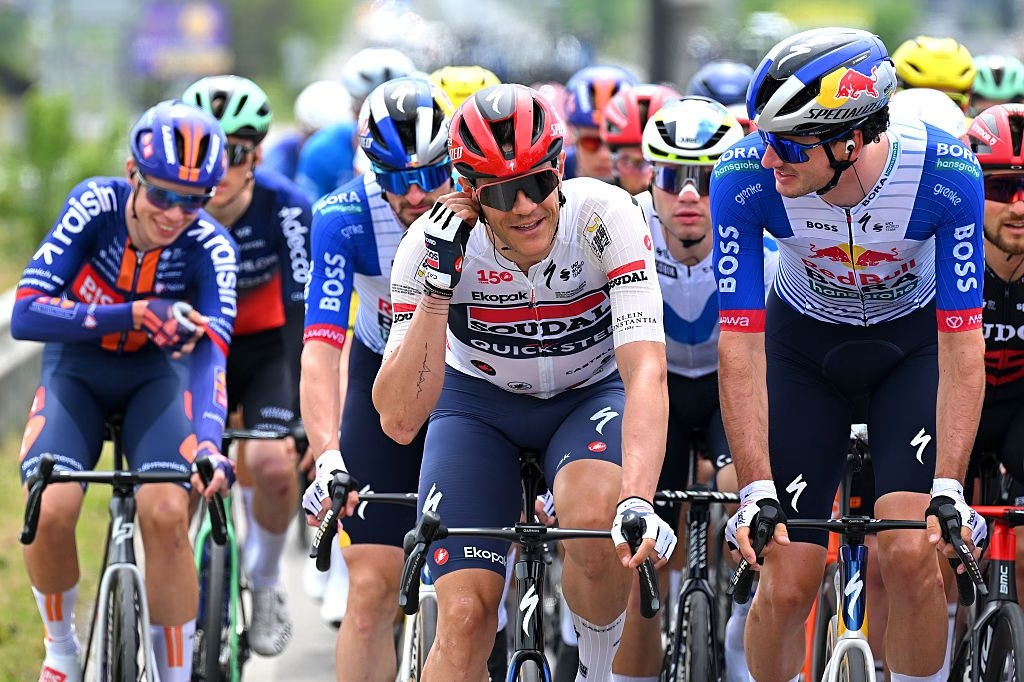
What does a domestique do inside the peloton?
A domestique is a rider whose job is to help a teammate rather than maximise their own result.
Much of that work happens in the peloton.
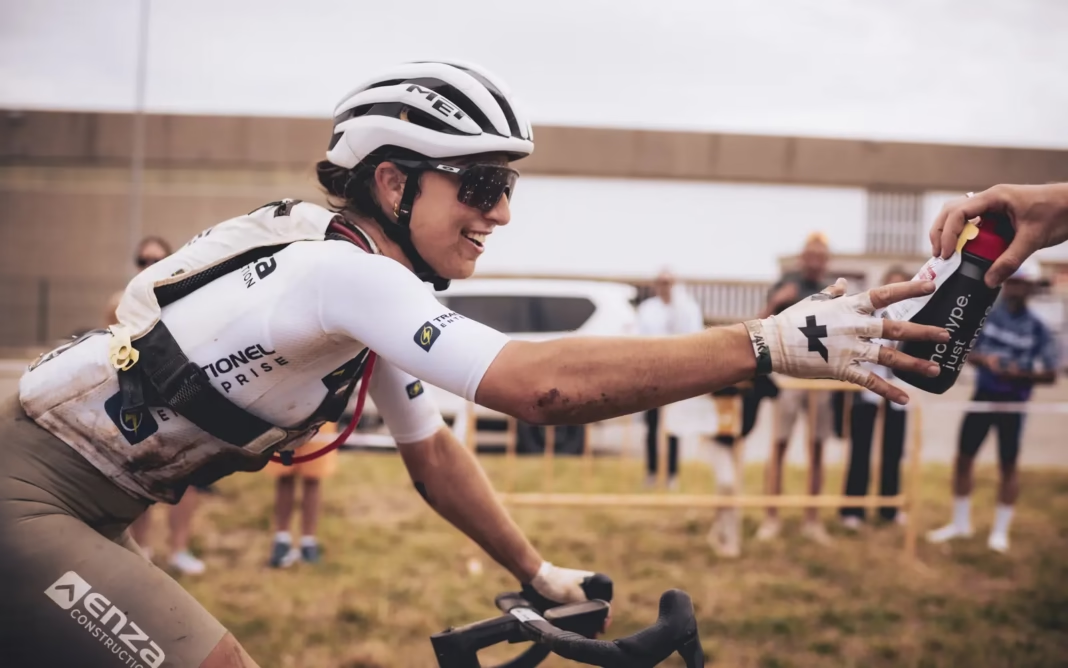
Domestiques ride in the wind so their leader does not have to. They chase breakaways, move a leader through the bunch, collect bottles, maintain position before climbs and sacrifice their own legs to keep the race under control.
One of the great skills in professional cycling is saving a leader energy without allowing them to drift into a dangerous position.
The domestique may spend hours doing visible work while the protected rider appears to do almost nothing.
That is often exactly the objective.
For a fuller explanation of those roles, see what is a domestique at the Tour de France?.
Why is positioning so important if everyone can draft?
Because the peloton is not equally safe or efficient everywhere.
Riding too far back creates problems. Crashes happen ahead, corners create gaps and road furniture can split the bunch. Every small acceleration at the front is magnified through the riders behind.
This creates the accordion effect.
The front of the peloton slows slightly for a corner. Riders farther back brake harder. When the bunch accelerates again, those at the rear may need to sprint simply to regain contact.
The riders near the front experience a much smoother effort.
Over several hours, that difference can become exhausting.
So riders constantly fight for position even when nobody is actively attacking.
The safest tactical position is near the front, not on it
Professional riders often talk about wanting to stay in the first 20 or 30 places.
There is a good reason.
At the very front, you are exposed to the wind.
At the very back, you are vulnerable to crashes, gaps and the accordion effect.
Somewhere inside the front section provides the best compromise: enough shelter to save energy, but close enough to the action to respond when the race changes.
Of course, every team wants the same space.
That is why the approach to a climb can look more frantic than the climb itself. Everyone knows entering in 15th position is better than entering in 80th.
The fight happens before the road goes uphill.
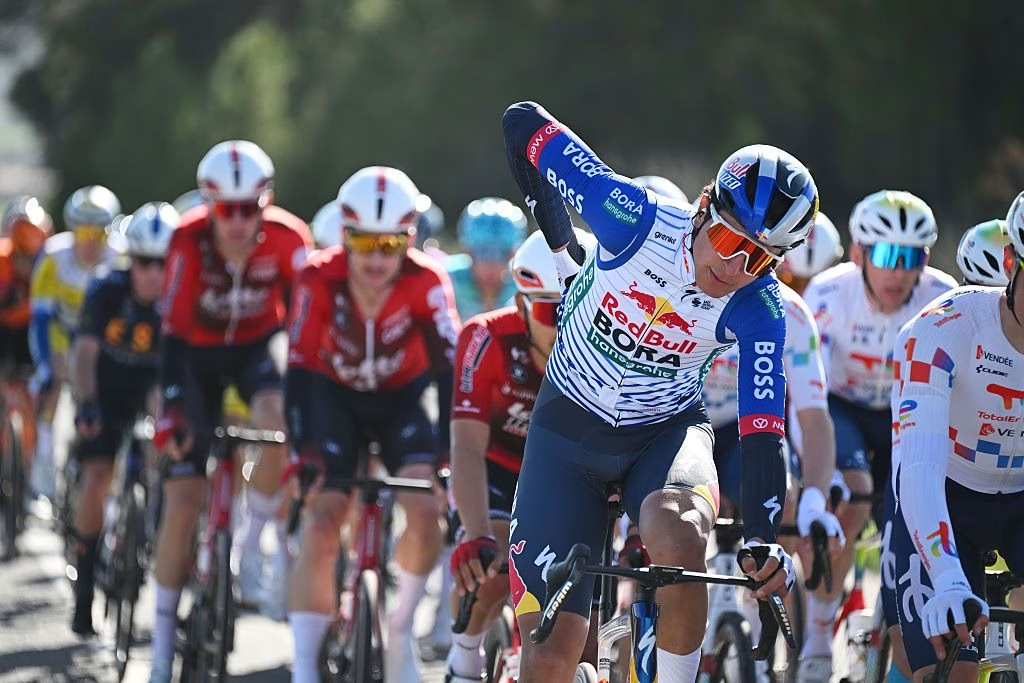
Why does the peloton sometimes spread across the road?
A wide peloton usually tells you something about the tactical situation.
When nobody wants to chase, several teams can occupy the front without driving the pace. Riders spread across the road rather than forming the long line associated with high speed.
The bunch slows.
The breakaway gains time.
A team represented in the escape has little incentive to contribute to the chase, while other teams may be waiting for a rival to take responsibility.
This is why the shape of the peloton can tell you so much before commentators explain anything.
A long, stretched line usually means the pace is high.
A wide bunch often means nobody wants to pay for the chase.
Why does the peloton suddenly speed up before a climb?
Positioning.
Teams know the climb will reduce drafting and potentially split the race. If their leader begins too far back, they may be trapped behind riders who cannot maintain the pace.
So several kilometres before the climb, teams begin moving forward.
The speed rises.
Domestiques line up.
The bunch stretches out.
This can make the approach harder than the actual opening part of the climb. Riders are sometimes dropped before the official ascent even begins because the fight for position has already pushed the pace so high.
The same thing happens before narrow roads, crosswind sections and sprint finishes.
The peloton often accelerates because everyone knows something important is about to happen.
How do crosswinds split a peloton?
Crosswinds make drafting much more complicated.
In a headwind, the best shelter is directly behind the rider in front.
With a side wind, the ideal position is diagonally behind them.
This creates an echelon.
The problem is that the road has limited width. Once the first echelon stretches from one side of the road to the other, riders farther back cannot occupy the ideal sheltered position.
They are forced into the wind.
Gaps begin to form.
That is why a flat stage can suddenly become decisive when the wind changes direction. A relaxed peloton can break into several groups within seconds, with riders caught behind struggling to recover.
Power matters.
Positioning can matter even more.
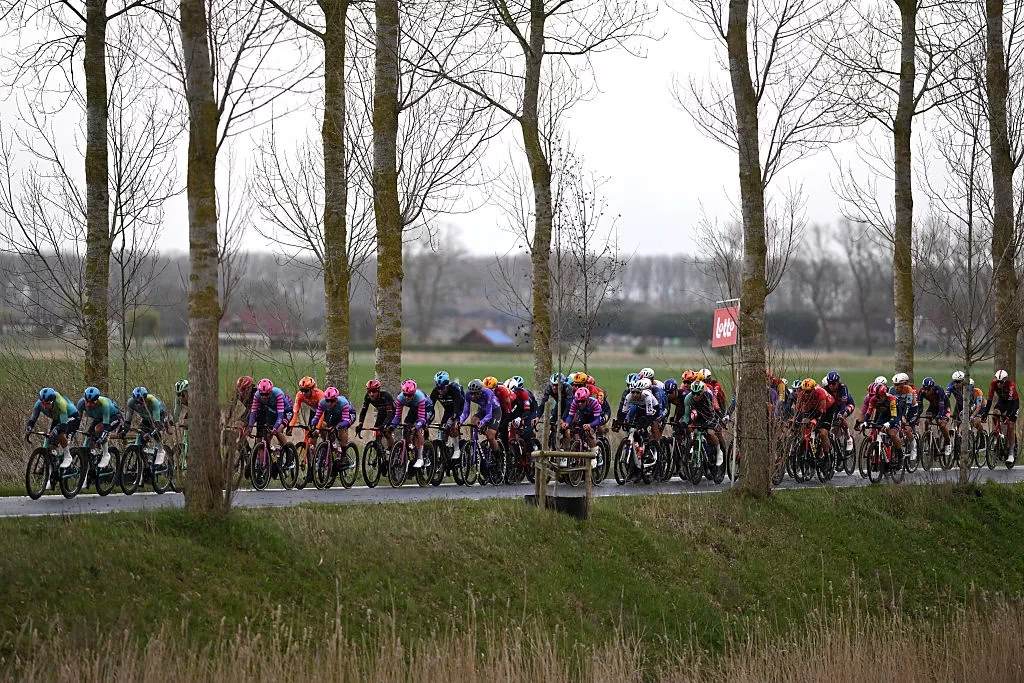
Why are crosswind splits so difficult to close?
Once a gap forms, the riders behind face two problems.
The first group is already moving quickly and usually contains riders who were well positioned before the split.
The second group is often still exposed to the same wind while trying to chase.
The front group also has motivation. If a GC rival or dangerous sprinter has been caught behind, teams in the first echelon will drive the pace to make the split permanent.
A gap of only 15 or 20 seconds can therefore become extremely difficult to close.
That is why teams become nervous before exposed sections even when nothing has happened yet.
They are positioning for a threat that may only last a few kilometres.
Why does the peloton form a single line?
A stretched single line usually means the pace is extremely high.
At lower speeds, several riders can travel side by side.
As the speed increases, everyone searches for the best available draft, naturally forming a line behind the rider setting the pace.
If the effort becomes hard enough, small gaps appear.
Once a rider loses the wheel ahead, they lose much of the aerodynamic benefit and have to work significantly harder to close it.
That can split a peloton even without a climb or crosswind.
Sometimes all it takes is enough speed.
How does the peloton help a sprinter?
Sprinters rely heavily on drafting because they need to reach the finish with enough energy for one maximal effort.
Their teams spend much of a flat stage protecting them from the wind and unnecessary work. Later, those teammates begin moving the sprinter towards the front.
That process develops into the lead-out, where riders take short, increasingly fast turns before the final lead-out rider delivers the sprinter near the front of the race.
A well-executed sprint means the protected rider may only spend the final 150 or 200 metres fully exposed.
That is why bunch sprinting is not simply a contest of top speed. Positioning and teamwork determine how much energy the sprinter has left when the decisive acceleration begins.
Our guide to how a bunch sprint works in cycling covers lead-out trains, positioning and sprint timing in more detail.
 Photo Credit: Olly Hassell/SWpix.com
Why don’t sprinters ride near the front all day?
Because they would waste the energy they need later.
A sprinter’s job during most of a flat stage is to avoid unnecessary work.
They sit in the peloton.
Teammates protect them.
Other riders chase the breakaway.
Then, late in the stage, the sprint team begins moving forward.
The same basic principle applies to GC riders before mountain finishes. The strongest rider does not need to prove they are strongest at kilometre 50.
They need that energy when the race is actually decided.
Why does the race leader’s team control the peloton?
In a stage race, the team of the overall leader often assumes responsibility for controlling the bunch.
That does not mean chasing every attack.
It means preventing anything that threatens the leader’s position.
A breakaway containing riders 30 minutes behind may be allowed a huge advantage. A rider close on GC may trigger an immediate chase.
The leader’s team can also influence how hard the stage becomes. A steady tempo preserves energy and reduces attacks, while a harder pace can expose weaker rivals before a decisive climb.
The peloton becomes the mechanism through which the yellow jersey team controls the shape of the day.
Why do rival teams help each other chase?
Because teams often have temporary shared interests.
Imagine the race leader’s team wants to keep a breakaway within reach.
A sprinter’s team also wants the break caught so it can contest the stage.
Both teams benefit from chasing.
They may share the work for 100km and then fight each other for the stage win.
That is one of the defining features of road race tactics. Teams are permanent opponents but temporary allies whenever their objectives overlap.
There are no permanent partnerships.
Only situations where cooperation makes sense.
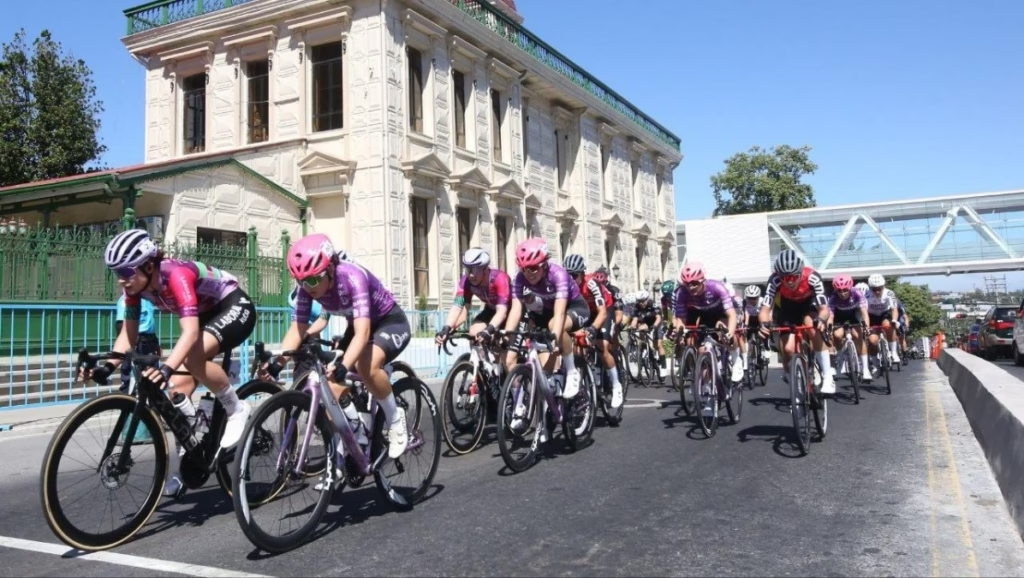 Photo Credit: Francisco Aleman
Why does everyone sometimes refuse to chase?
Because chasing costs energy.
If Team A has a rider in the breakaway, it has no reason to help bring that rider back.
Team B may want the break caught but decide Team C has more to lose.
Team C may think exactly the same thing about Team B.
Nobody wants to spend their domestiques while rivals save theirs.
This creates a tactical stalemate where the breakaway gains time even though the peloton has more than enough physical strength to catch it.
The strongest group does not always win the tactical argument.
Sometimes nobody wants to pay the bill.
What does sitting on mean?
A rider in a small group may refuse to take turns on the front.
This is usually described as sitting on.
The rider continues receiving the aerodynamic benefit without contributing much to the pace.
There is often a tactical reason. They may have a teammate ahead, their team may have instructed them not to work or they may simply be conserving energy because they are the fastest sprinter in the group.
That can create tension.
The riders doing the work know they are towing someone towards the finish who may later beat them.
If the passenger refuses to contribute, attacks often follow.
What does taking a pull mean?
A pull is a turn on the front of a group.
A rider moves into the wind, maintains the pace for a period and then moves aside so another rider can take over.
In a fast breakaway, pulls may last only a few seconds.
In a slower training group, riders may stay on the front for much longer.
The purpose is to share the expensive aerodynamic work rather than forcing one rider to do everything.
Once riders stop taking turns, the group normally slows.
That is why cooperation is so important to breakaway success.
Why does a breakaway start attacking itself?
Because the objective changes as the finish gets closer.
Early in the race, breakaway riders need each other. Working together gives them the best chance of staying ahead of the peloton.
Late in the stage, those same riders become direct rivals for victory.
A weaker sprinter may attack because reaching the finish in a group is useless to them. A faster rider may stop taking turns because they want to save energy. Others respond by attacking because they do not want to tow that rider to the line.
Cooperation disappears.
The breakaway slows.
That can give the peloton the opening it needs.
A break can therefore lose several minutes late in a stage even when the riders are still physically strong.
Why does the peloton sometimes get the chase wrong?
Because cycling is not controlled by a formula.
Teams estimate the time gap, remaining distance, strength of the break and likely speed needed to make the catch.
They can still miscalculate.
The break may be stronger than expected.
The chase may start too late.
Several teams may refuse to help.
A crash can remove important domestiques.
A tailwind can help the attackers, while a headwind may make them easier to catch.
This uncertainty is why breakaways still occasionally win stages where the peloton appears to have every tactical advantage.
The bunch is powerful.
It is not infallible.
Is riding in the peloton dangerous?
It can be.
Professional riders travel at high speed with very little space between wheels. A small mistake can affect dozens of riders behind.
Touching wheels can cause a large crash, while road furniture, narrow bridges and corners increase the risk further.
This is another reason riders spend so much energy fighting for position even when there is no tactical reason to attack.
Being near the front reduces the number of potential problems ahead.
Drafting saves energy.
Positioning keeps you in the race.
For recreational cyclists, the same broad principle of predictable positioning matters even outside racing. Our guide to road positioning for cyclists explains how to use space safely on normal roads.
Does the rider at the back save the most energy?
Not necessarily.
The rear of the peloton can provide excellent aerodynamic shelter, but it comes with other costs.
The accordion effect is stronger.
Corners require harder accelerations.
Crashes and splits happen ahead.
Moving forward through more than 100 riders takes energy.
A rider can therefore save power through drafting while wasting energy through poor position.
The most efficient place is often somewhere inside the front part of the bunch, sheltered but close enough to respond when something changes.
That is why protected leaders are constantly being moved forwards even during apparently quiet sections of a race.
-
 Photo Credit: quentinphotographiebe
 -
 Photo Credit: Getty
Why does the peloton look calm and then suddenly become chaotic?
Because riders are waiting for the part of the road that matters.
For 100km, there may be no tactical reason for the race to become difficult.
The breakaway is controlled.
The weather is stable.
The decisive climb is far away.
Everyone saves energy.
Then the race reaches the final 30km.
The break has to be caught.
The road narrows.
Teams begin positioning for a climb or sprint.
Suddenly every rider wants the same piece of road.
The transformation can happen within minutes.
The peloton has not suddenly started racing.
It has been racing all day.
The priorities have changed.
The peloton is both an energy-saving machine and a tactical battlefield
Drafting explains why cyclists form a peloton, but it does not explain everything that happens inside one.
The bunch lets riders travel faster while using less energy, making long stages possible and allowing team leaders to preserve their strongest efforts for decisive moments. At the same time, every rider wants good position, every team has a different objective and nobody wants to do more work than necessary.
That creates the tactical tension at the heart of road racing.
A peloton can spend hours cooperating to catch a breakaway and then become completely divided over who should chase the next attack. Riders can spend most of a stage helping each other travel efficiently before trying to drop each other on the final climb.
Understanding that changes how a cycling race looks.
What first appears to be a large group simply following the road is actually a constantly shifting balance of aerodynamics, teamwork, positioning and self-interest.
The riders are not sitting in the bunch because nothing is happening.
Until the right moment arrives, it is usually the smartest place to be.

