
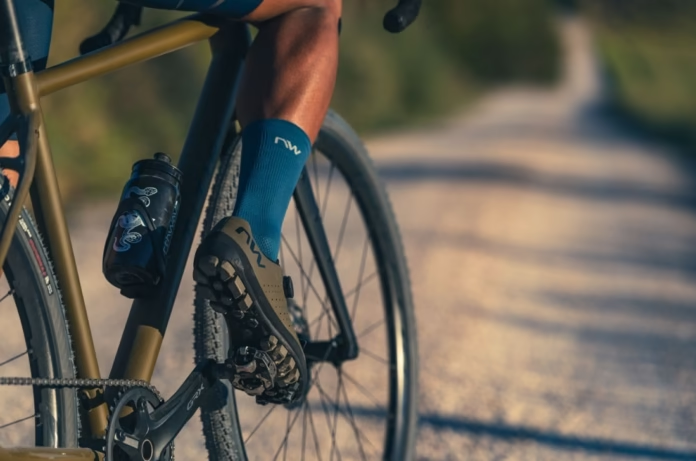
The Northwave Hammer Plus remains one of the more useful gravel and cross-country shoes for riders who value comfort and walkability as much as outright sole stiffness. After months of riding them across gravel routes, muddy trails, cyclocross-style terrain and longer commutes, the feature that stands out most is not their race performance but how little compromise they ask for away from the bike.
The Jaws Evo sole is stiff enough for hard efforts but deliberately more flexible through the toe than a carbon race shoe, while Northwave’s SLW3 dial gives the upper a secure, easily adjustable fit. That combination makes the Hammer Plus particularly well suited to gravel rides where walking, café stops and rough hike-a-bike sections are part of the day rather than an inconvenience.
Northwave Hammer Plus at a glance
| Best for | Gravel, XC mountain biking, mixed-terrain riding and commuting |
| Closure | Single SLW3 dial plus forefoot Velcro strap |
| Sole | Jaws Evo with rubber tread and flexible toe section |
| Cleats | Two-bolt MTB/SPD-style systems |
| Upper | Perforated seamless construction with thermowelded TPU protection |
| Fit | Regular, with a separate Hammer Plus Wide now available |
| Price | Originally around £121.49; 2026 pricing varies heavily by colour and size |
The Hammer Plus is still part of Northwave’s range in 2026 rather than being an obsolete shoe hanging around in old stock. The regular version now sits alongside a dedicated Hammer Plus Wide, while sale pricing means the shoe can often be found below its original launch price. That makes it more attractive now than when this review was first published, provided your size is available.
Design and closure
The design is simple and functional. A single SLW3 dial does most of the work, pulling the upper evenly around the foot, while a smaller Velcro strap sits across the forefoot. I still think the strap contributes less than the dial, but the SLW3 itself is excellent. It allows small on-bike adjustments without having to stop, and releasing pressure is quicker and more controlled than with a conventional ratchet system.
The pair tested here is the light grey/white version from the earlier colour range. Northwave’s current regular-fit listing has moved to black, white, dark grey and sand, so availability now depends on whether you are buying current stock or discounted previous-season colours.

The lower part of the shoe is protected by thermowelded TPU reinforcement, which is useful once gravel rides turn into rougher trails or you start knocking the shoes against rocks, roots and pedals. The perforated upper is soft rather than heavily structured, with generous padding around the tongue and ankle.
Jaws Evo sole and walking comfort
The Jaws Evo outsole is the reason the Hammer Plus makes more sense as an all-round off-road shoe than a pure race model. There is enough stiffness under the cleat area to stop the shoe feeling vague under power, but the toe section has noticeable flex when walking. On gravel rides where you may be opening gates, scrambling over obstacles or pushing the bike up a loose bank, that is genuinely useful.
The rubber tread also gives far more confidence on loose surfaces than a road shoe. Replaceable metal toe studs are included for muddy conditions, although I preferred removing them for mixed riding. They add grip when the ground is soft but can feel awkward and noisy on hard floors and rocky surfaces.
If you are moving from road pedals to a two-bolt off-road system, our guide to clipless pedals and cleats explains the differences between the main cleat formats.
Northwave Hammer Plus performance on the bike
The Hammer Plus never felt too soft during testing. Hard accelerations, short climbs and technical off-road sections all produced a solid connection with the pedal, without the harsh feel that can come with an extremely rigid carbon sole. For racing where every gram and every small gain in stiffness matters, there are more focused shoes. For normal gravel riding, the balance is arguably more useful.
The soft lining around the closure adds to that impression. On longer rides I did not get the concentrated pressure points that can develop in shoes with a stiffer upper, while the dial was easy to loosen slightly as feet expanded over the course of a warm ride.

Fit: regular or Hammer Plus Wide?
The regular Hammer Plus has reasonable overall volume, but I would not describe the toe box as especially broad. The front tapers enough that riders with a wide forefoot may notice pressure during longer rides or in hot conditions.
That criticism is easier to deal with in 2026 because Northwave now offers a separate Hammer Plus Wide. The Wide version adds 5mm through the metatarsal area, so riders who like the design but need more forefoot room no longer have to size up simply to gain width.
Northwave also recommends measuring both foot length and metatarsal circumference rather than choosing solely from your normal shoe size. That is worth doing with either fit because the flexible upper cannot compensate for a toe box that is fundamentally too narrow.
Ventilation
Ventilation is adequate rather than exceptional. The perforated upper does move air, but this is still a fairly padded off-road shoe and it can feel warm on hot days. That is less of a concern for typical UK gravel riding, but riders spending most of their summer in hotter climates may prefer a more open upper.
Long-term durability
This is one of the stronger parts of the review. After several months of use across muddy UK trails, rocky ground and regular commuting, the upper remained intact and the rubber tread had resisted wear well. The shoes even survived a scrape against barbed wire without tearing the outer material.
The TPU reinforcement around the lower edge, toe and heel has done its job, keeping the areas most likely to contact debris from becoming badly scuffed. For an off-road shoe that is deliberately comfortable enough to walk in, the construction has proved reassuringly tough.

Cleaning and maintenance
The synthetic upper is straightforward to clean. Most dirt comes away with a damp cloth or a gentle bike-cleaning solution, and the lack of complicated stitched panels means there are fewer places for dried mud to collect.
I would avoid treating them like waterproof winter boots, though. The perforations that help ventilation also mean sustained wet conditions eventually work through the upper. For the worst winter weather, a more enclosed shoe or overshoe remains the better answer.
Northwave Hammer Plus price and value in 2026
The original UK price was around £121.49, but that number is no longer especially useful because 2026 stock varies considerably by size and colour. The Hammer Plus is still being produced, while older colourways are regularly sold at a discount. If you can find your size below £100, the value argument becomes particularly strong.
That price bracket puts the Hammer Plus in a useful middle ground. Cheaper shoes often rely on basic Velcro closures and less supportive soles, while more expensive carbon models give you greater stiffness but make less sense if you regularly walk in your cycling shoes. The Hammer Plus is aimed squarely at the rider who wants one pair for gravel, MTB and mixed riding rather than a specialist race-day shoe.

Northwave Hammer Plus review verdict
The Northwave Hammer Plus works because it does not chase race-shoe stiffness at the expense of everything else. It is comfortable over long rides, easy to walk in, secure under power and durable enough for repeated use on messy British gravel and trails.
-
 Photo Credit: Flavia Ossola
The regular fit could still be too tapered for riders with a broad forefoot, and the small Velcro strap adds less than the SLW3 dial. Ventilation is also merely average in hot weather. None of those issues undermines the basic proposition, particularly now that a dedicated Wide version is available.
For gravel riders, mountain bikers and commuters who want a two-bolt shoe that can handle long days and regular time off the bike, the Hammer Plus remains easy to recommend in 2026. It makes most sense when bought below its original launch price, where the combination of comfort, adjustability and durability is difficult to fault.

