
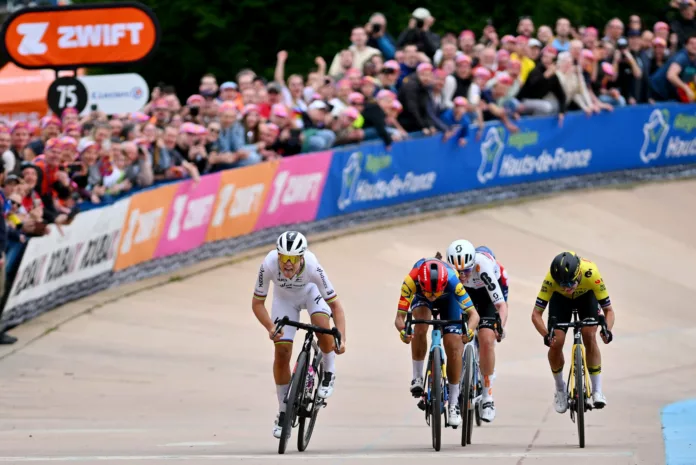
Paris-Roubaix Femmes is often framed as a shorter version of the men’s race. That is true only in the most superficial sense. The women’s event uses the same mythology, the same pavé, the same Roubaix Velodrome finish and much of the same late-race logic, but it does not ask the same tactical questions in the same order. That is why it is raced differently.
The difference is not about status or seriousness. It is about structure. Paris-Roubaix Femmes reaches its decisive terrain in a more compressed race, with fewer sectors and less total distance before the hardest part of the day really begins to bite. The men’s race, by contrast, is built as a long erosion of strength, team depth and control. Both races are brutal. They are simply brutal in different ways.
If you want the broader race context first, ProCyclingUK’s A complete history of Paris-Roubaix Femmes sets out how the women’s race has developed its own identity since 2021, while the Beginner’s guide to Paris-Roubaix Femmes 2026 explains the basics of the event for newer fans. For the current course itself, the Paris-Roubaix Femmes 2026 route guide gives the clearest overview of how the race is built today.
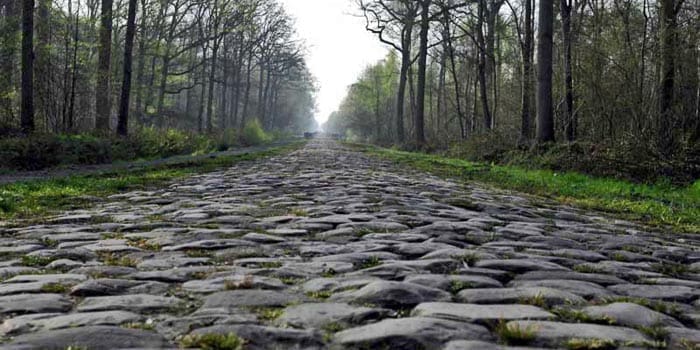
The route shape changes everything
The simplest place to begin is with the route itself.
The men’s race is longer, broader and more drawn out in how it applies damage. Teams have more road in which to apply pressure, more time to lose riders, reorganise, make mistakes, recover from them, and then start all over again. The race does not usually explode all at once. It wears the bunch down layer by layer, leaving the strongest riders to deal with the final sectors in a much more isolated and damaged state.
Paris-Roubaix Femmes is different because the decisive cobbles arrive in a tighter block. That makes the race feel more abrupt. The move from tension to consequence is quicker. In the men’s race, the day often feels like a long march into the furnace. In the women’s race, it can feel as though the door is opened much sooner and much more suddenly.
That matters tactically because it reduces the room for patience. The men’s race allows teams to think in longer phases. Paris-Roubaix Femmes more often pushes them into sharper decisions.

Why the women’s race is more immediate
One of the most striking differences between the two races is how quickly mistakes start to matter.
In the men’s race, there is sometimes enough distance left for a rider to survive a badly timed puncture, a small split, or a poor moment of positioning, especially if the team still has numbers to help repair the damage. That does not mean recovery is easy, but the sheer scale of the event means there is often more road in which the race can reshuffle before the next crucial phase.
Paris-Roubaix Femmes offers less of that luxury. When the race breaks, it often breaks with greater finality. If a rider enters a key sector too far back, loses contact at the wrong moment, or misses the move that forms on the cobbles, there is usually less time and less organisation behind to fix it. The race reaches its most dangerous point sooner in relative terms, so the consequences of being out of place arrive faster as well.
That is a big reason why Paris-Roubaix Femmes can look more explosive. It is not necessarily more chaotic. It is simply more immediate.

Team tactics work differently in each race
The structure of the men’s race allows teams to think in stages.
They can spend domestiques early, manage the run-in, protect leaders through long flat sections, and then gradually shift from control into selection. In a race that long, depth matters enormously because there are so many points where a team can still influence the outcome. Even if the strongest favourite is isolated relatively late, there has usually been a long strategic process before that point.
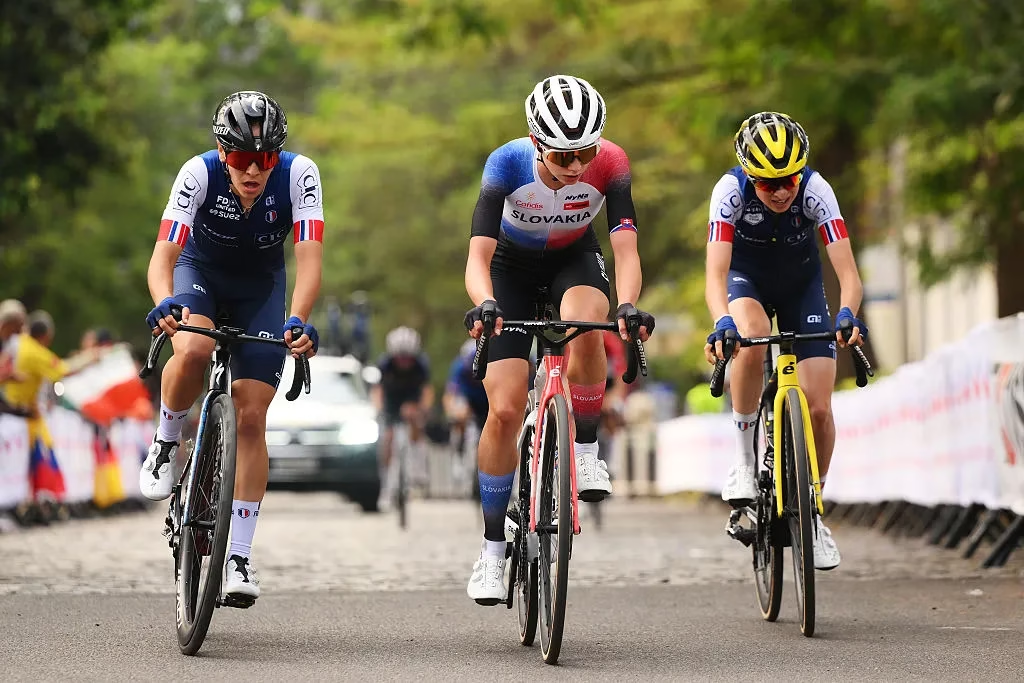
In Paris-Roubaix Femmes, team tactics often become more urgent and more reactive. There is less space for a slow tactical build because the route reaches its critical phase more quickly. That means positioning before the key sectors becomes even more important. Teams still want numbers at the front, of course, but they are often forced into sharper decisions sooner. Instead of building control over several phases of the race, they may find themselves already fighting for survival as the decisive sectors begin.
That creates a more compressed tactical environment. Plans still matter, but adaptation matters even more.
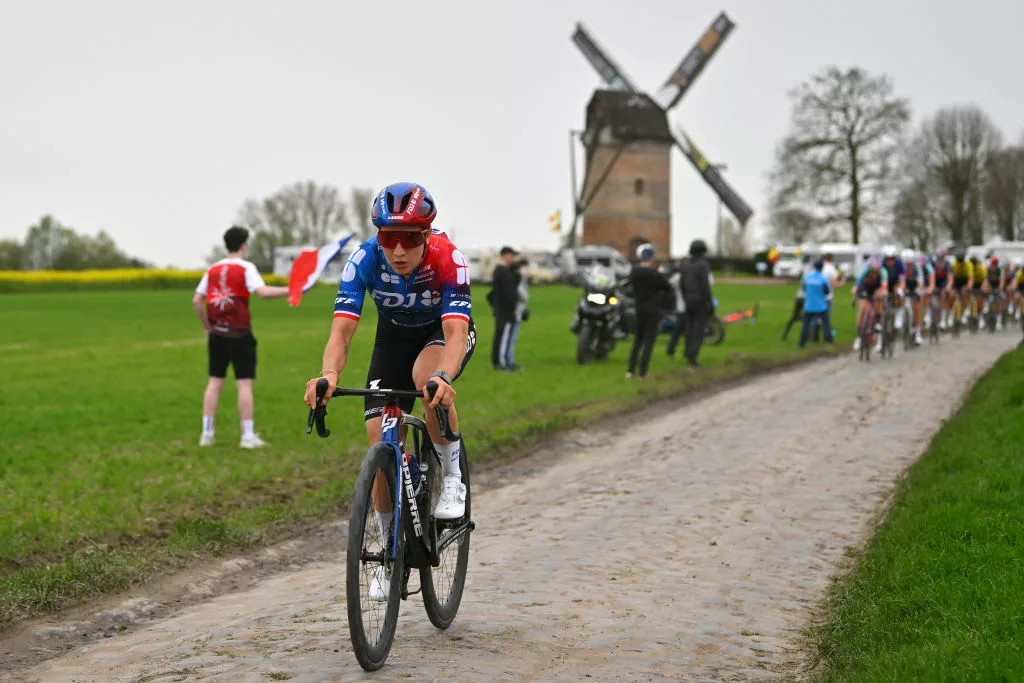 Photo Credit: Getty
The race rewards a slightly different type of strength
Both races reward power, endurance, positioning and bike handling. But the balance between those qualities shifts.
The men’s race places huge emphasis on deep endurance. It often favours riders who can absorb five or six hours of cumulative stress, repeated accelerations, bad luck and constant physical punishment before still producing one race-winning effort late on. Roubaix for the men is not just about surviving the cobbles. It is about surviving the long road to the cobbles and still being able to race once you get there.
Paris-Roubaix Femmes still rewards raw strength, but the compressed nature of the race leaves slightly more room for sharp tactical instinct and explosive decision-making. The winning move can matter sooner. The race can still favour the strongest rider, but not always in the same attritional way. Sometimes it rewards the rider who reads the moment correctly, commits first, and turns a brief hesitation behind into a decisive advantage.
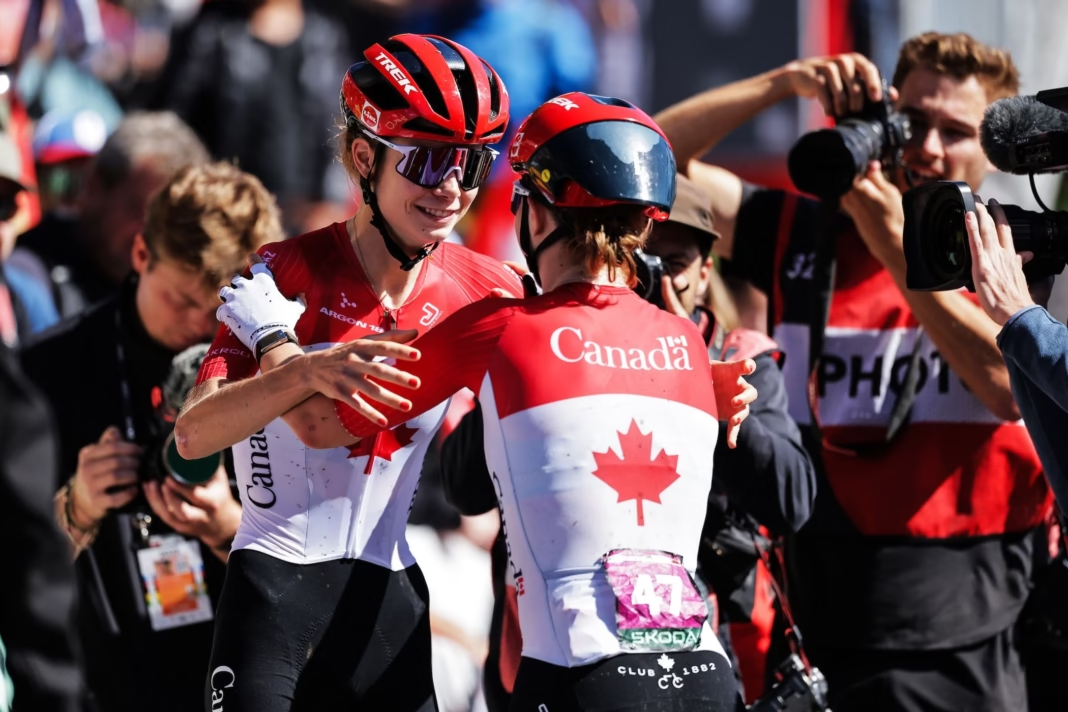
That is one reason the women’s race has already produced such varied winning scripts. As A complete history of Paris-Roubaix Femmes shows, the event has already been won through very different kinds of rides, from Lizzie Deignan’s long solo to Alison Jackson’s breakaway success and Pauline Ferrand-Prévot’s later attacking move. The race does not always wait for hierarchy to settle neatly. It can reward timing just as much as domination.
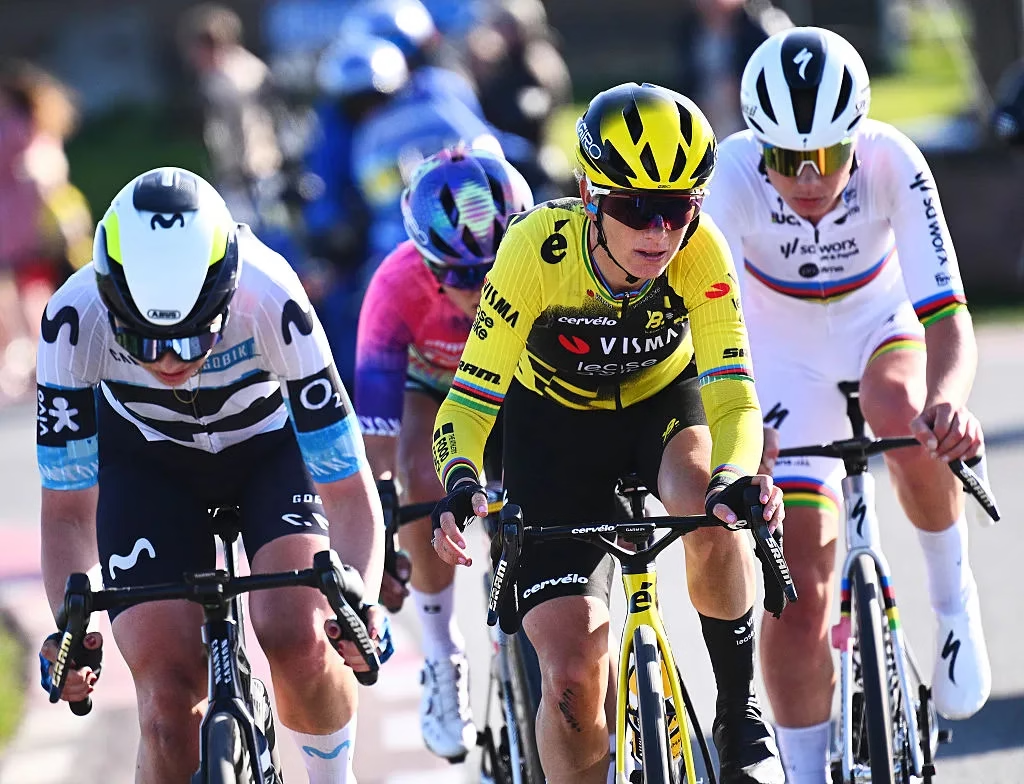
Positioning carries even greater urgency
Positioning matters in both versions of Paris-Roubaix, but the women’s race often makes that importance feel even more immediate.
In the men’s race, everyone knows that bad positioning before the major sectors can be fatal. But there is also a long build-up to that tension. The race teaches you where the danger is, then slowly drags the bunch towards it.
In Paris-Roubaix Femmes, the key sectors arrive in a way that gives the race a more pressurised feel. There is less dead space, less time for the day to breathe, and less room for riders to treat the early critical moments as anything other than decisive. That means the run-in to the pavé can feel more intense relative to the race as a whole. Riders are not conserving themselves for a distant showdown in quite the same way. They are already in it.
That sharper urgency is one of the reasons the women’s race so often rewards conviction.
Why Paris-Roubaix Femmes often feels more tactical
This may sound strange, because the men’s race is obviously deeply tactical too. But Paris-Roubaix Femmes often feels more tactical in a very specific sense.
The men’s event is so long and so attritional that eventually the route itself begins to act as the main selector. Even the best team plans must give way to the sheer brutality of distance and terrain. The strongest riders tend to emerge because the race simply keeps grinding until almost nothing else is left.
Paris-Roubaix Femmes still has that selection, but in a tighter and more compressed form. That means the right move can matter sooner and more sharply. Teams and riders are often forced into instinctive decisions at moments that in the men’s race might still sit within a longer process of wearing rivals down. The race can hinge more suddenly on one choice, one split, one acceleration, one hesitation.
That does not make it less honest. It simply makes it differently honest.
-
 Photo Credit: Getty

It is not a lesser version, it is a different version
This is the point that matters most.
Paris-Roubaix Femmes is not raced differently because it is a diluted copy of the men’s event. It is raced differently because the route asks different questions. The men’s race is a long destruction of control before the final verdict. The women’s race is more compressed, more abrupt and often more immediate in the way it forces decisions.
The result is that the men’s race tends to reward those who can endure a day-long war of attrition and still produce one final elite effort. Paris-Roubaix Femmes more often becomes a sharper contest of timing, nerve, positioning and instinct once the decisive phase begins.
That is not a weakness in the race. It is its identity.
Final verdict
The easiest mistake to make with Paris-Roubaix Femmes is to judge it only by what it does not share with the men’s race. It is shorter. It uses fewer sectors. It reaches the deepest part of the pavé more quickly. All of that is true.
But the more interesting truth is what those changes produce. They create a race that is faster to ignite, harsher in its consequences, and more compressed in its tactical demands. The men’s race grinds riders down until only the strongest remain. Paris-Roubaix Femmes forces the strongest to reveal themselves more quickly, and often more decisively.
That is why it is raced differently. Not because it is less than Roubaix, but because it is Roubaix organised around a different rhythm of pressure.
For readers coming at this from the wider cobbled spring, the Men’s Dwars door Vlaanderen 2026 route guide and How to watch the Men’s In Flanders Fields 2026 in the UK help place Paris-Roubaix within the broader shape of the Classics season.

