
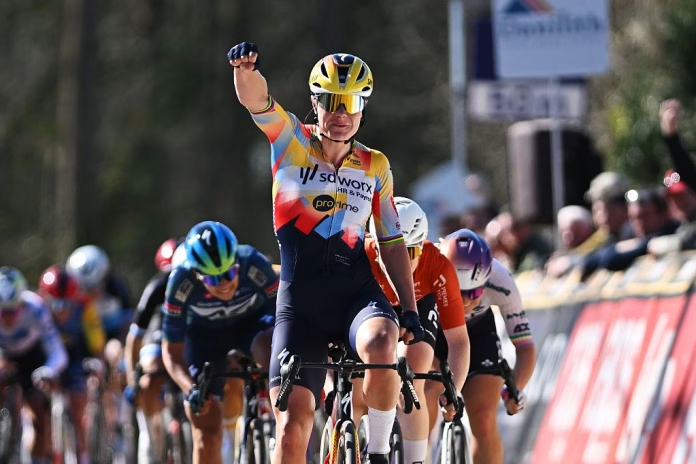
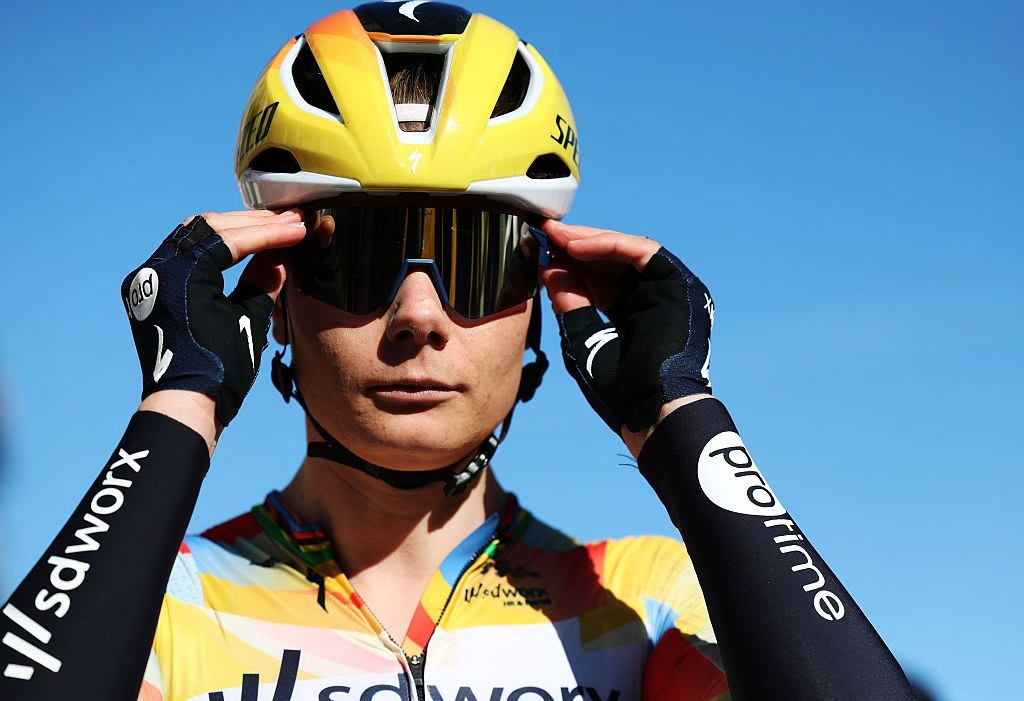
Lotte Kopecky’s 2026 season already feels more focused than her previous campaign. There is a clearer sense of purpose to it, and that matters because Kopecky tends to look most dangerous when her year is built around the biggest one-day races rather than a blurred mix of targets. Still riding for Team SD Worx-Protime, she remains one of the defining figures of the women’s Classics, but this spring has looked less like an experiment and more like a return to what she does best.
The broad pattern has been easy enough to spot. The first results were uneven, but the trajectory has been strong. She opened with frustration, raced her way into better condition, then turned that form into wins at exactly the kind of races that suit her profile. That is what makes the season interesting now. It is not simply that Kopecky is winning again. It is that she looks like Kopecky again, decisive in selective races, calm in tactical finales, and increasingly central to the biggest spring storylines.
A difficult opening, but not a worrying one
On paper, the season did not begin especially smoothly. Kopecky was 39th at Omloop Het Nieuwsblad Women, then 7th at Trofeo Alfredo Binda. Those are not the sort of numbers that immediately suggest dominance, but they do need context. Omloop was disrupted, and Binda looked much more like a rider building her way into the spring than one lacking level altogether.
That is often the danger with reading too much into March results in isolation. A rider like Kopecky is not judged only on placings, but on the shape of her condition and the races she is targeting. In her case, the bigger point was that she was steadily moving towards the part of the calendar where her strengths matter most: hard one-day races, selective finales, and spring Monuments where physical power and tactical judgement both count heavily.
Nokere Koerse was the first proper signal
The first real turning point came at Nokere Koerse. Kopecky took her first road win of the 2026 season there, beating Charlotte Kool and Lara Gillespie in a race that still required patience and precision rather than just raw speed. It was an important success because it suggested the build-up phase was over and the sharper version of Kopecky had arrived.
That mattered beyond the win itself. Nokere is not a Monument, but it is the sort of race where form becomes visible. You do not win there without good timing and good legs. Kopecky doing that just before Milano-Sanremo Women felt significant at the time, and it looks even more significant now.
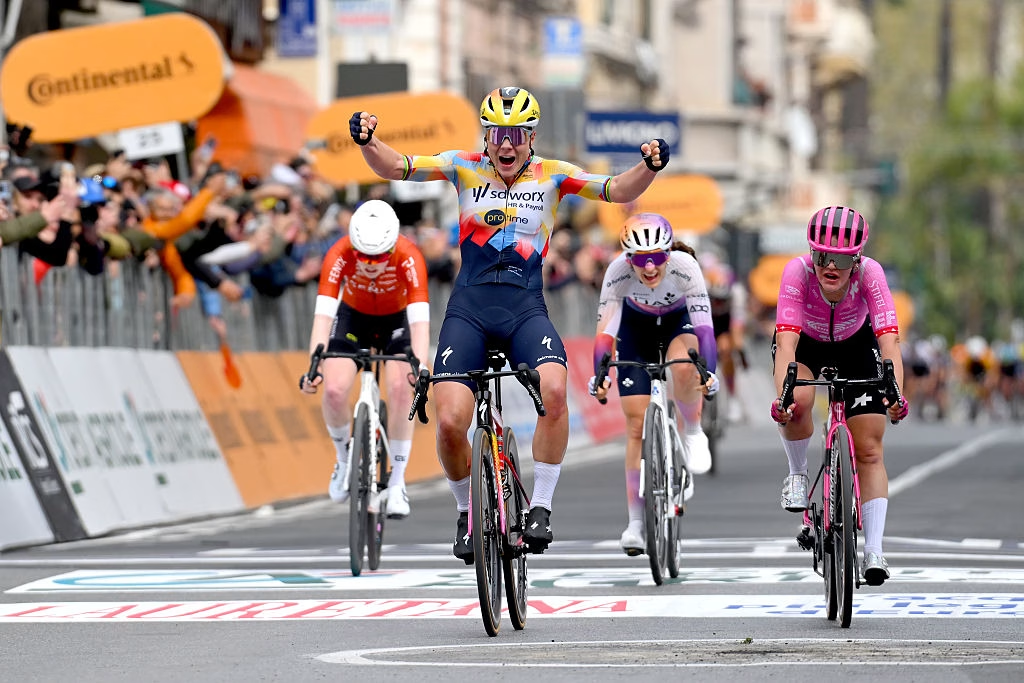 Photo Credit: Getty
Milano-Sanremo Women was the major statement
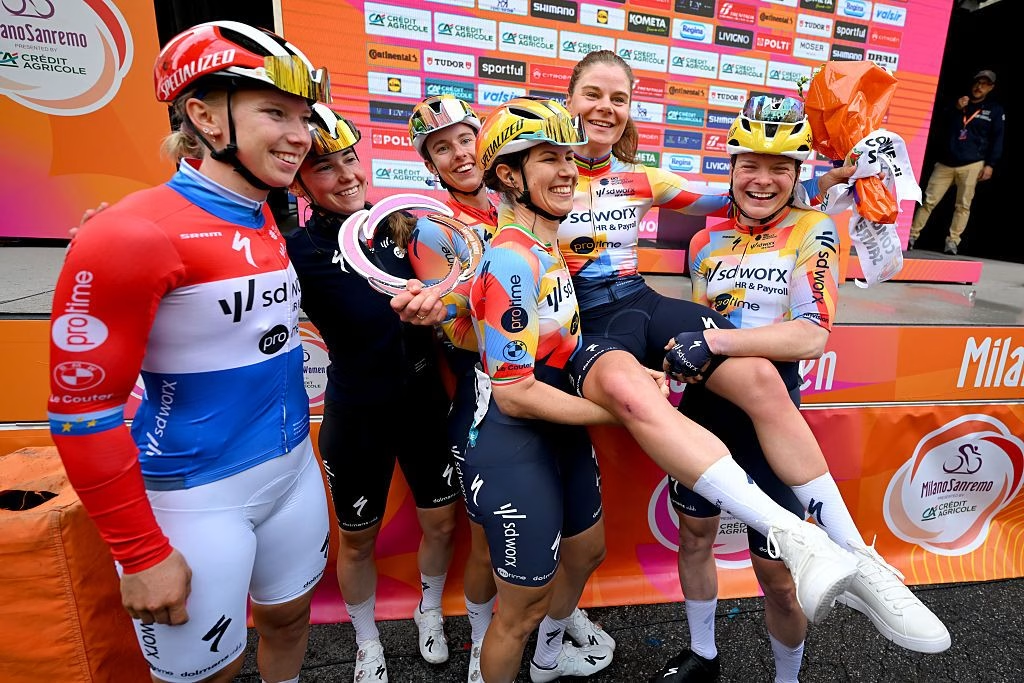
If Nokere was the signal, Milano-Sanremo Women was the declaration. Kopecky won the 2026 edition from the front group after the Poggio, beating Noemi Rüegg and Eleonora Gasparrini in a reduced sprint. That was her biggest result of the season so far and the ride that really re-established her at the front rank of the spring.
The shape of that win was especially important. This was not a straightforward bunch sprint and not a pure climbing exhibition either. It was exactly the kind of in-between race Kopecky handles so well: survive the decisive section, stay calm in a tactical finish, then finish with authority. That sort of victory says far more about her current level than a cleaner sprint win would have done.
It also reinforced the wider impression of her spring. This season looks much more like a deliberate Classics-first reset than a continuation of the more mixed ambitions seen before. That is a sensible direction. Kopecky can still influence stage races, but the clearest version of her remains the one aimed squarely at the biggest one-day prizes.
What has defined her 2026 season so far?
The clearest feature of Kopecky’s season so far has been coherence. Last year often felt like a balancing act between different identities. This year looks simpler and stronger.
She is again racing like a rider built around major one-day targets. That means using her range rather than forcing herself into one narrow role. Kopecky is dangerous because she can win in more than one way. She can survive a hard race and sprint from a reduced group. She can handle nervous positioning battles. She can accelerate repeatedly in a selective finale. She can also read the end of a race better than most of her rivals.
That combination is what gives her such a high ceiling in spring. She is not just a sprinter, and she is not just a Classics rider in the narrow sense either. The best version of Kopecky sits across several categories at once, and 2026 has already reminded everyone why that matters.

Lotte Kopecky’s 2026 results so far
Her road campaign to this point reads:
- Omloop Het Nieuwsblad Women – 39th
- Trofeo Alfredo Binda – 7th
- Nokere Koerse – 1st
- Milano-Sanremo Women – 1st
Those results tell a fairly clear story. The season began quietly, improved quickly, then lifted into major-winning form by the time the spring reached its most important opening block.
Likely 2026 race programme from here
A full rider calendar is not always confirmed far in advance, but based on Kopecky’s current Classics-first direction and the shape of the Women’s WorldTour, the most logical races for the rest of this spring are:
- In Flanders Fields Women
- Ronde van Vlaanderen
- Paris-Roubaix Femmes
- Amstel Gold Race Women
- La Flèche Wallonne Féminine
- Liège-Bastogne-Liège Femmes
Beyond spring, the bigger-picture races that would still make sense in her year include the Tour de France Femmes and the major championship targets later in the season, but the clearest immediate reading is that the heart of her 2026 campaign is the Monument and Ardennes block.
What does success look like from here?
For Kopecky, success in 2026 is not just about how many races she wins. It is about where she wins and how consistently she shapes the biggest races on the calendar.
She already has a major one-day victory this year. That changes the tone of the season immediately. From here, the question becomes whether she can turn that momentum into another Monument, a dominant cobbled campaign, or a spring that leaves her once again looking like the most complete Classics rider in women’s cycling.
That is a realistic aim. She has already shown enough to suggest the level is there. More importantly, she has shown that the structure around her season now makes sense. Kopecky does not need to prove she can be many different kinds of rider all at once. She needs to be the best version of herself in the races that matter most to her, and so far in 2026, that is exactly what she has been doing.
The verdict on her season so far
Lotte Kopecky’s 2026 season is still young, but it already looks significant. Not because every race has gone perfectly, but because the campaign has a much clearer identity than before. The best riders often look strongest when their racing makes sense, and Kopecky’s spring has started to make sense again.
A disrupted opener did not derail her. A quieter early run did not define her. She rode into form, won Nokere Koerse, then took Milano-Sanremo Women in exactly the kind of selective, high-level finale that suits her best. That is a serious platform for the months ahead.
If this continues, 2026 may come to be remembered less as a season of recovery and more as the year Kopecky reasserted exactly who she is.

