
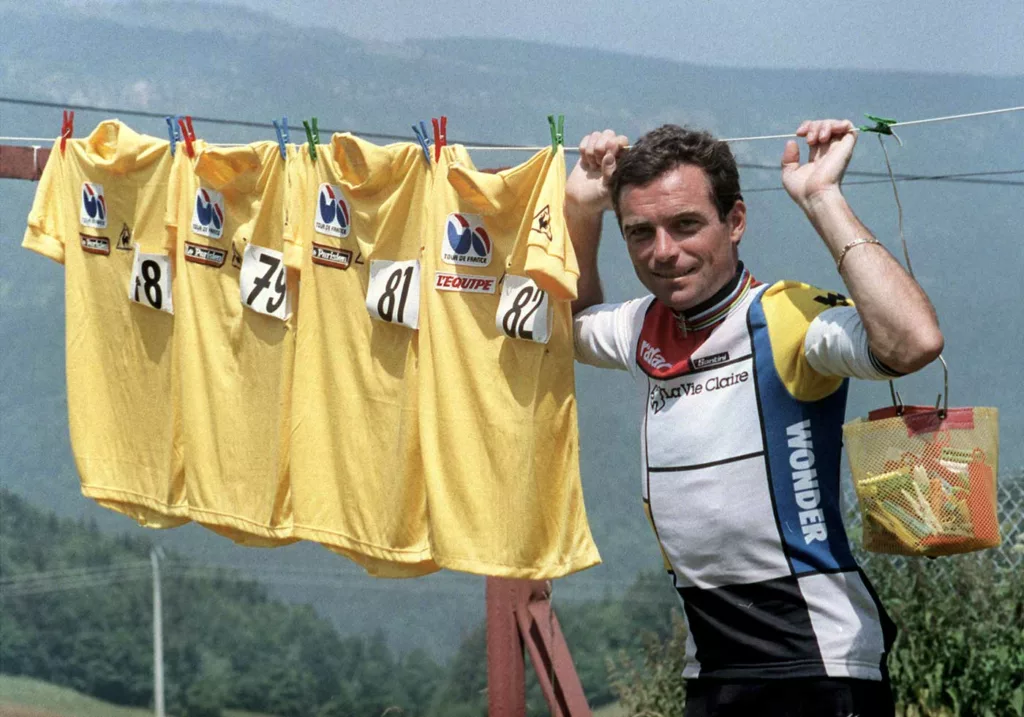
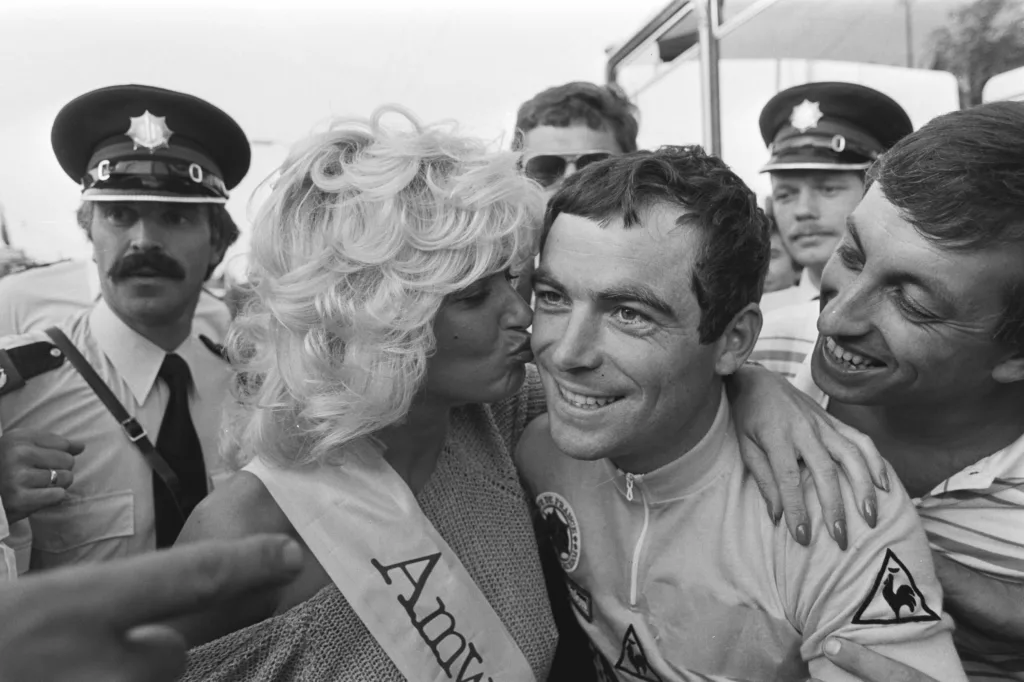
Bernard Hinault was not the most elegant rider of cycling’s golden generations, and he was not the most romantic either. He did not need to be. What made him so formidable was the completeness of his control. He could climb, time trial, handle bad weather, intimidate rivals, read a race and, when needed, simply overpower it. He won five Tours de France, three Giro d’Italia titles, two Vueltas a España and a world championship, but the numbers only tell part of the story. What set Hinault apart was the manner of his rule. For a period at the end of the 1970s and the start of the 1980s, he did not just win big races. He seemed to dictate what cycling was.
That is why he still feels like such an important figure in the sport’s history. There have been riders since then with similar palmarès in certain areas, and riders with more global fame, but none has carried quite the same sense of domination across the whole shape of the sport. Hinault was a Grand Tour rider, a Classics rider, a stage hunter, a time triallist and a leader in the rawest sense. He was not managing one corner of the calendar. He was laying claim to all of it. For readers exploring the wider history around him, this piece sits naturally alongside ProCyclingUK’s features on Greg LeMond, the brief history of Giro d’Italia and broader spring Classics history coverage.
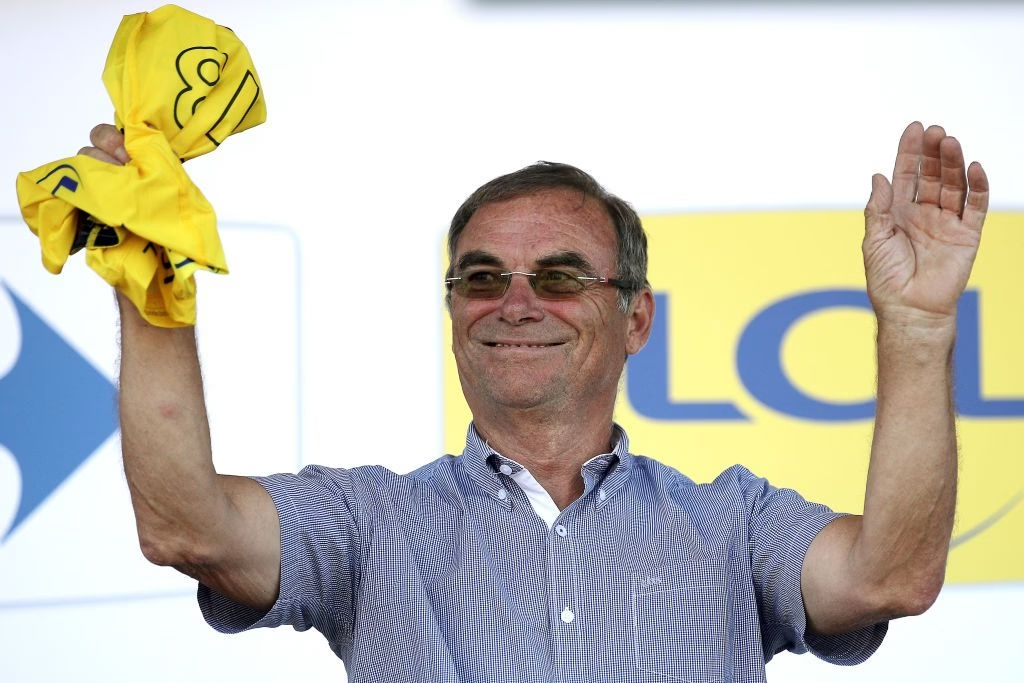
From Brittany to the top of the sport
Hinault was born in Yffiniac, in Brittany, on the 14th November 1954, and that background mattered. He always carried something of Brittany with him in the public imagination: hard, proud, direct, resistant to compromise. Even before the nickname “Le Blaireau” became part of cycling folklore, he had the air of a rider who did not bend easily. There was no polished courtliness about him. He looked and sounded like someone who expected the world to meet him on his terms.
That fitted the sort of rider he became. He turned professional in the mid-1970s and rose quickly through Gitane, then Renault-Gitane. By 1978 he was already winning the Vuelta a España and the Tour de France in the same season. That kind of acceleration into greatness is often the first sign that a rider is going to become something larger than a champion. Hinault was not learning slowly in public. He was taking over.
The timing mattered too. Eddy Merckx had defined the previous era so completely that the sport was still adjusting to life after him. There were strong riders around, clearly, but cycling had not yet found its next true centre of gravity. Hinault became that centre with startling speed.
The rider who could do everything
This is the simplest way to understand Hinault. He could do everything that mattered in top-level road racing, and usually at a standard high enough to win the biggest races in the world.
He was one of the strongest time triallists of his era, which gave him enormous authority in stage races. Rivals knew that if they handed him time in the mountains or in crosswinds, he could make the gap feel permanent against the clock. But he was not just a rider who waited for time trials to settle things. He climbed aggressively, often raced in bad weather as though he enjoyed it, and could attack in places where more controlled stage-race riders preferred to calculate.
He was also far better in one-day races than many Grand Tour champions. Hinault won Liège-Bastogne-Liège twice, Flèche Wallonne once, Paris-Roubaix once, Gent-Wevelgem once, the Amstel Gold Race once and Il Lombardia twice. That is not a side collection from a stage-race specialist. That is the record of a rider whose authority extended across the whole landscape of the sport.
That breadth is one of the reasons he still feels so unusual. Modern cycling has become more specialised. Grand Tour leaders are often more carefully managed, more selectively deployed and less inclined to spend themselves across every terrain type. Hinault belonged to an era when the biggest rider could still try to own almost everything. More importantly, he succeeded. That side of his career also links neatly with ProCyclingUK’s histories of races he mastered, including a brief history of Liège-Bastogne-Liège Femmes and the site’s Paris-Roubaix Femmes history coverage, even if those are the modern women’s versions of the races.
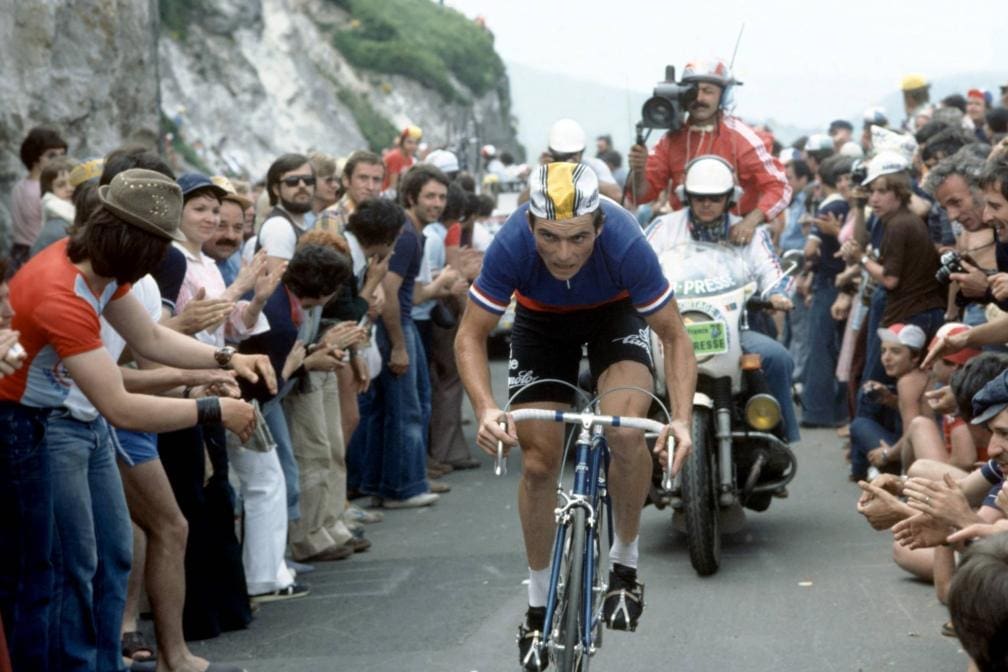
The Tours de France and the making of a ruler
Hinault won the Tour de France five times, in 1978, 1979, 1981, 1982 and 1985. That places him among the greatest riders in the history of the race, but again, the record alone does not quite capture the tone of those victories.
His first Tour win in 1978 established him instantly. He was only 23, and although he was not an unknown quantity by then, winning the Tour so early confirmed that the sport’s balance of power had shifted. He followed it with another win in 1979 and then returned after missing the 1980 edition to win again in 1981 and 1982. That kind of repeated control across changing routes, rivals and race situations is what turns greatness into rule.
The 1980 Tour perhaps tells you as much about Hinault as the years he won. He abandoned while in yellow because of knee pain. That decision angered some people at the time, partly because champions were still expected to embody suffering publicly, but it also showed something essential about him. He was not interested in symbolic survival for its own sake. He wanted command, not theatre at his own expense.
By the time he won again in 1985, after Laurent Fignon’s rise had complicated the shape of French cycling, Hinault was no longer just the young sovereign. He was the older dominant figure defending his place against the next wave. That added another dimension to his career. Great riders do not only arrive. They also have to survive the moment when others are strong enough to challenge their right to rule.
Not just a Tour rider
If Hinault had won five Tours and little else, he would still be a giant. But he won far more than that, and that is where the full scale of his career comes into focus.
He won the Giro d’Italia in 1980, 1982 and 1985. Those victories matter because the Giro has often exposed weakness in riders whose style did not travel well. It rewards resilience, climbing depth, adaptability and the ability to deal with a race that can feel less predictable than the Tour. Hinault won it three times, which tells you that his dominance was not confined to France or to one particular race structure.
He also won the Vuelta a España twice, in 1978 and 1983. The Vuelta did not yet carry quite the same place in the global calendar that it does now, but winning it still mattered, and winning it while also ruling elsewhere reinforced the larger point. Hinault was not choosing a narrow empire. He was taking as much of the map as he could.
That is why he remains the last rider who can convincingly be described as having owned the sport in its totality. Others have dominated the Tour. Others have mastered the Classics. Others have built staggering season peaks. Hinault felt different because there seemed to be so little outside his reach. Readers interested in the Grand Tour side of that legacy can pair this with ProCyclingUK’s brief history of Giro d’Italia and wider Grand Tour explainers.
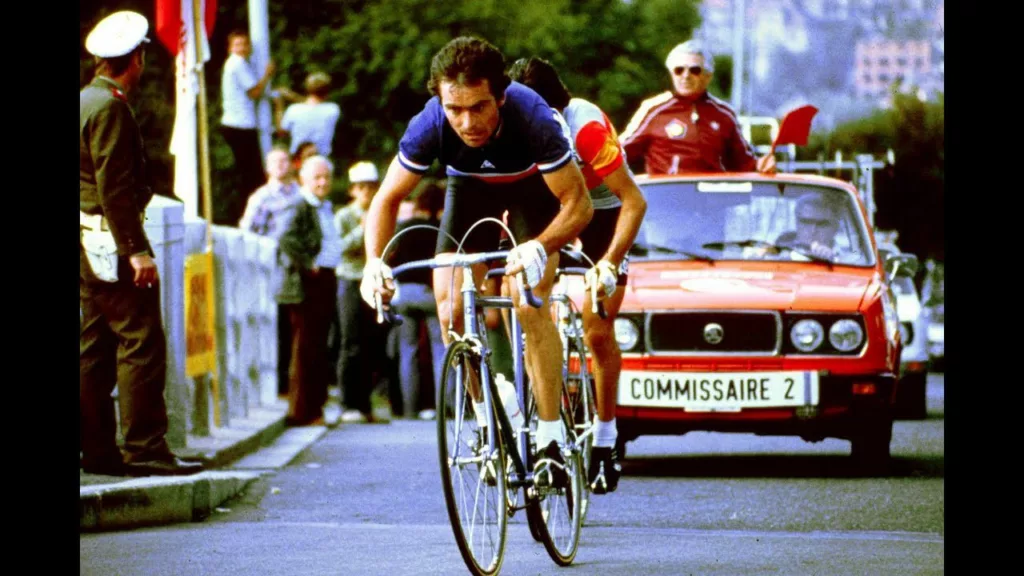
The aggression that defined him
The title of champion can often sound calm in retrospect. Hinault was not calm. He raced with a visible irritation, as though compromise itself offended him.
That aggression shaped how races unfolded. Rivals could not assume he would wait for the obvious point to strike. He was willing to attack from distance, ride hard in foul weather and force teammates and opponents alike into the sort of day they did not really want. His authority was not only physical. It was psychological. When Hinault was on the road, there was often a sense that the race would eventually be asked to conform to his appetite rather than the other way around.
This is part of why Paris-Roubaix 1981 remains so central to his legend. Roubaix was not supposed to be easy terrain for a rider with Grand Tour ambitions and overall targets elsewhere, yet he won it anyway, in filthy conditions, on one of the hardest roads in cycling. He later called Paris-Roubaix a stupid race, which only made the victory more Hinault-like. He did not need to love the race aesthetically. He needed to master it.
That same instinct ran through much of his career. He did not seem especially interested in fitting a pleasing narrative for other people. He wanted to win, and he wanted the terms of the victory to leave no doubt about who was stronger.
Authority inside the team and inside the sport
Hinault’s dominance was not only about results. It was also about presence. He carried himself like a man who expected to lead, and usually did.
Inside teams, that could be galvanising or abrasive, sometimes both. Hinault was not a soft-edged leader. He demanded clarity, loyalty and effort. In an era when team hierarchies could be harsher and more openly enforced, he fitted naturally into the role of the rider around whom everything revolved.
That quality reached its peak, and perhaps its complication, in the mid-1980s with Greg LeMond. Hinault had promised to support LeMond after LeMond helped him win the 1985 Tour, but the 1986 Tour became a much messier power struggle than a neat succession. Hinault attacked repeatedly, creating one of the most fascinating internal battles in Tour history. LeMond eventually won, but the episode added a final layer to Hinault’s legend. Even when he was supposed to be passing power on, he did not really know how to stop fighting for it.
That may not make him easy to romanticise, but it does make him easier to understand. Hinault was not built to be ceremonial. Leadership, for him, only seemed real when it was being asserted. ProCyclingUK’s Greg LeMond feature offers the natural companion piece here because LeMond’s rise helps define the closing phase of Hinault’s reign.
The world title and the complete palmarès
Hinault’s world championship win in 1980 mattered because it completed the image. A rider who had already shown authority in Grand Tours and major one-day races now also had the rainbow jersey. He did not need the title to prove he was great, but it strengthened the sense that he could occupy every important space in the sport.
The complete palmarès is why any serious assessment of Hinault eventually runs into the same conclusion. You are not just talking about one of the best Tour riders, or one of the strongest all-rounders, or one of the hardest men the sport has seen. You are talking about a rider who, for a defined period, could arrive at almost any major race with a credible chance of being the strongest person there.
That is a very rare sort of power. Cycling usually resists total ownership because its calendar is too varied, its conditions too unstable and its physical demands too contradictory. Hinault bent that reality more than anyone who came after him.
-
 Photo Credit: A.S.O./Billy Ceusters

Why nobody has really replaced him
There have been extraordinary riders since Hinault, clearly. Miguel Indurain had a remarkable hold on the Tour and the Giro. Sean Kelly had immense one-day and week-long authority. Tadej Pogačar has brought back an unusually broad form of excellence. But none has quite carried the same mixture of scale, aggression and command across the whole sport for a sustained stretch.
Part of that is structural. Modern cycling is more specialised, more optimised and less forgiving of the old idea that one rider should contest everything. Part of it is also temperamental. Hinault had a disposition that made total control seem like the only acceptable outcome. He did not simply want to be the best at his target races. He seemed to want the sport itself to acknowledge him as the point around which everything turned.
That is why he remains such a useful historical marker. When people describe a rider as dominant now, they are usually describing dominance inside a lane. Hinault’s greatness belonged to an era when the lane could still be the whole road.
The last rider to own the sport this completely
There is always a risk in phrases like this of sounding nostalgic or exaggerated. Hinault’s record does not need exaggeration.
He won 10 Grand Tours. He won the world title. He won across the Monuments and major Classics. He won in the cold, in the mountains, against the clock and over cobbles. He led teams, intimidated rivals and shaped races through sheer force of will. Most champions become associated with a terrain or a calendar block. Hinault became associated with command itself.
That is why he still stands slightly apart. Not because nobody since has been brilliant, but because nobody since has quite combined aggression, authority and breadth in the same overwhelming way. Bernard Hinault was not only a champion of his time. For a while, he looked like the owner of it.

