
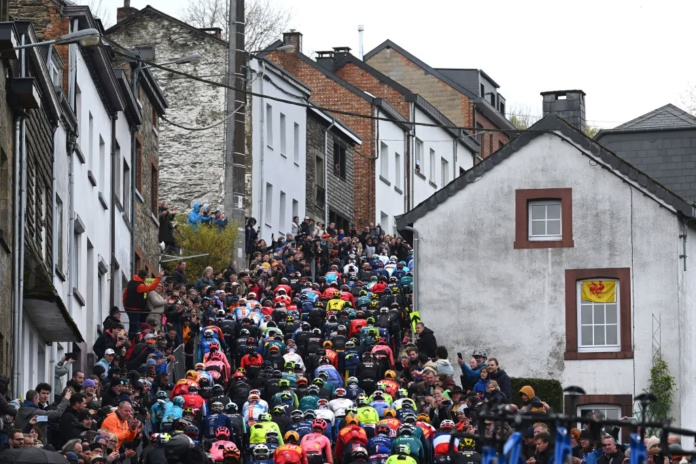
Men’s Liège-Bastogne-Liège 2026 arrives with exactly the kind of field a Monument should have. Tadej Pogačar and Remco Evenepoel still sit at the top of the race hierarchy, but this year’s edition feels broader than a simple two-man script. Paul Seixas has forced his way into the main conversation after his Ardennes rise, Tom Pidcock has returned in time and shown immediate sharpness at the Tour of the Alps, and a second line of contenders including Mattias Skjelmose, Ben Tulett and Kevin Vauquelin, gives the race more tactical depth than a standard favourite-versus-favourite showdown.
That matters because Liège-Bastogne-Liège is rarely won by reputation alone. The men’s race covers 259.5km and includes 11 climbs, which means the winner usually needs more than one spectacular move. He needs endurance, timing, support at the right moments and the confidence to act before the race becomes too controlled.
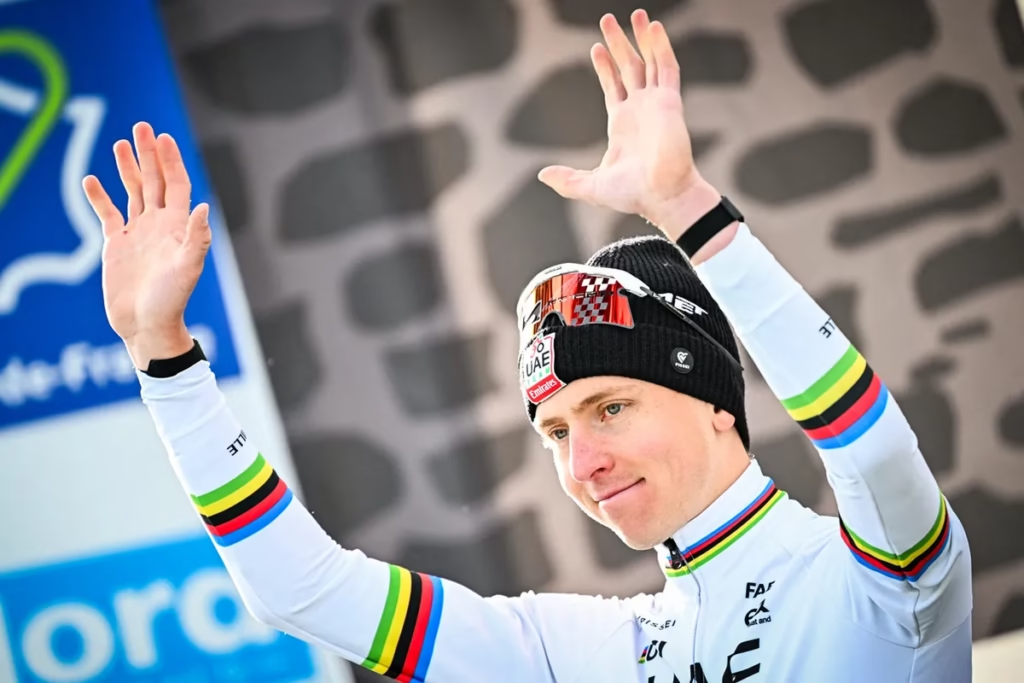
Tadej Pogačar is still the clearest reference point
Pogačar remains the rider everyone else has to solve. He is one of only two men to win Liège-Bastogne-Liège since 2021, and that matters because this race rewards exactly the kind of qualities he brings: repeated climbing force, aggression from distance and the ability to make a very hard race look simpler than it really is.
The larger point is not only that Pogačar can win, but that he can win in more than one way. If UAE Team Emirates-XRG decide to control the race, he can still finish off a selective finale. If the race opens earlier than expected, he is also one of the few riders strong enough to turn Liège into a long-range test and still be the best rider at the end of it. That is why he starts as the clearest favourite even in a field this strong.
He also comes into the race with the broader authority that only a rider like Pogačar can carry. Every major one-day race bends around his presence, and Liège is no different. That is why the wider start list and team-by-team guide both ultimately circle back to the same point: if he is at his best, everyone else is racing around him.
Remco Evenepoel gives the race its strongest counterweight
Evenepoel remains the most obvious rider capable of turning the race into something Pogačar does not fully control. Like Pogačar, he is one of only two winners of the race since 2021, which immediately places him in the highest tier of contenders.
What makes Evenepoel so dangerous in Liège is not just that he can follow the best climbers. It is that he can reshape the race if he decides the usual timing does not suit him. He is one of the few riders in the field with the engine and confidence to attack from distance and make that kind of move feel entirely rational rather than desperate. On a route like this, that changes how everyone else has to think.
That is also why his presence gives the race a harder edge. Pogačar can dominate a Monument through sheer force, but Evenepoel is one of the very few riders who can make him answer an uncomfortable question before the expected point. That possibility alone gives Liège a much sharper tactical shape than a simple favourite waiting game.
Paul Seixas has changed the whole tone of the race
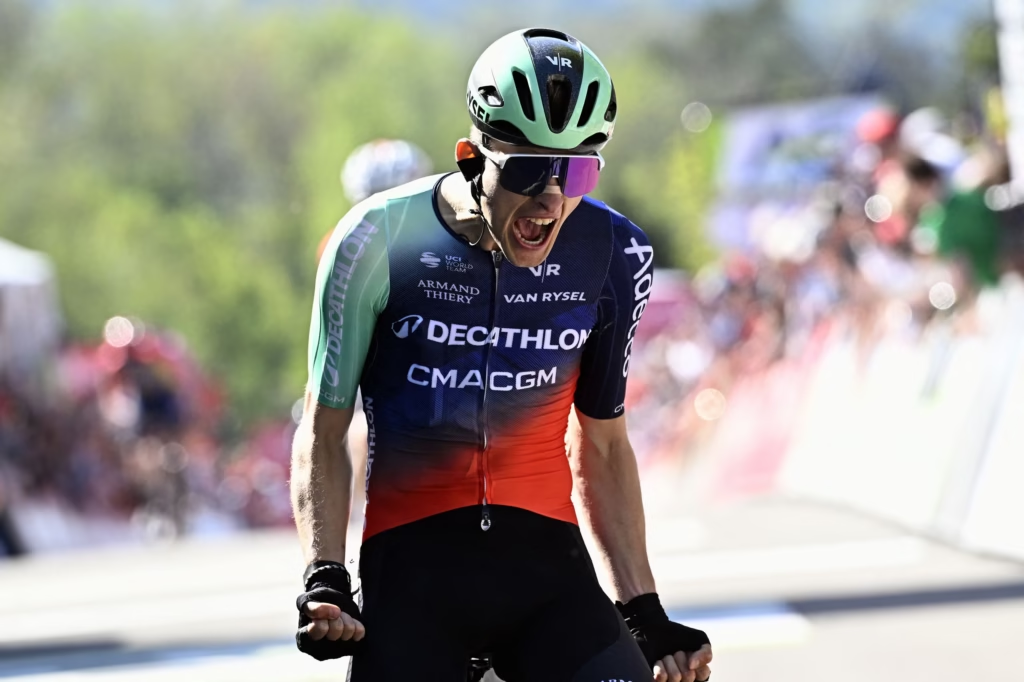
The rider who makes Liège-Bastogne-Liège 2026 feel different is Paul Seixas. He would have been an exciting young name in almost any Ardennes field, but his recent results have pushed him far beyond that category.
Seixas’s rise has been too serious to dismiss as momentum alone. After his Itzulia Basque Country breakthrough and his win at La Flèche Wallonne, he no longer arrives as a talented outsider who might animate the race. He arrives as one of the riders rivals have to account for properly. The big question is whether he can carry that level into a longer, broader Monument rather than the more compressed test of the Mur de Huy. That is the main uncertainty, but it is now a question of race shape rather than whether he belongs.
That is what makes him so important to this edition. If Seixas holds his level deep into the final hour, then Liège stops being a two-rider story and becomes something far richer. His rise has already shifted the spring narrative in What Men’s Flèche Wallonne 2026 means for the season, and this Monument is the next place where that shift can become even more significant.
Tom Pidcock looks much more relevant than he did a week ago
Pidcock’s status has shifted quickly. Earlier in the week, his Liège ambitions were framed around a quicker-than-expected return from injury after his dramatic Volta a Catalunya crash. That alone made him interesting, but his Stage 3 win at the Tour of the Alps changed the mood again. He did not just return. He returned and won, which is a very different signal before a Monument.
That does not automatically make him a top favourite on the level of Pogačar or Evenepoel, but it does make him one of the most dangerous unpredictable riders in the race. Pidcock can handle selective terrain, read complicated finales and profit if the biggest names hesitate at the wrong moment. The question is how much of his best condition is already there, but his Tour of the Alps performance makes it much harder to treat him as a speculative name only.
In a race like Liège, that matters enormously. He does not need the race to follow the cleanest script in order to contend. In some ways, he is better when it does not.
The second tier could still shape the race
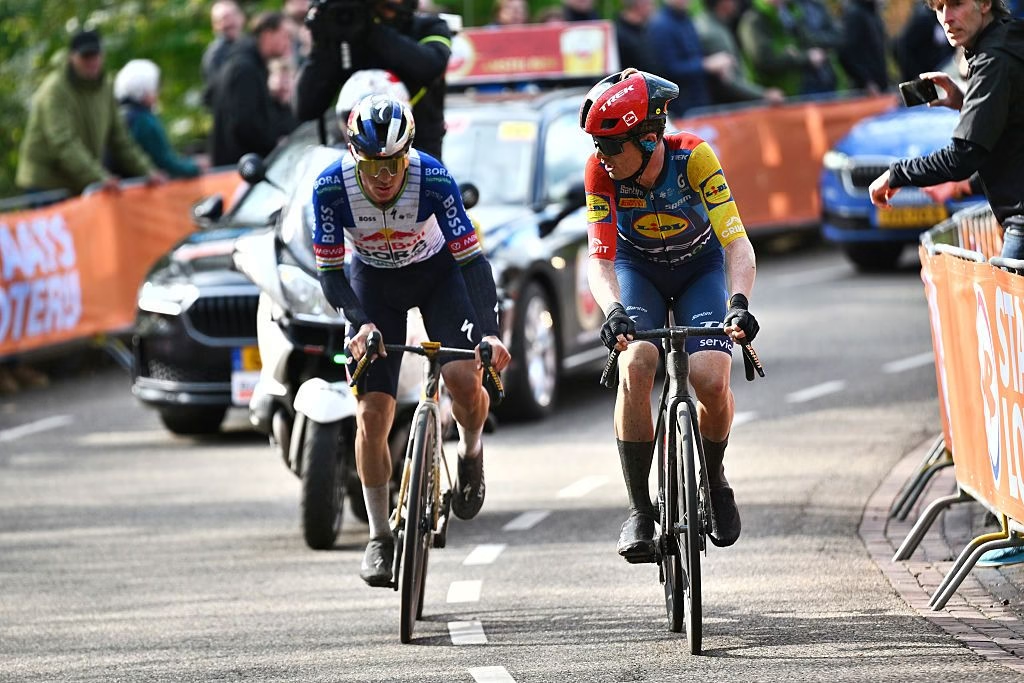
One reason this Liège looks so good on paper is that the names behind the main four are strong enough to shape the race rather than just follow it. Mattias Skjelmose remains one of the most reliable Ardennes riders in the peloton. Ben Tulett has already shown in this week’s racing that he belongs in the hardest finales. Kevin Vauquelin continues to look like exactly the kind of rider who can thrive if the race becomes selective without becoming completely explosive.
That group matters because Liège often rewards the rider who can still act after the first wave of favourites have tested each other. A race this hard tends to thin the field naturally, and if UAE or Red Bull – Bora – Hansgrohe do not fully lock things down, riders like Skjelmose, Tulett and Vauquelin could find themselves in exactly the right sort of finale.
They are also the riders who make the Monument tactically richer. If the top favourites hesitate for even a moment, this second line is good enough to force decisions rather than wait passively for them. That is why the race should feel more open than a clean Pogačar-Evenepoel duel.
How the race may be won
There are a few clear scenarios. The first is the most obvious one: Pogačar or Evenepoel turns the race into a high-level war of attrition and simply proves strongest on the decisive climbs. The second is that Seixas carries his current form deep enough into the Monument to make that hierarchy much less stable than usual. The third is that a rider like Pidcock, Skjelmose or Vauquelin profits from a more tactical finale after the biggest favourites have spent too much energy watching each other.
What seems less likely is a conservative race decided only by waiting. Liège-Bastogne-Liège is too long and too selective for that to be the default, especially with this field. The race may not explode early, but it should be hard enough that support starts disappearing well before the final kilometres. That usually leaves the strongest riders to decide the Monument directly.
That is also why team depth matters so much here. The riders most likely to win are obvious enough, but the way they reach the decisive point is what will separate this from a simple ranking exercise. The wider team-by-team guide shows how much support varies behind the headline names, and that may matter almost as much as form once the race really starts.
-
 Photo Credit: Gaetan Flamme
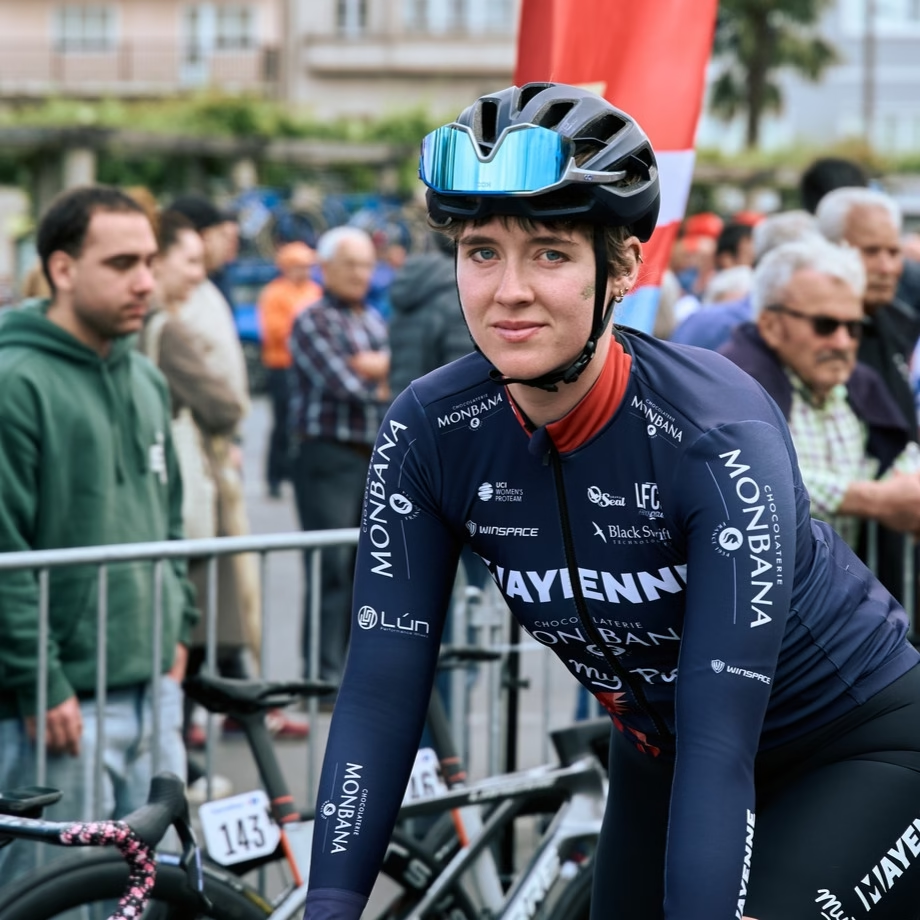
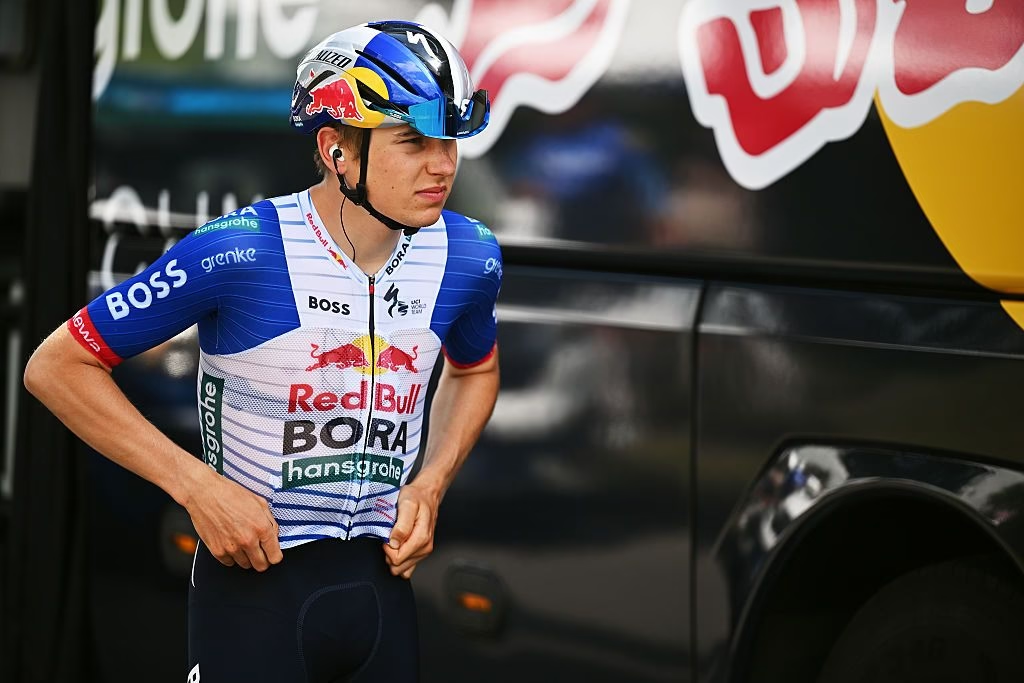
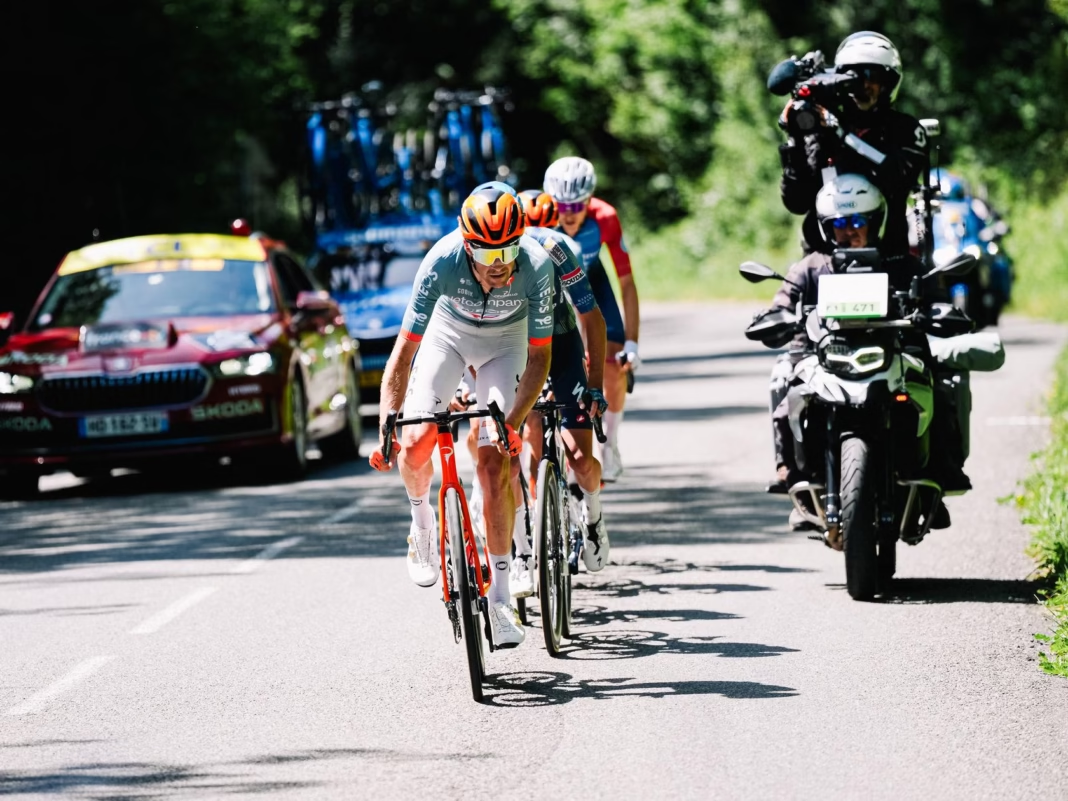
Top contenders for Men’s Liège-Bastogne-Liège 2026
Pogačar starts as the clearest favourite because he remains the most complete Liège rider in the field. Evenepoel is the strongest counterweight because he can win this race on force rather than on circumstance. Seixas is the rider who has changed the whole conversation after his Ardennes surge. Pidcock is the unpredictable elite option after returning with a win. Behind them, Skjelmose, Tulett and Vauquelin look like the most convincing names to profit if the Monument opens up in a less tidy way.
Contenders verdict
Men’s Liège-Bastogne-Liège 2026 has the right kind of contender picture for a Monument. There are two established giants at the top, one rapidly rising rider who now belongs alongside them, one returning wildcard in Pidcock, and enough secondary contenders to stop the race from feeling too neat. That balance is exactly why this edition looks so promising.
If the race follows the cleanest script, it still runs through Pogačar and Evenepoel. But Seixas has done enough to stop this feeling like a simple two-rider Monument. That is what makes Liège-Bastogne-Liège 2026 feel more open, and more interesting, than a routine final Classic of the spring.
Top 3 Prediction
⦿ Tadej Pogačar
⦿ Remco Evenepoel
⦿ Paul Seixas

