
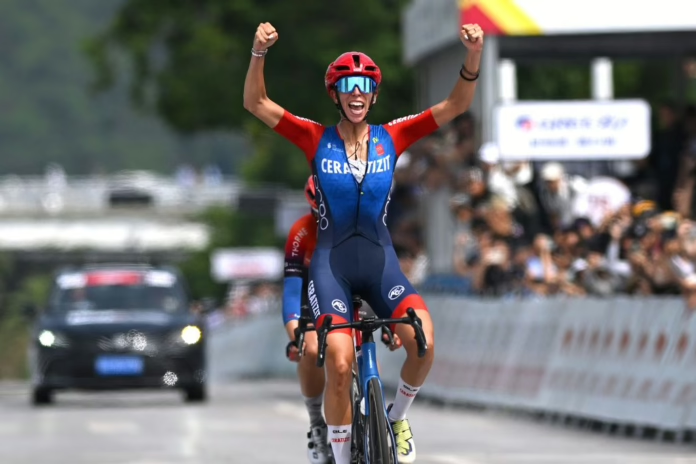
Sandra Alonso will return to the peloton with Eneicat-BeCall in 2026, giving the Spanish rider a new route back into racing after becoming a mother and being left without a team following the closure of Ceratizit.
The move has been framed by Eneicat-BeCall as more than a standard signing. Their announcement leaned into the idea of a comeback, a return home and a rider beginning again after a major life change. For Alonso, it offers a platform after a disrupted period away from the professional peloton and a chance to rebuild within a Spanish structure.

Alonso begins again with Eneicat-BeCall
Alonso raced for Ceratizit from 2022 to 2025, staying with the team as it moved from Women Continental level into the Women’s WorldTour. That gave her four seasons inside one of the more recognisable international women’s squads, but the closure of the team changed the direction of her career heading into 2026.
Eneicat-BeCall’s announcement made the emotional tone of the signing clear. “It is not just a signing. It is a story. It is a return,” the team wrote, adding that Alonso comes back to the peloton after becoming a mother and does so with them.
For a rider with deep roots in Spanish cycling, the move also carries a sense of symmetry. Alonso raced for Bizkaia-Durango earlier in her career, including spells in 2018, 2019 and 2021, before stepping into the Ceratizit set-up. Her 2026 move now places her back in a Spanish environment as she looks to regain race rhythm and rebuild momentum.
A different route back into the peloton
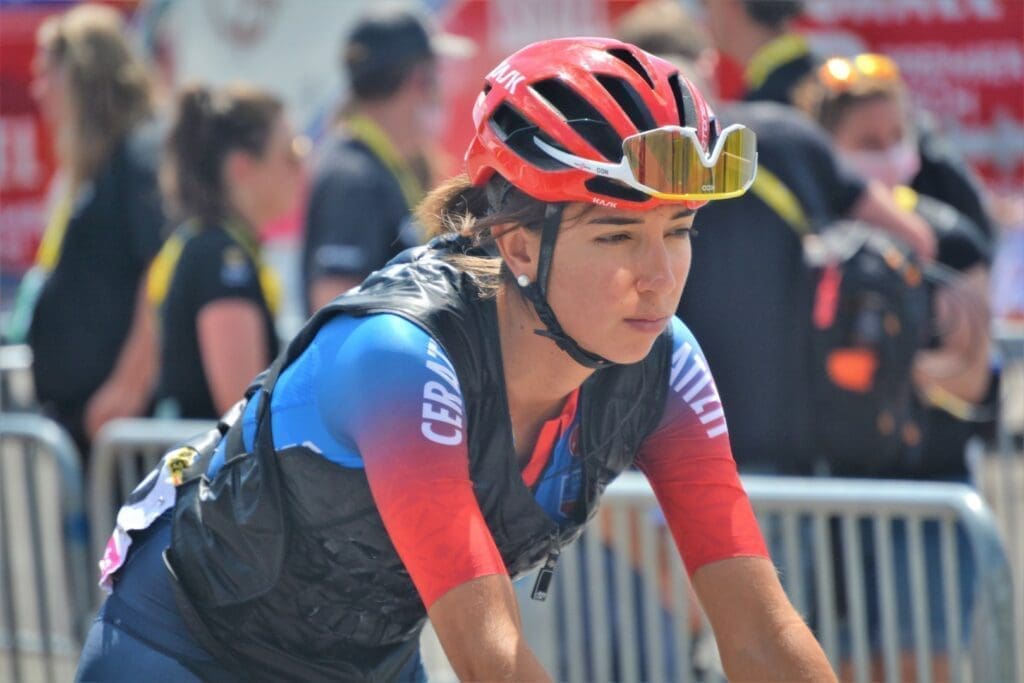
This is not simply a rider changing teams at the end of a normal contract cycle. Alonso’s situation has been shaped by three things at once: motherhood, the closure of her previous team and the changing structure of Spanish women’s cycling.
Ceratizit’s end left riders needing to find new contracts in a difficult market, and Alonso’s return comes with the added challenge of rebuilding after time away from competition. In that sense, Eneicat-BeCall is a logical landing place. The team has been a familiar name in Spanish women’s cycling and previously operated at the Continental level, before changes in Spain made it harder for domestic teams to continue at that level because of the requirement to meet national minimum wage standards.
As a result, Alonso’s comeback is likely to begin more through the Spanish national racing scene than the WorldTour calendar she had access to with Ceratizit. That does not make the move insignificant. It gives her a team, race opportunities and a familiar environment in which to re-establish herself.

Career path shows long Spanish roots before WorldTour step
Alonso’s career has already crossed several layers of the women’s peloton. She began with Bizkaia Durango – Euskadi Murias in 2018, continued with Bizkaia-Durango in 2019, then spent 2020 with the unfortunate Cronos – Casa Dorada Women Cycling team. A return to Bizkaia-Durango followed in 2021 before her move to Ceratizit-WNT Pro Cycling.
Her four-year period with Ceratizit gave her the chance to race within a team that developed into a Women’s WorldTeam. The 2024 and 2025 seasons in particular placed her inside the top tier of the sport, before the team’s closure left her searching for a new way forward.
That background should be valuable for Eneicat-BeCall. Alonso brings international experience, knowledge of WorldTour racing and the profile of a rider who has spent time inside a more structured professional environment. Even if the first task is simply to return steadily, her experience gives the team a rider with a stronger racing education than many available domestic-level signings.
-
 Photo Credit: Billy Ceusters / Getty Images


A comeback with emotional weight
Eneicat-BeCall’s announcement was deliberately personal. The team wrote that the signing was about believing, returning and starting again, before welcoming Alonso “home”.
That language fits the moment. Motherhood and elite sport still create complicated pathways in cycling, particularly outside the handful of teams with the resources to offer long-term support through pregnancy, maternity leave and a structured return to racing. Alonso’s comeback will therefore be watched not only as a sporting story, but as another example of a rider trying to build a second chapter after becoming a parent.
For Alonso, 2026 is likely to be about patience first. Racing sharpness, confidence and calendar access will all need to be rebuilt. Yet the core of the move is clear: she has a team, she has a route back into the peloton, and she has a Spanish platform from which to start again.
Eneicat-BeCall have not just added a rider to their roster. They have given Alonso the chance to restart a career that could easily have been stalled by circumstances beyond her control.

