
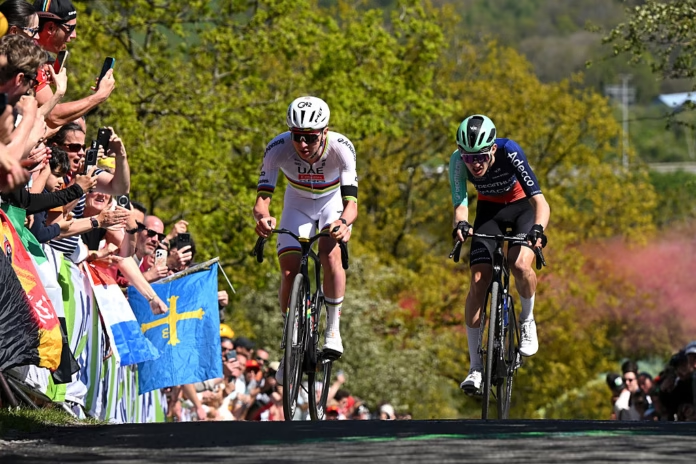
Tadej Pogačar leaves the spring as the clearest reference point in men’s cycling. His fourth win at Liège-Bastogne-Liège added another Monument to a 2026 campaign that already included major victories elsewhere, reinforcing the sense that the biggest one-day races still tend to bend around him.
What changed most in Liège was not the identity of the winner, but the shape of the hierarchy behind him. Paul Seixas finished 2nd on his Liège debut after being the only rider able to follow Pogačar deep into the decisive phase before finally cracking on Roche-aux-Faucons. Remco Evenepoel then took 3rd, which means the race did not simply confirm the old order. It made the top of the sport feel broader, sharper and more unstable than it did a week earlier.
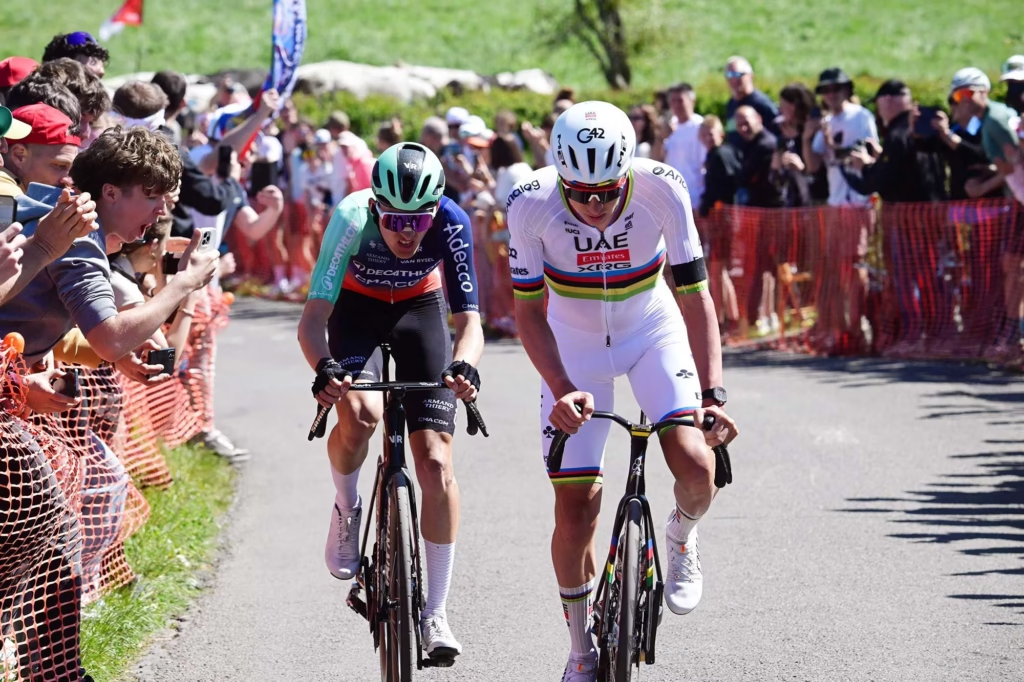
Tadej Pogačar – still the rider the spring belongs to
Pogačar’s spring had already been extraordinary before Liège. Adding a fourth victory in La Doyenne matters because this is not a race that hands out flattering results. It is long, selective and usually decided only after the strongest riders have been exposed properly. Winning here, after already dominating across other major one-day races, means he has once again shown that he can control the season across very different terrain types.
That is what makes his season form so imposing. He is not only winning on one terrain type. He is winning across the full spectrum of elite spring racing, from long-range aggression to Monument-level endurance and climbing. If there is one clear conclusion after Liège, it is that he remains the sport’s most complete one-day rider by some distance.
It is also the way he won that sharpens the point. This was not a quiet, controlled victory. He made the race hard enough that only Seixas could stay with him deep into the decisive phase, before finally breaking him on the last major climb. That shows two things at once: Pogačar still has the authority to define a Monument on his terms, and the level required to trouble him has become extremely high.
Paul Seixas – no longer a prospect, now a real force
Seixas is the rider whose status changed most through the Ardennes. A teenager winning a major hilly one-day race is one kind of story. The same rider then taking 2nd in Liège, after staying with Pogačar longer than the rest of the field, is something much bigger.
That changes the season immediately. Seixas did not merely survive his Monument debut. He forced Pogačar to race properly, and that alone tells you how quickly the conversation has moved. He is no longer only the future of hilly one-day racing. He is already one of the riders shaping its present.
That does not mean he has replaced the hierarchy. It means he has complicated it. Until now, the biggest Ardennes races could still be framed mainly around Pogačar, Evenepoel and a cluster of very good riders trying to disrupt them. Seixas has moved himself out of that cluster. He now looks much closer to being the rider who can help define the next version of the hierarchy itself.
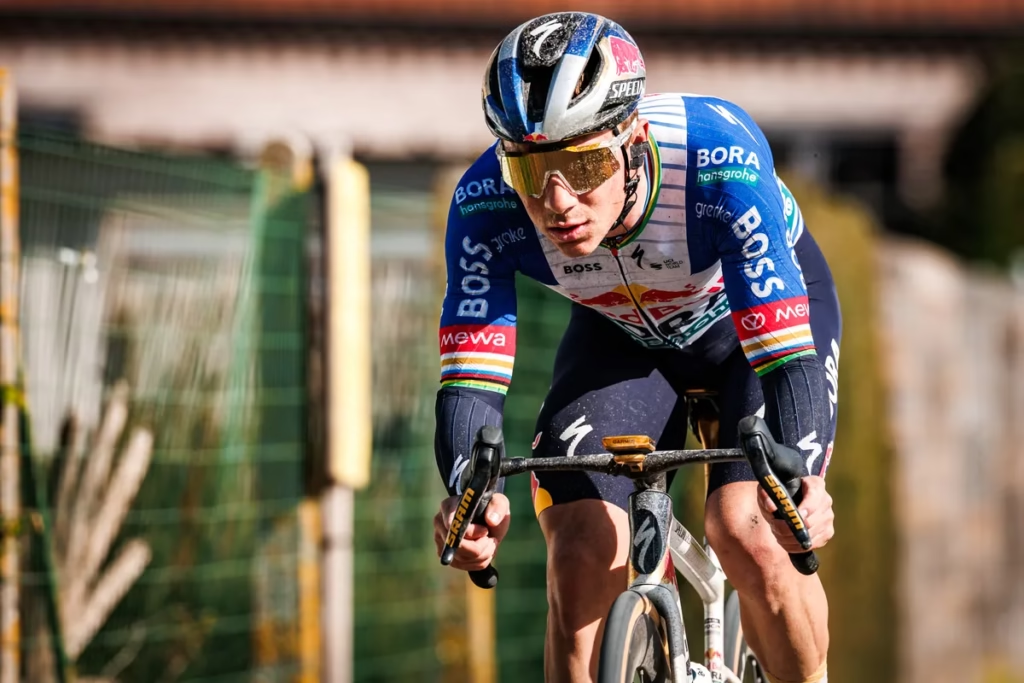
Remco Evenepoel – still elite, but the picture around him has changed
Evenepoel’s 3rd place is still a strong Monument result, but it reads differently after Seixas finished ahead of him. He remains one of the sport’s defining one-day racers and one of the few riders with the stature to make Pogačar race differently. Liège did not weaken that. What it did do was make his position in the hierarchy less exclusive.
For much of the recent spring, the biggest races could still be read mainly through the Pogačar-Evenepoel axis. Liège widened that frame. Evenepoel is still central to the season, but he is no longer the only rider sitting just behind Pogačar on this terrain. That is a meaningful shift, because it gives the sport a more crowded and more interesting top layer moving forward.
That does not diminish his importance. It simply makes the top of the sport more competitive, and more interesting, than it looked a few weeks ago.
The Ardennes did not end with a duel, they ended with a three-part story
That is probably the most useful wider reading of the race. Men’s Ardennes week could have closed with a familiar summary: Pogačar on top, Evenepoel nearest, and everyone else behind. Instead, it ended with a more complicated picture. Pogačar still won. Seixas proved that his week was not a brief spike. Evenepoel remained on the podium. The result did not overthrow the order, but it made the order much richer and much less settled than before.
That matters because the sport is better when the hierarchy is visible but not closed. Pogačar still leaves spring as the dominant reference point. But Liège ensured the conversation moving forward is no longer only about whether Evenepoel can match him. It is now also about how quickly Seixas can become a genuine equal in this type of race.
That alone gives the rest of the season more tension than it had before the race started.
Liège also raised the standard for the rest of the season
The season meaning is not only about the podium itself. It is also about the level the race demanded. Pogačar had to be very good to win. Seixas had to be much better than almost anyone expected to take 2nd. Evenepoel still had to be strong just to hold 3rd in a race where the front end was that selective. When a Monument finishes like that, it tends to raise the standard for every comparable race that follows.
For the rest of the year, especially the bigger hilly one-day races and the moments where these riders overlap again, Liège has made one thing clear. Beating Pogačar is still the central problem. But now there is a second layer to solve as well, because Seixas is no longer racing for experience and Evenepoel is no longer the only established rival trying to hold his place against the world champion’s reach.
That makes the season feel less predictable without making it vague. The lines are clearer now, but there are more of them.
-
 Photo Credit: Gaetan Flamme
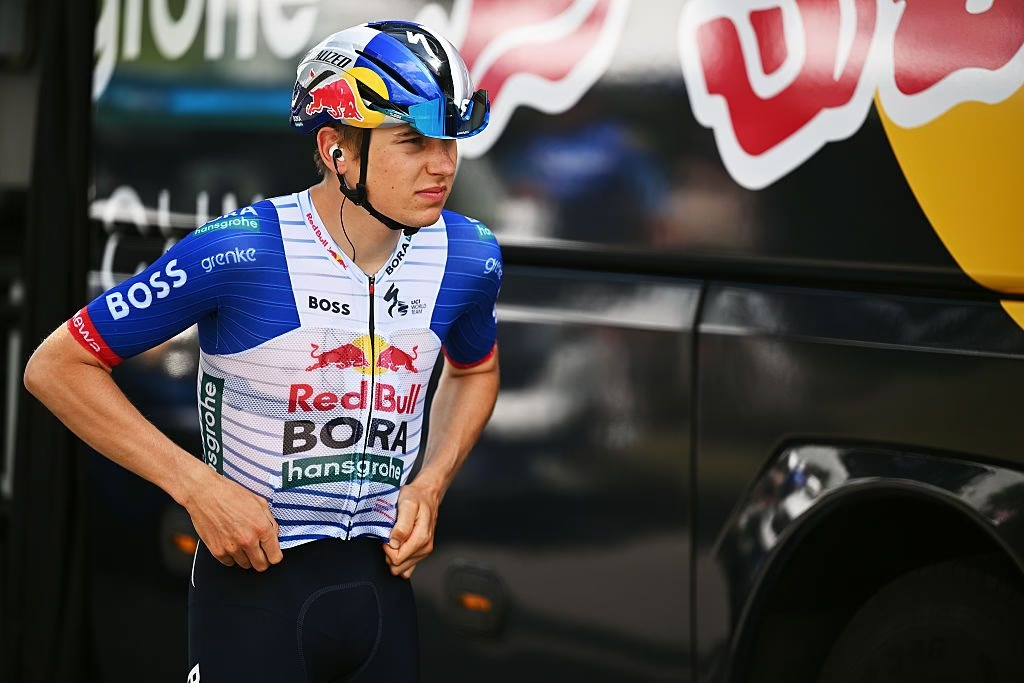
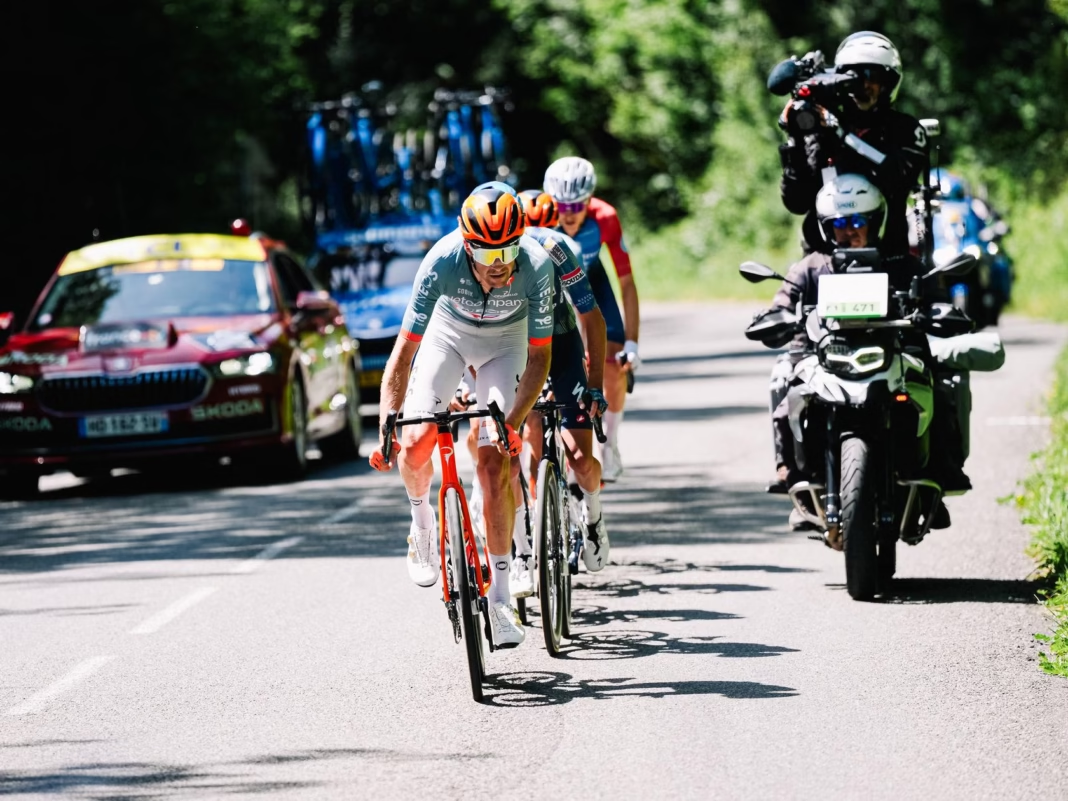
Updated men’s spring form guide after Liège-Bastogne-Liège 2026
1. Tadej Pogačar
Still the standard. His Liège win confirmed that the biggest races of the spring still resolve themselves most often in his favour.
2. Paul Seixas
The biggest mover. His Liège ride was too strong to frame as a good day or a youthful surprise. He is now one of the season’s defining riders.
3. Remco Evenepoel
Still absolutely top-class, still central to the biggest one-day races, but no longer standing alone as the clearest alternative to Pogačar on this terrain.
What this means for the rest of 2026
The most important answer is that the sport now has a clearer benchmark and a more complicated chasing group. Pogačar remains the rider everyone else has to solve. But Liège showed that solving him is no longer only Evenepoel’s problem. Seixas has arrived much sooner than expected, and that changes the shape of every major hilly race that still lies ahead.
That is the real update to the season form guide after Men’s Liège-Bastogne-Liège 2026. The king is still the same. The court around him is not.
For the wider race picture, the contenders preview, the team-by-team guide, the route guide, the full start list and What Men’s Liège-Bastogne-Liège 2026 means for the season all help frame how the result took shape, but the race itself delivered the cleanest verdict. Pogačar is still the benchmark. Seixas is now a real force. Evenepoel is still central, but no longer alone in the role of principal challenger.

