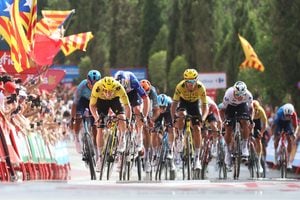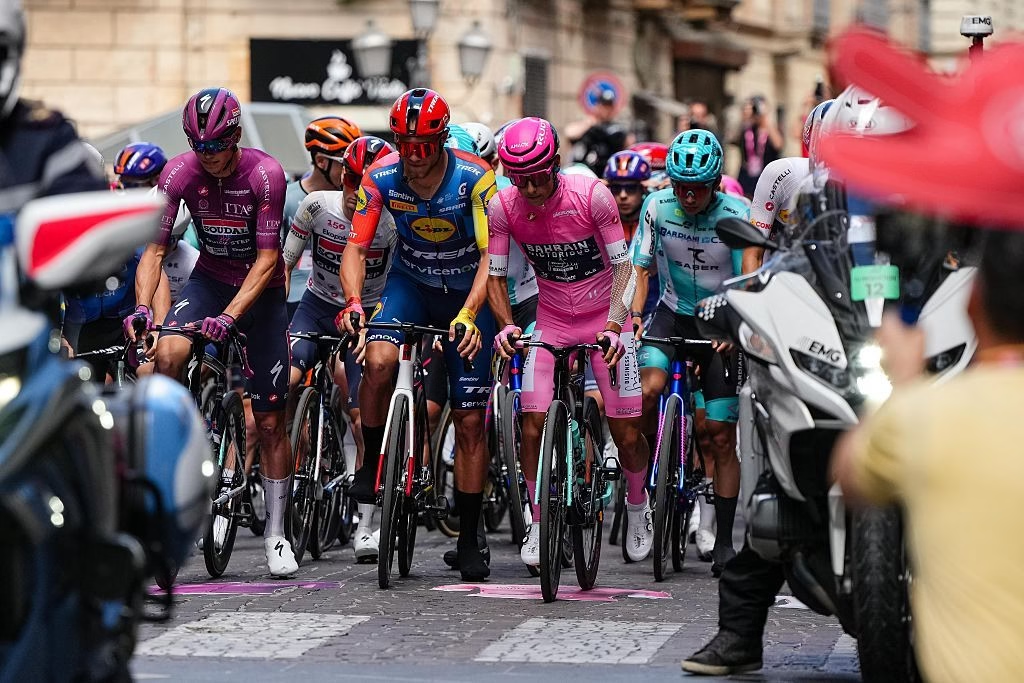
The 2026 Giro d’Italia reaches stage 13 on Friday, 22nd May, with a route that looks simple for most of the day, then suddenly becomes much more awkward. Alessandria to Verbania is 189km, and for around 160km it is a largely flat run across the Po Valley towards Lake Maggiore. The final 30km changes the whole stage, with short climbs, a steep section at Ungiasca and a descent towards the lakeside finish.
After Alec Segaert’s late attack won stage 12 in Novi Ligure and Afonso Eulálio extended his overall lead over Jonas Vingegaard to 33 seconds, the Giro enters another stage that is unlikely to be a pure GC showdown but still carries risk. Segaert’s win came after a move inside the final 3km, while Eulálio took bonus seconds at the intermediate sprint to add another six seconds to his advantage.
Stage 13 is the sort of day that can reward several different rider types. The resilient sprinters will look at the flat finish in Verbania and hope they can survive the late climbs. The puncheurs will see Ungiasca as the place to make the race too hard for the fast men. The breakaway riders will know that the peloton has already let opportunities slip in this Giro.
The route
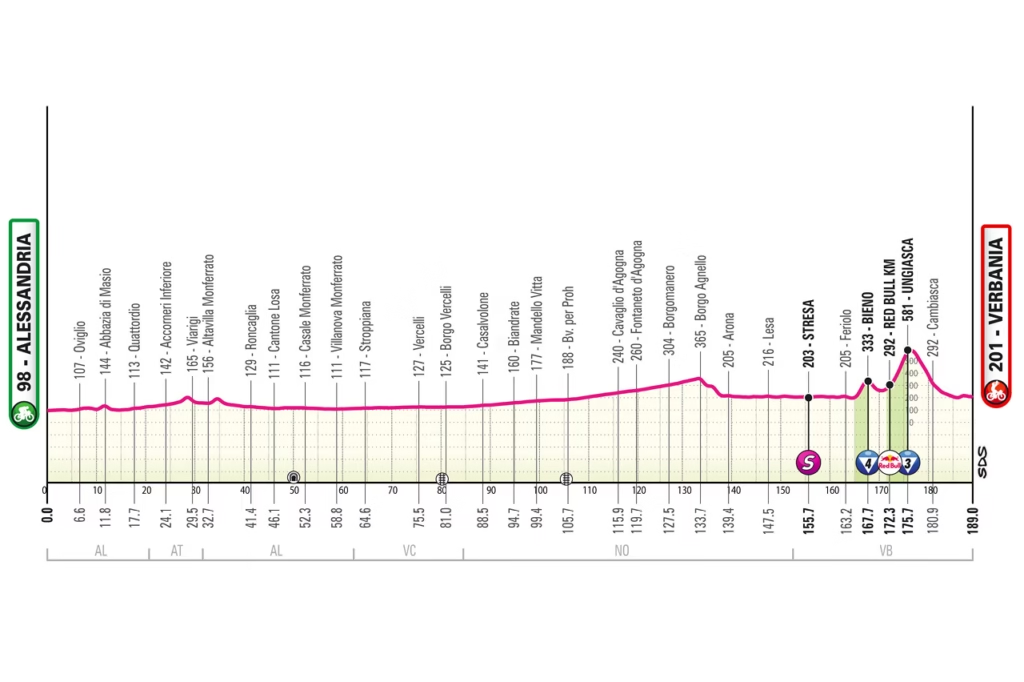
Stage 13 starts in Alessandria and heads north through the Po Valley, passing towns such as Casale Monferrato and Vercelli before moving towards Lake Maggiore. The opening 160km are flat, wide and mostly straightforward, though urban obstacles through the towns will still keep the peloton attentive.
That opening section should allow the breakaway to form, but it also gives the sprint teams a long period of control if they want to keep the race together. The difficulty is that the stage does not end with a straightforward flat chase. Everything important is stacked into the final 30km.
Once the route reaches the western shore of Lake Maggiore, the character changes. Bieno is the first late climb, with manageable gradients, but it acts as the gateway to the more serious part of the finale. Ungiasca is the decisive obstacle, with several kilometres above 10 per cent before a descent towards Verbania.
The final 3km then run along the lake. The road is wide and almost straight at first, then follows the shoreline with a few bends and a slight narrowing before a 300-metre final straight. If a reduced group arrives together, there is enough room for a sprint. The more important question is who has survived the climb before it.
What’s on offer
- Stage: 13
- Date: Friday, 22nd May
- Route: Alessandria to Verbania
- Distance: 189km
- Altitude gain: around 1,400 metres
- Start time: around 11:40am BST
- Expected finish: around 4:00pm BST
- Key climbs: Bieno and Ungiasca
- Likely winner type: puncheur, breakaway rider or resilient sprinter
- Main tactical point: the steep Ungiasca climb before the descent to Verbania
Why stage 13 is harder than it first looks
For most of the day, stage 13 should feel like a sprint stage. The roads across the Po Valley are flat enough for the peloton to control the breakaway, and the distance is not extreme by Giro standards. But the race is not decided by the first 160km. It is decided by how much damage the final 30km can do.
Ungiasca is the obvious hinge point. Several kilometres above 10 per cent is more than enough to remove pure sprinters if the pace is high. Even sprinters who survive may do so without teammates, which changes the final into Verbania. A fast rider without a lead-out is still dangerous, but much easier to disrupt.
That opens the door for puncheurs and stage hunters. A rider who attacks on Ungiasca does not need to hold a huge gap. The descent and lakeside run-in are short enough that a small front group could stay away if the chase behind hesitates. If the bunch regroups, then the final 300 metres are straightforward enough for a sprint.
This is why stage 13 is difficult to classify. It is flat for too long to be a pure climbers’ day, but the finish is too hard to trust the pure sprinters completely.
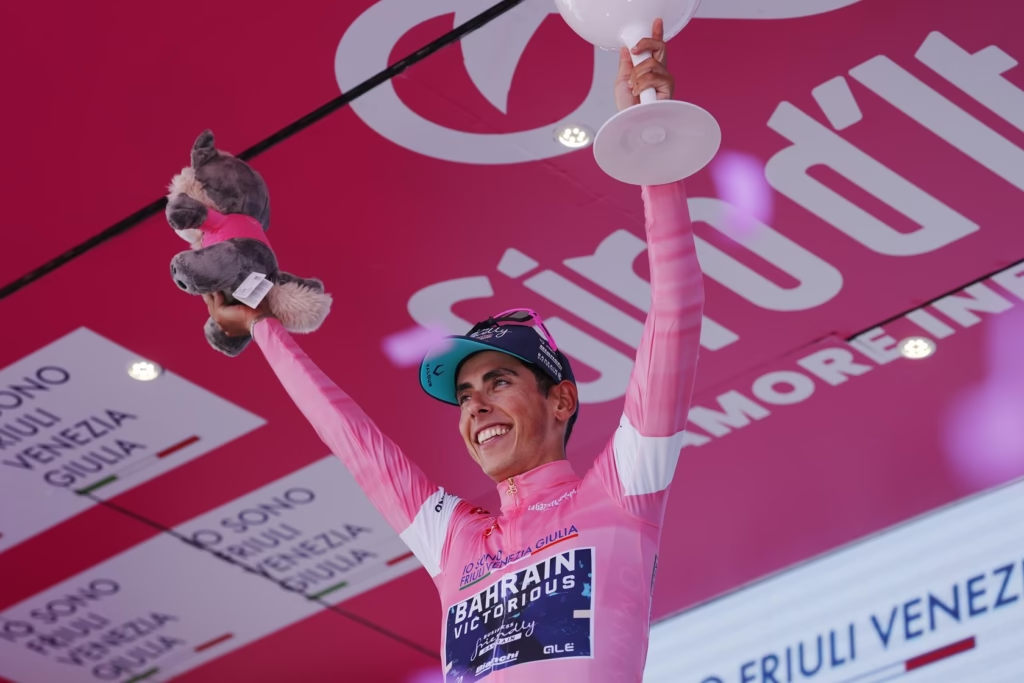 Photo Credit: RCS
The GC context
Eulálio starts stage 13 still in pink, with his advantage over Vingegaard now 33 seconds after taking bonus seconds on stage 12. That keeps the race extremely close, but stage 13 is not an obvious day for Vingegaard to launch a major GC attack. The climbs are short, the descent leads into a flatter finish, and the following stage to Pila is a far more natural place for the overall contenders to race directly.
Even so, Bahrain Victorious cannot treat this as a relaxed day. A narrow lead changes everything. Eulálio has already shown he is willing to contest intermediate bonuses, and he may need to stay alert again if there are seconds available before Verbania. More importantly, he has to avoid being caught behind if the race splits over Ungiasca.
For Team Visma | Lease a Bike, the day is about pressure without overcommitting. Vingegaard does not need to attack every time the road rises, but his team can make sure he is always well placed. If Eulálio is isolated or poorly positioned before Ungiasca, the stage could become uncomfortable quickly.
The podium contenders face a similar task. Thymen Arensman, Felix Gall, Ben O’Connor, Jai Hindley and the rest of the top 10 should not be expected to gamble here, but they must stay close to the front. A stage like this can look harmless until one small split opens at the wrong moment.
Why the breakaway will be interested
The breakaway will see stage 13 as a real chance, especially after the Giro’s recent pattern. Narváez won from the break in Chiavari on stage 11, and Segaert disrupted the expected sprint in Novi Ligure on stage 12. The peloton has not always managed these medium-difficulty days cleanly.
The problem for the break is the first 160km. A flat run across the Po Valley gives the bunch plenty of time to monitor the gap. If the sprint teams believe their riders can survive the late climbs, they should keep the move within reach.
The break’s best chance is to include strong riders who can still climb hard on Ungiasca and then descend quickly into Verbania. A weak move will be swallowed up before the final 30km. A strong one, especially with several teams represented and no obvious GC danger, could force the peloton into another difficult chase.
The composition matters more than the size. Five or six powerful stage hunters could be more dangerous than a large group with poor cooperation.
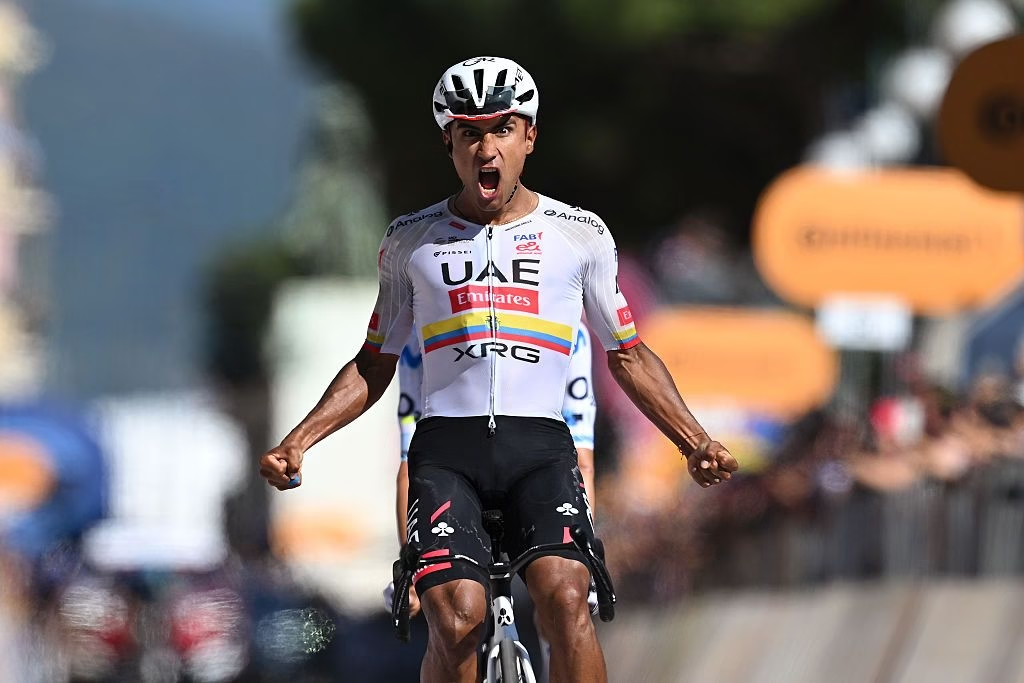 Photo Credit: Getty
What the sprinters need
The sprinters need patience and survival. There is no point spending too much energy in the first half of the stage if the race is going to turn on the final climbs. Teams with fast finishers need to keep the breakaway close, but also save enough riders to protect their sprinter before Bieno and Ungiasca.
This is not a stage for the heaviest pure sprinters unless the climbs are ridden conservatively. The better fit is a durable fast finisher, someone who can get over the late gradients in a reduced group and still produce a strong sprint along the lakeside.
Paul Magnier remains central because of the ciclamino jersey battle. Stage 12 did not give him the sprint opportunity many expected, and Narváez has moved close enough in the points competition to create real pressure. If Magnier survives Ungiasca, Verbania could be a chance to respond.
Jonathan Milan’s situation is more complicated. He has the speed to win a flat finish, but the final climbs could make the stage difficult if rival teams push the pace. He needs a controlled climb and enough support left afterwards. If he is forced to chase back alone or without teammates, his chances become much weaker.
Davide Ballerini may be one of the more natural fits. He can handle harder terrain than many pure sprinters and has enough finishing speed if the group is reduced. Jasper Stuyven is another rider who could benefit from a harder final if the fastest men lose support.
Riders to watch
Jhonatan Narváez is impossible to ignore. He already has three stage wins in this Giro and has shown exactly the kind of range stage 13 demands: climbing strength, tactical timing, descending confidence and enough speed to finish it off. The obvious problem is that everyone now knows it. He will be marked far more heavily than he was earlier in the race.
Giulio Ciccone is another strong fit if he wants to chase stages. Ungiasca is steep enough for him to attack, and the descent to Verbania gives him a route to the finish if he creates separation. He probably needs to arrive alone or in a small group without faster finishers.
Filippo Zana also fits the day. He is durable, strong on rolling and hilly terrain, and dangerous from a breakaway or reduced group. If the stage becomes tactical after Bieno, he is exactly the kind of rider who could profit.
Ballerini and Stuyven sit between the sprinter and Classics-rider categories, which makes them interesting here. They may not want the race to be brutally hard, but they will not fear a selective final either.
Magnier and Milan remain the key sprinter names if the race comes back together. Magnier has the points-jersey motivation, while Milan needs a clean opportunity after several stages where the terrain or race situation has complicated things.
Segaert’s stage 12 win will also change how riders look at late moves. Another attack inside the final few kilometres may be harder to allow now, but his victory will encourage riders who know they cannot beat the sprinters head-to-head.


How the stage could unfold
The early breakaway should form on the flat roads after Alessandria. Sprint teams are unlikely to allow a huge group with too much strength, but there will be plenty of riders interested in making the move. The first half should be a balance between control and conservation.
The race may stay fairly calm until the approach to Lake Maggiore. That is where positioning will start to matter. Teams will want their leaders and sprinters near the front before the sequence of climbs, because moving up once the road narrows and rises will be much harder.
Bieno should begin the selection. It may not decide the stage, but it will show which teams want to make the race harder. Ungiasca is where the main attacks should come. If the breakaway is still ahead, it may split there. If the peloton has brought the break close, the puncheurs will have a strong incentive to attack before the descent.
The descent into Verbania then becomes a tactical test. A small group over the top can survive if it works together. A larger chasing group behind may hesitate, especially if fast finishers are present and nobody wants to lead them out.
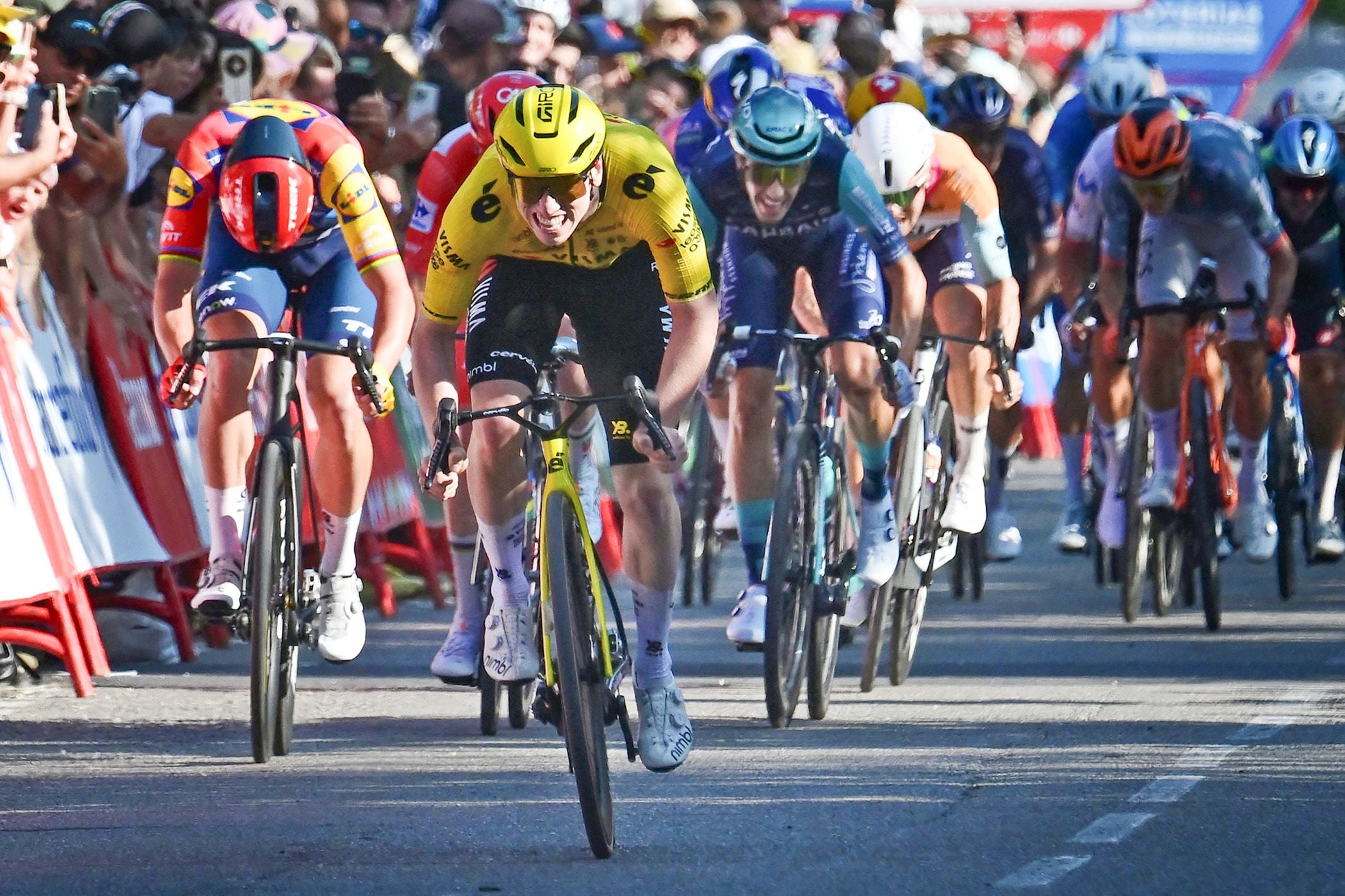
If the race comes together in the final 3km, the lakeside finish should produce a reduced sprint. But the most likely decisive move will happen before that, on or immediately after Ungiasca.
Prediction
Stage 13 is finely balanced. The flat first 160km should give the sprint teams confidence, but the final 30km are hard enough to take the race away from them. The combination of Bieno, Ungiasca and the descent towards Verbania makes this one of those Giro stages where a reduced group feels more likely than a full bunch sprint.
The breakaway has a real chance if the right riders get clear, but the final climb is close enough to the finish for late attackers from the peloton to be dangerous too. Magnier and Milan can win if they survive, but this feels more suited to a puncheur or all-rounder who can use the steep gradients to remove the pure sprinters.
Prediction: Narváez to be dangerous again, but the marking may finally make it harder for him. A reduced front group looks the likeliest outcome, with Ballerini a strong pick if the race comes back together after Ungiasca and the fastest pure sprinters have lost support.