
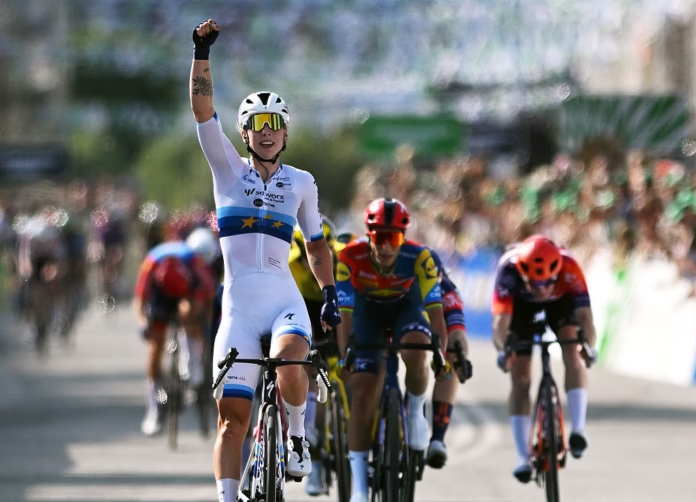
Copenhagen Sprint Women 2026 takes place on Saturday, 13th June, giving the Women’s WorldTour one of its newest and most distinctive sprint-focused one-day races. The race starts in Roskilde, travels through North Zealand and the outer Copenhagen area, then finishes in the Danish capital on a city circuit. It is built for speed, but not necessarily for simplicity.
This is only the second edition of the women’s Copenhagen Sprint, but it already has a clear identity. It is flat, fast, urban in its final phase and designed to showcase Denmark as both a cycling country and a spectator setting. The women’s race comes first on the weekend, with the men’s race following on Sunday, 14th June. Both races start at Stændertorvet in Roskilde and finish in Copenhagen, with the women covering 156km and taking on three laps of the final circuit.
For beginners, the easiest way to understand Copenhagen Sprint Women is this: it is a race made for sprinters, but the final still demands positioning, timing and nerve. The terrain is not supposed to drop the fast riders. The challenge is getting them to the final straight in the right place after more than 150km of high-speed racing.
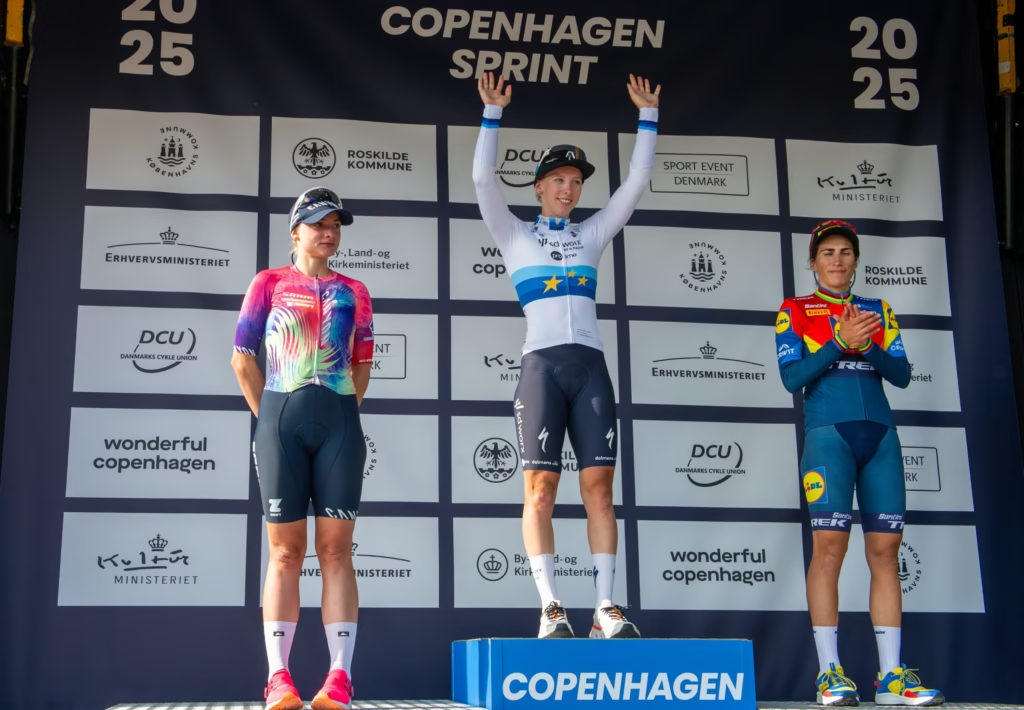 Photo Credit: Andreas Roungkvist
What is Copenhagen Sprint Women?
Copenhagen Sprint Women is a one-day professional road race in Denmark, held as part of the Women’s WorldTour. That means it sits at the top level of women’s cycling, alongside races such as the Tour of Flanders, Paris-Roubaix Femmes and Liège-Bastogne-Liège Femmes, even though its character is very different.
Where those spring Classics often use cobbles, climbs or long attritional sections to create selection, Copenhagen Sprint Women is much more focused on speed. The route is predominantly flat, and the race is designed to give the sprinters a major WorldTour target in a part of the calendar often shaped by stage racing and tougher one-day events.
That does not make it easy. Flat races can be extremely stressful because the bunch stays large for longer. Teams fight constantly for position, lead-outs become crowded, and the final circuit means everyone knows where they need to be. A race like this can look controlled until the last few kilometres, then become chaotic very quickly.
When is Copenhagen Sprint Women 2026?
Copenhagen Sprint Women 2026 takes place on Saturday, 13th June.
The key details are:
- Race: Copenhagen Sprint Women 2026
- Date: Saturday, 13th June
- Level: Women’s WorldTour
- Start: Stændertorvet, Roskilde
- Finish: Copenhagen, outside the National Gallery of Denmark
- Distance: 156km
- Final circuit: three laps in Copenhagen
The men’s race follows the next day, on Sunday, 14th June, over a longer route and with five laps of the Copenhagen circuit. That gives the weekend a similar format to several major race weekends where the women’s and men’s events share a setting but have their own distinct race dynamics.
Where does the race go?
The race starts in Roskilde, one of Denmark’s most historic cities, before heading through the landscapes of North Zealand and towards Copenhagen. The route uses open roads, towns and fast approach sections before entering the capital for the decisive circuit. The women’s route includes the road from Roskilde to Copenhagen, followed by three laps of the city circuit.
That structure matters. The first part of the race gives an early breakaway room to form, but the final part gives sprint teams time to organise. Once the riders reach Copenhagen, the race becomes much more predictable in one sense, but much more stressful in another. Everyone knows a sprint is likely, so every team wants position at the same time.
The finish outside the National Gallery of Denmark gives the race a strong city-centre identity. It is not just a sporting finish, but a showcase finish through one of Europe’s most cycle-focused capitals. Copenhagen’s cycling culture is a major part of the race’s appeal, and the route is designed to make that visible.
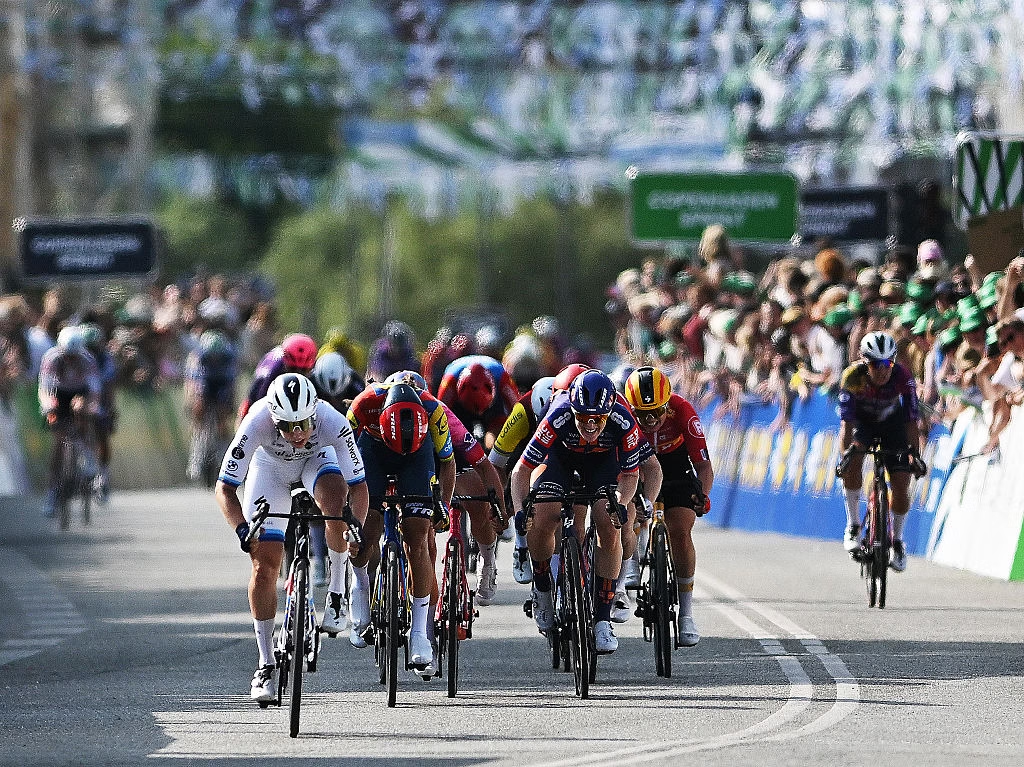
Why is Copenhagen Sprint Women important?
Copenhagen Sprint Women matters because it gives the Women’s WorldTour a major Danish race and a clear sprint-focused one-day target. Denmark has a deep cycling culture, strong public cycling identity and a growing presence in elite racing, so a top-level women’s race in Copenhagen feels like a natural fit.
It also broadens the shape of the Women’s WorldTour. Not every top-level one-day race needs to be a climbing race or a cobbled Classic. Sprinters need races where they are not merely trying to survive terrain designed for others. Copenhagen Sprint Women gives them that kind of stage.
That is important for the calendar. A rider like Lorena Wiebes, Elisa Balsamo, Chiara Consonni or Charlotte Kool can target this race as a genuine headline objective, not just as one possible outcome in a harder Classic. The 2025 edition proved that immediately, with Wiebes winning ahead of Balsamo and Consonni in a high-speed sprint finish.
Who won the first Copenhagen Sprint Women?
Lorena Wiebes won the first Copenhagen Sprint Women in 2025. She beat Elisa Balsamo and Chiara Consonni, with Charlotte Kool just behind, which underlined exactly what kind of race the organisers had created: a major WorldTour sprint contest for the fastest women in the peloton.
That first edition also showed that a flat race can still be difficult. The bunch reached the final circuit together, but crashes and positioning battles shaped the run-in. Wiebes had the strongest lead-out and the fastest finish, launching from a strong position and winning clearly.
For the 2026 edition, that 2025 result matters because it gives the race an instant benchmark. Any sprinter arriving in Denmark knows what the race rewards: patience, team support, technical calm and the ability to finish after a fast, crowded final.
What kind of rider can win Copenhagen Sprint Women?
The obvious answer is a sprinter. More specifically, Copenhagen Sprint Women suits a sprinter who can handle a long, high-speed one-day race and still keep position in the final circuit.
The winner needs several qualities:
- Top-end sprint speed
- A strong lead-out or at least good team support
- Confidence in a crowded bunch
- Good positioning through city roads
- Patience before launching the sprint
- Enough resilience to handle 156km before the final effort
Pure climbing does not matter much here. Explosive attacking ability is useful, but only if a rider can create hesitation late on. The most likely winner is still a fast finisher who reaches the final kilometre near the front with teammates or trusted lead-out support.
That is why the race naturally suits riders such as Wiebes, Balsamo, Kool, Consonni and other powerful fast finishers. It is a race where the strongest sprinter should have a genuine chance, as long as her team gets the final right.
How does the final circuit shape the race?
The final circuit is one of the most important parts of Copenhagen Sprint Women. The women’s race covers three laps in Copenhagen, which gives teams repeated chances to learn the final roads before the sprint. It also means the pace should rise steadily as the race becomes more controlled.
For beginners, the final circuit is where you should start watching closely. Before then, the race may be about breakaway control. On the circuit, it becomes about lead-outs, position and timing.
A lead-out is the group of teammates who guide a sprinter into the final few hundred metres. They ride at high speed to keep the sprinter sheltered and well placed. In a race like Copenhagen Sprint Women, a strong lead-out can be the difference between winning and being boxed in behind other riders.
The repeated laps also make the final more intense. Riders know the key corners, the exposed sections and the point where they need to be near the front. That makes the last lap crowded because every team wants the same piece of road.
Can a breakaway win?
A breakaway can win any race in theory, but Copenhagen Sprint Women is designed to make that difficult. The flat route gives the peloton a major advantage. Sprint teams can control the gap more easily than they can in hilly or cobbled races, and the final circuit gives them a clear chase structure.
That does not mean the breakaway is irrelevant. Early attacks can force sprint teams to work. Smaller teams may use the race to gain visibility, and a strong move can survive deep into the day if the peloton misjudges the chase.
But the most likely outcome remains a sprint. The race name is not misleading. Copenhagen Sprint Women is built around the idea that the fastest riders should have the chance to decide the race in Copenhagen.
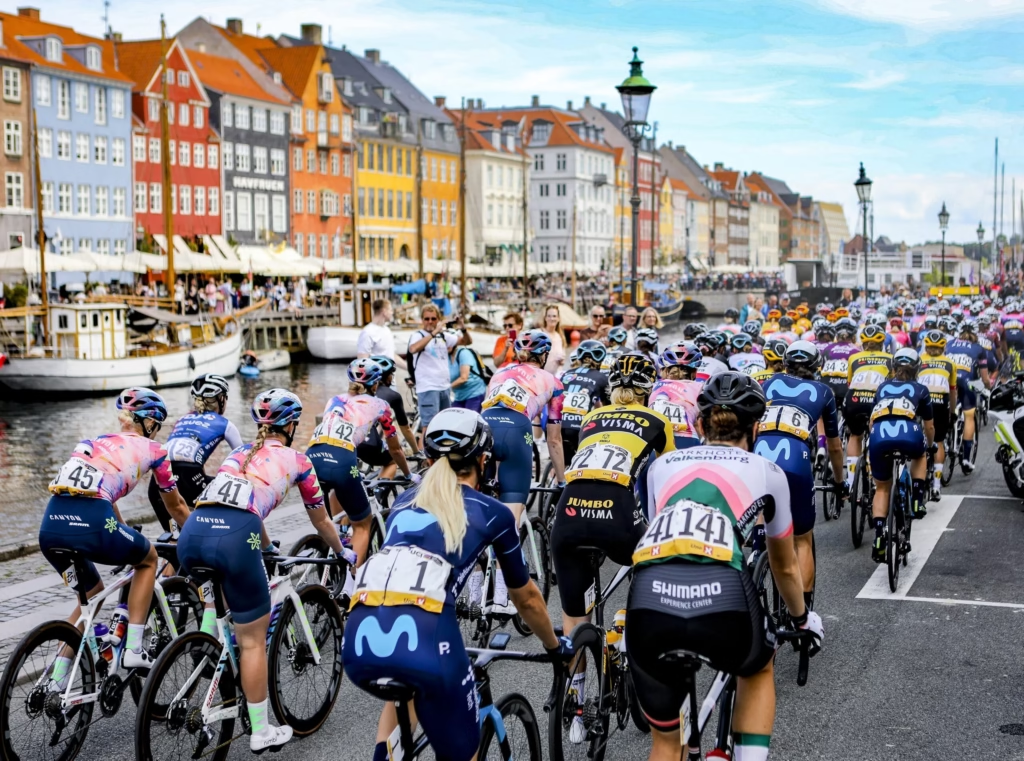
What should beginners watch for?
The first thing to watch is which teams take control. If the biggest sprint teams move to the front early, the race is probably heading towards a bunch sprint. If they hesitate, the breakaway may get more time and the final becomes more complicated.
The second thing is positioning on the final circuit. Sprinters need to be near the front, but not in the wind too early. If a favourite is too far back with one lap to go, she may have to spend too much energy moving up. If she is too far forward too soon, she can be exposed before the sprint.
The third thing is the lead-out. A well-organised lead-out looks calm even at very high speed. Teammates peel off one by one, each rider taking a turn until the sprinter launches. When it works, the sprint almost looks inevitable. When it goes wrong, the final kilometre can become messy very quickly.
The final thing is timing. On a flat finish, launching too early can be as costly as launching too late. The best sprinters know when to wait, when to follow and when to go.
How does Copenhagen Sprint Women compare with other races?
Copenhagen Sprint Women is closer to races such as Scheldeprijs Women or Women’s Ronde van Brugge than to the hillier Classics. It is not about repeated climbs, steep cobbled bergs or long mountain efforts. It is about speed, organisation and the final sprint.
Compared with Scheldeprijs Women, Copenhagen Sprint Women has a bigger city-centre showcase and a newer WorldTour identity. Compared with Ronde van Brugge, it has a more explicit sprint label and a strong Danish national setting. It also sits in a different part of the season, after the spring Classics and before the heart of the summer stage-racing block.
That gives it a useful place in the calendar. It is a race where sprinters can chase a top-tier one-day win without needing to survive the kind of climbs that dominate many other WorldTour races.
Why Copenhagen is a fitting finish
Copenhagen is one of the world’s most famous cycling cities, not because of professional racing alone but because of everyday cycling. Bikes are part of the city’s identity. Commuters, families, students and tourists all share a cycling culture that feels normal rather than exceptional.
That makes the race finish feel appropriate. A WorldTour sprint in Copenhagen is not just a sporting event dropped into a random city. It connects elite racing with a place where cycling is already woven into daily life.
For television viewers, that also matters visually. The final laps through the capital, the city roads and the finish near the National Gallery of Denmark give the race a distinctive look. It is modern, urban and recognisably Danish.
Who are the likely contenders?
The 2026 start list will determine the final favourites, but the race type points clearly towards the elite sprinters. Lorena Wiebes will always be an obvious reference after winning the first edition. Elisa Balsamo and Chiara Consonni were also on the 2025 podium, while Charlotte Kool was close behind.
Other fast finishers will look at Copenhagen Sprint Women as a major opportunity. The route is not built to make them suffer over climbs. It is built to ask whether they and their teams can deliver under pressure.
The strongest teams will likely arrive with dedicated sprint plans. That means lead-out riders matter almost as much as the sprinters themselves. In a race like this, the winner is often the rider with both the fastest legs and the best final 2km around her.
-
 Photo Credit: Cor Vos
 -
 Photo Credit: Zac Williams/AusCycling

What is the most likely race outcome?
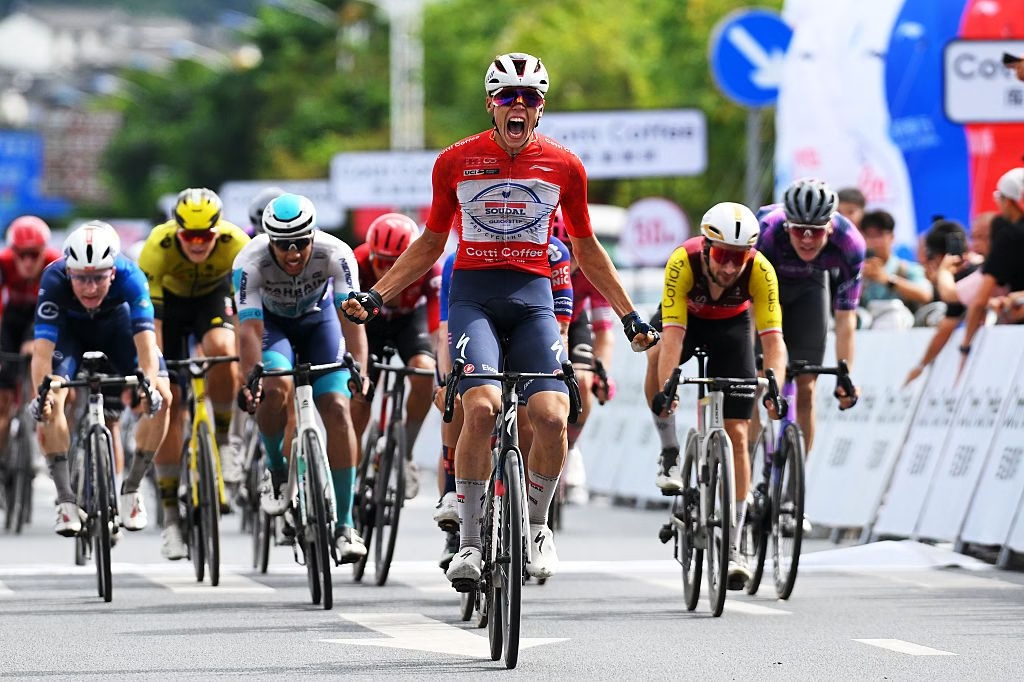
The most likely outcome is a bunch sprint in Copenhagen. The route is flat, the finishing circuit gives the sprint teams structure, and the race’s identity is built around fast riders.
That does not mean the result is predictable. A bunch sprint can still be chaotic. Crashes, late splits, poor positioning or a mistimed lead-out can all change the final. The strongest sprinter does not automatically win if she starts the sprint from the wrong place.
The most likely race pattern is an early breakaway, a controlled chase, a high-speed final circuit and a sprint outside the National Gallery of Denmark. It is a simple structure on paper, but the details in the final lap will decide everything.
Why Copenhagen Sprint Women 2026 is worth watching
Copenhagen Sprint Women 2026 is worth watching because it gives the fastest riders in the women’s peloton a major WorldTour stage. Some races ask sprinters to survive. This one asks them to organise, hold position and finish the job.
It is also still new enough to feel fresh. The first edition gave the race a clear identity, but the 2026 edition will help show whether Copenhagen Sprint Women becomes a fixed landmark for sprinters or develops into something more unpredictable.
For beginners, it is one of the easiest Women’s WorldTour races to understand. The route is flat, the aim is clear, and the final should be fast. But within that simplicity sits the real skill of sprint racing: teamwork, timing, positioning and the nerve to wait until exactly the right moment.

