
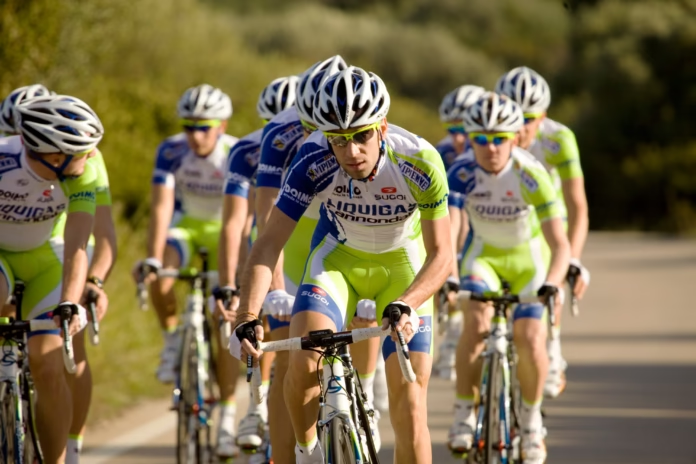
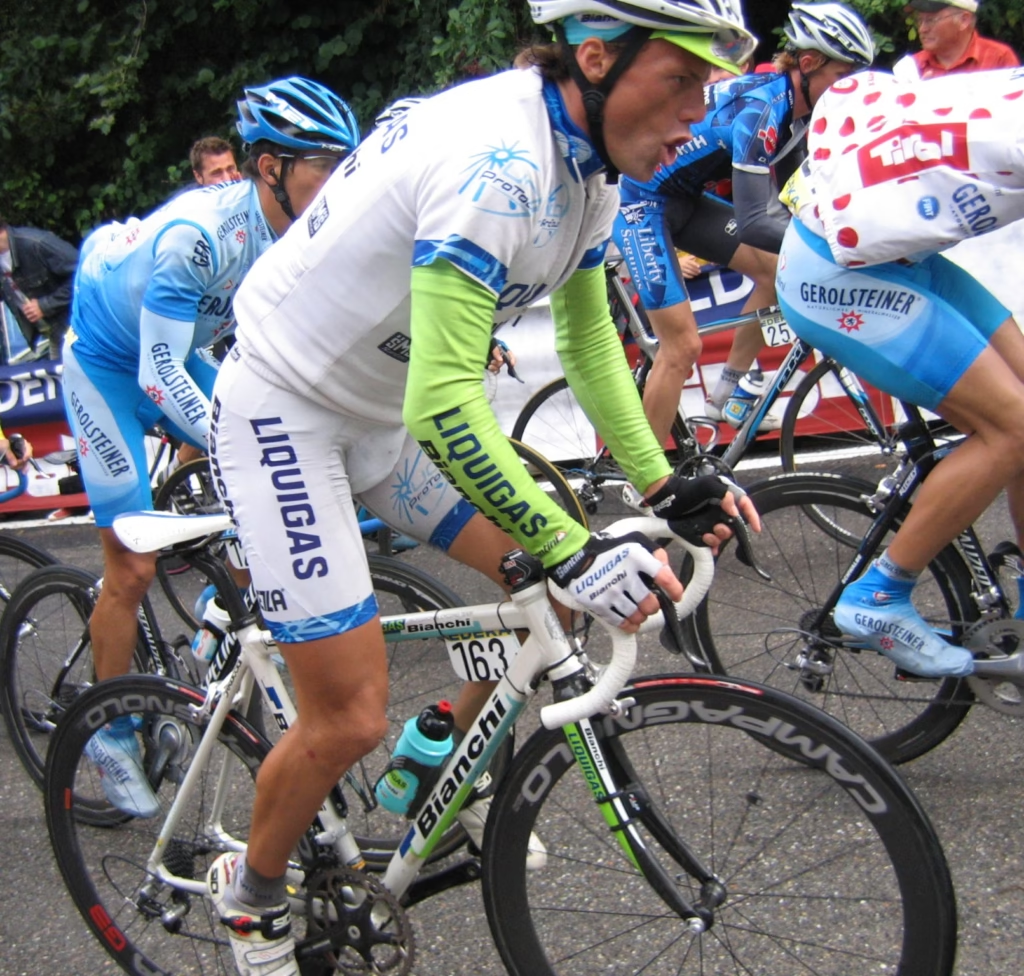
Liquigas is one of those teams that feels easy to remember visually and harder to place historically.
The kit was unmistakable. Acid green, white and blue. The riders were distinctive too: Danilo Di Luca, Stefano Garzelli, Mario Cipollini, Ivan Basso, Vincenzo Nibali, Roman Kreuziger, Franco Pellizotti, Daniel Oss, Elia Viviani and Peter Sagan all passed through the project in one form or another.
Yet the team is still slightly underrated. It did not have the romantic mythology of La Vie Claire, the long dynastic weight of Rabobank, the German boom-and-bust scale of Telekom or the pure Italian nostalgia of Carrera, Mercatone Uno or Saeco. Liquigas sat in a different space. It was modern, corporate, ambitious, often clinical and sometimes complicated.
But between 2005 and 2012, the Liquigas project produced three Grand Tour wins, one of the first great Peter Sagan green-jersey campaigns, a Tour de France podium, Giro d’Italia dominance, the emergence of Vincenzo Nibali, and one of the most recognisable team identities of the ProTour era.
Its legacy deserves more attention. For more cycling history features, see our Men’s Cycling History Hub.
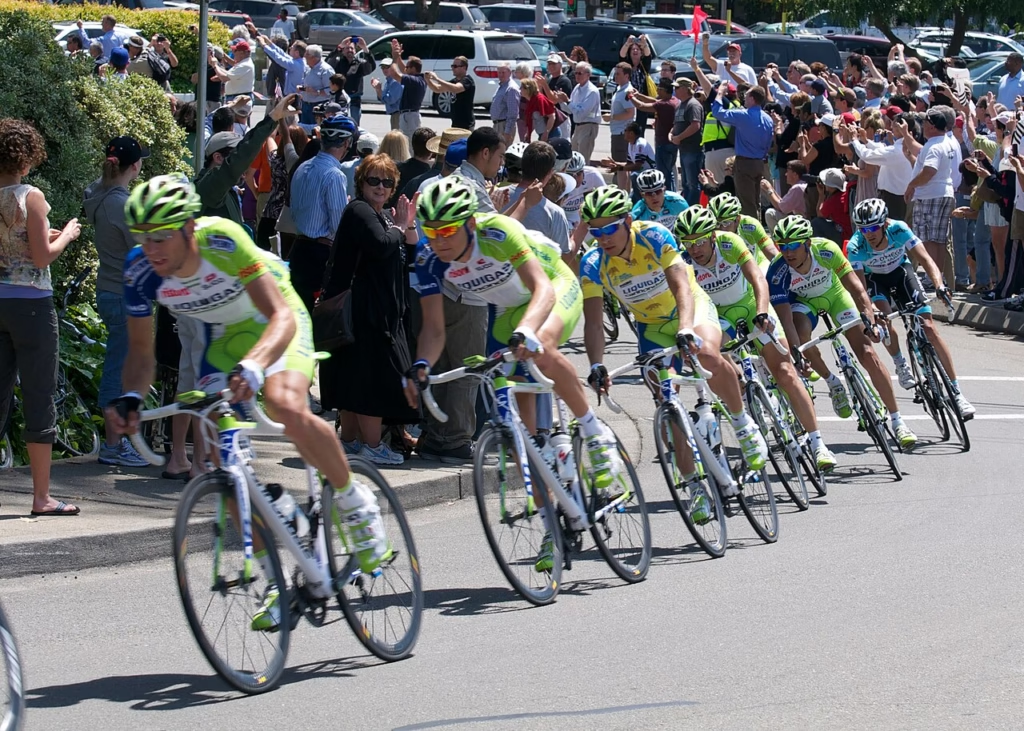 Photo Credit: Dave DeBisschop
Quick answer: what was Liquigas?
Liquigas was an Italian professional cycling team that raced at the top level from 2005 to 2012, starting as Liquigas-Bianchi and ending as Liquigas-Cannondale before the team became Cannondale Pro Cycling in 2013. Its biggest wins included Danilo Di Luca’s 2007 Giro d’Italia, Ivan Basso’s 2010 Giro d’Italia, Vincenzo Nibali’s 2010 Vuelta a España and Peter Sagan’s 2012 Tour de France green jersey.
| Era | Team name | Main identity |
|---|---|---|
| 2005-2006 | Liquigas-Bianchi | Italian ProTour launch, Di Luca, Garzelli and Cipollini |
| 2007-2009 | Liquigas | Giro focus, Basso comeback, Nibali development |
| 2010 | Liquigas-Doimo | Grand Tour peak with Basso and Nibali |
| 2011-2012 | Liquigas-Cannondale | Nibali, Sagan, green jersey and transition |
| 2013 onwards | Cannondale Pro Cycling | Liquigas name gone, team structure continued |
The launch: Liquigas-Bianchi and the new ProTour world
Liquigas arrived in its most familiar modern form in 2005, just as cycling entered the UCI ProTour era.
That timing matters. The team was not an old romantic squad slowly adapting to a new structure. It was built for the new system from the start. The ProTour promised a more regular top-tier calendar, guaranteed places in major races and a clearer elite-team hierarchy. Liquigas entered that world with money, Italian identity and a squad designed to matter immediately.
The first roster had star power. Mario Cipollini brought glamour and sprint history, even if his best years were behind him. Stefano Garzelli gave the team Giro pedigree. Danilo Di Luca became the central racing figure almost immediately. Franco Pellizotti was already part of the climbing core. Magnus Bäckstedt added cobbled credibility after his Paris-Roubaix win the year before.
It was a strange mix: veteran prestige, Italian stage-race ambition, one-day strength and a fresh ProTour-era structure. That made Liquigas feel less sentimental than some Italian predecessors. It was not built around one charismatic patron or one homegrown myth. It was built to compete everywhere the new calendar required.
The first season already showed what the team would become. Di Luca won Amstel Gold Race and La Flèche Wallonne, took the Vuelta al País Vasco and became the first winner of the individual UCI ProTour ranking. That gave Liquigas instant credibility.
The Giro was still the emotional centre, but the team was never only a Giro team. From the start, Liquigas wanted to be Italy’s modern WorldTour-level answer to cycling’s changing power structure. For the race context behind that ambition, see our brief history of the Men’s Giro d’Italia.
Danilo Di Luca and the first Giro win
Danilo Di Luca gave Liquigas its first Grand Tour victory at the 2007 Giro d’Italia.
At the time, it looked like the defining win of the team’s early years. Di Luca was not a traditional diesel climber. He was sharp, aggressive, explosive and suited to the Giro’s mix of steep finishes, tactical racing and emotional volatility. He could win uphill, race the Classics and thrive when the road tilted just enough to make the pure sprinters disappear.
His 2007 Giro victory fitted that style. It was not a controlled procession built around mountain-train dominance. It was a Giro won through aggression, timing and the ability to hit hard when the race opened. He also won Liège-Bastogne-Liège that year, giving Liquigas a season that combined Grand Tour success and Monument status.
But Di Luca also represents one of the complications in Liquigas history.
His later career became inseparable from doping sanctions and controversy. Even though the 2007 Giro remains in the record books, the wider memory of Di Luca changed sharply after his subsequent cases. That affects how Liquigas is remembered, because its first Grand Tour win came through a rider whose reputation later collapsed.
That does not erase the sporting fact of 2007, but it does make the legacy more awkward. Liquigas had reached the top quickly, but the team’s first era came with the same ethical shadows that hung over much of elite men’s cycling in the mid-2000s.
The awkwardness sits in the same broad historical landscape as other team stories from the period. Festina’s team history shows how deeply the late-1990s and early-2000s still shaped the sport’s reputation, while the later Telekom story shows how success and reassessment often sit side by side in cycling history.
The Basso rebuild
Ivan Basso’s arrival changed the team’s centre of gravity.
Basso had been one of the best stage racers in the world before his suspension linked to Operación Puerto. When he returned, Liquigas became the place where he tried to rebuild a Grand Tour career that had once looked capable of defining an era.
That move was significant. Liquigas was no longer only a team of sharp Italian attackers and developing talents. It became a project around structured stage-race leadership. Basso brought a different kind of racing: measured, controlled, climbing-heavy and based on endurance rather than sudden acceleration.
His 2010 Giro d’Italia victory was the team’s cleanest Grand Tour statement in sporting terms.
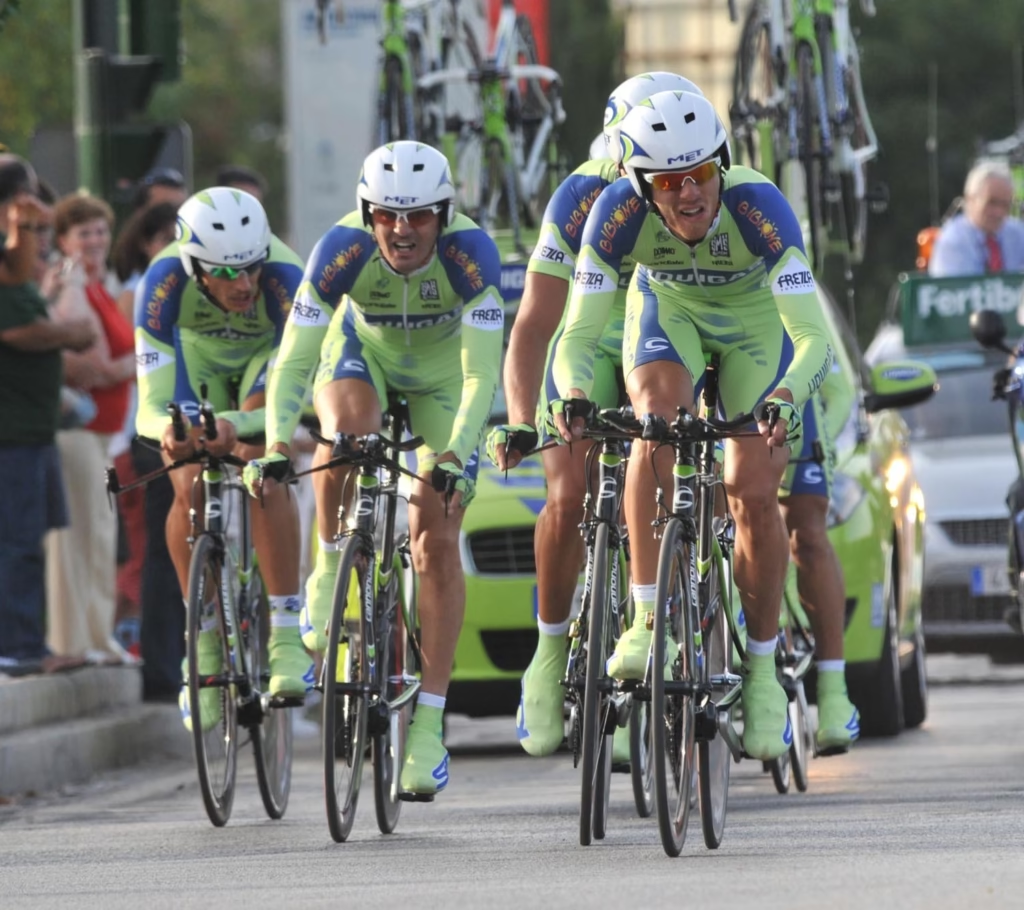
Liquigas-Doimo dominated the race as a unit. The team won the stage 4 team time trial and briefly placed Vincenzo Nibali, Basso and Valerio Agnoli in the top three overall. Later, Basso took control in the mountains, with the Monte Zoncolan stage becoming the symbolic day of his comeback. Nibali finished third overall, giving the team two riders on the final podium.
That 2010 Giro was not just a rider victory. It was a team victory. Liquigas looked organised, deep and confident. The climbing support around Basso worked, Nibali’s presence gave the team a second card, and the whole race made the squad look like the strongest Italian stage-race structure of its generation.
It also showed the team’s internal transition. Basso was the established leader, but Nibali was already becoming the future.
Vincenzo Nibali and the Vuelta breakthrough
Vincenzo Nibali’s 2010 Vuelta a España win may be the most important result in Liquigas history.
Di Luca gave the team its first Giro. Basso gave it a comeback story and a dominant Giro structure. But Nibali gave Liquigas a rider whose career would stretch far beyond the team itself.
At the 2010 Vuelta, Nibali was still becoming the rider later known as one of the complete Grand Tour champions of his era. He had climbing resilience, descending nerve, tactical intelligence and a willingness to race in ways that were not always predictable. The Vuelta win confirmed that he was not simply a strong Giro podium rider. He was a Grand Tour winner.
The final margin over Ezequiel Mosquera was not huge, but the result carried huge weight. Nibali became the first Italian winner of the Vuelta in decades and gave Liquigas-Doimo its second Grand Tour of the same season.
That 2010 double is still central to the team’s reputation. Very few teams win two Grand Tours in one year. Liquigas did it with two different riders, two different leadership styles and a squad that had evolved from the Di Luca years into something more durable.
Nibali would later win the Giro, Tour de France and another Vuelta elsewhere, becoming one of the great all-round Grand Tour riders. But Liquigas was the team that shaped the first phase of that career. It gave him leadership, pressure, mountain support and the room to become more than a promising Italian GC rider.
That is a major part of the underrated legacy. Nibali’s later Tour peak is covered in our review of the 2014 Tour de France, where his dominance became the central story of the race.
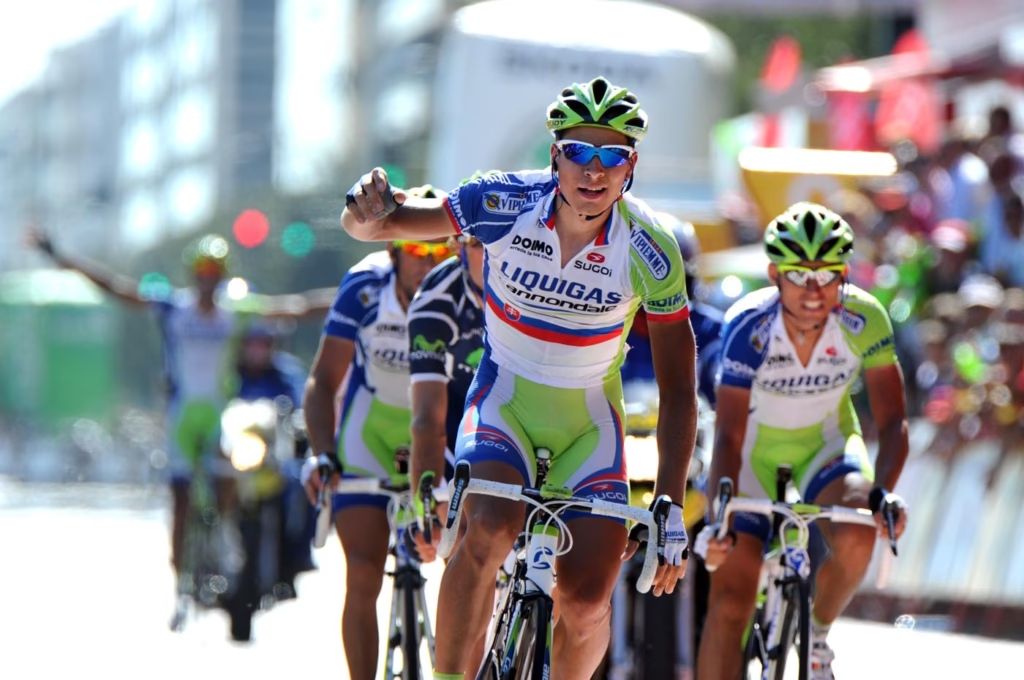 Photo Credit: Graham Watson
The Peter Sagan explosion
If Basso and Nibali defined Liquigas as a Grand Tour team, Peter Sagan changed how it looked to the wider public.
Sagan’s rise in the green Liquigas-Cannondale kit was immediate, vivid and impossible to ignore. He was young, explosive, technically brilliant and difficult to classify. He could sprint, climb short hills, descend, handle chaos and win from situations where other riders simply waited for a normal finish.
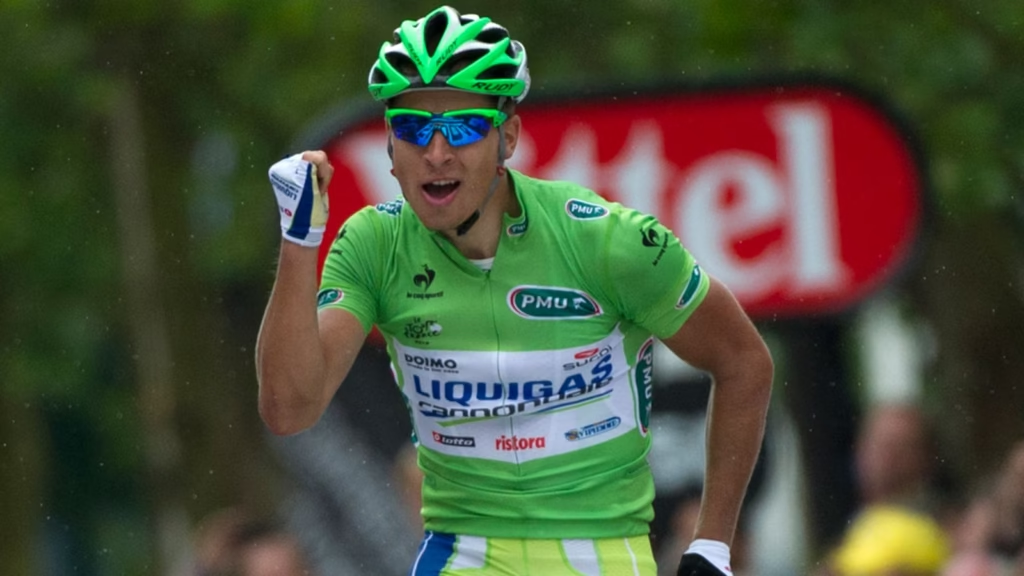
The 2012 Tour de France made him a global star.
Sagan won three stages and took the points classification in his debut Tour. It was not a normal green jersey campaign built only on flat bunch sprints. It was a demonstration of range. He won uphill in Seraing, won again on the sharp finish in Boulogne-sur-Mer, and then added another stage in Metz. He collected points everywhere and made the green jersey feel like a prize for an all-round racer rather than just a sprinter.
Liquigas-Cannondale went to that Tour with two major objectives: Sagan in green and Nibali for the general classification. Both worked. Sagan won the points competition, while Nibali finished third overall behind Bradley Wiggins and Chris Froome.
That made the 2012 Tour the perfect summary of late Liquigas: a Grand Tour podium rider and a new-generation superstar in the same squad, both wearing one of the most visible kits in the race.
There is also a neat visual joke in the team’s history. Liquigas was already the green team. Then Sagan turned its most famous Tour de France image into the green jersey itself. For more on the classification he came to dominate, see our Tour de France green jersey guide, our feature on Peter Sagan’s career highlights and cycling legacy and our ranking of the greatest Tour de France sprinters.
Liquigas and the Giro d’Italia
For all its international results, Liquigas was still rooted in the Giro.
That is where its Italian identity came through most clearly. The team won the Giro twice, with Di Luca in 2007 and Basso in 2010. It also placed riders on the podium and helped shape several editions through mountain strength, team time trials and aggressive racing.
The Giro suited Liquigas because it rewarded depth and adaptability. The route was often chaotic, technical and mountainous. Weather could change the race. Finales could be strange. Tactical moments mattered. Liquigas usually had riders for that kind of contest.
Its best Giro teams had multiple cards: a leader, a second GC rider, climbing helpers and riders who could survive hard days. In 2010, that structure reached its peak. Basso won, Nibali finished third and the team looked like the reference point of Italian stage racing.
That is why Liquigas should be remembered as one of the key Giro teams of the late 2000s and early 2010s. It did not dominate for a decade, but when it was strong, it looked completely at home in the race.
The Giro has always carried a very different emotional charge from the Tour, especially for Italian teams. Our brief history of the Men’s Giro d’Italia explains why the race’s national identity made a team like Liquigas feel so important.
Liquigas at the Tour de France
Liquigas never won the Tour de France, but it still left a mark on the race.
Its Tour identity was more varied than its Giro identity. In some years, it was chasing stage wins. In others, it was building around GC development. By 2012, it had become one of the most interesting teams in the race because it had both Nibali and Sagan.
Nibali’s third place in 2012 was a serious result. He was racing against the full force of Team Sky’s Wiggins-Froome structure, on a route heavy with time trial kilometres. For a rider whose later Tour win would come through a very different set of circumstances, the 2012 podium showed his consistency and adaptability.
Sagan’s green jersey gave the team a different kind of Tour fame. He was not just successful. He was memorable. The celebrations, the uphill sprints, the confidence and the sense of a new rider arriving all made Liquigas-Cannondale one of the visual stories of that Tour.
The team did not own the Tour in yellow, but it helped shape the race’s next decade by developing two riders who would become central to it: Nibali as a Tour winner in 2014, and Sagan as the dominant green jersey rider of his generation.
For more on the yellow-jersey record book, see our Tour de France winners list and every Tour de France winner since 1903.
Beyond Grand Tours: Classics, one-week races and the next generation
Liquigas was never just Basso, Nibali and Sagan.
The team’s one-week race record was strong. Di Luca won the Vuelta al País Vasco in 2005. Roman Kreuziger won the Tour de Romandie in 2009 and had already looked like one of the team’s next GC prospects. The squad could target Tirreno-Adriatico, Romandie, Tour de Suisse-style terrain and hilly WorldTour racing with real ambition.
It also had a Classics strand. Di Luca’s Ardennes wins in 2005 and Liège victory in 2007 gave the team prestige in races that mattered far beyond Italy. Sagan then extended that identity, even if his biggest Classics wins came after the Liquigas name had disappeared.
The development side is important too. Liquigas had a habit of carrying riders who would become significant elsewhere. Nibali is the obvious one. Sagan is another. Elia Viviani passed through the late Liquigas-Cannondale setup before becoming one of the world’s leading sprinters and track riders. Daniel Oss became a valuable Classics and team rider. Moreno Moser appeared as part of the next wave.
That gave Liquigas a more modern feel than many Italian teams. It was not purely national. It had Italian roots, but it increasingly became an international development and performance squad, helped by Cannondale’s growing influence.
This is where Liquigas sits closer to the longer team-history pattern explored in our 7-Eleven team history, where a team’s importance comes not only from what it won, but from the riders and structures it helped push into the next era.
The shadows in the story
Any serious Liquigas history has to acknowledge the shadows.
Di Luca’s later doping history damaged how his Liquigas successes were remembered. Manuel Beltrán was removed from the 2008 Tour de France after a positive EPO test. Franco Pellizotti’s results and reputation became complicated by biological-passport issues. Basso himself arrived after a suspension, even though his Liquigas comeback was one of the team’s defining sporting projects.
That does not make Liquigas unique. The mid-2000s and early-2010s were a difficult period across men’s cycling, and many major teams from that era carry similar baggage. But it does mean the legacy is not clean or simple.
The fairest reading is that Liquigas was both a product of its time and one of the teams that helped carry Italian cycling into the next era. It sat between cycling’s older, murkier world and a newer one shaped by global sponsors, more international rosters, younger stars and different performance structures.
That tension is part of why the team is interesting. The same kind of layered reading matters for several other major team histories, from Festina to Telekom.
Why the legacy is underrated
Liquigas is underrated because its achievements are spread across several different memories rather than one single myth.
For some fans, it is Di Luca in green and blue, attacking through the Giro. For others, it is Basso grinding his way back to the top on Monte Zoncolan. For others, it is Nibali becoming a Grand Tour winner. For many, especially outside Italy, it is Sagan dancing through the 2012 Tour in the green jersey.
Those memories do not always get joined together.
But they should. Liquigas won Grand Tours with three different leaders. It helped build the career of one of the best Grand Tour riders of the modern era. It introduced Sagan to the Tour de France as a superstar. It delivered one of the most visually recognisable kits of its period. It bridged Italian cycling tradition and a more globalised WorldTour model.
That is a serious legacy.
It may not be a beloved myth in the way some older teams are. It may not have carried the romance of wool-jersey nostalgia or the dominance of a superteam. But Liquigas mattered. It mattered in the Giro, it mattered at the Vuelta, it mattered at the Tour, and it mattered in the careers it launched.
Liquigas’ biggest achievements
| Year | Achievement | Rider |
|---|---|---|
| 2005 | UCI ProTour individual winner | Danilo Di Luca |
| 2005 | Amstel Gold Race | Danilo Di Luca |
| 2005 | La Flèche Wallonne | Danilo Di Luca |
| 2007 | Giro d’Italia overall | Danilo Di Luca |
| 2007 | Liège-Bastogne-Liège | Danilo Di Luca |
| 2010 | Giro d’Italia overall | Ivan Basso |
| 2010 | Vuelta a España overall | Vincenzo Nibali |
| 2012 | Tour de France points classification | Peter Sagan |
| 2012 | Tour de France third overall | Vincenzo Nibali |
The riders who define Liquigas
| Rider | Why they matter to the story |
|---|---|
| Danilo Di Luca | First star, Ardennes winner and 2007 Giro champion |
| Ivan Basso | Comeback leader and 2010 Giro winner |
| Vincenzo Nibali | Developed into a Grand Tour winner before later becoming a legend |
| Peter Sagan | Brought global attention with the 2012 Tour green jersey |
| Stefano Garzelli | Early Giro pedigree and Italian credibility |
| Roman Kreuziger | One-week stage-race talent and part of the team’s development profile |
| Elia Viviani | Young sprinter who later built a major career elsewhere |
| Daniel Oss | Part of the squad’s Classics and support-rider depth |
What happened to Liquigas?
The Liquigas name disappeared from the top level after the 2012 season. Cannondale, already a major partner, took over as title sponsor for 2013, and the team continued as Cannondale Pro Cycling.
That transition makes Liquigas slightly harder to remember as a finished story. It did not collapse dramatically in the way some teams do. It evolved. The sponsor changed, the kit changed, and the team’s identity shifted towards Cannondale and Sagan.
In sporting terms, the 2013 Cannondale team was still part of the same lineage. Sagan won another Tour green jersey that year, but strictly speaking that was no longer a Liquigas-branded success. The Liquigas chapter had ended, even if the structure carried on.
That makes 2012 the natural closing image: Sagan in green, Nibali on the Tour podium, Basso still present, and the bright Liquigas-Cannondale kit about to disappear from the peloton.
-
 Photo Credit: Canyon SRAM (supplied media release)
 -
 Photo Credit: Park Tool
FAQs: Liquigas cycling team history
When did the Liquigas cycling team exist?
The best-known modern Liquigas team raced at the top level from 2005 to 2012. It began as Liquigas-Bianchi, later raced as Liquigas, Liquigas-Doimo and Liquigas-Cannondale, then became Cannondale Pro Cycling in 2013.
Who were the biggest Liquigas riders?
The biggest Liquigas riders included Danilo Di Luca, Ivan Basso, Vincenzo Nibali and Peter Sagan. Stefano Garzelli, Roman Kreuziger, Franco Pellizotti, Elia Viviani and Daniel Oss were also important parts of the wider story.
Did Liquigas win the Tour de France?
No. Liquigas never won the Tour de France overall. Its best Tour de France achievements included Peter Sagan winning the 2012 green jersey and Vincenzo Nibali finishing third overall in the same race.
Did Liquigas win the Giro d’Italia?
Yes. Liquigas won the Giro d’Italia twice: with Danilo Di Luca in 2007 and Ivan Basso in 2010.
Did Liquigas win the Vuelta a España?
Yes. Vincenzo Nibali won the 2010 Vuelta a España for Liquigas-Doimo.
Was Peter Sagan on Liquigas?
Yes. Peter Sagan rode for Liquigas-Cannondale and won three stages and the green jersey at the 2012 Tour de France. He stayed with the successor Cannondale team after the Liquigas name disappeared.
What happened to Liquigas-Cannondale?
Liquigas left the title sponsorship after 2012, and the team became Cannondale Pro Cycling in 2013.
Why is Liquigas remembered?
Liquigas is remembered for its bright green kit, Italian Grand Tour success, Basso and Nibali’s 2010 double, Sagan’s early Tour de France breakthrough and its place as one of the strongest Italian teams of the ProTour era.
Final word
Liquigas should be remembered as more than a bright kit and a few famous riders.
It was the team of Di Luca’s 2007 Giro, Basso’s 2010 Giro comeback, Nibali’s first Grand Tour win and Sagan’s first Tour de France green jersey. It helped bridge Italian cycling’s old stage-race culture with a more international, sponsor-driven WorldTour model. It produced stars, won major races and left behind a visual identity that still stands out.
The legacy is not spotless, because that period of cycling rarely was. But it is stronger than it is often given credit for.
Liquigas was not just green. For several seasons, it was one of the most important teams in the sport.

