The 2026 Giro d’Italia restarts after its second rest day with a short, sharp and potentially explosive mountain stage in Switzerland. Stage 16 takes the race from Bellinzona to Carì on Tuesday, 26th May, with only 113km of racing but almost 3,000 metres of climbing packed into the route.
After the flat but chaotic Milan stage, where Fredrik Dversnes won from the break and the GC times were neutralised before the final lap, the overall contenders are immediately thrown back into the mountains. Jonas Vingegaard starts the stage in pink, 2:26 ahead of Afonso Eulálio, with Felix Gall, Thymen Arensman, Jai Hindley and Giulio Pellizzari all still close enough to make the podium fight a major storyline.
This is not the longest mountain stage of the Giro, but it could still be one of the most intense. The stage includes repeated climbs around Torre and Leontica before the summit finish at Carì, an 11.7km climb averaging 7.9 per cent. Coming straight after a rest day, it has all the ingredients for a difficult restart: short distance, early climbing, GC pressure and a final ascent steep enough to create meaningful gaps.
The route
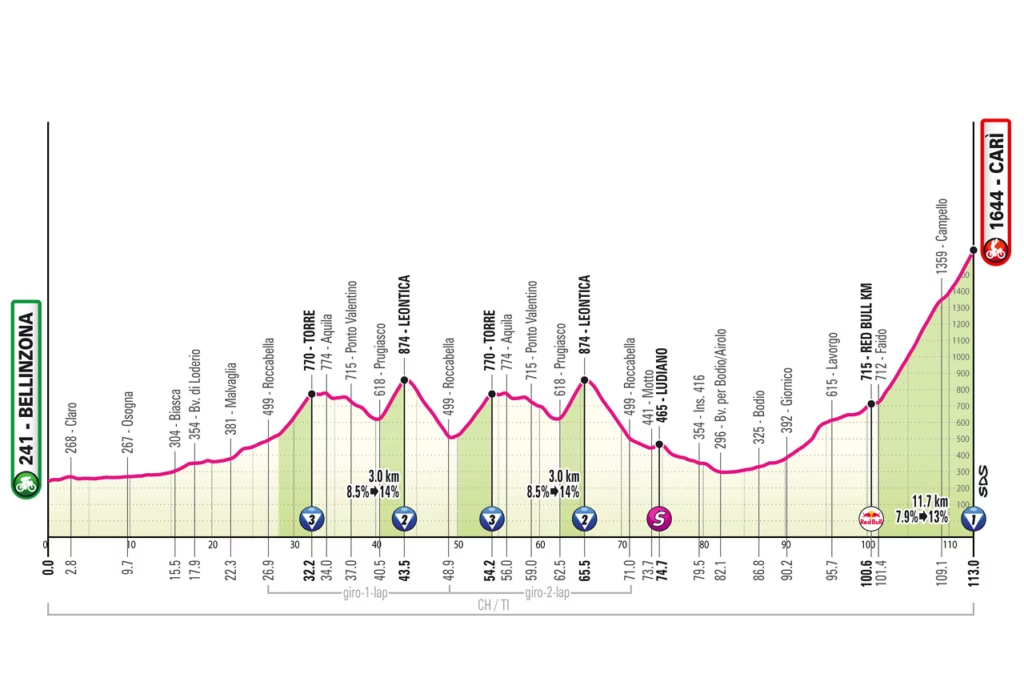
Stage 16 starts in Bellinzona and finishes at Carì. At 113km, it is the shortest road stage of the 2026 Giro, but the distance is deceptive. There is almost no room for the race to settle, and the repeated climbing means teams will have to be alert almost from the beginning.
The opening phase heads north before the riders reach the Roccabella circuit. That circuit is covered twice and includes the climbs of Torre and Leontica. Torre is listed at 4.7km at 5.6 per cent, while Leontica is shorter but harder, around 3km at just over 8 per cent, with early pitches reportedly reaching around 14 per cent.
Those climbs are not the final decision point, but they are important. They give breakaway riders a place to go clear, allow mountain jersey contenders to collect points, and give GC teams a chance to start removing domestiques before the final climb. On a stage this short, even the middle climbs can feel decisive if the pace is high.
The final climb to Carì is the obvious centrepiece. It is 11.7km at 7.9 per cent and rises to the finish, with the final kilometre also steep enough to prevent any rider from recovering before the line. That makes it a real summit finish rather than a stage where the favourites can afford to wait too long.
What’s on offer
- Stage: 16
- Date: Tuesday, 26th May
- Route: Bellinzona to Carì
- Distance: 113km
- Vertical metres: around 2,900 to 3,000 metres
- Stage type: mountain
- Start time: around 1:00pm BST
- Key climbs: Torre, Leontica and Carì
- Final climb: Carì, 11.7km at 7.9 per cent
- Likely winner type: GC climber or elite breakaway climber
- Main tactical point: how hard the race is made before the final climb
Why stage 16 is dangerous after the rest day
Rest days can do strange things in Grand Tours. Some riders recover and come out stronger. Others feel flat, stiff or slow to restart. Stage 16 is a harsh way to discover who has responded well, because there is no long flat run to ease back into the race.
The short distance is also important. On a 200km mountain stage, teams can sometimes wait. On a 113km stage, there is less time for hesitation. A breakaway can become dangerous quickly, and GC teams cannot afford to spend too long calculating if they want the stage win or bonus seconds.
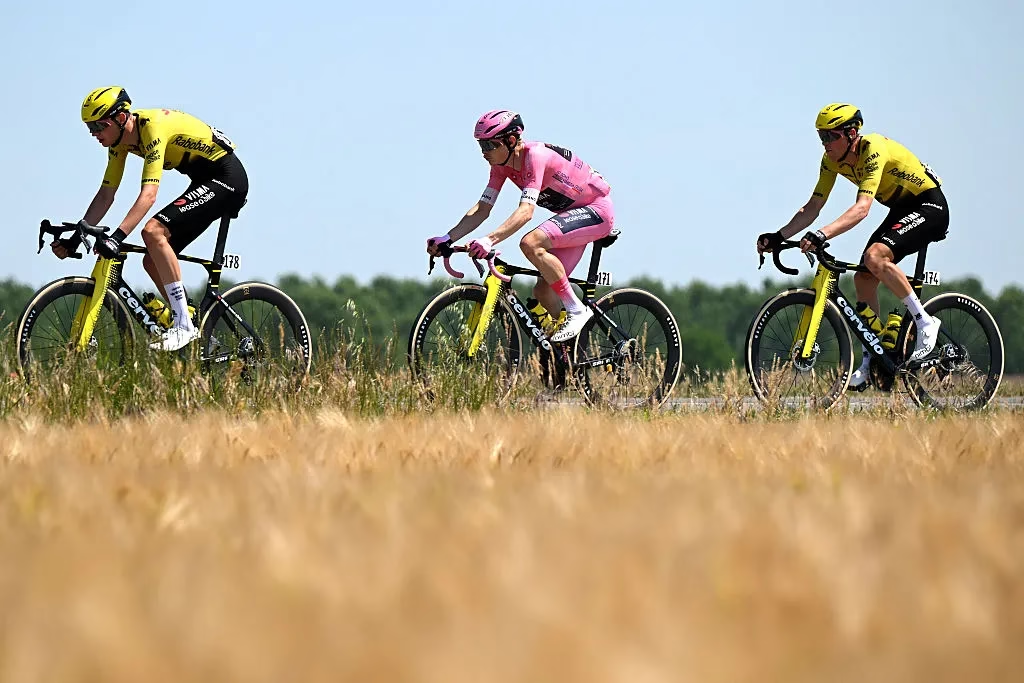
The repeated Torre and Leontica climbs should also make the stage harder than a simple summit-finish profile. If Team Visma | Lease a Bike ride tempo from early on, the race could arrive at Carì already heavily reduced. If they let the breakaway go, then the stage may become a two-layer race, with stage hunters ahead and the GC favourites measuring each other behind.
Either way, Carì is steep enough to expose weakness. A rider slightly off after the rest day could lose more than expected.
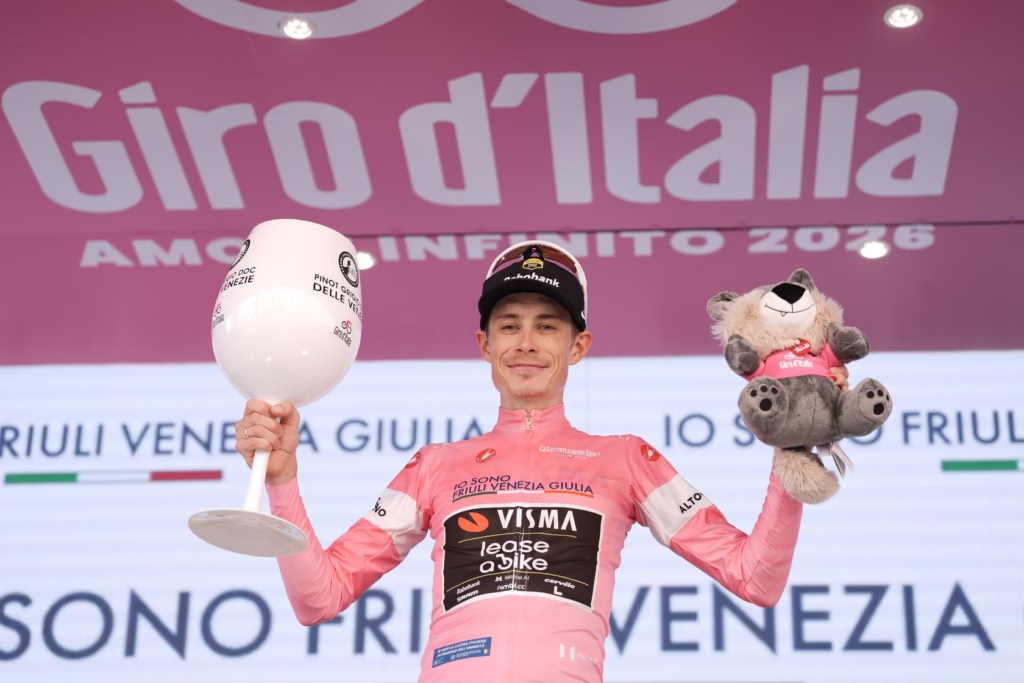 Photo Credit: RCS
Vingegaard’s race to control
Vingegaard enters stage 16 in a very different position from the one he held before Pila. He is no longer chasing the maglia rosa. He is defending it. That changes the tactical burden on Team Visma | Lease a Bike, but it does not make the race passive.
The Dane has already won three summit finishes in this Giro, including the decisive stage 14 climb to Pila. He also leads the mountains classification and has looked like the strongest climber whenever the road has become genuinely selective. Stage 16 gives him another finish that suits sustained climbing pressure.
The key question is whether Visma want the stage. If they ride to control the break and set up Vingegaard, then he is the obvious favourite. The bookmakers also have him as the clear favourite ahead of Giulio Ciccone, Einer Rubio and Wout Poels, which reflects both his race position and the shape of the final climb. If Visma prefer to defend and let a breakaway fight for the win, the stage becomes much more open.
Vingegaard does not need to attack. With a 2:26 lead over Eulálio, he can ride defensively and still strengthen his position if rivals fade. But the final climb to Carì may tempt him, especially if he senses that the podium fight behind him is already under stress.
Eulálio and the podium defence
For Eulálio, stage 16 is about proving that Pila was a bad day rather than the start of a decline. He remains second overall and still leads the young rider classification, but his margin over the riders behind him is not comfortable. Gall is only 24 seconds away, while Arensman is 37 seconds behind.
That means Eulálio has two jobs. He has to avoid losing more time to Vingegaard, but he also has to defend second place from Gall and Arensman. On a stage like this, those two battles can become connected quickly. If Vingegaard attacks and Eulálio cannot follow, Gall may be the rider who benefits most.
Gall should be one of the most important riders on the day. He was second to Vingegaard on Pila and has looked like one of the strongest pure climbers in the race. Carì gives him another clear opportunity to put Eulálio under pressure and potentially move into second overall.
Arensman also remains close. He lost his podium place on Pila, but he is only 13 seconds behind Gall. If the final climb becomes more about steady pacing than explosive attacks, he can still limit losses or even move back onto the podium.
Hindley and Pellizzari give Red Bull-Bora-hansgrohe two cards. Hindley is fifth overall, while Pellizzari is sixth and still chasing Eulálio in the young rider classification. That pair could make the podium fight more tactical if they are willing to attack before the final few kilometres.
Could the breakaway win?
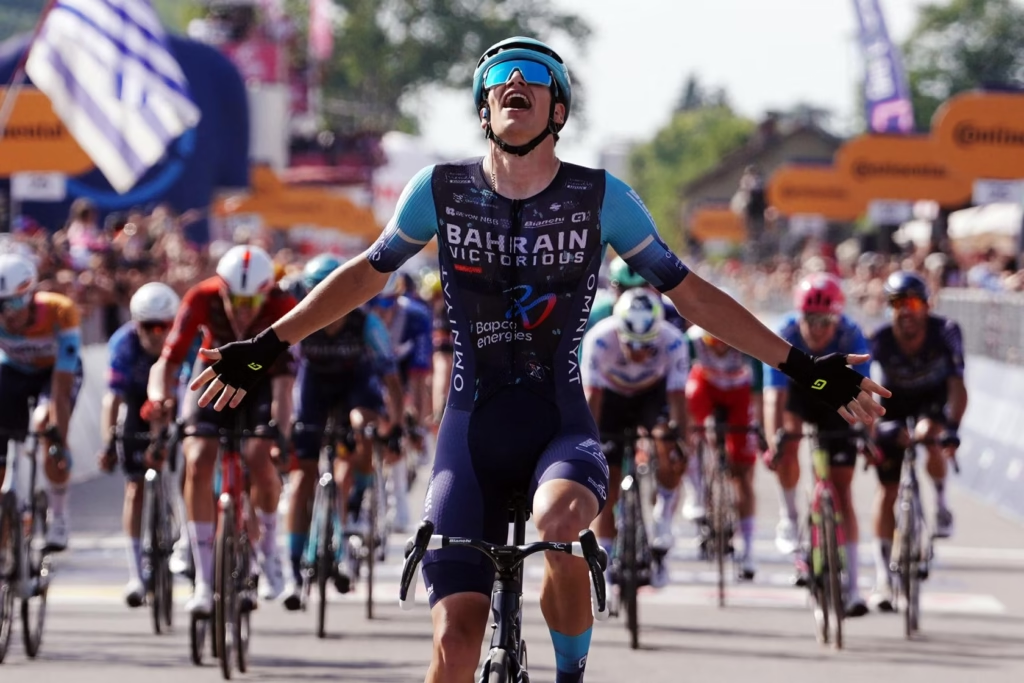
The breakaway has a real chance, but it depends almost entirely on Visma’s intentions. Stage 16 is short, hard and packed with climbing, which is ideal for strong climbers who are far enough down GC to be allowed freedom. The Torre and Leontica circuit gives the move repeated terrain to build a gap before Carì.
Giulio Ciccone is one of the obvious names if he goes on the attack. He is short-priced with the bookmakers and was active on stage 14, which shows both intent and climbing condition. He also has the profile for a stage like this: aggressive, capable on repeated climbs, and dangerous if given a head start before the final ascent.
Einer Rubio, Wout Poels, Igor Arrieta, Jan Christen, Egan Bernal, Jan Hirt and Chris Harper all fit the broader breakaway or climbing-stage profile. Some are better placed on GC than others, so their freedom will depend on the peloton’s tolerance. Rubio and Poels, in particular, look like strong stage-hunting options if the race is not fully controlled.
The challenge for the break is that Carì is hard enough for Vingegaard to take back time quickly if Visma decide to chase. A five-minute advantage at the foot would be difficult to close. Two minutes might not be enough if the GC group climbs at full speed.
The mountains classification
Vingegaard leads the mountains classification by a large margin, but stage 16 still matters for the blue jersey battle. With Torre and Leontica climbed twice, and Carì finishing the stage, there are enough points available for breakaway climbers to strengthen their positions.
Jardi van der Lee, Giulio Ciccone, Felix Gall and Diego Pablo Sevilla all have reasons to look at the classification. But if Vingegaard continues to win or place high on summit finishes, the mountains jersey may remain tied to the GC race rather than becoming a separate target.
The more realistic battle may be for who wears blue on the road while Vingegaard is in pink. That gives the breakaway climbers an extra incentive to be active, even if they are not likely to overhaul him immediately.
Riders to watch
Jonas Vingegaard is the obvious favourite if the stage is controlled. The final climb suits him, the race situation suits him, and he has already shown he can finish off summit stages at this Giro.
Giulio Ciccone may be the most dangerous breakaway option. He has the climbing ability, aggression and race instinct for a short mountain stage, and the repeated climbs before Carì give him the right platform.
Felix Gall is the key podium contender to watch. He was second on Pila and sits close enough to Eulálio to make stage 16 a genuine chance to move up.
Einer Rubio is well suited to a breakaway fight and has the climbing quality to win if given room. He is also exactly the kind of rider who can profit if Visma allow the stage to go up the road.
Wout Poels and Jan Hirt are both interesting veteran stage-hunting options. On a short mountain day after a rest day, experience can matter as much as raw explosiveness.
Jai Hindley and Giulio Pellizzari give Red Bull-Bora-hansgrohe tactical depth. If they use both riders properly, they can put pressure on Arensman, Gall and Eulálio rather than simply following.
Igor Arrieta, Jan Christen and Davide Piganzoli are also worth watching, particularly if the stage becomes a test of young climbing depth. Piganzoli’s presence high on GC means he may be more useful to Visma than free to chase the stage, but his form has already been important to the team.
How the stage could unfold
The start should be aggressive. With only 113km to race and climbing coming early, plenty of riders will want to make the breakaway. The first major selection may happen before the GC teams have even fully organised.
On the Torre and Leontica circuits, the stage could split into two races. Ahead, climbers and stage hunters will try to build a margin. Behind, Visma will decide whether to keep the break close or ride purely for GC control.
If the break still has a large advantage before Carì, the stage winner may already be up the road. Ciccone, Rubio, Poels or another strong climber could use the final climb to break the group apart and win alone.
If the gap is small, the GC favourites should take over. The lower slopes of Carì may be ridden at a high tempo by Visma, with the decisive attacks coming later. The final 5km should be where the podium contenders are forced into direct confrontation.
The steep final kilometre means there is little chance for bluffing at the end. Any rider who reaches that section already struggling will lose time all the way to the line.
Prediction
Stage 16 is finely balanced between breakaway and GC showdown. The short distance and repeated climbs make it ideal for a strong move, but Vingegaard’s position and the summit finish give Visma every reason to keep control if they want another stage win.
The most likely outcome may depend on how much Visma want to spend after the rest day. If they chase, Vingegaard is the clear pick. If they allow a strong breakaway to go, Ciccone and Rubio look like two of the best stage-winning options.
Prediction: a strong breakaway to go deep, but Visma to keep the race close enough for the GC favourites to fight on Carì. Vingegaard remains the safest pick for the win, with Gall again the most likely rider to follow him closest and put more pressure on Eulálio’s second place.