Men’s Copenhagen Sprint is one of the youngest races on the UCI WorldTour, but it already has a clear identity. It was created to give Denmark a top-level one-day race built around speed, city-centre racing and the country’s deep cycling culture. In a calendar full of cobbles, Ardennes climbs and long-running Classics, Copenhagen Sprint arrived with a simpler promise: a flat, fast Danish race designed to give the sprinters their own WorldTour stage.
The race was first held in 2025, with the men’s event following the inaugural women’s race on the same weekend. That immediately gave Copenhagen Sprint a modern feel. It was not launched as a men’s race with a women’s version added later, but as a paired WorldTour project from the start, with both events using Copenhagen and Zealand as their central setting.
For newer fans, ProCyclingUK’s beginner’s guide to Copenhagen Sprint 2026 explains the race format, route character and why it has quickly become an important fixture for sprinters.
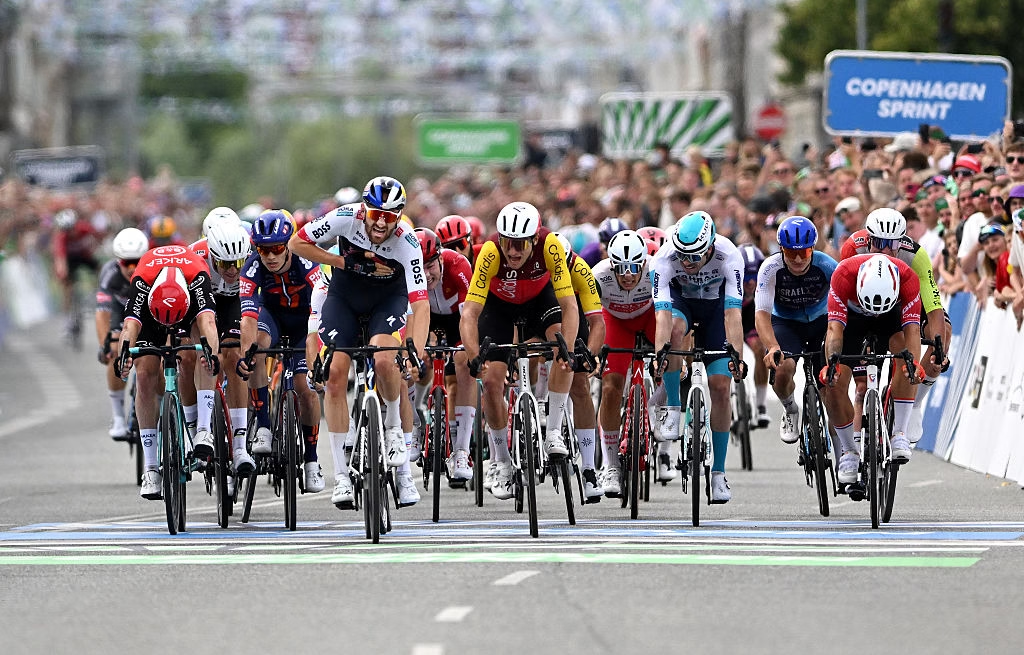
Why Copenhagen needed a WorldTour race
Denmark has long had the cycling culture to support a race like Copenhagen Sprint. Copenhagen is one of Europe’s most bike-friendly cities, while Danish riders have become major figures across road, track and time trialling. The country has produced Tour de France winners, Classics contenders, sprinters, rouleurs and some of the most technically sharp riders in the modern peloton.
What Denmark did not have, for a long time, was a regular men’s WorldTour one-day race that fully matched that cycling identity. The Tour de France Grand Départ in Denmark in 2022 showed how strongly the country could support elite road cycling, with huge crowds and a national atmosphere around the race. Copenhagen Sprint built on that momentum, but with a permanent place of its own rather than a one-off hosting role.
The concept was also well suited to the region. Denmark’s landscape does not naturally lend itself to long mountain races or brutal high-altitude stages. Instead, Copenhagen Sprint leans into what the terrain offers: exposed roads, fast approaches, technical positioning and a city-centre finale where sprint trains must be precise rather than simply powerful.
The launch of Copenhagen Sprint
Copenhagen Sprint was announced as a new top-level Danish race with both men’s and women’s events planned from the outset. The route concept placed Roskilde and Copenhagen at the centre of the project, linking historic Zealand roads with a finishing circuit in the Danish capital.
That gave the race a distinctive structure. The peloton would start outside Copenhagen, cross parts of Zealand, then enter the city for repeated laps of a finishing circuit. On paper, it was a sprinter’s race. In practice, the organisers also created a finale where crashes, positioning, corners and lead-out timing could have as much influence as raw top speed.
The race’s arrival on the WorldTour calendar gave Denmark something significant: a one-day race that could attract the strongest sprint teams in the world. It also gave the men’s calendar a rare new event with a clearly defined purpose. Not every new race needs to imitate the Monuments. Copenhagen Sprint was built to be something else entirely.
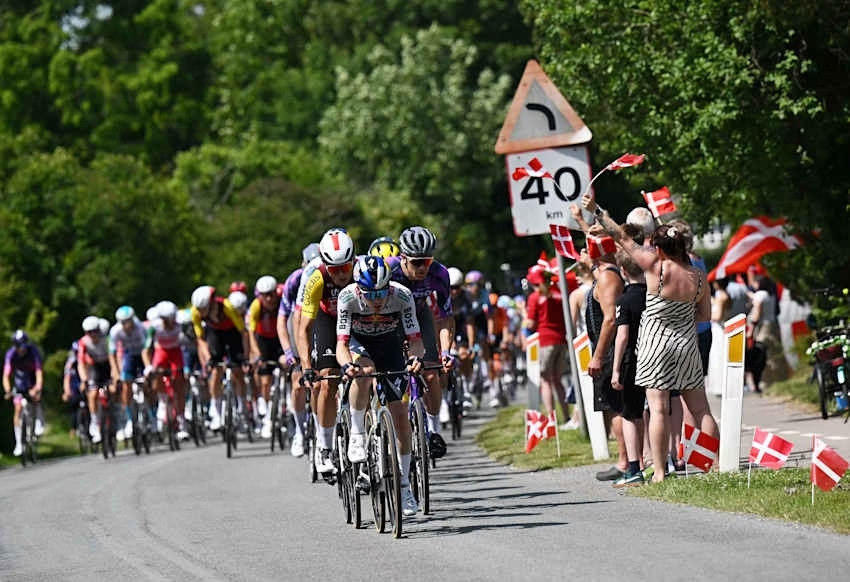
The first edition in 2025
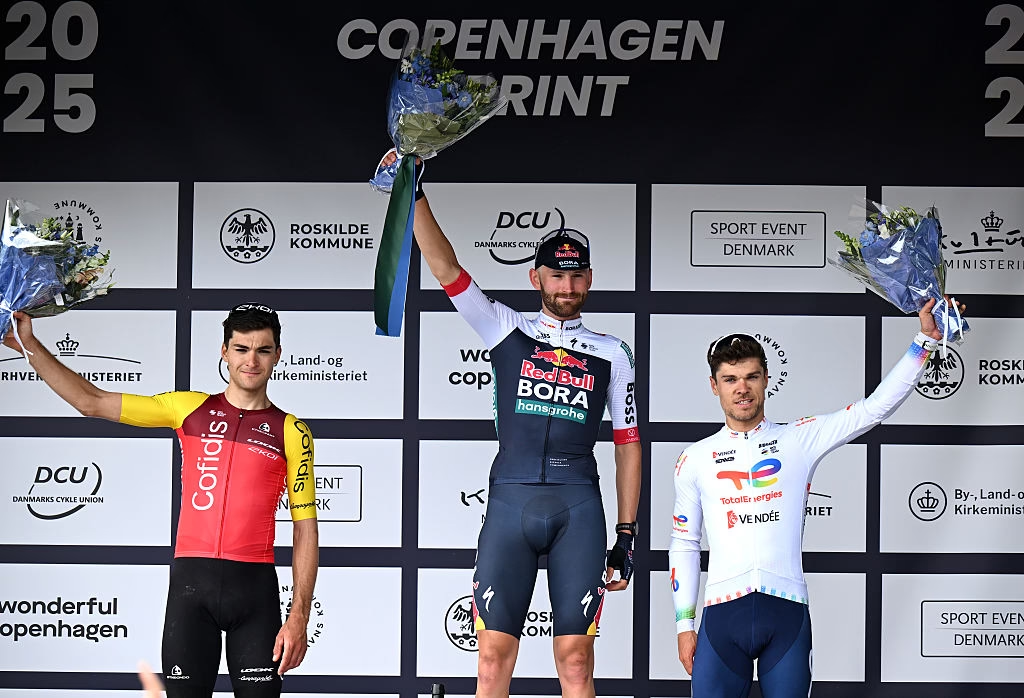
The first men’s Copenhagen Sprint took place in 2025 and was won by Jordi Meeus. The Belgian sprinter, racing for Red Bull-Bora-Hansgrohe, took victory in a reduced and chaotic sprint, beating Alexis Renard and Emilien Jeannière in Copenhagen.
That result suited the race’s identity perfectly. Meeus had already shown his ability to win on the biggest sprint stages, including at the Tour de France, but Copenhagen Sprint gave him a different kind of test. The race was long enough to carry weight, flat enough to attract the sprinters, and technical enough that the final result depended on more than just being the fastest rider in a clean drag race.
The 2025 men’s route started in Roskilde and finished in Copenhagen, with the race entering the capital for laps of the city circuit. The distance was over 230km, giving it the length expected of a major one-day race while still keeping the sporting character firmly sprint-focused.
The first edition also made clear that Copenhagen Sprint would not be a ceremonial bunch sprint every year. Late tension, crashes and final-lap positioning shaped the race, and several strong sprint options were either disrupted or removed from contention before the finish. That instantly gave the event a more serious edge.
What kind of race is Copenhagen Sprint?
Copenhagen Sprint is best understood as a modern sprint Classic. It does not have the age of Milan-San Remo, the cobbled brutality of Paris-Roubaix or the climbing density of Liège-Bastogne-Liège, but it has a clear role inside the calendar. It gives fast riders a WorldTour one-day race where they are not merely surviving until the final straight. They are the central characters.
That makes it different from many major one-day races, where sprinters often arrive as outsiders or specialists trying to hang on. In Copenhagen, the route is built with them in mind. The challenge is not whether they can survive a mountain pass or a sequence of cobbled bergs, but whether their teams can control a long, fast, exposed race and deliver them through a technical city finale.
The final circuit is crucial. A flat race can still be difficult if the run-in is fast, nervous and crowded. Copenhagen’s city setting means positioning matters constantly. Lead-out trains need to stay together, domestiques have to judge when to move up, and sprinters need to survive the turbulence before they can use their speed.

Why the race matters for sprinters
The modern WorldTour does not always give pure sprinters many one-day opportunities at the highest level. Scheldeprijs remains the traditional sprinters’ Classic, but it sits outside the WorldTour. Many other major one-day races are either too hilly, too long in a different way, or too selective for most pure fast men.
Copenhagen Sprint helps fill that gap. It gives the fastest riders in the peloton a race where victory can carry WorldTour weight without pretending to be something it is not. For sprinters, that is valuable. A win here is not just another bunch finish. It is a top-level one-day result in a race designed around their craft.
It also gives teams a reason to bring full sprint structures. Lead-out riders, road captains and sprint domestiques become central to the race rather than supporting figures. The winning move is likely to be the last 500 metres, but the work that makes it possible begins much earlier.
How Copenhagen Sprint fits into the men’s calendar
Copenhagen Sprint sits in June, in the period between the Giro d’Italia and the Tour de France. That position gives it an interesting role. It is not a spring Classic, and it is not a Tour de France warm-up stage race. Instead, it stands as a one-day opportunity for sprinters and Classics-style fast men at a point in the season when many riders are adjusting their race programmes.
For some sprinters, it can be a final major test before July. For others, it can be a WorldTour target in its own right, especially if their Tour de France selection is uncertain or their team wants a result before the next major block of racing.
ProCyclingUK’s men’s cycling race hub places Copenhagen Sprint within the wider 2026 WorldTour calendar, alongside the major Classics, Grand Tours and summer one-day races.
The Danish identity of the race
Copenhagen Sprint’s setting is a major part of its appeal. The race is not simply a generic flat one-day event placed in Denmark. It uses Copenhagen’s cycling identity as part of the spectacle. The finish near the heart of the capital gives the race a recognisable backdrop, while the route across Zealand connects the capital with a wider regional cycling story.
The race also benefits from timing. Danish cycling has been highly visible in recent years, with riders such as Jonas Vingegaard, Mads Pedersen, Kasper Asgreen and Magnus Cort keeping the country close to the centre of elite men’s racing. Copenhagen Sprint gives that interest a home event at the sport’s top level.
New races often struggle because they lack heritage. Copenhagen Sprint cannot invent a century of history, but it can build around something Denmark already has: a visible, everyday cycling culture and a public that understands the bike as part of national life.
The link with Copenhagen Sprint Women
One of the most important parts of Copenhagen Sprint’s identity is that the men’s and women’s races were launched together. The women’s event is not an afterthought, and the shared weekend gives the race a modern structure from the beginning.
In 2025, Lorena Wiebes won the first Copenhagen Sprint Women, while Jordi Meeus won the first men’s race. That opening weekend immediately gave the event two recognisable sprint winners and reinforced its central identity as a race for fast finishers.
For more detail on the women’s race, ProCyclingUK’s beginner’s guide to Copenhagen Sprint Women 2026 explains how the women’s event fits into the Women’s WorldTour and why it gives sprinters a rare top-level one-day target.
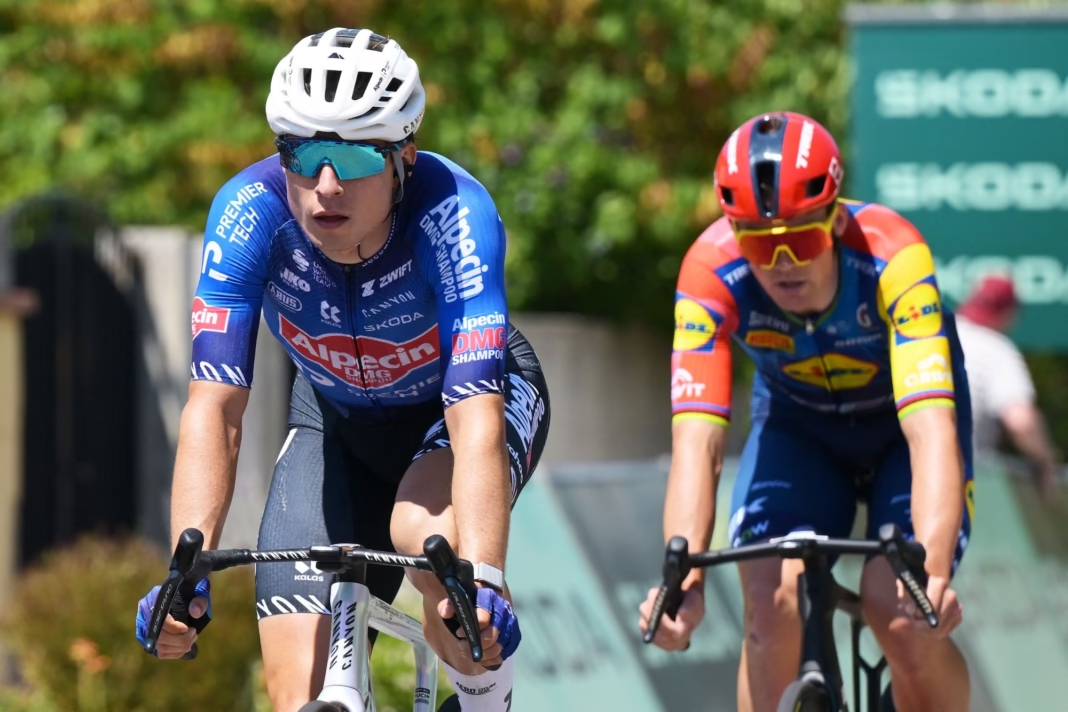
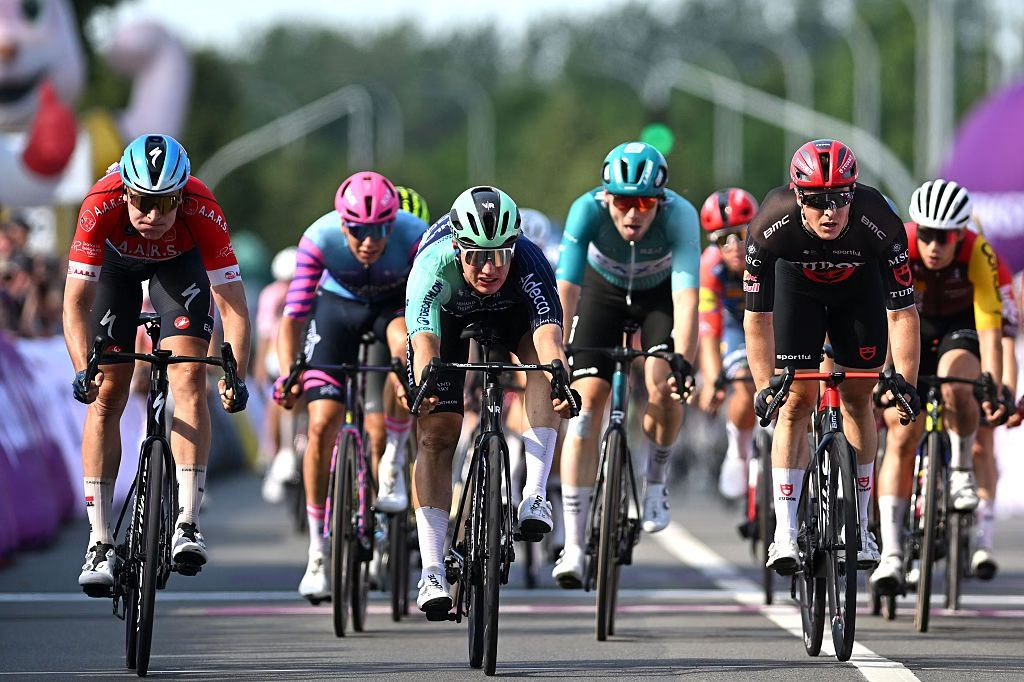
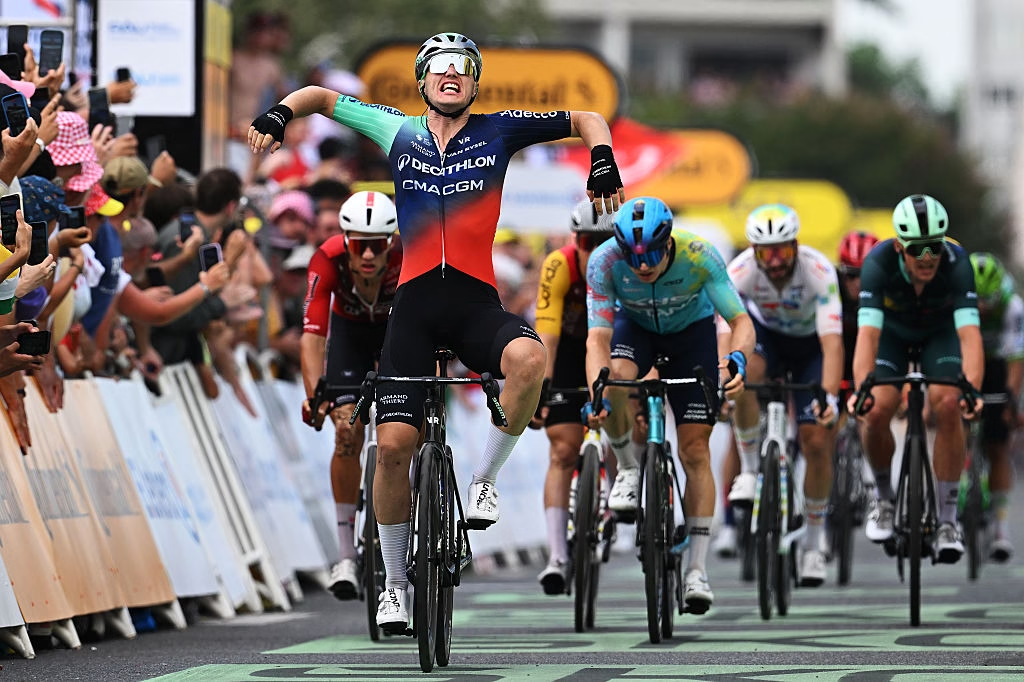
All men’s Copenhagen Sprint winners
- 2025: Jordi Meeus
The legacy Copenhagen Sprint is trying to build
It is too early to talk about Copenhagen Sprint as a race with deep history. Its history, for now, is almost entirely potential. But that is not a weakness. Every long-running race began with a first edition, a first winner and an idea strong enough to survive beyond its launch.
Copenhagen Sprint’s idea is clear. It is a Danish WorldTour race for sprinters, held in a country that understands cycling, using a route that suits the landscape rather than fighting against it. That gives it a better chance than many new races, because the identity is simple and easy to explain.
The next challenge is repetition. The race needs memorable finishes, returning stars, local crowds and a growing list of winners who make the roll of honour feel important. If it can keep attracting the best sprinters, Copenhagen Sprint could become a rare thing in the modern men’s calendar: a new race that finds its place quickly because it knows exactly what it wants to be.