
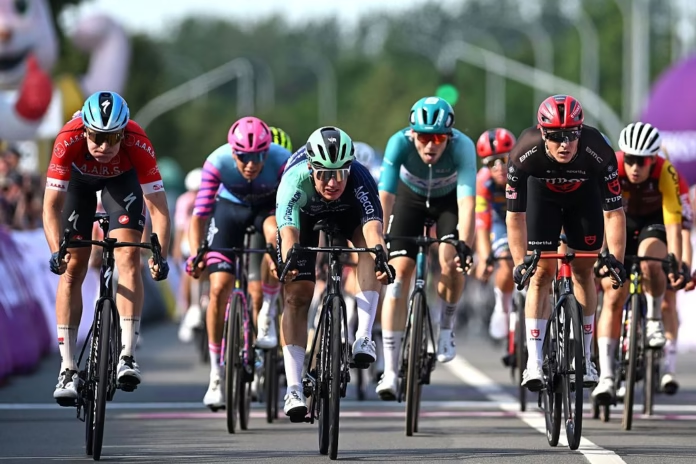
Olav Kooij’s Pau win did more than give Decathlon CMA CGM a Tour de France stage victory. It changed the sprint hierarchy of the opening week and put pressure back on the established names.
Stage 7 to Bordeaux is now about more than another flat finish. It is a response test for Tim Merlier and Jasper Philipsen.
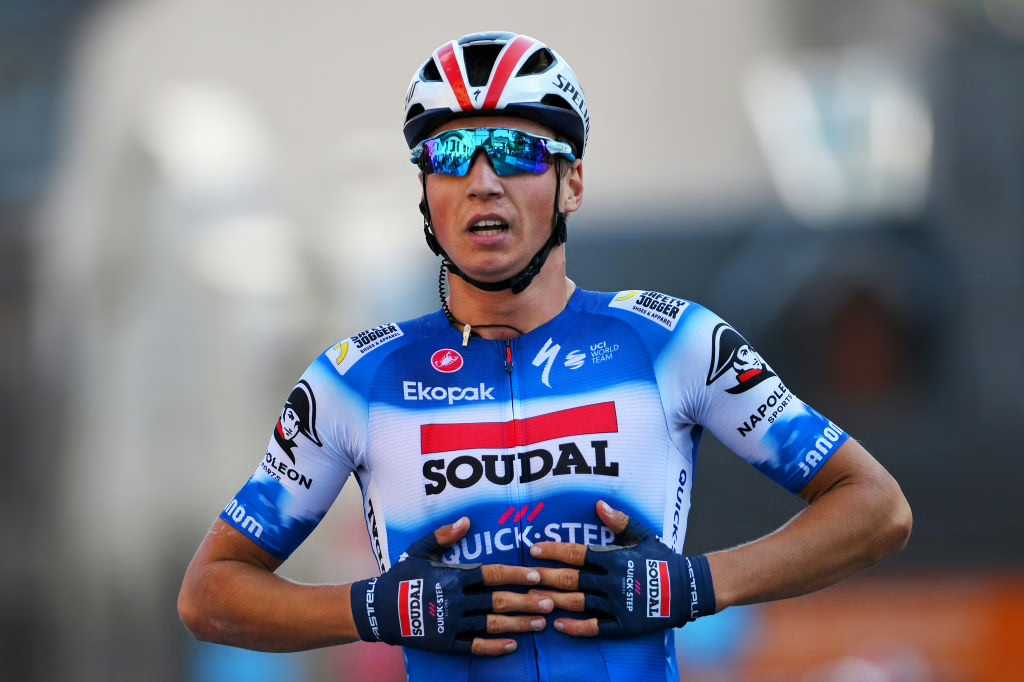
Merlier was third in Pau. Philipsen was fifth. Both were in the picture, but neither landed the result they needed. Kooij took the win, Max Kanter took second, and suddenly the first serious sprint of the 2026 Tour belongs to a rider who came in still needing to prove himself at this level.
That makes Bordeaux important. Stage 7 from Hagetmau to Bordeaux is 175.1km, officially flat, with 850m of elevation gain and only one categorised climb before the finish. It is one of the clearest sprint days of the opening week, as set out in our Tour de France 2026 stage 7 preview.
For Kooij, Bordeaux is a chance to confirm Pau was not a one-off. For Merlier and Philipsen, it is a chance to prevent the sprint narrative moving away from them.
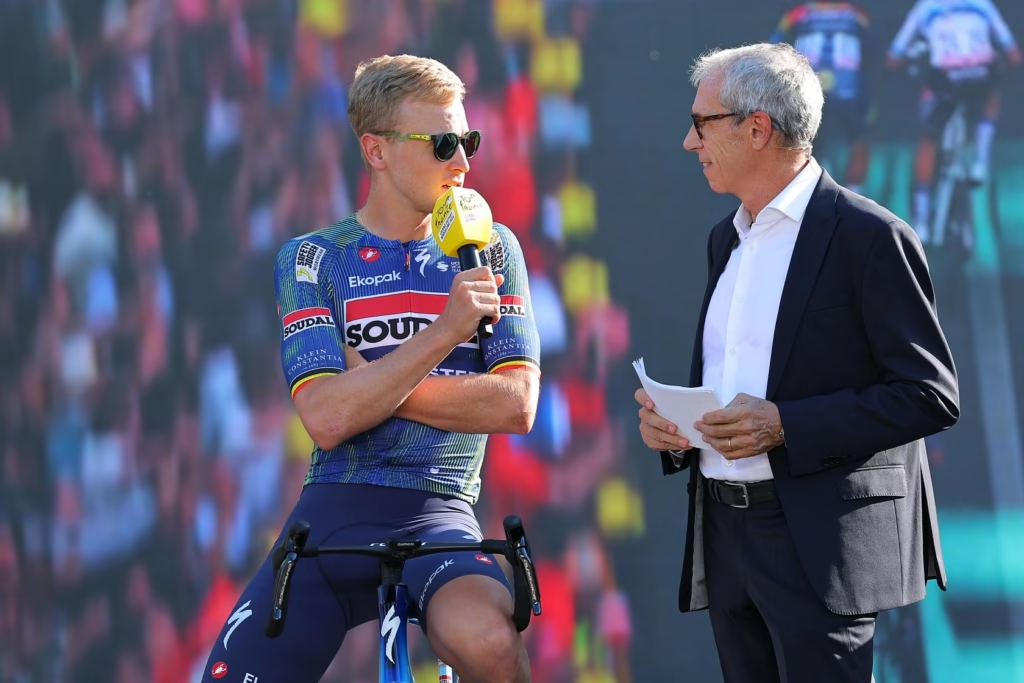 Photo Credit: A.S.O./Morgan Bove
Quick answer: why do Philipsen and Merlier need a Bordeaux response?
Philipsen and Merlier need a result in Bordeaux because Kooij’s stage 5 win changed the pressure around the sprint field. Merlier was third in Pau, Philipsen fifth, and both now need a clean sprint finish to reassert themselves. Bordeaux is flat enough for a full bunch sprint, prestigious enough to matter, and early enough in the Tour for the winner to shape the sprint hierarchy before the weekend.
| Rider | Pau result | Bordeaux pressure |
|---|---|---|
| Olav Kooij | 1st | Prove Pau was the start of a run |
| Tim Merlier | 3rd | Turn speed into a Tour stage win |
| Jasper Philipsen | 5th | Rebuild authority in the sprint field |
| Max Kanter | 2nd | Show Pau was not a one-day spike |
| Mads Pedersen | Points leader | Keep scoring even if pure sprinters win |
Why Pau changed the pressure
Pau was chaotic, but it still counted.
A reduced sprint can be easy to dismiss if the result looks too shaped by circumstance. But the problem for Merlier and Philipsen is that Kooij still beat the riders in front of him. He did not simply inherit the stage because others disappeared. He handled the moment, stayed present in the front group and finished the sprint properly.
That matters in a Tour de France sprint field. Confidence is not abstract. It affects where teams ride, which wheels riders trust, and how much authority a sprinter carries in the final kilometres.
Before Pau, Kooij was dangerous but still unproven at the Tour. After Pau, he is a stage winner. That changes how everyone else has to race him.
Merlier can argue that Pau was not his ideal finish. Philipsen can argue that Alpecin-Premier Tech were disrupted. Both arguments have merit. But Bordeaux gives them the next clean chance to correct the picture. If Kooij wins again, the sprint conversation changes from “breakthrough” to “control”.
Our piece on why Olav Kooij’s Pau win changes the Tour de France sprint picture looked at that shift immediately after stage 5.
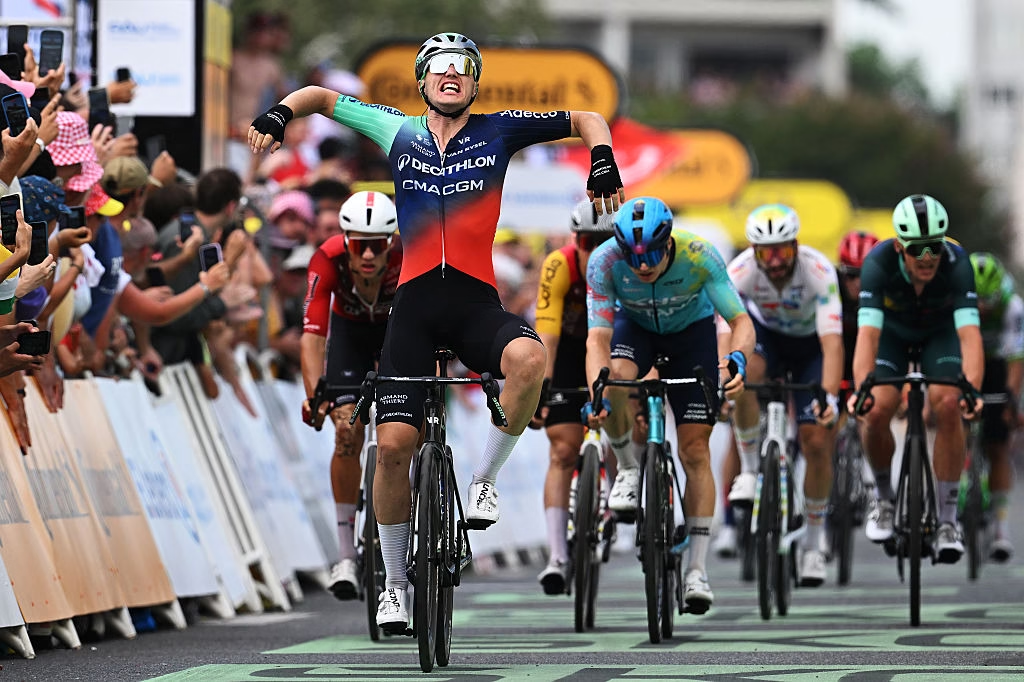 Photo Credit: Getty
Why Bordeaux is the right pressure test
Bordeaux should be a fuller and more conventional sprint than Pau.
The stage has one category 4 climb, the Côte de Béguey, which comes 37.8km from the finish. That is not the kind of obstacle that should remove the pure sprinters unless the race has already become stressed by wind, crashes or fatigue. The finish also comes after a long, flat run-in where sprint teams should have enough time to organise.
That makes the excuse list shorter.
If the breakaway is caught, if the bunch arrives mostly intact, and if the lead-outs have space to form, then Bordeaux becomes a cleaner measure of sprint strength than Pau. Not perfect, because no Tour sprint is ever perfect, but cleaner.
That is why the stage matters psychologically. Merlier and Philipsen do not just need to be close. They need to be in the part of the race where the winner is chosen. If they are boxed in, late, isolated or again finishing behind Kooij, then the sprint hierarchy begins to settle without them at the top.
The stage also fits clearly into the group of opportunities covered in our guide to the Tour de France 2026 route’s best days for sprinters.
What Merlier needs from Soudal Quick-Step
Merlier’s third place in Pau is both encouraging and frustrating.
Encouraging because he was still there, still fast and still on the podium. Frustrating because a sprinter with his top-end speed does not want to leave the first real Tour bunch sprint with someone else’s breakthrough story leading the headlines.
For Merlier, Bordeaux is about precision from Soudal Quick-Step.
He does not necessarily need a team to control the whole stage. Plenty of teams will help bring the breakaway back because the sprint prize is too obvious. What he does need is a clean final five kilometres. He needs to be brought forward before the road becomes crowded, protected through the final positioning fight, and launched late enough that he can use his speed rather than spend it too early.
Merlier’s biggest strength is simple: if he starts a sprint from the right place, he is one of the hardest riders in the race to beat. His weakness in a Tour context is that the race rarely gives him a laboratory sprint. The final kilometres are messy, teams overlap, GC riders fight for safety and lead-out trains lose shape.
Bordeaux is a chance for Soudal Quick-Step to turn raw speed into a result. Third in Pau was acceptable. Another minor placing in Bordeaux would feel like a missed opportunity.
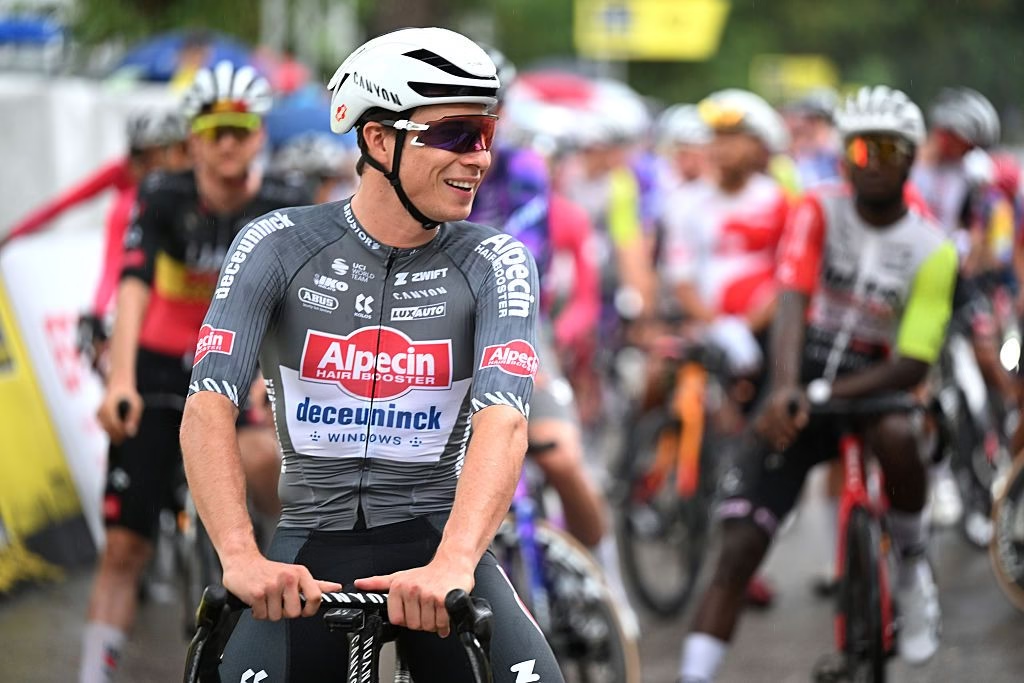 Photo Credit: Getty
Why Philipsen’s lead-out still matters
Philipsen’s fifth in Pau was not a disaster, but it was not enough.
His status in the Tour sprint field has been built on more than his own speed. It has also been built on Alpecin’s ability to place him, impose themselves late and make other teams react to their lead-out. When that structure is disrupted, Philipsen becomes more beatable.
That is why Bordeaux is important for him. He has previous history there after winning the Tour stage into Bordeaux in 2023, when he beat Mark Cavendish in one of the most talked-about sprint finishes of that edition. That matters because he knows the city, the pressure and the prestige of the finish. But past success also raises expectations.
For Philipsen, the key is not just speed. It is presence.
Alpecin-Premier Tech need to put him back into the front of the sprint before the final kilometre. They cannot let him become a rider surfing other people’s trains because Kooij, Merlier and Pedersen will not wait for him. Philipsen is at his best when his team makes the sprint feel like it is happening around him, not when he is reacting late to someone else’s move.
If Bordeaux becomes a full bunch sprint and Philipsen is again outside the top three, it will start to look less like bad luck and more like a problem. Our guide to Jasper Philipsen at the Tour de France 2026 explains why his lead-out remains central to his chances.
How Kooij changes the wheels everyone wants
The biggest tactical change after Pau is that Kooij is no longer just one of several wheels.
He is now the wheel.
That creates a different final kilometre. Before a breakthrough win, a sprinter can sometimes move with a little more freedom because teams are still weighing him against the biggest names. After a Tour stage win, that changes. Riders will look for him. Lead-outs will track Decathlon CMA CGM. Rivals will judge their own timing against his.
That can help Kooij if Decathlon are strong enough. It gives them status. It can also hurt him if too many riders crowd his wheel and make his sprint harder to launch.
For Merlier and Philipsen, this is the tactical puzzle. Do they try to beat Kooij through cleaner lead-out control, or do they accept that his wheel may now be one of the best places to be? Merlier probably wants separation and a clean launch. Philipsen may be more comfortable in a physical, high-pressure sprint where positioning instinct matters as much as the final acceleration.
Kooij has created a new reference point. Bordeaux will show whether the others can shift it back.
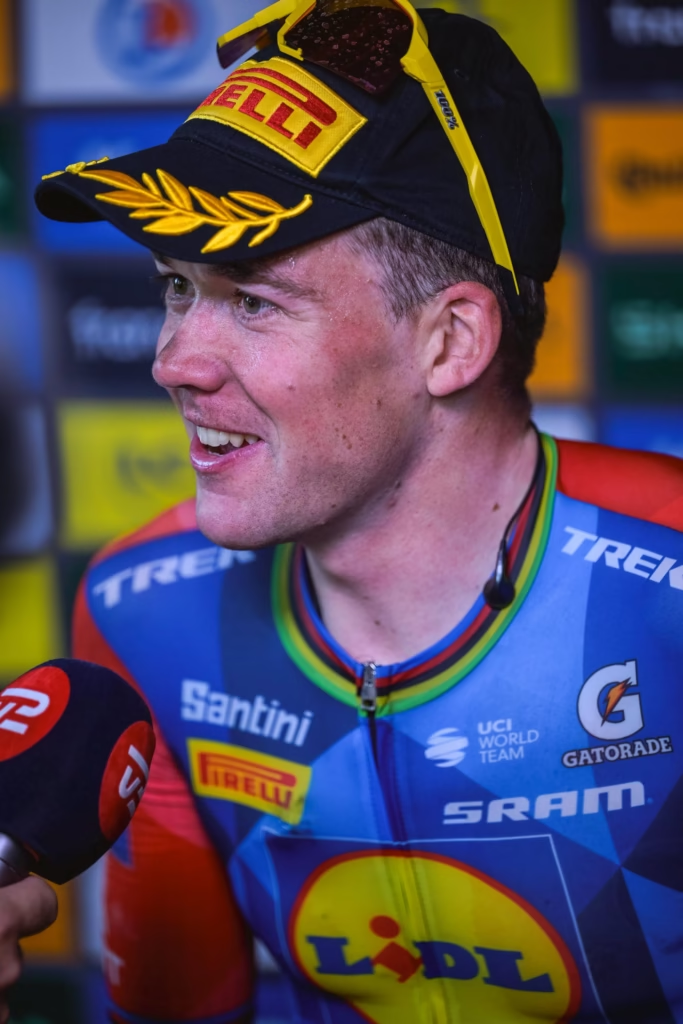 Photo Credit: A.S.O./Charly López
Why Pedersen is still part of the problem
This is not only a Kooij, Merlier and Philipsen article because Mads Pedersen changes the sprint equation too.
Pedersen leads the points classification after stage 6, and he has done it by scoring on different types of days. That is a problem for the pure sprinters because he does not need every stage to end in a textbook drag race. He can collect points through intermediate sprints, hard reduced finishes and days where others lose position.
For Merlier and Philipsen, Bordeaux is therefore not only about stage prestige. It is about preventing Pedersen from turning consistency into control of the green jersey competition.
If Kooij wins and Pedersen scores well again, the pressure on Merlier and Philipsen doubles. They would lose a stage to a new sprint winner and still fail to make serious ground in green. That is why the intermediate sprint and the final both matter. Bordeaux carries points, confidence and hierarchy all at once.
For the wider points battle, see our analysis of whether Mads Pedersen can win green at the Tour de France 2026 and our Tour de France 2026 sprinters guide.
Why Bordeaux could define the sprint hierarchy before the weekend
One sprint can be noise. Two sprints start to become evidence.
If Kooij wins in Bordeaux after winning in Pau, he becomes the dominant sprint story of the first week. If Merlier wins, Pau becomes the chaotic day before the fastest man got his clean chance. If Philipsen wins, the race returns to a familiar Tour sprint order, with Alpecin-Premier Tech back in control.
That is why stage 7 matters more than a routine flat day.
The Tour is about to move beyond the opening rhythm. The GC has already been reshaped by Pogačar’s stage 6 attack and the loss of Torstein Træen from the race. The sprinters now get a stage where they can reassert their own order before the race heads into the next phase.
Bordeaux is not just a chance to win. It is a chance to define who the peloton treats as the sprint reference point for the next week.
The latest GC picture after the Pyrenees is covered in our GC and jerseys after Tour de France 2026 stage 6.
 Photo Credit: Getty
What a good day looks like for Merlier
A good day for Merlier is simple: a controlled bunch sprint and a launch from the front three wheels.
He does not need a complicated race. He does not need crosswinds, late attacks or a reduced group. He needs Soudal Quick-Step to keep the stage predictable, deliver him into position and avoid the disruption that shaped Pau.
Second would be useful, but not ideal. A win changes everything. It turns the conversation from Kooij’s breakthrough to Merlier’s response. It also restores the idea that the fastest finish in the race still belongs to him when the sprint is clean.
That is the key phrase: when the sprint is clean. Bordeaux has to be his answer to Pau.
What a good day looks like for Philipsen
A good day for Philipsen is about authority.
He does not just need to sprint fast. He needs Alpecin-Premier Tech to look like a team that can still control a Tour de France finale. That means being visible at the right time, not too early, not too late, and giving Philipsen a chance to use his strength rather than improvise.
A Philipsen win in Bordeaux would feel significant because it would come in a city where he has already succeeded. It would remind the sprint field that Pau was a disrupted day, not a changing of the guard.
A podium would steady things. Another fifth place would not.
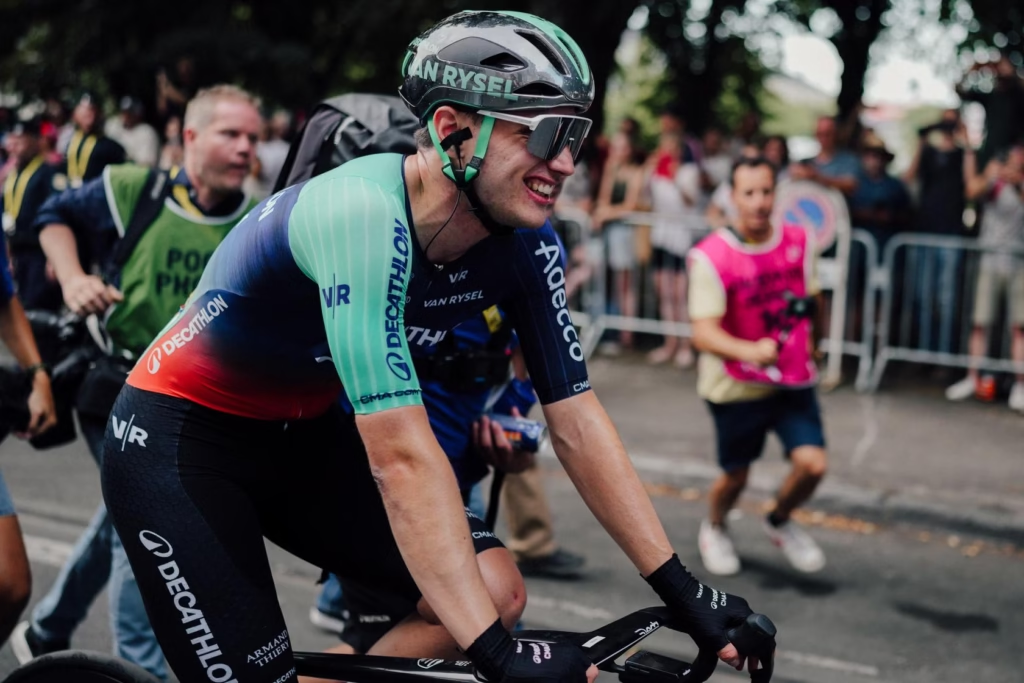
What a good day looks like for Kooij
Kooij does not need to win to prove Pau was real, but another win would change his race completely.
If he wins in Bordeaux, he becomes more than a breakthrough sprinter. He becomes the form sprinter of the Tour. Decathlon CMA CGM would then have two stage wins and a rider who has beaten the established names on consecutive sprint opportunities.
Even a podium would be useful. It would show that Pau was not just a product of chaos and that he can back up the result in a more standard sprint.
The danger is that he is now marked. Winning once creates attention. Winning twice requires control.
How to watch the Bordeaux sprint
The finish is expected between 16:13 and 16:35 BST, with the intermediate sprint at Landiras due around 15:02-15:17 BST and the Côte de Béguey around 15:24-15:41 BST.
The essential viewing window is from around 15:30 BST, when the final climb, the chase, the lead-out battle and the run into Bordeaux should all come into view.
Full timings are in our Tour de France 2026 stage 7 live viewing and start time update.
-
 Photo Credit: Gaetan Flamme
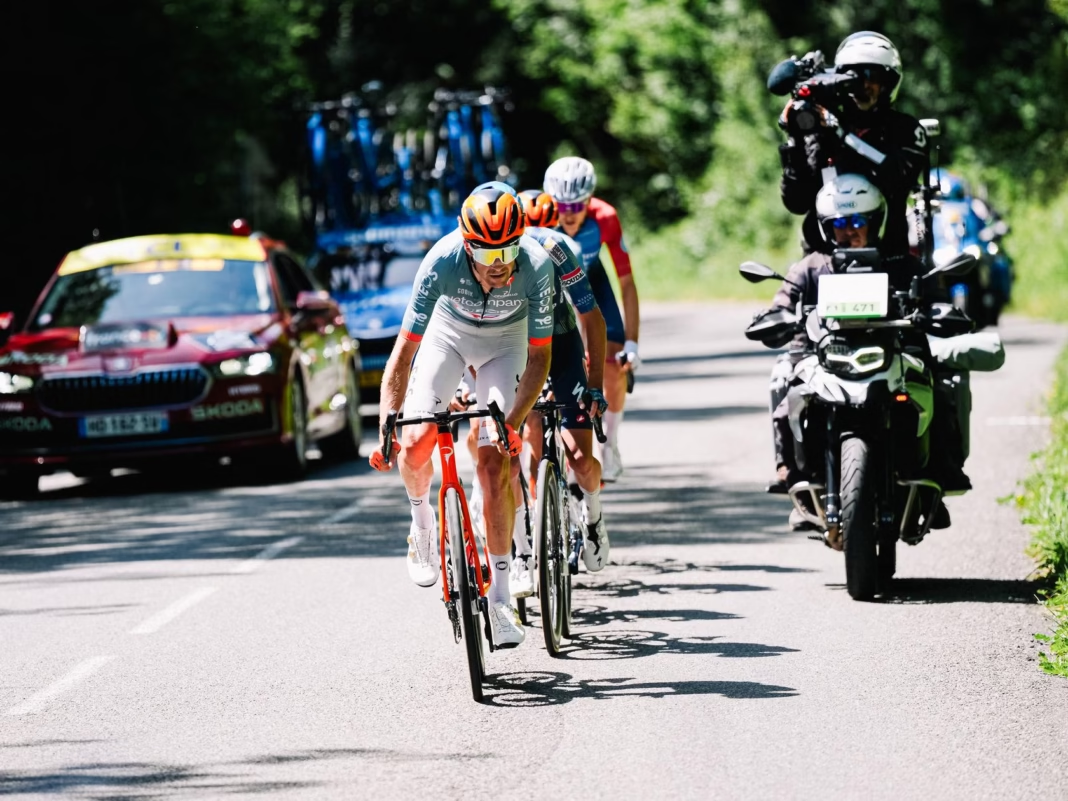
Prediction: Bordeaux tells us who owns the sprint conversation
The stage profile points to a bunch sprint. The psychology points to a response.
Kooij can win again, but Merlier and Philipsen have more to lose. Merlier needs a clean finish to turn speed into a stage win. Philipsen needs Alpecin-Premier Tech to restore the structure around him. Both need to stop Kooij from making the sprint hierarchy look like it has already changed.
Prediction: Merlier responds in Bordeaux, with Kooij still close and Philipsen under pressure to show more than he did in Pau.
FAQs
Why do Philipsen and Merlier need a response in Bordeaux?
Because Olav Kooij won the first serious sprint chance in Pau, while Merlier finished third and Philipsen fifth. Bordeaux is another flat sprint opportunity and gives both established names a chance to reset the hierarchy.
What happened in the Pau sprint?
Olav Kooij won stage 5 in Pau ahead of Max Kanter and Tim Merlier, with the sprint coming from a reduced front group after late disruption.
Is Bordeaux a better sprint test than Pau?
It should be. Stage 7 is flatter, more predictable and has only one category 4 climb, so it is more likely to produce a fuller bunch sprint.
Can Olav Kooij win again in Bordeaux?
Yes. Kooij has the confidence and speed after winning in Pau, but Bordeaux may bring more lead-out trains and a more complete sprint field.
Why is Jasper Philipsen dangerous in Bordeaux?
Philipsen has already won a Tour de France stage in Bordeaux, and his team’s lead-out strength makes him dangerous if Alpecin-Premier Tech control the final kilometres properly.
Who is the best pick for stage 7?
Tim Merlier is the best response pick if the sprint is clean. Kooij and Philipsen remain major contenders, while Pedersen, Girmay and Kanter can all disrupt the expected order.

