
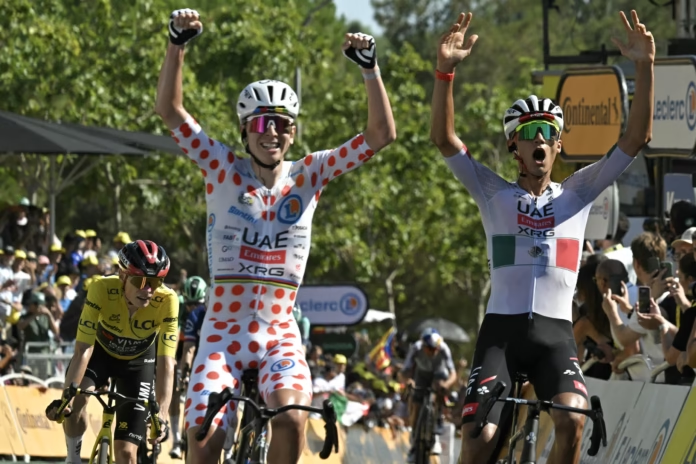
Stage 7 of the Tour de France 2026 takes the race from Hagetmau to Bordeaux on Friday 10 July, giving the sprinters a major chance to take control again after the first Pyrenean summit finish.
After stage 6 exploded the general classification on the Tourmalet and the climb to Gavarnie-Gèdre, stage 7 is a very different test. The route is 175.1km long, officially classed as flat, and carries just 850m of elevation gain. The neutralised start is at 13:15 CEST, with the finish expected between 17:13 and 17:35 CEST, or 16:13 and 16:35 BST.
This should be one of the clearest sprint opportunities of the opening week. The one categorised climb, the Côte de Béguey, is only 1.2km at 4.4% and comes 37.8km from the finish, which is not enough to stop the fast men unless crosswinds, crashes or fatigue from the Pyrenees change the day.
The full race route is covered in our Tour de France 2026 full route guide, while this stage fits clearly into the pattern set out in our guide to the Tour de France 2026 route’s best days for sprinters.
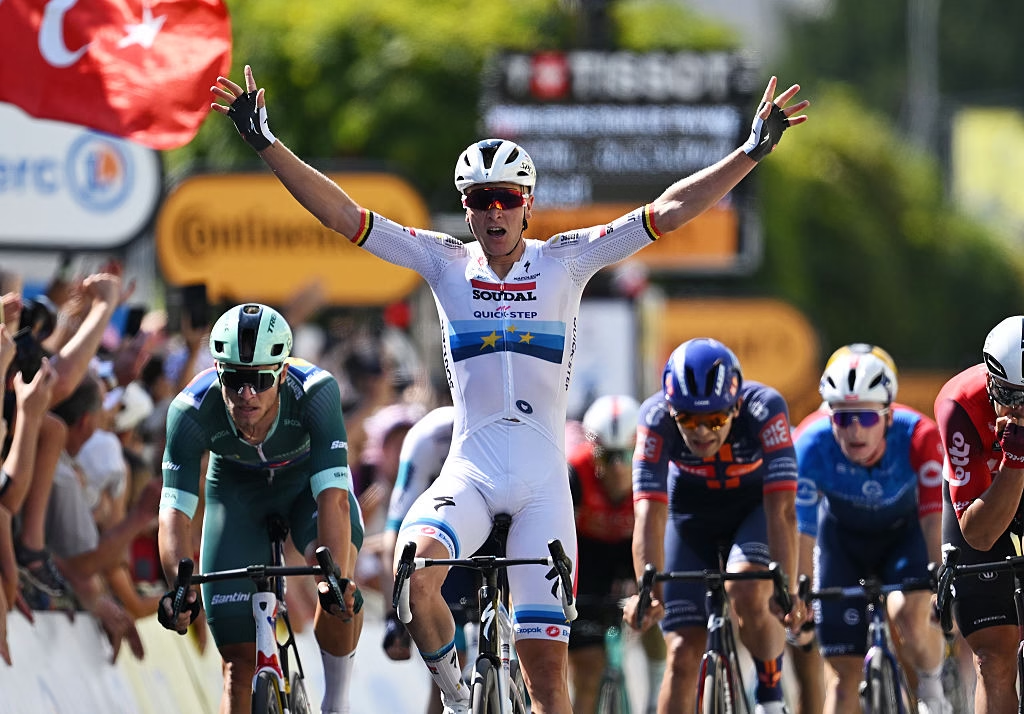
Tour de France 2026 stage 7 route
| Detail | Stage 7 |
|---|---|
| Date | Friday 10 July 2026 |
| Route | Hagetmau to Bordeaux |
| Distance | 175.1km |
| Stage type | Flat |
| Elevation gain | 850m |
| Neutralised start | 13:15 CEST / 12:15 BST |
| Expected finish | 17:13-17:35 CEST / 16:13-16:35 BST |
| Intermediate sprint | Landiras |
| Categorised climb | Côte de Béguey |
| Likely winner type | Sprinter |
Quick answer: who will win stage 7?
Stage 7 is likely to end in a bunch sprint in Bordeaux. Olav Kooij, Tim Merlier, Jasper Philipsen, Biniam Girmay, Mads Pedersen and Max Kanter should all be involved if their teams control the breakaway and avoid late-positioning mistakes.
Kooij arrives with the confidence of his stage 5 win in Pau, while Philipsen has previous Bordeaux history after winning there in 2023 ahead of Mark Cavendish. The finish should suit the pure sprinters more than the climbers, but the run-in through Bordeaux will still reward the teams with the cleanest lead-out.
For the wider sprint field, see our Tour de France 2026 sprinters guide.
What happened before stage 7?
Stage 6 changed the race completely.
Tadej Pogačar won the mountain stage to Gavarnie-Gèdre after attacking on the Tourmalet, finishing more than two and a half minutes ahead of Jonas Vingegaard. The result moved Pogačar into yellow and ended Torstein Træen’s time in the race lead after the Norwegian had taken the jersey on stage 4.
That makes stage 7 a reset day in one sense, but not a rest day. The GC riders will want a calmer stage after the Pyrenees, while the sprint teams will see Bordeaux as too good an opportunity to waste.
For the route that created the first major GC showdown, see our Tour de France 2026 stage 6 preview and our stage 6 live viewing and start time update.
Stage 7 profile: flat, fast and built for control
The numbers point strongly towards a sprint.
There is only 850m of climbing across 175.1km, and most of the route heads north from Landes into Gironde before the approach to Bordeaux. The stage leaves Hagetmau, passes through Saint-Sever, Mont-de-Marsan, Labrit, Luxey, Sore, Saint-Symphorien, Landiras, Cadillac-sur-Garonne and Béguey before the final run into Bordeaux.
The key feature is how little there is to disrupt the bunch. There is one fourth-category climb late in the stage, but it is not hard enough on paper to split the peloton. The bigger risks are road furniture, positioning, heat, possible wind and the usual sprint-stage tension after a mountain day.
Côte de Béguey: the only climb of the day
The Côte de Béguey is the only categorised climb on stage 7.
| Climb | Category | Length | Average gradient | Position |
|---|---|---|---|---|
| Côte de Béguey | 4 | 1.2km | 4.4% | km 137.3 |
The climb comes 37.8km from the finish, so it is unlikely to decide the stage directly. It may still matter tactically because it comes close enough to the finish for teams to begin fighting for position shortly afterwards.
A lone attacker could use it as a launchpad, but the sprint teams will expect to bring everything back before Bordeaux. It is more likely to be a point of stress than a point of selection.
Intermediate sprint at Landiras
The intermediate sprint comes at Landiras, around 54.8km from the finish.
That makes it an important moment for the green jersey contenders. The stage offers 25 points at Landiras, then a full flat-stage haul at the finish in Bordeaux.
Mads Pedersen has built an early advantage in the points competition, but stage 7 gives the pure sprinters a chance to reduce the gap. If the breakaway is small and controlled, the green jersey contenders should still be able to contest the intermediate sprint before the teams reorganise for Bordeaux.
Pedersen remains a major threat because he is not dependent on perfect flat sprint days. Our guide to Mads Pedersen at the Tour de France 2026 explains why he can keep scoring across more varied terrain than many pure sprinters.
Why Bordeaux usually means a sprint
Bordeaux has long been associated with sprint finishes at the Tour de France.
Its wide roads, prestige finish and position after transition stages make it a natural fast-men destination. The most recent Tour finish in Bordeaux came in 2023, when Jasper Philipsen beat Mark Cavendish in a high-profile sprint after Cavendish looked close to claiming a record-breaking stage win.
That history gives the 2026 stage an extra layer. Philipsen will know the finish city carries good memories, while the other sprint teams will see it as one of the most valuable flat stages of the first half of the race.
For more on Philipsen’s chances in this year’s race, see our guide to Jasper Philipsen at the Tour de France 2026.
The run-in to Bordeaux
The final approach brings the race into Bordeaux via the Pont Simone Veil with 4.5km remaining, before entering the city with 3.9km to go. The official schedule has the finish expected between 17:13 and 17:35 CEST.
That final bridge crossing could become a key positioning point. Sprint stages are rarely decided only in the final 300 metres. The work starts much earlier, especially in a city finish where lead-out trains want to be near the front before the road furniture, roundabouts and bends start to bite.
The key battle may begin inside the final 10km. GC teams will also want their leaders out of trouble, which means the sprinters’ teams may have to share road space with UAE Team Emirates-XRG, Visma-Lease a Bike, Red Bull-Bora-Hansgrohe and the other classification squads.
Who are the stage 7 favourites?
Stage 7 should be decided by the sprinters.
Olav Kooij is the obvious starting point after winning stage 5 in Pau. That victory showed he had the speed and positioning to handle a messy finale. Decathlon CMA CGM will now be expected to control the stage more like a team with a proven Tour sprint winner.
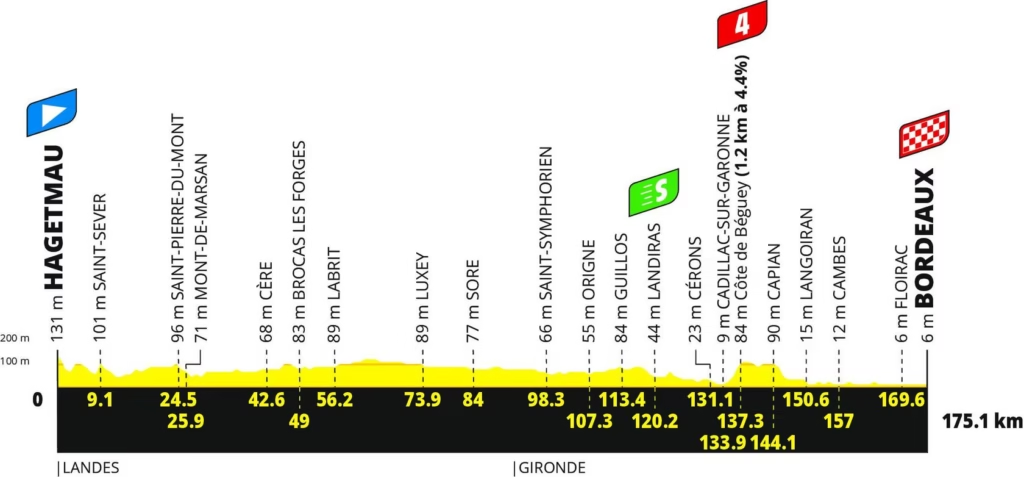
Tim Merlier should also be central. He was third in Pau and remains one of the fastest pure sprinters in the race. A cleaner, flatter run to Bordeaux may suit him better than a reduced and crash-affected finale.
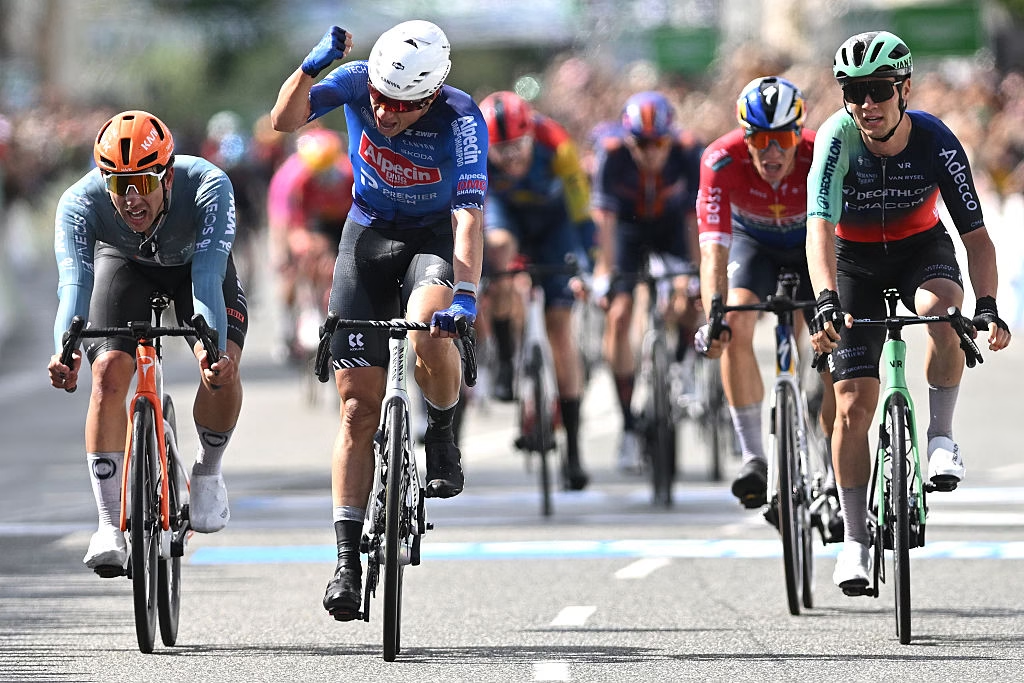
Jasper Philipsen cannot be ignored. He was fifth in Pau, but Bordeaux is a finish city where he has already won at the Tour. Alpecin-Premier Tech will need to deliver him into position more cleanly than they managed on stage 5.
Biniam Girmay, Max Kanter, Milan Fretin, Søren Wærenskjold and Mads Pedersen should also be watched. Pedersen is not the purest sprinter in the race, but his green jersey instincts make him dangerous in any stage where positioning, stamina and aggression matter.
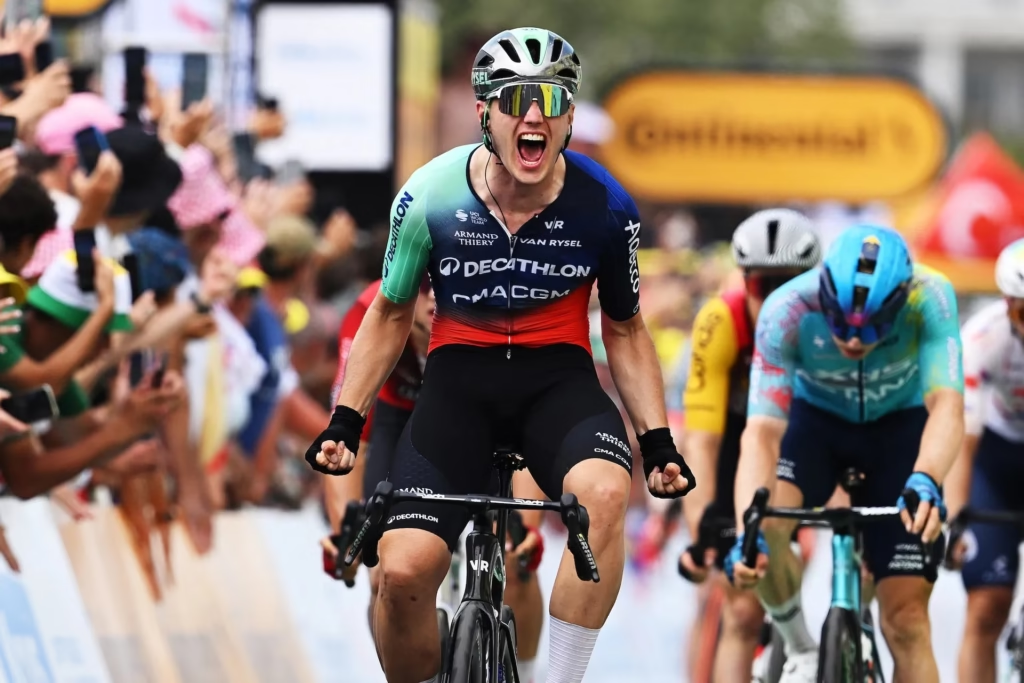 Photo Credit: Getty
Stage 7 favourites
| Rider | Team | Why he can win |
|---|---|---|
| Olav Kooij | Decathlon CMA CGM Team | Won stage 5 and has confidence |
| Tim Merlier | Soudal Quick-Step | Pure sprint speed and a flatter finish |
| Jasper Philipsen | Alpecin-Premier Tech | Previous Bordeaux winner and proven Tour sprinter |
| Biniam Girmay | Intermarché-Wanty | Fast, durable and dangerous in hectic finishes |
| Max Kanter | XDS Astana Team | Second in Pau and clearly in form |
| Mads Pedersen | Lidl-Trek | Green jersey threat and strong after hard racing |
| Milan Fretin | Cofidis | Top-10 speed in Pau |
| Søren Wærenskjold | Uno-X Mobility | Powerful finisher if the sprint becomes messy |
Kooij’s stage 5 victory changed the sprint picture because it proved Decathlon CMA CGM had more than a theoretical chance in the bunch finishes. Our analysis of why Olav Kooij’s Pau win changes the Tour de France sprint picture looks at what that result means for the rest of the race.
Can the breakaway win stage 7?
It is possible, but unlikely.
A breakaway will probably go early because some teams will want TV time and others have limited sprint options. The problem is that the route is too controllable. There is not enough climbing to seriously disrupt the chase, and Bordeaux is too valuable for the sprint teams to give away.
The breakaway’s best chance would come from three things: heat, hesitation and a small sprint-team alliance. If only two or three teams commit to chasing, and if the peloton decides to take the day gently after the mountains, the break could last longer than expected. But with Kooij, Merlier, Philipsen, Girmay and Pedersen all having reasons to contest the finish, the bunch sprint remains the most likely outcome.
For a wider look at where breakaways do have better chances in this race, see our guide to the Tour de France 2026 route’s best days for breakaways.
What does stage 7 mean for GC?
Stage 7 should not change the general classification if everyone stays upright.
For Pogačar, the stage is about wearing yellow safely and avoiding the chaos that often comes with flat finales. UAE Team Emirates-XRG do not need to control the whole stage for the sprint. Their job is to keep Pogačar near the front, out of danger and away from splits.
For Vingegaard, Evenepoel, Del Toro, Seixas and the other GC riders, the same rule applies. Stage 7 is a day to recover from the Pyrenees, save energy and avoid giving away time through bad positioning.
The danger is not the profile. The danger is the final 20km. Sprint stages after a mountain day can look calm for hours, then suddenly become frantic as GC teams and sprint teams fight for the same strip of road.
The unusual GC picture coming into the mountains was set up by stage 4 and stage 5. Our GC and jerseys after Tour de France 2026 stage 5 update explains the standings before the Pyrenean reset.
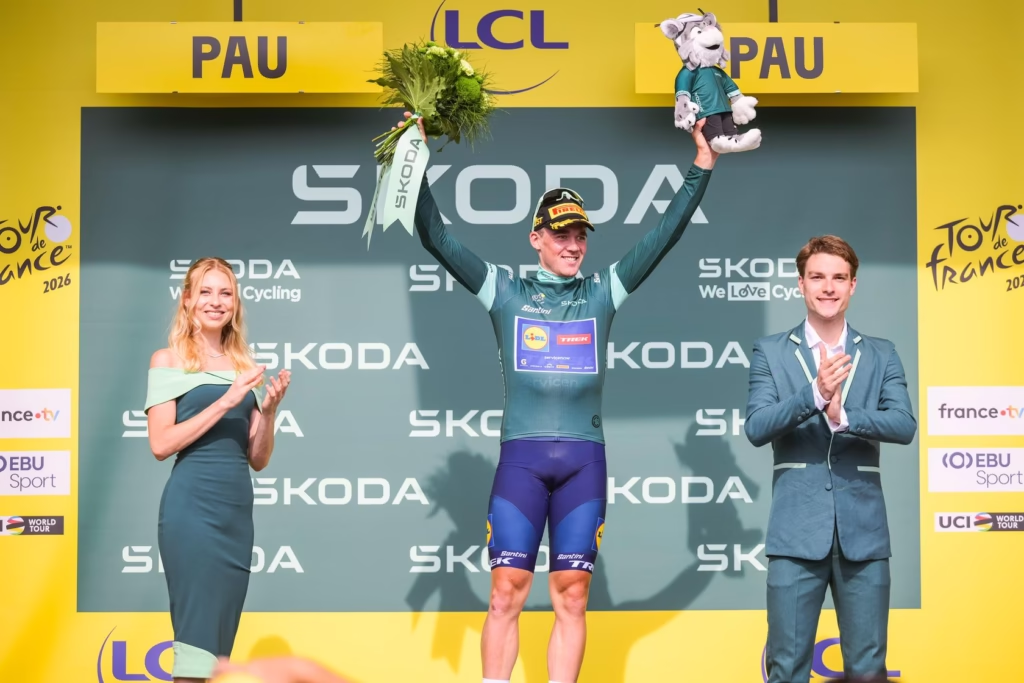
What does stage 7 mean for the green jersey?
Stage 7 is a major green jersey day.
The intermediate sprint at Landiras offers 25 points, while the finish in Bordeaux offers another large haul to the winner. That makes the stage more important than a simple stage-win opportunity. It is also a chance to reshape the points classification.
Pedersen’s advantage comes from consistency, aggression and ability to score on harder days. The pure sprinters need stages like Bordeaux to claw back ground. Kooij, Philipsen, Merlier and Girmay cannot afford to let Pedersen keep collecting big points on days that should suit them.
That may make the intermediate sprint more contested than usual. A small break taking maximum points at Landiras would suit Pedersen if it reduces what the pure sprinters can score. A controlled stage would suit those trying to close the gap.
Our article on whether Mads Pedersen can win green at the Tour de France 2026 sets out why stages like this matter even when he is not the outright fastest sprinter.
Heat could still matter
The Tour has been raced in intense heat through the opening week, and stage 7 may still be affected by the physical hangover from the Pyrenees.
Even on a flat stage, heat changes the race. Riders need more bottles, more ice and more careful pacing. The sprint trains also have to keep their leaders fresh without wasting too much energy too early.
A hot flat stage can look easy on television, but it can be exhausting inside the peloton. The sprinters who survived stage 6 best may have more left in the final kilometre than the riders who suffered over the Tourmalet.
How to watch stage 7
UK viewers should expect the decisive part of the stage to come in the final hour, particularly from the approach to the Côte de Béguey onwards.
The finish is expected between 16:13 and 16:35 BST, so anyone short on time should aim to be watching from around 15:30 BST. That should cover the final climb, the run-in to Bordeaux and the sprint set-up.
For full broadcast information, see our guide on how to watch Tour de France 2026 in the UK and our wider Tour de France 2026 live stream guide by country.
-
 Photo Credit: Cs-wolves / Wikimedia Commons, CC BY-SA 4.0
Stage 7 prediction
This should be a sprint, and it should be cleaner than Pau.
Kooij has the form and confidence, Merlier has the top-end speed, and Philipsen has the Bordeaux history. The stage is flat enough for the pure sprinters, but the finish will still be nervous because every team knows this is one of the best chances of the week.
Prediction: Tim Merlier to win stage 7, with Kooij and Philipsen also on the podium. Pedersen should stay heavily involved for green, even if the final straight suits the pure speed men slightly more.
FAQs
What time does stage 7 of the Tour de France 2026 start?
Stage 7 has a neutralised start at 13:15 CEST, which is 12:15 BST. The finish in Bordeaux is expected between 17:13 and 17:35 CEST, or 16:13 and 16:35 BST.
Is stage 7 a sprint stage?
Yes. Stage 7 from Hagetmau to Bordeaux is officially classed as flat and should be a bunch sprint unless crosswinds, crashes or a tactical mistake disrupt the chase.
How long is Tour de France 2026 stage 7?
Stage 7 is 175.1km long, with 850m of elevation gain.
Are there any climbs on stage 7?
There is one categorised climb, the Côte de Béguey, which is 1.2km at 4.4% and comes 37.8km from the finish.
Where is the intermediate sprint on stage 7?
The intermediate sprint is at Landiras, around 54.8km from the finish. It is the key mid-stage points opportunity for the green jersey contenders.
Who are the favourites for stage 7?
The main favourites are Olav Kooij, Tim Merlier, Jasper Philipsen, Biniam Girmay, Max Kanter and Mads Pedersen.
Could stage 7 change the yellow jersey?
It should not change the yellow jersey if the stage finishes in a normal bunch sprint. The main GC risk is crashes, splits or poor positioning in the final kilometres.

