
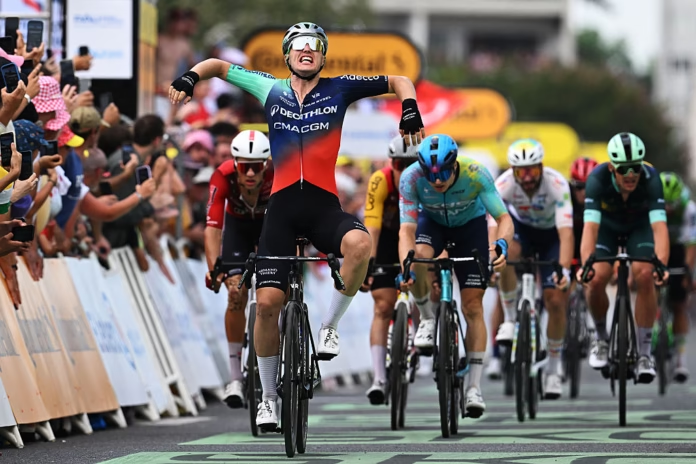
Olav Kooij did not just win a stage in Pau. He changed the shape of the Tour de France sprint contest at the first serious opportunity.
Stage 5 had been marked down as the first proper day for the fast men. After the team time-trial, the early GC movement and Mads Pedersen’s breakaway success in Foix, the road from Lannemezan to Pau finally gave the pure sprinters a stage they could properly control. As our Tour de France 2026 stage 5 preview set out, this was always likely to be about whether the sprint teams could keep the race together after a chaotic opening block.
Kooij made sure it did not become a day of missed chances. He won from Max Kanter and Tim Merlier, with Jasper Philipsen fifth, Biniam Girmay sixth and Mads Pedersen seventh. That finishing order matters because it immediately rearranges the tone of the sprint battle.
Before Pau, Kooij was a dangerous contender. After Pau, he is a Tour de France stage winner, and that is a very different status.
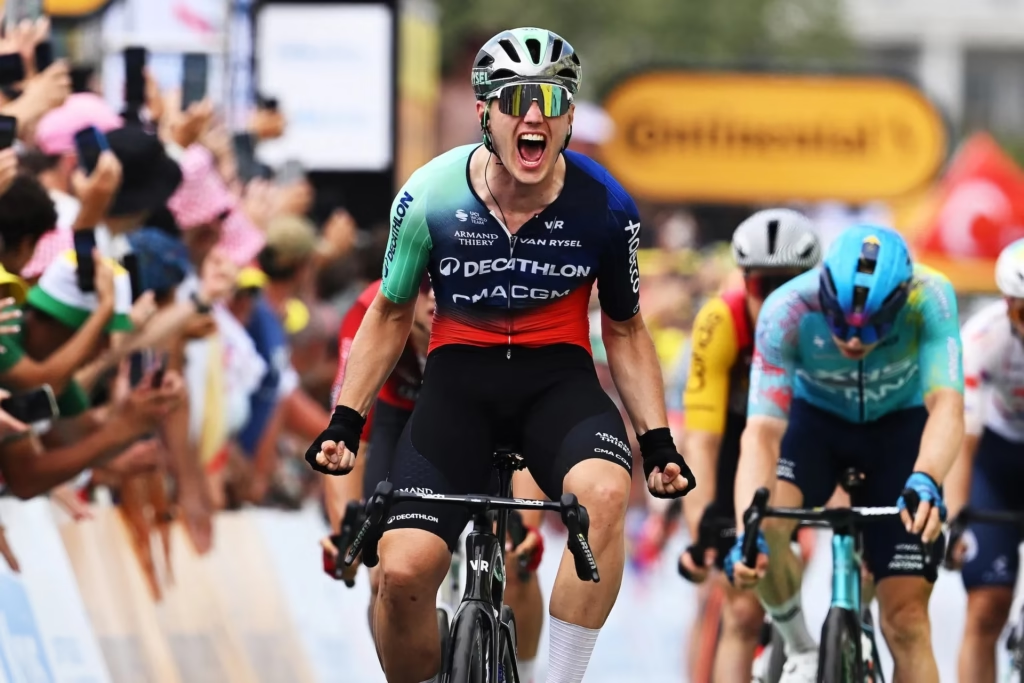 Photo Credit: Getty
Kooij has answered the Tour question early
Kooij arrived at this Tour with a strong sprinting record, but still with one obvious gap on his CV. He had already shown his speed across the calendar, and his move to Decathlon CMA CGM had been framed around exactly this kind of opportunity. When Olav Kooij signed with Decathlon CMA CGM from 2026, the logic was clear: he would become a focal point for the team’s sprint ambitions at the highest level.
The Tour, though, carries its own weight. Sprinting here is not only about pure speed. It is about managing the stress of the peloton, surviving long run-ins, holding position through road furniture, trusting the lead-out and launching at the only moment that matters. A rider can be quick enough to win almost anywhere and still need proof that he can turn that speed into a Tour stage victory.
Kooij now has that proof. More importantly, he collected it on the first available day. There was no slow build, no sequence of near misses, no need to learn by being boxed in or beaten by more experienced Tour sprinters. The race gave him one clear opening and he took it.
That changes the conversation around him. He is no longer the rider who might be ready for this level. He is the rider who has already won at this level.
The win was not soft
This was not a reduced field where the biggest sprint names had disappeared from the front. Merlier was third. Philipsen was fifth. Girmay was sixth. Pedersen, already in green after his Stage 4 victory, was seventh. The result was messy around the edges, with a late crash disrupting the finale, but Kooij still had to beat an elite group in the decisive metres.
That is why the win carries more weight than a simple first Tour stage success. It came against the riders who will define the sprint narrative of this race. Merlier remains one of the quickest pure finishers in the peloton. Philipsen has the Tour pedigree and the Alpecin-Premier Tech structure around him, as explored in our guide to Jasper Philipsen at the Tour de France 2026. Girmay has already shown he can convert difficult sprint days into major results. Pedersen is less of a textbook bunch sprinter, but his durability and points-hunting instincts make him one of the most dangerous riders in the green jersey contest.
Kooij beat them all.
That is the key point. Stage 5 was not a quiet, opportunistic sprint. It was the first public test of the fast men at this Tour, and Kooij passed it before several more established names could impose themselves.
Philipsen and Merlier are under pressure, not beaten
The mistake would be to treat Pau as a final verdict. It was not. Sprinting at the Tour rarely works like that. The next bunch sprint may bring a cleaner lead-out, a different wind direction, a wider finish or a more tired peloton. Merlier’s third place keeps him right in the mix, while Philipsen’s fifth was a poor return by his standards rather than a collapse.
Still, pressure moves quickly at the Tour. Kooij has his stage. Merlier and Philipsen do not. For the next flat opportunity, that changes the way their teams race. Soudal Quick-Step and Alpecin-Premier Tech are now chasing a response. Decathlon CMA CGM can approach the next sprint with the calmer authority of a team that has already justified its selection and plan.
That psychological shift should not be overstated, but it does matter. Sprint teams feed on rhythm. A first win settles a lead-out. A first defeat forces a review. For Kooij and Decathlon CMA CGM, Pau gives them proof that the structure can work. For Philipsen and Merlier, it raises the urgency before the next sprint chance.
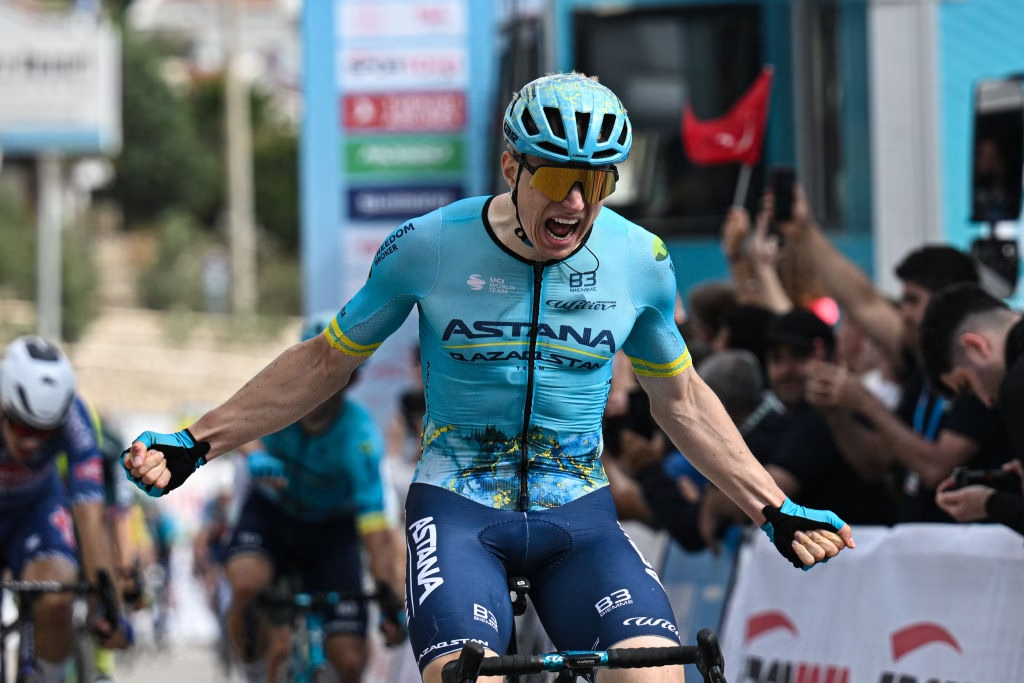 Photo Credit: Getty
Kanter’s second place widens the sprint picture
Max Kanter’s second place should not be treated as a footnote. It adds another layer to the sprint picture because it suggests this will not simply be a Tour of the same three names trading wins.
Kanter was not the headline favourite in Pau, but he and XDS Astana were positioned well enough to threaten the victory. He finished ahead of Merlier, Philipsen, Girmay and Pedersen. That matters for the coming sprint stages because it forces the bigger teams to respect more wheels in the final kilometre.
In practical terms, that makes the finishes harder to control. Kooij has shown he can win. Kanter has shown he can get into the right place. Merlier and Philipsen still have the reputation and lead-outs. Girmay and Pedersen can survive rougher days than some of the heavier sprinters.
The first sprint has not narrowed the race. It has opened it up.
Lead-outs will decide more than raw speed
Pau also underlined a wider truth about the 2026 Tour. The sprint stages will not simply be a drag race between the fastest riders. They will be decided by positioning, timing and how many useful team-mates each sprinter still has when the pace rises.
That was already one of the themes in our guide to the best lead-out riders at the Tour de France 2026. The run-in to Pau showed why. The pure sprinters may get several chances across the race, but each one will come with different stress. Early stages bring fresh legs and nervous GC teams. Later stages bring fatigue, depleted sprint trains and more desperation from riders still looking for a result.
Kooij’s win suggests Decathlon CMA CGM have enough structure to place him where he needs to be. That is not a small detail. For a sprinter at the Tour, being fast is only useful if the team can keep him close enough to use that speed.
Decathlon CMA CGM now have a more complete Tour
For Decathlon CMA CGM, Kooij’s win is significant beyond the stage result. The team came to the race with two clear storylines: Kooij for the sprints and Paul Seixas as the young French rider learning the Tour at the highest level. Pau has already delivered on one half of that plan.
That matters tactically too. Decathlon CMA CGM no longer need to force every sprint day through the same lens of pressure and expectation. They can still chase more with Kooij, but they are now doing so from a position of success rather than anxiety. It also gives Seixas a little more room. A team with a Tour stage win in its pocket can afford more patience with its young GC project.
It also validates the broader idea behind Kooij’s arrival. Decathlon CMA CGM did not sign him as a luxury. They signed him because they wanted a rider who could win the biggest sprint stages. Pau showed that this plan is not just plausible. It is already delivering.
Green jersey threat, but not yet green jersey favourite
Kooij’s win also sharpens the points classification, but it does not automatically make him the rider to beat for green. Pedersen remains a different type of threat because he can score on stages that pure sprinters may not survive at the front. His Foix win, and his seventh place in Pau, showed exactly why he is such a dangerous points rider.
That was already the logic behind our Tour de France 2026 sprinters guide. A full green jersey campaign is not just about winning the flattest stages. It is about scoring repeatedly, reaching intermediate sprints, surviving difficult days and still having enough left for the next bunch finish.
Kooij, though, has changed the arithmetic. If he can keep winning the flatter stages, he will force Pedersen to keep scoring everywhere. He will also increase the pressure on Philipsen, Merlier and Girmay, who cannot allow one rider to start stacking sprint victories while they share the minor placings.
That is the key point. Kooij does not need to look like the complete green jersey rider yet. He needed to show that he can win the days most suited to him. He has done that immediately.
-
 Photo Credit: A.S.O./Billy Ceusters
The next sprint chances now look different
The next flat opportunities now carry a new tone. Before Pau, the question was whether Kooij could beat the Tour’s established fast men. After Pau, the question is how those established names respond.
That makes the route more interesting. Our guide to the Tour de France 2026 route’s best days for sprinters highlighted the stages where the fast men should still have chances, including Bordeaux, Bergerac, Nevers, Chalon-sur-Saône, Voiron and Paris. Those days now come with a sharper narrative.
Philipsen needs a clean answer. Merlier needs to turn podium speed into a win. Girmay needs to keep himself close enough in the points race for the harder days to matter. Pedersen will keep looking at every sprint, intermediate and reduced finish as part of a broader green jersey strategy. Kanter has earned more attention. Kooij has earned more marking.
That is exactly what a first sprint should do. It should set the hierarchy, then immediately make everyone challenge it.
The sprint hierarchy has shifted
Pau did not make Kooij untouchable. It did something more interesting. It made the sprint field more uncertain.
Before Stage 5, the first bunch finish looked like a test of whether Kooij could match the biggest Tour names. After Stage 5, the test has moved elsewhere. Can Merlier respond? Can Philipsen turn frustration into control? Can Girmay take points on the harder sprint days? Can Pedersen keep using his versatility to stay ahead in green? And can Kanter turn one excellent placing into a wider run of results?
Kooij’s win has not ended the sprint contest. It has properly started it.
The Tour now has a new confirmed sprint winner, a wider cast of contenders and a green jersey race that looks less predictable than it did 24 hours earlier. That is why Pau mattered. It was not just Kooij’s first Tour de France win. It was the moment the sprint hierarchy stopped being theoretical.

