

Remco Evenepoel enters the final three mountain stages of the Tour de France sitting second overall, 4:32 behind Tadej Pogačar.
Mathematically, the race is not over. Stages 18, 19 and 20 contain three consecutive summit finishes, two visits to Alpe d’Huez and more than 12,000 metres of combined climbing. One bad day can still transform the general classification.
Realistically, Evenepoel is extremely unlikely to win the Tour.
His victory in the stage 16 individual time trial proved that he can beat Pogačar in the discipline where he remains the world reference. It did not show that he can recover four and a half minutes across terrain that generally favours the yellow jersey.
Evenepoel gained 28 seconds during the time trial. To take yellow, he now needs to recover almost ten times that amount across three mountain stages.
That would require more than one excellent attack. Pogačar would need to show a level of weakness he has not displayed anywhere in this Tour.
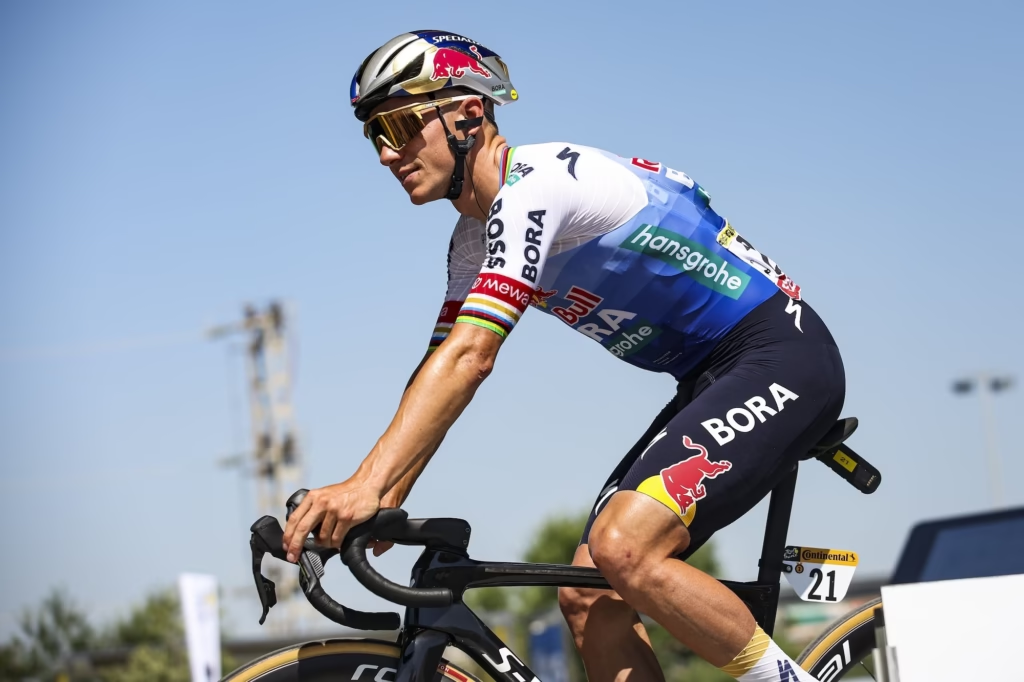
Tour de France general classification before stage 18
| Position | Rider | Team | Gap |
|---|---|---|---|
| 1 | Tadej Pogačar | UAE Team Emirates-XRG | Leader |
| 2 | Remco Evenepoel | Red Bull-Bora-Hansgrohe | +4:32 |
| 3 | Isaac del Toro | UAE Team Emirates-XRG | +6:51 |
| 4 | Paul Seixas | Decathlon CMA CGM | +7:11 |
| 5 | Juan Ayuso | Lidl-Trek | +9:22 |
| 6 | Mattias Skjelmose | Lidl-Trek | +10:14 |
| 7 | Lenny Martinez | Bahrain Victorious | +12:50 |
| 8 | Tom Pidcock | Pinarello-Q36.5 Pro Cycling Team | +12:58 |
Evenepoel’s advantage over Del Toro is 2:19, while Seixas sits another 20 seconds further behind.
That gives him two different races to manage.
He can attack Pogačar and attempt to reopen the yellow jersey contest. He must also avoid exhausting himself so completely that Del Toro, Seixas or another podium rival brings his second place into danger.
The safest strategy is to defend the runner-up position. The only route towards winning the Tour involves rejecting that caution.
Can Evenepoel still win the Tour de France?
Yes in theory, but only if Pogačar has a major physical problem, makes a serious tactical mistake or suffers a sustained collapse on one of the final Alpine stages.
Evenepoel will not recover 4:32 through finish bonuses or small late attacks.
He needs at least one stage on which Pogačar loses minutes.
The possible routes are narrow:
- Pogačar cracks badly on a summit finish
- UAE Team Emirates-XRG lose control after several riders struggle
- Evenepoel joins or creates a dangerous long-range move
- Pogačar suffers a mechanical problem at a decisive moment
- Illness or accumulated fatigue suddenly affects the yellow jersey
- Evenepoel gains time on stage 18 and forces a more aggressive race on Alpe d’Huez
- A temporary tactical alliance forms between Red Bull-Bora-Hansgrohe, Lidl-Trek and Decathlon CMA CGM
Without one of those developments, Pogačar can allow Evenepoel small gains and still retain a comfortable advantage.
Evenepoel does not merely need to be slightly stronger. He needs the final Alpine block to produce a completely different hierarchy from the first two weeks.
Why the stage 16 time trial did not reopen the Tour
Evenepoel’s victory from Évian-les-Bains to Thonon-les-Bains was one of his finest performances of the race.
He beat Pogačar by 28 seconds across 26.1km, produced the fastest ride through the major checkpoints and confirmed his status as the Tour’s strongest time triallist.
It was also his second consecutive stage victory and strengthened his hold on second overall.
The performance created the appearance of a renewed yellow jersey battle. The actual time gap tells a different story.
Pogačar began the time trial five minutes ahead. He finished it 4:32 clear.
Evenepoel removed less than ten per cent of his deficit on the stage most likely to favour him. The remaining stages are mountainous and move the race back towards Pogačar’s strongest terrain.
That is why our analysis of Evenepoel’s time trial victory focused as much on the podium as the yellow jersey.
Evenepoel showed that he can defeat Pogačar on a stage. He did not establish a realistic route towards overtaking him overall.
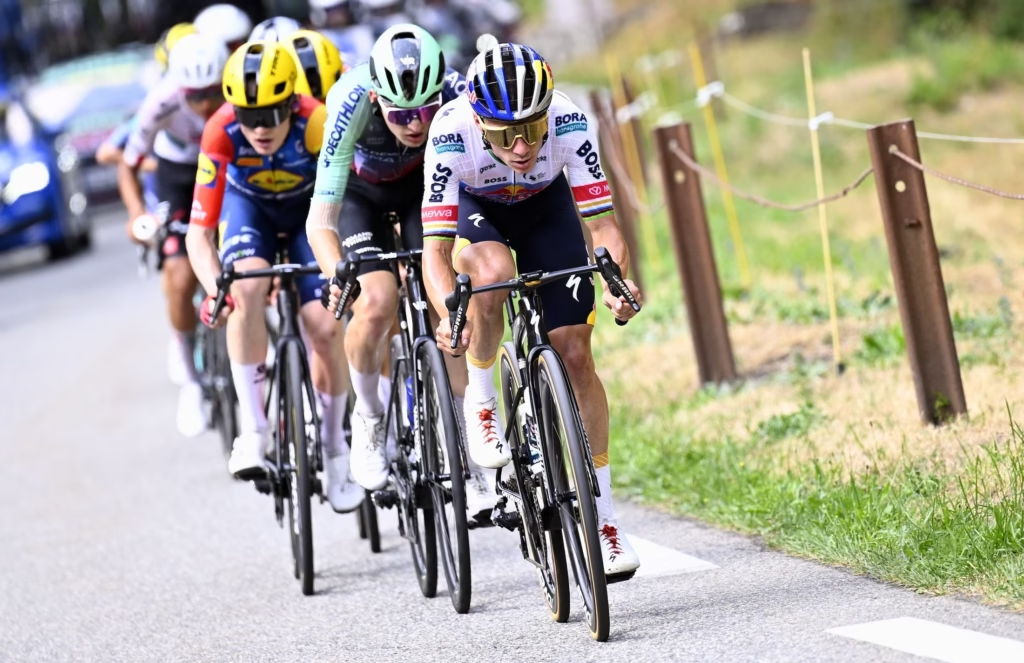 Photo Credit: Getty
What has Evenepoel said about his chances?
Evenepoel’s own comments have been more realistic than some of the discussion surrounding his time trial victory.
After moving into second overall, he said his objective was to ride the best third week of his life and protect his podium position.
Following stage 16, he again played down the likelihood of overturning Pogačar’s advantage. His focus was on second place, even while acknowledging that he would continue racing aggressively if opportunities appeared.
That does not mean he will refuse to attack.
Evenepoel has little interest in spending three mountain stages simply following wheels. If he feels strong, he will test Pogačar and pursue another stage victory.
His comments show that Red Bull-Bora-Hansgrohe’s underlying strategy is built around securing second rather than gambling everything on an improbable overall victory.
That distinction matters.
An attack intended to win a stage can be controlled and calculated. Recovering 4:32 requires a far larger commitment and creates a genuine risk of losing the podium.
How much time does Evenepoel need on each stage?
Evenepoel does not need to divide the deficit equally, but doing so demonstrates the size of the task.
| Stage | Finish | Average gain required |
|---|---|---|
| 18 | Orcières-Merlette | 1:31 |
| 19 | Alpe d’Huez | 1:31 |
| 20 | Alpe d’Huez | 1:30 |
| Total | 4:32 |
Gaining around 90 seconds on Pogačar once would represent a major result.
Doing it on three consecutive days is not a realistic expectation based on the form shown so far.
Evenepoel could instead hope for one dramatic collapse. If he gained three minutes on stage 20, smaller differences from the previous two days would suddenly become important.
That is the only credible sporting route without a crash, illness or mechanical incident.
He needs to remain close enough for one exceptional stage to matter.
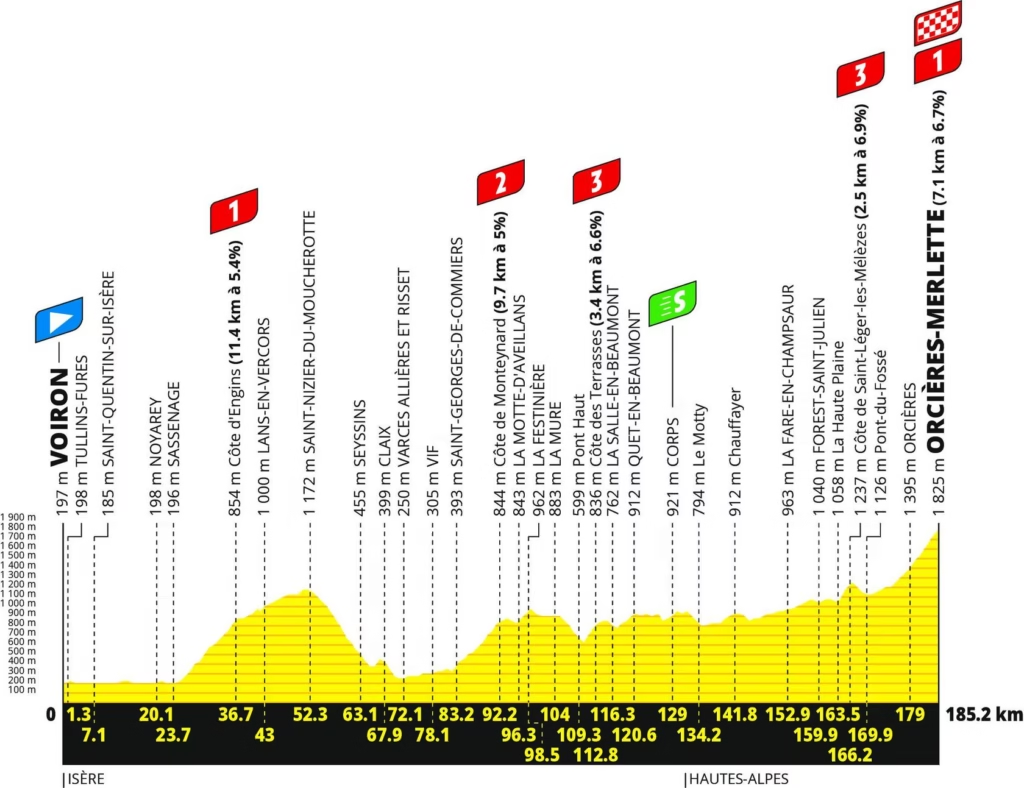
Stage 18: Evenepoel must create doubt at Orcières-Merlette
Stage 18 covers 185.2km from Voiron to Orcières-Merlette, with approximately 3,900 metres of climbing and five categorised ascents.
The final climb measures 7.1km at 6.7%.
This is the least severe of the three summit finishes and probably Evenepoel’s best chance to attack without immediately turning the race into a pure high-mountain climbing test.
The gradient is steady rather than extreme. Drafting remains useful, and a powerful rider can sustain a high speed without needing the acceleration of a pure climber.
That gives Evenepoel a possible route.
He can ask Red Bull-Bora-Hansgrohe to make the stage difficult before the final ascent, reduce UAE’s support and then attack from further out than the final kilometre.
A late acceleration is unlikely to produce more than a few seconds. Evenepoel needs a move that forces Pogačar to chase for several kilometres.
The Tour de France 2026 stage 18 preview covers the complete route and the tactical possibilities before Orcières-Merlette.
What would count as success on stage 18?
Evenepoel does not need to recover a minute and a half immediately.
A gain of 20 to 30 seconds would at least change the tone of the race.
It would reduce the gap below four minutes, show that Pogačar is not completely comfortable and force UAE to approach the first Alpe d’Huez stage with greater caution.
Finishing together would strengthen Pogačar’s position.
Losing further time would effectively end even the theoretical discussion. Evenepoel would then need to concentrate entirely on defending second place.
Does Adam Yates’ illness make Pogačar vulnerable?
Adam Yates struggled during stage 17 while dealing with illness and finished well behind the main peloton.
That matters because Yates is one of Pogačar’s most important mountain domestiques. His ability to control attacks, set the pace and remain with the yellow jersey deep into the finale gives UAE a major tactical advantage.
A weakened Yates reduces the team’s margin for error.
It does not automatically make Pogačar personally vulnerable.
UAE still have other riders capable of controlling the race, while Del Toro sits third overall and can remain with the leading GC group. Pogačar has also repeatedly shown that he is comfortable responding to attacks without a full group of teammates around him.
Evenepoel should still test the reduced support.
The best way to discover whether Yates’ condition matters is to make UAE work before Orcières-Merlette. Allowing them to ride steadily until the final climb would make his absence far less significant.
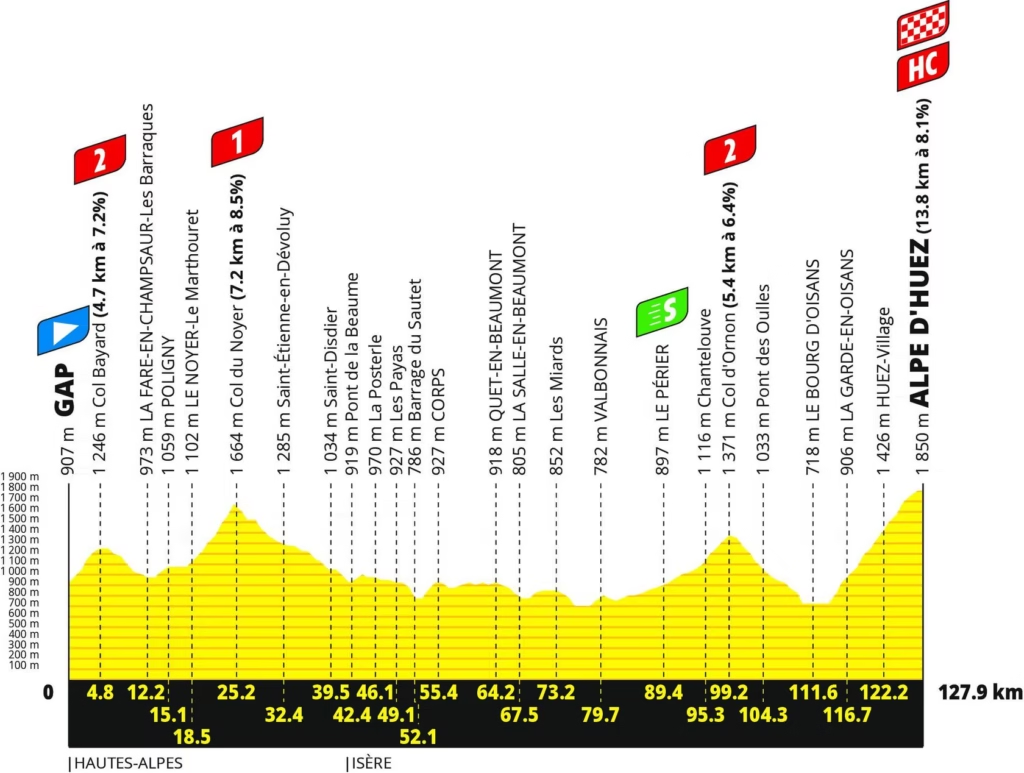
Stage 19: Alpe d’Huez is where the race must truly reopen
Stage 19 is only 127.9km long but includes approximately 3,500 metres of climbing.
The route crosses the Col Bayard, Col du Noyer and Col d’Ornon before the 13.7km ascent of Alpe d’Huez at 8.1%.
Its short distance should encourage aggressive racing from the start.
Evenepoel cannot afford to treat it as a conventional mountain stage and wait until the final three kilometres. If the gap remains close to four minutes after stage 18, he needs to use the earlier climbs to weaken UAE and create a less controlled race.
The problem is that Alpe d’Huez appears to favour Pogačar.
The climb is long enough for the strongest rider to impose a sustained difference, while its steep opening kilometres punish anyone who goes beyond their level too early.
Evenepoel must decide whether to follow Pogačar’s accelerations or ride at his own pace. Trying to match every change of speed could produce exactly the collapse that threatens second place.
Evenepoel’s ideal stage 19 scenario
His best route would involve several connected tactical moves:
- Red Bull-Bora-Hansgrohe place riders in the early breakaway.
- Lidl-Trek and Decathlon attack to pursue their own podium ambitions.
- UAE are forced to chase across the Col du Noyer.
- Pogačar reaches Alpe d’Huez with limited support.
- Evenepoel attacks before the final five kilometres.
- Pogačar shows his first sustained weakness of the Tour.
Even then, Evenepoel probably needs to gain at least one minute.
Anything smaller would leave too much work for stage 20.
The significance of the repeated summit finishes is examined in why back-to-back Alpe d’Huez stages could define the Tour de France 2026.
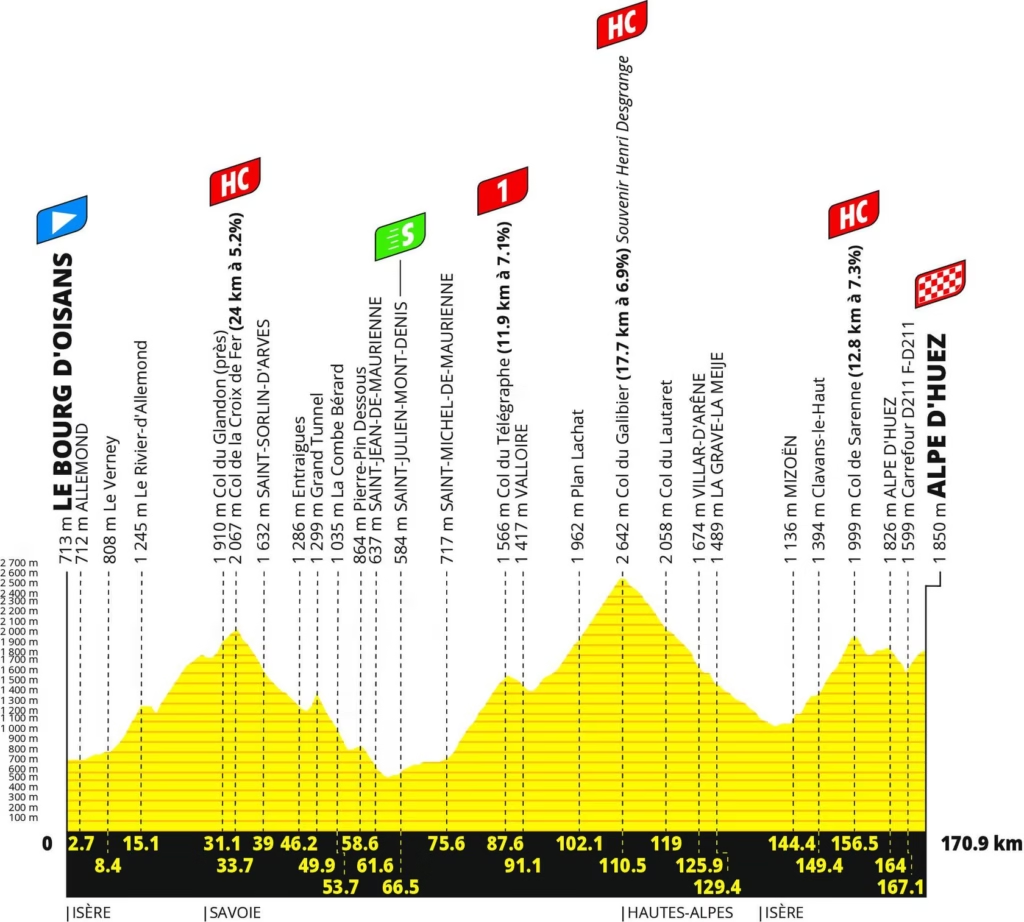
Stage 20 is the only day capable of producing a complete reversal
Stage 20 is the queen stage and the only remaining route where a rider could realistically lose several minutes without a crash.
The 170.9km course contains approximately 5,450 metres of climbing and crosses the Croix de Fer, Télégraphe, Galibier and Col de Sarenne before the final return towards Alpe d’Huez.
This is Evenepoel’s only plausible opportunity to turn a substantial deficit into a yellow jersey challenge through racing alone.
The stage is long, exceptionally difficult and repeatedly reaches high altitude. Team support can disappear early, while one badly managed effort on the Galibier may have consequences several hours later.
Evenepoel needs stage 20 to become a war of endurance rather than a controlled contest on the final climb.
The complete route is covered in the Tour de France 2026 queen stage guide.
Where should Evenepoel attack?
Waiting for the final ascent is unlikely to be enough.
Even if Evenepoel dropped Pogačar by 30 seconds on Alpe d’Huez, he would remain several minutes behind overall.
The Galibier or the road towards the Col de Sarenne offers a more meaningful opportunity.
An attack there creates several possibilities:
- Pogačar must chase without teammates
- Rival podium contenders may cooperate with Evenepoel
- UAE must decide whether Del Toro should work
- A gap can grow across the descent and transitional roads
- Pogačar may pay for an aggressive response later
The risk is equally large.
Evenepoel could attack 70km from the finish, fail to establish a gap and then lose several minutes himself. That would place his second position under threat from Del Toro and Seixas.
A genuine attempt to win the Tour requires tactics that could also cost him second place.
Would the other GC teams help Evenepoel?
Evenepoel cannot defeat Pogačar through Red Bull-Bora-Hansgrohe’s strength alone.
Florian Lipowitz’s crash and abandonment during the stage 16 time trial removed his most important high-GC teammate. The withdrawal leaves the team with fewer tactical options in the mountains.
Evenepoel may therefore need cooperation from riders with their own objectives.
Decathlon CMA CGM
Paul Seixas is only 20 seconds behind Del Toro in the white jersey and podium battle.
Decathlon have a clear reason to attack UAE. A move that isolates Del Toro may also place Pogačar under pressure, creating an opening for Evenepoel.
Lidl-Trek
Juan Ayuso and Mattias Skjelmose sit fifth and sixth overall.
Both need time to reach the podium and cannot achieve that by following UAE until the finish. Lidl-Trek can attack with one rider while forcing UAE to monitor the other.
Pinarello-Q36.5 Pro Cycling Team
Tom Pidcock is further behind and can take greater tactical risks, although his eighth place means Bahrain Victorious and TotalEnergies may still respond to him.
He is unlikely to determine the yellow jersey race directly but can contribute to creating a fragmented stage.
The difficulty is that none of those teams are racing for Evenepoel.
Their attacks may help him, but they may also force him to chase. If Seixas or Ayuso moves into a dangerous position, protecting second place could require Evenepoel to work alongside Pogačar rather than against him.
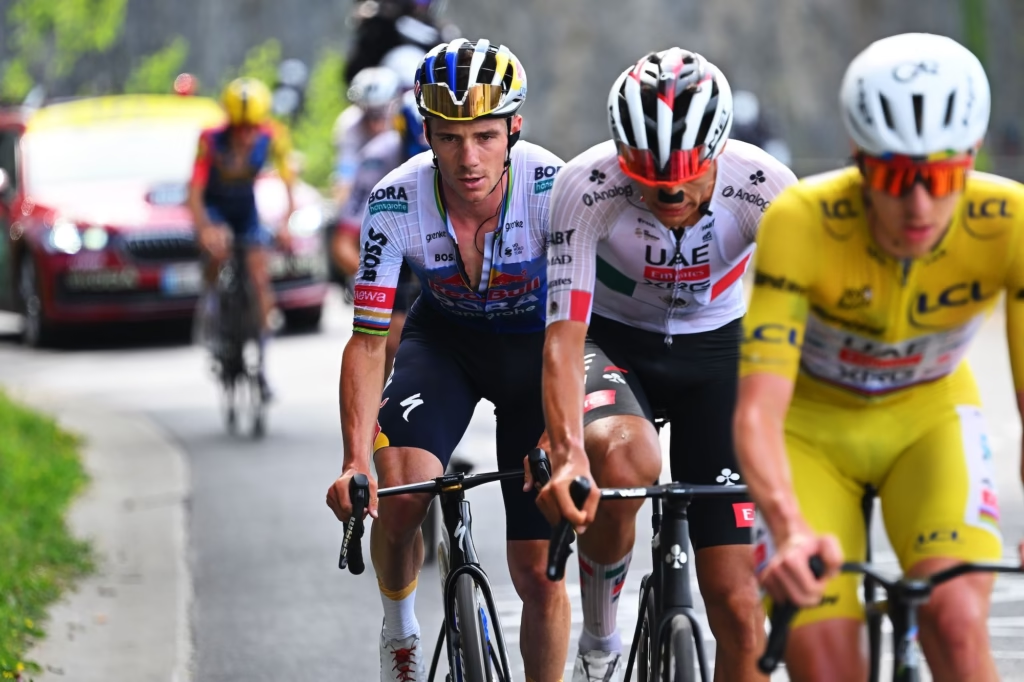 Photo Credit: Getty
Can Evenepoel use Del Toro’s podium battle against UAE?
Del Toro’s third place creates an unusual complication for UAE.
He is both a teammate supporting Pogačar and a podium contender defending his own position.
If Evenepoel attacks, Del Toro may be strong enough to follow. That gives Pogačar a teammate ahead and removes some of the immediate pressure to chase.
Evenepoel therefore needs to make his moves difficult for Del Toro as well as Pogačar.
A steady, powerful attack may not be enough if the Mexican can sit on his wheel. Repeated accelerations or cooperation with Seixas could force Del Toro to choose between protecting his podium and working for yellow.
The white jersey battle between Del Toro and Seixas creates one of the most important tactical subplots of the Alpine stages.
If Seixas attacks Del Toro, Evenepoel can potentially follow without taking full responsibility. UAE must then respond to protect both yellow and third overall.
What if Evenepoel wins stage 18?
A stage victory alone would not transform the Tour.
If Evenepoel wins at Orcières-Merlette but Pogačar finishes on his wheel, the only difference may come from bonus seconds.
A 10-second winning bonus would reduce the gap to 4:22 if Pogačar finished outside the top three. That remains an enormous deficit.
Evenepoel needs a stage win accompanied by genuine road separation.
| Stage 18 outcome | Approximate remaining deficit |
|---|---|
| Wins, Pogačar receives same time | Around 4:22 at best through bonuses |
| Gains 20 seconds plus bonuses | Around four minutes |
| Gains one minute plus bonuses | Around 3:20 |
| Gains two minutes plus bonuses | Around 2:20 |
The third scenario would reopen the conversation.
The fourth would turn the final two stages into a genuine race for yellow.
Neither is likely without Pogačar experiencing a clear problem.
What if Pogačar simply follows Evenepoel?
That is the most probable outcome.
Pogačar does not need to attack Evenepoel or win any of the remaining stages. He can mark the Belgian, allow harmless breakaways to contest the victories and ride conservatively whenever the road becomes dangerous.
His 4:32 advantage gives him enormous tactical flexibility.
He could lose 30 seconds on each of the next three stages and still reach Paris more than three minutes ahead.
Evenepoel must therefore provoke a response beyond simple marking.
He needs to force Pogačar into repeated chases, expose him to isolation and discover whether the yellow jersey can recover from three consecutive difficult days.
That is easier to describe than execute.
Pogačar has been the strongest climber in the race and has shown no indication that sustained mountain pressure is likely to break him.
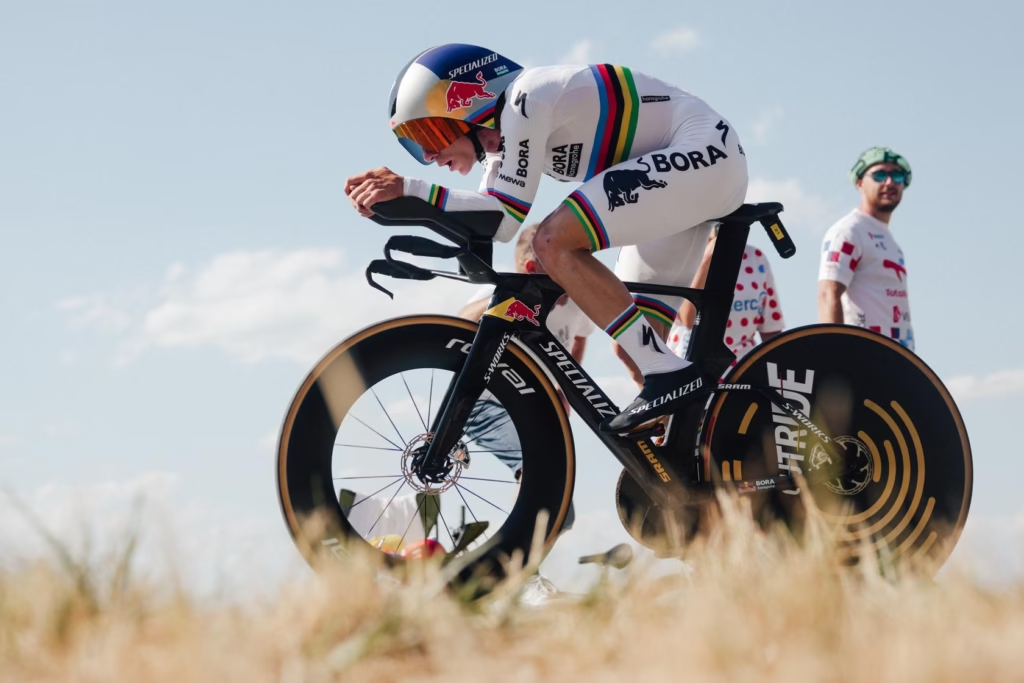 Photo Credit: A.S.O./Thomas Maheux
Does Evenepoel’s time trial form help in the mountains?
Yes, but not in the most obvious way.
The time trial demonstrated that Evenepoel can sustain extremely high power across a rolling course. That ability becomes useful on moderate gradients, valleys and long transitional sections between climbs.
His best attacks may therefore come away from the steepest slopes.
Rather than attempting to out-accelerate Pogačar on Alpe d’Huez, Evenepoel can attack over a summit and use his aerodynamic efficiency on the descent or valley road.
The final Alpine routes contain opportunities for that approach, particularly on stage 20.
The problem is creating the initial separation.
If Pogačar remains on his wheel, Evenepoel’s power becomes an advantage for both riders.
Could Evenepoel lose second by chasing yellow?
That is the central strategic danger.
Del Toro is 2:19 behind and Seixas 2:39 behind. Those are meaningful gaps, but they are small enough to disappear if Evenepoel attacks early and collapses later.
The same riders can exploit hesitation.
If Evenepoel focuses entirely on Pogačar and allows Seixas or Del Toro to move up the road, he may be forced into an uncomfortable chase. Pogačar has no reason to help if his yellow jersey remains safe.
Red Bull-Bora-Hansgrohe therefore need clear thresholds.
An attack that creates meaningful separation is worth pursuing. One that stalls while podium rivals remain protected should be abandoned before it becomes destructive.
Evenepoel can race aggressively without treating every stage as a final throw of the dice.
The balance changes on stage 20. If he still trails by several minutes but holds a secure advantage over third, he may decide that testing Pogačar is worth the risk.
What would make the Tour genuinely close again?
The gap needs to fall below two minutes before the decisive section of stage 20.
At that point, one attack on the Galibier or Sarenne could potentially change yellow.
If Pogačar enters stage 20 more than three minutes ahead, Evenepoel’s chances remain remote. He would need a collapse rather than a normal tactical victory.
| Gap after stage 18 | Meaning for the race |
|---|---|
| More than 4:30 | Tour effectively over |
| Between 3:30 and 4:30 | Evenepoel needs a major Alpe d’Huez gain |
| Between 2:30 and 3:30 | A difficult but visible route remains |
| Below 2:30 | Stage 20 could become decisive |
| Below 1:30 | Genuine yellow jersey battle |
Evenepoel’s immediate objective is not to take yellow at Orcières-Merlette.
It is to reduce the gap enough that later attacks have tactical credibility.
Why Pogačar remains the overwhelming favourite
Everything in the current race situation favours Pogačar.
He has the largest advantage, the strongest climbing performances and a teammate sitting third overall. He can decide which attacks matter and allow the others to spend energy fighting among themselves.
The final route also suits him.
Orcières-Merlette is manageable enough for UAE to control. Alpe d’Huez rewards his climbing strength, while the queen stage gives him several places to attack if defence becomes uncomfortable.
The Tour de France 2026 Alps guide shows why the remaining stages offer opportunities for Evenepoel but no obvious weakness for Pogačar.
Pogačar does not need to produce another dominant display.
He only needs to avoid one disastrous day.
-
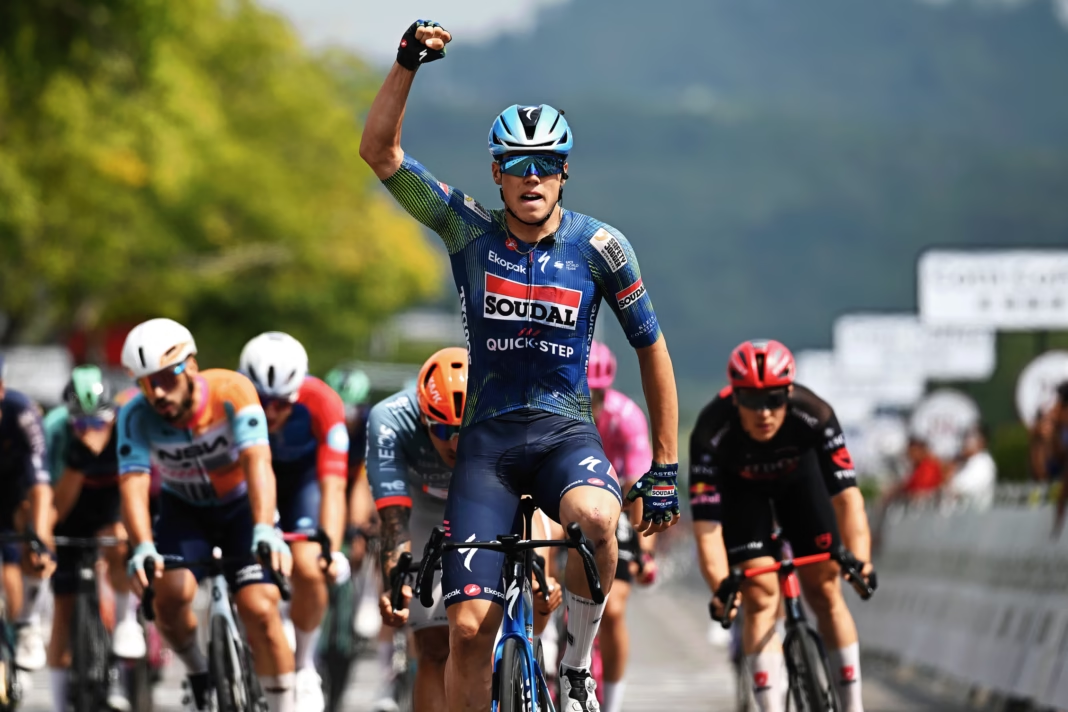
 Photo Credit: Getty
Can Evenepoel win another stage?
This is much more realistic than winning the Tour.
Stage 18 suits his sustained power, particularly if the GC group reaches Orcières-Merlette behind a caught breakaway.
Stage 19 provides a prestigious Alpe d’Huez finish, although Pogačar is likely to be stronger on the final climb.
Stage 20 offers opportunities for a long-range attack if Evenepoel decides to use the Galibier or Sarenne rather than waiting for the finish.
He has already won two stages in three days and appears to be reaching his best form during the third week.
Another victory would strengthen an already successful Tour even if the yellow jersey remains beyond him.
Can Evenepoel win the 2026 Tour de France?
The honest answer is almost certainly no.
A 4:32 deficit against Pogačar would be difficult to recover with a favourable time trial still remaining. Attempting it across three mountain stages, where Pogačar has generally been stronger, makes the challenge far greater.
Evenepoel has not conceded the race emotionally. He will still attack if an opportunity appears, and his recent victories show that he has the form to place Pogačar under pressure.
His own comments reveal the more realistic objective.
He wants to produce the best third week of his career and secure second overall. That is not an admission of weakness. It is an accurate reading of the race.
For yellow to become possible, Evenepoel needs to gain meaningful time at Orcières-Merlette, take at least another minute on the first Alpe d’Huez stage and arrive at stage 20 close enough to launch a long-range attack.
Anything less leaves him dependent on Pogačar suffering a collapse, illness, crash or mechanical problem.
Prediction: Evenepoel attacks during the Alpine block and may win another stage, but Pogačar retains yellow by a comfortable margin. Evenepoel finishes second overall, confirming himself as the strongest challenger without turning the final weekend into a genuine two-rider race for the Tour.

