
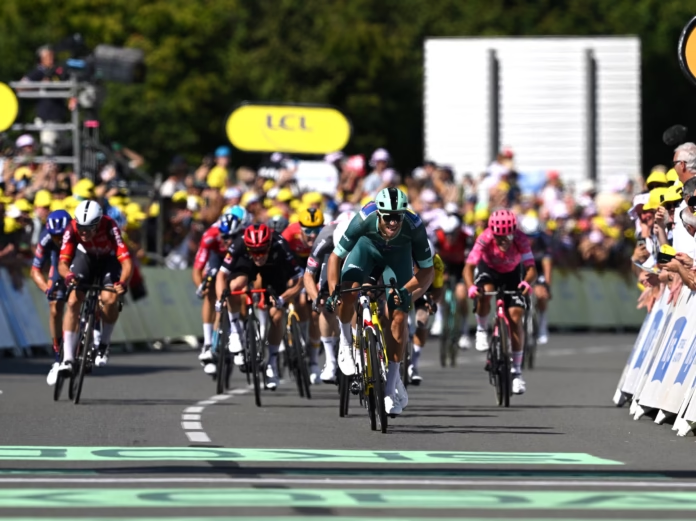
The Tour de France 2026 sprint stages will not be decided only by the fastest riders. Jasper Philipsen, Tim Merlier, Olav Kooij, Arnaud De Lie, Biniam Girmay, Pascal Ackermann and the other fast men will all need help long before the final 200 metres. That is where the lead-out riders matter.
A lead-out rider is not just a teammate who rides in front of a sprinter. The best ones understand timing, road position, speed, risk, wind direction, corners and when to launch. They can keep calm at 60km/h, move their sprinter through traffic and still have enough power left to deliver the final acceleration. In a Tour sprint, that can be the difference between first and fifth.
The 2026 route gives sprint teams several clear chances, with Bordeaux, Bergerac, Nevers, Chalon-sur-Saône, Voiron and Paris all likely to interest the fast men in different ways. But it is not a pure sprinters’ Tour. The mountains and hilly stages will gradually strip resources, which means the best lead-out riders will need to survive the race as well as shape the finishes.
Using the startlist supplied, these are the lead-out riders and sprint support specialists most likely to matter at the Tour de France 2026.
For the wider sprint context, see our Tour de France 2026 sprinters guide, best sprinters at the Tour de France 2026 and Tour de France 2026 sprint stages ranked.
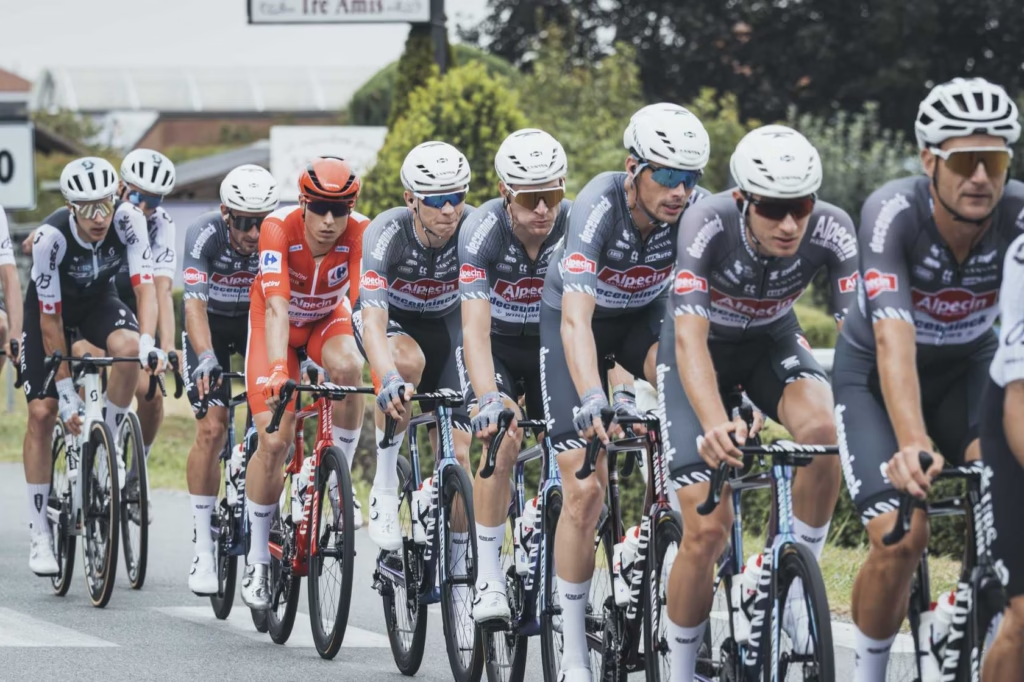
What makes a great Tour de France lead-out rider?
A great lead-out rider needs power, timing and judgement. Raw speed helps, but it is not enough. The final kilometres of a Tour stage are crowded, nervous and full of competing trains. Riders are fighting for the same space, often with road furniture, corners, roundabouts and crosswinds making the approach even harder.
The best lead-out riders can do three jobs. First, they protect the sprinter before the final. Second, they move the sprinter into position at the right moment. Third, they produce one final high-speed effort that allows the sprinter to launch without being boxed in or exposed too early.
There are different types of lead-out riders. Some are final men, used in the last 500 metres. Some are positioning riders, used between five kilometres and one kilometre to go. Some are big rouleurs who control the approach. Some are fast riders who could sprint themselves but are trusted to deliver a teammate.
The Tour rewards complete trains, but it also rewards improvisation. If a sprint train loses one rider, the whole plan can change. That is why the best lead-out riders are not only strong. They are adaptable.
For more on team structure, see our explainer on how Tour de France teams work and what is a domestique at the Tour de France?.
Best lead-out riders at the Tour de France 2026 at a glance
| Rank | Rider | Team | Main sprinter |
|---|---|---|---|
| 1 | Jonas Rickaert | Alpecin-Premier Tech | Jasper Philipsen |
| 2 | Bert Van Lerberghe | Soudal Quick-Step | Tim Merlier |
| 3 | Mathieu van der Poel | Alpecin-Premier Tech | Jasper Philipsen |
| 4 | Jasper Stuyven | Soudal Quick-Step | Tim Merlier |
| 5 | Cees Bol | Decathlon CMA CGM Team | Olav Kooij |
| 6 | Mike Teunissen | XDS Astana Team | Max Kanter / Davide Ballerini |
| 7 | John Degenkolb | Team Picnic PostNL | Pavel Bittner |
| 8 | Tom Van Asbroeck | NSN Cycling Team | Biniam Girmay / Jake Stewart |
| 9 | Edward Planckaert | Alpecin-Premier Tech | Jasper Philipsen |
| 10 | Søren Wærenskjold | Uno-X Mobility | Himself / Magnus Cort |
| 11 | Luke Durbridge | Team Jayco-AlUla | Pascal Ackermann / Michael Matthews |
| 12 | Nils Politt | UAE Team Emirates-XRG | Tactical positioning / reduced finishes |
| 13 | Daan Hoole | Decathlon CMA CGM Team | Olav Kooij |
| 14 | Niklas Märkl | Team Picnic PostNL | Pavel Bittner |
The top of the ranking is shaped by certainty. Alpecin-Premier Tech and Soudal Quick-Step have the clearest traditional sprint structures on the supplied startlist. Decathlon CMA CGM Team have a strong support base around Olav Kooij. NSN Cycling Team, Team Picnic PostNL, Uno-X Mobility, Lotto-Intermarché, Bahrain Victorious and Team Jayco-AlUla have sprint options, but their trains look less clean or more dependent on improvisation.
For the full squad context behind those choices, see our full start list for Tour de France 2026 and Tour de France 2026 team-by-team guide.
 Photo Credit: Unipublic / Cxcling / Antonio Baixauli
1. Jonas Rickaert – Alpecin-Premier Tech
Jonas Rickaert is the most important specialist lead-out rider on this startlist. If Jasper Philipsen is going to win bunch sprints at the 2026 Tour, Rickaert will almost certainly be central to the final kilometre.
His value is trust. A sprinter needs to know where the final lead-out rider will be, when they will accelerate and how long they can hold the effort. Rickaert has spent years in that kind of role, and Alpecin-Premier Tech’s sprint structure is built around familiarity rather than improvisation.
Rickaert’s job is not always spectacular. He may not be the rider who appears most prominently on television until very late. But if he delivers Philipsen into the final 200 metres with speed and space, the stage is already half won.
The presence of Mathieu van der Poel changes the whole equation. Van der Poel can act as a high-speed positioning rider or final launchpad, while Rickaert provides the specialist sprint-train discipline. Together, they give Philipsen one of the strongest lead-out structures in the race.
Alpecin-Premier Tech look like the benchmark sprint train on this startlist because they have a clear hierarchy: Philipsen as finisher, Van der Poel as superstar support, Rickaert as trusted lead-out, and Edward Planckaert or Silvan Dillier as earlier positioning pieces.
For Philipsen’s wider green jersey case, see our Tour de France 2026 sprinters guide and best sprinters at the Tour de France 2026.
2. Bert Van Lerberghe – Soudal Quick-Step
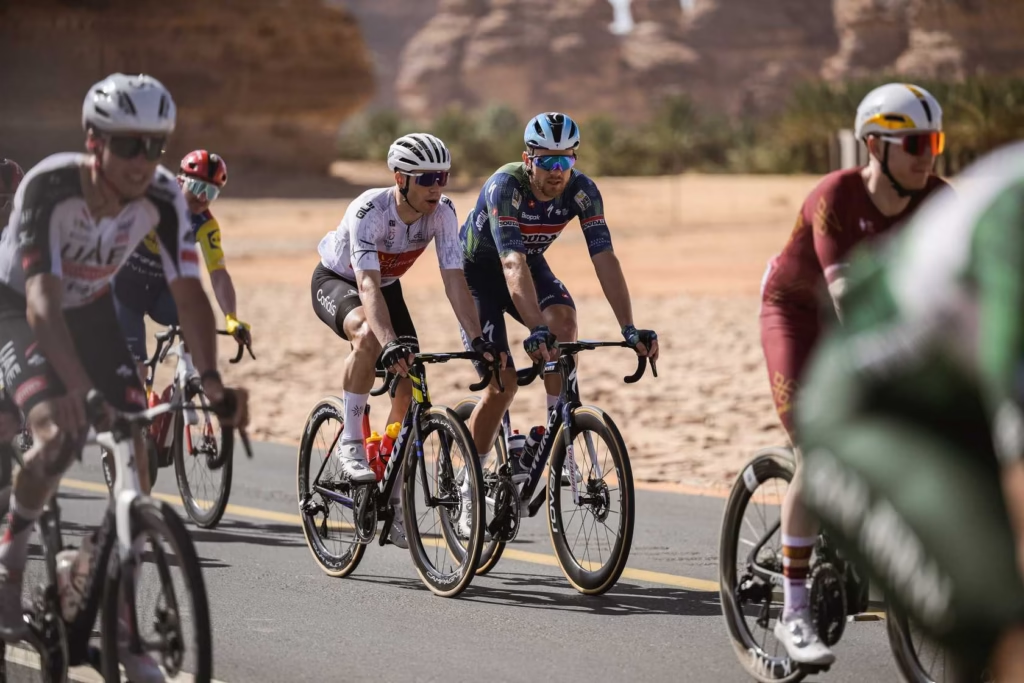
Bert Van Lerberghe is the obvious final lead-out rider for Tim Merlier. Soudal Quick-Step have a long history of building sprint trains, and on this startlist Van Lerberghe is the rider who gives Merlier the clearest final-kilometre structure.
Merlier is one of the fastest pure sprinters in the race. He does not need a long, complicated launch. He needs to be placed correctly, kept out of the wind and delivered late enough that his acceleration can do the damage. Van Lerberghe is well suited to that.
His role is different from Rickaert’s at Alpecin-Premier Tech because Soudal Quick-Step’s wider Tour squad is not only a sprint train. Mikel Landa, Valentin Paret-Peintre and Ilan Van Wilder give the team climbing and general classification options, while Jasper Stuyven offers a powerful classics-style presence. That means Van Lerberghe may be the key specialist in a more mixed squad.
The Merlier-Van Lerberghe relationship is still one of the most direct sprint links in the race. If Soudal Quick-Step get the final three kilometres right, Van Lerberghe should be the rider who turns control into launch speed.
On the flattest days, especially the biggest bunch sprint opportunities, he should be one of the most important riders in the peloton. For those likely sprint opportunities, see our Tour de France 2026 route: best days for sprinters.
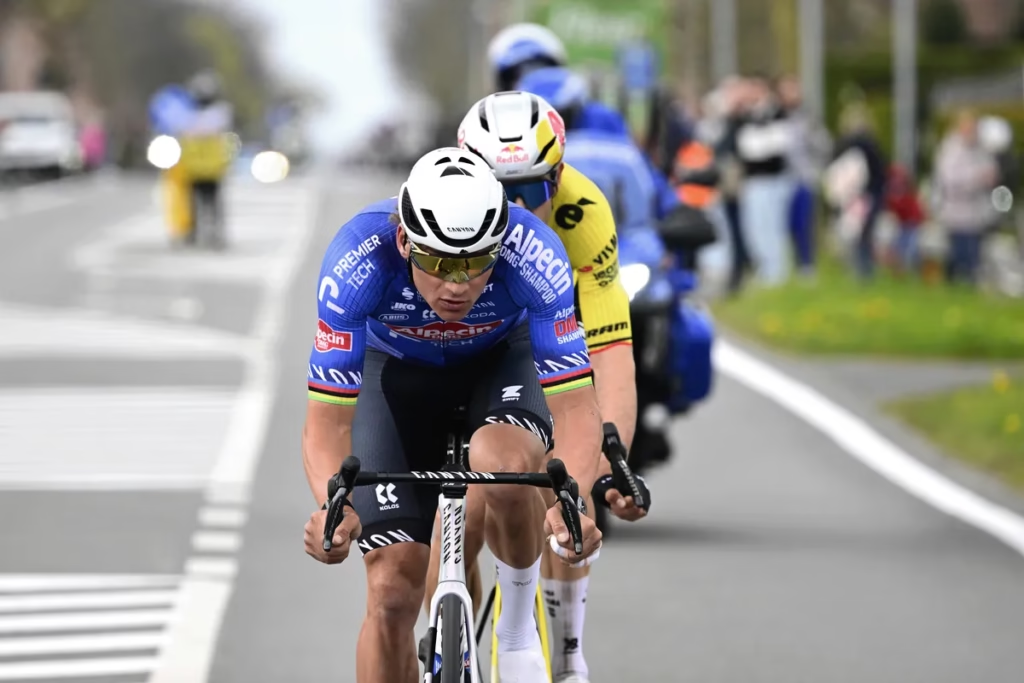 Photo Credit: Getty
3. Mathieu van der Poel – Alpecin-Premier Tech
Mathieu van der Poel is not a traditional lead-out rider, but he may be the most frightening lead-out weapon in the race. When he commits fully to Jasper Philipsen, he changes the speed and shape of the sprint.
Van der Poel’s strength is not only power. It is the ability to place Philipsen into positions that most riders cannot reach. He can move through traffic, accelerate hard out of corners, hold speed on draggy roads and make split-second decisions in chaotic finales. That is why his work for Philipsen has often looked more like race-winning creation than simple support.
The risk is that Van der Poel also has his own stage ambitions. On hilly stages, he may be a contender rather than a helper. Alpecin-Premier Tech have to decide when to use him as a sprint weapon and when to release him as a stage hunter.
On pure sprint stages, though, he is one of the most valuable lead-out riders in the Tour. He can act as the penultimate rider, the final rider, or the rider who rescues the train if positioning goes wrong.
If Philipsen wins multiple stages, Van der Poel will probably be central to at least one of them.
For Van der Poel’s wider stage-hunting profile, see our Tour de France 2026 breakaway specialists to watch and Tour de France 2026 stage hunters to watch.
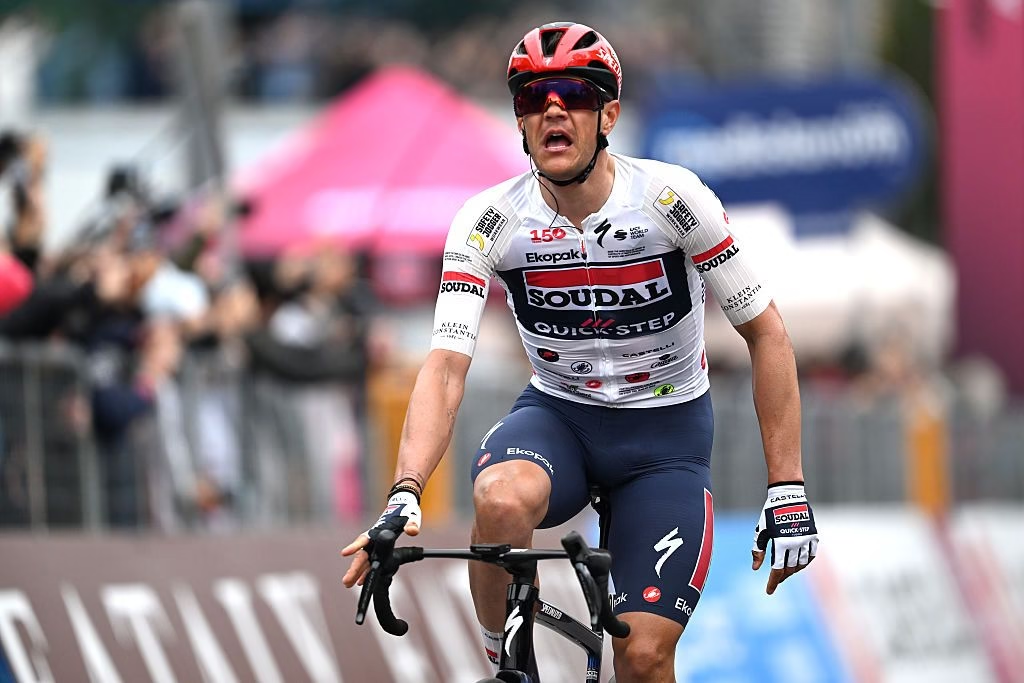
4. Jasper Stuyven – Soudal Quick-Step
Jasper Stuyven gives Soudal Quick-Step a powerful and experienced sprint support option around Tim Merlier. He is not a pure final lead-out in the same way as Van Lerberghe, but he may be just as important in the final five kilometres.
Stuyven’s value is positioning. He is strong enough to hold the front, experienced enough to understand risk, and robust enough to guide a sprinter through a chaotic approach. On Tour stages where everyone wants the same piece of road, that can be more important than the final lead-out itself.
He also gives Soudal Quick-Step tactical flexibility. If Merlier is not in contention, Stuyven can still survive hard terrain and target reduced finishes or breakaways. But on flat days, his most important job should be to help get Merlier to the launch point.
A Merlier sprint train with Stuyven controlling the approach and Van Lerberghe handling the final launch is a serious threat. It may not be as star-heavy as Alpecin-Premier Tech’s setup, but it is direct, powerful and well balanced.
Stuyven is the kind of rider who can make a sprint look calmer than it really is.
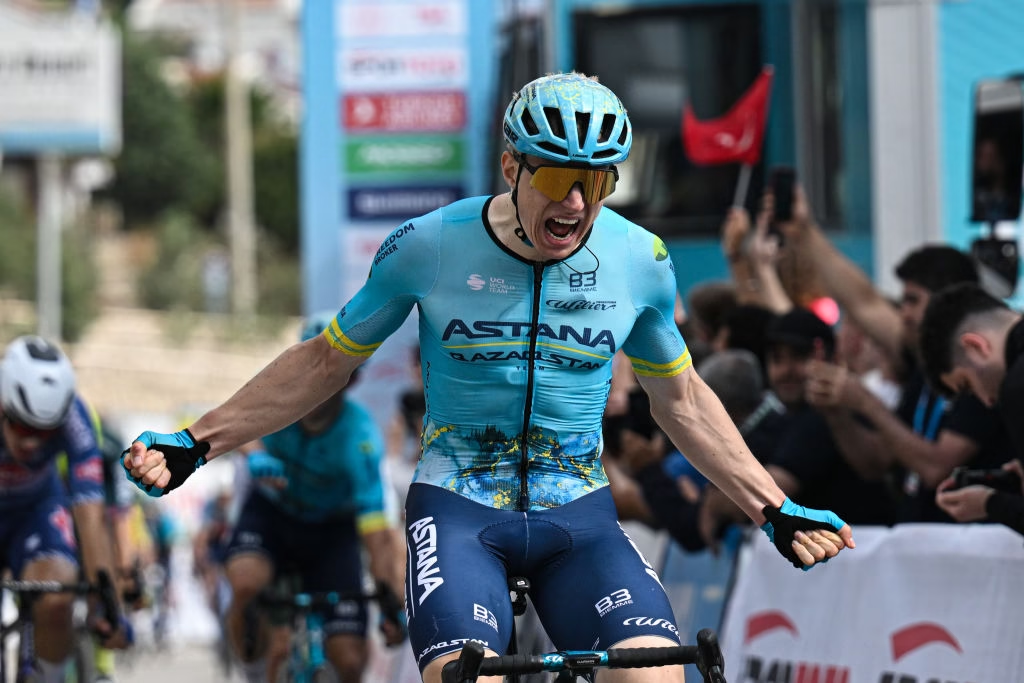 Photo Credit: Getty
5. Cees Bol – Decathlon CMA CGM Team
Cees Bol could be one of the most important riders in Olav Kooij’s Tour. Decathlon CMA CGM Team have a mixed squad with GC, young rider and stage ambitions, but if Kooij is their main sprint card, Bol is the obvious lead-out and positioning asset.
Bol knows how to handle sprint finishes from both sides. He has been a sprinter himself, which matters because former or secondary sprinters often understand exactly what the finisher needs. They know when a launch is too early, when the speed is too low and when a sprinter is about to be boxed in.
Kooij is fast enough to beat anyone, but the Tour is not a controlled one-week sprint race. He will need help dealing with the physicality of the bunch, especially against teams with more established Tour sprint trains. Bol gives him size, power and experience.
Daan Hoole can also be useful earlier in the approach, while Tiesj Benoot gives the team an experienced road captain option on harder days. That makes Decathlon’s sprint support more interesting than it first appears.
The question is whether the team can fully commit to Kooij while also managing Paul Seixas, Matthew Riccitello and other stage-race interests. If the answer is yes, Bol should be one of the most visible lead-out riders in the race.
For the French team’s broader Tour context, see our feature on Paul Seixas and the next French Tour de France generation.
6. Mike Teunissen – XDS Astana Team
Mike Teunissen is one of the most experienced sprint support riders on the startlist. XDS Astana Team may not have the strongest sprint train overall, but Teunissen gives them a rider who understands how to place a fast man in a Tour finish.
The team’s sprint direction is less obvious than Alpecin-Premier Tech or Soudal Quick-Step. Max Kanter has sprint speed, Davide Ballerini can finish from reduced groups, and Simone Velasco offers another fast, durable option. Teunissen could support any of them depending on the stage.
That versatility is useful. Teunissen is not just a final lead-out rider. He can position, protect, guide through the last five kilometres and help a team without a dominant sprinter punch above its weight in messy finishes.
He is also valuable on stages where the sprint is not perfectly clean. If the race becomes reduced by hills or crosswinds, Teunissen can still function. That makes him a strong fit for a Tour where the sprint stages are broken up by a lot of climbing.
XDS Astana Team may not control many sprint finishes, but Teunissen can help them exploit the ones that become disorganised.
 Photo Credit: Getty
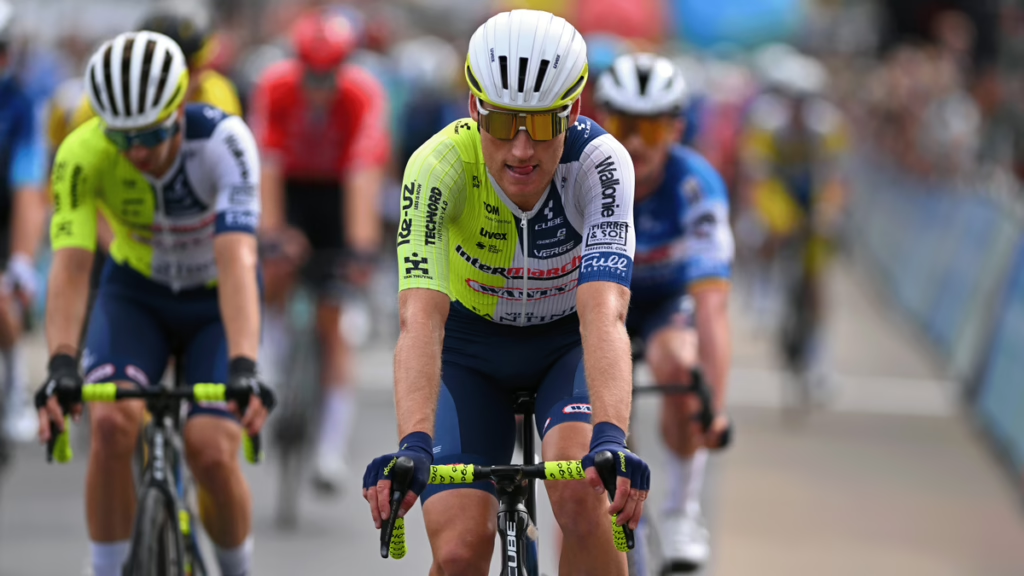
7. John Degenkolb – Team Picnic PostNL
John Degenkolb is not a lead-out rider in the narrowest sense, but he is exactly the sort of experienced sprint support rider who can matter at the Tour. Team Picnic PostNL have Pavel Bittner as their clearest sprinting option on this startlist, and Degenkolb can help give him structure.
Degenkolb has the experience to read finishes, keep a young sprinter calm and guide a team through the final kilometres. That can be crucial for Bittner, who has speed but may need support against more established sprint trains.
Team Picnic PostNL also have Niklas Märkl, Julius van den Berg, Robbe Dhondt and John Degenkolb as riders who can contribute to a sprint approach. It may not be the most powerful train in the Tour, but it has enough experience and physicality to be competitive if the finale becomes chaotic.
Degenkolb’s role could be especially important on reduced sprint days. If the stage is too hard for some pure fast men, Team Picnic PostNL may have a better chance of using experience rather than simply matching the raw power of Alpecin or Soudal Quick-Step.
A veteran lead-out does not always have to be the fastest rider. Sometimes the most important skill is knowing where not to be.
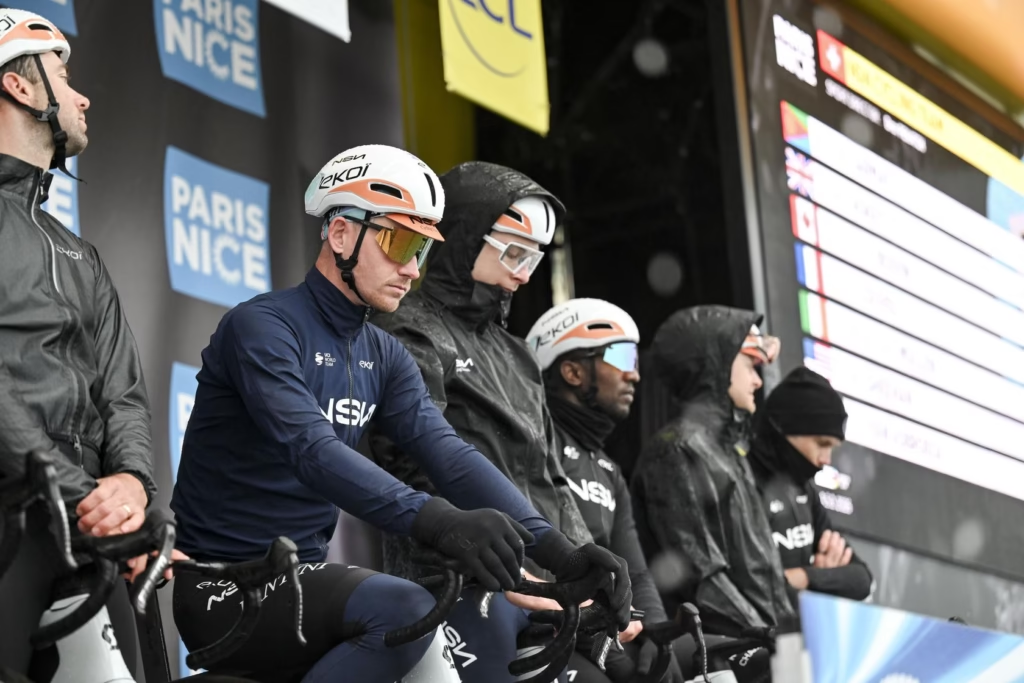
8. Tom Van Asbroeck – NSN Cycling Team
Tom Van Asbroeck looks like the key sprint support rider for NSN Cycling Team. With Biniam Girmay, Jake Stewart and Lewis Askey in the squad, the team has several fast or semi-fast riders, but Girmay is the obvious headline finisher.
Van Asbroeck’s value is experience. He can position, protect and help organise a team that may not have a classic sprint train in the same way as Alpecin-Premier Tech or Soudal Quick-Step. That matters because Girmay’s best chances may come on slightly harder sprint days rather than the purest drag-race finishes.
Mike Teunissen would have been a natural support comparison, but on this supplied startlist he is with XDS Astana Team. That leaves Van Asbroeck, Matis Louvel, Jake Stewart and possibly Krists Neilands or Marco Frigo as riders who can help shape NSN’s final kilometres depending on the terrain.
Girmay does not always need a perfect train. He can surf wheels, handle harder finishes and win in reduced groups. But a rider like Van Asbroeck can still be crucial in getting him through the danger zone before the sprint really begins.
If Girmay is in the green jersey battle, Van Asbroeck’s value rises further.
For more on the points battle, see our Tour de France 2026 jerseys explained and Tour de France 2026 sprinters guide.
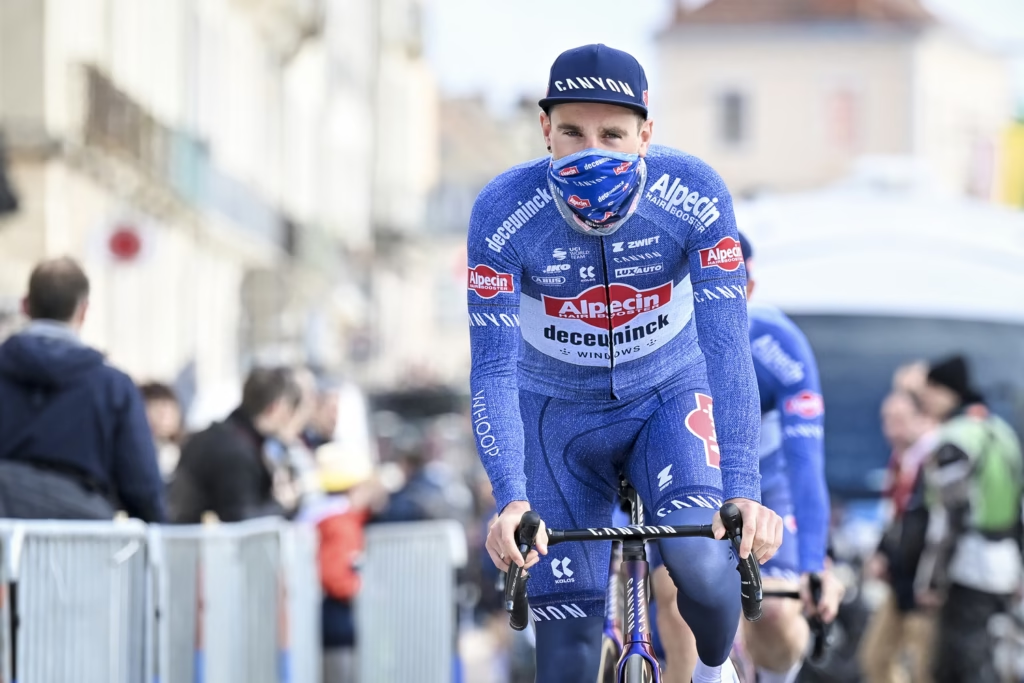 Photo Credit: A.S.O/Billy Ceusters
9. Edward Planckaert – Alpecin-Premier Tech
Edward Planckaert may not be the final man for Jasper Philipsen, but he can be an important part of Alpecin-Premier Tech’s sprint structure. A strong lead-out train is not only about the last rider. It is about the sequence before that.
Planckaert can help control the approach, keep Philipsen and Van der Poel in position, and contribute before Rickaert or Van der Poel take over. On the biggest sprint days, that earlier work is essential. If a train loses position with three kilometres to go, the final lead-out may never get the chance to do its job.
Alpecin-Premier Tech’s advantage is depth. They can use Planckaert, Silvan Dillier and Jonas Rickaert before Van der Poel and Philipsen. That gives them options in different types of sprint stage.
Planckaert’s role could also become more important if Van der Poel is given freedom on hilly days or if the team decides not to use him fully in every sprint. Having another experienced rider in the chain protects the train from becoming too dependent on one superstar helper.
For Philipsen, that support matters. He is fast enough to win on his own, but with a complete train, he becomes even harder to beat.
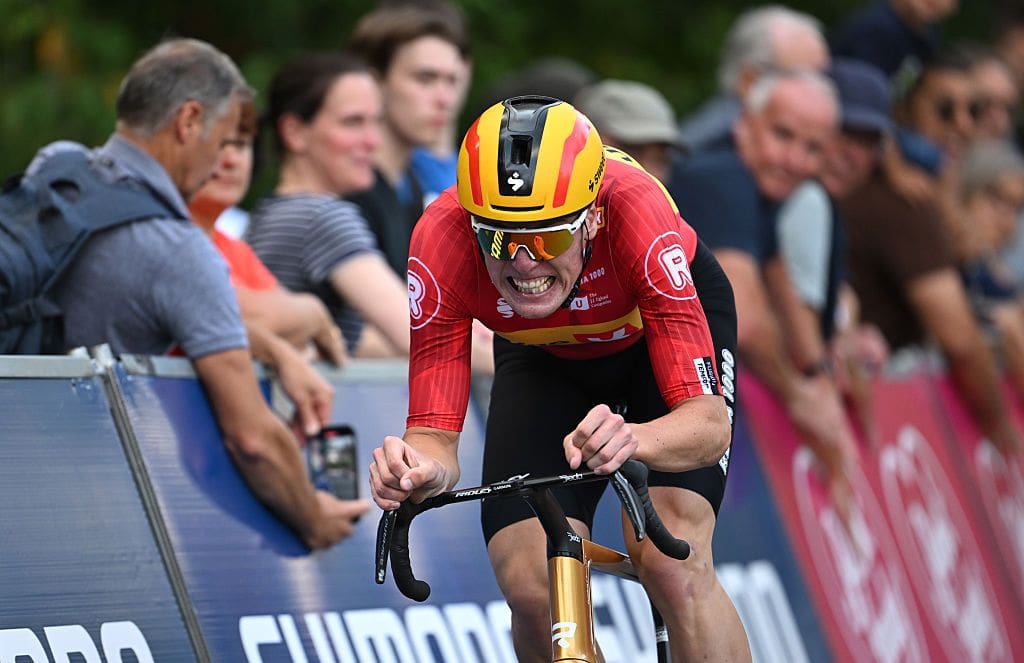 Photo Credit: Getty
10. Søren Wærenskjold – Uno-X Mobility
Søren Wærenskjold is an awkward fit in a lead-out ranking because he may be more finisher than helper. But on this Uno-X Mobility squad, he is also one of the riders most capable of shaping a sprint approach.
Uno-X have several fast or durable riders: Wærenskjold, Magnus Cort, Jonas Abrahamsen, Anders Skaarseth and perhaps Anthon Charmig or the Johannessen brothers depending on terrain. The team may not have one fixed sprint hierarchy every day. Instead, they can adapt.
Wærenskjold’s power makes him valuable in the final kilometres. He can act as a long-range lead-out, a positioning engine, or a protected sprinter in his own right. That flexibility is one of Uno-X’s strengths.
If the stage is flat and fast, Wærenskjold may be the finisher. If the finish is harder or more tactical, Cort may become the better option. In either case, Wærenskjold’s ability to hold speed can shape the final.
He is not a classic last-man lead-out, but he is one of the most useful sprint-support riders on the startlist. For more on Cort’s broader Tour role, see our Tour de France 2026 breakaway specialists to watch.
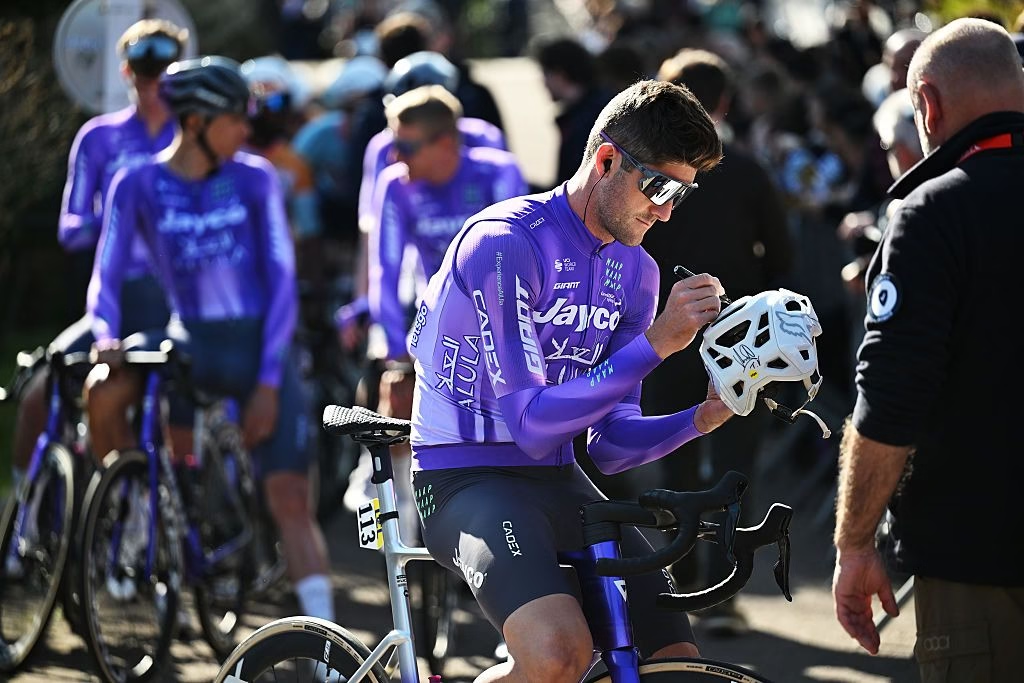 Photo Credit: Getty
11. Luke Durbridge – Team Jayco-AlUla
Luke Durbridge is a power rider rather than a specialist final lead-out, but he could be important for Team Jayco-AlUla in sprint and reduced-sprint stages. The team have Pascal Ackermann and Michael Matthews as their main fast finishers, with Mauro Schmid and Luke Plapp offering more aggressive options.
Durbridge’s value comes earlier in the finale. He can help keep the team near the front, control the speed and reduce chaos before the more technical final kilometre. On stages where positioning matters more than a perfect sprint train, that can be vital.
Ackermann needs a cleaner lead-out than Matthews, who is better at handling messy reduced finishes. That means Jayco-AlUla may shift their sprint support depending on the day. Durbridge can work for either.
This is not the most obvious sprint train in the race, but it is a useful one because it has several riders who can survive harder terrain. On a stage where pure sprint trains lose riders over climbs, Jayco-AlUla may still have enough numbers to guide Matthews or Ackermann into the finale.
Durbridge may not be the final launch rider, but he can be the rider who keeps the option alive.
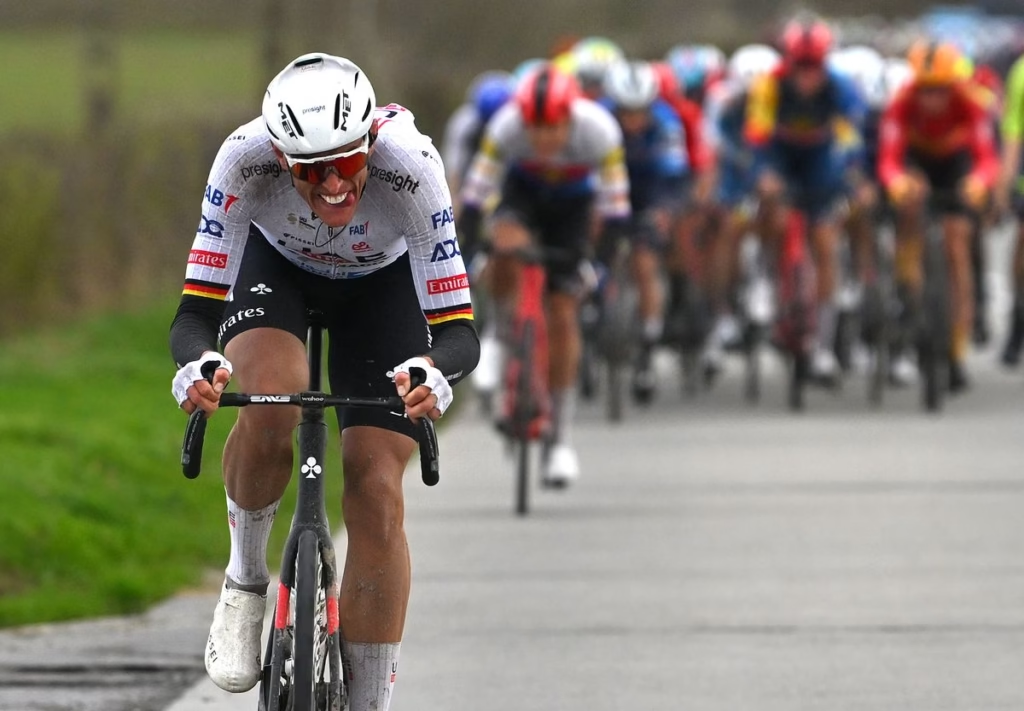
12. Nils Politt – UAE Team Emirates-XRG
Nils Politt is not on this list because UAE Team Emirates-XRG are built around a pure sprinter. They are not. He is here because he is one of the best positioning engines in the race, and that can matter even when a team’s main objective is GC.
UAE have Tadej Pogačar, Isaac del Toro, Adam Yates, Brandon McNulty, Felix Großschartner, Tim Wellens and Florian Vermeersch. Their priority is not a bunch sprint. But in the Tour, GC teams still need lead-out-style work before dangerous finales, narrow roads, crosswinds and intermediate sprint chaos.
Politt can do that job. He can place leaders near the front, hold position at high speed and take control before the final technical section. That is not a lead-out for a sprinter, but it is the same skill set used for a different purpose.
He may also be useful if UAE target a reduced finish with Pogačar, Wellens or McNulty. On rolling stages, Politt can act as a launch platform or positioning rider before the road kicks up.
In a conventional sprint article, he might not feature. In a Tour lead-out article, he belongs because lead-out work is not only for the green jersey teams.
For the GC context around UAE, see our Tadej Pogačar at the Tour de France 2026 and Tour de France 2026 domestiques who could decide the race.
 Photo Credit: LaPresse
13. Daan Hoole – Decathlon CMA CGM Team
Daan Hoole could be an important early lead-out and positioning rider for Decathlon CMA CGM Team. He is not the final launch rider for Olav Kooij, but he gives the team the power to organise the approach.
Hoole’s time-trial ability translates well to the final kilometres before a sprint. He can hold speed, keep the team in position and help prevent Kooij from being swamped by more established sprint trains. That is especially useful on wide, fast run-ins where raw power matters.
The Decathlon sprint structure may use Hoole earlier, Cees Bol later, and Kooij as the finisher. Tiesj Benoot can also help on harder approaches, especially if the stage has late climbs or positioning battles before the sprint.
That is a strong setup, but it depends on team priorities. Decathlon also have Paul Seixas, Matthew Riccitello, Aurélien Paret-Peintre and Nicolas Prodhomme, so they may not be able to spend the whole Tour riding as a pure sprint team.
Still, on days where Kooij is the plan, Hoole’s work before the final kilometre could be crucial. For the wider time-trial and engine-room context, see our best time-triallists at the Tour de France 2026.
 Photo Credit: Cor Vos
14. Niklas Märkl – Team Picnic PostNL
Niklas Märkl is a useful sprint support rider for Team Picnic PostNL. In a team built around Pavel Bittner’s speed and John Degenkolb’s experience, Märkl can help bridge the gap between early positioning and the final lead-out.
He is the kind of rider who may not headline the train but can make the difference between a sprinter entering the last kilometre in 15th position or 30th. That matters. At Tour level, a sprinter who starts too far back can be beaten before the sprint begins.
Märkl, Degenkolb, Julius van den Berg and Robbe Dhondt could give Bittner enough structure to contest some of the flatter finishes. The team may not dominate against Alpecin-Premier Tech or Soudal Quick-Step, but it can still place a fast rider well if the final is messy.
The key is whether Team Picnic PostNL commit fully to Bittner on the sprint days or spread their resources between Warren Barguil, Frank van den Broek and breakaway opportunities. If the team rides for Bittner, Märkl should matter.
Strongest full sprint trains at the Tour de France 2026
| Rank | Team | Sprinter | Likely train strength |
|---|---|---|---|
| 1 | Alpecin-Premier Tech | Jasper Philipsen | Best complete sprint structure |
| 2 | Soudal Quick-Step | Tim Merlier | Strong final lead-out with Stuyven and Van Lerberghe |
| 3 | Decathlon CMA CGM Team | Olav Kooij | Good support if the team commits fully |
| 4 | Team Picnic PostNL | Pavel Bittner | Experienced but less dominant |
| 5 | NSN Cycling Team | Biniam Girmay | Stronger for reduced and messy sprints |
| 6 | Team Jayco-AlUla | Pascal Ackermann / Michael Matthews | Flexible rather than pure |
| 7 | Uno-X Mobility | Søren Wærenskjold / Magnus Cort | Powerful but adaptable |
| 8 | Cofidis | Milan Fretin / Alex Aranburu | Useful support but not a top train |
| 9 | Bahrain Victorious | Phil Bauhaus | Some power, but mixed team priorities |
| 10 | XDS Astana Team | Max Kanter / Davide Ballerini | Teunissen helps, but train is limited |
Alpecin-Premier Tech are the clear No. 1 because they combine a top sprinter with a proven support structure. Soudal Quick-Step are close behind because Merlier has one of the best specialist final men in Van Lerberghe and a powerful positioning rider in Stuyven.
Decathlon CMA CGM Team are the interesting third option. Kooij has the speed to justify a full train, and Bol plus Hoole gives the team a solid structure. The issue is whether the team’s wider GC and French development aims dilute that sprint focus.
After that, the trains become less conventional. NSN Cycling Team may be better in hard finishes for Girmay. Jayco-AlUla can adapt around Matthews or Ackermann. Uno-X have power but not a single fixed pattern. Team Picnic PostNL have a useful Bittner-Degenkolb-Märkl structure but may lack the top-end train depth of the biggest sprint squads.
For how those sprint days fit into the points race, see our Tour de France 2026 sprinters guide and Tour de France 2026 jerseys explained.
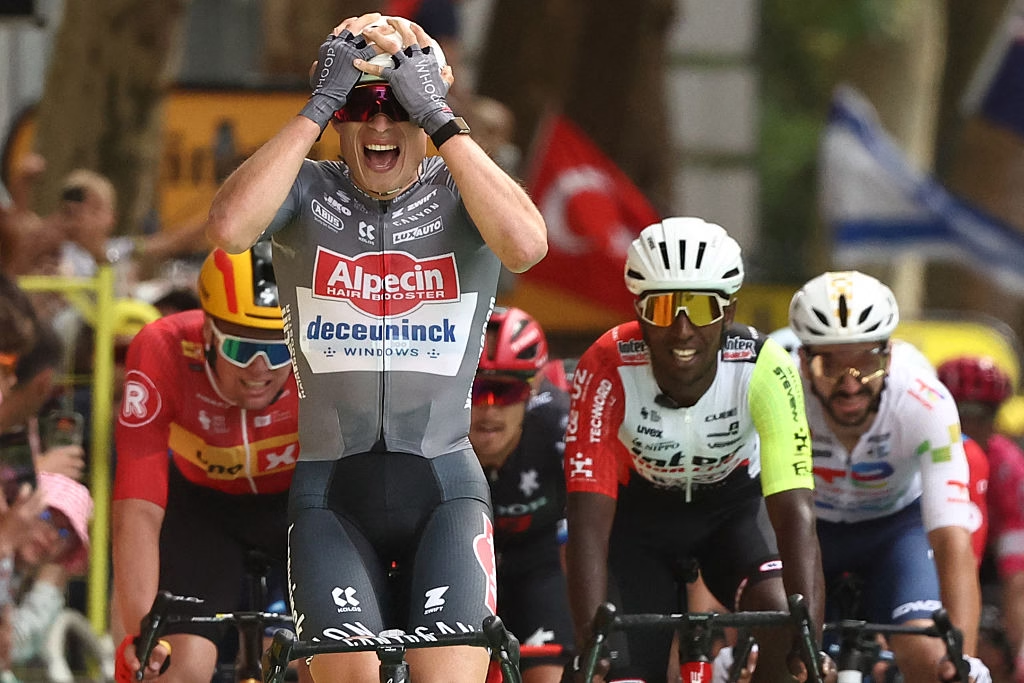
Alpecin-Premier Tech: the Philipsen train
Alpecin-Premier Tech have the strongest lead-out structure on the startlist. Jasper Philipsen is the sprinter, Jonas Rickaert is the specialist lead-out, Mathieu van der Poel is the world-class positioning weapon, and Edward Planckaert plus Silvan Dillier can help earlier.
That gives the team several ways to win. They can build a traditional train. They can use Van der Poel to rescue positioning. They can let Philipsen surf wheels if the train breaks down. They can also switch to Van der Poel on hilly days if the sprint is no longer the right objective.
The challenge is workload. Van der Poel cannot be expected to spend every day purely in service of Philipsen if he also has stage ambitions. Philipsen’s green jersey hopes may also require intermediate sprint support, not just final lead-outs.
Still, this is the team every other sprint squad will measure itself against. If Alpecin-Premier Tech hit the front in the final kilometre with Rickaert, Van der Poel and Philipsen lined up, the rest of the peloton will know exactly what is coming.
For the green jersey picture, see our Tour de France 2026 route: best days for sprinters.
Soudal Quick-Step: Merlier’s direct route to the line
Soudal Quick-Step may not have the deepest old-school sprint train, but the Merlier setup is clear. Jasper Stuyven can control and position. Bert Van Lerberghe can lead out. Tim Merlier can finish.
That clarity matters. Some Tour sprint teams will spend the final kilometres deciding who they are working for. Soudal Quick-Step should not have that issue on flat stages. If Merlier is in the front group, he is the sprinter.
The team’s challenge is balancing stages. Mikel Landa gives them a climbing and GC presence. Valentin Paret-Peintre and Ilan Van Wilder may be useful on hillier terrain. Jasper Stuyven himself could be a stage hunter on harder days. But when the race points towards a bunch sprint, the train should be direct.
Van Lerberghe’s job is especially important because Merlier is a high-speed finisher who benefits from a late, controlled launch. Put him in the right place and he can beat anyone. Leave him exposed too early and his advantage becomes harder to use.
This is why Soudal Quick-Step are one of the main threats to Alpecin-Premier Tech on the pure sprint days.
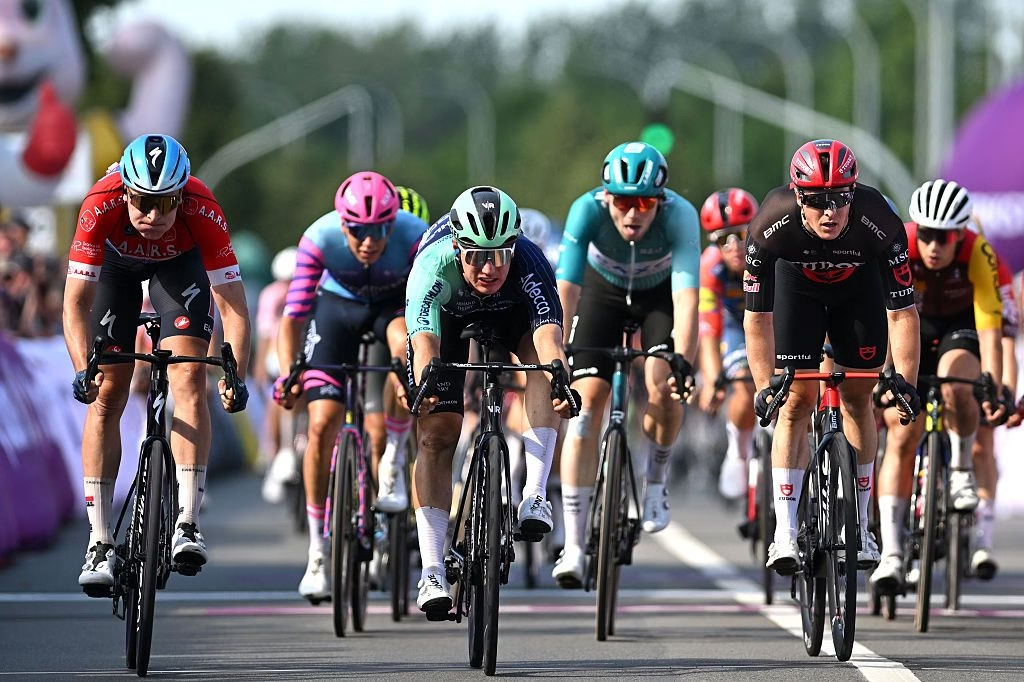
Decathlon CMA CGM Team: Kooij’s developing Tour train
Olav Kooij may have one of the best sprint finishes in the race, but his Tour train is less established than Philipsen’s or Merlier’s. That makes Decathlon CMA CGM Team one of the most interesting squads to assess.
Cees Bol is the obvious lead-out option. Daan Hoole can contribute power before the final kilometre. Tiesj Benoot can help on difficult approaches. Daan Hoole and Benoot also give the team strong positioning capacity before sprint stages become fully chaotic.
The issue is team identity. Decathlon are also carrying Paul Seixas, Matthew Riccitello, Aurélien Paret-Peintre and Nicolas Prodhomme, which means their Tour is not built only around Kooij. They may have ambitions in the mountains, white jersey battle, French storylines and breakaways.
That can make a sprint train harder to organise. A pure sprint team spends the whole day thinking about the finish. A mixed team has more decisions to make.
If Decathlon commit to Kooij on the flat days, their train is good enough to win. If they leave him to improvise too often, he may still be fast enough, but the margin against Philipsen and Merlier becomes smaller.
NSN Cycling Team: Girmay’s harder-stage support
NSN Cycling Team are not a traditional lead-out squad in this startlist, but they could be very effective for Biniam Girmay in the right type of finish.
Girmay’s advantage is versatility. He does not need every sprint to be a perfect flat drag race. He can handle harder finishes, rolling approaches and reduced groups. That changes what his support riders need to do. Instead of delivering him through a pure sprint train, they need to keep him in position when the race is messy.
Tom Van Asbroeck is the most obvious experienced support rider. Jake Stewart and Lewis Askey may also be useful depending on whether they are used as protected options or helpers. Krists Neilands and Marco Frigo can contribute on harder stages before the race reaches the final.
That makes NSN’s sprint approach more flexible than structured. They may not beat Alpecin-Premier Tech in a perfectly controlled sprint train against sprint train. But if the stage is harder, the group smaller and the finish more chaotic, Girmay may need less support than the pure sprinters.
For Girmay, the lead-out is about survival and position as much as final launch speed.
 Photo Credit: Cor Vos
Team Picnic PostNL: Bittner, Degenkolb and Märkl
Team Picnic PostNL have a quietly useful sprint setup around Pavel Bittner. It is not the most obvious Tour-winning train, but it has a good mix of youth, experience and physicality.
Bittner gives the team speed. John Degenkolb gives experience. Niklas Märkl gives sprint support. Julius van den Berg and Robbe Dhondt can help earlier in the day or in the approach. That should be enough to contest sprints if the team gets the final right.
The question is top-end quality. Against Philipsen, Merlier and Kooij, Bittner may need a near-perfect run. That puts pressure on the train because he cannot afford to start too far back.
Degenkolb’s role will be important. He knows how to read a Tour sprint and can help Bittner avoid the common mistake of wasting energy too early. A younger sprinter with an experienced guide is often more dangerous than the ranking suggests.
Team Picnic PostNL may not dominate the flat stages, but they should be capable of turning disorder into opportunity.
Lotto-Intermarché: De Lie needs more than strength
Arnaud De Lie is one of the strongest sprinters on the startlist, but the Lotto-Intermarché train looks less obvious than some of his rivals. That makes him a fascinating case.
De Lie has enough raw ability to win without the best lead-out in the race. He can handle physical finishes, draggy roads and messy finales. But against Philipsen, Merlier and Kooij, he will need at least some structure. Starting sprints from poor position is rarely sustainable at the Tour.
Huub Artz, Liam Slock, Jenno Berckmoes and Baptiste Veistroffer may all contribute in different ways, while Georg Zimmermann and Lennert Van Eetvelt are more likely to be useful on harder days. The team has strength, but not an obvious final-kilometre specialist in the mould of Rickaert or Van Lerberghe.
That means De Lie may be forced to freelance more often. That can work because he is powerful and instinctive, but it also increases risk. He may win stages from chaos, but he could also lose out if more organised trains take control.
Lotto-Intermarché’s job is to get him near the right wheels rather than build a perfect train from five kilometres out.
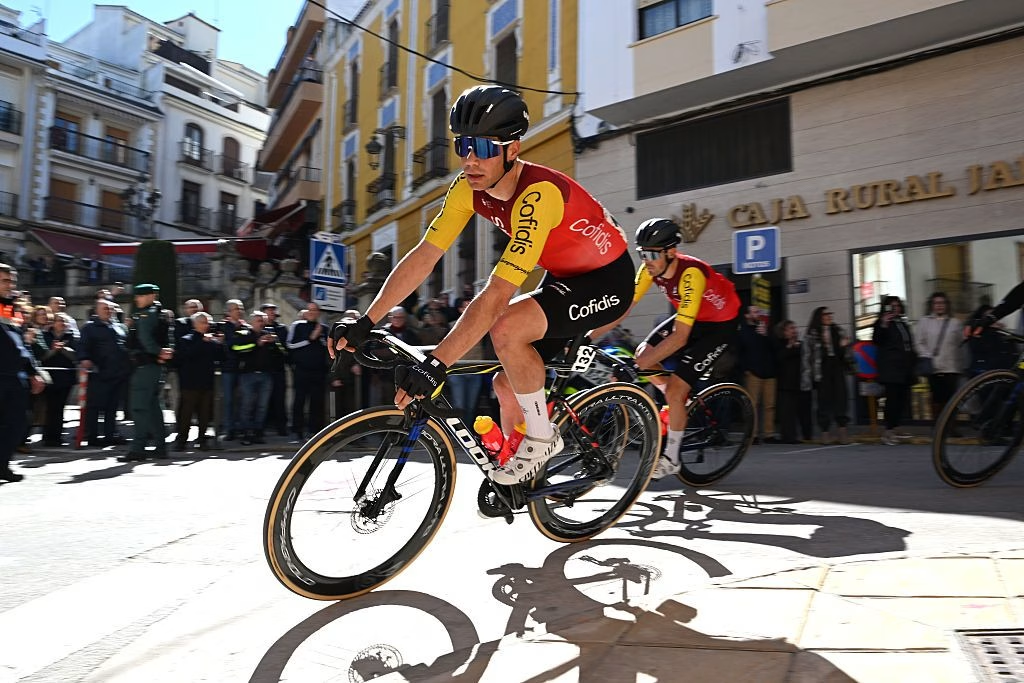
Cofidis: Fretin, Aranburu and the reduced sprint option
Cofidis have an interesting mix rather than a pure sprint train. Milan Fretin gives them a fast option, while Alex Aranburu and Jenthe Biermans are better suited to harder finishes or reduced groups. Piet Allegaert and Alex Kirsch can help position and support.
That means Cofidis may not always be chasing the same finish as Alpecin-Premier Tech or Soudal Quick-Step. On a pure flat stage, they may struggle to control or dominate the final. On a rolling stage where the front group is reduced, they become more interesting.
Allegaert and Kirsch are the likely support riders in a sprint approach. Biermans can also be used either as a helper or a finisher depending on the day. Aranburu gives the team a stronger chance if the finish is uphill, technical or attritional.
This is less a classic lead-out train and more a flexible finishing group. That can be useful in a Tour where not every sprint is straightforward.
For the wider stage-type picture, see our Tour de France 2026 sprint stages ranked.
Bahrain Victorious: Bauhaus and a mixed support cast
Phil Bauhaus gives Bahrain Victorious a sprint option, but the team’s wider structure points to a mixed Tour rather than a pure sprint operation. With Antonio Tiberi, Lenny Martinez and Damiano Caruso in the squad, Bahrain have bigger mountain and GC interests than a simple Bauhaus train.
That does not mean Bauhaus is unsupported. Vlad Van Mechelen could be useful in sprint approaches, Kamil Gradek gives power, and Robert Stannard can help on harder terrain. Matej Mohorič may also be useful in positioning on some days, although his own stage-hunting value is too high to reduce him to sprint support.
Bauhaus needs a clean run to get the best from his speed. The challenge is whether Bahrain can provide that often enough against more sprint-focused squads.
On days where the sprint is disorganised, he can be dangerous. On days where Alpecin and Soudal Quick-Step fully control the final, Bahrain may need to surf wheels rather than build the race themselves.
That puts pressure on positioning rather than a textbook lead-out. For Mohorič’s likely attacking value, see our Tour de France 2026 breakaway specialists to watch.
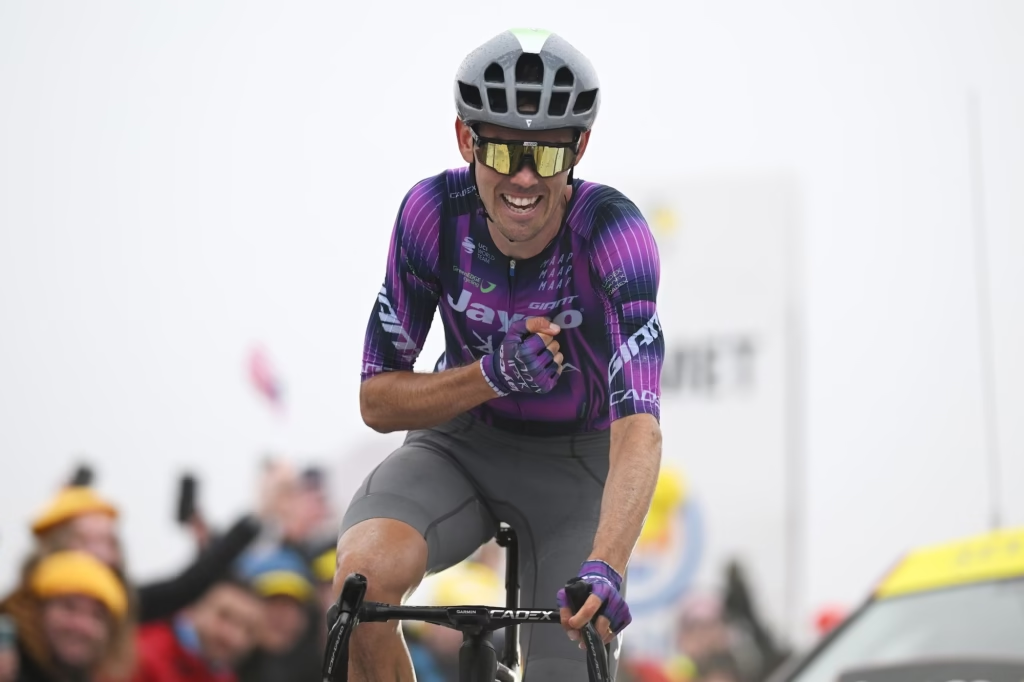 Photo Credit: Getty
Team Jayco-AlUla: Ackermann, Matthews and flexibility
Team Jayco-AlUla have two very different sprint options. Pascal Ackermann is the more traditional sprinter. Michael Matthews is the more durable reduced-finish threat. That affects the lead-out structure.
For Ackermann, the team needs a cleaner sprint train. Luke Durbridge can help with power and positioning. Kelland O’Brien, Felix Engelhardt and Mauro Schmid may all contribute depending on stage shape. But this is not a full old-school sprint train built entirely around Ackermann.
For Matthews, that is less of an issue. He has spent much of his career thriving in finishes that are too hard for pure sprinters and too fast for climbers. He does not need the same final launch. He needs to be placed correctly and protected until the race becomes selective.
That gives Jayco-AlUla tactical flexibility. They can ride for Ackermann on flatter days and Matthews on tougher ones. The downside is that a team with two possible sprint plans can sometimes lack the clarity of a team built around one finisher.
Their best lead-out work may come on the stages that are not clean bunch sprints, where versatility matters more than a rigid train. For the harder sprint-stage picture, see our Tour de France 2026 route: best days for sprinters.
Uno-X Mobility: power, flexibility and no fixed script
Uno-X Mobility have one of the more flexible sprint support groups in the race. Søren Wærenskjold can sprint or lead out. Magnus Cort can win from reduced groups. Jonas Abrahamsen brings strength. Anders Skaarseth and the Johannessen brothers give the team depth for harder days.
That makes them difficult to classify. They are not built like a pure sprint train, but they have enough power to contest fast finishes and enough versatility to survive selective stages. The key question is who is the finisher on each day.
Wærenskjold is the most obvious option for flatter sprints. Cort is the stronger reduced-group and breakaway finisher. Abrahamsen can be used as a positioning rider or attacking option. This gives Uno-X more flexibility than many teams, but less certainty.
In sprint finales, certainty matters. Everyone needs to know who is doing what. Uno-X’s challenge will be turning their depth into a clear plan before the final five kilometres.
If they get that right, they can be dangerous on stages where the biggest trains are weakened.
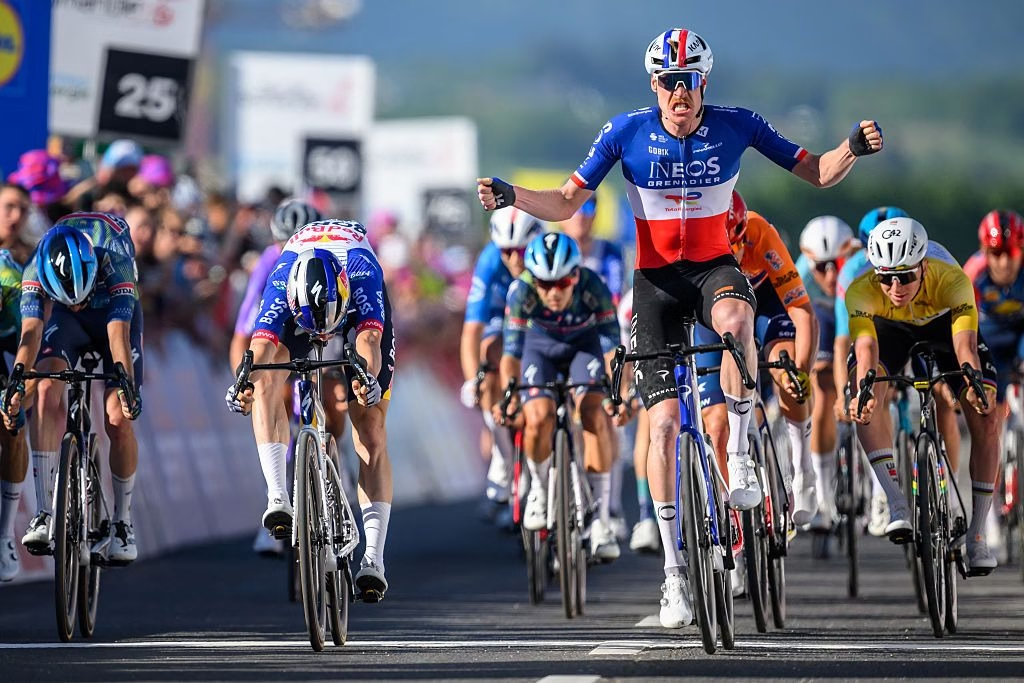 Photo Credit: Getty
Lead-out riders for reduced sprints
Not all Tour sprint finishes are pure bunch sprints. Some come after hills, crosswinds or long days of fatigue. These are the stages where reduced-sprint support becomes important.
| Rider | Team | Best suited finisher |
|---|---|---|
| Tom Van Asbroeck | NSN Cycling Team | Biniam Girmay |
| Luke Durbridge | Team Jayco-AlUla | Michael Matthews |
| Mauro Schmid | Team Jayco-AlUla | Michael Matthews / himself |
| Jasper Stuyven | Soudal Quick-Step | Tim Merlier / himself |
| Mathieu van der Poel | Alpecin-Premier Tech | Jasper Philipsen / himself |
| Søren Wærenskjold | Uno-X Mobility | Magnus Cort / himself |
| Jenthe Biermans | Cofidis | Alex Aranburu / himself |
| Dorian Godon | Netcompany INEOS | Reduced sprint option |
| Matteo Trentin | Tudor Pro Cycling Team | Marc Hirschi / himself |
| Anthony Turgis | Team TotalEnergies | Reduced sprint or breakaway |
Reduced sprints are often won before the final straight. The important part is surviving the climbs, staying in position and making sure the sprinter or fast finisher does not waste energy chasing. That is why riders like Van Asbroeck, Durbridge, Stuyven and Trentin matter even when they are not conventional final lead-out riders.
The 2026 route has several stages where this could be relevant. Hilly days and awkward run-ins may reduce the field, and the mountains will gradually make the sprint trains less complete. By the third week, the best support rider may not be the fastest one. It may be the one who is still there.
For more on the route days that suit fast finishers, see our Tour de France 2026 route: best days for sprinters and why sprinters suffer in the Tour de France mountains.
Lead-out riders who may be used for GC protection
Lead-out skills are not only useful for sprinters. GC teams need the same qualities before dangerous finishes, crosswind sections, narrow roads and the start of climbs.
| Rider | Team | Likely protected rider |
|---|---|---|
| Nils Politt | UAE Team Emirates-XRG | Tadej Pogačar |
| Florian Vermeersch | UAE Team Emirates-XRG | Tadej Pogačar |
| Edoardo Affini | Team Visma | Lease a Bike | Jonas Vingegaard |
| Victor Campenaerts | Team Visma | Lease a Bike | Jonas Vingegaard |
| Jan Tratnik | Red Bull-BORA-hansgrohe | Remco Evenepoel / Florian Lipowitz |
| Mattia Cattaneo | Red Bull-BORA-hansgrohe | Remco Evenepoel |
| Filippo Ganna | Netcompany INEOS | Carlos Rodríguez / Kévin Vauquelin |
| Michal Kwiatkowski | Netcompany INEOS | Carlos Rodríguez / Kévin Vauquelin |
| Daan Hoole | Decathlon CMA CGM Team | Paul Seixas / Olav Kooij |
| Tiesj Benoot | Decathlon CMA CGM Team | Paul Seixas / Olav Kooij |
These riders may not be leading out a sprinter, but their job can look very similar. They bring their leader forward, hold position, control speed and reduce risk. On Tour stages with nervous finales, that is a form of lead-out work.
This can also affect the sprint teams. If GC squads crowd the front in the final 10km to protect leaders, sprint trains have less space. That makes the job of the specialist lead-out riders even harder.
For more on GC team structure, see our Tour de France 2026 GC favourites ranked, Tour de France 2026 domestiques who could decide the race and how the Tour de France general classification works.
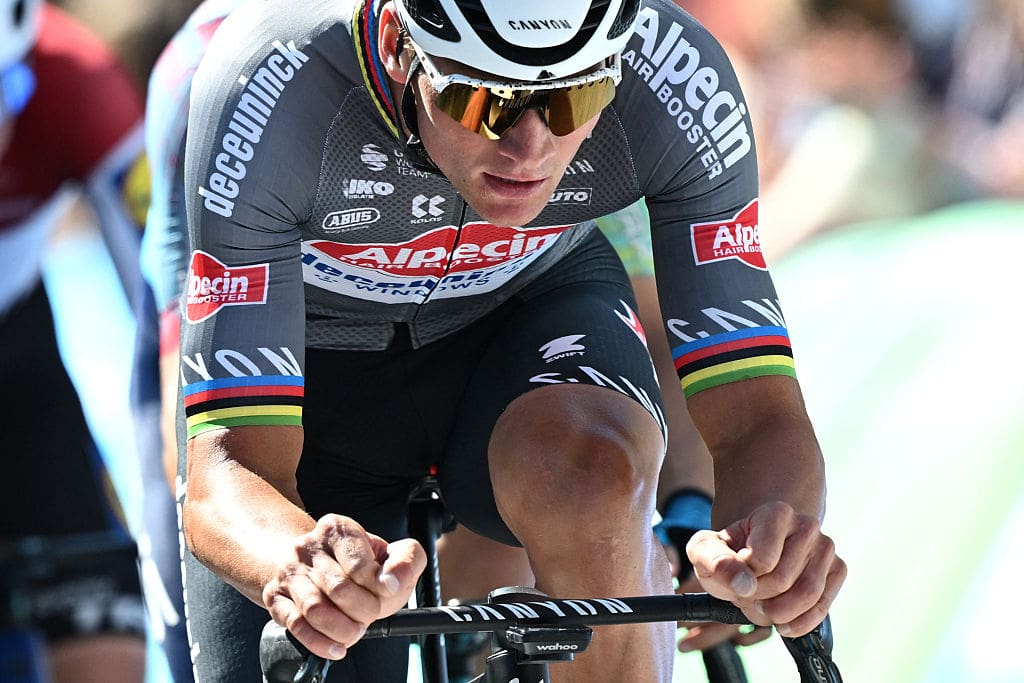 Photo Credit: Getty
Best final lead-out riders
The final lead-out rider is the last teammate before the sprinter launches. This is the most specialised role in the train.
| Rank | Rider | Team | Sprinter |
|---|---|---|---|
| 1 | Jonas Rickaert | Alpecin-Premier Tech | Jasper Philipsen |
| 2 | Bert Van Lerberghe | Soudal Quick-Step | Tim Merlier |
| 3 | Cees Bol | Decathlon CMA CGM Team | Olav Kooij |
| 4 | Mathieu van der Poel | Alpecin-Premier Tech | Jasper Philipsen |
| 5 | John Degenkolb | Team Picnic PostNL | Pavel Bittner |
| 6 | Tom Van Asbroeck | NSN Cycling Team | Biniam Girmay |
| 7 | Mike Teunissen | XDS Astana Team | Max Kanter / Davide Ballerini |
| 8 | Niklas Märkl | Team Picnic PostNL | Pavel Bittner |
| 9 | Søren Wærenskjold | Uno-X Mobility | Magnus Cort / himself |
| 10 | Jasper Stuyven | Soudal Quick-Step | Tim Merlier |
Rickaert and Van Lerberghe are the most obvious specialist final men. Bol is a strong option for Kooij if Decathlon use him that way. Van der Poel is probably the most explosive support rider in the list, but his role can change from stage to stage.
The rest are more situational. Degenkolb, Van Asbroeck, Teunissen, Märkl and Wærenskjold may not all be used as classic last men, but they are the riders most likely to perform that function for their teams when a sprint opportunity appears.
Best early lead-out and positioning riders
The early lead-out is often underappreciated. These are the riders who take control before the final kilometre and stop the train from being swamped.
| Rider | Team | Role |
|---|---|---|
| Edward Planckaert | Alpecin-Premier Tech | Sprint-train positioning |
| Silvan Dillier | Alpecin-Premier Tech | Early control and positioning |
| Jasper Stuyven | Soudal Quick-Step | High-speed approach |
| Daan Hoole | Decathlon CMA CGM Team | Power positioning |
| Luke Durbridge | Team Jayco-AlUla | Approach control |
| Nils Politt | UAE Team Emirates-XRG | Positioning engine |
| Filippo Ganna | Netcompany INEOS | Power and control |
| Edoardo Affini | Team Visma | Lease a Bike | GC and sprint-style positioning |
| Victor Campenaerts | Team Visma | Lease a Bike | Late approach power |
| Kamil Gradek | Bahrain Victorious | Sprint approach support |
These riders may not be the ones delivering the final launch, but they decide whether the final launch is possible. If they lose position, the sprinter may have to fight through traffic. If they keep the team near the front, the final lead-out can do its job.
This is where Alpecin-Premier Tech are especially strong. They do not only have Rickaert and Van der Poel. They have enough riders before them to keep Philipsen in the right part of the bunch.

Which sprinter has the best lead-out?
Jasper Philipsen has the best lead-out on the supplied startlist. Alpecin-Premier Tech offer the clearest combination of specialist support, raw power and trust. Rickaert, Van der Poel, Planckaert and Dillier give Philipsen a train that can work in several ways.
Tim Merlier is close behind. Soudal Quick-Step’s Stuyven-Van Lerberghe-Merlier structure is one of the cleanest in the race, especially on flat days where the team can focus fully on the sprint.
Olav Kooij has a good but less certain setup. Cees Bol and Daan Hoole can help him, but Decathlon’s wider team objectives may affect the level of commitment. Kooij may be fast enough to win regardless, but he may not have the same full-train certainty as Philipsen.
Biniam Girmay and Arnaud De Lie have more improvised support. That does not make them weak. It means they may need to rely more on positioning instincts, wheel surfing and harder finishes where perfect trains matter less.
Pascal Ackermann, Pavel Bittner, Max Kanter, Milan Fretin and Søren Wærenskjold all have support, but their teams are unlikely to dominate the biggest sprint finales unless the race becomes messy.
For the wider hierarchy of the fast men, see our best sprinters at the Tour de France 2026.
How the route affects lead-out riders
The 2026 Tour route makes lead-out depth important because the sprint chances are spread across a difficult race. A team may look strong in week one but lose structure after the mountains.
The early sprint days should favour the full trains. Fresh riders, clearer roles and less accumulated fatigue should help Alpecin-Premier Tech, Soudal Quick-Step and Decathlon CMA CGM Team. Bordeaux and Bergerac are the kind of stages where the best sprint trains can impose themselves.
Later sprint days may be different. After the Pyrenees, Massif Central, Vosges, Jura and Alps, some lead-out riders may be tired, dropped or focused on survival. That is when versatile sprinters and reduced-finish riders can gain ground.
The final stage in Paris may also be less straightforward if the Montmartre-style finish pattern again makes the race harder than the old pure Champs-Élysées sprint. In that situation, the best lead-out may not be the fastest train. It may be the train that still has enough riders left after a very hard Tour.
For more on the full route, see our Tour de France 2026 full route guide, Tour de France 2026 route analysis and how Tour de France riders recover between stages.
-
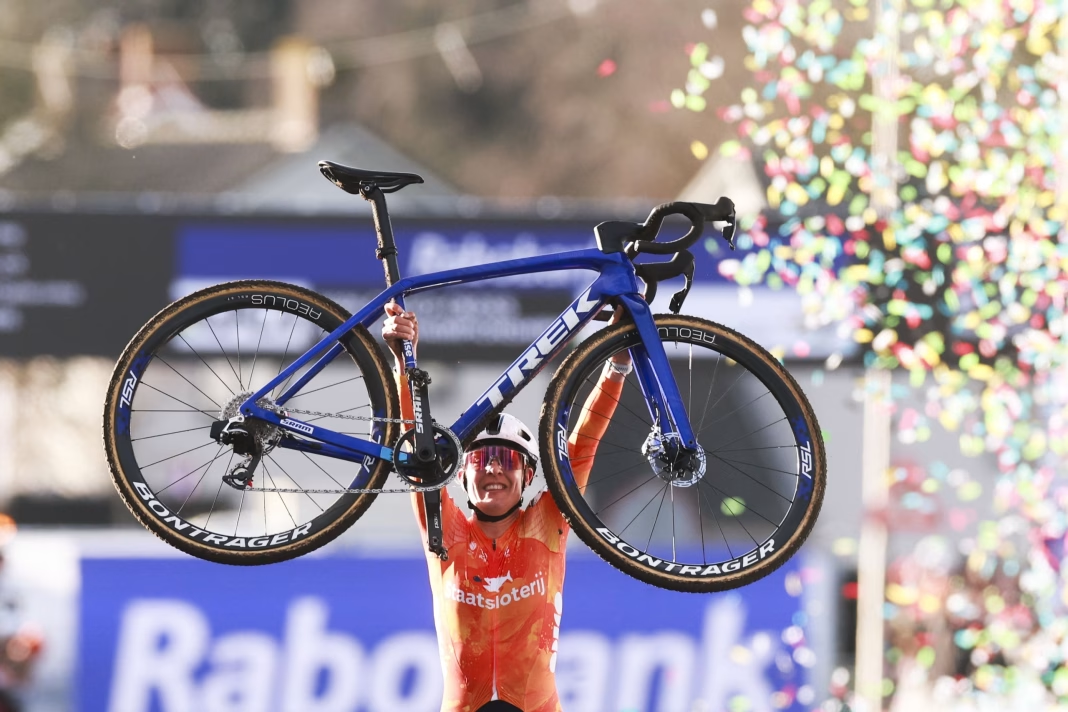
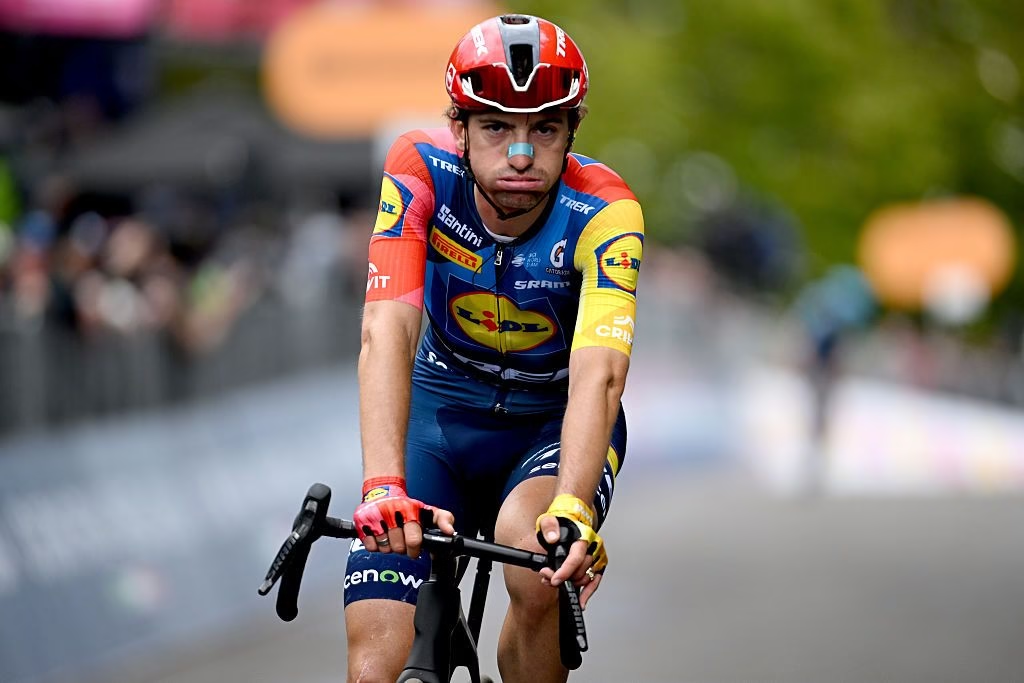
 Photo Credit: Getty

Lead-out riders most likely to decide a stage
If one lead-out rider is going to directly decide a sprint stage, Jonas Rickaert is the safest pick. His work for Philipsen can be the final difference on the biggest sprint days.
Bert Van Lerberghe is next because Merlier’s sprint depends so much on clean placement. If Van Lerberghe drops Merlier into the right slot, Soudal Quick-Step can win even against a stronger overall train.
Mathieu van der Poel is the wild card. His lead-outs can be so forceful that they change the sprint before Philipsen launches. If he is fully committed, he may be the most powerful lead-out rider in the race, even if he is not a pure specialist.
Cees Bol could decide a stage for Kooij if Decathlon get their timing right. John Degenkolb could do the same for Bittner in a messy finish. Tom Van Asbroeck could be decisive for Girmay if the sprint comes after a harder day where only a reduced train remains.
The best lead-outs are often visible only in hindsight. The sprinter gets the win, but the stage may have been shaped 500 metres earlier by the rider who put them in the right place.
Best lead-out riders verdict
The Tour de France 2026 has several strong sprint teams, but Alpecin-Premier Tech have the best lead-out structure on the supplied startlist. Jonas Rickaert, Mathieu van der Poel, Edward Planckaert and Silvan Dillier give Jasper Philipsen the clearest and most proven support network.
Soudal Quick-Step are the closest challengers. Bert Van Lerberghe and Jasper Stuyven give Tim Merlier a direct, powerful and experienced path to the finish. If they get the final right, Merlier can beat anyone.
Decathlon CMA CGM Team are the team with the most interesting developing train. Cees Bol and Daan Hoole can give Olav Kooij serious support, but the team’s wider ambitions may decide how often they can fully commit.
Behind them, the picture becomes more improvised. NSN Cycling Team, Team Picnic PostNL, Team Jayco-AlUla, Uno-X Mobility, Lotto-Intermarché, Cofidis, Bahrain Victorious and XDS Astana Team all have useful sprint support, but fewer guaranteed final-kilometre structures.
That should make the 2026 sprint battle more varied. Some stages may be won by the best train. Others may be won by the sprinter who can survive without one.
For more Tour de France 2026 coverage, visit our Tour de France hub, best sprinters at the Tour de France 2026 and how to watch Tour de France 2026 in the UK.

