
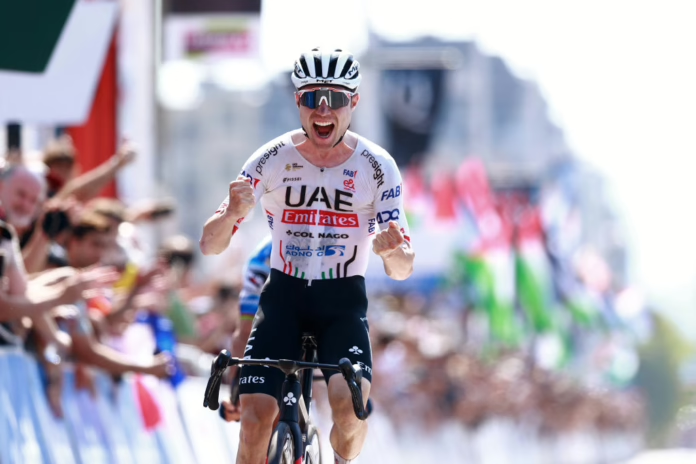
The Men’s Donostia San Sebastian Klasikoa 2026 is one of the most important one-day races of the summer and one of the hardest races to predict on the WorldTour calendar.
It is not a Monument, and it does not have the same casual recognition as Paris-Roubaix, the Tour of Flanders or Liège-Bastogne-Liège. But among riders and proper cycling fans, San Sebastián has a serious reputation. It is long, hilly, technical, tactical and usually raced by riders coming out of the Tour de France with either excellent form or completely empty legs.
The 2026 edition takes place on Saturday 1 August. It starts and finishes in Donostia/San Sebastián, covers 221.1km and includes more than 4,150m of climbing. The route keeps the race’s familiar Basque identity, with coastal roads, inland climbs, repeated changes of rhythm and a brutal final section built around Jaizkibel, Erlaitz and Murgil Tontorra.
For beginners, the simple version is this: Donostia San Sebastian Klasikoa is a climber’s Classic, but not a pure climber’s race. It favours riders who can handle a long day, survive repeated climbs, attack on steep gradients, descend well and still sprint from a small group if the race comes back together.
For the wider season context, see our Men’s Cycling Race Hub and Men’s Cycling Route Guide Hub.
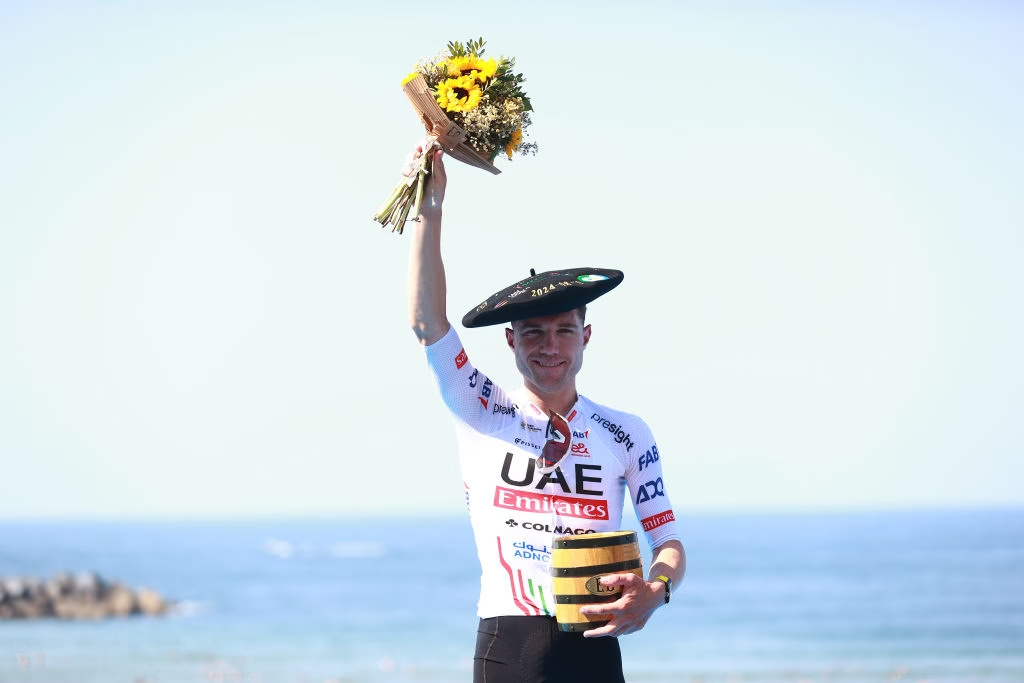
Quick answer: what is Donostia San Sebastian Klasikoa?
Donostia San Sebastian Klasikoa is a men’s WorldTour one-day race held in the Basque Country. The 2026 edition takes place on Saturday 1 August, starting and finishing in Donostia/San Sebastián. It is 221.1km long, includes more than 4,150m of climbing, and is usually decided on the late climbs before the descent back into the city.
| Detail | Donostia San Sebastian Klasikoa 2026 |
|---|---|
| Race | Donostia San Sebastian Klasikoa |
| Date | Saturday 1 August 2026 |
| Country | Spain, Basque Country |
| Level | UCI WorldTour |
| Race type | One-day Classic |
| Distance | 221.1km |
| Climbing | More than 4,150m |
| Start and finish | Boulevard, Donostia/San Sebastián |
| Key late climbs | Jaizkibel, Erlaitz, Murgil Tontorra |
| Best suited to | Climbers, punchy riders, strong all-rounders |
Why is San Sebastián such a big race?
San Sebastián matters because it sits in a rare place on the calendar.
It comes just after the Tour de France, when many of the best riders in the world are still carrying elite race condition. Some riders arrive from the Tour at their absolute peak. Others are exhausted after three weeks of racing. That creates an unusual mix: huge names on the start list, but with form that can be difficult to read.
It is also one of the few summer one-day races with real WorldTour weight. The spring Classics are long gone. The Tour is finished. The Vuelta a España is still ahead. San Sebastián becomes a bridge between the Grand Tour summer and the late-season Classics.
The race also has its own identity. It is not a cobbled Classic, not a sprinters’ Classic and not a pure mountain race. It is a Basque hill Classic, which means repeated climbing, hard roads, sharp gradients, passionate crowds and a finish that often rewards bravery.
For newer fans, our guide to the Men’s WorldTour explains where races like San Sebastián sit in the wider professional calendar.
Why is it called Donostia San Sebastian Klasikoa?
The race name reflects the city and the Basque setting.
Donostia is the Basque name for San Sebastián. Klasikoa means Classic. So Donostia San Sebastian Klasikoa is effectively the San Sebastián Classic, but with the Basque name and identity built into the modern branding.
That matters because the race is not just held in the Basque Country. It feels Basque in almost every part of its character. The crowds are loud, the roads are steep, the weather can change quickly, and the racing culture is intense. Riders often talk about the Basque Country as one of the most passionate cycling regions in Europe, and San Sebastián is one of its biggest annual showcases.
For new fans, that helps explain why the race feels bigger than just another one-day event. The location is part of the story. Our travel guide to cycling in the Basque Country around San Sebastián and Bilbao explains why the same roads work so well for visiting riders.
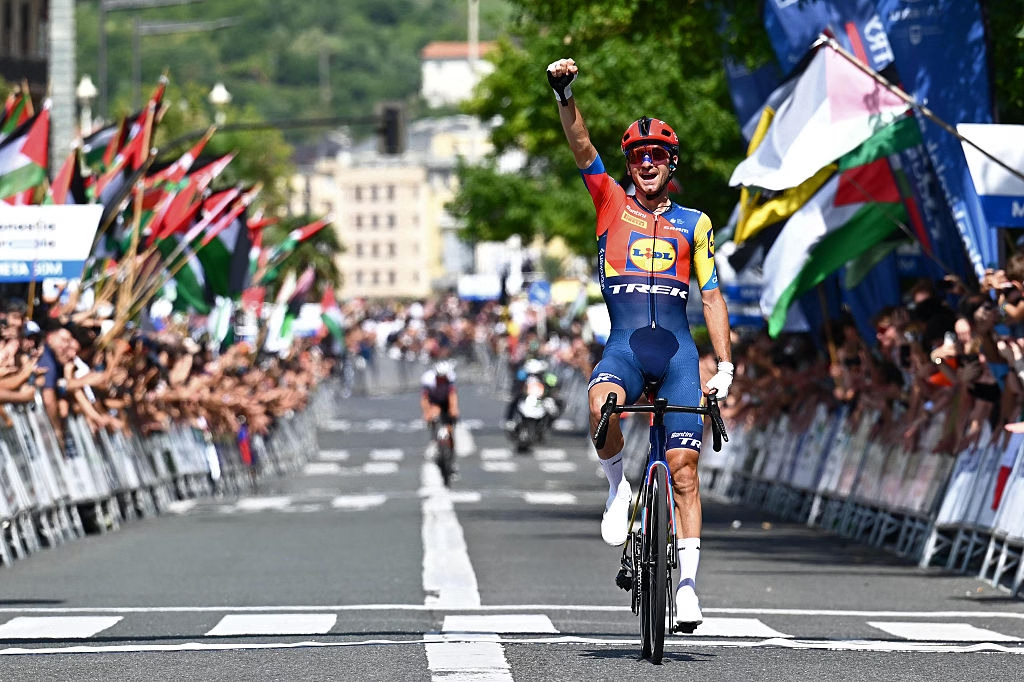
When is the Men’s Donostia San Sebastian Klasikoa 2026?
The 2026 race takes place on Saturday 1 August.
That places it six days after the end of the 2026 Tour de France. This is important because the Tour has a major effect on who rides well in San Sebastián.
Some Tour riders use San Sebastián as a final hit-out after carrying great condition through July. Others arrive with fatigue, illness, crashes or emotional exhaustion from three weeks of stress. Teams also use the race to give opportunities to riders who may have ridden support roles at the Tour but are capable of leading a one-day race.
It is not a normal standalone Classic where everyone builds specifically for one day. It is a race shaped by the Tour that came before it. For the race that feeds into it, see our Tour de France 2026 full route guide and our beginner’s guide to Men’s Tour de France 2026.
What is the 2026 route?
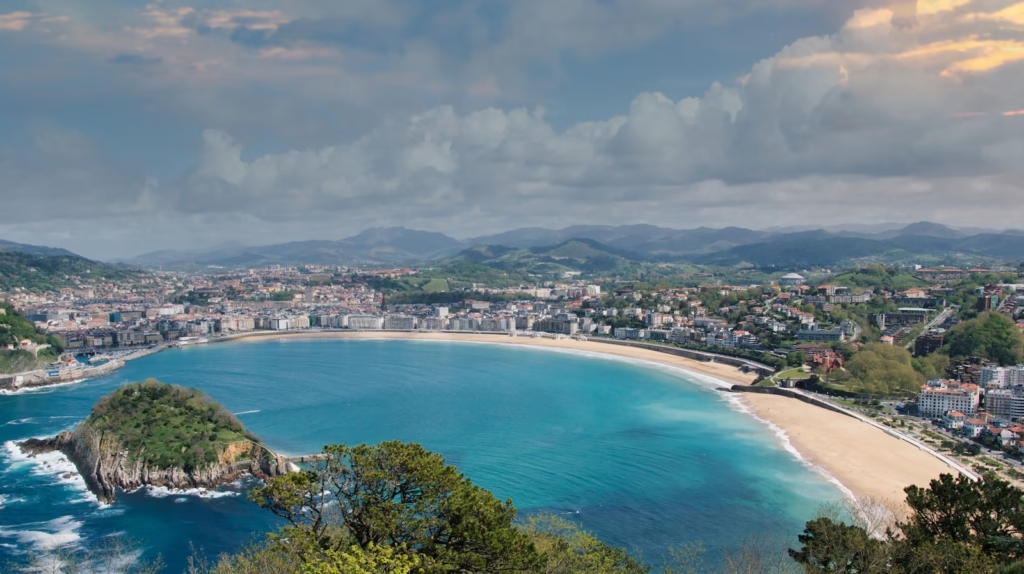
The 2026 route is 221.1km long and includes more than 4,150m of climbing. It starts and finishes on the Boulevard in Donostia/San Sebastián, one of the city’s central race-day locations.
The first part of the race uses coastal roads before moving inland through Gipuzkoa. The route then builds through repeated climbs and rolling terrain before reaching the decisive late sequence.
The main late climbs are Jaizkibel, Erlaitz and Murgil Tontorra. Those names matter. They are the climbs most likely to shape the result, either by reducing the main group, launching the winning attack or setting up the final descent back towards San Sebastián.
The route is not just difficult because of one climb. It is difficult because the effort accumulates. Riders face more than 200km of racing, constant changes in rhythm and a final hour where there is very little time to recover between climbs, descents and positioning battles.
The women’s calendar uses some of the same Basque racing identity. Our Itzulia Women 2026 stage 3 preview from Donostia to Donostia shows how Jaizkibel and the roads around the city also shape major women’s racing.
The key climbs explained
Jaizkibel
Jaizkibel is one of the race’s symbolic climbs. It has appeared in the race for years and is strongly linked with the identity of San Sebastián.
It is not the steepest climb in the race, but it is long enough and hard enough to reduce the peloton. It often comes at a point where teams start to reveal who has legs and who is struggling. A big move can go here, but more often Jaizkibel helps create the selection that shapes the finale.
For beginners, think of Jaizkibel as the climb that starts the real race. The early kilometres matter, but once the peloton reaches this phase, the contenders need to be near the front.
Erlaitz
Erlaitz is harder and more selective. It is shorter than a major Alpine climb, but the gradients are more severe and the road can make riders suffer quickly.
This is where the race can become properly tactical. Teams may try to isolate leaders. Strong climbers may attack to test the group. Riders who survived Jaizkibel can suddenly find themselves dropped if they are not positioned well or if the pace goes up at the wrong moment.
Erlaitz is one of the best places to watch if you want to understand who can really win.
Murgil Tontorra
Murgil Tontorra is the final sting.
It is steep, narrow, awkward and usually decisive. The climb comes late enough that any rider who attacks there knows the finish is close. It is also hard enough that the strongest rider can create a gap without needing a long-range solo move.
The road includes punishing gradients and concrete sections around rural lanes before the route moves towards Igeldo and drops back into San Sebastián.
If one rider gets clear on Murgil Tontorra and descends well, the race can be over. If a small group crests together, the win may be decided by positioning, nerves and the final run-in.
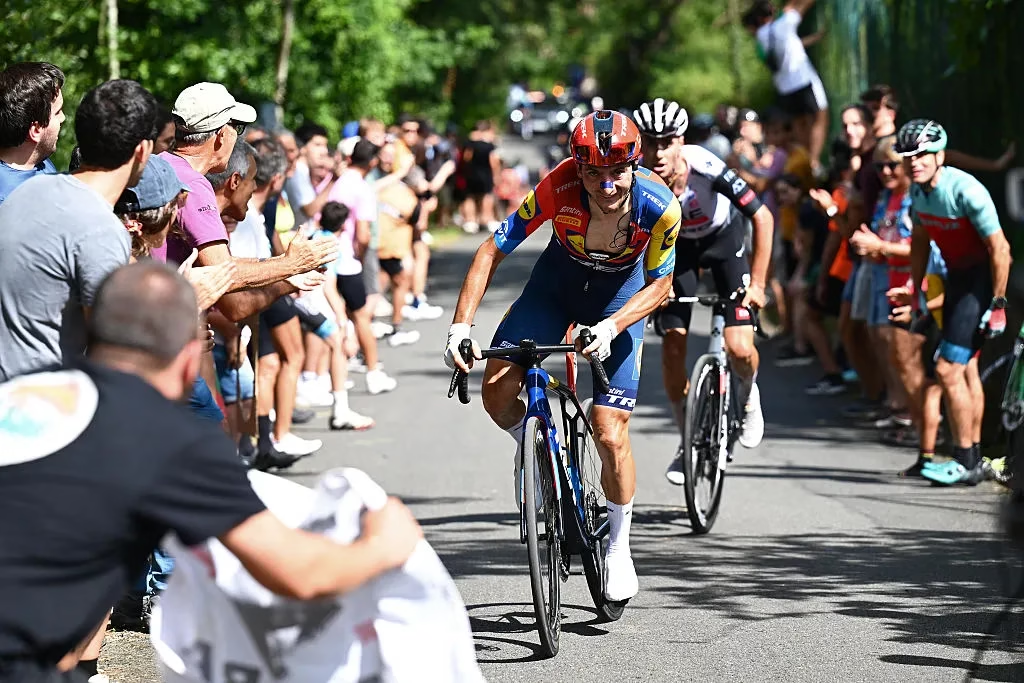
What kind of rider wins San Sebastián?
San Sebastián usually favours climbers and punchy all-rounders.
A pure sprinter will almost never survive the route well enough to win. A pure Grand Tour climber can win, but only if he is sharp enough on short climbs and confident enough in the finale. A classics-style puncher can also win if he climbs well enough to survive Jaizkibel, Erlaitz and Murgil Tontorra.
The ideal rider has several qualities:
| Skill | Why it matters |
|---|---|
| Climbing | The route has more than 4,150m of elevation gain |
| Explosiveness | Murgil Tontorra rewards sharp attacks |
| Descending | The race often drops back towards the city after the final climb |
| Race reading | Timing matters more than simple strength |
| Tour form | Many contenders arrive from the Tour de France |
| Small-group sprint | Some editions finish from a reduced group |
That is why San Sebastián can produce different types of winners. Sometimes a solo climber gets away. Sometimes a small group contests the finish. Sometimes a rider who looked quiet all day makes one perfectly timed attack.
If you want more context on the kind of rider who can make repeated climbing matter, see our guides to the best climbers at the Tour de France 2026 and the greatest Tour de France climbers.
How the race usually unfolds
San Sebastián usually starts with a breakaway. That is normal in almost every WorldTour one-day race. A small group goes clear early, the peloton lets it build a gap, and the stronger teams control the race behind.
The middle phase is about wearing riders down. The route is long and constantly rolling, so the peloton gradually becomes smaller. Teams with favourites try to stay calm, avoid crashes and save energy for the final climbs.
The real race usually begins in the final 60km. That is where positioning becomes more aggressive and the peloton starts to hit the decisive climbs with purpose.
Jaizkibel can split the race. Erlaitz can break it apart. Murgil Tontorra can decide it completely.
After that, the descent and run-in to San Sebastián become a test of control. A solo leader has to hold the gap. A chase group has to cooperate. A small group has to decide whether to work together or start watching each other. That tension is one of the best parts of the race.
The same broad principles apply to hilly breakaway and attack days at stage races. Our guide to the best breakaway days on the Tour de France 2026 route explains how terrain, fatigue and timing can shape a race long before the final move.
Why the race is hard to predict
San Sebastián is difficult to predict because the start list is shaped by fatigue as much as talent.
The strongest rider on paper is not always the strongest rider on the day. A Tour de France contender may arrive with brilliant form but no freshness. A rider who abandoned the Tour early may be better recovered. A non-Tour rider may have prepared specifically for this race and arrive sharper than the bigger names.
Weather can also change the race. The Basque Country can be warm, wet, humid, windy or changeable. Descents and narrow roads become more difficult if conditions are poor.
Team tactics add another layer. Some squads bring one obvious leader. Others bring several riders who can attack. In a one-day race, that matters. A team with multiple cards can force rivals to chase, while a team with one leader may have to ride defensively.
San Sebastián is not random, but it is rarely simple.
Why Tour de France riders often matter
The Tour de France is the most important form reference for San Sebastián.
Riders who finish the Tour strongly can carry that condition into the Klasikoa. They have three weeks of racing in their legs, but they also have high endurance, race rhythm and climbing form. If they have recovered mentally and physically, they can be extremely dangerous.
The risk is fatigue. The Tour drains riders in ways that are not always obvious from outside. Even a rider who looked strong in week three may struggle to reset for a one-day race. Travel, media, celebrations, disappointment or illness can all affect the week after the Tour.
That is why San Sebastián often rewards riders who come out of the Tour with unfinished business. They may have missed a stage win, worked for a leader or shown good legs without getting a result. This race gives them a chance to turn Tour form into a major one-day victory.
The final week of the 2026 Tour is especially relevant because it is so hard. Our Tour de France 2026 contenders preview and Tour de France 2026 route: best days for GC attacks help explain why riders could arrive in San Sebastián either flying or completely drained.
Where it sits in the post-Tour calendar
San Sebastián is the first major men’s WorldTour one-day race after the Tour de France. That gives it a particular flavour.
It is not quite a late-season Classic and not quite a Tour afterparty. It is both a standalone prize and a bridge into August. Riders who still have form can target San Sebastián, then reset for races such as the Tour de Pologne, the Vuelta a España build-up or later one-day races.
That position makes it especially useful for fans. If you followed the Tour, San Sebastián gives you an immediate chance to see which riders have recovered well. If you are looking ahead to the next stage-race block, our beginner’s guide to Men’s Tour de Pologne 2026 explains the next WorldTour race that follows shortly afterwards.
Is San Sebastián like a Monument?
San Sebastián is not one of cycling’s five Monuments, but it is one of the biggest one-day races outside that group.
The Monuments are Milan-San Remo, Tour of Flanders, Paris-Roubaix, Liège-Bastogne-Liège and Il Lombardia. They have deeper histories, longer mythology and a different place in the sport.
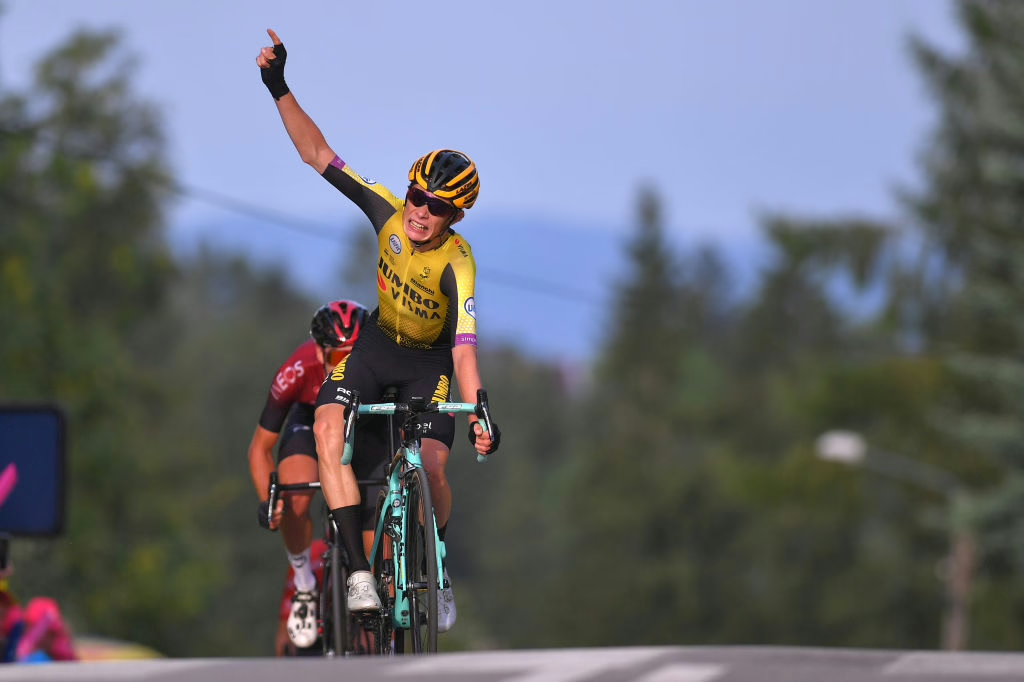
San Sebastián sits just below that level in prestige, but it is still a major WorldTour Classic. Winning it matters. It appears on palmarès alongside the biggest one-day races and is especially valued by climbers and stage racers, because there are not many one-day WorldTour races built so clearly around their strengths.
For a Grand Tour rider, San Sebastián can be one of the best one-day races to win. For a puncheur, it is a chance to beat the climbers. For a team, it is a major result in a part of the season where opportunities are limited.
For Monument context, see our beginner’s guide to Men’s Ronde van Vlaanderen 2026 and beginner’s guide to Men’s Liège-Bastogne-Liège 2026. The wider history of cycling’s biggest races is also covered in our Men’s Cycling History Hub.
What makes the Basque Country so important in cycling?
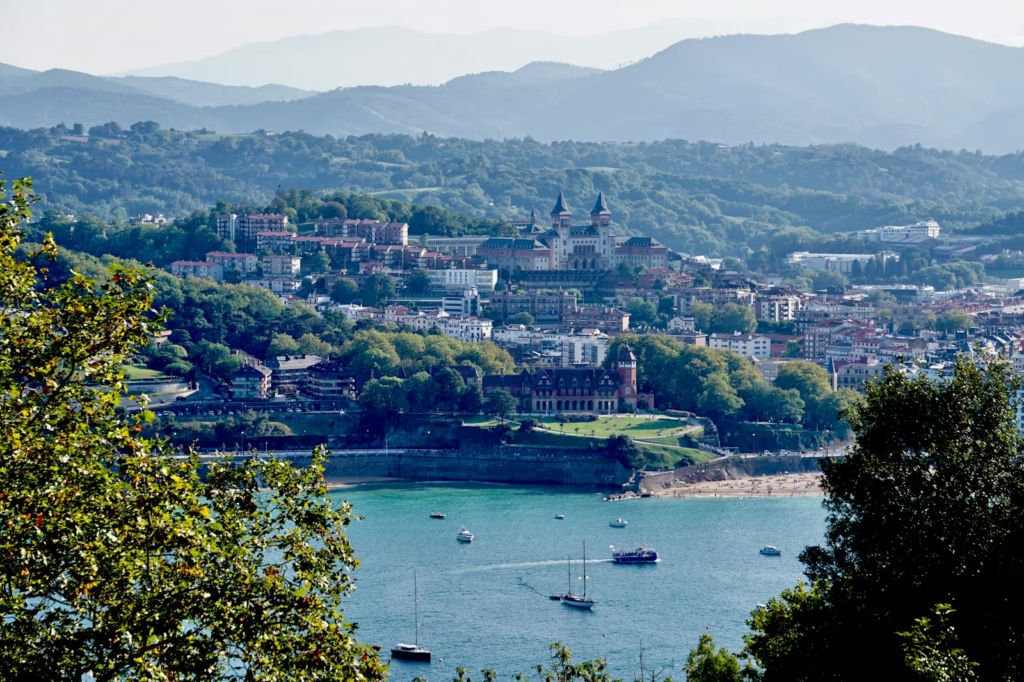
The Basque Country is one of Europe’s great cycling regions.
The roads are hard, the climbs are steep, and the fans are among the most committed in the sport. Races such as Itzulia Basque Country and San Sebastián have built a reputation for intense, tactical racing on terrain that constantly rises and falls.
The landscape helps create that identity. The climbs are not always long in Alpine terms, but they are frequent, sharp and difficult to control. Roads twist through villages, forests, coastal sections and rural hills. That makes racing more complicated than a simple climb-descent-finish pattern.
For beginners, the easiest comparison is this: Basque racing often feels like a long argument between the road and the riders. There is rarely a calm, flat section where everyone can relax for long.
That same character is visible in the women’s calendar too. Our beginner’s guide to Itzulia Women 2026 explains why Basque terrain produces such sharp, tactical racing across several days.
Best places to watch the race
The best place for fans depends on what kind of experience they want.
| Watching spot | Best for |
|---|---|
| Boulevard, Donostia/San Sebastián | Start, finish and city atmosphere |
| Jaizkibel | Seeing the race begin to split |
| Erlaitz | Watching serious selection |
| Murgil Tontorra | The decisive final climb |
| Igeldo/Ondarreta area | Final descent and run-in |
| Big screen in the city | Following the whole race with atmosphere |
For first-time spectators, the Boulevard is the easiest option. You get the start, finish, team buses, atmosphere and the least complicated logistics.
For cycling purists, Murgil Tontorra is the place to be. It is where the winning move is most likely to happen. The trade-off is that once the riders pass, you may not get back to the finish in time unless you have planned carefully.
How to watch the Men’s Donostia San Sebastian Klasikoa 2026
The final broadcast details should be checked closer to race day, because rights and schedules can change by country.
In general, San Sebastián is usually available through major cycling broadcasters and streaming platforms that carry WorldTour racing. UK viewers should check the listings in race week rather than relying on early assumptions.
The most important viewing window is the final 60km. That is where the race normally moves from controlled to explosive. If you can only watch one part, watch from before Jaizkibel through to the finish.
For other major race viewing information across the season, see our Men’s Cycling TV Guide Hub.
Beginner’s guide: what to watch for
| Moment | What it tells you |
|---|---|
| Early breakaway | Which teams are trying to get ahead of the race |
| First hard climbs | Which teams want to make the race difficult |
| Jaizkibel | First serious selection |
| Erlaitz | Whether the favourites are isolated |
| Murgil Tontorra | Likely winning attack or final split |
| Descent to San Sebastián | Whether the leader can hold the gap |
| Final kilometre | Solo win, reduced sprint or tactical hesitation |
Common mistakes new fans make
The biggest mistake is treating San Sebastián like a normal hilly race where only the final climb matters.
Murgil Tontorra is usually crucial, but the damage is done before then. The distance, heat, positioning, earlier climbs and team tactics all shape who even reaches the final climb with a chance.
Another mistake is assuming the best Tour de France rider will automatically win. Tour form matters, but freshness matters too. Some riders are flying after the Tour. Others are empty.
A third mistake is expecting a pure bunch sprint. That is very unlikely. The race is too hard, too selective and too close to the Tour for the peloton to arrive together.
Who should enjoy this race?
San Sebastián is ideal for fans who like tactical racing and climbing Classics.
It is especially good if you enjoy:
| Fan type | Why it works |
|---|---|
| Grand Tour fans | Many Tour riders often start |
| Classics fans | It is a major one-day race with tactical depth |
| Climbing fans | The route is built around repeated climbs |
| Basque cycling fans | The atmosphere is one of the sport’s best |
| New cycling fans | The finale is easy to understand once the key climbs are known |
It may be less appealing if you only enjoy bunch sprints or simple race patterns. San Sebastián is more complicated than that. But once you understand the structure, it is one of the best one-day races of the year.
-
 Photo Credit: Getty

FAQs: Men’s Donostia San Sebastian Klasikoa 2026
When is the Men’s Donostia San Sebastian Klasikoa 2026?
The 2026 race takes place on Saturday 1 August.
Where does the race start and finish?
The race starts and finishes in Donostia/San Sebastián, with the Boulevard acting as the central race location.
How long is the 2026 race?
The 2026 route is 221.1km long.
How much climbing does the race have?
The 2026 race includes more than 4,150m of climbing.
Is Donostia San Sebastian Klasikoa a WorldTour race?
Yes. The men’s race is part of the UCI WorldTour and is classified as a 1.UWT one-day race.
Is San Sebastián a Monument?
No. San Sebastián is not one of cycling’s five Monuments, but it is one of the most prestigious one-day races outside that group.
What are the key climbs?
The key late climbs are Jaizkibel, Erlaitz and Murgil Tontorra. Murgil Tontorra is often the final decisive climb before the descent back into San Sebastián.
What kind of rider wins San Sebastián?
The race usually suits climbers, punchy riders and strong all-rounders. A winner needs to handle repeated climbs, steep gradients, long distance and a fast, tactical finale.
Why do Tour de France riders often do well?
The race comes soon after the Tour de France, so many riders arrive with excellent race condition. The challenge is whether they have recovered enough to use that form.
Who won the 2025 race?
Giulio Ciccone won the 2025 Donostia San Sebastian Klasikoa.
Final word
The Men’s Donostia San Sebastian Klasikoa 2026 is one of the best races on the calendar for anyone learning how one-day cycling works beyond the spring Classics.
It has a simple shape but a complex rhythm. The race starts and finishes in a beautiful city, moves through hard Basque roads, builds towards Jaizkibel and Erlaitz, then usually comes down to the steep final test of Murgil Tontorra.
It is long enough to punish weak legs, steep enough to reward climbers, tactical enough to suit clever riders and late enough after the Tour de France to make form hard to read.
That is why it works so well. San Sebastián is not just a post-Tour bonus race. It is a major Classic in its own right, and one of the best places to see Grand Tour legs, punchy attacks and Basque racing culture collide on the same afternoon.

