
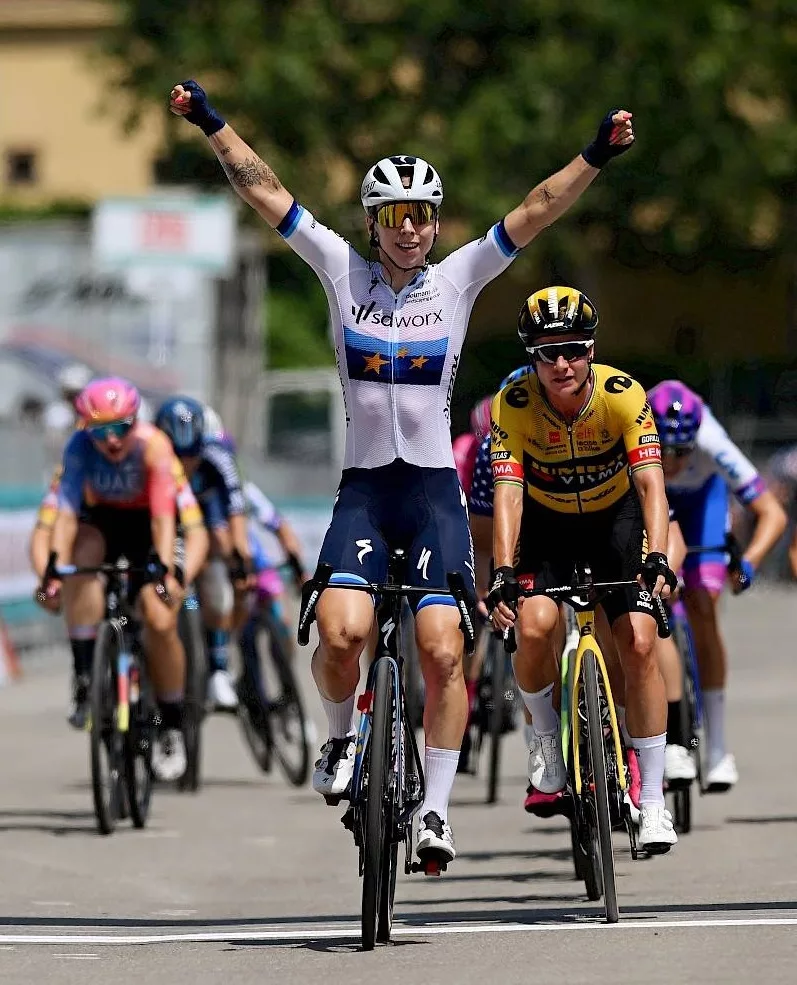
The Giro d’Italia Women 2026 begins with a stage built for speed. Stage 1 takes the peloton from Cesenatico to Ravenna over 139km on Saturday, 30th May, with only around 100 metres of elevation gain and a flat final circuit around the finish city. It is the clearest possible invitation for the sprinters, and it should decide the first maglia rosa of the race.
There are much harder days waiting later in the Giro, with the Nevegal uphill time trial, the mountain stage to Santo Stefano di Cadore and the Colle delle Finestre all set to shape the general classification. The opening stage is different. This is about speed, control, positioning and whether the sprint teams can manage the pressure of the first day.
For the overall contenders, stage 1 is mostly about staying safe. For the fast finishers, it is one of the biggest opportunities of the race. A stage win here brings more than a sprint victory. It brings the first pink jersey, early control of the points classification and a major psychological advantage before the race starts to become more complicated.
For the full shape of the race, ProCyclingUK’s Giro d’Italia Women 2026 full route guide breaks down all nine stages, including where the sprint opportunities sit before the major GC tests.
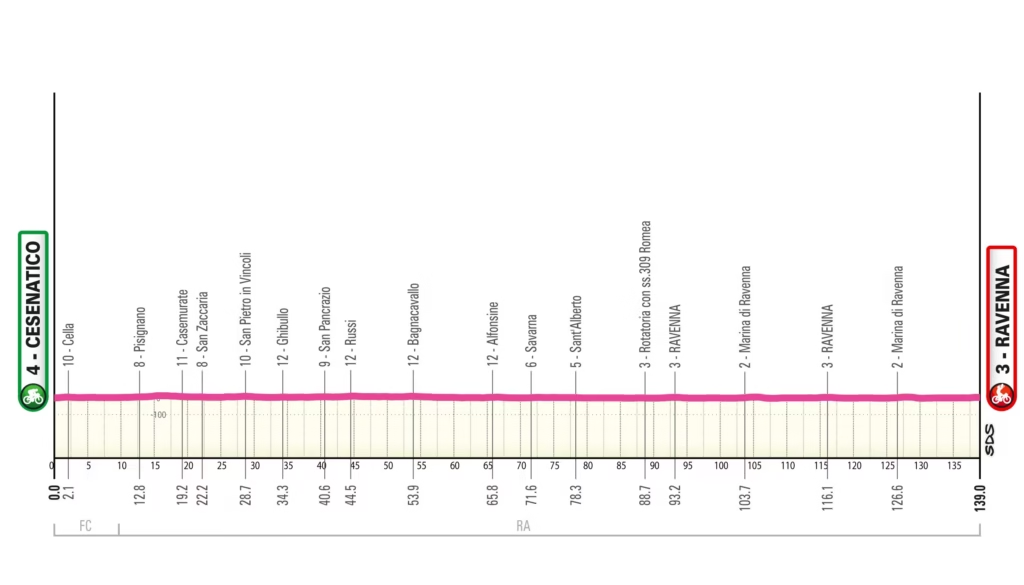
Giro d’Italia Women 2026 stage 1 route
Stage 1 starts in Cesenatico, one of Italian cycling’s most evocative towns, and finishes in Ravenna after 139km. The route crosses the flatlands of Emilia-Romagna before reaching Ravenna, where the riders will pass the finish line and then complete laps of a flat urban circuit.
There is no climbing of consequence. With around 100 metres of elevation gain across the whole stage, this is about as flat as a Giro d’Italia Women stage can realistically be. That does not make it simple, though. Opening stages are rarely calm, especially when the first leader’s jersey is on offer.
The point-to-point section should allow the early breakaway to form, but the sprinters’ teams will know this is too good a chance to miss. Once the race reaches Ravenna, the final circuit should increase the tension. Urban roads, corners, road furniture and the pressure of the opening day will make positioning vital before the final sprint.
The stage also begins a race with deep history. ProCyclingUK’s complete history of the Giro d’Italia Women explains how the event has evolved through its different names and eras before arriving at its current position as one of the defining races of the women’s calendar.
What’s on offer on stage 1?
- Stage: Stage 1
- Date: Saturday, 30th May
- Route: Cesenatico to Ravenna
- Distance: 139km
- Elevation gain: around 100 metres
- Stage type: Flat
- Likely finish: Bunch sprint
- Expected start: around 14:20 BST
- Expected finish: around 17:30-17:50 BST
Why the opening stage is not just a sprint day
On paper, stage 1 is a sprinter’s dream. In reality, it will probably be one of the most nervous days of the entire race. The first stage of a major tour always carries extra pressure because every rider is fresh, every team wants position and nobody wants to lose time before the race has properly begun.
The flat profile increases that tension rather than reducing it. With so many riders still together deep into the stage, the fight for space before the final circuit should be fierce. The GC teams will want their leaders near the front to avoid crashes. The sprint teams will want full control. Breakaway riders will know the odds are against them, but they will still try to give the race its first shape.
The first maglia rosa also changes the psychology. This is not only a stage win. For a sprinter, winning in Ravenna means leading the Giro d’Italia Women, wearing pink on stage 2 and making the race revolve around your team for at least one day. That prize will make the final kilometres even more intense.
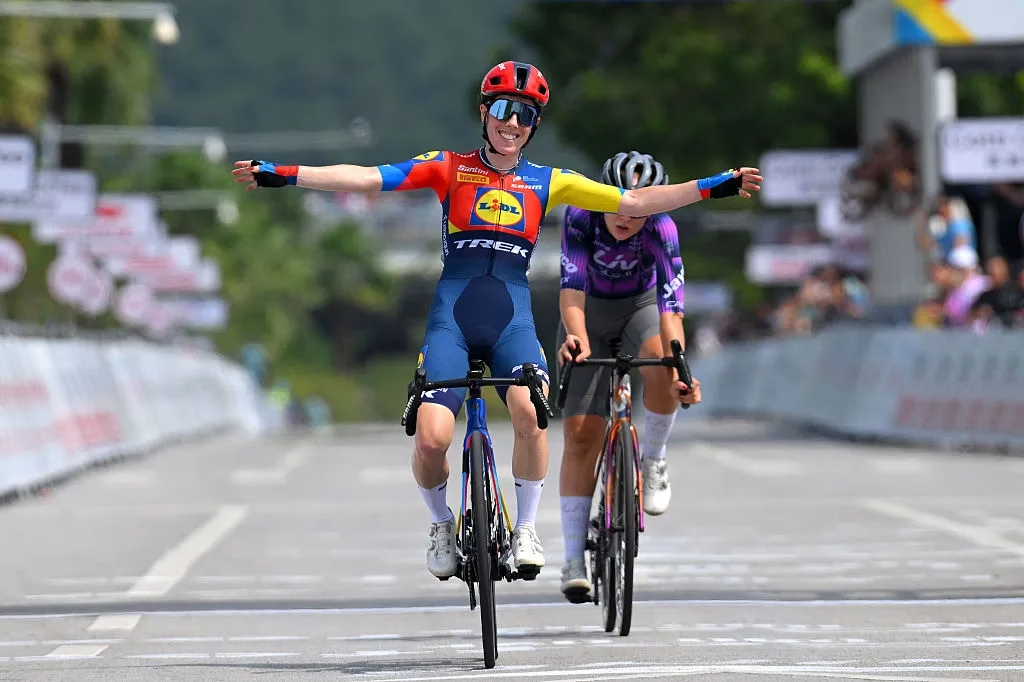 Photo Credit: Getty
The final circuit in Ravenna
The Ravenna circuit should be where the stage truly tightens. Once the peloton has crossed the finish line for the first time, the race shifts from a flat road stage into a controlled sprint set-up. The teams will have time to inspect the finish, understand the final corners and begin organising their lead-outs.
That does not mean the finale will be straightforward. Circuits can make sprint stages more predictable, but they also compress the fight for position. Riders know what is coming, which means everyone wants to be in the same place at the same time. The final lap should be fast, tense and difficult to control.
Lead-out strength will matter, but so will timing. A rider who is perfectly positioned with 1km to go may still lose the race if they are forced to open too early. A sprinter who looks boxed in may still win if the final metres open at exactly the right moment. Stage 1 should be decided by speed, but it will be set up by nerve.
Can the breakaway survive?
A breakaway should go early, but survival will be very difficult. The profile gives the sprinters’ teams almost no excuse to let the move take too much time, and several teams have obvious reasons to chase. The first maglia rosa is too valuable to hand away cheaply.
The more realistic target for the breakaway is visibility. Riders from smaller teams may use the opening stage to get into the race early, show the jersey and force the favourites’ teams to work. That is still valuable, especially in a race where later stages become much harder and less predictable.
For the move to survive, the peloton would need hesitation, weather disruption or a badly timed chase. Without that, the sprint teams should have enough road, enough firepower and enough motivation to bring everything back together before Ravenna.
Riders to watch on Giro d’Italia Women stage 1
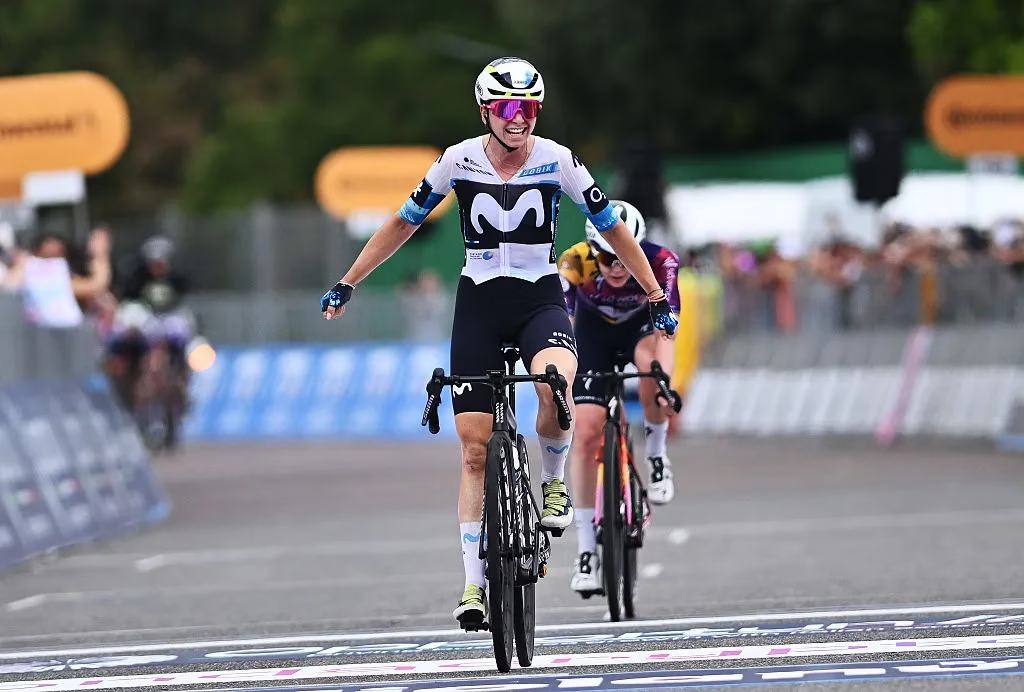
Lorena Wiebes is the obvious sprint favourite. She has the speed, the lead-out support and the recent Giro pedigree to make her the rider everyone else has to beat. If SD Worx-Protime deliver her into the final 200 metres in position, she will be very difficult to stop.
Charlotte Kool is the most obvious pure-speed threat to Wiebes. A clean, flat sprint is exactly the kind of finish where she can challenge the best in the world. Fenix-Premier Tech will need to keep her protected through the final circuit, but if she gets a clean launch, she can win.
Elisa Balsamo brings a different kind of danger. She is fast enough to win a full bunch sprint, but she is also one of the better sprinters when the finish becomes messy. If the final circuit disrupts the bigger lead-outs, Balsamo’s instincts could become decisive.
Chiara Consonni should also be right in the mix. She is technically sharp, quick through chaotic finales and capable of finding space when sprint trains begin to break apart. A nervous opening stage could suit her more than a perfectly controlled drag race.
Georgia Baker gives Liv AlUla Jayco a strong fast-finishing option. She may need the sprint to be slightly less clean than Wiebes or Kool would like, but her track speed and positioning should make her a serious contender for the podium.
Letizia Paternoster is another rider who can profit if the finale becomes disrupted. She has the speed to be relevant and the race craft to follow the right wheels when the sprint begins to take shape.
Rachele Barbieri will have extra motivation on Italian roads. She is unlikely to be ignored by the bigger sprint teams, but if she is close enough inside the final kilometre, she has the finishing speed to challenge for a major result.
Lara Gillespie is an interesting outside option, particularly if the sprint is not completely orderly. UAE Team ADQ’s broader race will be built around Elisa Longo Borghini’s GC defence, but Gillespie gives them a lively fast-finishing card for a stage like this.
For a wider look at the fast finishers expected to shape the early part of the race, ProCyclingUK’s guide to the best sprinters in women’s cycling right now gives useful context on the current hierarchy among the sport’s quickest riders.
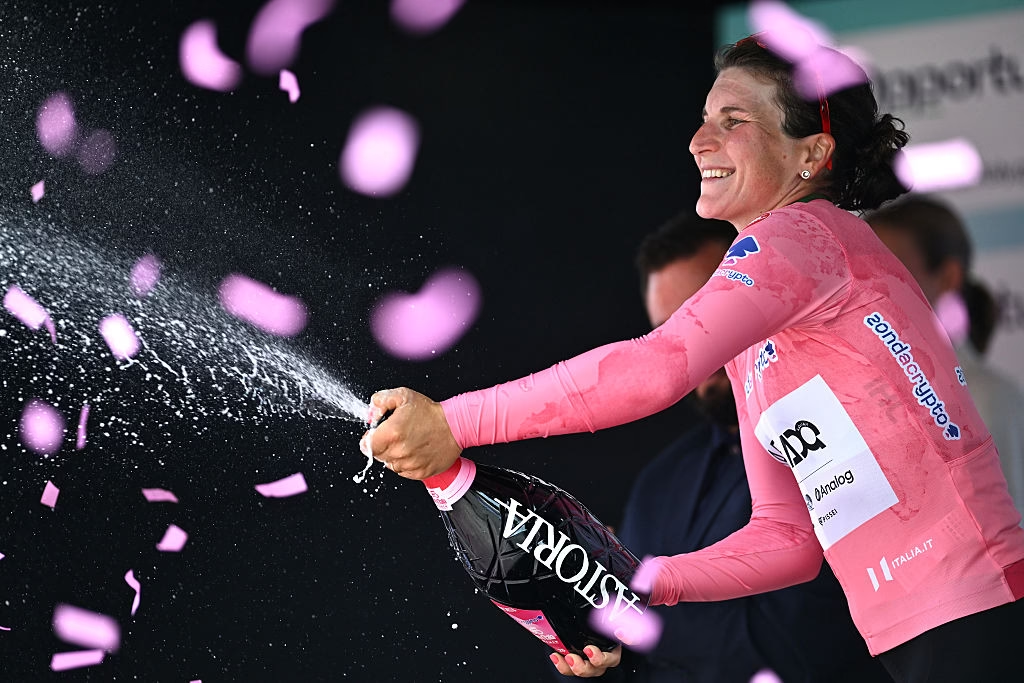 Photo Credit: Getty
What does stage 1 mean for the GC contenders?
The general classification riders will not expect to gain time in Ravenna, but they can lose the Giro here if they are careless. Flat opening stages can be dangerous because the whole peloton is still together, the pace rises sharply before the finish and sprint teams fight for the same space as GC teams trying to protect leaders.
Elisa Longo Borghini, Demi Vollering, Marlen Reusser, Sarah Gigante, Gaia Realini and the other overall contenders should all be focused on staying near the front without becoming involved in the sprint itself. The goal is simple: avoid crashes, avoid splits and reach stage 2 with the same time as the rest of the favourites.
The three-kilometre rule can reduce some of the time-loss risk, depending on exactly where any incident happens, but it does not remove the physical danger. For the GC teams, stage 1 is about discipline. Let the sprinters fight for pink, but make sure the race is not damaged before the mountains arrive.
For a broader race-level view of the main overall contenders, ProCyclingUK’s Giro d’Italia Women 2026 race preview looks at the riders and teams likely to shape the fight for the maglia rosa across the full nine days.
The first maglia rosa battle
The first pink jersey gives stage 1 its central storyline. A sprinter has an excellent chance to lead the Giro d’Italia Women after Ravenna, and possibly keep the jersey into stage 2 if the race again comes down to a sprint in Caorle.
That creates a short but meaningful early sprint block before the route begins to change. The fast finishers know they may only have a handful of clean opportunities in this Giro. Stage 1 is the cleanest of them all, so failure here would feel expensive.
The points classification also begins immediately. Wiebes will be the obvious favourite if she wins, but riders such as Kool, Balsamo, Consonni and Baker can all put themselves into the ciclamino conversation with a strong opening sprint.
Giro d’Italia Women 2026 stage 1 prediction
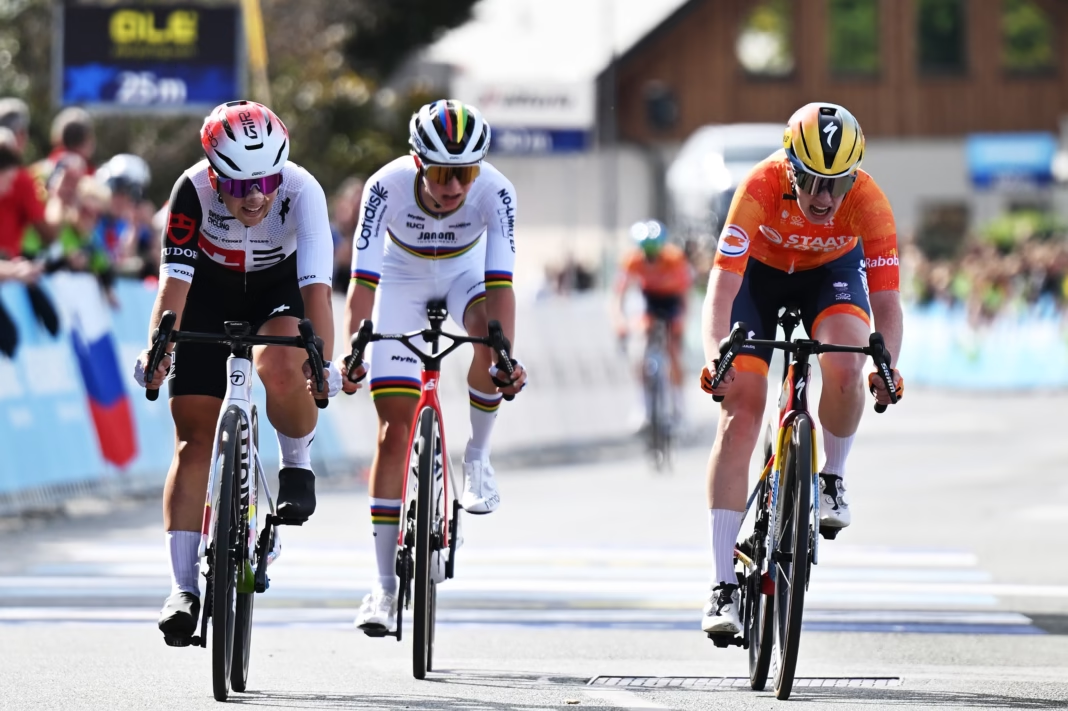
Everything points towards a bunch sprint in Ravenna. The route is flat, the first pink jersey is available, and too many teams have strong sprinters to allow the breakaway much freedom. The final circuit should make the run-in fast and nervous, but it should still come down to the fastest finishers.
Prediction: Lorena Wiebes
Wiebes is the safest pick because she combines raw speed with the lead-out structure to handle a high-pressure opening stage. Kool, Balsamo and Consonni can all beat her if the sprint becomes messy, but if SD Worx-Protime get the finale right, Wiebes has the clearest route to the first maglia rosa.
How to watch Giro d’Italia Women 2026 stage 1 in the UK
UK viewers can watch Giro d’Italia Women 2026 stage 1 live on TNT Sports and HBO Max. The stage is expected to start at around 14:20 BST, with the finish due between around 17:30 and 17:50 BST.
For full broadcast details across the race, ProCyclingUK’s how to watch Giro d’Italia Women 2026 in the UK guide explains the TV and streaming options for British viewers.
Giro d’Italia Women 2026 stage 1 verdict
Stage 1 is the sprinters’ best early chance and one of the most important days for the fast finishers in the whole race. It is flat, direct and likely to be controlled, but the pressure of the first maglia rosa should make the final circuit in Ravenna anything but relaxed.
For the GC riders, success means staying invisible and safe. For the sprinters, success means taking control of the Giro before the mountains and time trial begin to loom over the race. Ravenna should give the 2026 Giro d’Italia Women a fast, nervous and highly contested opening finish.

