
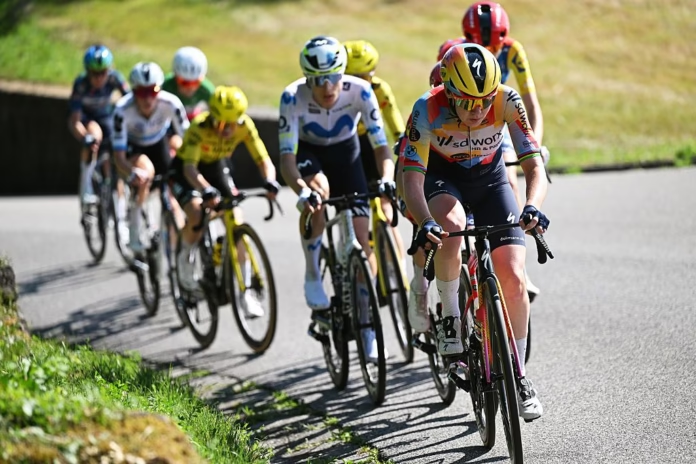
The Giro d’Italia Women 2026 moves from the controlled brutality of the Nevegal uphill time trial into its first major mountain road stage on stage 5, with 146km from Longarone to Santo Stefano di Cadore. After three sprint and reduced-sprint stages, then a short but sharp individual test against the clock, this is where the climbing finally becomes sustained, tactical and team-driven.
The stage carries 3,400 metres of elevation gain, making it one of the most demanding days of the race before the final weekend. The route includes Passo Tre Croci and Passo Sant’Antonio in the first part of the stage, before a finishing circuit of around 23km that includes two ascents of the Costa climb, a sharp test of roughly 4km at 9%.
That shape makes stage 5 very different from the Nevegal time trial. On stage 4, riders had nowhere to hide but only had to manage their own effort. On stage 5, they will need teammates, positioning, feeding, descending confidence and tactical judgement. This is a day where the strongest climber does not automatically win. The stage is long enough and complex enough for the race situation to matter.
Anna van der Breggen now holds the maglia rosa after the Nevegal time trial, which gives stage 5 a different tactical feel. Team SD Worx-Protime will begin the day with responsibility, but the course is hard enough that defending the jersey will require more than simple control. For the bigger picture, our Giro d’Italia Women 2026 full route guide explains how this Dolomite stage fits into the nine-day race.
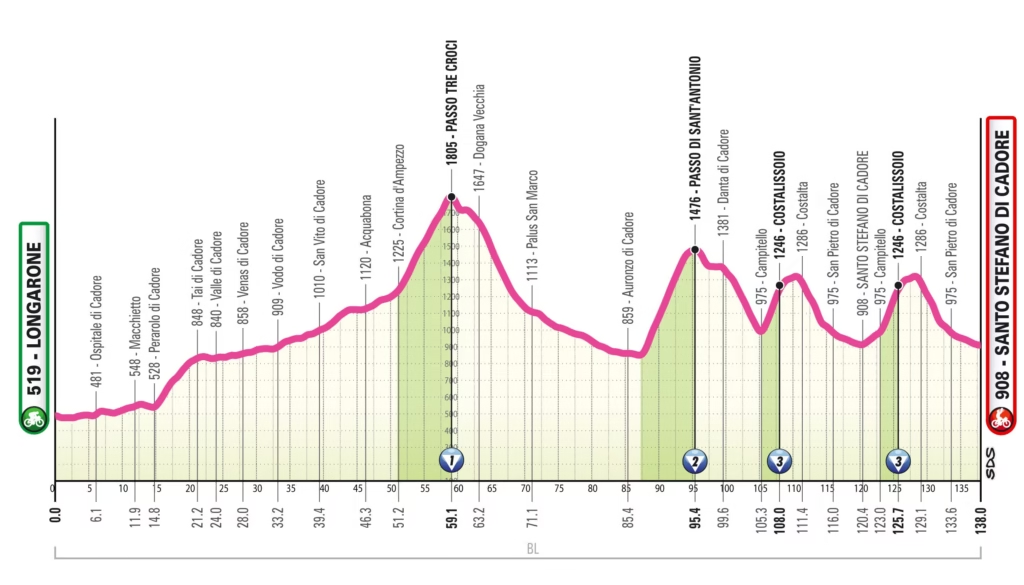
What’s on offer on stage 5?
- Stage: stage 5
- Date: Wednesday, 3rd June
- Route: Longarone to Santo Stefano di Cadore
- Distance: 146km
- Elevation gain: 3,400 metres
- Stage type: mountain
- Key climbs: Passo Tre Croci, Passo Sant’Antonio, Costa finishing circuit
- Finish: Santo Stefano di Cadore
- UK live coverage: TNT Sports and HBO Max
The headline is the climbing, but the detail is more important. Stage 5 is not a simple summit-finish procession. The riders face major early and mid-stage climbing, then enter a finishing circuit where the repeated Costa ascent can be used either to attack for the stage or to isolate GC rivals.
The first part of the stage should begin shaping the race well before the finale. Passo Tre Croci and Passo Sant’Antonio are not decorative climbs. They are long and steep enough to thin the peloton, fatigue domestiques and test whether riders who performed well on Nevegal can recover quickly enough for a very different effort the following day.
The final circuit then gives the stage its sharp tactical edge. Two ascents of a climb around 4km at 9% are enough to create real gaps, especially after the earlier climbing. The first passage can be used to soften rivals, while the second should decide which riders still have enough left to fight for the stage.
Why stage 5 is a major GC day
Stage 4 created the first clear order among the general classification contenders, but stage 5 may reveal who can actually back it up in a full road stage. An uphill time trial is a pure physical test. A Dolomite mountain stage is messier. Teams need to defend, chase, protect and decide when to commit.
That makes stage 5 a major day for riders who lost time on Nevegal. If the gaps from the time trial are significant, some teams may feel they have to race aggressively rather than wait for the Colle delle Finestre and Sestriere on stage 8. A rider already behind on GC cannot afford to let Team SD Worx-Protime ride tempo all day and then accept another small loss on the final climb.
It is also a dangerous day for Van der Breggen. She has the race lead, the experience and the tactical intelligence to manage a day like this, but the route is too mountainous to control comfortably from kilometre zero. It is also too important to leave completely open. That balance should create tension.
Stage 5 may not settle the Giro outright, but it should force the first proper road-stage commitments from the GC teams.
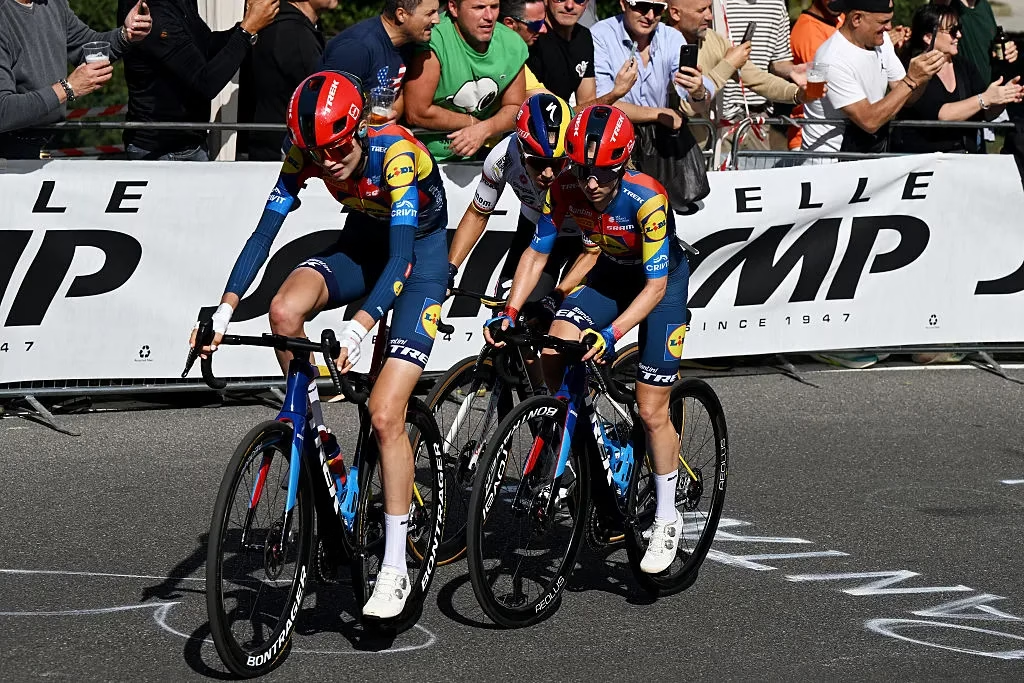
Passo Tre Croci and Passo Sant’Antonio set the tone
The early climbs are where the stage can become much harder than it looks on a basic route summary. Passo Tre Croci is around 7.8km at 7.5%, while Passo Sant’Antonio is around 7.6km at 8.3%. Those are serious climbs in any stage race, and they come before the finishing circuit rather than as the final act.
That matters because riders cannot treat this as a waiting game for the final kilometre. If the pace is hard over Tre Croci and Sant’Antonio, the group of contenders could already be reduced before Santo Stefano di Cadore comes into focus. If the climbs are ridden more conservatively, the final circuit becomes even more explosive.
The descents and valley sections between the climbs will also be important. This is Dolomite terrain, so rhythm matters. A rider who is distanced over the top of a climb may still return if teammates are present and the race hesitates. Equally, a small split can become significant if the strongest teams keep pushing over the crest.
That is the difference between this stage and the time trial. The climbing is not just about watts. It is about where the effort is made, which teammates remain, and who has the confidence to keep pressure on after the summit.
The final circuit around Santo Stefano di Cadore
The finishing circuit is the key tactical feature of the stage. The race enters a loop of around 23km, with two ascents of Costa before the finish in Santo Stefano di Cadore. At around 4km at 9%, Costa is exactly the sort of climb that can break a reduced GC group after a long mountain day.
The first ascent should show who is struggling. It may not produce the winning move, but it can remove domestiques and force weaker GC riders into defensive riding. The second ascent is where the stage should become decisive. At that point, riders will have already absorbed more than 3,000 metres of climbing, and the gradients will feel much steeper than they would in isolation.
Because the finish is not a simple summit finish, timing becomes important. A rider who attacks too early on the final ascent may still have work to do after the climb, depending on the exact run-in. A rider who waits too long risks allowing a more explosive climber to go clear over the steepest ramps.
This is where teams with multiple GC cards could become dangerous. If one rider attacks on the first passage and another waits for the second, the race leader’s team may have to make difficult choices.
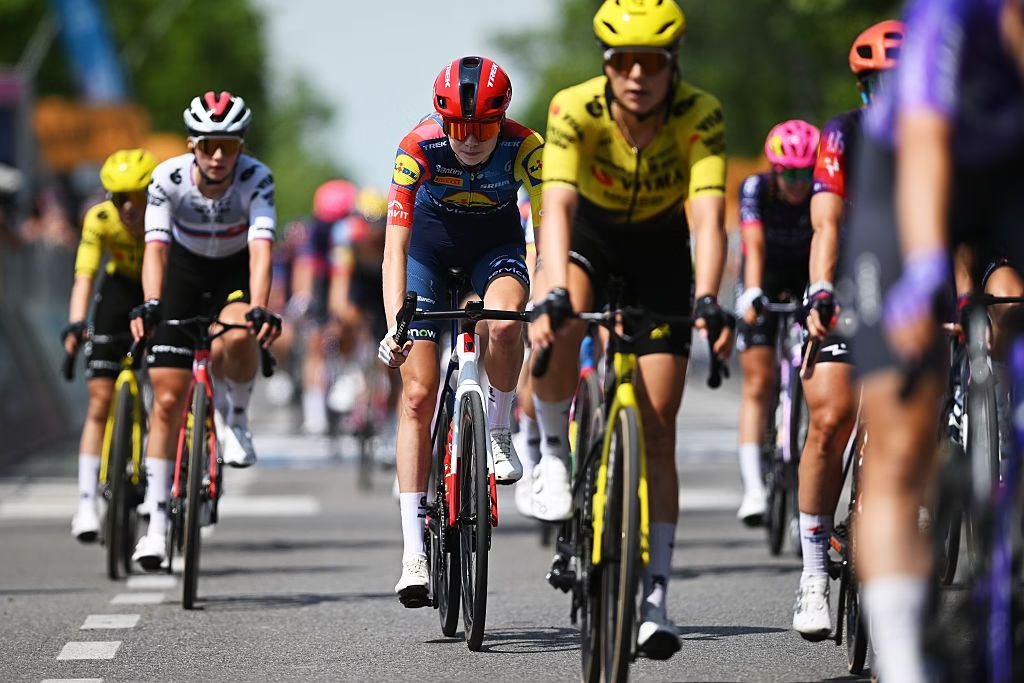
Who does stage 5 suit?
Stage 5 suits climbers who can handle repeated efforts, not just riders with a single explosive acceleration. The route asks for endurance, recovery and tactical patience. It is a day for riders who can survive a hard first half, stay positioned through the descents and then still produce a decisive effort on the final circuit.
Anna van der Breggen starts as the obvious reference point because she now has the maglia rosa. She has the experience to manage a difficult day, the climbing strength to respond on Costa and the tactical calm to avoid being pulled into unnecessary moves too early. The question is not whether the terrain suits her, but how much responsibility her team wants to take before the final weekend.
Demi Vollering should remain one of the most dangerous challengers. This is the kind of stage where she can use both climbing strength and race intelligence, especially if the final circuit becomes a head-to-head GC fight. She does not need the race to be chaotic, but she can also exploit it if the group becomes small.
Elisa Longo Borghini has a strong case too. A Dolomite road stage with repeated climbs, descents and tactical transitions is exactly the sort of terrain where her experience becomes valuable. She may not need to make one spectacular attack if she can instead grind the group down and force others to respond.
Marlen Reusser will be fascinating to watch. The time trial suited her more obviously than stage 5, but if she is still high on GC after Nevegal, the question becomes how well she can defend across repeated climbing. She has the engine, but the Costa circuit may be a sterner climbing test than she would ideally choose.
Climbers who could move up
Niamh Fisher-Black has the kind of profile that should suit this stage, especially if the pace is selective before the final climb. She can climb well enough to stay with the best and may benefit if Lidl-Trek can use numbers after Balsamo’s strong opening phase of the race. If the race shifts towards a pure GC contest, Fisher-Black becomes one of the more important riders to watch.
Antonia Niedermaier is another strong candidate for a major move. The climbs are hard enough to reward her, and the stage is demanding enough to create gaps beyond bonus seconds. If she is close after Nevegal, this could be an opportunity to turn climbing ability into a serious GC statement.
Urška Žigart, Monica Trinca Colonel, Isabella Holmgren, Barbara Malcotti and Mavi García all have reasons to target this stage. García brings experience and climbing aggression, while Holmgren and Niedermaier represent the younger riders who could make significant gains if the established favourites hesitate. Trinca Colonel and Malcotti may also benefit from a stage where consistency across several climbs is more valuable than one all-out attack.
The young rider contest could change significantly here too. Célia Gery, Viktória Chladonová, Rosita Reijnhout, Holmgren and Lore De Schepper were all part of the GC conversation before the mountains began properly, but stage 5 is the sort of day where that order can break apart quickly. A rider who handles the Dolomite climbs well could take a major step towards the white jersey.
Could the breakaway survive?
Stage 5 is difficult enough for a breakaway to matter, but whether it survives depends on how Team SD Worx-Protime and the other GC squads decide to race. If Van der Breggen has a comfortable enough lead, there may be room for a non-threatening move to go clear. If the overall picture remains tight, the break may be held closer because bonus seconds, stage prestige and tactical control all matter.
The stage profile gives breakaway riders several opportunities to build a gap, but the final circuit is a problem. Two ascents of Costa mean that any break will need strong climbers, not just early attackers. A mixed move with rouleurs and opportunists may survive deep into the stage, but the steep final climbs are likely to expose anyone who has been carried along by the group.
The most dangerous breakaway riders are those close enough in quality to climb with GC contenders, but far enough down overall not to provoke an immediate chase. If the big teams begin marking each other, stage 5 could reward a strong climber who goes early and keeps enough in reserve for the final circuit.
What does stage 5 mean for Elisa Balsamo?
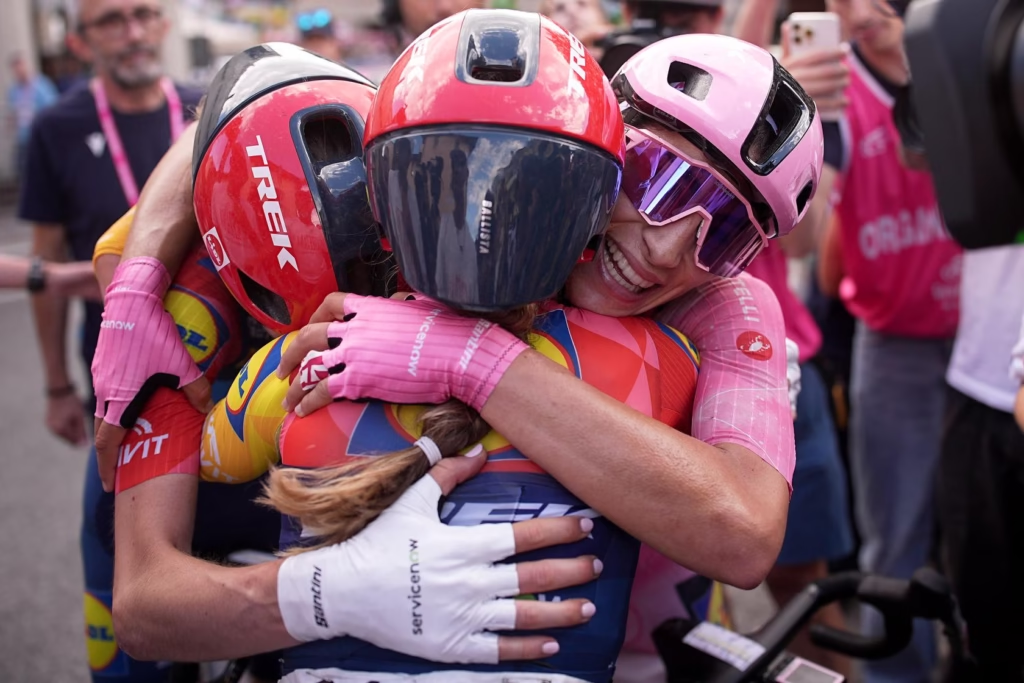
Balsamo’s Giro has already been hugely successful, but stage 5 is a very different kind of problem. After three stage wins and a commanding lead in the points classification, the race now moves into terrain that is far less suited to her strengths.
Without the maglia rosa, her task becomes clearer. She no longer has to defend the overall lead on a day built for climbers. Instead, the priority should be survival, managing energy and protecting her points classification ambitions. Stage 6 to Brescello should offer a much more favourable opportunity for the fast finishers, so the danger is spending too much energy on stage 5 and compromising the next chance.
For Lidl-Trek, the leadership focus also changes. Balsamo remains hugely important to the race, but the GC picture now points more towards Fisher-Black and the team’s climbing resources. Stage 5 is where Lidl-Trek will need to balance Balsamo’s points campaign with any realistic overall ambitions.
Where stage 5 can be won or lost
The most obvious decisive point is the second ascent of Costa, but the stage can be lost much earlier. A rider isolated before the final circuit will be vulnerable. A poor descent after one of the earlier climbs could force a costly chase. A missed feed or badly timed effort over Passo Sant’Antonio may only show up later, when the road steepens again near Santo Stefano di Cadore.
The key factors should be:
- surviving Passo Tre Croci without burning too many teammates
- staying positioned over Passo Sant’Antonio
- using the descents and valley roads efficiently
- entering the final circuit near the front
- reading the first ascent of Costa without overreacting
- committing fully on the second ascent if the stage or GC gap is there
The stage rewards teams that can think several moves ahead. It may not be enough simply to have the strongest rider. The best squad will need to decide whether to control, attack, isolate rivals or let a breakaway carry the stage while protecting GC.
-
 Photo Credit: Getty
How to watch stage 5 in the UK
Giro d’Italia Women 2026 stage 5 is being shown live in the UK on TNT Sports and HBO Max. TNT Sports lists the stage as starting at 12:10 BST, although live broadcast windows can sit slightly later depending on the television schedule.
Full UK broadcast information for the race is available in our guide on how to watch the Giro d’Italia Women 2026 in the UK.
Giro d’Italia Women 2026 stage 5 prediction
Anna van der Breggen is now the reference point, but Demi Vollering still looks the strongest pick for the stage win if the final circuit becomes selective. The route gives her the sustained climbing, repeated efforts and tactical complexity that suit a complete GC rider. If the race splits on Costa, she has the profile to either attack herself or respond to moves from Van der Breggen, Longo Borghini and the other main contenders.
Vollering and Van der Breggen look like the most obvious threats. Vollering has the experience and resilience for a stage that may be decided as much by timing as by pure climbing, while Van der Breggen now has the jersey, the form and the race craft to make the Santo Stefano di Cadore circuit work in her favour.
Niamh Fisher-Black, Antonia Niedermaier and Mavi García are also credible contenders if the race becomes more open. A breakaway cannot be ruled out, particularly if the GC teams hesitate after the Nevegal time trial, but the severity of the final circuit should still pull the strongest climbers towards the front.
Stage 5 is unlikely to decide the Giro d’Italia Women outright. It should, however, make the GC battle feel real on the road for the first time. After Nevegal sorted the riders individually, Santo Stefano di Cadore will show which teams can race the mountains properly.

