
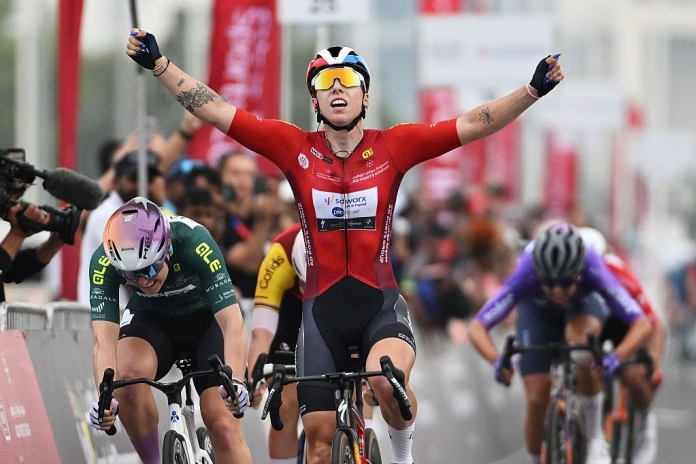
Women’s cycling sprint finishes are getting faster because the whole race into the sprint is faster. The final 150 metres still belongs to the rider with timing, nerve and acceleration, but the modern sprint is no longer just a late burst from a loose bunch. It is the visible end point of a much quicker final hour, with better lead-outs, deeper teams, improved equipment, more refined training and a peloton that is now able to hold high speed for longer.
The numbers make the shift obvious. In 2025, Lorena Wiebes won stage 2 of the UAE Tour Women at an average speed of 48.407km/h, the fastest recorded Women’s WorldTour stage. At Paris-Roubaix Femmes, the first edition in 2021 was won at 39.656km/h, before the race rose to 40.48km/h in 2025 and then 40.834km/h in 2026. The Tour de France Femmes has shown the same trend on fast road stages, with stage 1 in 2024 won at 45.057km/h and stage 3 in 2025 at 44.232km/h.
Those figures do not all describe identical races. A flat desert stage, a cobbled Classic and a Tour de France Femmes road stage are shaped by different terrain, weather, wind and tactics. But they point in the same direction. Women’s racing at the top level is being ridden at higher sustained speeds, and sprint finishes are the clearest place to see the change.
For more on the current sprint hierarchy, our piece on how to beat Lorena Wiebes looks at the uncomfortable tactical problem facing every sprint team, while our guide to the best sprinters in the 2026 Giro d’Italia Women shows how deep the field has become.
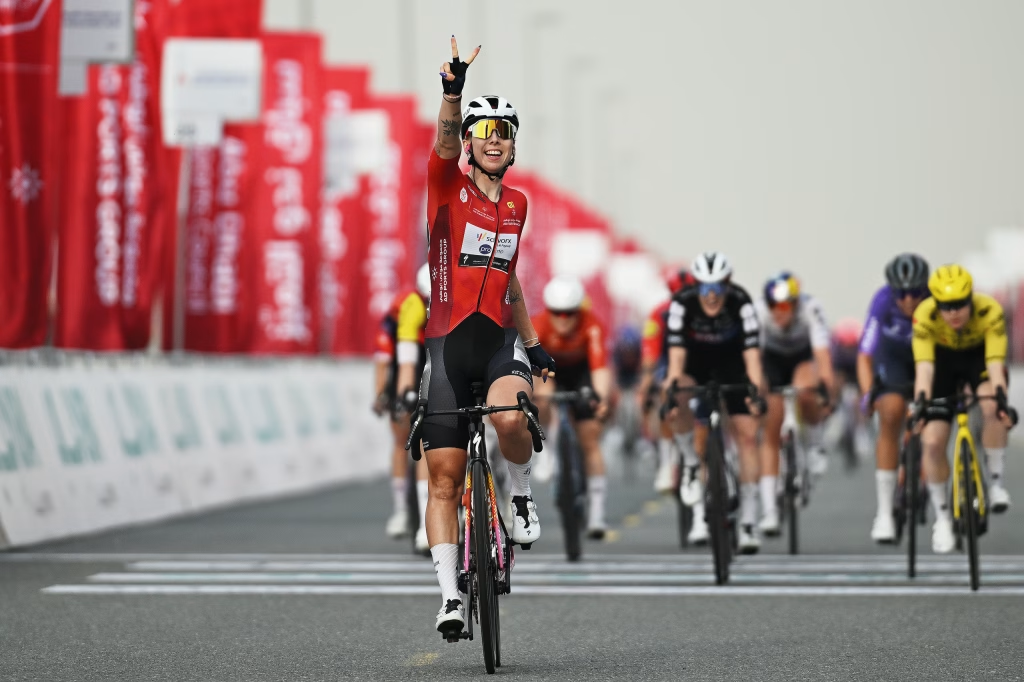 Photo Credit: Getty
The fastest women’s races show the trend
Average speed is not a perfect measure of sprinting, because every route is different. Wind direction, road width, stage length, elevation, peloton size and tactical control all affect the final number. Even so, the top-end benchmarks are useful because they show the level at which the women’s peloton can now operate.
| Race or stage | Year | Winner | Distance | Average speed | Why it matters |
|---|---|---|---|---|---|
| UAE Tour Women stage 2 | 2025 | Lorena Wiebes | 111km | 48.407km/h | Fastest recorded Women’s WorldTour stage |
| Tour de France Femmes stage 1 | 2024 | Charlotte Kool | 69.7km | 45.057km/h | Fastest stage in Tour de France Femmes history |
| Tour de France Femmes stage 3 | 2025 | Lorena Wiebes | 163.5km | 44.232km/h | Second-fastest stage in Tour de France Femmes history |
| Paris-Roubaix Femmes | 2026 | Franziska Koch | 143.1km | 40.834km/h | Fastest edition of the women’s Roubaix |
| Paris-Roubaix Femmes | 2025 | Pauline Ferrand-Prévot | 148.5km | 40.48km/h | First edition clearly above the 40km/h mark |
| Paris-Roubaix Femmes | 2021 | Lizzie Deignan | 116.4km | 39.656km/h | Benchmark from the first edition |
The UAE Tour Women figure is the headline-grabber because 48.407km/h is extraordinarily fast for a road stage. But the Roubaix data is arguably more revealing in a different way. Paris-Roubaix Femmes is not a smooth, flat sprint stage. It includes cobbled sectors, positioning fights, repeated accelerations and technical stress. For that race to move above 40km/h shows how much stronger and more organised the front of the women’s peloton has become.
The Tour de France Femmes numbers also matter because they come from the sport’s most visible women’s stage race. A 45.057km/h stage in 2024 and a 44.232km/h stage over 163.5km in 2025 show that fast women’s racing is not limited to short stages or specific desert conditions. The speed is now being repeated across major race environments.
Faster finales start long before the sprint
The biggest reason sprint finishes are getting faster is that the run-in now begins much earlier. A decade ago, many women’s races still had a looser final structure. Strong teams existed, but fewer squads had the depth to control the breakaway, manage the chase, protect a leader and still deliver a dedicated sprint train.
That has changed. In the biggest races, the final 30km can now become a sustained fight for position. Teams move earlier to avoid being boxed in. Lead-out riders commit before the final bends. Domestiques burn themselves off keeping the bunch lined out. Once that happens, the final sprint is launched from a much higher base speed.
This is why a sprint can look quicker even before the winning rider opens up. A sprinter launched at 60km/h from a structured lead-out after a stage ridden at more than 44km/h is operating in a very different environment from a rider coming out of a slower, more hesitant finale. The top-end speed matters, but so does the speed of the whole approach.
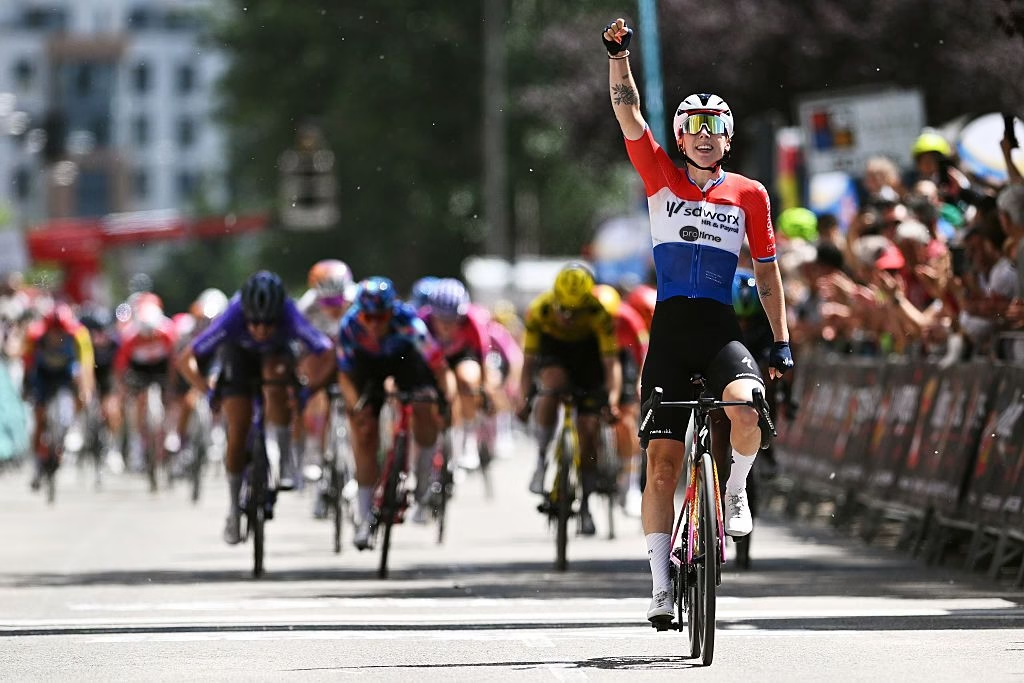 Photo Credit: Getty
Lead-outs are becoming more specialised
The rise of proper sprint trains has transformed women’s sprinting. The best teams now build structured lead-outs around clear roles: early positioning riders, final kilometre pilots, last lead-out riders and the sprinter herself. That has made the finales faster and more predictable in one sense, but also more intense.
A sprinter like Wiebes benefits from this enormously. Her raw speed is already exceptional, but what makes her so difficult to beat is that she is often delivered into the right place at the right time. When a team can keep a race fast, protect its sprinter through the final corners and prevent chaotic surges from disrupting the launch, the sprint becomes a controlled weapon rather than a gamble.
It is not only Team SD Worx-Protime shaping that shift. Lidl-Trek, Canyon SRAM zondacrypto, Team Picnic PostNL, UAE Team ADQ and several other squads have all contributed to a deeper sprinting culture. The more teams commit to organised lead-outs, the faster the whole finale becomes, because nobody can afford to wait.
That creates a self-reinforcing cycle. Better trains raise the speed. Higher speed forces better positioning. Better positioning demands stronger support riders. Stronger support riders make the sprint even quicker.
Sprinters are surviving harder races
Another major change is that the fastest women are no longer limited to flat, clean sprint stages. Many of the best sprinters can now survive lumpy terrain, repeated accelerations and selective finales before still producing a decisive kick.
Elisa Balsamo’s stage 3 win at the 2026 Giro d’Italia Women was a useful example. The finale in Buja was hilly and chaotic enough to briefly threaten the sprinters, with Sigrid Ytterhus Haugset almost holding off the reduced bunch, yet Balsamo still came through late to win. That was not a simple flat lead-out. It was a sprint after a difficult, selective run-in, and it showed why modern fast finishers need more than pure speed. The full race report is here: Giro d’Italia Women 2026 stage 3: Elisa Balsamo wins again in Buja after Haugset is caught late.
That versatility has changed how teams race. They know riders such as Balsamo, Marianne Vos, Lotte Kopecky, Chiara Consonni and Lara Gillespie can remain dangerous after harder days, so they are more willing to chase, control and keep the race together. The sprint does not need to come after a completely flat stage. It can come from a reduced group after climbs, wind, road furniture and late attacks.
This has created several different sprint types within women’s racing: the full bunch sprint, the reduced sprint, the uphill drag, the technical city finish, the post-climb sprint and the endurance sprint after a day that has already removed half the field.
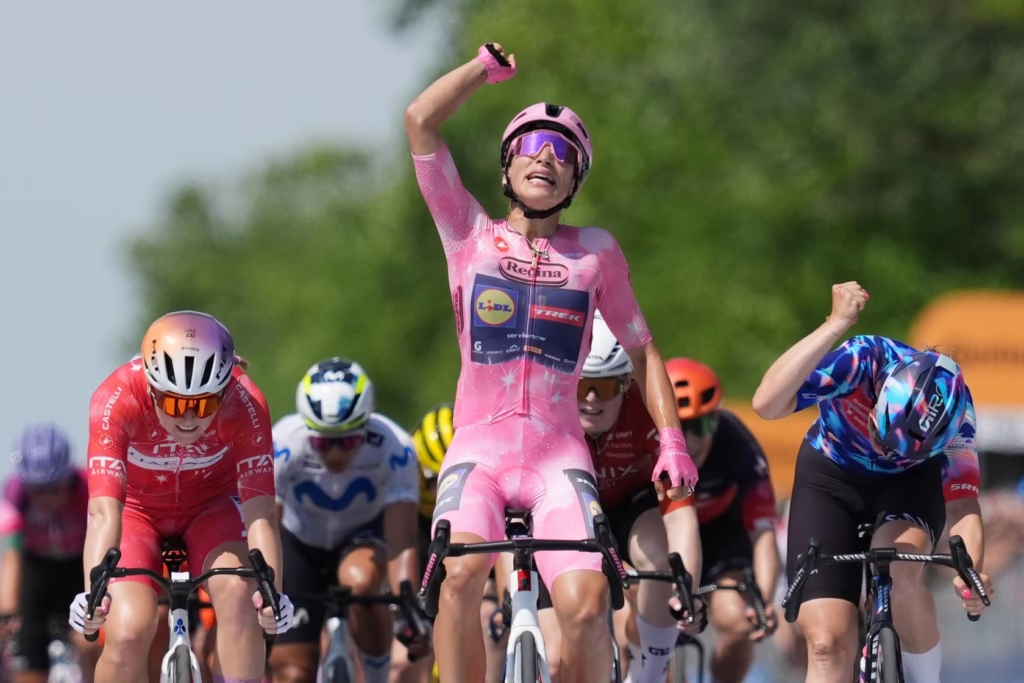 Photo Credit: RCS
The calendar gives sprint teams more chances to practise
The calendar has also helped. More high-level women’s races now include proper sprint opportunities across stage races and one-day events. The Tour de France Femmes, Giro d’Italia Women, La Vuelta Femenina, UAE Tour Women, Tour of Britain Women and other races have given sprinters more chances to refine their craft against top opposition.
That matters because sprinting improves through repetition. Lead-outs need practice under pressure. Sprinters need to learn how different teammates deliver them. Teams need to understand which corners, distances and wind directions suit their rider. You cannot build that from training alone.
A deeper race calendar also means more riders develop into specialists. A young sprinter can now see a clearer pathway: junior racing, development squads, Continental opportunities, then WorldTour lead-out or sprint roles. That pathway is still not as deep as it should be, but it is far stronger than it was.
The outcome is visible in the finals. More teams know what they are trying to do. More riders are comfortable in high-speed run-ins. More sprinters have experience of winning under pressure.
Equipment and aerodynamics are narrowing the margins
Modern equipment has played a part too. Bikes, wheels, tyres, skinsuits, helmets and cockpit positions have all become more refined, and women’s teams now have far better access to performance support than previous generations did.
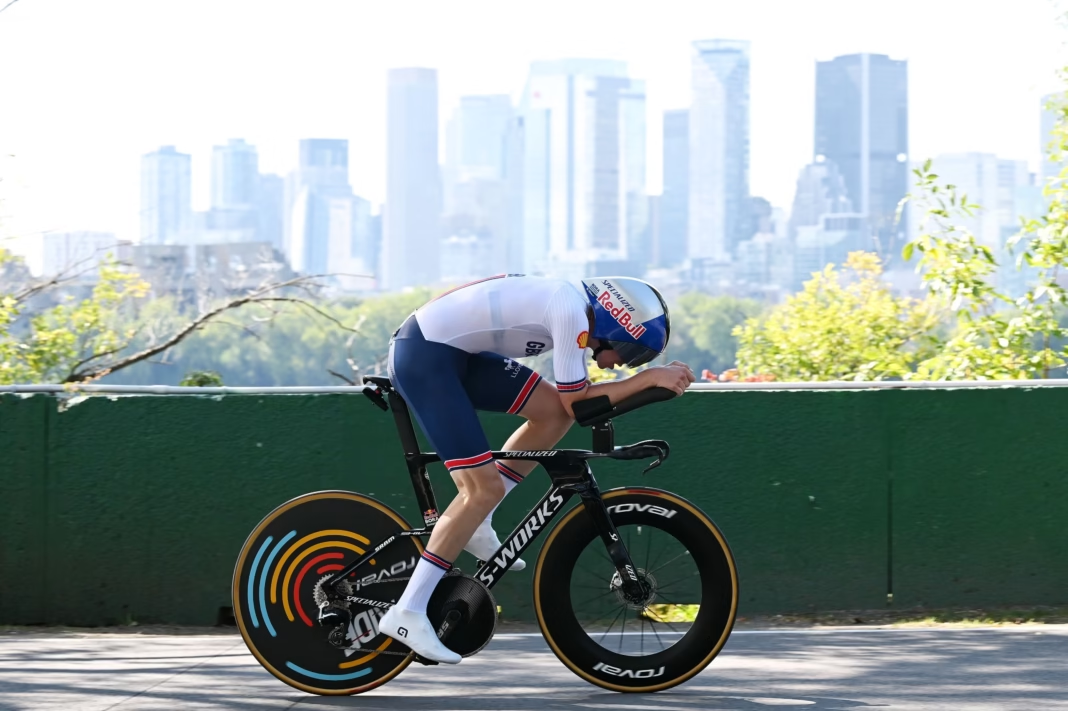
The gains are not magic. A faster bike does not win a sprint without the rider. But at the top level, small efficiencies matter. A more aerodynamic position in the final kilometre, lower rolling resistance, better tyre pressure choices and improved wheel selection can all help a rider preserve energy before the launch.
The bigger shift is that more women’s teams now take these details seriously across the whole squad, not only for the star rider. If the lead-out riders are more aerodynamic and better equipped, they can hold higher speeds for longer. If the sprinter is fresher because the team has been more efficient all day, the final kick becomes more powerful.
Sprinting is often described through peak speed, but the real performance question is usually energy preservation. The fastest rider at 200 metres to go is often the one who has spent the least unnecessary energy getting there.
Training has become more specific
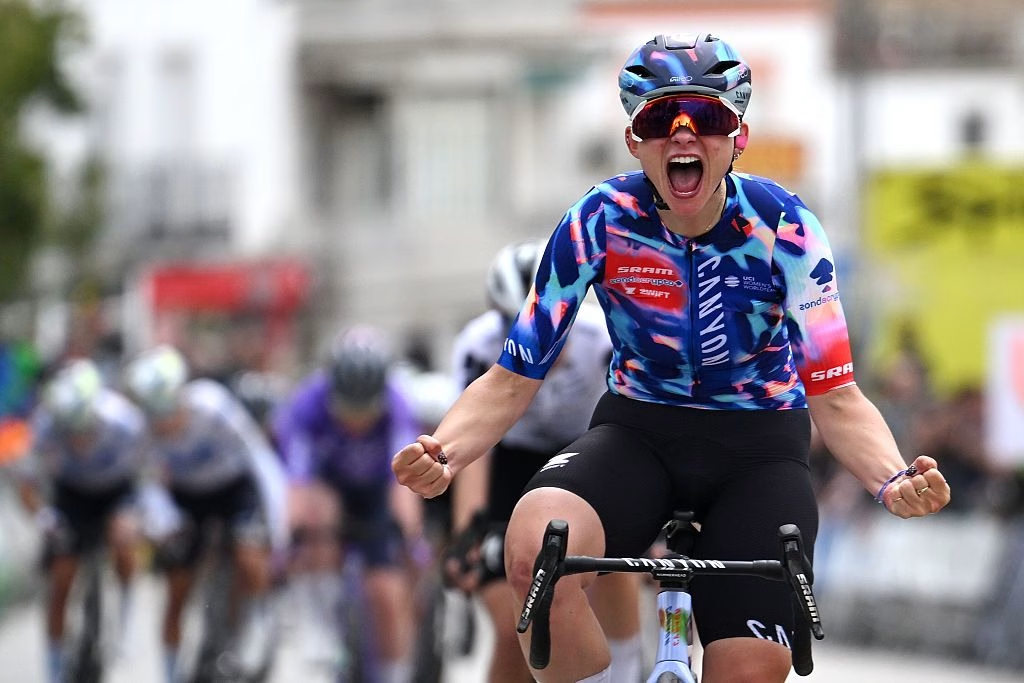
Training for women’s sprinters has become more specialised. Sprinting is no longer treated as simply being naturally fast. The best riders work on repeated efforts, gym strength, launch timing, bike handling, lactate tolerance, positioning, starts, lead-out communication and the ability to sprint after fatigue.
That final point is vital. Road sprinting is not track sprinting. It happens after hours of racing, with stress, wind, corners, climbs and constant accelerations. The ability to produce speed while tired is often more important than a single fresh sprint number.
This is where modern coaching has made a difference. Teams can analyse power, speed, fatigue, positioning and race files in detail. They can study exactly where a sprint was lost: too much time in the wind, wrong wheel, late launch, poor gear choice, bad corner entry, or lack of support from 3km to go.
The best sprint teams are learning faster because they now have more data, more staff and more race examples to review.
The field is deeper, so the sprint has to be cleaner
A deeper peloton makes sprinting faster because it leaves less room for improvisation. When only a handful of riders can realistically win, a strong sprinter may recover from poor positioning and still come through. When there are 10 or 15 dangerous fast finishers, mistakes are punished.
That is increasingly the case in women’s cycling. Wiebes may remain the benchmark in pure speed, but she is not sprinting against a thin field. Balsamo has race craft and endurance. Kool has top-end speed. Consonni has timing. Vos brings experience and positioning. Kopecky can win from reduced groups or harder races. Gillespie is developing into a serious fast finisher.
Riders such as Lily Williams, Martina Fidanza, Anniina Ahtosalo, Daria Pikulik, Maggie Coles-Lyster and Megan Jastrab add further depth depending on the race. That depth changes the final kilometre. A rider cannot simply wait for the obvious wheel. Too many teams want the same space. Too many sprinters can punish hesitation. That forces earlier commitment and higher speed.
 Photo Credit: Cor Vos
Technical finales are shaping the modern sprinter
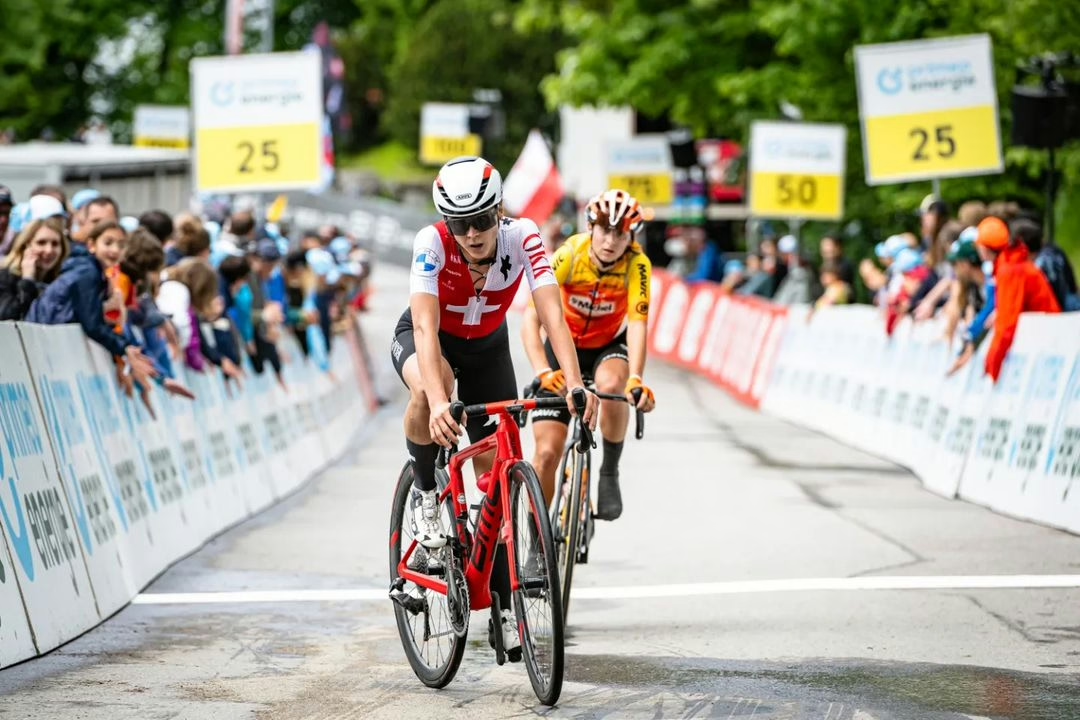
Women’s sprint finishes are also getting faster because riders are becoming better at handling technical run-ins. Modern race finales often include road furniture, roundabouts, narrow streets, traffic islands and late corners. The fastest sprint is not always launched by the rider with the biggest top speed. It is launched by the rider who exits the final corner in the right position, at the right speed, with the right wheel.
This has made bike handling a central part of sprinting. The best sprinters are not just powerful. They are precise. They know when to move up, when to hold position, when to surf wheels and when to trust their lead-out. They also know when not to panic, which can be just as important.
A technical final can make a sprint look chaotic, but the best riders are usually working to a clear plan. The apparent randomness often hides a lot of preparation: route recon, video analysis, final kilometre notes and team meetings about where the race must be positioned before the decisive turn.
Dual-threat riders have changed sprint tactics
One of the most important developments in women’s racing is the number of riders who can sprint and survive difficult terrain. These riders are not pure sprinters in the old sense. They are Classics riders, puncheurs, track-influenced finishers or stage-race fast women who can handle selective days.
That has made teams more flexible. A squad no longer has to choose between riding for a climber or riding for a sprinter on every intermediate stage. Kopecky can be used in hard Classics-style racing and still finish it off. Vos has built a career on that ability. Balsamo can survive more than many pure sprinters. Gillespie and Consonni also bring versatility.
This changes the way teams approach the finale. Instead of waiting for a completely flat sprint, they may keep the pressure on over late climbs to remove pure speed rivals. The sprint that remains may be smaller, but it can be faster because the riders left are both strong and fresh enough to finish properly.
Race organisers are designing better sprint opportunities
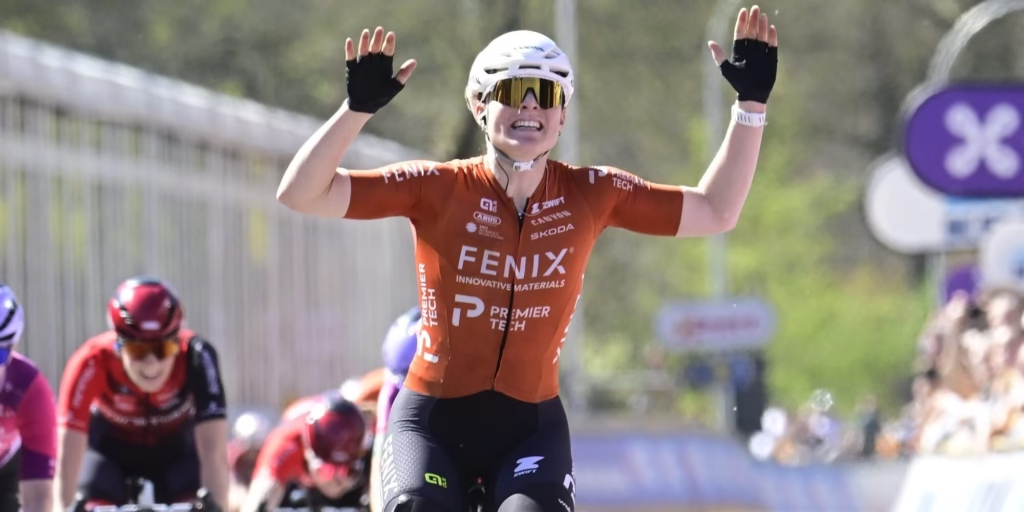
Women’s racing has also benefited from more deliberate route design. Stage races now often include clearer sprint days, more varied finales and better-balanced routes. That gives fast finishers meaningful opportunities rather than making every day either too easy to control or too hard for them to survive.
A good sprint stage is not necessarily flat from start to finish. It needs roads that allow teams to chase, a finish that is safe enough to contest, and enough tactical tension to make the final hour worthwhile. As organisers improve route planning, sprint teams can plan more effectively.
The Giro d’Italia Women 2026 opening stages showed how much this matters. The early part of the race gave Balsamo repeated opportunities to use speed, positioning and resilience before the route turned sharply towards the climbers. That kind of structure creates storylines: sprinters take control early, GC riders wait for their terrain, and the classifications begin to pull in different directions.
Faster sprinting also raises safety questions
Faster finishes inevitably raise the question of safety. Higher speeds, more teams fighting for position and deeper sprint fields can create risk, especially on roads that narrow late or include complex street furniture.
That does not mean sprinting should be less competitive. It means route design, barrier placement, final kilometre clarity and rider behaviour all matter. The faster women’s sprinting becomes, the more important it is that race organisers treat sprint finishes as specialist environments requiring proper planning.
A safe sprint is not a dull sprint. In fact, the best sprint finishes are usually those where the route allows teams to organise properly and riders to launch cleanly. Chaos may look dramatic, but clean speed is often more impressive.
-
 Photo Credit: Cor Vos


What the speed increase tells us about women’s cycling
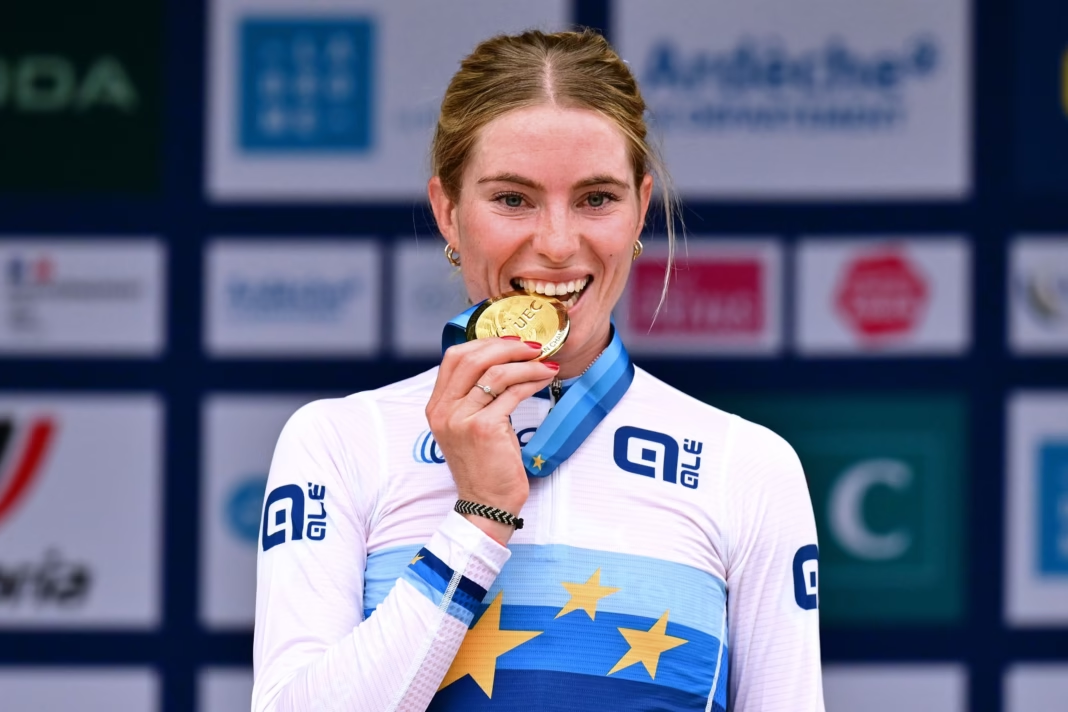
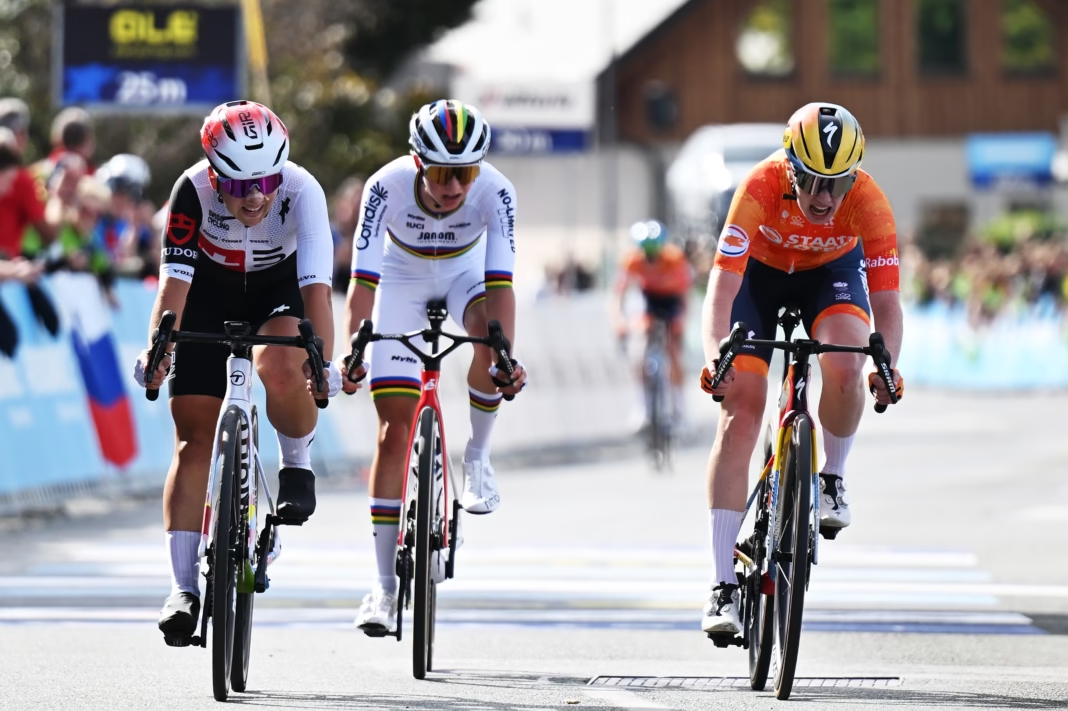
The acceleration of women’s sprinting is a sign of wider progress. It shows deeper teams, better preparation, stronger calendars, greater tactical sophistication and a peloton where more riders are capable of shaping the race.
It also changes how races are watched. Sprint stages are no longer waiting rooms before the climbs. They are technical, strategic and often decisive. Points classifications now carry stronger narratives. Lead-out riders are easier to recognise. Fast finishers are becoming season-long protagonists rather than occasional stage winners.
That is important for the sport’s growth. Sprints are accessible to new fans because the drama is immediate. The line is there, the speed is obvious, and the winner is clear. But the more you understand the build-up, the richer it becomes. The final 200 metres may be the visible part, but the sprint is really formed by the 20km before it.
Why women’s cycling sprint finishes are getting faster
Women’s sprint finishes are getting faster because every part of the sprint environment has improved. The riders are stronger, the lead-outs are more organised, the calendar gives sprinters more opportunities, the teams are better resourced, the equipment is more refined and the tactical knowledge has grown.
The fastest race days now show what that looks like in numbers: 48.407km/h for a Women’s WorldTour stage in the UAE, 45.057km/h at the Tour de France Femmes, and more than 40km/h over the cobbles at Paris-Roubaix Femmes. Those figures are not only trivia. They show a peloton that is able to race harder for longer before the sprint even begins.
The best sprinters are still the stars of the final straight, but they are now supported by structures that make their speed more repeatable. They reach the final kilometre better protected, better positioned and often at a higher speed than before. That is why the modern women’s sprint looks so different: not just faster at the line, but faster in the whole build-up.
The sprint is no longer just a burst. It is a team project, a technical exercise, a tactical battle and one of the clearest visible measures of how far the sport has moved.

