
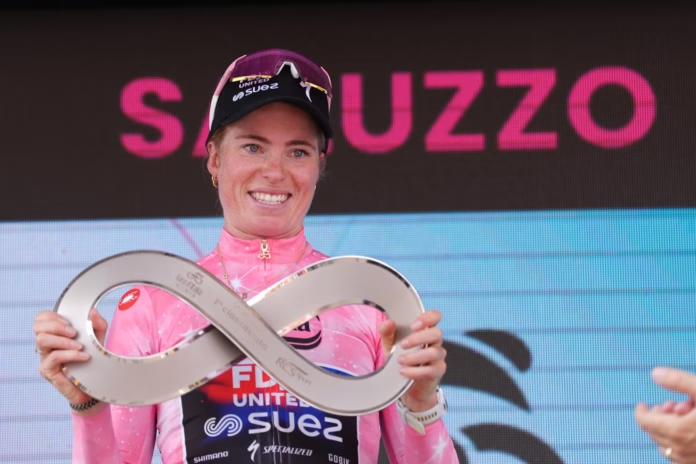
The Giro d’Italia Women 2026 did more than deliver a dramatic final-stage reversal. It reshaped the balance of the women’s WorldTour season, gave Demi Vollering a major Grand Tour win built on persistence rather than control, and turned the summer’s remaining stage-race picture into something far more open than it had looked after the Nevegal time trial.
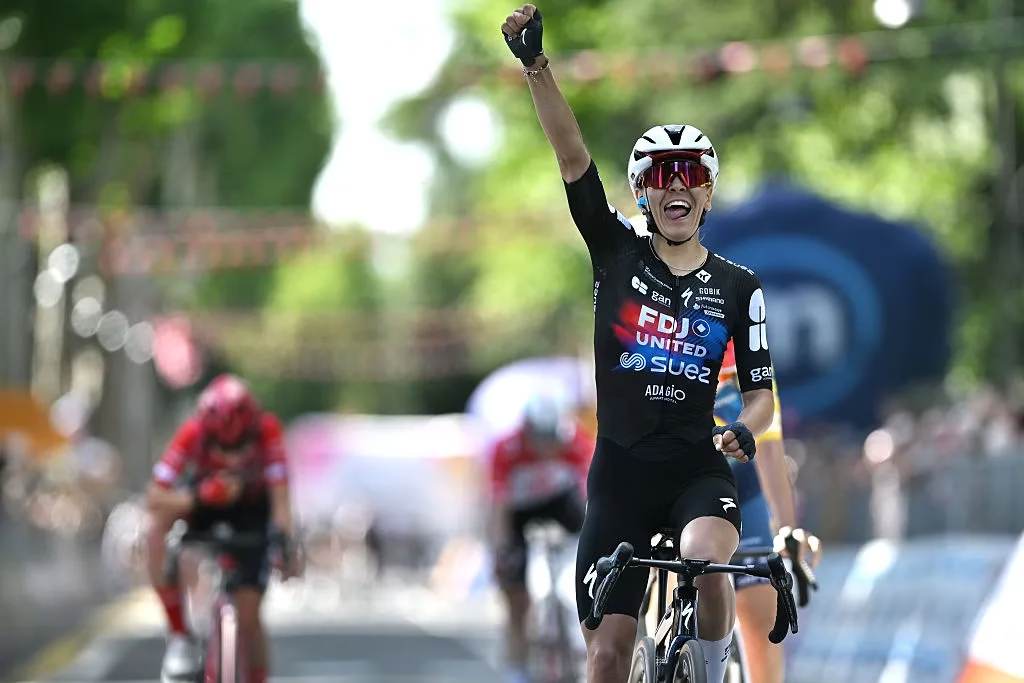
Vollering’s overall victory, sealed on the final day around Saluzzo after starting stage 9 49 seconds behind Anna van der Breggen, was not a routine confirmation of form. It was a race won by pressure. She lost time in the uphill time trial, clawed back ground in the mountains, won at Santo Stefano di Cadore and on the shortened Colle delle Finestre stage, then used the final climbs around Saluzzo to overturn the Giro completely.
That makes the result more significant than a simple Grand Tour win. Vollering leaves the Giro with proof that she can win a major stage race even when the first decisive GC day goes against her. Van der Breggen, meanwhile, showed that her return to top-level stage racing is real, even if the final day took the race away from her. Antonia Niedermaier confirmed that she is no longer just a promising climber, Isabella Holmgren turned the white jersey into a genuine breakthrough, and Elisa Balsamo reminded everyone that she remains one of the most reliable sprint finishers in the peloton.
For the wider season, the Giro now becomes a reference point. It has clarified some riders’ form, exposed others’ limits, and set up the next part of the year with more questions than easy answers.
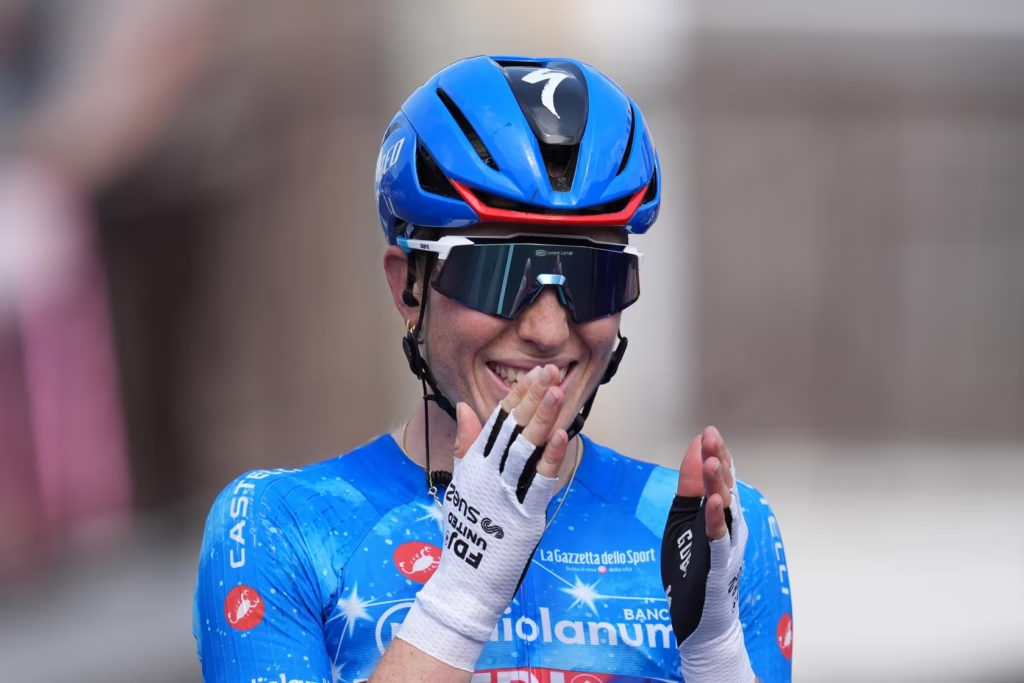 Photo Credit: RCS
Vollering’s Giro win changes the tone of her season
Demi Vollering did not win this Giro from a position of comfort. She was put under pressure by Van der Breggen’s stage 4 time trial, had to chase the race through the mountains, and still needed one final decisive move on stage 9 to take pink.
That kind of victory carries more weight than a race controlled from the first mountain stage. It showed that Vollering could absorb a setback, keep forcing the issue and still have the legs and nerve to attack on the final day. Her win on the Colle delle Finestre had reduced the gap, but it had not solved the race. Saluzzo was where she turned persistence into the overall title.
For FDJ United-Suez, this is a major statement. Vollering has delivered the team a Grand Tour victory in a race where the pressure grew day by day, and the support structure around her also mattered. Célia Gery won stage 7, worked well across the final week and became part of the team’s wider story, while Lauren Dickson was used aggressively in the mountains. This was not only about one leader saving a race. It was a team finding enough ways to keep the Giro alive until Vollering could finish it.
The win also sharpens the rest of Vollering’s season. Any future stage race she enters now carries the weight of a Giro champion in peak competitive rhythm. She has wins, a mountains jersey, and a final-stage comeback on her record. That is the sort of form line that changes how rivals race against her.
Van der Breggen’s return is confirmed, even with the final-day collapse
Anna van der Breggen losing the Giro on the last day should not obscure how strong her race was. She won the Nevegal time trial with authority, moved into pink, defended it through the first major mountain tests and still reached the final stage with a 49-second lead.
That is not the profile of a rider simply finding her way back. It is the profile of a rider who can still control major races at the highest level. The disappointment is obvious because the Giro was within reach, but the evidence from the week is also clear. Van der Breggen can still win at WorldTour level, still time trial at an elite standard, and still shape a Grand Tour.
The question is now about repeatability and recovery. The Giro’s final stage showed that defending deep into a hard race is different from producing one outstanding performance. The old Van der Breggen often made control look simple. This version still has the engine and tactical intelligence, but Saluzzo showed that the peloton around her is now strong enough to keep attacking until the race breaks.
For Team SD Worx-Protime, that creates a useful but complicated picture. They had the maglia rosa, won a major time trial, placed Valentina Cavallar inside the top 10 and fought deep into the final weekend. But they also lost the race from a position of strength. That will sting, especially because Vollering’s final move came from exactly the kind of pressure they had spent days trying to manage.
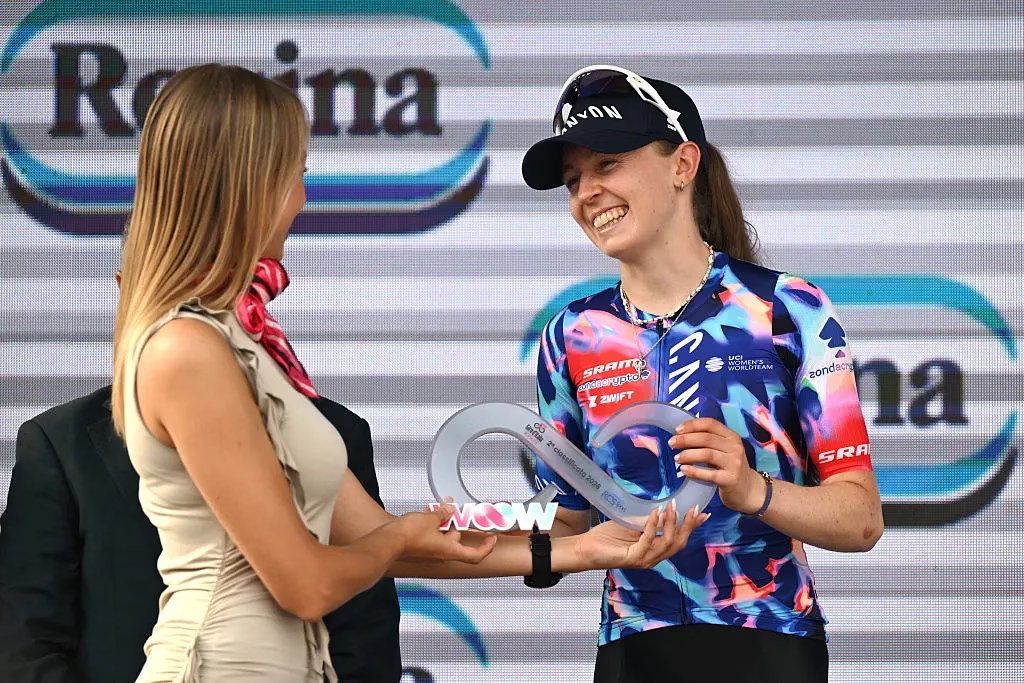
Niedermaier is now a Grand Tour podium rider
Antonia Niedermaier’s second place changes her status. Before this Giro, she was already known as a major climbing talent with a high ceiling. After it, she has a Grand Tour podium, a near-miss in the overall classification, and a race where she actively shaped the decisive final day.
Her stage 9 aggression was not a decorative attack. It helped destabilise the maglia rosa and pulled the Giro into the kind of terrain where Vollering could finish the job. Niedermaier did not simply follow the two biggest names and inherit a result. She raced like someone trying to win.
That is important for Canyon SRAM zondacrypto. The team now has another clear Grand Tour reference point, and Niedermaier’s performance gives them a route into future stage races where they do not need to wait for others to make the first move. She climbed consistently, handled the final weekend and finished only 30 seconds from the overall win.
For the season ahead, she becomes a much more closely marked rider. That is the price of a breakthrough. Teams will not give her the same freedom if she attacks from distance, and she will be treated as a genuine GC threat rather than a developing rider who might have a good day.
Holmgren turns potential into a white jersey and top-10 GC
Isabella Holmgren’s Giro was one of the most important development results of the race. Winning the young rider classification was impressive enough, but finishing seventh overall and second on the Finestre made it much more than a youth-jersey story.
The performance showed climbing depth, recovery and composure. Holmgren was not surviving the hard days at the back of the GC group. She was present when the race was reduced to its strongest climbers and looked comfortable enough to influence the shape of the final mountain stages.
That gives Lidl-Trek a major long-term boost. The team already had Elisa Balsamo dominating the sprint side of the race and Niamh Fisher-Black finishing fifth overall, but Holmgren’s ride gives them another GC pathway for the future. Her white jersey win was not built on avoiding bad days while others faded. It came from genuinely high-level climbing.
For the wider season, Holmgren’s status changes quickly. She will now be watched in every hilly and mountainous stage race she starts. The Giro gave her both a result and a reputation, which can be both useful and restrictive. The next challenge is racing with that attention.
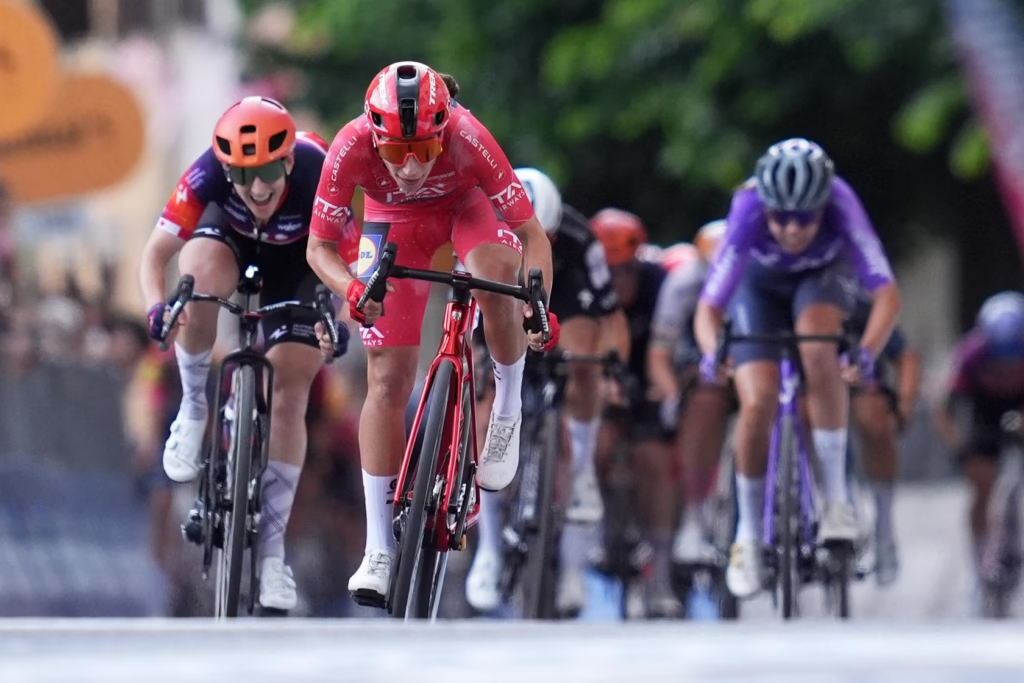
Balsamo reasserts herself as the season’s most dependable sprinter
Elisa Balsamo’s Giro began with the unusual circumstances of Lorena Wiebes’ stage 1 disqualification, but everything after that was earned in the usual way: positioning, timing and repeated finishing speed.
She won the points classification by a huge margin and controlled the ciclamino jersey competition long before the race reached its final weekend. On a route that eventually became a GC fight between climbers, Balsamo still left as one of the defining riders of the race.
That has a clear knock-on effect for the rest of the season because the sprint hierarchy in women’s cycling can shift quickly. Wiebes remains the benchmark on many days, but Balsamo’s Giro was a reminder that she is still one of the few riders who can repeatedly convert sprint chances across a multi-day race. It was not a single opportunistic win. It was a pattern.
For Lidl-Trek, the Giro was strong across almost every category. Balsamo won the points jersey, Holmgren won white, Fisher-Black finished fifth, and the team won the Super Team classification. That breadth gives them momentum well beyond this race.
Longo Borghini salvages the Giro with final-stage victory
Elisa Longo Borghini did not get the overall result she would have wanted, but her stage 9 victory changed the feel of her race. Winning in Saluzzo on the day the Giro was overturned gave UAE Team ADQ a major result and moved her to fourth overall.
It also showed that she remains one of the most dangerous riders when a race becomes tactical after the climbs rather than simply being decided by a pure summit finish. The final stage suited her experience, her ability to read a reduced group and her willingness to commit when the race was unstable.
For her season, that is useful. The Giro confirmed that she was not the strongest climber in the race, but it also showed that she can still win from elite groups on hard terrain. That makes her a threat in hilly one-day races, selective stage finishes and any race where the final climb is followed by a technical or tactical run-in.
UAE Team ADQ will still want more from future Grand Tours, but ending the Giro with a stage win and fourth overall is a strong recovery from a race where the podium gradually moved out of reach.
The race strengthened the next generation
One of the clearest themes of the Giro was the depth behind the most established names. Niedermaier finished second overall. Holmgren won white and finished seventh. Lore De Schepper made the top 10. Femke de Vries finished sixth for Team Visma | Lease a Bike. Célia Gery won stage 7 and climbed into the upper end of the points and youth standings.
That mix is important. The Giro was not only a battle between Vollering and Van der Breggen. It also showed how quickly the next group is closing. These riders are not waiting for easier races to collect results. They are already performing deep into Grand Tours, on climbs, in breakaways and in the final classification.
For the season ahead, that makes team tactics harder to predict. More squads now have riders who can be protected deep into mountain stages, and more young riders have the confidence to race rather than simply follow. The gap between established favourites and emerging contenders is narrowing.
That should make the next major stage races more aggressive. Riders like Niedermaier and Holmgren have shown they can live with the best climbers. The next step is being treated as riders who can win.
The Giro exposed the importance of final-stage design
The 2026 route will be remembered partly because the race was still alive on the final day. Stage 9 was not a conventional summit finish, but it had enough climbing to make defensive racing dangerous and enough distance after the final climb to force tactical decisions.
That final structure shaped the outcome. If the Giro had ended with the Finestre stage, Van der Breggen would have won. Instead, the Saluzzo loop gave Vollering one last chance and gave Niedermaier a platform to attack. The result was a race that turned after many people would have expected the GC to be settled.
That is a useful lesson for women’s stage-race design. A final stage does not need to be the hardest mountain finish to be decisive. It needs to create pressure, fatigue and uncertainty. Saluzzo did exactly that.
For organisers, the 2026 Giro is a strong argument for keeping final days meaningful. For teams, it is a reminder that defending a lead through a hilly final stage can be just as complicated as defending on a summit finish.
-
 Photo Credit: Getty
What it means for the Tour de France Femmes
The Giro now feeds directly into the bigger summer picture. Vollering has a Grand Tour win, Van der Breggen has proof of top-level form, Niedermaier has a podium, Holmgren has a major breakthrough, and Longo Borghini has a final-stage win after an uneven GC race.
The Tour de France Femmes will not simply repeat the Giro, but the form lines are impossible to ignore. Vollering will be one of the defining favourites wherever she starts next. Van der Breggen has shown enough to be treated as a serious threat again. Niedermaier and Holmgren have raised their expectations. Balsamo has strengthened her sprint-season standing. Longo Borghini remains dangerous whenever the route gives her tactical space.
The Giro also showed that the strongest rider on paper does not always control the strongest race. Van der Breggen looked close to winning after stage 8. Vollering still found a way through. That lesson will travel into every major race that follows.
For fans, it sets up the rest of the summer perfectly. The established champions are still there, but the next tier is no longer waiting politely behind them.
What the Giro means for the rest of 2026
The Giro d’Italia Women 2026 leaves the season with a sharper hierarchy, but not a closed one. Vollering is the standout Grand Tour rider from this race, yet Van der Breggen, Niedermaier, Longo Borghini, Fisher-Black and Holmgren all leave with results that can shape their next targets.
Balsamo’s sprint dominance gives Lidl-Trek another clear route to success in flatter races, while the team’s GC depth makes them one of the most balanced squads of the summer. FDJ United-Suez leave with the overall winner and two stage winners. Canyon SRAM zondacrypto leave with a rider who nearly won the Giro. Team SD Worx-Protime leave with both a major time trial win and the frustration of a race that slipped away late.
That mix is what makes the Giro valuable for the season. It did not provide one simple answer. It gave the peloton a new set of questions. Can Vollering carry this form into the next Grand Tour? Can Van der Breggen respond after losing pink so late? Can Niedermaier turn a podium into a win? Can Holmgren keep developing at this speed? Can Balsamo keep putting pressure on Wiebes in the sprint hierarchy?
The Giro has ended, but its consequences now run through the rest of the women’s cycling calendar.

