
The Tour de France 2026 route gives the general classification contenders almost everything they could have feared. There is an opening team time trial in Barcelona, early Pyrenean climbing, a first-week summit finish at Gavarnie-Gèdre, a difficult mid-race block through the Massif Central, Vosges and Jura, a stage 16 individual time trial, and then a final Alpine weekend built around back-to-back finishes at Alpe d’Huez.
That makes this a Tour for complete riders rather than specialists. A pure climber will have to survive the Barcelona team time trial and the stage 16 time trial. A time triallist will have to survive the Pyrenees, Plateau de Solaison, Orcières-Merlette and two Alpe d’Huez finishes. A rider with weak team support could be exposed before the final climb even begins.
The Tour de France 2026 full route guide sets out the stage-by-stage structure, while the Tour de France 2026 route analysis explains where the race is most likely to be won and lost. Based on that route, current form, team strength and Grand Tour pedigree, these are the leading GC favourites for the 2026 Tour de France.
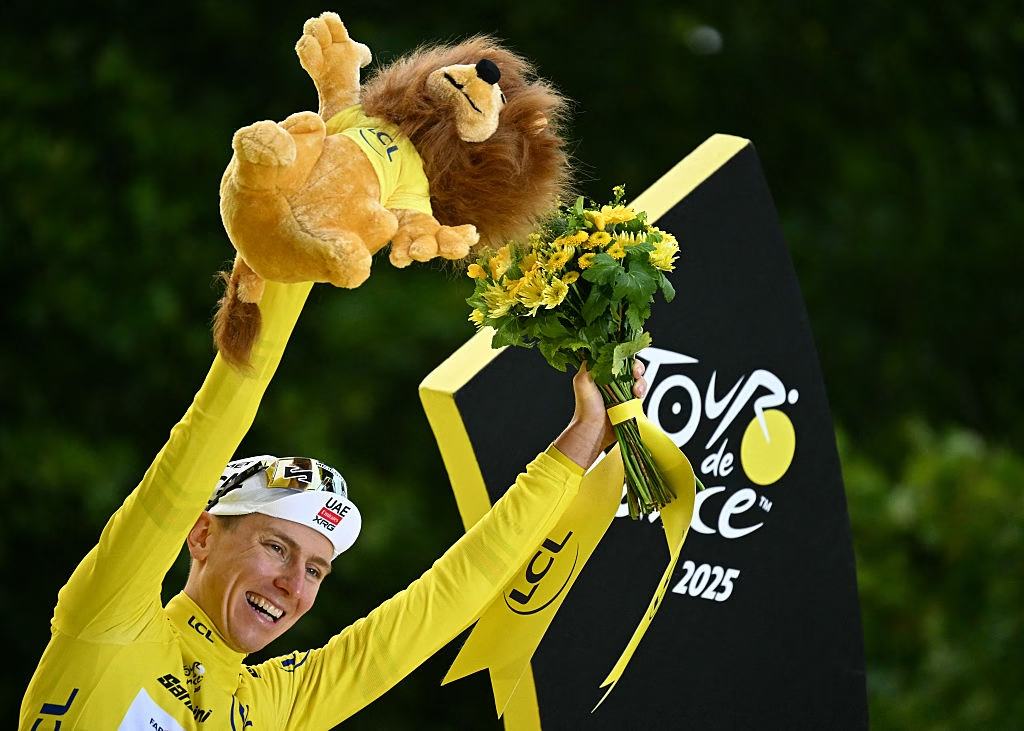
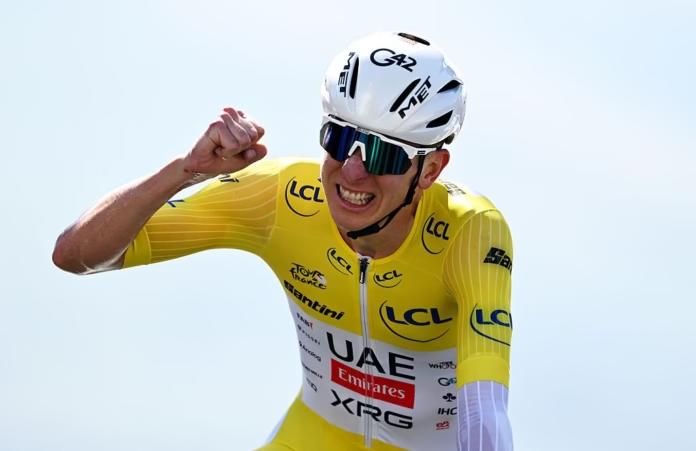
1. Tadej Pogačar
Tadej Pogačar starts as the obvious number one favourite. The route is hard enough, varied enough and explosive enough to suit almost every part of his racing style, and there is no stage type here that should genuinely scare him.
The Barcelona team time trial should be manageable with UAE Team Emirates-XRG’s depth. The early Pyrenees suit his ability to race aggressively from the opening week rather than waiting for a set-piece summit finish. The hilly stages give him places to collect small margins. The stage 16 time trial should not be a problem for a rider who has repeatedly shown that he can limit losses, or gain time, against the clock when the course has climbing and rhythm changes. Then the final Alpine weekend gives him the kind of terrain where he can attack repeatedly rather than rely on one long effort.
The route also rewards punch and recovery, two areas where Pogačar is usually exceptional. Les Angles, Gavarnie-Gèdre, Le Lioran, Le Markstein, Plateau de Solaison, Orcières-Merlette and Alpe d’Huez all offer different types of climbing pressure, but none of them obviously point away from him.
His biggest challenge may be control. UAE Team Emirates-XRG have enormous depth, but that can also create questions of hierarchy if riders such as Isaac del Toro and João Almeida are also present and strong. Still, Pogačar is not simply the strongest rider on paper. He is the one most likely to gain time in several different ways across this route.
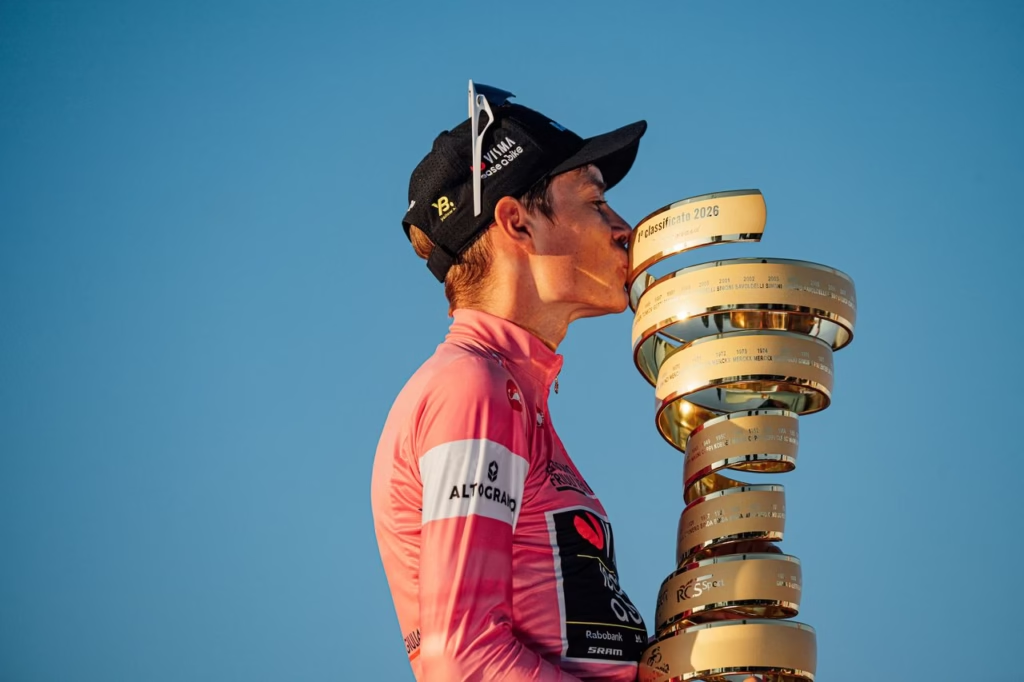 Photo Credit: Getty
2. Jonas Vingegaard
Jonas Vingegaard is the clear second name and the only rider who can be placed close to Pogačar before the race starts. His 2026 Giro d’Italia victory strengthened his status rather than weakened it, confirming that he is still one of the defining Grand Tour riders of this era.
The complication is obvious: the Giro-Tour double. Vingegaard’s Giro win gives him momentum, confidence and another Grand Tour title, but it also means he comes into July with a very different preparation from the traditional Tour-only build-up. Whether that makes him sharper or more vulnerable will be one of the biggest questions of the race.
The route itself gives him real opportunities. The repeated mountain stages, the altitude on the Galibier, the stage 20 queen stage and the back-to-back Alpe d’Huez finishes all suit a rider who can sustain climbing pressure and recover deep into a Grand Tour. The stage 16 time trial should also be acceptable because it is not a flat power test. Its rolling and uphill features should limit the advantage of a pure time trial specialist.
Team Visma | Lease a Bike will be central to his chances. If they arrive with a strong enough mountain unit, Vingegaard can turn the final week into a grinding endurance contest. If he is isolated too early, especially on stage 20, the route becomes much harder to manage.
He is ranked second because Pogačar remains the more versatile and explosive favourite, but Vingegaard is far more than a challenger by reputation. If the Giro has not taken too much out of him, this route gives him several credible paths to yellow.
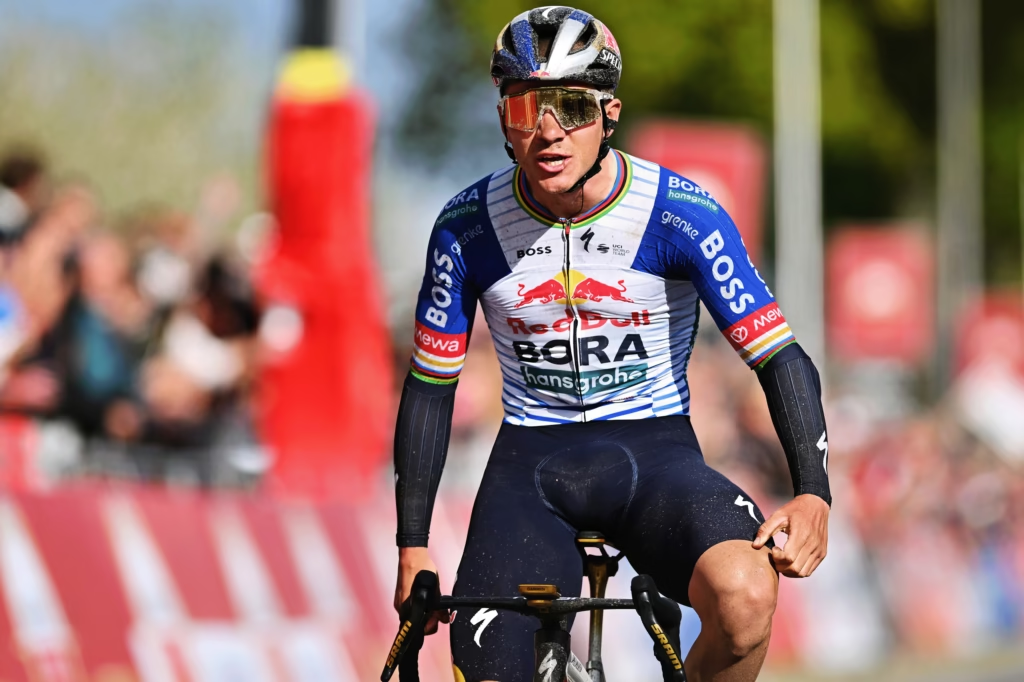 Photo Credit: Getty
3. Remco Evenepoel
Remco Evenepoel is third because he has one obvious route weapon and one obvious route problem. The weapon is stage 16, the 26.1km individual time trial from Évian-les-Bains to Thonon-les-Bains. The problem is everything that comes after it.
Evenepoel remains one of the riders most likely to gain time against the clock. If he reaches stage 16 within striking distance, the time trial could put him into a stronger GC position before the Alps. The route is not a pure flat time trial, but it is still the one stage where he can take control of his own performance without depending on team tactics or rival behaviour.
The issue is that the 2026 Tour does not end with the time trial. It moves straight towards Orcières-Merlette and then back-to-back Alpe d’Huez stages. That is a major problem for a rider whose Grand Tour ceiling is still judged against Pogačar and Vingegaard in the highest mountains. Evenepoel can climb extremely well, but this route asks him to do it repeatedly, under pressure, and after nearly three weeks.
His team context at Red Bull-BORA-hansgrohe also matters. The support around him should be strong, but he will need protection across several different phases: the Barcelona TTT, nervous hilly stages, the Vosges and Jura block, and the final Alps. A small weakness at any point could undo the advantage he hopes to take in the time trial.
Evenepoel is a podium contender and a plausible yellow jersey threat if the race breaks his way. To win, he probably needs to gain meaningful time on stage 16 and then climb the final Alpine weekend at the level of his life.
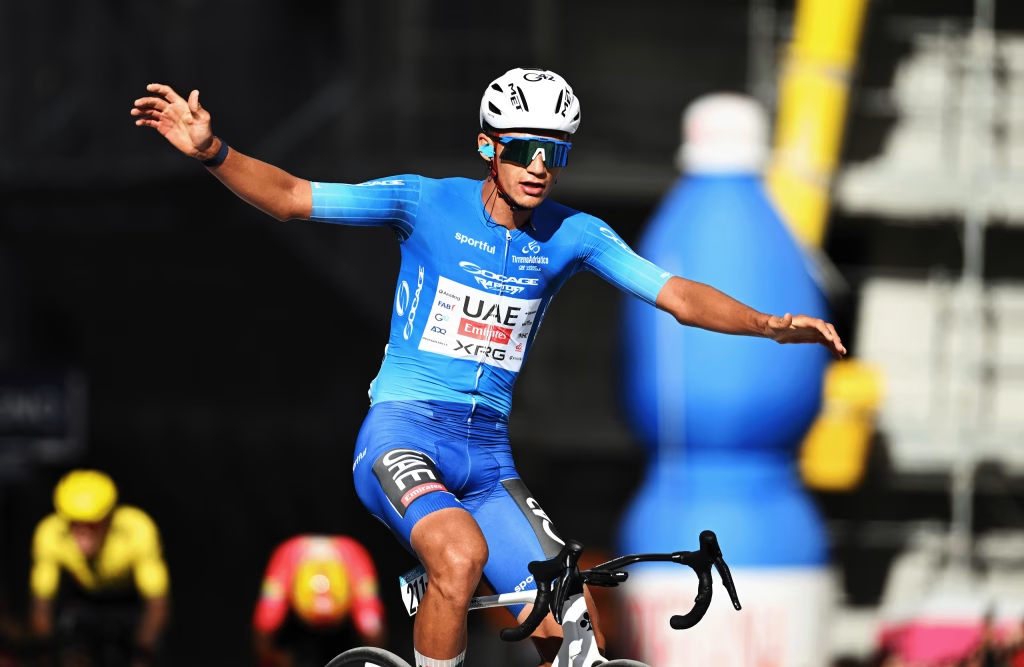
4. Isaac del Toro
Isaac del Toro is one of the most intriguing names on the list because his ceiling is still moving. On a route like this, he could be a luxury climbing weapon for UAE Team Emirates-XRG, a protected second card, or a rider who quietly rides himself into a major GC position if the race opens up.
His problem is team hierarchy. If Pogačar starts, del Toro will not begin as the outright leader. That changes how his race is read. He may be asked to support, follow moves, attack early, or act as a satellite rider before the final climbs. Those roles do not always lead to a clean GC bid, but they can still place a rider high overall if he is strong enough.
The route suits him in many ways. Early climbing, repeated mountain stages and the final Alpine block should give him chances to show his level. The Barcelona team time trial also helps if UAE Team Emirates-XRG ride strongly, because he could begin the race ahead of many rival leaders.
His biggest unknown is how he handles three full weeks at Tour level with the pressure of a major GC battle around him. There is a difference between looking brilliant in week-long races and still being there when the Tour reaches the Galibier, Sarenne and Alpe d’Huez on stage 20.
Del Toro ranks this high because of form, team strength and upside. He may not be the first UAE card, but he could still become one of the defining riders of the race.
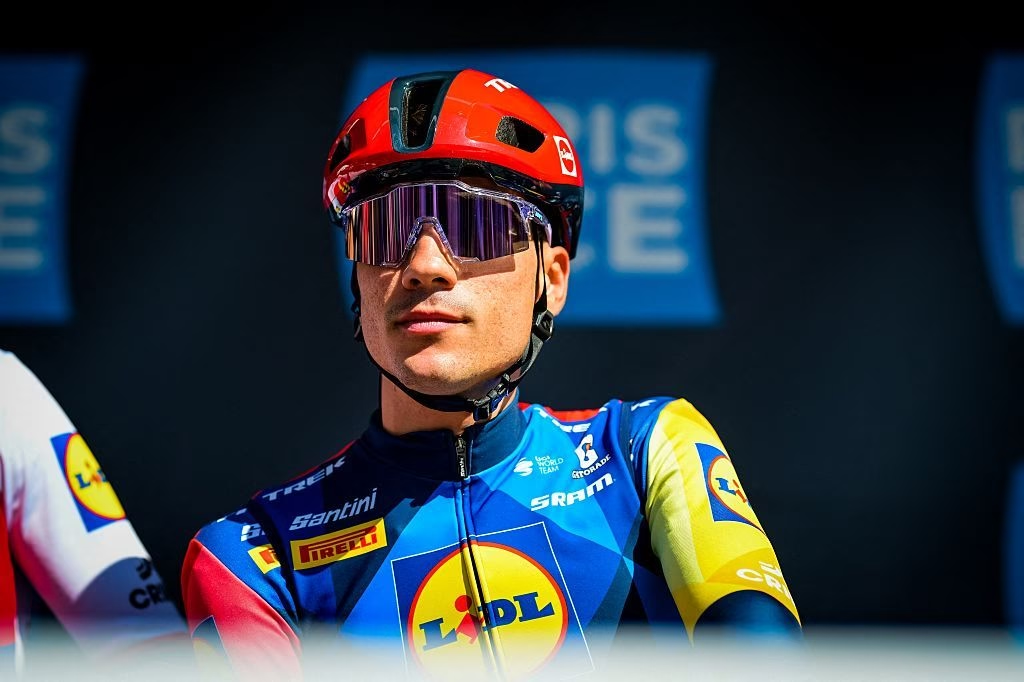
5. Juan Ayuso
Juan Ayuso has the profile of a rider who should suit the Tour de France, but his ranking depends heavily on form, confidence and how his team situation translates into July.
The route offers him plenty. He can climb, he can time trial, and he should be capable of handling the varied demands of the 2026 course. The stage 16 time trial is a genuine opportunity for him to gain or defend time, while the Pyrenees and Alps give enough climbing for a podium challenge if he is at his best.
The question is whether he can turn talent into a full three-week Tour performance. Ayuso has often looked like a rider with the physical tools to challenge the very top group, but the Tour asks for more than isolated strength. It asks for consistency, calm, team support, recovery and the ability to handle bad days without letting them become race-ending ones.
The back-to-back Alpe d’Huez stages are the key. If Ayuso reaches the final weekend within range, stage 20 gives him the terrain to make a statement. If he has already been worn down by the Vosges, Jura and time trial, the same stage could expose him.
He sits just behind the top three because the route suits him, but he still needs to prove he can match the level of Pogačar, Vingegaard and Evenepoel across the full Tour.
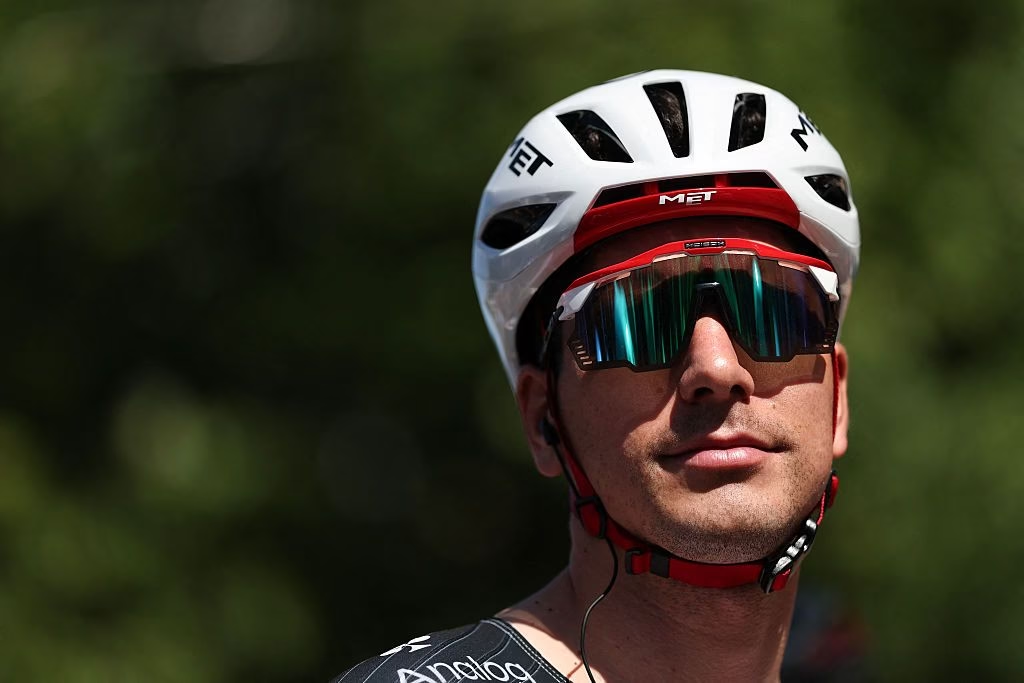
6. João Almeida
João Almeida is one of the safest high-GC picks in the race. He may not have the same explosive aura as Pogačar, Vingegaard or Evenepoel, but he has the consistency, climbing durability and time-trial base to make this route work.
The 2026 Tour asks for repeated recovery, and that is where Almeida can be extremely effective. He is often at his best when the race becomes hard through accumulation rather than one single violent acceleration. The middle phase through Le Lioran, Le Markstein and Plateau de Solaison should suit his ability to keep grinding when others start to fray.
The stage 16 time trial is also useful. Almeida should not fear it, and if he reaches that point with a strong GC position, he can consolidate or even move up. The final Alps are harder to judge. He may lack the explosive response to follow the most violent attacks, but he is the kind of rider who can limit losses and keep coming back.
Like del Toro, his team role is complicated by Pogačar. If UAE Team Emirates-XRG use him as support, his GC ceiling may be capped. If he is allowed to ride his own race behind Pogačar, he could easily finish very high overall.
Almeida is not the most exciting pick, but he is one of the most reliable.
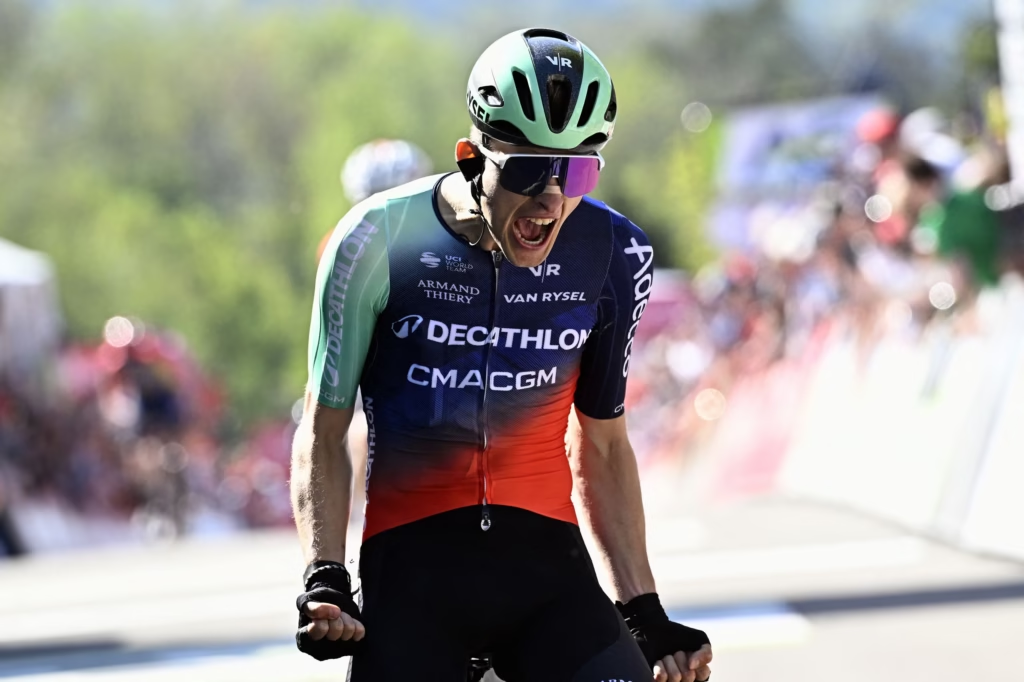
7. Paul Seixas
Paul Seixas is the wildcard with the highest intrigue. A French rider arriving at the Tour with rising expectations always changes the atmosphere, and Seixas has already been spoken about as one of the most important young GC names to watch before July.
The route is difficult for a young contender because it gives no gentle introduction. A team time trial in Barcelona, mountains by stage 3, a summit finish by stage 6 and then an extremely hard final week is a brutal way to learn the Tour. But it also gives a young climber repeated chances to show himself if the legs are there.
The biggest question is not talent. It is management. How does he handle pressure? How does his team protect him? Does he race for GC from day one, or does he build into the race? Can he recover after the first rest day, then again after the second? Can he handle the psychological noise of the final Alpe d’Huez weekend if France begins to believe?
Seixas is ranked seventh because it is hard to place him ahead of riders with deeper Grand Tour records. But his upside is real. If he survives the opening week in range, the French narrative around his Tour could grow very quickly.
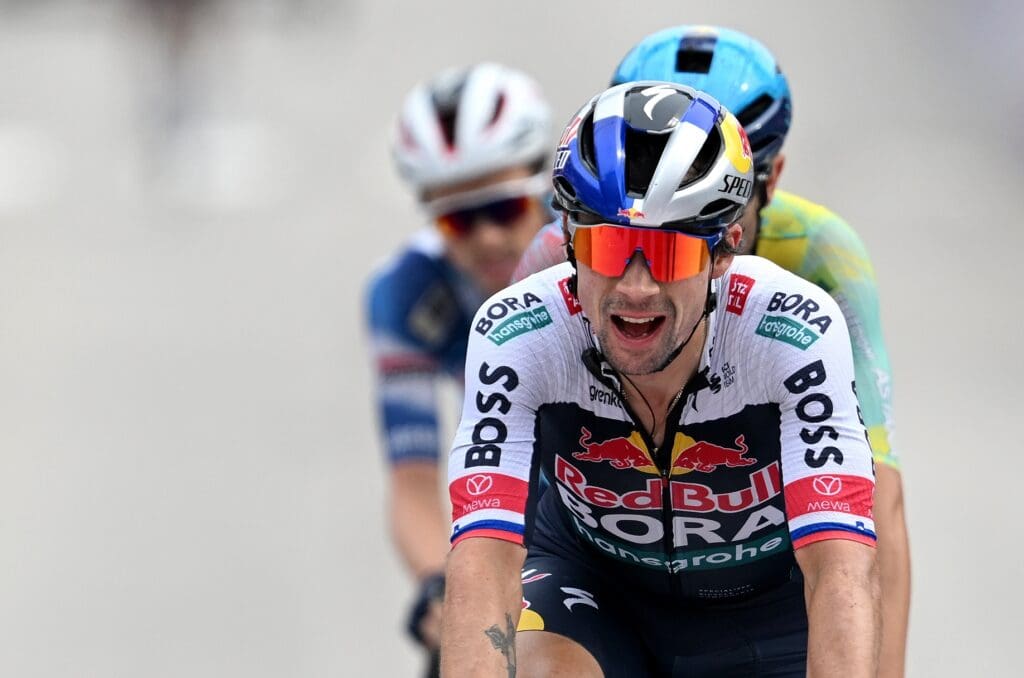 Photo Credit: Getty
8. Primož Roglič
Primož Roglič’s ranking depends on whether he arrives as a protected contender, a co-leader, or a rider with a freer role inside a team built around Evenepoel. At his best, he still has the skill set to be dangerous on this route. The question is whether his best over three weeks is still enough to threaten the Tour podium.
The route suits parts of him well. He can time trial, climb, handle steep finishes and manage pressure. A hilly and mountainous Tour with one meaningful time trial is not a bad layout for him. The stage 16 time trial could be a place to gain time on pure climbers, while stages such as Gavarnie-Gèdre, Plateau de Solaison and Orcières-Merlette suit a rider who can finish hard on climbs.
The issue is resilience across the whole race. The 2026 route has repeated danger points, and Roglič has often had to manage crashes, positioning stress and bad luck in Grand Tours. Barcelona, Montjuïc, the early Pyrenees and the final Alpine weekend all carry risk.
He remains too good to rank lower, but the Tour is now more likely to need everything to go right for him than for the riders above.
 Photo Credit: Getty
9. Florian Lipowitz
Florian Lipowitz sits in the next group of serious podium outsiders. He has the climbing ability and stage-race profile to be relevant, especially if the route becomes a race of attrition rather than constant attacking.
The 2026 Tour is not a bad course for him. The mountains are frequent, the final week is hard, and the stage 16 time trial gives him a chance to defend or limit rather than being overwhelmed by a much longer flat test. If he rides consistently through the Pyrenees and reaches the second rest day still close, the Alps could suit him.
His challenge is status. Inside a strong Red Bull-BORA-hansgrohe structure, he may not be the first card if Evenepoel and Roglič are both present and protected. That could limit his tactical freedom early, but it might also help him. A rider who is not marked as heavily can sometimes ride into GC contention while attention sits elsewhere.
Lipowitz’s podium path depends on consistency and opportunity. He may not look like a race-winning favourite, but he is exactly the sort of rider who can finish very high if others crack.
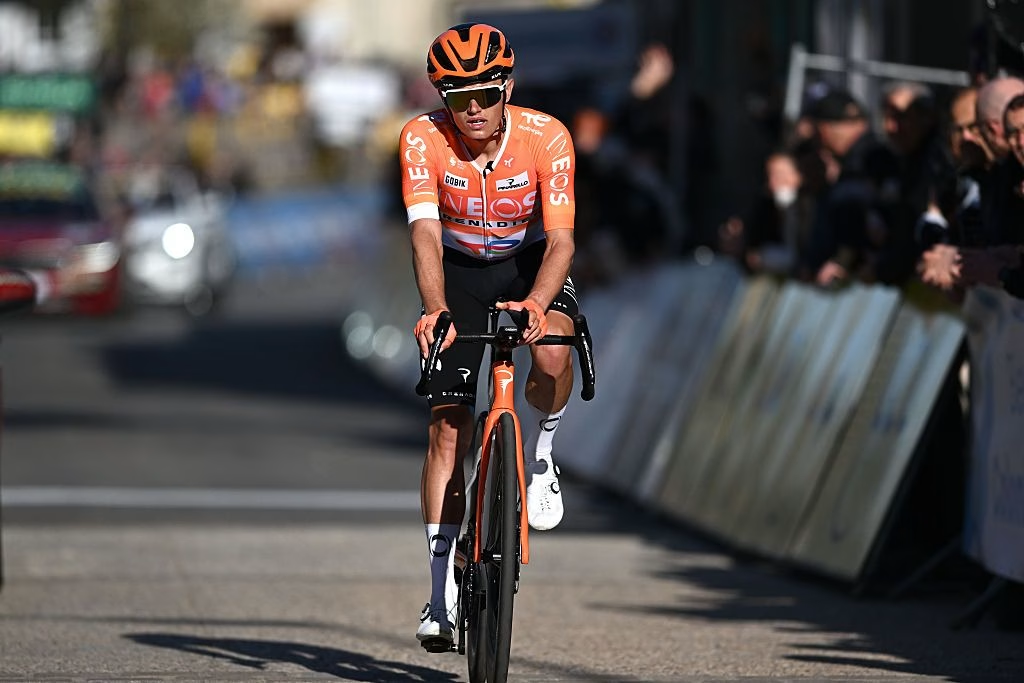
10. Oscar Onley
Oscar Onley earns a place in the top 10 because the route gives ambitious climbers a route into the race. The key for him will be limiting losses against the clock and surviving the early GC sorting before the final mountains.
Onley’s climbing strength makes him interesting for stages such as Les Angles, Gavarnie-Gèdre, Plateau de Solaison, Orcières-Merlette and Alpe d’Huez. The repeated mountain opportunities are good for him. The Barcelona team time trial and stage 16 individual time trial are more complicated.
If he loses too much in those timed efforts, he may have to chase stage results or a lower top-10 rather than a podium. If he limits the damage, the final week gives him enough terrain to move up. The back-to-back Alpe d’Huez finishes are especially important because they reward riders who can still climb hard after nearly three weeks.
Onley is not one of the main favourites, but he has enough climbing quality to be taken seriously as a high-GC outsider.
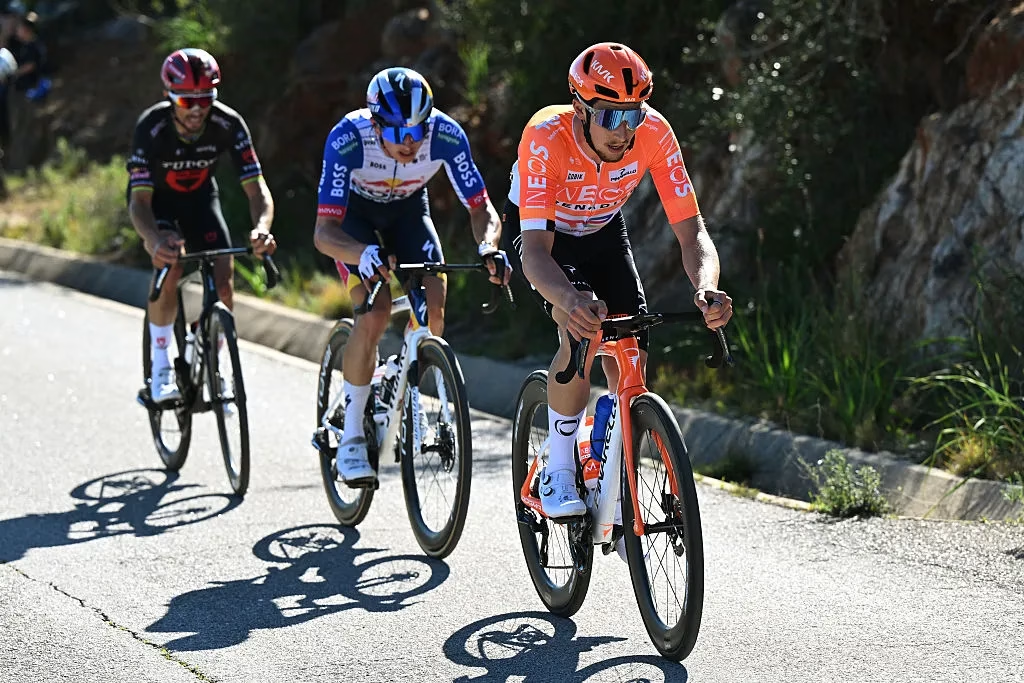 Photo Credit: Getty
11. Kévin Vauquelin
Kévin Vauquelin is another rider who fits the outside-GC category well. He has the versatility to handle hilly terrain, enough time-trial strength to be relevant on stage 16, and the kind of racing style that can keep him in the picture if the Tour becomes unpredictable.
The question is whether he can hold the level deep into the Alps. The 2026 route is not only about being good on one summit finish. It asks riders to climb early, recover, survive the middle mountain block, time trial well and then handle Orcières-Merlette and two Alpe d’Huez stages. That is a huge demand.
Vauquelin’s route to a top result may be through consistency rather than domination. If he avoids a bad day and uses the stage 16 time trial well, he could be placed nicely before the Alps. From there, he needs to survive rather than attack like a pure climber.
A top five would require a major step, but a strong top 10 or better is realistic if his form continues upward.
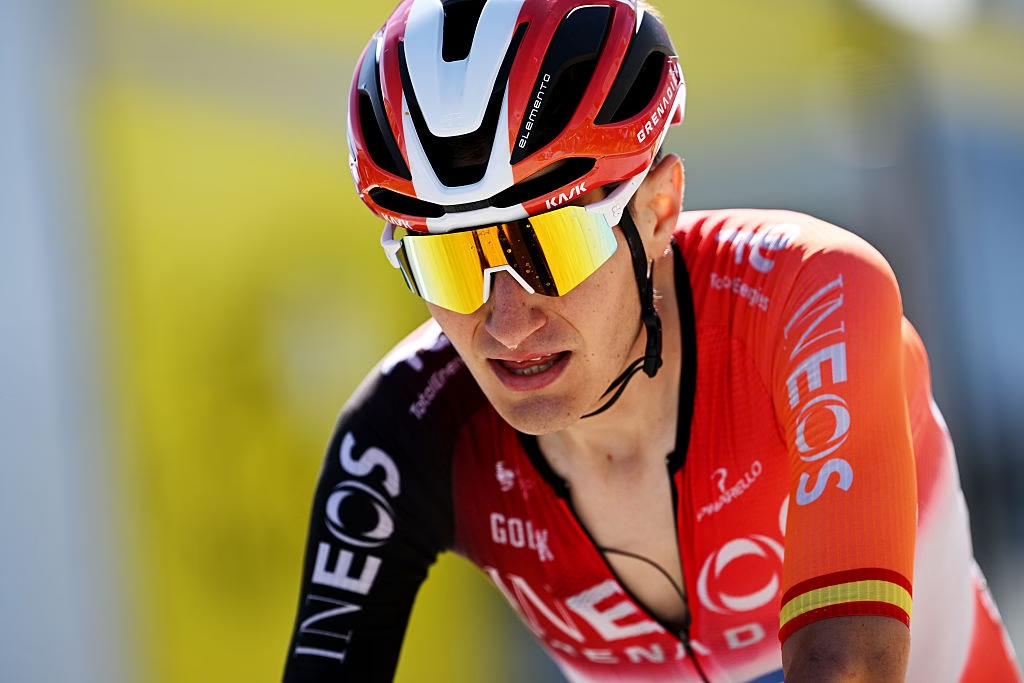
12. Carlos Rodríguez
Carlos Rodríguez has the qualities to ride a strong Tour: climbing consistency, tactical intelligence and enough experience to understand how to survive difficult Grand Tour days. He is not ranked higher because the 2026 route asks for a very high ceiling in both the time trial and the final Alpine block.
The early mountains should not scare him, and the longer, harder stages may suit him better than explosive hilly finishes. The challenge is turning solidity into gains. Against Pogačar, Vingegaard, Evenepoel and the next wave of contenders, simply being consistent may not be enough to reach the podium.
The stage 16 time trial is important for him. If he limits losses there, the final Alps give him a chance to climb back into the top five or top 10. If he loses too much, he may be forced into a more aggressive race than he would prefer.
Rodríguez is a dependable GC contender, but he needs either a step forward or a chaotic race to move into podium territory.
13. Matteo Jorgenson
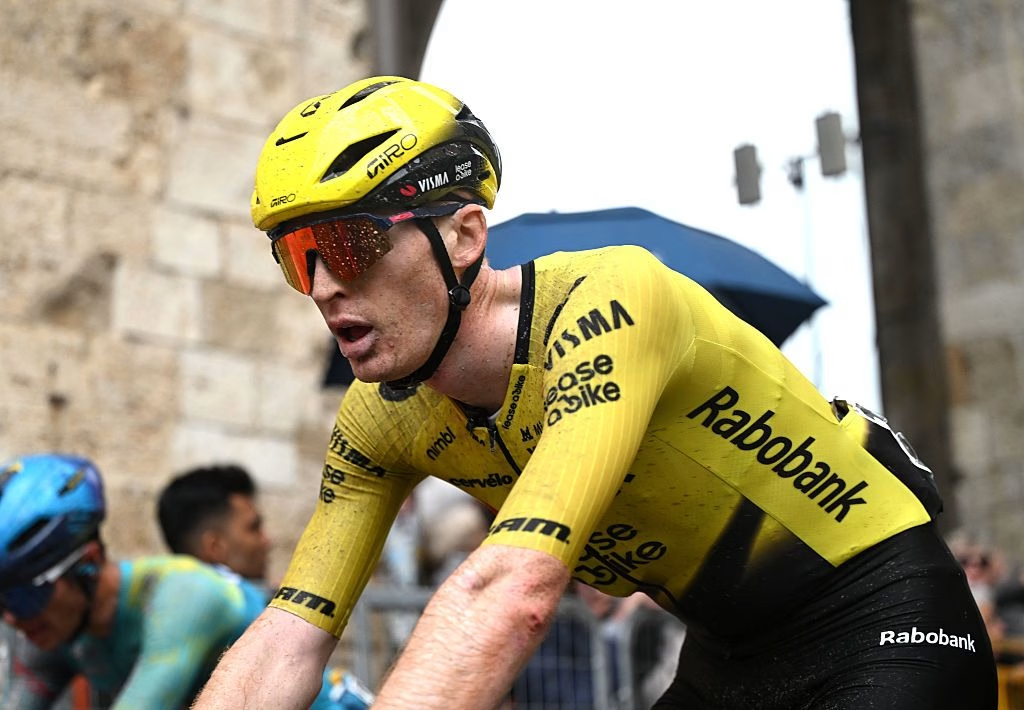
Matteo Jorgenson is difficult to rank because his role could change depending on Team Visma | Lease a Bike’s strategy around Vingegaard. If he rides mainly as a super-domestique, his GC potential may be secondary. If he gets freedom or remains high after the opening week, he could become a serious tactical weapon.
The route suits his versatility. The Barcelona team time trial should favour a strong Visma collective. The hilly stages, the time trial and the mountain blocks all suit a rider who can do a bit of everything. Jorgenson may be especially valuable in the final week, either as support for Vingegaard or as a satellite rider placed ahead of the GC group.
His ranking reflects uncertainty rather than lack of quality. In a different team structure, he might be higher. In this one, his best work may not show in the final general classification.
Still, if the race becomes tactical, Jorgenson could be one of the riders who shapes it.
14. Cian Uijtdebroeks
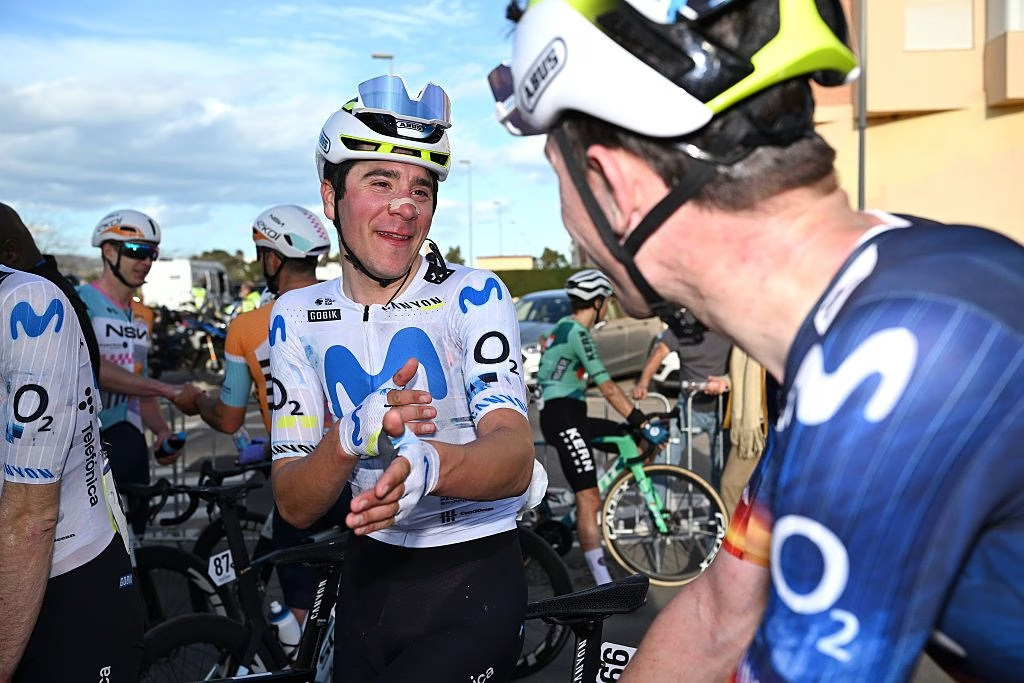
Cian Uijtdebroeks remains a rider with enough climbing ability to be considered for the wider GC picture, but the 2026 Tour asks serious questions of him. The final week is very hard, which suits his strengths, but the early team time trial, stage 16 time trial and repeated pressure points demand more than climbing consistency.
His best route is gradual. Stay safe in Barcelona, avoid losing contact in the Pyrenees, survive the middle phase, then try to move up as others fade. The final Alpine weekend could help him if he reaches it fresh enough.
The concern is whether he has the time-trial level and team control needed to avoid being too far back by then. On this route, a rider cannot simply wait for the Alps if the earlier gaps are already significant.
He is a top-10 possibility rather than a podium favourite, but the mountain-heavy final week keeps him relevant.
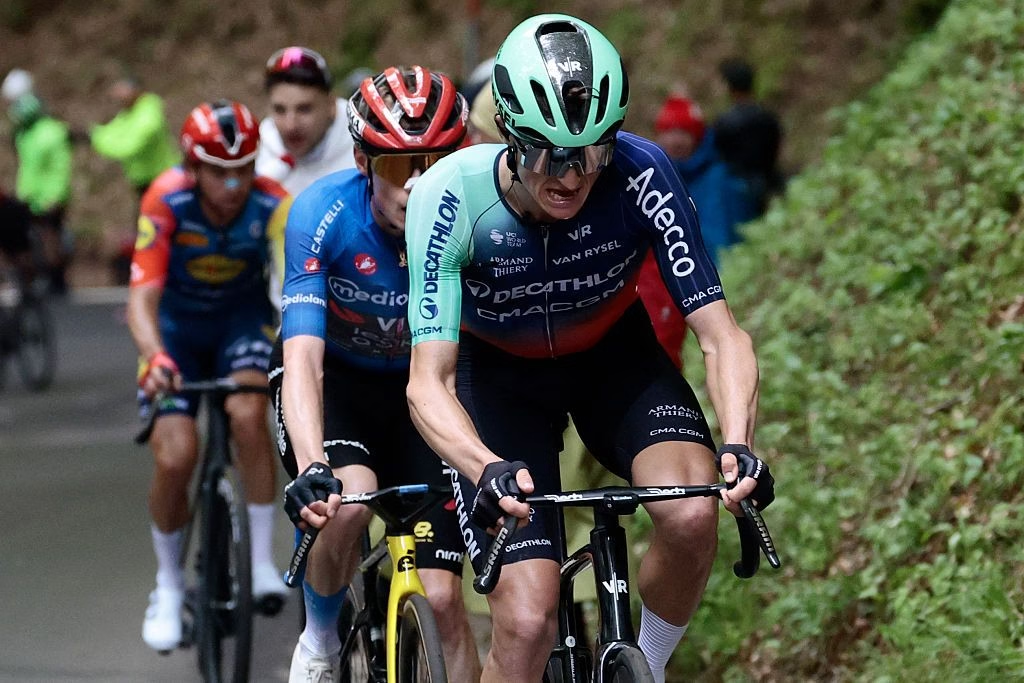 Photo Credit: Getty
15. Felix Gall
Felix Gall is a pure climbing threat and should always be respected on a Tour route with this much mountain terrain. Gavarnie-Gèdre, Plateau de Solaison, Orcières-Merlette and Alpe d’Huez all give him places to show his best level.
The issue is the rest of the route. The Barcelona team time trial and stage 16 individual time trial could cost him. The hilly stages and positioning-heavy days may also be awkward if the race is nervous. Gall’s best chance is for the Tour to become brutally selective in the mountains, reducing the importance of the timed stages and allowing him to climb into contention.
Stage 20 is the day that keeps his GC hopes alive. A huge Alpine stage with the Croix de Fer, Galibier, Sarenne and Alpe d’Huez is exactly the sort of terrain where a pure climber can make a race look very different.
Gall may not look like a winner, but he could still be one of the riders who damages the GC order.
The next tier of Tour de France 2026 GC contenders
Behind the top 15, several riders could still shape the race.
Netcompany INEOS should have multiple cards if riders such as Carlos Rodríguez, Oscar Onley and Kévin Vauquelin are all selected and arrive in form. That could be one of the most interesting team dynamics of the race because depth matters so much on this route.
UAE Team Emirates-XRG may also have more than one rider capable of finishing high, especially if Pogačar, del Toro and Almeida all start. That gives them tactical flexibility, but it also means the final hierarchy will matter.
Team Visma | Lease a Bike’s supporting cast around Vingegaard could affect the GC picture in a similar way. If riders such as Jorgenson remain high overall, they become both protection and tactical pressure. The same applies to Red Bull-BORA-hansgrohe if Evenepoel, Roglič and Lipowitz all line up with genuine condition.
The route gives room for a surprise, but probably not a random winner. The 2026 Tour is too complete and too hard for that. Anyone who reaches Paris on the podium will need to survive every type of test the race offers.
-
 Photo Credit: Getty

What the route tells us about the GC battle
The 2026 Tour route is designed to expose weakness in different ways. The opening Barcelona team time trial makes team strength relevant immediately, something explored further in the Tour de France 2026 Grand Départ guide. The early Pyrenean stages to Les Angles and Gavarnie-Gèdre will test whether contenders have arrived ready, rather than letting them grow into the race gradually.
The middle section through Le Lioran, Le Markstein and Plateau de Solaison could be just as important, because those stages come before the stage 16 time trial and the final Alpine block. Riders who reach the second rest day already tired or isolated may find the last week impossible to manage.
The final week is the obvious focus. The stage 16 individual time trial gives Evenepoel, Ayuso, Almeida and other efficient riders against the clock a clear chance to gain or defend time. Then the race turns back towards the mountains, with Orcières-Merlette and the double Alpe d’Huez finish creating a final test of climbing, recovery and team depth.
The back-to-back Alpe d’Huez stages are covered in more detail in Why back-to-back Alpe d’Huez finishes could define the Tour de France 2026, but the key point is simple: the route gives the strongest climbers one last chance, while punishing anyone who arrives there without support or recovery.
Tour de France 2026 GC favourites verdict
Tadej Pogačar starts as the number one favourite because he is the most complete rider for this route. Jonas Vingegaard is the clear second, with the form and Grand Tour record to challenge him, but the Giro-Tour double question makes his July harder to read. Remco Evenepoel is third because the stage 16 time trial gives him a real weapon, though the final Alpine weekend remains the major test.
Behind them, Isaac del Toro, Juan Ayuso and João Almeida represent a dangerous next tier of riders who could challenge for the podium if team roles and form align. Paul Seixas is the most exciting wildcard, while Roglič, Lipowitz, Onley, Vauquelin and Rodríguez all have credible top-10 or better pathways.
The Tour de France winners list shows how often the race has rewarded riders with very different profiles, but the 2026 route looks like one for the modern all-round Grand Tour contender. The opening team time trial punishes poor team structure. The early Pyrenees punish slow starters. The mid-race mountain block punishes fragile recovery. The stage 16 time trial punishes pure climbers. The final Alpe d’Huez weekend punishes anyone without endurance, support or nerve.
That is why Pogačar and Vingegaard remain the benchmark. They are the two riders most likely to answer every question the route asks. The rest need either a step forward, a tactical opening, or one of the top two to finally crack.
More Tour de France previews, stage guides, race reports and analysis will sit in the Tour de France archive as the 2026 race approaches.

