The Hudson Valley and Catskills do not sell themselves like a classic cycling destination. There is no single famous climb that dominates the marketing, no pro-team winter base, no neat package of sun, switchbacks and café stops arranged for visiting riders. Instead, the appeal builds more quietly. A rail trail over the Hudson River. A farm road that lifts towards a ridge. A reservoir glittering through trees. A village with coffee, old brick buildings and the feeling that New York City has slipped much further away than the train timetable suggests.
That is what makes the region so good for cycling. It is an escape, but not a soft one. From New York City, you can reach the lower Hudson Valley without turning the trip into a major expedition. From there, the riding can be as gentle or as hard as you want. You can cruise paved rail trails from Poughkeepsie, ride gravel beside the Ashokan Reservoir, follow rolling farm roads through Dutchess and Ulster counties, or point the bike towards the Catskills and find climbs that change the whole shape of the day.
For riders used to European cycling holidays, the Hudson Valley and Catskills feel different. The roads are wider in places, the distances between towns can feel more American, and the landscape has a less polished edge. But the ingredients are all there: river views, forested climbs, rail-trail infrastructure, small towns, gravel options, sharp escarpment roads and a strong sense of season.
It deserves a place on your riding list because it offers something many cycling destinations struggle to balance: accessibility, atmosphere and proper riding variety. It also fits neatly within a wider North American riding trip, sitting alongside the kind of regional escape ideas covered in our Cycling in USA and Canada guide.
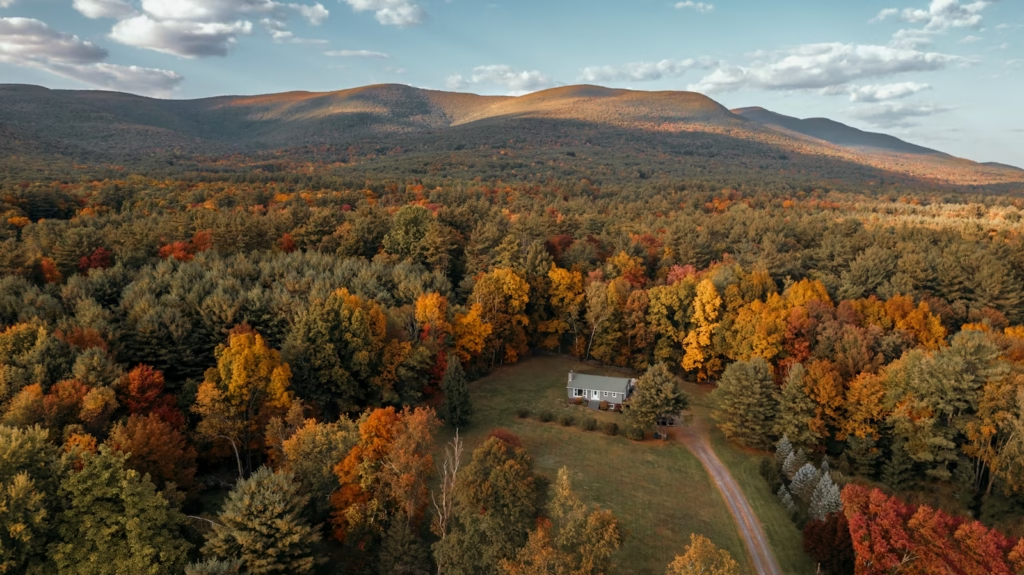
Hudson Valley and Catskills cycling at a glance
| Detail | What to expect |
|---|---|
| Best base areas | Poughkeepsie, Beacon, New Paltz, Kingston, Woodstock, Hudson, Phoenicia |
| Riding style | Rail trails, rolling road rides, gravel paths, Catskills climbs |
| Best for | Long weekends, mixed-ability trips, gravel riders, scenic endurance days |
| Main easy-route draw | Empire State Trail, Dutchess Rail Trail, Walkway Over the Hudson |
| Main gravel / trail draw | Ashokan Rail Trail, Wallkill Valley Rail Trail |
| Main climbing draw | Catskills roads, including Platte Clove and escarpment routes |
| Best seasons | Spring, early summer and autumn |
| Travel appeal | Easy escape from New York City, strong food and town culture |
| Bike choice | Road bike for paved routes, gravel bike for mixed-surface exploring |
Why the Hudson Valley works so well for cyclists
The Hudson Valley works because it gives cyclists options without forcing everyone into the same kind of ride. That is its greatest strength. A strong rider can make a hard day out of the Catskills. A newer rider can build confidence on rail trails. A gravel rider can link crushed-stone paths, backroads and reservoir routes. A couple or group with mixed fitness can base themselves somewhere like Poughkeepsie or New Paltz and still find rides that work for different moods.
The region also has a natural rhythm. The Hudson River gives the landscape its spine. Towns cluster along it, bridges create obvious crossing points, and rail trails stitch together sections that would otherwise feel more fragmented. Ride west and the land begins to rise towards the Catskills. Ride east and the roads roll through farms, woods and small communities. Stay near the river and the riding feels open, historic and often surprisingly calm.
There is a strong sense of transition. The further you move away from the city, the more the air changes. The road noise softens. Trees close over the lanes. The river appears between houses, fields and railway lines. In autumn, the whole valley seems to glow, with maples and oaks turning the ridges into bands of copper, orange and red. In spring, the roads feel newly washed, with damp earth in the woods and blossom appearing around village streets. In summer, the rides can be lush, humid and heavy with the smell of leaves, river water and warm tarmac.
That variety makes the region ideal for a cycling escape rather than a single set-piece challenge. You do not have to chase one famous route. You can let the trip unfold.
The rail trails make it unusually accessible
One of the biggest reasons the Hudson Valley works for cycling is its rail-trail network. For riders who want a scenic trip without constant traffic stress, this matters enormously.
The Empire State Trail is the spine of this accessibility, running through the Hudson Valley as part of a much larger New York State trail network. You do not need to ride the whole thing for it to matter. Its value for visiting cyclists is that it helps create ready-made links between towns, river crossings and quieter sections of riding.
The Dutchess Rail Trail and Walkway Over the Hudson are the clearest starting point. The Dutchess Rail Trail runs from Hopewell Junction to Poughkeepsie, where it connects with the Walkway Over the Hudson. From there, riders can cross the river high above the water, then continue towards the Hudson Valley Rail Trail and New Paltz.
The experience is memorable because it feels so different from a normal road ride. The Walkway lifts you above the Hudson, with the river stretching north and south, trains moving below, and the Catskills faintly visible in the distance on clear days. It is wide, open and slow in the best way. You are not fighting traffic or gradients. You are simply crossing a huge piece of landscape on a bike.
For anyone planning a lower-stress cycling trip, this part of the region is a gift. It gives you traffic-free mileage, clear navigation and the chance to ride with people who may not be comfortable on busier roads. It also works well as a warm-up before heading deeper into hillier country.
There is a useful contrast here with more mountain-focused cycling destinations. In places like the Alps or Sierra Nevada, the easy days often still involve climbing. In the Hudson Valley, an easy day can genuinely be easy, scenic and satisfying. That makes it a strong destination for trips where cycling is important, but not everyone wants to suffer every morning.
Walkway Over the Hudson: the ride that sets the tone
The Walkway Over the Hudson is not a climb, not a technical road and not a challenge in the traditional cycling sense. Yet it is one of the most important riding experiences in the region because it captures what the Hudson Valley does well.
The bridge gives you scale. You feel the width of the river, the openness of the valley and the layered history of the route. The surface is smooth, the views are broad, and the pace naturally drops. It is the kind of place where even serious riders stop pretending they are training and take a moment to look around.
On a clear day, the Hudson below has that dark, slow-moving quality that makes the valley feel older than the towns around it. The air can smell faintly metallic from the bridge, mixed with leaves, river damp and warm stone. Cyclists roll past walkers, families, runners and visitors taking photos. It is not fast riding, but it is place-led riding, and that is the point.
It also makes a practical hub. From Poughkeepsie, you can build a gentle rail-trail ride, head west towards New Paltz, or use it as part of a longer loop. For riders arriving by train or building a short New York escape, it is one of the easiest ways to feel that the trip has properly begun.
New Paltz and the western side of the river
New Paltz is one of the best bases for a cycling trip in the lower Hudson Valley. It has enough food, coffee and accommodation to work as a weekend base, but it also sits close to several different riding styles. You can keep things easy on rail trails, ride towards the Shawangunk Ridge, explore quiet roads, or use it as a launch point for more ambitious loops towards the Catskills.
The town has the right kind of post-ride feel. There are students, hikers, climbers, cyclists, old houses, outdoor shops and cafés that understand people arriving slightly dusty and hungry. It does not feel like a resort. It feels like a lived-in outdoor town, which is often better.
The Wallkill Valley Rail Trail adds another layer. It is longer and rougher in feel than the neatest paved rail trails, but that makes it more atmospheric. It passes through woodland, open stretches and old railway corridors, with the Rosendale Trestle providing another memorable crossing. On a gravel bike, it becomes part of the region’s wider mixed-surface appeal.
The western side of the river is also where the riding begins to feel more exploratory. Roads move towards the Gunks, farms, orchards and foothills. The terrain starts to roll more deliberately. You begin to sense that the Catskills are not far away.
The Catskills: where the riding gets serious
The Catskills change the tone of the trip. The Hudson Valley can be relaxed, scenic and forgiving. The Catskills can be abrupt, wooded, steep and surprisingly demanding.
These are not high mountains by Alpine standards, but that is not the right comparison. The Catskills are about density, texture and gradient. Climbs come through trees, past creeks, cabins, old barns and rocky slopes. The roads can feel narrow and local. Gradients can bite without warning. The sense of isolation grows quickly once you leave the main corridors.
Platte Clove Road is the climb that gets talked about most, and with good reason. It rises through the Catskill Escarpment on a road that is narrow, steep and seasonally closed in winter. It is not a casual add-on. It is a proper objective, the kind of climb that changes the mood of a route before you even reach it. There is a reason it carries a reputation among regional riders.
The climb is not just hard because of its numbers. It is hard because of its character. The road pitches up sharply, trees press in, and the gradient seems to remove all softness from the ride. There are climbs where you settle into rhythm. Platte Clove is more confrontational. It asks whether you really meant to come this way.
For a visiting cyclist, that is part of the Catskills’ appeal. The region has enough gentle riding to be welcoming, but enough severity to make a hard day feel earned.
Ashokan Rail Trail: the softer face of the Catskills
Not every Catskills ride needs to be steep. The Ashokan Rail Trail offers a completely different version of the region, following the Ashokan Reservoir between West Hurley and Boiceville on a crushed-stone surface.
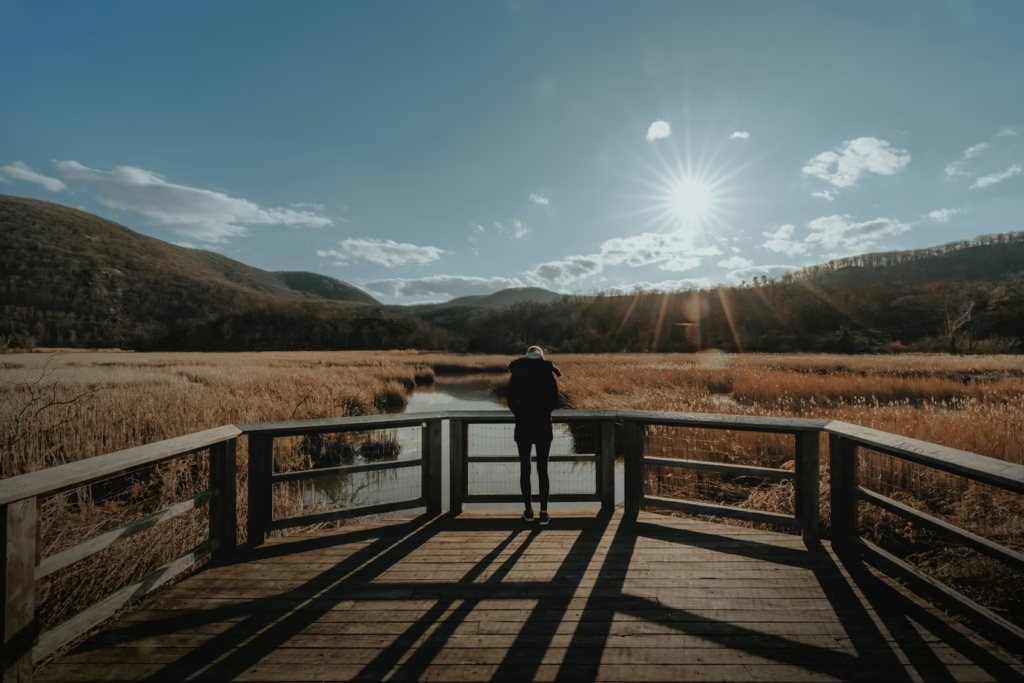
This is one of the best reasons to bring a gravel bike. The trail is wide, calm and scenic, with reservoir views and Catskill ridgelines giving the ride a spacious quality. It is not technical gravel. It is more about rhythm, air and landscape. The surface lets you relax, and the views keep slowing you down.
There is something quietly powerful about riding beside a reservoir. The water opens the landscape. The sky feels bigger. The Catskills sit behind it with a blue-green weight, and the ride becomes less about effort than attention. You hear tyres on fine stone, birds in the trees, wind across the water and the small noises of people stopping at viewpoints.
For mixed-ability trips, the Ashokan Rail Trail is ideal. Stronger riders can add road loops or climbs before or after. Others can keep the day simple and still feel they have experienced the Catskills. That flexibility is a major part of the region’s strength.
Road cycling in the Hudson Valley
Road cycling in the Hudson Valley is best when you choose your roads carefully. This is not a place where every road automatically feels like a European cycling lane. Some state roads are busy, and not every direct route is the nicest route. The best riding often comes from linking quieter county roads, rail-trail sections and smaller climbs rather than simply following the most obvious line on a map.
The reward is a landscape that changes constantly. You can ride past orchards, stone walls, river viewpoints, wooded lanes, old farmhouses and small towns with porches, church steeples and brick storefronts. The gradients are rarely steady for long. Instead, the road keeps lifting and falling, building fatigue through repetition rather than one obvious climb.
This makes the region excellent for endurance riding. A 70km ride can feel gentle if built around rail trails and river roads. A 120km ride into hillier terrain can feel properly demanding. Add Catskills climbs and the day becomes serious quickly.
It is also a good region for riders who like a sense of narrative in a route. You can start near the river, cross a bridge, ride through town streets, enter farmland, climb into woods, stop for coffee, then return by a different surface or valley. The landscape gives each section a different feel.
Gravel and mixed-surface riding
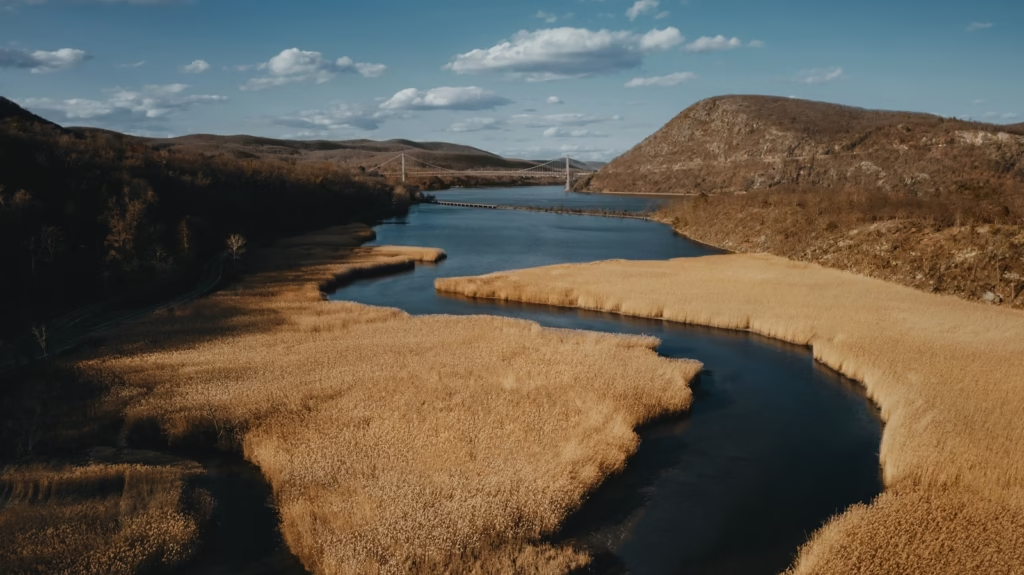
The Hudson Valley and Catskills are especially attractive if you ride a gravel bike. That is partly because of the rail trails, but also because the region encourages mixed-surface thinking.
A gravel bike lets you move between paved lanes, crushed-stone trails, reservoir paths and rougher rail-trail sections without worrying too much about surface changes. It also suits the mood of the place. The best rides are not always about speed. They are about linking features: a bridge, a trail, a farm road, a village, a viewpoint, a reservoir, a climb.
That makes the area feel more flexible than a pure road destination. If the weather turns, you can shorten the ride. If traffic looks heavy, you can use trail sections. If the legs are good, you can add climbing. If the day feels more about travel than training, you can drift between towns and stop often.
The gravel here is not usually the dramatic, remote, high-altitude kind. It is more intimate. Woods, water, old railway corridors, leaf litter, compacted stone, small bridges, sudden clearings. It suits riders who like texture and variety rather than only speed.
Best bases for a Hudson Valley and Catskills cycling trip
| Base | Best for | Riding feel |
|---|---|---|
| Poughkeepsie | Rail trails, Walkway Over the Hudson, train access | Accessible, scenic, good for easy-to-moderate riding |
| Beacon | Train access, Hudson Highlands, stylish town base | Hilly options nearby, good food and weekend atmosphere |
| New Paltz | Rail trails, Gunks, mixed road and gravel | Outdoor-town feel, very flexible riding |
| Kingston | River access, Catskills gateway, food and culture | Good for mixed trips and longer loops |
| Woodstock | Catskills atmosphere, quieter roads, weekend escape | More scenic, more touristy, good for relaxed trips |
| Phoenicia | Central Catskills, harder climbing, mountain feel | Better for riders wanting serious terrain |
| Hudson | Northern valley riding, food, architecture, Amtrak access | Stylish, rolling, good for road-focused weekends |
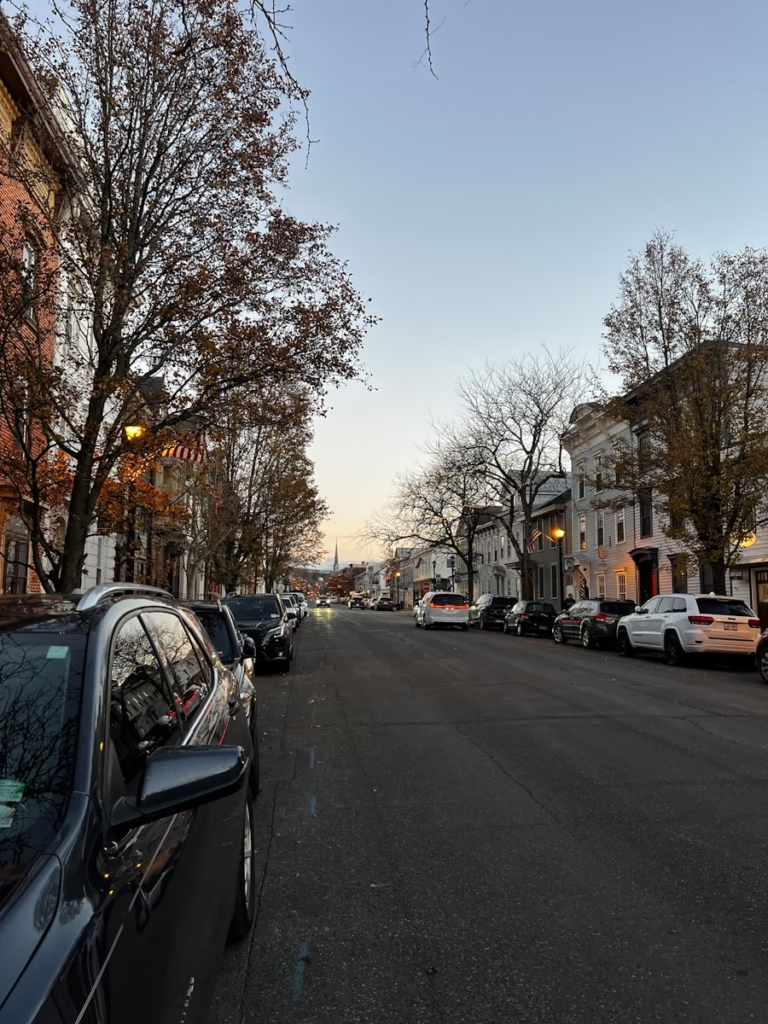
For a first trip, Poughkeepsie or New Paltz probably make the most sense. Poughkeepsie is practical and rail-trail friendly. New Paltz has more outdoor atmosphere and better access to mixed riding. For a more Catskills-focused trip, Kingston, Woodstock or Phoenicia bring you closer to the climbs and mountain roads.
How hard is the riding?
The honest answer is that the riding is as hard as you make it. That sounds obvious, but it is especially true here.
A rail-trail weekend can be gentle. You can ride mostly traffic-free, keep the gradients modest and focus on scenery. A gravel weekend around New Paltz and Ashokan can be moderately challenging without becoming brutal. A Catskills climbing weekend can be very hard, especially if you include steep escarpment roads, longer loops and repeated elevation gain.
The difficulty comes from three things:
| Factor | Why it matters |
|---|---|
| Route choice | Rail trails are accessible, Catskills climbs are not |
| Surface | Crushed stone is manageable but slower than road |
| Weather | Heat, humidity, rain or autumn chill can change the ride quickly |
For strong riders, the Catskills offer enough difficulty to make the trip worthwhile. For newer riders, the rail-trail network gives enough structure to avoid being overwhelmed. That range is rare, and it is one of the region’s biggest advantages.
When to ride in the Hudson Valley and Catskills
Autumn is the obvious answer, but not the only one.
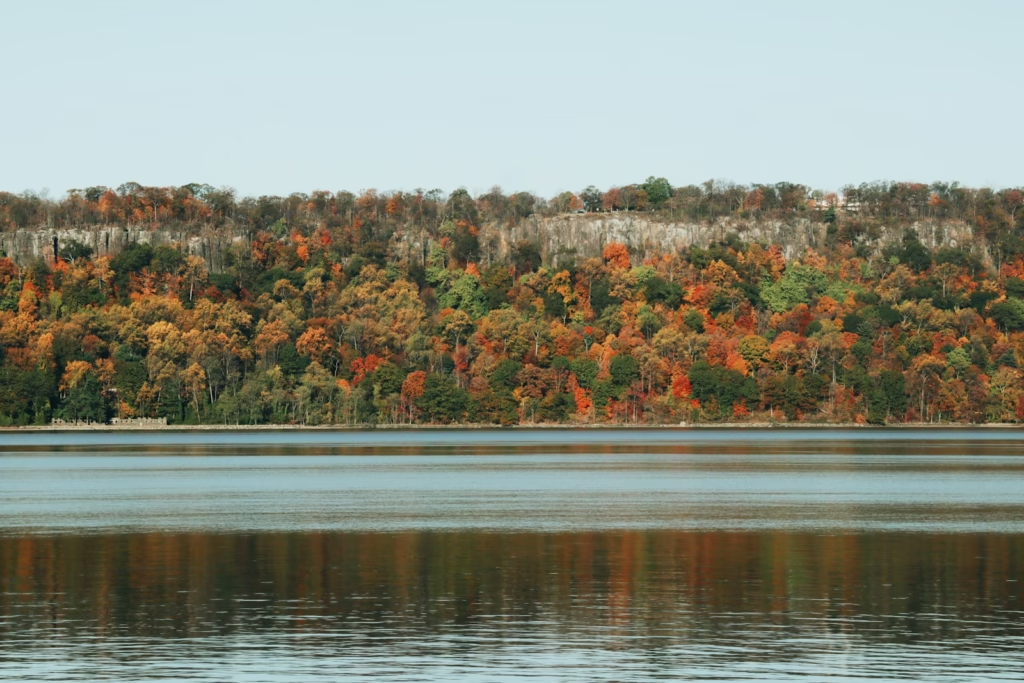
September and October are the classic months. The heat softens, the leaves turn, and the whole valley becomes more atmospheric. Riding through the Hudson Valley in autumn can feel almost cinematic: red barns, golden trees, cool mornings, bright afternoons and the smell of woodsmoke beginning to appear in the air.
Spring is also excellent. April and May bring fresh green roadsides, cooler temperatures and a sense of the region waking up again. Some high or seasonal roads in the Catskills may still need checking, especially routes with winter closures, but the lower valley can be lovely.
Summer can be beautiful but humid. Early starts matter. The shade in the woods helps, but long exposed sections can feel heavy. Bring more water than you think you need, especially if riding between smaller towns or on trail sections with fewer services.
Winter is more limited. Lower rail trails may still be usable depending on conditions, but the Catskills are a different proposition. Seasonal closures, ice and weather make it less suitable for most visiting road cyclists.
Food, towns and the post-ride appeal
A cycling trip needs more than roads. The Hudson Valley and Catskills understand this better than many places. The post-ride culture is part of the reason to go.
Towns like Beacon, New Paltz, Kingston and Hudson give the trip a strong off-bike dimension. There are cafés, bakeries, breweries, farm shops, restaurants, bookshops, galleries and old streets that make wandering around after a ride feel like part of the day rather than filler. You can finish a ride dusty, hungry and slightly sunburnt, then sit outside with coffee, pizza, tacos, pastries or a local beer and feel that the effort has somewhere to land.
The food culture is not separate from the landscape. Orchards, farms and small producers shape the valley’s identity. In autumn especially, everything seems to smell faintly of apples, leaves and baked sugar. It is easy to romanticise that, but cycling makes it feel earned. Food tastes different when you have reached it by bike.
For riders travelling with non-cyclists, this matters. The region is not a one-note cycling destination. There is enough around the riding for the trip to work as a proper escape.
How it compares to better-known cycling destinations
The Hudson Valley and Catskills will not replace the Alps, Mallorca, Girona or the Basque Country. They are not trying to. Their appeal is different.
Compared with classic European cycling bases, the region feels less packaged and more self-directed. You need to plan routes carefully. You need to understand which roads are good and which are simply direct. You need to accept that some rides may involve a mix of surfaces, towns and road types rather than one perfect cycling ribbon.
That is also what gives it character. It feels like a real place first and a cycling destination second. The best rides come with texture: a bridge crossing, a stretch of crushed stone, a steep wooded climb, a town stop, a river view, a descent through trees, a road that feels like it was not designed with cyclists in mind but somehow rewards them anyway.
For riders who enjoy place-led travel, that is a strength. It is the same reason regions like Asturias and Cantabria or Sicily around Etna can feel so compelling. They are not always smooth or obvious, but they have atmosphere.
For more place-led cycling travel, our Travel and Riding Abroad hub brings together guides to regions where the riding is shaped as much by culture and landscape as by climbs.
Suggested cycling trip styles
Easy long weekend from New York City
Base yourself in Poughkeepsie or Beacon. Use the train, keep the logistics simple and focus on rail trails, river views and short road loops. This is the best option if you want the feeling of escape without hiring a car or building a complicated itinerary.
Rail-trail and gravel weekend
Base yourself around New Paltz or Kingston. Ride the Wallkill Valley Rail Trail, Hudson Valley Rail Trail, Walkway Over the Hudson and Ashokan Rail Trail. A gravel bike is ideal, but many routes can be adapted depending on tyres and comfort.
Catskills climbing weekend
Base yourself in Phoenicia, Woodstock or Kingston and build routes towards the Catskills. Include proper climbs, check seasonal road conditions, and plan food and water carefully. This is the version for riders who want the region to bite back.
Mixed riding and food escape
Base yourself in Hudson, Kingston or New Paltz. Ride in the morning, keep distances flexible and let the afternoons belong to cafés, farm shops, breweries and wandering. This is the best version if the trip is about atmosphere as much as training.
Practical tips for riding Hudson Valley and the Catskills
A gravel bike is probably the most versatile choice. A road bike works well if you are sticking to paved routes and rail trails with smooth surfaces, but a gravel bike opens more doors and reduces stress when surfaces change.
Check seasonal closures before planning Catskills climbs. Roads such as Platte Clove can close during winter and reopen depending on conditions and maintenance. Do not assume a route is passable just because it appears on a map.
Use rail trails intelligently. They are not just easy rides. They can be connectors that make bigger routes safer and more enjoyable.
Plan food and water. Some areas have plenty of cafés and shops, while others can feel surprisingly empty between towns.
Be realistic about traffic. The best riding avoids the busiest roads where possible. A route-planning app is useful, but local cycling routes, heatmaps and recent reviews can help avoid unpleasant sections.
Think seasonally. Autumn is beautiful but popular. Summer can be humid. Spring can be changeable. The Catskills can feel colder and more serious than the river valley.
For riders who like the idea of this kind of destination-led trip, but want something more event-based in the UK, our UK sportive guide gives a different way to choose a cycling goal around scenery, difficulty and atmosphere.

Hudson Valley and Catskills cycling FAQ
Is Hudson Valley good for cycling?
Yes. The Hudson Valley is excellent for cycling because it combines rail trails, river crossings, rolling roads, small towns and access to the Catskills. It works especially well for long weekends and mixed-ability cycling trips.
Can you cycle from New York City to the Hudson Valley?
Yes. The Empire State Trail connects New York City with the Hudson Valley and continues north towards Albany. Some sections are traffic-free trails, while others use roads, so route planning matters.
What is the best base for cycling in the Hudson Valley?
Poughkeepsie is one of the most practical bases because of train access, the Dutchess Rail Trail and the Walkway Over the Hudson. New Paltz is better for a more outdoorsy base with rail trails, gravel and access towards the Gunks and Catskills.
Are the Catskills good for road cycling?
Yes, but they are more demanding than the lower Hudson Valley. The Catskills offer serious climbs, wooded roads and scenic loops, but riders should plan carefully, check seasonal closures and be prepared for steeper gradients.
Is the Ashokan Rail Trail good for cycling?
Yes. The Ashokan Rail Trail is one of the best easy gravel or mixed-surface rides in the Catskills. It follows the Ashokan Reservoir on a wide crushed-stone surface with excellent mountain and water views.
What bike is best for Hudson Valley and Catskills riding?
A gravel bike is the most versatile choice because it handles paved roads, rail trails and crushed-stone surfaces. A road bike works well for paved routes, while wider tyres are useful if you want to explore mixed surfaces.
When is the best time to cycle in Hudson Valley and the Catskills?
Autumn is the classic season because of the foliage, cooler air and strong visual atmosphere. Spring is also excellent, while summer can be humid and winter is more limited, especially in the Catskills.
Why Hudson Valley and the Catskills deserve a place on your riding list
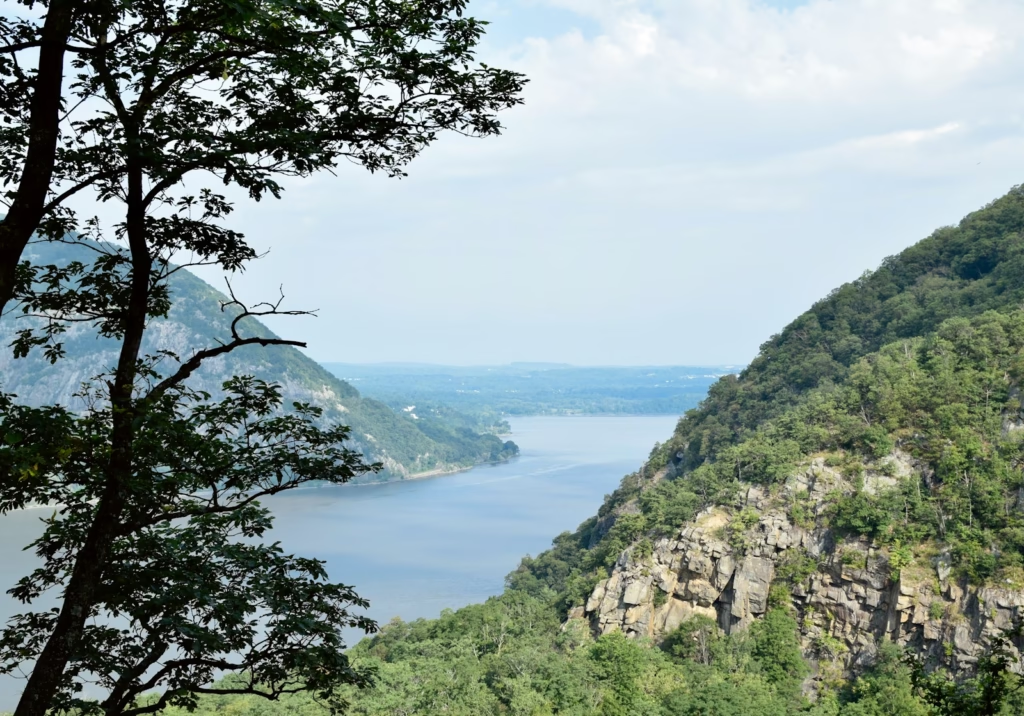
The Hudson Valley and Catskills deserve attention because they offer more than a set of routes. They offer a change of mood. The region gives you the rare feeling of being able to leave a major city and quickly enter a landscape that feels layered, historical, wooded and open to exploration.
You can ride gently over the Hudson on a rail trail, then the next day test yourself on a Catskills climb. You can follow crushed stone beside a reservoir in the morning and sit in a lively town by late afternoon. You can build a trip around performance, but you do not have to. The region is just as good when the ride is a way of noticing things: river light, old bridges, damp leaves, clapboard houses, bakery windows, forest shadows and the slow shift from valley to mountain.
That is its real strength. It is not a cycling escape that asks you to ride one famous climb and tick it off. It asks you to move through a landscape with several personalities. River, trail, town, ridge, reservoir, forest, climb.
For cyclists who value atmosphere as much as numbers, that is exactly why it belongs on the list.