The Tour de France 2026 jury issued another yellow card after stage 5, with Lotto Intermarché sports director Pieter Vanspeybrouck sanctioned for a breach of rules concerning vehicle movements during the race.
The stage 5 communiqué also listed two fines for Christoph Roodhooft, named in the jury decision as a driver for Alpecin-Premier Tech. He was fined once for a vehicle movement breach and again for failing to respect the instructions of the organiser or commissaires.
No rider was given a time penalty after stage 5. No stage result was changed. No general classification position was altered by the jury decision. The sporting story in Pau remained Olav Kooij’s reduced sprint victory, covered in our Tour de France 2026 stage 5 report, while Torstein Træen kept the yellow jersey.
Across the race so far, the running total is now 6,800 CHF in fines, 6 yellow cards, 1 rider eliminated outside the time limit and 25 UCI points deducted.
For a broader explanation of the system, see our guide to Tour de France 2026 penalties and yellow cards.
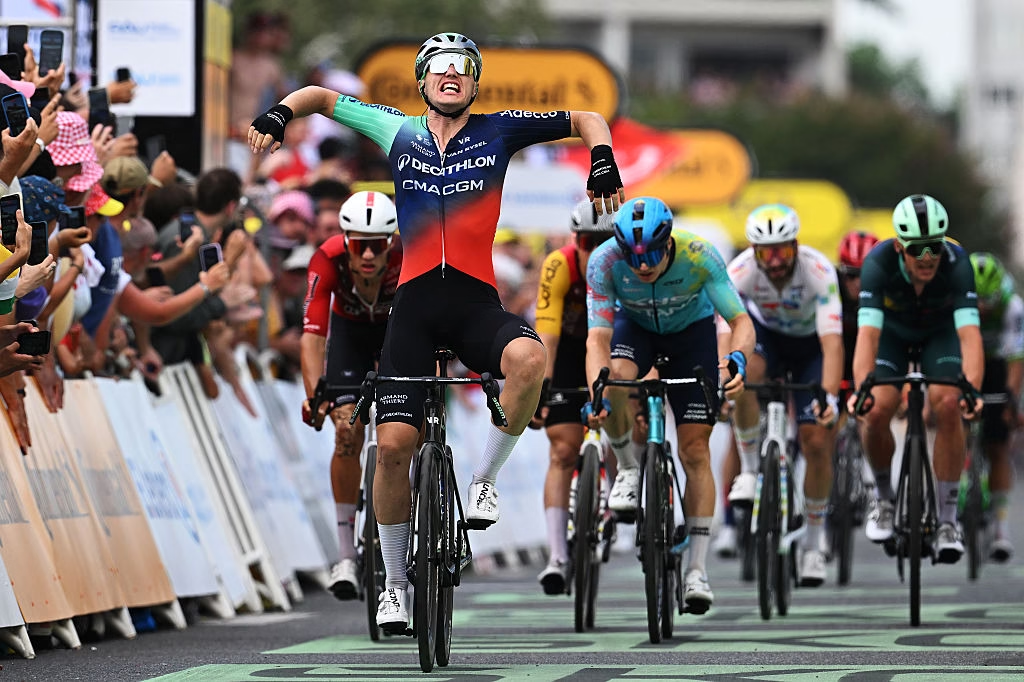 Photo Credit: Getty
Tour de France 2026 stage 5 jury decisions
| Person | Role / team | Infringement | Penalty |
|---|---|---|---|
| Pieter Vanspeybrouck | Sports director, Lotto Intermarché | Breach of regulations or guidelines concerning vehicle movements during the race, or failure to comply with commissaires’ instructions | 500 CHF fine and yellow card |
| Christoph Roodhooft | Driver, Alpecin-Premier Tech | Breach of regulations or guidelines concerning vehicle movements during the race, or failure to comply with commissaires’ instructions | 500 CHF fine |
| Christoph Roodhooft | Driver, Alpecin-Premier Tech | Failing to respect the instructions of the organiser or commissaires | 200 CHF fine |
That makes stage 5 a shorter jury sheet than stage 3, but it still matters. Vehicle movement breaches are exactly the type of incident the UCI yellow card system is designed to control, because race cars, motorbikes and team vehicles can affect safety and fairness even when they are not part of the visible racing action.
Stage 5 fines and yellow cards at a glance
| Stage 5 total | Number |
|---|---|
| Total fines | 1,200 CHF |
| Yellow cards | 1 |
| Time penalties | 0 |
| Rider relegations | 0 |
| Riders disqualified by jury | 0 |
| Riders outside the time limit | 0 |
| UCI points deducted | 0 |
The important point is that these were staff and convoy-related sanctions. They did not affect Kooij’s stage win, the sprint result, the green jersey standings or the yellow jersey race. The updated sporting picture is covered in our GC and jerseys after Tour de France 2026 stage 5.
What the stage 5 yellow card means
Vanspeybrouck’s yellow card is a formal disciplinary warning. It is not the same as a time penalty, and it does not automatically change any rider’s result.
The risk comes if yellow cards accumulate. Two yellow cards in the same race can lead to disqualification and suspension, while further accumulation over a set period can trigger longer bans.
That is why yellow cards matter even when they do not alter the day’s classification. A single card can become significant later if a sports director, staff member, rider or race convoy participant is sanctioned again.
Why vehicle movement penalties matter
Vehicle movement penalties can sound technical, but they are central to race safety.
A Tour de France stage is not just riders on the road. It is also team cars, neutral service vehicles, commissaire vehicles, medical cars, television motorbikes, photo motorbikes and organisation vehicles moving around a peloton at speed.
If a car or motorbike moves at the wrong time, passes incorrectly, blocks another vehicle, gives a rider shelter or fails to follow commissaire instructions, it can create danger. It can also affect the sporting fairness of the race.
That is why the stage 5 decision matters more than the fine sheet might suggest. The race jury is continuing to police the convoy after earlier vehicle movement sanctions during the first week.
 Photo Credit: Getty
Technological fraud checks after stage 5
The stage 5 jury decision also confirmed more checks as part of the fight against technological fraud.
The communiqué said 48 bikes were checked, including 9 bikes by X-ray, and that all bikes complied with UCI regulations.
That is not a penalty. It is still worth noting because these checks form part of the Tour’s daily control environment. They sit alongside anti-doping, equipment checks, safety rules, littering controls and race convoy discipline.
Feeding rules for stage 6
The stage 5 communiqué also looked ahead to stage 6. It confirmed that the feeding zone would be open from kilometre 10 and would close 6km from the finish.
That matters because stage 6 is the Pau to Gavarnie-Gèdre mountain stage, with the Col d’Aspin, Col du Tourmalet and a summit finish. Feeding rules become especially important on hot, mountainous days because teams need to keep riders supplied while staying inside the race regulations.
The jury also confirmed that the rules around musettes in the bottle zones remain in place for stage 6. Our Tour de France 2026 stage 6 preview explains why the day should be such a major physical and logistical test.
Running tally after stage 5
| Stage | Main jury decisions | Fines | Yellow cards | Other penalties |
|---|---|---|---|---|
| Stage 1 | No race penalties listed. 12 bikes checked for technological fraud, all compliant | 0 CHF | 0 | None |
| Stage 2 | Sticky bottle fines for Pablo Castrillo and Movistar sports director José Joaquín Rojas. UAE mechanic Bostian Kavcnik fined and yellow-carded for irregular assistance | 1,200 CHF | 1 | None |
| Stage 3 | Sticky bottle fines, feeding infringements and vehicle movement breaches, including yellow cards for staff and race convoy personnel | 3,900 CHF | 4 | None |
| Stage 4 | Vlad Van Mechelen fined for littering outside a waste zone. Kelland O’Brien eliminated outside the time limit | 500 CHF | 0 | 25 UCI points deducted; 1 OTL |
| Stage 5 | Pieter Vanspeybrouck yellow-carded and fined for a vehicle movement breach. Christoph Roodhooft fined twice | 1,200 CHF | 1 | None |
| Total | Race total after stage 5 | 6,800 CHF | 6 | 25 UCI points deducted; 1 rider OTL |
Stage 2 brought the first yellow card of the race, with the full details covered in our Tour de France 2026 stage 2 commissaires’ decisions. Stage 3 then became the busiest jury day so far, on the same day as Tadej Pogačar’s Les Angles victory, which is covered in our Tour de France 2026 stage 3 report.
Stage 4 added a littering sanction and a time-cut elimination on the day Mads Pedersen won in Foix and Træen moved into yellow. The race situation after that stage is covered in our Tour de France 2026 stage 4 report and GC and jerseys after stage 4 update.
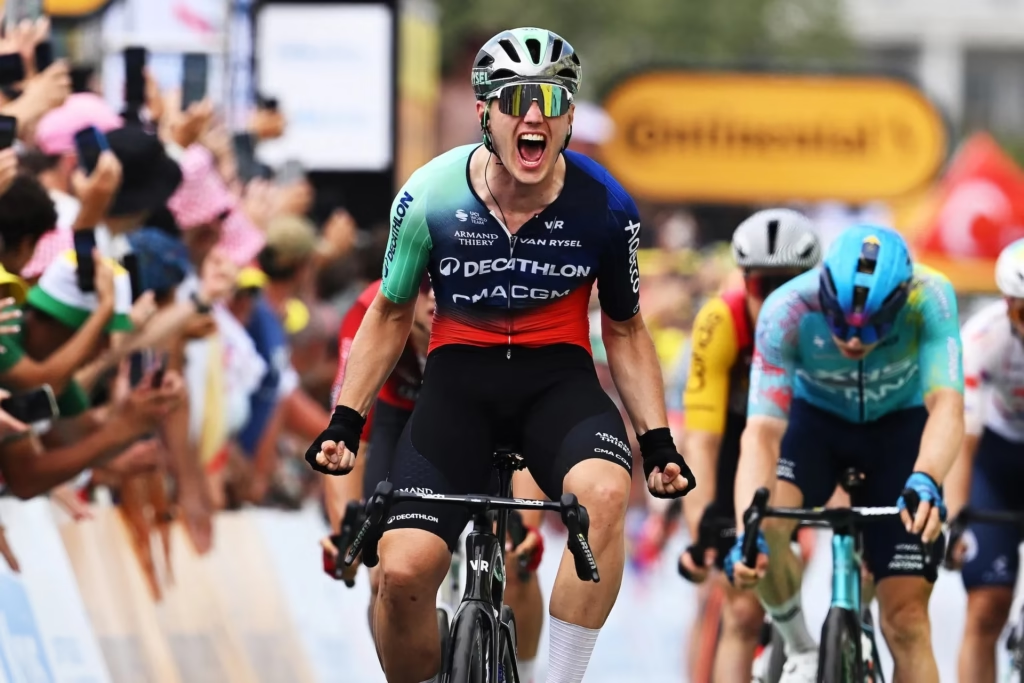 Photo Credit: Getty
Team-by-team penalty picture after stage 5
| Team / organisation | Race total so far |
|---|---|
| UAE Team Emirates-XRG | 1,000 CHF, 2 yellow cards |
| Movistar | 700 CHF |
| Decathlon CMA CGM | 700 CHF |
| Groupama-FDJ United | 700 CHF |
| Tudor Pro Cycling Team | 1 yellow card |
| Cofidis | 200 CHF |
| Red Bull-Bora-Hansgrohe | 600 CHF |
| TV motorbike | 500 CHF, 1 yellow card |
| Photo motorbike | 500 CHF, 1 yellow card |
| Bahrain Victorious | 500 CHF, 25 UCI points deducted |
| Lotto Intermarché | 500 CHF, 1 yellow card |
| Alpecin-Premier Tech | 700 CHF |
| Team Jayco-AlUla | 1 rider OTL |
This table shows why the Tour’s penalty picture is not just about riders. UAE Team Emirates-XRG have two yellow cards through staff members, while the TV and photo motorbike pilots from stage 3 are also part of the yellow-card tally. Stage 5 continued that pattern, with the sanctions again focused on staff and vehicle behaviour rather than riders.
Yellow card running tally
| Stage | Person | Role / team | Reason |
|---|---|---|---|
| 2 | Bostian Kavcnik | Mechanic, UAE Team Emirates-XRG | Irregular assistance |
| 3 | Andrej Hauptman | Sports director, UAE Team Emirates-XRG | Vehicle movement breach |
| 3 | Raphael Meyer | Staff member, Tudor Pro Cycling Team | Feeding-related infringement |
| 3 | Jean Antoine Ponce | TV motorbike pilot | Vehicle movement breach |
| 3 | Kurt Vandenborre | Photo motorbike pilot | Vehicle movement breach |
| 5 | Pieter Vanspeybrouck | Sports director, Lotto Intermarché | Vehicle movement breach |
The yellow card list is now one of the more interesting disciplinary threads of the race. None has directly changed the yellow jersey standings, but repeated cards can become serious if they accumulate.
What changed after stage 5?
The biggest change is that the race has now reached six yellow cards in five stages.
That does not mean the Tour is out of control. It does show that the commissaires are watching convoy conduct, feeding behaviour and assistance closely. The repeated theme is not dangerous sprinting or rider-to-rider aggression. It is support behaviour around the race: cars, motorbikes, feeding, mechanical help and instructions from officials.
That fits the first week of this Tour. The route has already included a team time-trial, hilly roads, a mountain finish, a hot breakaway day and a hectic reduced sprint. Different stages create different pressure points, and the jury decisions reflect that.

Did the penalties affect the yellow jersey?
No. The stage 5 penalties did not affect the yellow jersey.
Træen remains in yellow because of the time he gained in the stage 4 breakaway, not because of any jury decision. Pogačar and Vingegaard remain 7:53 down because of that same breakaway time gap, not because of a penalty.
That distinction matters. The jury sheet can look dramatic, but the general classification is still being shaped on the road. Our explainer on why Pogačar and Vingegaard are 7:53 down breaks down the maths behind the current GC situation.
What to watch on stage 6
Stage 6 may bring a different kind of jury sheet.
The race goes from Pau to Gavarnie-Gèdre, with the Col d’Aspin, Col du Tourmalet and a summit finish. That means feeding, convoy movement and time limits all become more important again.
On mountain days, riders can be spread across the road for long periods. Team cars have to move through groups carefully. Riders need more food, bottles and cooling. Sprinters and injured riders also have to manage the time cut. Our Tour de France time cuts explainer explains how that part of the race works.
The stage 5 decision did not change the race standings, but it added another warning to the wider Tour picture. The commissaires are active, the yellow cards are accumulating, and the move into the mountains will only make race management more demanding.