Cycling around Salzburg and the Grossglockner is not just about one famous climb. It is about the way Austria changes under your wheels: river paths out of a cultured city, lake roads through tidy alpine towns, valley floors that feel almost too easy, and then the shock of the Grossglockner High Alpine Road rising into a harsher, bigger landscape.
This is a cycling destination with two different personalities. Salzburg gives you the accessible side: cafés, river riding, day loops, smooth roads and manageable climbs close to the city. Grossglockner gives you the serious side: long gradients, weather exposure, high altitude, hairpins, toll-road engineering and one of the most memorable road-bike challenges in the Alps.
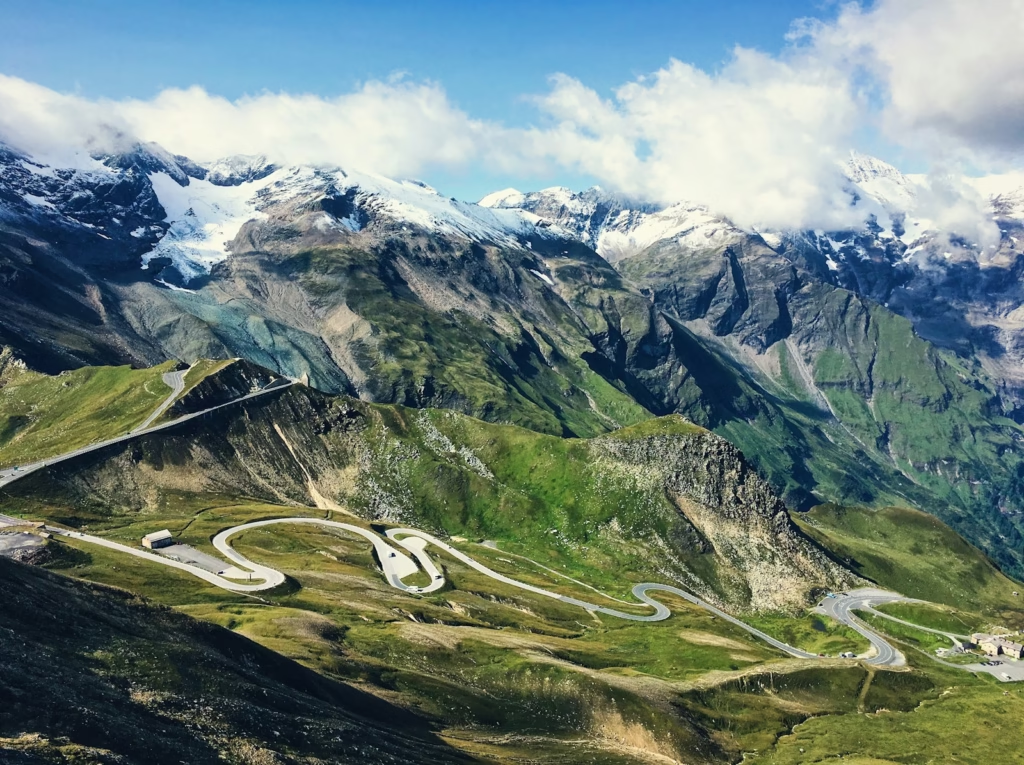
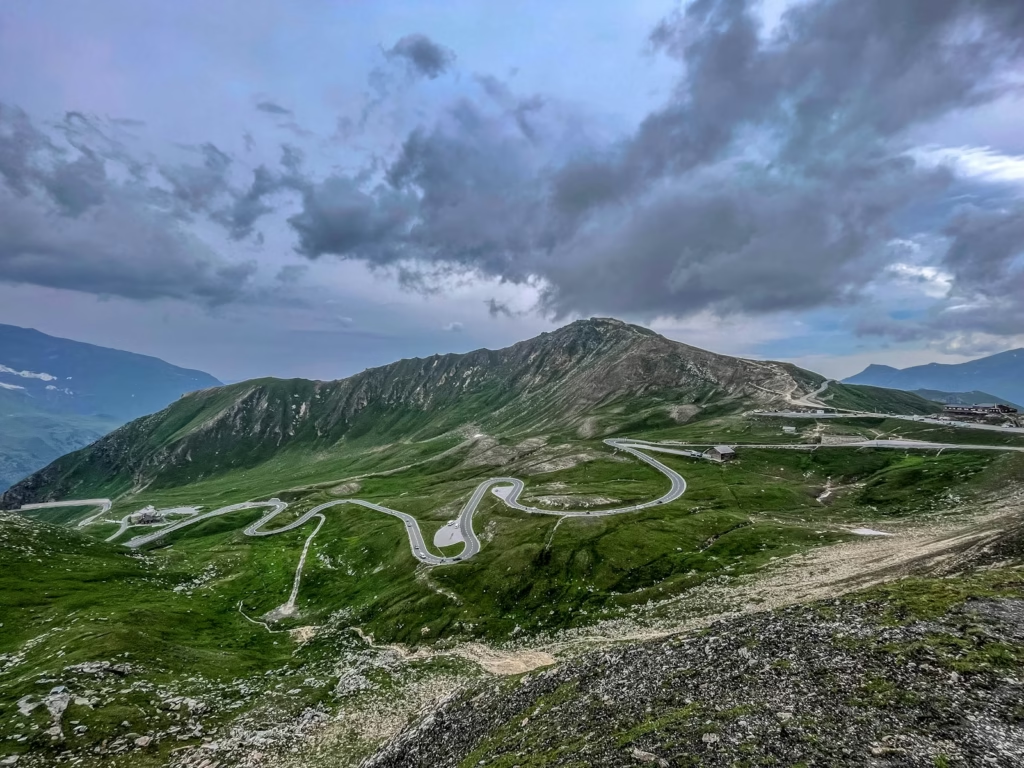
The Grossglockner High Alpine Road is 48km long, climbs through 36 bends and reaches the Hochtor at 2,504 metres, with the Edelweiss-Spitze access road rising higher again to 2,571 metres. It is a climb for experienced riders, not a casual holiday spin.
For riders building a wider European riding list, Salzburg and Grossglockner sit naturally in the same conversation as our Cycling in Rest of Europe hub and the broader Travel & Riding Abroad guide.
Quick answer: why is cycling in Salzburg and Grossglockner special?
Cycling in Salzburg and Grossglockner is special because it combines easy-access alpine riding with one of Europe’s great high mountain roads. Salzburg offers smooth river routes, lake loops and rolling approaches, while the Grossglockner High Alpine Road delivers a full alpine climbing test with long gradients, 36 bends, glacier views, high altitude and a summit-road atmosphere that feels closer to a Grand Tour mountain pass than an ordinary tourist route.
| Feature | Why it matters |
|---|---|
| Salzburg city base | Easy access, culture, food, transport and river routes |
| Salzach valley roads | Fast, scenic riding without immediate high-mountain difficulty |
| Tauern Cycle Trail | Long-distance riding through the Hohe Tauern region |
| Zell am See-Kaprun | Natural staging point for Grossglockner attempts |
| Grossglockner High Alpine Road | Austria’s most famous high mountain cycling challenge |
| Edelweiss-Spitze | Highest drivable point on the road at 2,571m |
| Franz-Josefs-Höhe | Glacier viewpoint facing Austria’s highest mountain |
| Atmosphere | Orderly Austrian roads mixed with raw alpine drama |
Salzburg: the soft launch before the hard climbing
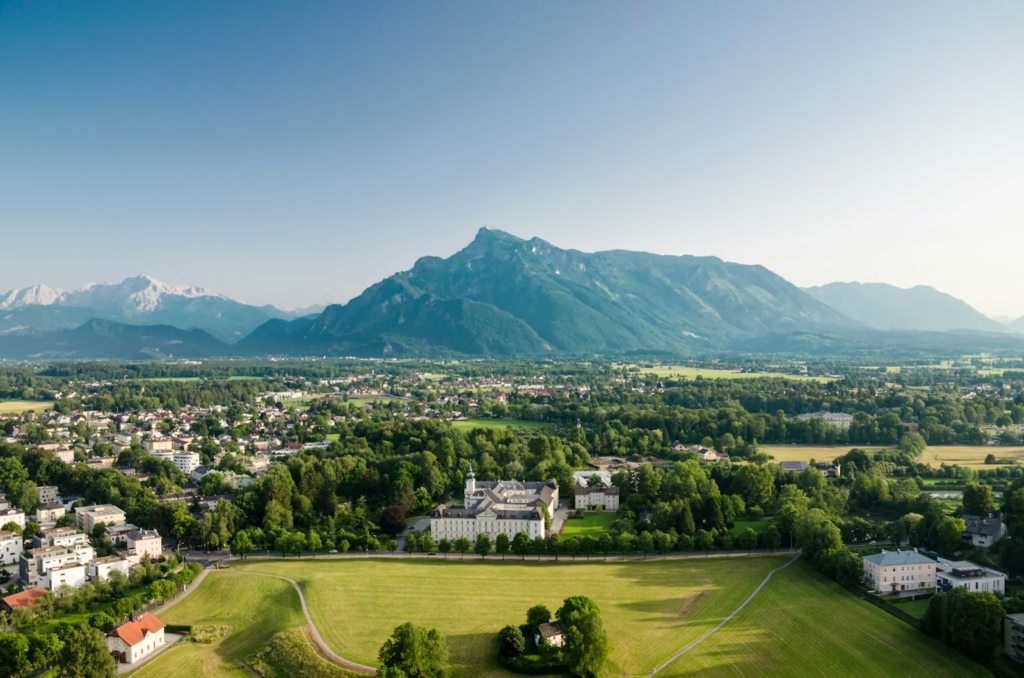
Salzburg works well as a cycling base because it does not immediately throw you into survival mode.
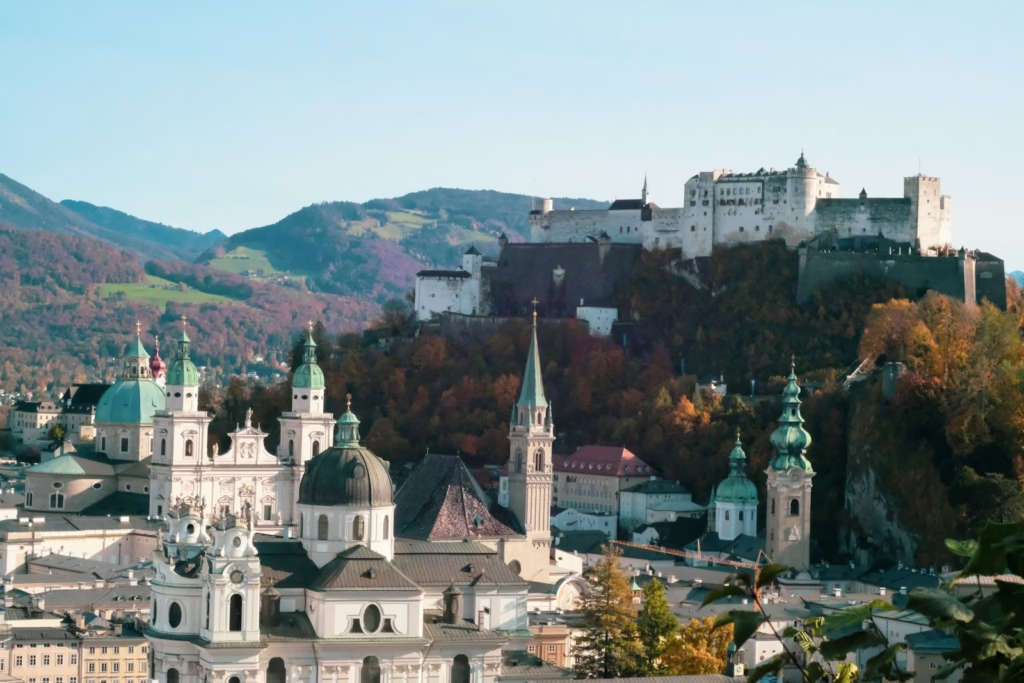
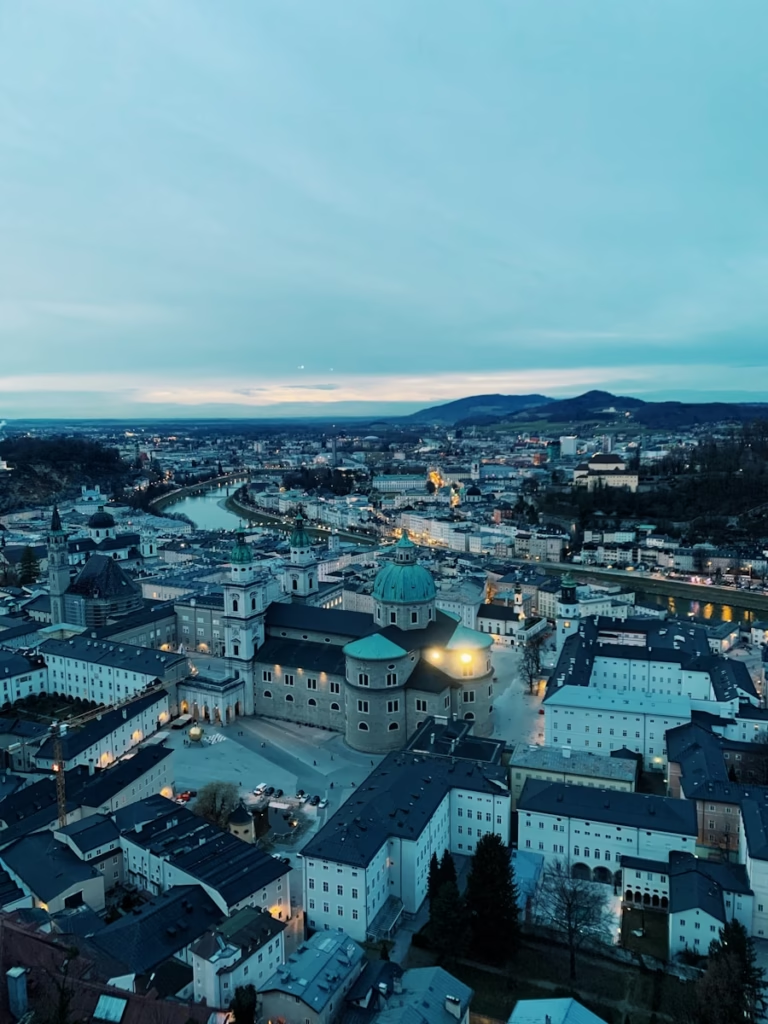
The city sits on the Salzach, close to the German border and at the edge of the Alps. That matters because you can ride from the urban centre into river valleys, foothills and lake country without needing to commit to a huge mountain day straight away. For visitors, that makes Salzburg less intimidating than many alpine bases. You can build into the terrain rather than being trapped in it from day one.
The riding around the city has a very different feel from the Grossglockner. It is calmer, more controlled and more varied. There are riverside stretches, village roads, small climbs and rolling routes where the scenery changes quickly without forcing every ride into a full climbing test.
That contrast is the appeal. Salzburg gives you the culture and the warm-up. Grossglockner gives you the exam.
It also sits close enough to other serious alpine riding regions to work as part of a bigger trip. Our guide to cycling in the Bavarian Alps around Garmisch-Partenkirchen covers the German side of that wider mountain landscape.
The Tauern Cycle Trail: the long-distance backbone
For riders who want distance rather than pure climbing, the Tauern Cycle Trail is the obvious starting point.
The Tauernradweg runs for more than 300km through the Salzburg region, following the landscape around the Hohe Tauern and major river valleys towards Salzburg and beyond. For road cyclists, it is useful because it shows the softer side of the region. It is not all switchbacks and altitude. You can ride long, steady kilometres, use the river corridor to move through the landscape and build routes that feel scenic rather than brutal.
That is important in a Salzburg and Grossglockner trip. Not every day needs to be a summit day. The best version of the trip mixes effort and absorption: one day turning the pedals easily along the valley, the next day staring up at the hairpins of the high road.
Grossglockner: the climb that gives the trip its edge
The Grossglockner High Alpine Road is the reason many cyclists come here.
It is not hidden. It is not quiet in the way a forgotten forest climb is quiet. It is a famous, engineered, high alpine road with toll booths, viewpoints, motorcyclists, cars, buses, signposts and a sense of occasion. That could make it feel less pure. Instead, it gives the climb a particular drama.
This is not a back lane. It is a stage.
The road takes you into the Hohe Tauern National Park and towards Austria’s highest mountain, the Grossglockner, which rises to 3,798 metres. The Kaiser-Franz-Josefs-Höhe viewpoint sits at 2,369 metres above the Pasterze Glacier, facing the mountain itself.
That is what makes it different from many climbs. You are not simply riding to a pass sign. You are riding through a built alpine spectacle, with viewpoints, glaciers, snowfields, high rock, marmot slopes, motor noise, cowbells, tourists and cyclists all compressed into one road.
The numbers behind the Grossglockner
The basic numbers tell you why the climb has a reputation.
| Grossglockner feature | Detail |
|---|---|
| Full High Alpine Road | 48km |
| Bends | 36 |
| Hochtor altitude | 2,504m |
| Edelweiss-Spitze altitude | 2,571m |
| Kaiser-Franz-Josefs-Höhe | 2,369m |
| Highest mountain visible | Grossglockner, 3,798m |
| Main character | Long, steep, exposed, high alpine |
| Best riding advice | Start early or late to avoid peak traffic |
From the Salzburg side, the hard climbing really bites after Ferleiten. The Ferleiten to Fuscher Törl section is around 17km, with the extra road to the Edelweiss-Spitze adding more height again. The average gradients sit in that difficult zone where there is rarely enough relief to reset properly.
That is the key. Grossglockner is not just long. It is persistently steep. There are famous Alpine climbs where the average gradient is softened by valleys, shelves or long transitions. The Grossglockner gives you extended periods where the road simply stays hard.
For comparison with other major mountain-riding regions, our guide to cycling in Tirol, Innsbruck and the Ötztal looks at another Austrian base built around serious alpine climbing.
The Salzburg side: Fusch, Ferleiten and the long drag upward
Most riders coming from the Salzburg and Zell am See side will approach through Bruck, Fusch and Ferleiten.
The valley approach can feel deceptively civilised. The road is smooth, the mountains rise cleanly ahead, and there is time to settle into the day. Then the toll-station area arrives and the character changes. The road begins to ask a much more direct question: have you brought the legs, gearing and patience for a proper Alpine climb?
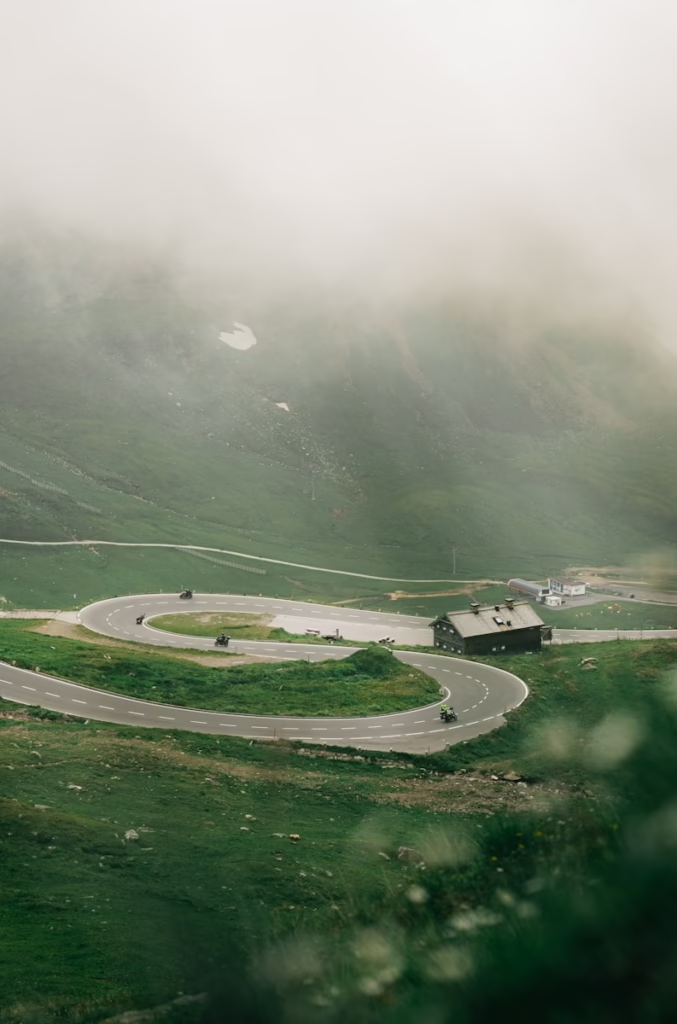
From there, the gradients are not playful. The climb settles into a long, stern rhythm. The hairpins help visually, because they give structure to the effort, but they do not make it easy. Every turn seems to reveal another wall, another slope, another view that is beautiful partly because it hurts to reach.
The road also feels exposed. On a wooded climb, you can lose yourself in the shade and the repetition. On the Grossglockner, you are often very aware of your height, your speed, the traffic, the changing weather and the next section of road above you.
That is part of the appeal. It does not let you drift.
Edelweiss-Spitze: the optional extra that is not really optional
The Edelweiss-Spitze is the kind of detour cyclists pretend is optional until they get there.
It rises from the main road to 2,571 metres, making it the highest drivable point on the Grossglockner High Alpine Road. The access road is short, but after the main climb it feels like a final provocation. It is steeper, tighter and more exposed, with a summit atmosphere that rewards the extra effort.
For many riders, this is the emotional high point. It is not simply a point on the map. It is the place where you stop pretending this is a normal ride. You have climbed out of the valley, through the bends and into a panorama that feels properly earned.
That said, it is not a place for bravado. The road can be busy, the gradient bites, and descending from high altitude after a hard effort demands concentration. If the weather is changing or the legs are already empty, the sensible choice may be to skip it.
The mountain will still be there next time.
The Heiligenblut side: quieter, steeper-feeling and more dramatic
The southern side from Heiligenblut gives the Grossglockner a different personality.
Heiligenblut already feels like a mountain village with purpose. From there, the road rises towards the high alpine section with a more immediate sense of drama. That side can feel more intimate than the northern ramp. The road does not lack scale, but the village, valley and mountain views give it a sharper sense of place.
If the Salzburg side is the classic grand approach, the Heiligenblut side is the more compact mountain story.
For riders doing a full crossing, the south side also changes the ride psychologically. Once you have climbed, crossed and descended, you understand why the Grossglockner is more than one climb. It is a whole mountain road system, with different moods on different sides.
Franz-Josefs-Höhe: the glacier viewpoint
The road to Kaiser-Franz-Josefs-Höhe is one of the great reasons to treat the Grossglockner as more than a simple up-and-down climb.
It takes you to a viewpoint above the Pasterze Glacier, facing the Grossglockner itself. For a cyclist, this is a different kind of reward from a pass summit. A pass gives you a crossing. Franz-Josefs-Höhe gives you a viewpoint. It makes the ride feel less like ticking off a climb and more like arriving somewhere.
The detour adds work, but it also adds meaning. If the weather is clear, it is one of the places where the whole trip makes visual sense: road, glacier, mountain, sky and the smallness of the bike against it all.
Why the roads feel so good
Austria’s cycling appeal is partly practical.
The roads are usually well surfaced, the signage is clear, the towns are tidy and the whole landscape feels organised without feeling sterile. That matters when you are riding somewhere unfamiliar. You spend less energy worrying about the basics and more time reading the terrain.
On the Grossglockner itself, the road is engineered for access, tourism and spectacle. That brings traffic, but it also brings a surface and structure that make the climb rideable despite its severity. The bends are broad, the gradients are clear, and the route feels like it has been designed to turn altitude into theatre.
Around Salzburg, the road network gives you options. You can ride flat, ride rolling, ride towards lakes, ride towards mountains, or use the Tauern routes to stretch out the kilometres. It is not a one-climb destination.
That is the difference between a good cycling trip and a single bucket-list day.
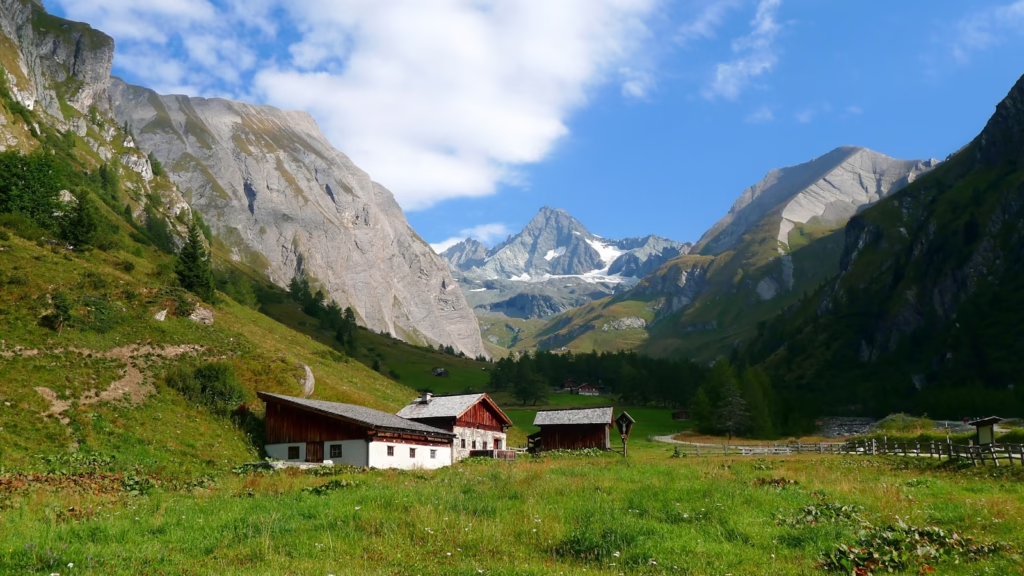
The atmosphere: calm valleys, hard mountains
The best thing about cycling here is the change in atmosphere.
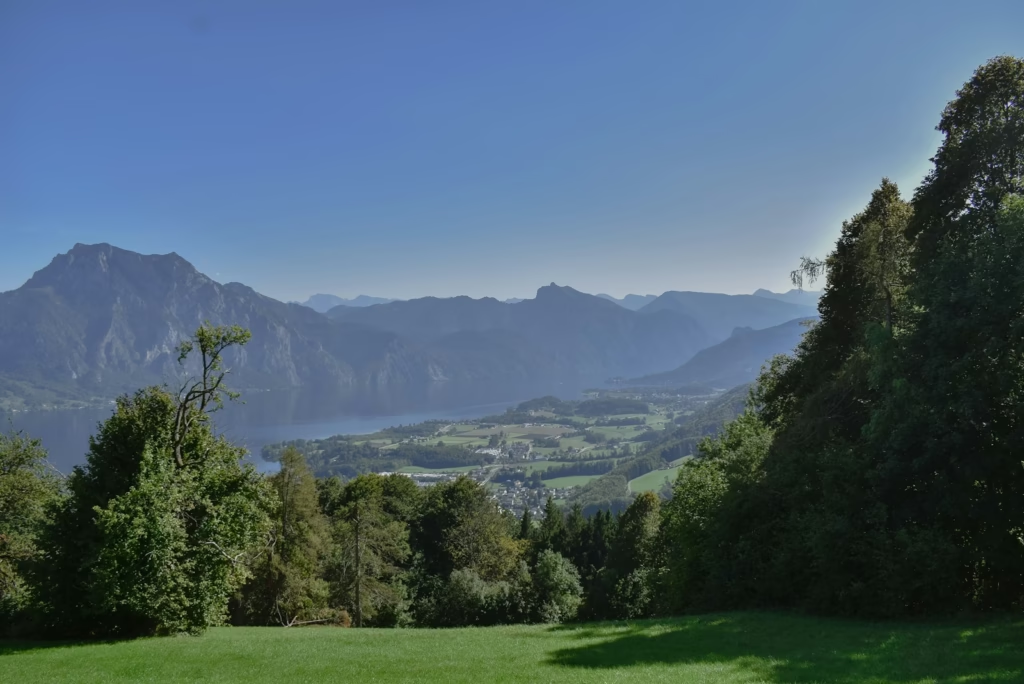
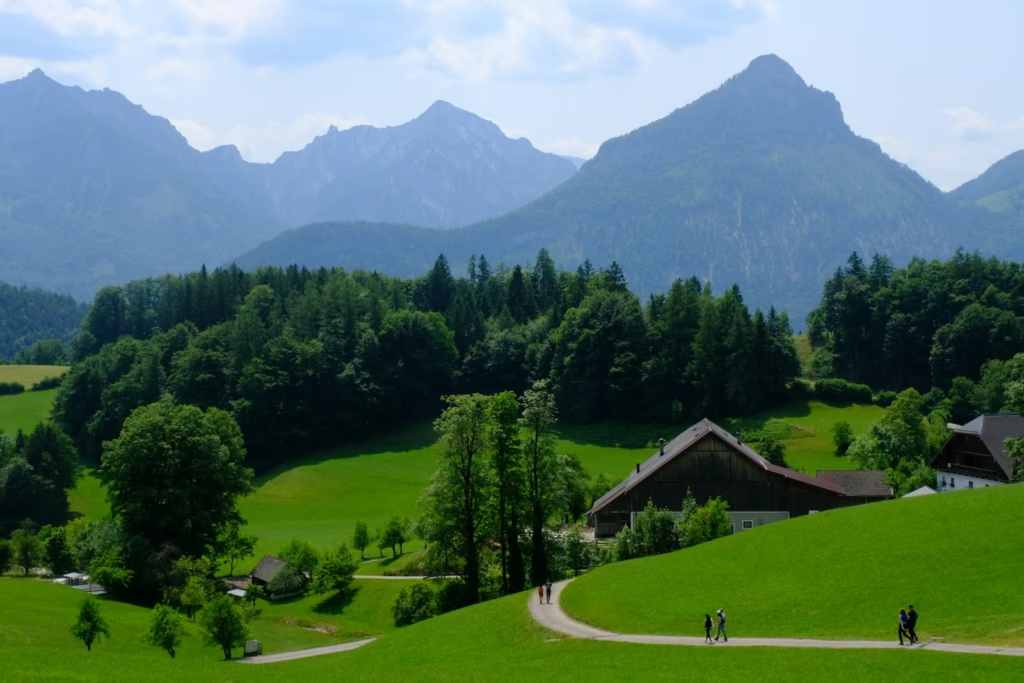
In Salzburg, there is polish. River paths, old streets, cafés, church bells, hotel breakfasts, clean lanes and the sense of a city that knows how to receive visitors. On the valley roads, there is order: farmhouses, timber balconies, neat fields, bright grass and mountains sitting in the background like a promise.
Then the Grossglockner removes the softness.
The air thins. The bends stack up. The weather becomes less decorative and more relevant. Clouds move quickly. Wind matters. Snow can sit high above the road even when the valley feels summery. Motorbikes echo through the turns. Riders stop more often, partly for photographs and partly because the climb forces honesty.
That combination is what makes it special. It is not just beautiful. It has range.
The same idea runs through our guide to cycling in Andermatt and the central Swiss passes, where the road network also turns one base into several different mountain stories.
How hard is the Grossglockner compared with famous Tour climbs?
The Grossglockner is easily hard enough to sit in the conversation with major European climbs.
It may not have the same Tour de France mythology as Alpe d’Huez, the Galibier or the Tourmalet, but physically it belongs in that world. The average gradients are serious, the altitude is high, and the climb has fewer easy sections than many riders expect.
The difference is the feel. French Tour climbs often carry race history at every corner. The Grossglockner carries road-building history, alpine tourism and Austrian mountain identity. It feels less like riding through old television footage and more like riding through a national monument.
That makes the experience distinct. You do not ride Grossglockner because it is a copy of a French climb. You ride it because it is unmistakably Austrian.
For a classic French comparison, see our guide to cycling Bourg d’Oisans and Alpe d’Huez. For a wider shortlist, our feature on epic cycling climbs in the Alps puts the scale of alpine riding into context.
Best bases for a Salzburg and Grossglockner cycling trip
| Base | Best for | Character |
|---|---|---|
| Salzburg | Culture, easy logistics, river rides | City base with alpine access |
| Zell am See | Lakes, climbs, Grossglockner access | Classic cycling holiday feel |
| Kaprun | Mountain sports and high-alpine access | Outdoors-focused and practical |
| Bruck / Fusch | Direct Grossglockner approach | Best for a focused climb attempt |
| Heiligenblut | Southern side of Grossglockner | Dramatic village and mountain setting |
Salzburg is the easiest base if the trip is part cycling, part travel. Zell am See and Kaprun are stronger if riding is the main focus. Fusch and Bruck are for the rider who wakes up thinking about one road. Heiligenblut gives the southern side more atmosphere and makes the mountain feel more remote.
When to ride
The Grossglockner High Alpine Road is normally open from the start of May until the start of November, with the winter closure caused by snow and impassable conditions.
For cyclists, the best window is usually later than the first possible opening date. Early season can still mean cold conditions, snow walls, meltwater and changeable weather. Mid-summer gives more predictable riding but more traffic. September can be excellent if the weather holds, with clearer air, fewer visitors and a slightly calmer atmosphere.
The advice to ride early or late matters. Starting before 08:00 gives the climb a very different feel. The road is quieter, the light is better, and the mountain has more presence before the tourist traffic builds. Late afternoon can also be beautiful, but it requires more care with weather, temperature and descent time.
What bike and gearing do you need?
Bring lower gears than pride suggests.
The Grossglockner is not a climb for grinding a heroic gear from the bottom. It is long enough and steep enough that cadence matters. A compact chainset or modern semi-compact with a large cassette is sensible for most riders. Even strong cyclists will appreciate a bailout gear when the road stays close to 10% and the altitude begins to tell.
Disc brakes are useful for the descents, especially if conditions change, though rim brakes can be fine if well maintained. The more important point is preparation: fresh pads, good tyres, layered clothing, gloves, a gilet or rain jacket and enough food to avoid the classic alpine mistake of eating too late.
The descent can be cold even on a warm day. The climb makes you sweat. The summit reminds you that you are high in the mountains.
What makes the riding different from France, Italy or Switzerland?
Salzburg and Grossglockner feel less crowded with cycling mythology than France or Italy, and less expensive-feeling than Switzerland, but the riding quality is absolutely serious.
There is also a different rhythm. In France, many cyclists arrive chasing Tour de France names. In Italy, they often arrive chasing Giro icons and Dolomite drama. In Austria, the fame is quieter but the gradients can be harsher. The roads are clean, the climbs are severe, and the scenery is less theatrical in a romantic sense but more alpine in a raw, direct way.
The Grossglockner itself is not hidden, but the wider region still feels underused by international road cyclists compared with the better-known Alpine centres. That gives a Salzburg and Grossglockner trip a particular appeal: famous enough to feel significant, but not so overdone that every café is full of riders comparing the same bucket-list climbs.
Best type of rider for this trip
This is a good trip for three types of cyclist.
The first is the strong road rider who wants a proper alpine climbing target without repeating the obvious French or Italian classics. Grossglockner gives that rider a major day out.
The second is the mixed-interest traveller who wants cycling, culture and scenery rather than a pure training camp. Salzburg makes that possible because the city has enough beyond the bike.
The third is the rider building towards harder mountains. You can use Salzburg and the valley routes to build confidence, then step up to Grossglockner when ready.
It is less ideal for riders who only want flat, traffic-free leisure cycling unless they stick to river routes and avoid the high road. The Grossglockner is not a casual add-on. It is a serious undertaking.
A good three-day cycling structure
| Day | Ride idea | Purpose |
|---|---|---|
| Day 1 | Salzburg river and foothills loop | Settle in, check bike, warm up |
| Day 2 | Zell am See / Kaprun rolling ride | Build distance and alpine rhythm |
| Day 3 | Grossglockner High Alpine Road | Main climbing challenge |
A better trip would stretch this over five or six days, with recovery and bad-weather flexibility. The Grossglockner should not be squeezed into the only possible slot if the forecast looks poor. A high alpine road deserves respect, and sometimes that means waiting.
-
 Photo Credit: Tour de Pologne
Verdict: why Salzburg and Grossglockner stay with you
Cycling in Salzburg and Grossglockner works because it gives you contrast.
You get the civilised rhythm of Salzburg, the long pull of river valleys, the neatness of Austrian road culture and then the full shock of a high alpine climb that does not soften itself for visitors. Grossglockner is famous, but it still feels severe. Salzburg is beautiful, but it is not just a postcard. Together, they make a cycling trip that has depth.
The roads are smooth, the climbs are serious, the scenery is clean and vast, and the atmosphere shifts from calm to monumental in a single ride.
That is what makes it special. Not just the height. Not just the gradients. The whole progression: city, valley, mountain, glacier, descent, and the feeling afterwards that you have ridden through several versions of Austria in one trip.
FAQs
Is the Grossglockner High Alpine Road good for cycling?
Yes, but it is a serious ride. The Grossglockner High Alpine Road is long, steep, exposed and best suited to experienced cyclists with good fitness, suitable gearing and confidence descending in the mountains.
How high is the Grossglockner High Alpine Road?
The road reaches the Hochtor at 2,504 metres, while the Edelweiss-Spitze access road reaches 2,571 metres.
How hard is the Grossglockner climb?
It is very hard. From the Ferleiten side, the climb towards Fuscher Törl and Edelweiss-Spitze includes long, sustained gradients and more than 1,600 metres of climbing if you include the highest road section.
When is the best time to cycle the Grossglockner?
Summer and early autumn are usually the best periods, with September often a good balance of road access, clear air and lower traffic. Early starts are strongly recommended in peak season.
Is Salzburg a good base for a cycling holiday?
Yes. Salzburg is a strong base for riders who want a mix of culture, river routes, rolling roads and alpine access. For a Grossglockner-focused trip, Zell am See, Kaprun, Fusch or Heiligenblut are more direct bases.
Can beginners ride Grossglockner?
Not as a first major climb. Beginners can enjoy the Salzburg river routes and gentler valley roads, but Grossglockner is better suited to experienced cyclists with good fitness, sensible gearing and confidence descending in the mountains.