
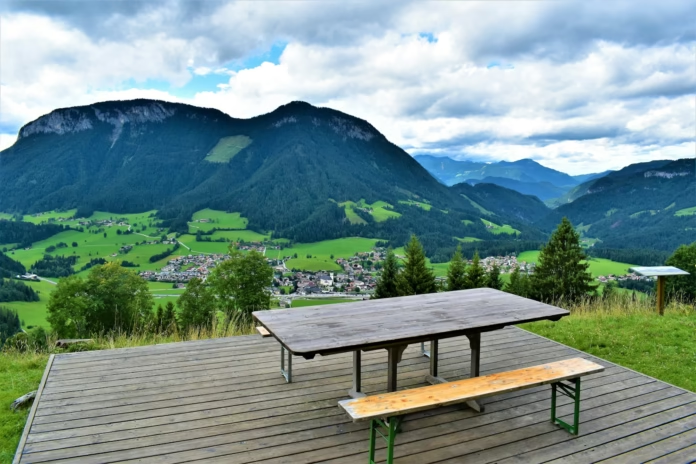
Tirol does not ease you into the Alps. It puts the mountains in front of you as soon as you arrive. In Innsbruck, they rise directly above the city, green at the base, grey and jagged higher up, often holding a streak of snow even when the valley is warm enough for short sleeves. In Ötztal, the valley narrows and darkens, the road following the river past timber balconies, cable cars, avalanche galleries and signs pointing towards climbs that feel less like routes and more like warnings.
For a cyclist, that is the appeal. Tirol is not a gentle riding destination built around lazy loops and café-first mornings. It can do that, in small doses, but its real character is heavier and more dramatic. The climbs are long, the valleys are deep, the roads are clean and the weather has a way of making every ride feel slightly more serious. Even on a bright day, with cowbells somewhere above the road and the smell of cut grass drifting from a farmyard, there is a sense that the mountains are setting the terms.
Innsbruck and Ötztal give the region two different cycling personalities. Innsbruck is the urban alpine base, a city where you can drink coffee in the old town and be climbing properly within minutes. Ötztal is more direct, more physical, more tied to the big-road mythology of the Timmelsjoch, Kühtai and the Ötztaler Radmarathon. Together they make Tirol one of Europe’s great mountain cycling destinations, not because it is easy to package, but because it feels so unfiltered.
For more mountain-riding inspiration across Europe, the wider ProCyclingUK travel section brings together guides to destinations such as Andermatt and the central Swiss passes, Aosta Valley and Asturias and Cantabria.
Why Tirol is special for road cycling
Tirol works because the riding feels immediate. There are many cycling destinations where the good roads sit an hour away from the place you are staying. Innsbruck is not like that. The city sits in the Inn valley with mountains pressing in from both sides, so even a short ride can become a climbing day if you choose the wrong road, or the right one.
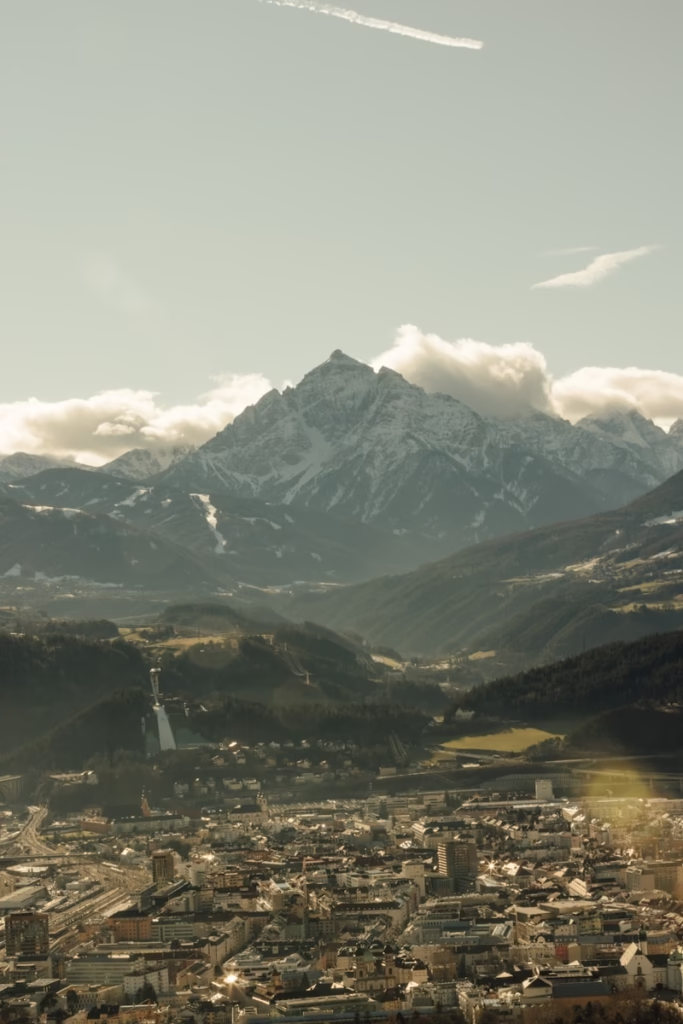
That proximity changes the mood of a trip. You can roll away from the river, pass trams, apartment blocks and bakeries, then suddenly find the road rising above the city. The sound changes first. Traffic softens, chains hum more clearly, cowbells begin to carry across the hillside and the smell of warm tarmac mixes with pine resin and wet stone. Innsbruck never quite lets you forget that it is a city, but the mountains pull the ride upwards so quickly that urban life becomes part of the contrast rather than a distraction.
Ötztal is different. It feels more like a valley built around effort. The road to Sölden and beyond has a heavier, more enclosed atmosphere, with the Ötztaler Ache running beside the valley road and the mountains closing in as you head deeper. There are hotels, ski lifts and outdoor shops, but there is also a sense of scale that makes even the easy kilometres feel like part of a bigger day.
The region is not only about famous climbs. It is about the way those climbs are connected. Innsbruck gives you access to Kühtai, Igls, Patscherkofel and the roads made famous by the 2018 Road World Championships. Ötztal gives you Timmelsjoch, the Sölden valley roads, Kühtai from the Oetz side and the legendary Ötztaler Radmarathon loop. The map is dense with serious riding.
For riders comparing alpine bases, Tirol sits naturally alongside the Swiss high-pass feel of cycling in Andermatt and the central Swiss passes, but Innsbruck gives the experience a more urban edge.
Innsbruck as a cycling base
Innsbruck is one of the most satisfying alpine cities for cyclists because it never feels detached from the riding. You can stay centrally, walk to dinner, sit by the Inn, hear church bells drifting through the old town and still have proper climbs on your doorstep. It has the practical advantages of a city, but the terrain of a mountain camp.
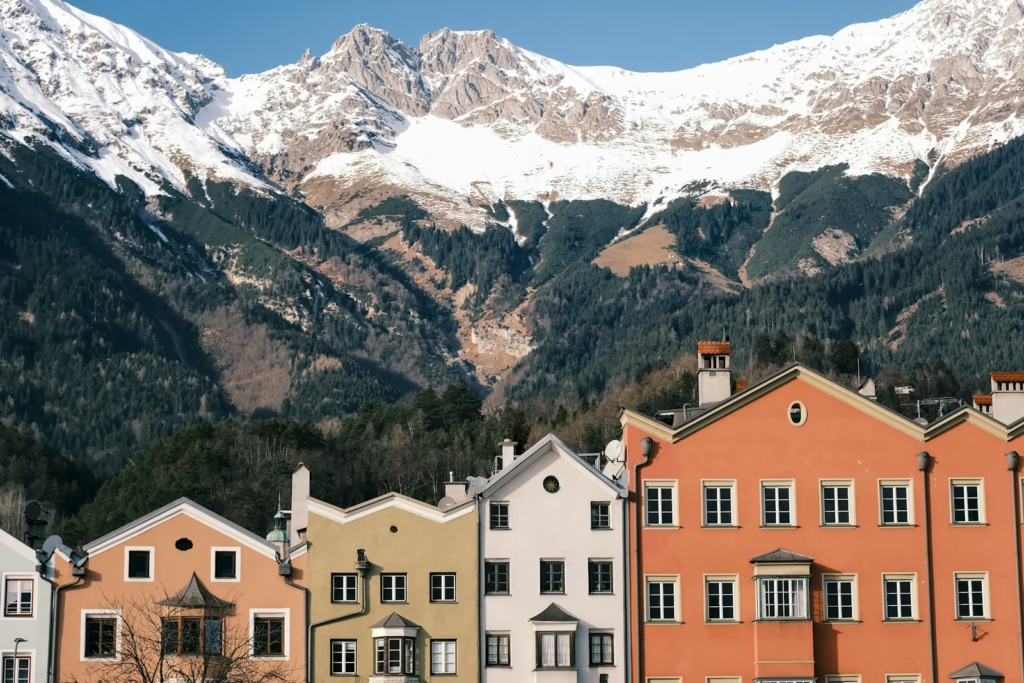
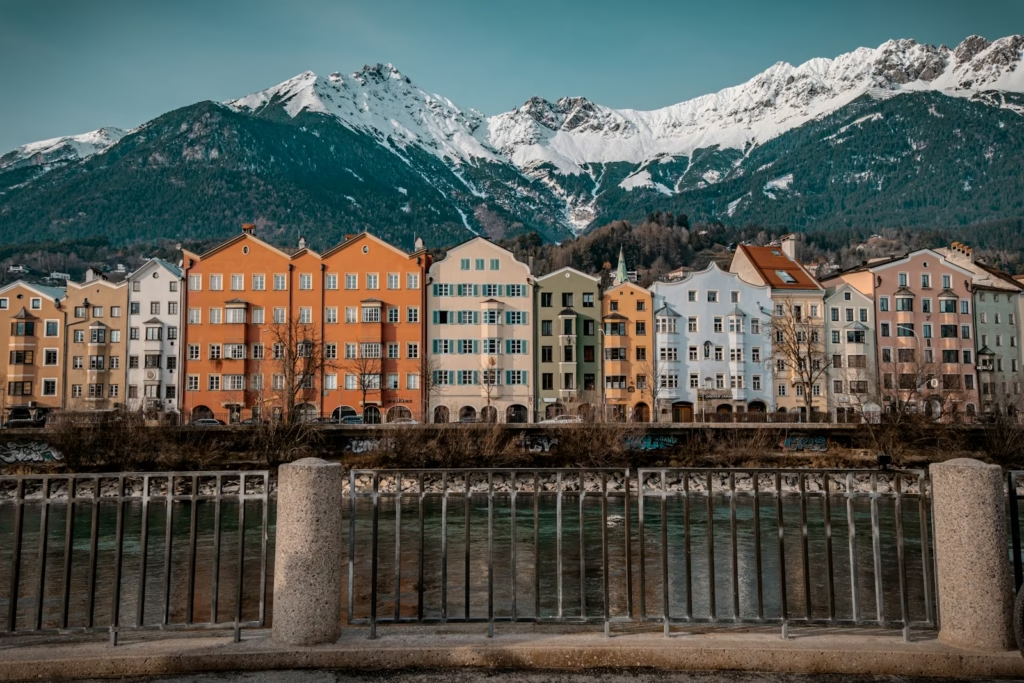
The first impression is often visual. The Nordkette rises so steeply above the rooftops that it looks almost unreal, like a painted backdrop behind the pastel buildings of the old town. In the morning, light catches the upper rock first while the streets below are still cool. Cyclists clip in near the river, jackets zipped, tyres clicking over the small seams in the road, knowing that by the top of the first climb they may be unzipping everything again.
The riding around Innsbruck suits riders who like variety. You can make a shorter punchy ride over the local hills, head towards Igls and the World Championships roads, or build a much larger day out towards Kühtai. The city also has enough bike shops, cafés, transport links and accommodation to make logistics straightforward. It is a good option for riders who want mountain riding without disappearing completely into a resort town.
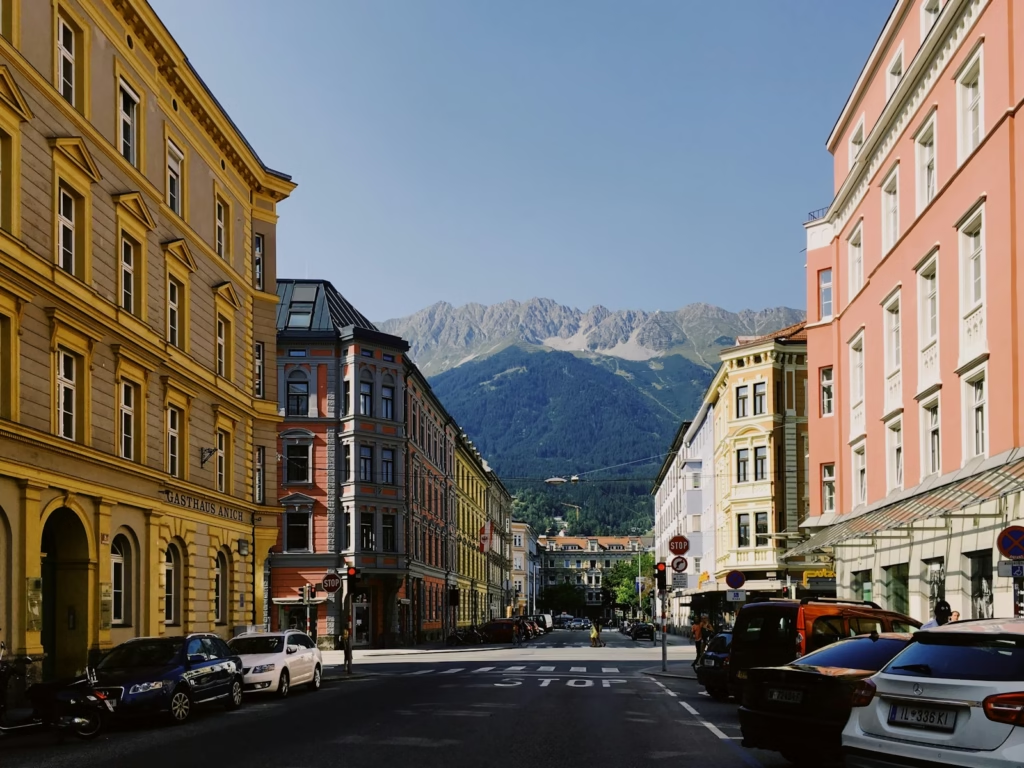
The trade-off is traffic. Innsbruck is a real city, not a postcard village. The first few kilometres can involve junctions, buses, commuter traffic and tramlines depending on where you are staying. That is not a reason to avoid it, but it does shape the best riding. Early starts help. So does planning routes that get you onto quieter roads quickly.
Kühtai from Innsbruck and Oetz
Kühtai is one of Tirol’s defining climbs. It is not only hard, it is useful, because it links Innsbruck and the Ötztal side in a way that makes it central to many serious routes. It rises above 2,000m, which gives it real alpine weight, and the road has the open, exposed feeling of a climb that belongs in the high mountains rather than the foothills.
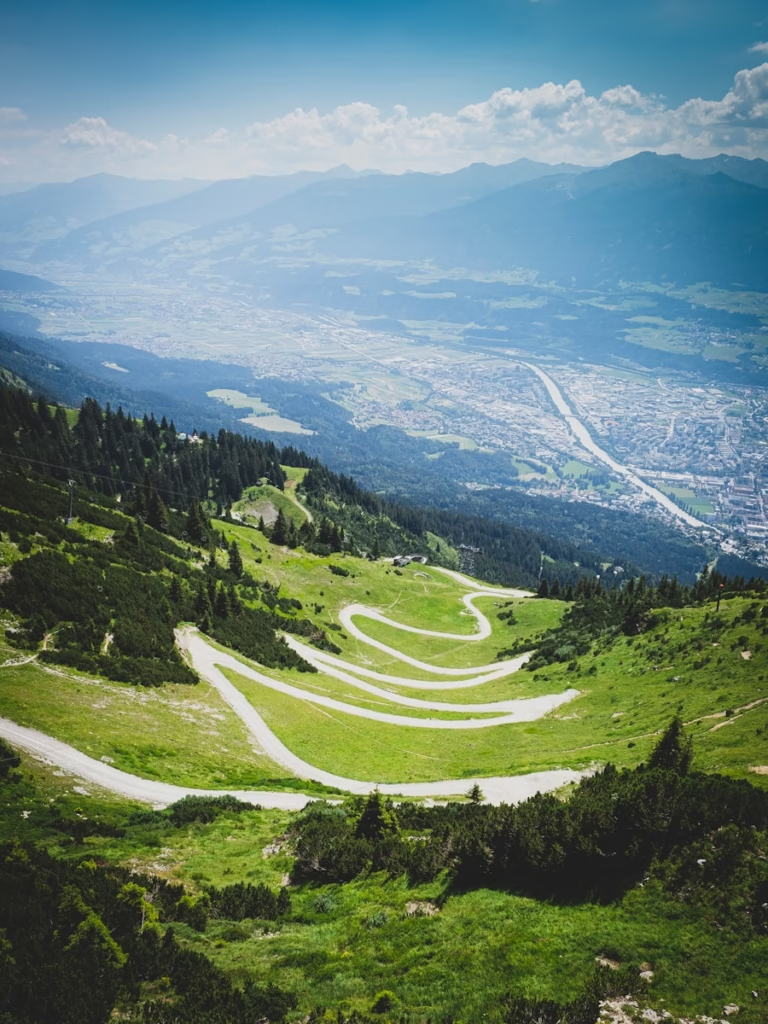
From Innsbruck, the route towards Kühtai builds gradually before the real climbing begins. The lower valley can feel almost calm, especially if the day starts with mist rising from the fields and the sound of farm machinery somewhere across the slope. Then the road starts to demand more. Villages arrive and disappear. The air cools. The valley opens and closes. The rhythm becomes less conversational.
What makes Kühtai memorable is not just gradient. It is the way the climb keeps changing tone. There are sections where the road feels civilised, passing houses and meadows, and others where the mountain takes over, the road cutting through rock and forest, the sky widening as the altitude rises. On a warm day, you smell hot grass and pine. On a damp one, the whole climb can feel sharper, with cold air sliding down from the higher slopes and the sound of tyres on wet road becoming oddly loud.
From the Oetz side, Kühtai is a serious piece of climbing in its own right and a key part of the Ötztaler Radmarathon route. It feels more like a direct mountain test, especially if you are coming from the valley floor with the knowledge that the road has a long way to rise. This is not a climb to bluff. It rewards measured pacing, proper fuelling and a willingness to let the first half feel almost too easy.
Kühtai is also one of the climbs that gives Tirol its particular identity. It is not as internationally famous as Alpe d’Huez or the Stelvio, but it feels like a real cyclist’s climb: high, long, functional, scenic and demanding without needing theatrical hairpins at every turn.
Timmelsjoch and the high alpine feeling of Ötztal
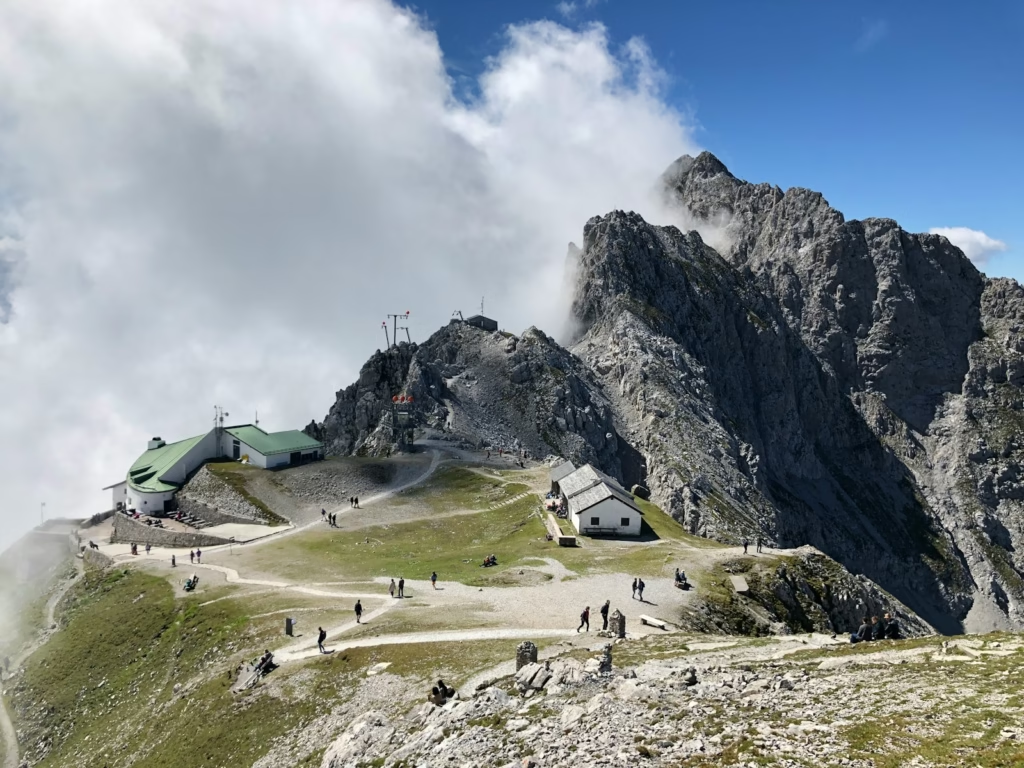
Timmelsjoch is the climb that gives Ötztal its mythic edge. From Sölden, the road heads towards Hochgurgl and the Italian border, rising into a harsher, more exposed landscape. The climb reaches 2,474m, and by the upper sections the scenery feels stripped back to rock, sky, patches of alpine grass and the pale line of the road.
There is a particular sensation to riding high above the valley here. The first part can still feel connected to the world below: hotels, lifts, signs, terraces, the ordinary machinery of an alpine resort. Higher up, that fades. The wind becomes more noticeable. The light hardens. The road feels cleaner and colder. Even in summer, you can sense how short the riding season is at this altitude.
Timmelsjoch is not only a climb for numbers. It is a climb for atmosphere. The road pulls you into a landscape where everything feels slightly bigger than your own effort. Hairpins sit against wide slopes. Motorbikes pass in small bursts of noise, then disappear. Other cyclists become little moving dots on the ramps above. You look up and see the next line of road cut into the mountain, which is both beautiful and faintly cruel.
The descent demands respect. The height, weather and road layout mean conditions can change quickly. A warm valley morning does not guarantee a warm pass. Carrying an extra layer is not caution for the sake of it here; it is basic common sense. The same climb that feels magnificent in sun can become cold, nervous and exposed if cloud drops over the summit.
For riders based in Sölden, Timmelsjoch is the obvious headline day. It is the ride you think about before the trip, the one that gives the whole week a centre of gravity. But it is also a climb best treated with patience. Go too hard early and the upper slopes will make the point for you.
The Ötztaler Radmarathon myth
Even riders with no intention of entering the Ötztaler Radmarathon can feel its presence in the valley. The event is one of Europe’s great amateur cycling challenges, taking riders over four Alpine passes and around 5,500m of climbing, with Sölden as the emotional centre of the route. Kühtai, Brenner, Jaufen and Timmelsjoch combine into a day that feels almost absurd on paper and unforgettable in practice.
The route explains a lot about Ötztal’s cycling culture. This is not a place that sells soft alpine leisure first. It sells effort. Hotels understand cyclists. Shops understand early starts and tired faces. Menus make more sense after five hours on the bike. There is a practical mountain seriousness to it, as though the valley expects you to have arrived with a plan and a pair of legs ready to suffer.
What makes the Ötztaler idea powerful is the loop itself. It is not just one climb repeated or a single summit out and back. It is a journey across borders, valleys and weather systems. The rhythm changes from Austria into Italy and back again. The scale becomes part of the experience. By the time Timmelsjoch arrives late in the day, it is not simply the final climb. It is a test of what the previous hours have left behind.
You do not need to ride the full marathon route to understand why it has such a hold on cyclists. Even taking on one or two of its climbs gives you the texture of it: long valley approaches, serious gradients, fast descents, sudden changes in temperature and the strange satisfaction of seeing Sölden again at the end of a hard day.
Hahntennjoch and Tirol’s wilder roads
Hahntennjoch sits away from the Innsbruck to Ötztal axis, but it belongs in any serious Tirol cycling conversation. It is one of those passes that feels less polished than the most famous alpine roads, narrower and rawer in places, with a more remote character. From the Lechtal side, it climbs towards 1,894m through spectacular mountain scenery, with ramps that quickly remind you this is not a gentle scenic road.
Hahntennjoch has an edge. The road feels more exposed, the surroundings more rugged, and the traffic mix can include motorbikes as well as cars and cyclists. It is a climb for riders who like their alpine days to feel a little less controlled. There is beauty here, but it is not soft beauty. It comes in cliffs, pale rock, steep slopes and the feeling of being very small between mountains.
This is one of the reasons Tirol works so well as a cycling destination. Innsbruck and Ötztal are the obvious bases, but the wider region has more texture than a simple greatest-hits list. You can build a week around famous climbs, but you can also move between valleys and find roads that feel quieter, stranger and more local.
Hahntennjoch is best treated as a full ride rather than an add-on. The climb, descent, weather and access roads all deserve attention. On the right day, it can be one of the most memorable rides in the region. On the wrong day, it can be hard, cold and unforgiving.
Innsbruck’s World Championships roads
The 2018 UCI Road World Championships left Innsbruck with a modern cycling identity beyond tourism. The race routes put the city’s climbs on global television, and the Höttinger Höll became the sharpest symbol of that week: short, brutal and steep enough to turn the elite men’s road race into a final act of survival.
For visiting cyclists, the World Championships roads give Innsbruck a different kind of appeal. This is not only alpine climbing in the grand-pass sense. It is also punchy, urban-adjacent, technical terrain where the city and the mountains blur together. You can ride roads that feel connected to race history without needing to spend the whole day above 2,000m.
That makes Innsbruck useful for mixed weeks. Not every ride has to be Kühtai or Timmelsjoch. Some of the most enjoyable days are shorter, sharper and more exploratory: up towards Igls, through forested roads, past viewpoints where the city sits below in a flat ribbon between mountains. The climbs bite, but they do not always require the full alpine expedition mindset.
There is something satisfying about finishing a hard ride and rolling back into a real city. You pass commuters, schoolchildren, tourists with cameras, people carrying shopping bags, and nobody particularly cares that your legs are empty. That normality is part of the charm. Innsbruck lets a ride feel huge without making the whole day revolve around it.
What the roads feel like
Tirol’s roads generally have the clean, precise feel that many riders associate with Austria and Switzerland. The surfaces are often good, signage is clear, and the engineering of the mountain roads gives the riding a certain confidence. You feel that these roads were built to function through difficult terrain.
That does not mean they are always easy. Valley roads can be busy. Alpine passes can carry tourist traffic, cars, campervans and motorbikes, especially in summer. The riding is at its best when you choose timing carefully. Early mornings are quieter, cooler and more atmospheric. The light sits low across the meadows, villages are just waking up, and the roads have that slightly damp freshness that disappears later in the day.
Descending in Tirol is usually excellent, but it requires attention. The roads are fast and well surfaced, but mountain weather, tunnels, shaded corners, drainage channels and traffic all add layers of risk. A descent from Timmelsjoch or Kühtai can be exhilarating, but only if you keep something in reserve. Cold hands and overconfidence are a bad combination.
The sounds of the roads stay with you. The steady hush of the river in Ötztal. Cowbells above Kühtai. Motorbikes echoing between rock faces. Brakes feathering into a hairpin. A church bell somewhere below. The small click of a gear change when the gradient steepens again and nobody wants to say out loud how hard it feels.
For a different kind of European climbing texture, the Black Forest from Freiburg offers quieter forest roads and repeated climbs rather than Tirol’s more direct high-alpine drama.
The atmosphere after the ride
Tirol is a good place to be tired. That may sound obvious, but it is part of what makes the region work. Some cycling destinations are all about the ride, with the rest of the day feeling like admin. Tirol gives you a proper after-ride setting.
In Innsbruck, that can mean sitting in the old town with a coffee or a beer while the mountains you rode earlier stand over the city. There is a pleasant oddness to eating something sweet, still faintly salty from dried sweat, while tourists drift past in clean shoes and the late afternoon sun catches the painted buildings. You feel both part of the city and slightly separate from it, carrying the private memory of gradients and descents that nobody around you has seen.
In Ötztal, the atmosphere is more resort-like but still satisfying. Sölden has the infrastructure of a mountain town used to people arriving with equipment and ambition. You see bikes leaned outside hotels, riders in recovery sandals, wet kit hanging over balconies, people eating as though the day has created a moral right to order more. The air cools quickly in the evening. The valley shadows lengthen, and the mountains that felt huge on the bike become even darker above the roofs.
Food helps. Tirol is not the lightest place to eat after a ride, but it is exactly the sort of food you want when you have been climbing all day: dumplings, potatoes, soup, cheese, pastries, strong coffee, cold beer. A plate of käsespätzle after a hard alpine ride makes perfect emotional sense. It is not refined recovery cuisine. It is warm, salty, rich and deeply welcome.
One of the small pleasures of riding here is the way cafés and mountain stops smell: coffee, wood, sunscreen, damp jackets, fried food, pastry and occasionally the sharp mineral smell of wet road steaming in the sun after a shower. It is a mountain cyclist’s version of comfort.
Innsbruck or Ötztal: which base should you choose?
Innsbruck is the better base if you want variety, convenience and a city around the cycling. It suits riders who want to mix big rides with shorter ones, travel without hiring a car, eat somewhere different each night and have access to shops, trains and city life. It is also the better choice if not everyone on the trip is riding every day.
Ötztal is the better base if the trip is built around serious climbing. Sölden, Oetz and the valley towns make more sense if Timmelsjoch, Kühtai and Ötztaler-style days are the focus. It feels more like a training camp or mountain block, especially if the plan is to ride hard, eat, sleep and repeat.
The best answer, if time allows, is to use both. Start in Innsbruck to enjoy the city and the World Championships roads, then move into Ötztal for the heavier alpine days. That way the trip develops naturally. The first rides introduce the region, the later ones take you deeper into it.
A split trip also helps mentally. Innsbruck gives you energy, movement and choice. Ötztal gives you focus. Together they stop the week becoming one-dimensional.
When to ride in Tirol
The best road cycling season in Tirol usually runs from late spring through early autumn, with May to October often cited as the broad road cycling window. For the high alpine passes, conditions are more specific. Snow, maintenance, weather and seasonal openings can affect roads such as Timmelsjoch, so checking pass status before travelling is essential.
June can be beautiful, with green valleys, long daylight and snow still visible high above the roads. It can also bring unsettled weather. July and August offer the warmest conditions but also more tourist traffic, especially on famous passes. September may be the best month for many road cyclists: cooler air, stable light, fewer crowds and that early autumn sharpness in the mountains.
The main rule is to respect altitude. A valley forecast is not a pass forecast. If you are heading above 2,000m, carry layers even if the start feels warm. Weather can move quickly, and descents can become cold enough to change a ride from enjoyable to miserable.
Early starts are useful throughout summer. They reduce traffic, make climbing more comfortable and give you more time if weather builds later in the day. In the Alps, that margin is worth having.
Who Tirol suits best
Tirol suits riders who enjoy climbing and are comfortable with proper mountain days. You do not need to be a racer, but you do need to respect the terrain. The climbs are long enough that pacing matters, and the descents are serious enough that bike handling and concentration are part of the trip.
It is excellent for riders preparing for a sportive, gran fondo or alpine challenge. The gradients, altitude and route density make it easy to build demanding back-to-back days. It is also good for experienced cyclists who want a trip that feels more dramatic than a warm-weather training camp.
It may be less ideal for beginners looking for gentle, low-stress riding. There are easier valley options and cycle paths, especially in parts of the Inn valley and Ötztal, but the real road-cycling identity of the region is mountainous. If your idea of a perfect ride is flat lanes and long café stops, Tirol can feel severe.
For riders who like big landscapes, structured climbs and a sense of consequence, it is difficult to beat.
For contrast, the Rest of Europe cycling travel hub is useful for comparing Tirol with other climbing destinations, while Limburg and the Amstel Gold region offers a very different style of punchy, race-linked riding.
-
 Photo Credit: quentinphotographiebe
 -
 Photo Credit: Getty
Practical information for cycling in Tirol
Location
Tirol is in western Austria, with Innsbruck as the main city and transport hub. Ötztal sits to the west of Innsbruck, with Oetz, Sölden and Gurgl among the key valley locations for riders.
Innsbruck is the easiest base for travel, rail connections, bike shops and mixed city-and-mountain riding. Ötztal is better for a more climb-focused trip, especially if Timmelsjoch, Kühtai and Ötztaler Radmarathon-style routes are the priority.
Riding
Expect proper alpine riding. Key climbs and routes include Kühtai, Timmelsjoch, Hahntennjoch, the Innsbruck World Championships roads, Igls, Patscherkofel approaches, the Ötztal valley roads and the Ötztaler Radmarathon route.
Distances can be deceptive because the climbing is serious. A 70km ride in Tirol can feel much bigger than a 120km rolling ride elsewhere. Plan by elevation, not just distance.
Carry a rain jacket or gilet for high descents, even in summer. Use lights for tunnels or shaded valley roads, and check pass status before riding high alpine routes.
When to go
The broad road cycling season runs from May to October, but the best period for high mountain riding is usually June to September. September is especially appealing for cooler temperatures and quieter roads.
High passes can be affected by snow and seasonal closures, so always check current conditions before planning a ride around Timmelsjoch or other high alpine roads.
Accommodation
Innsbruck has the widest choice of hotels, apartments and restaurants, making it the most flexible base. Staying near the river or old town works well if you want easy access to both city life and ride starts.
Sölden and the wider Ötztal valley are better for a cycling-first trip. Look for bike-friendly accommodation with secure storage, laundry options, early breakfast and space to dry kit. In a mountain valley, those small details make a hard week much easier.
Food and recovery
Tirol is well suited to hungry cyclists. Expect hearty food, good bread, pastries, coffee, dumplings, cheese, soups and mountain-hut staples. It is worth planning cafés and water stops on longer rides, especially on remote climbs where services may be seasonal.
After a hard day, Innsbruck gives more variety, while Ötztal gives the classic mountain-resort recovery rhythm: shower, food, short walk, early night, repeat.
Why Tirol belongs on a cycling travel list
Tirol is special because it feels serious without feeling joyless. The climbs are hard, the weather can be sharp, and the roads demand respect, but the reward is enormous. Few places combine an alpine city, a deep cycling valley, famous high passes, World Championships roads and the myth of one of Europe’s hardest amateur events in such a compact area.
It is not the most relaxed cycling destination in Europe. It is not as café-soft as Girona, as sun-soaked as Sierra Nevada, or as quietly pastoral as parts of the Black Forest. Tirol has a harder edge. The mountains sit closer. The roads rise faster. The air changes sooner. A ride can begin with church bells and espresso in Innsbruck and end with cold fingers on a high descent, your legs hollowed out by gradients you underestimated two hours earlier.
That is why it stays with you. Tirol gives cycling a sense of scale. It makes ordinary rides feel consequential and big rides feel properly earned. Whether you base yourself in Innsbruck, disappear into Ötztal, or link the two through Kühtai and the surrounding valleys, the region has a way of turning effort into memory.
You remember the details afterwards: the green flash of meadows above Innsbruck, the sound of the Ötztal river beside the road, the first glimpse of the upper Timmelsjoch ramps, the smell of woodsmoke in a village, the relief of a warm plate after a cold descent, the way the mountains change colour as the evening drops into the valley.
That is the real reason to ride here. Tirol does not only give you climbs to tick off. It gives you days that feel bigger than the route file.

