
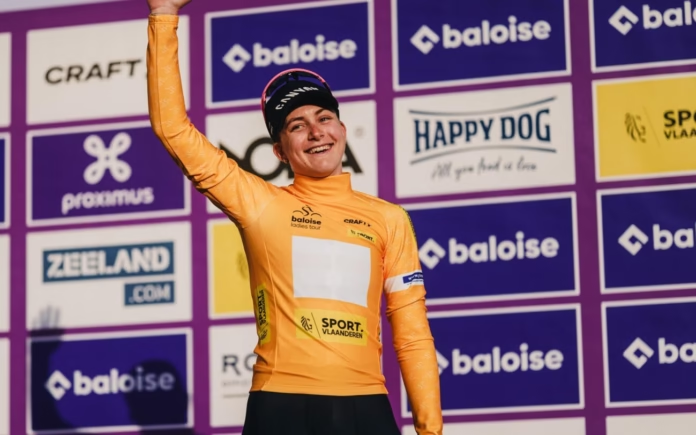
The Baloise Ladies Tour 2026 start list brings together elite time triallists, established sprinters, track specialists and a substantial group of emerging riders across 21 teams.
Lotte Kopecky is the outstanding name in the field and begins as the natural favourite for the general classification. The Belgian leads Team SD Worx-Protime across a course featuring a short opening prologue, several fast road stages and the decisive split day in Maaseik, where an individual time trial is followed by a second road stage later that afternoon.
Kopecky will face strong opposition from defending champion Zoe Bäckstedt, British time trial specialist Anna Henderson and German track star Franziska Brauße. The sprint field is equally deep, with Charlotte Kool, Anniina Ahtosalo, Clara Copponi, Martina Fidanza, Maike van der Duin and Scarlett Souren all capable of winning stages.
The five-day race runs from Wednesday 15 July to Sunday 19 July. The full route and stage profiles are covered in our Baloise Ladies Tour 2026 race preview.
 Photo Credit: Getty
Baloise Ladies Tour 2026 start list
Data powered by FirstCycling.com
Lotte Kopecky starts as the general classification favourite
Lotte Kopecky gives Team SD Worx-Protime the strongest individual contender in the race.
The Belgian has almost every attribute required to win the Baloise Ladies Tour. She can gain time in both individual tests, collect bonus seconds in reduced sprints and remain near the front when crosswinds or technical circuits create gaps.
The short opening prologue should immediately suit her power. The longer Maaseik time trial then gives Kopecky another opportunity to establish control before the afternoon road stage places extra pressure on recovery and positioning.
Team SD Worx-Protime also brings enough experience to protect its leader across the flatter stages. Femke Gerritse and Femke Markus can support Kopecky deep into difficult finales, while Barbara Guarischi offers valuable lead-out and positioning experience.
Marie Schreiber gives the team an attacking option, particularly if a road stage becomes difficult to control. Her aggressive approach could also force rival teams to work while Kopecky remains protected in the peloton.
Kopecky’s status as favourite does not guarantee an uncomplicated race. The Baloise Ladies Tour is frequently shaped by small gaps, bonus seconds and moments of poor positioning rather than one decisive mountain stage.
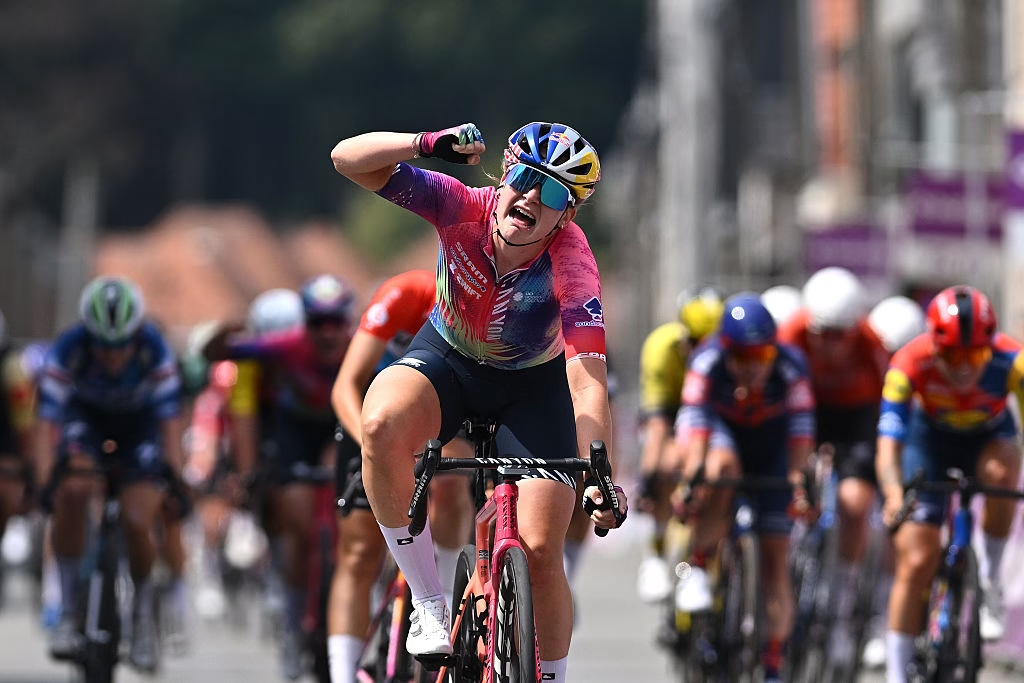
Zoe Bäckstedt returns as defending champion
Zoe Bäckstedt returns to the race after winning the 2025 overall title through dominant performances against the clock.
The Canyon//SRAM Racing zondacrypto rider remains one of the clearest threats to Kopecky. Her ability to produce high power over short distances makes her an obvious contender for the IJzendijke prologue, while the longer Maaseik time trial should provide another chance to gain substantial time.
Bäckstedt’s strengths extend beyond the individual tests. Her cyclocross background, bike handling and comfort in exposed racing make her particularly useful on technical circuits and roads affected by wind.
She may not possess Kopecky’s finishing speed, which makes the time bonuses an important part of the contest. Bäckstedt will want to build an advantage against the clock rather than enter the final stage needing to take seconds from faster riders.
Canyon//SRAM also has Maike van der Duin for the bunch finishes. Van der Duin can collect stage results and bonus seconds, while Maria Martins provides another fast option.
Tiffany Cromwell brings experience and tactical awareness, particularly if crosswinds or repeated attacks make the road stages harder than their profiles suggest.
Bäckstedt is one of several riders featured in our guide to the British riders to watch in women’s cycling in 2026.
Anna Henderson gives Lidl-Trek a serious overall option
Anna Henderson should be considered one of the strongest alternatives to Kopecky and Bäckstedt.
The British rider has the time-trial ability required to remain in the general classification battle, but her wider road skillset may be just as important. Henderson positions herself well, reads exposed races effectively and is capable of remaining near the front when the peloton begins to split.
Lidl-Trek also brings Clara Copponi as its clearest sprint option. Copponi can challenge on the flatter stages and provides the team with a route towards bonus seconds even when Henderson is being protected for the overall standings.
The presence of Ava Holmgren, Fleur Moors and Felicity Wilson-Haffenden gives Lidl-Trek considerable young talent. Wilson-Haffenden should be particularly interesting in the time trials, while Moors and Holmgren can be used aggressively when the main teams hesitate.
Lauretta Hanson supplies the road experience needed to bring those different options together.
Lidl-Trek may not have the single overwhelming leader possessed by SD Worx-Protime, but it has one of the most complete and flexible squads in the race.
 Photo Credit: Getty
Charlotte Kool leads a high-quality sprint field
Charlotte Kool is one of the fastest pure sprinters on the start list and gives Fenix-Premier Tech a clear chance of winning multiple stages.
The route contains several finishes that should suit her, although the race is rarely as simple as a sequence of controlled bunch sprints. Wind, technical circuits and the accumulated fatigue of repeated high-speed stages can all affect which sprinters reach the final kilometre in position.
Kool’s team will need to provide consistent support. Evy Kuijpers and Fien Van Eynde can contribute to the lead-out, while Marthe Truyen and Millie Couzens offer strength when the race becomes more aggressive.
Marion Norbert Riberolle gives the squad another rider capable of handling difficult positioning and repeated accelerations.
Kool will not have the sprint field to herself. Almost every major team arrives with at least one fast finisher, creating a race in which controlling the final kilometres may prove as difficult as winning the sprint itself.
Linda Zanetti can win without a perfect lead-out
Linda Zanetti leads Uno-X Mobility and should be among Kool’s most dangerous rivals.
Zanetti combines finishing speed with the ability to survive harder racing. She does not need a completely flat or perfectly controlled finale, making her particularly valuable if crosswinds, corners or short climbs reduce the peloton.
Uno-X also has Anniina Ahtosalo and Laura Tomasi, giving the team additional options rather than forcing every stage to be built around one rider.
That depth allows Uno-X to race more aggressively. Ahtosalo can be protected for the finish, while other riders follow attacks or place pressure on teams carrying a more obvious sprint favourite.
Francesca Pellegrini, Mia Gjertsen and Emilie Alberte Greve complete a squad with enough speed and flexibility to remain visible throughout the week.
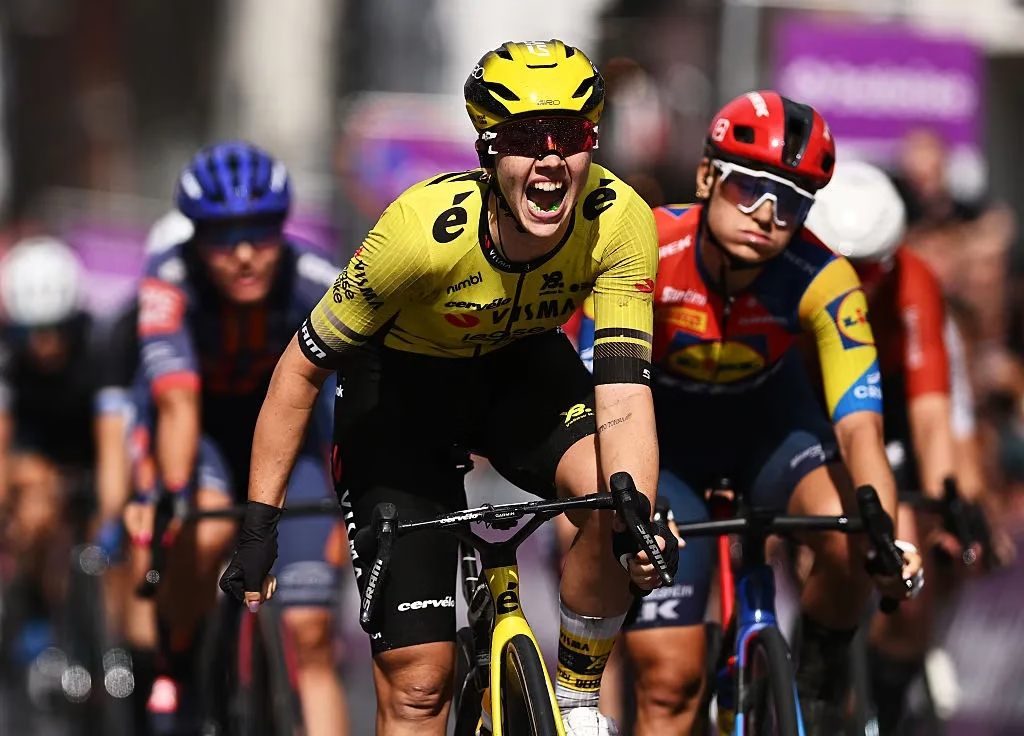
Martina Fidanza brings pure finishing speed
Team Visma | Lease a Bike Women arrives with Martina Fidanza as its leading sprint option.
Fidanza’s track background is particularly relevant in a race defined by short, intense efforts and high-speed positioning. When delivered into a clear sprint, she has the speed to challenge any rider in the field.
Nienke Veenhoven provides a second quick finisher and gives Visma more tactical freedom. The team does not need to commit every resource to Fidanza if a stage becomes too selective.
The younger members of the squad may also be given opportunities. Viktória Chladoňová and Imogen Wolff are capable of contributing in aggressive racing and may be used to enter breakaways or anticipate the sprint teams.
The central question is whether Visma can consistently place Fidanza near the front against deeper and more experienced lead-out units.
Maike van der Duin gives Canyon//SRAM two routes to success
Canyon//SRAM’s interest in the race does not end with Bäckstedt’s general classification campaign.
Maike van der Duin gives the team a genuine sprint leader and should be capable of challenging for stage victories. Her ability to cope with difficult positioning may prove especially useful on days when exposed roads or technical circuits disrupt the conventional lead-outs.
That creates a useful division of responsibilities. Bäckstedt can concentrate on conserving energy and avoiding time losses, while Van der Duin targets the finishes.
There may also be moments when their interests overlap. A strong Canyon//SRAM move in the wind could protect Bäckstedt’s overall position while simultaneously reducing the number of sprinters Van der Duin must beat.
Few teams have such a natural combination of time-trial leadership and sprint potential.

Clara Copponi carries Lidl-Trek’s sprint hopes
Clara Copponi provides Lidl-Trek with a proven fast finisher alongside Henderson’s general classification challenge.
Her presence ensures the team does not need to spend the entire race riding defensively. Copponi can target stage wins and bonus seconds, while Henderson remains protected behind her.
Copponi’s track experience should suit the repeated accelerations and intense positioning battles expected throughout the race. She can also handle a finish that is more technical than a simple straight-line sprint.
The challenge for Lidl-Trek will be dividing its resources effectively. Henderson needs support through exposed sections, while Copponi requires riders in the final kilometres.
The squad’s depth means it should be capable of doing both, particularly if its younger riders adapt quickly to their roles.
Scarlett Souren leads the ProTeam challenge
Scarlett Souren is one of the strongest riders starting outside the leading WorldTour teams.
The VolkerWessels Cycling Team sprinter has the speed to challenge the established favourites and should not be treated as an outsider merely because of her team’s status.
VolkerWessels brings a particularly strong line-up for this level of racing. Lonneke Uneken, Anne Knijnenburg and Maaike Boogaard provide experience and alternative options, while Meis Poland and Bodine Vollering add further depth.
Souren may benefit from the tactical pressure on the larger teams. SD Worx-Protime, Canyon//SRAM, Lidl-Trek, Fenix-Premier Tech and Uno-X all have clear responsibilities. VolkerWessels can be more selective about when it contributes to the chase.
A well-timed lead-out or a reduced sprint could bring Souren directly into the battle for victory.

Georgia Baker adds another track specialist
Georgia Baker gives Liv AlUla Jayco Continental another potentially important rider against the clock and in the faster road stages.
Her track background makes her comfortable with sustained power and repeated accelerations. She can also contest selective finishes if the pure sprinters have been weakened.
The team includes Emma Jeffers, Hélène Hesters, Erin Bootham and Matilde Vitillo, providing several young riders with opportunities to race proactively.
Baker’s exact role may depend on her opening prologue. A strong result could turn her into the team’s general classification leader, while a time loss may free her to chase stage victories.
AG Insurance-Soudal brings several possible leaders
AG Insurance-Soudal arrives without one overwhelming favourite but with several riders capable of influencing the race.
Alexandra Manly offers sprinting speed and track experience. Gladys Verhulst-Wild can challenge in reduced finishes, while Marthe Goossens and Marith Vanhove provide further options.
Amandine Fouquenet and Messane Bräutigam add depth to a squad that can race aggressively rather than waiting for conventional bunch sprints.
This is an important advantage in the Baloise Ladies Tour. Teams built around one sprinter can become predictable, particularly when several rivals refuse to contribute to the chase.
AG Insurance-Soudal can place riders into dangerous moves and preserve a fast finisher behind. It may not begin with the clearest route towards the overall title, but it has enough options to collect stages and shape the race.
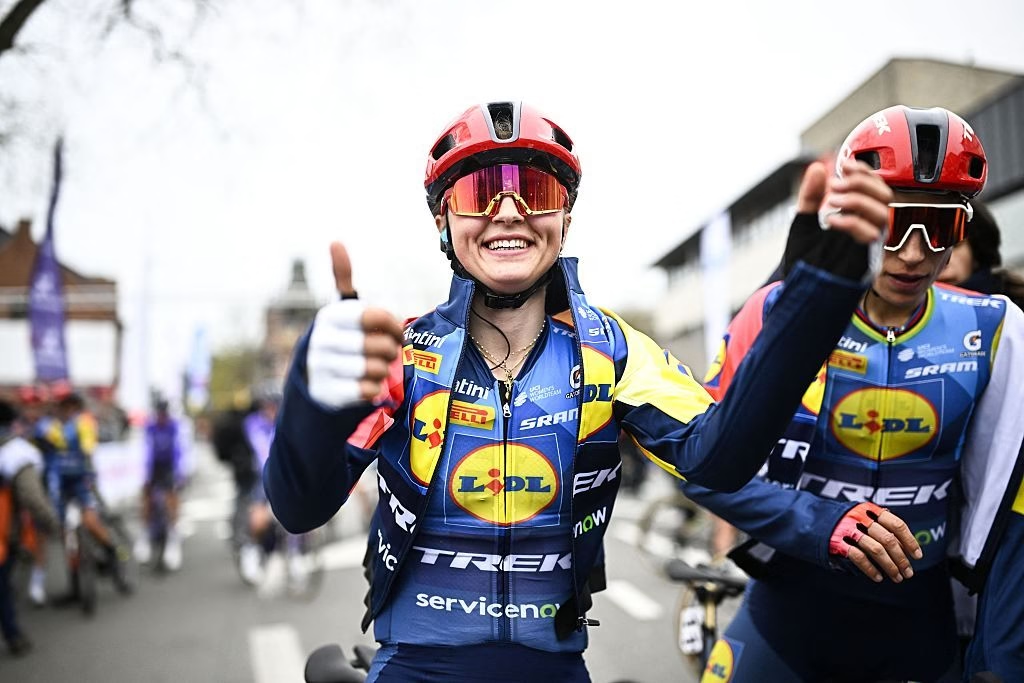
Young riders who could use the race as a breakthrough
The Baloise Ladies Tour is especially valuable for developing riders because its route rewards power, positioning and tactical awareness rather than established mountain-racing experience.
Fleur Moors, Ava Holmgren, Viktória Chladoňová and Imogen Wolff all start for leading teams and could receive freedom on selected stages.
Moors is particularly well suited to difficult, technical racing. Holmgren brings strong bike handling and the ability to cope with repeated accelerations, while Chladoňová continues to develop across multiple disciplines.
The Continental teams also contain riders who may use the race to attract greater attention. The flat and rolling stages provide opportunities to enter breakaways, contest intermediate sprints and challenge the WorldTour teams before their deeper lead-outs take control.
The race may not create large climbing gaps, but it is unforgiving in different ways. A young rider who remains positioned through crosswinds, recovers between the two Maaseik stages and produces a strong time trial will demonstrate a broad professional skillset.
Track backgrounds should matter throughout the week
The start list contains an unusually high concentration of riders with elite track experience.
Kopecky, Bäckstedt, Copponi, Fidanza, Brauße, Baker and Martins are among those whose track skills can translate directly to the road.
The connection is particularly relevant here. The Baloise Ladies Tour repeatedly demands short bursts of power, rapid changes in speed and confidence while riding shoulder-to-shoulder in a fast peloton.
The prologue also rewards riders who can reach maximum intensity quickly. The Maaseik time trial requires a longer sustained effort, followed by the challenge of recovering for another road stage on the same day.
Track experience does not automatically produce success, but the route gives those riders more opportunities than a conventional mountainous stage race would.
 Photo Credit: Toni Baixauli
Which team has the strongest Baloise Ladies Tour line-up?
Best team for the general classification
Team SD Worx-Protime begins with the strongest individual favourite in Kopecky and enough support to protect her throughout the race.
Strongest time-trial combination
Canyon//SRAM Racing zondacrypto has defending champion Bäckstedt, with additional power from Van der Duin, Cromwell and Martins.
Most balanced team
Lidl-Trek can pursue the general classification through Henderson, target sprints through Copponi and use several talented young riders aggressively.
Best pure sprint option
Fenix-Premier Tech possesses the fastest established sprinter in Kool, although delivering her cleanly will remain a demanding task.
Strongest Continental squad
VolkerWessels Cycling Team has enough quality through Souren, Uneken, Knijnenburg and Boogaard to challenge the WorldTour teams directly.
Readers can follow the broader women’s racing calendar through the ProCyclingUK women’s cycling race hub.

What the start list tells us about the race
The 2026 Baloise Ladies Tour should be decided through accumulation rather than one dramatic mountain stage.
The two individual tests will create the clearest measurable gaps. Bonus seconds, crosswinds, technical circuits and small positioning errors will then add or remove a handful of seconds at a time.
That structure makes Kopecky the logical favourite but leaves her vulnerable to a specialist performance from Bäckstedt or Henderson. Bäckstedt can gain time against the clock, while Henderson’s consistency may allow her to remain close even if she does not dominate either test.
The sprint field creates another tactical layer. Kool, Ahtosalo, Copponi, Fidanza, Van der Duin and Souren cannot all receive an ideal lead-out. Their teams may therefore use attacks or crosswinds to remove rivals before the final kilometre.
The Maaseik split day could prove decisive. Riders must complete an individual time trial, recover, refuel and then return for another road stage. A poor recovery process can cost more than a slightly disappointing time trial.
The race route was designed around exactly these fine margins when the Baloise Ladies Tour’s five-province course was announced.

