
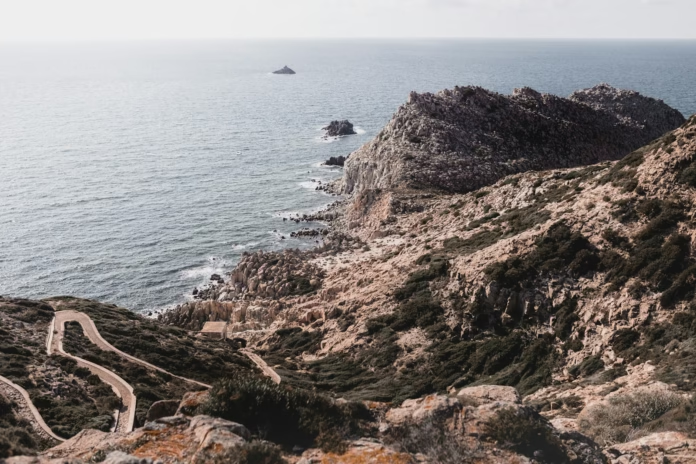
Sardinia does not have the same automatic cycling reputation as Mallorca, Tenerife or the Alps. That is part of what makes it so appealing.
The Italian island has most of the ingredients riders travel for: long coastal roads with constant sea views, significant climbing, quiet inland routes, small towns that feel genuinely separate from the tourist centres and enough variation to build anything from an easy café ride to a full week of mountainous riding.
It also adds something harder to quantify. Sardinia still feels relatively unexplored as a cycling destination. There are established routes and areas where cycling tourism is well developed, but much of the island does not feel as though every good road has already been turned into a must-ride segment.
That variety makes Sardinia one of the more interesting choices within cycling in Italy. You can spend one day following the sea between Alghero and Bosa and the next climbing into an interior where the Mediterranean disappears completely from view.
The coast is the obvious reason to bring a bike
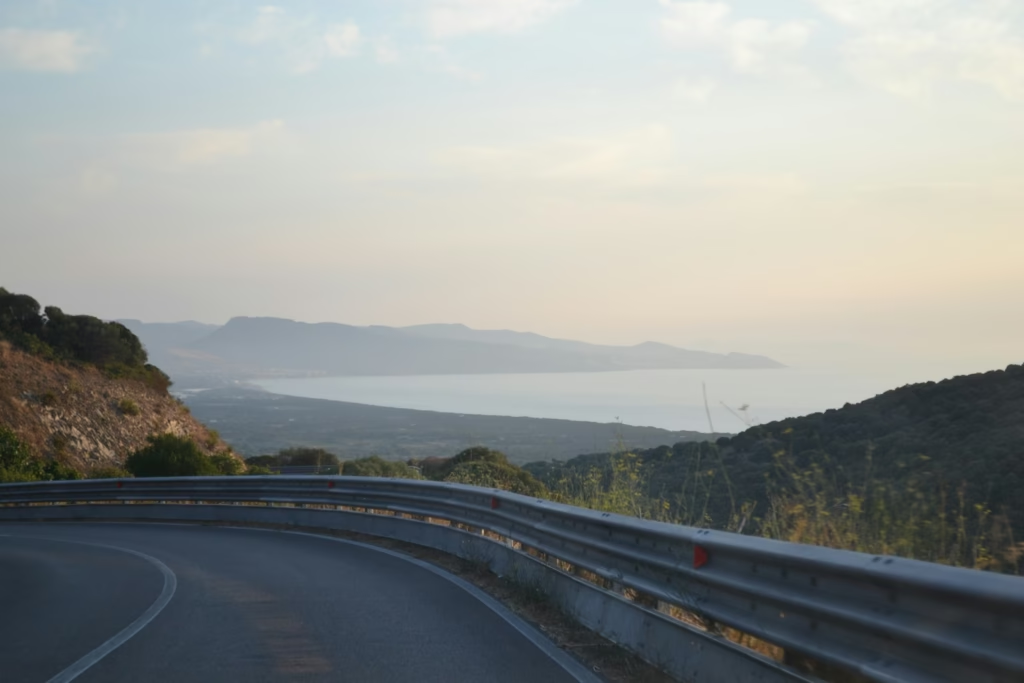
For a first visit, it is difficult to look past Sardinia’s coastal roads.
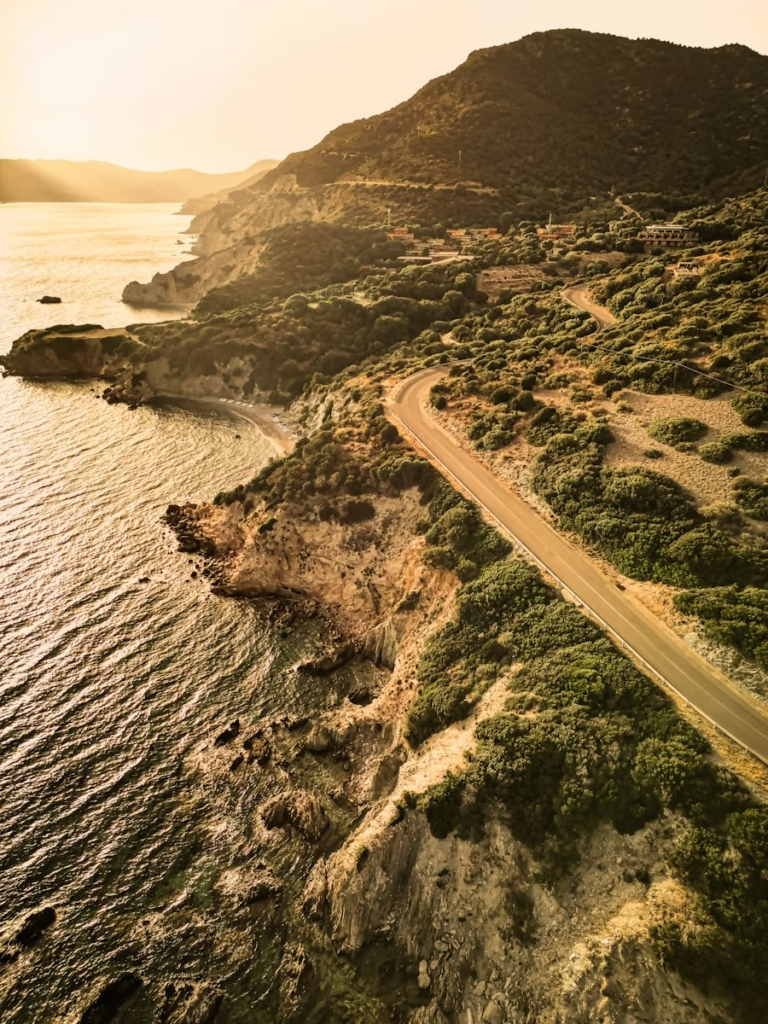
The best-known stretch is probably Bosa to Alghero on the west coast, around 60km of winding road between the Mediterranean and the hills. It rises and falls constantly rather than following one major climb, with long sections high above the water and enough bends to make the road itself part of the attraction.
For road riders, that matters. This is not simply a flat scenic road beside the beach. Repeated short climbs break the rhythm, descents continually reopen the views and elevation begins to accumulate without the ride ever becoming a conventional mountain day.
It is the sort of road where average speed becomes increasingly irrelevant.
Alghero also works well because the Bosa route is only one option. Head north and the landscape around Porto Conte and Capo Caccia gives another version of the coast, while riding inland opens up quieter roads that can turn an out-and-back into a substantial loop.
Alghero to Bosa is Sardinia’s headline road ride
If you only ride one road on a first trip, the route south from Alghero towards Bosa is the obvious choice.
The SP105 follows the western coast through a landscape of cliffs, open sea and rolling Mediterranean hills. Sardinia’s tourism authorities themselves promote the road as one of the island’s standout cycling itineraries, and it is easy to understand why.
The road repeatedly moves away from the water before returning to exposed viewpoints, meaning the scenery changes throughout the ride rather than relying on one spectacular section.
Bosa provides a natural turnaround point. The town sits around the Temo river beneath the Malaspina castle and is substantial enough to make a proper café or lunch stop before deciding whether to ride back along the coast or build a longer inland return.
An Alghero-Bosa-Alghero day is long enough to feel worthwhile without requiring a major logistical exercise.
It is also a useful introduction to how Sardinia rides: never completely flat, rarely monotonous and constantly changing between coast and hillside.
The east coast is more dramatic
If the west coast is beautiful, the east often feels bigger.
The riding around Ogliastra, Baunei, Dorgali, Cala Gonone and the Gulf of Orosei is defined by limestone mountains rising close to the Mediterranean. Roads can leave a coastal settlement and become proper climbing roads almost immediately, without the long flat approaches common in larger mountain regions.
The result is terrain that can occasionally feel Alpine while still unmistakably Mediterranean.
Baunei is one of the strongest places to build a cycling trip around. Roads towards Urzulei and Dorgali move through exposed rocky terrain, while the descents towards the coast repeatedly bring the sea back into view.
There is not always one neat climb with a famous summit sign and a history of professional racing.
Instead, the entire landscape does the work.
You climb because the road needs to cross the mountains. The gradient changes, the road rolls briefly along a ridge, then another valley appears and the climbing starts again.
It feels more like travelling through mountains than collecting climbs.
Sardinia offers a different Italian cycling experience
Italy already has almost every type of cycling destination imaginable.
The Dolomites provide famous passes and tightly concentrated climbing. Bormio gives direct access to the Stelvio, Gavia and Mortirolo. Tuscany provides rolling roads and gravel, while the Amalfi Coast combines spectacular scenery with far more complicated traffic and road conditions.
Sardinia sits somewhere between several of those experiences without really resembling any of them.
Compared with the Amalfi Coast and Sorrento, the island generally offers much more space to escape busy coastal traffic. Compared with Lucca and northern Tuscany, the landscape feels more remote and maritime.
Its closest Italian comparison may be another island. Our guide to cycling in Sicily around Mount Etna has some of the same combination of heat, rougher edges, coast and serious climbing, but Sardinia spreads those characteristics across a much broader range of landscapes rather than allowing one mountain to dominate the trip.
The interior is where Sardinia becomes genuinely different
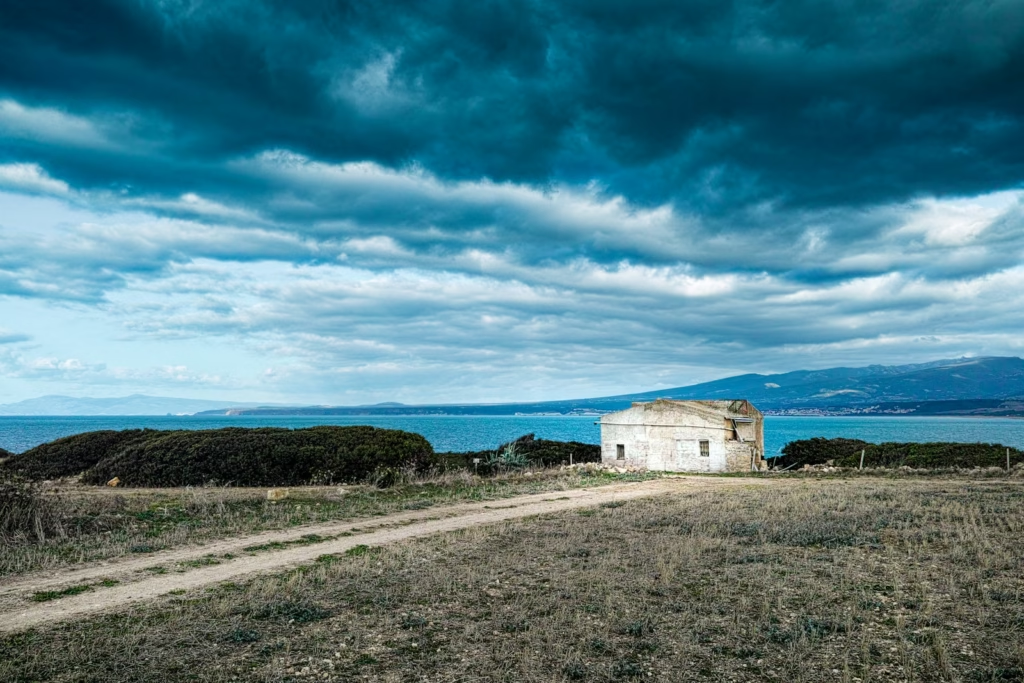
It would be easy to plan an entire Sardinian cycling holiday around the coastline and miss the part of the island that gives it most of its character.
Move inland and the roads become quieter, settlements become smaller and the scenery changes dramatically.
The central Gennargentu massif contains Sardinia’s highest mountains, while areas around Fonni, Orgosolo, Nuoro and Barbagia provide long rolling climbs, upland roads and valleys that can feel a very long way from the beach resorts.
This is not always cycling built around famous named ascents. That can improve the experience.
You can spend a long time climbing without encountering a sign telling you that this is the road everyone comes here to ride. Traffic can become sparse, views open across broad mountain landscapes and the route feels like a journey rather than a collection of cycling landmarks.
Some destinations seem to have had their entire road network categorised by cyclists.
Sardinia still contains roads that feel good precisely because they have not.
Gennargentu gives the island its serious climbing
Riders looking for a proper mountain day should look towards central Sardinia.
The Gennargentu range gives the island its highest terrain and creates routes that are very different from the short coastal climbs farther west. Fonni, one of Sardinia’s highest towns, is an obvious reference point for riding through the central mountains.
The climbing tends to be about accumulated elevation rather than one superstar ascent.
Roads can gain height gradually for long periods before dropping towards another settlement and beginning again. A route can collect more than 2,000 metres of climbing without ever being organised around a single pass in the way a Dolomites ride might be.
That makes the interior particularly attractive for riders who enjoy long endurance climbing rather than summit hunting.
It also provides one of the strongest contrasts on the island. The exposed Mediterranean landscapes of the coast give way to forests, high ground and much quieter mountain roads within a relatively short distance.
Costa Smeralda gives northern Sardinia a different style
The north-east is internationally associated with the Costa Smeralda, but there is more to riding here than resort towns and marinas.
Olbia is a convenient base with access towards San Pantaleo, Arzachena and the hills of Gallura. The terrain is generally rolling rather than mountainous, with constant short climbs and descents that make it easy to accumulate elevation over a 70-100km ride.
Granite hills give the landscape a different character from the limestone of the east coast or the wilder central mountains.
The north-east also works particularly well for riders travelling with people who are not planning their entire holiday around cycling. There are beaches, established resorts, restaurants and transport links, while worthwhile riding begins close enough to town that there is no need to turn every day into an expedition.
It may not be Sardinia at its wildest.
It could be Sardinia at its easiest.
The western coast works brilliantly as a point-to-point ride
Sardinia also lends itself to a cycling holiday that moves rather than staying in one base.
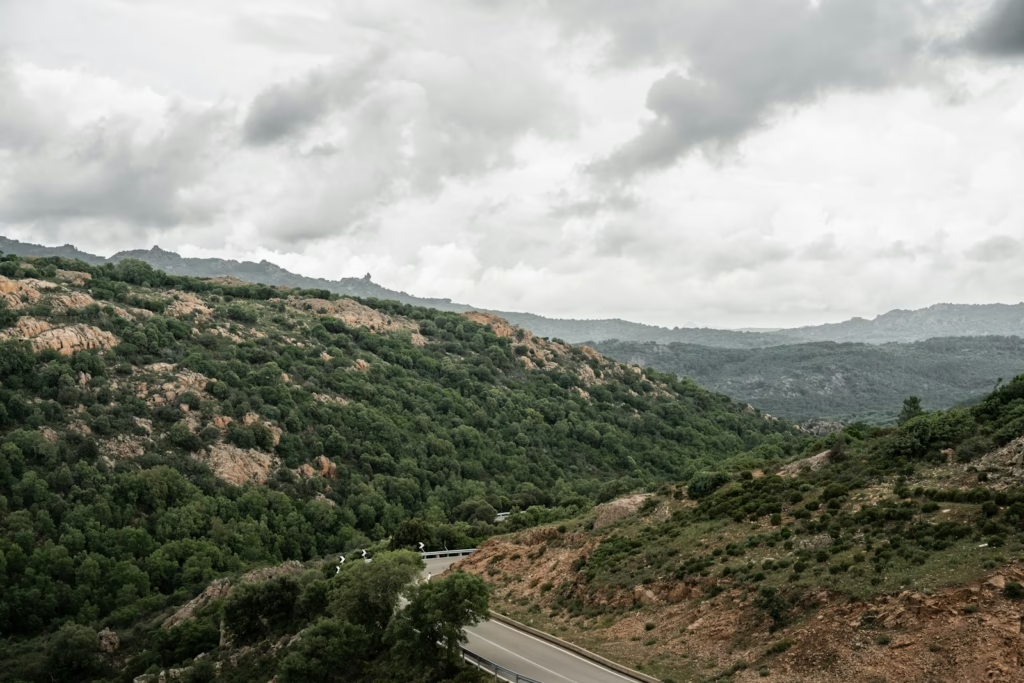
A route can follow large parts of the western and southern coastline from Alghero towards Cagliari, using mainly secondary roads and linking coastal towns across almost 400km.
That changes the experience completely.
Instead of returning to the same hotel each afternoon, the landscape progresses gradually from the north-west through quieter coastal sections and eventually towards the more populated south.
You do not need a full bikepacking setup to do it.
A road bike with lightweight luggage and pre-booked accommodation makes a multi-day trip perfectly realistic, particularly if the objective is enjoying the riding rather than carrying camping equipment.
Anyone considering that style of trip will benefit from preparing for repeated days rather than one enormous ride. Our guide to training for your first multi-day cycling holiday covers the durability, fuelling and pacing needed to keep riding well once the kilometres begin stacking up.
Sardinia rewards riders who enjoy rolling roads
The island is mountainous, but it is not only for riders who measure a destination by the length of its biggest climb.
Much of Sardinia’s best road cycling happens on roads that simply never settle.
You climb for several kilometres, cross a ridge, descend into another village and immediately begin gaining height again. Individual climbs can look relatively modest on a route profile while the total elevation becomes substantial.
A 90km loop can easily feel much harder than its distance suggests.
That is also what makes the riding interesting. The climbing feels integrated into the landscape rather than inserted as a deliberate challenge.
There is usually a reason the road goes uphill.
Something is on the other side.
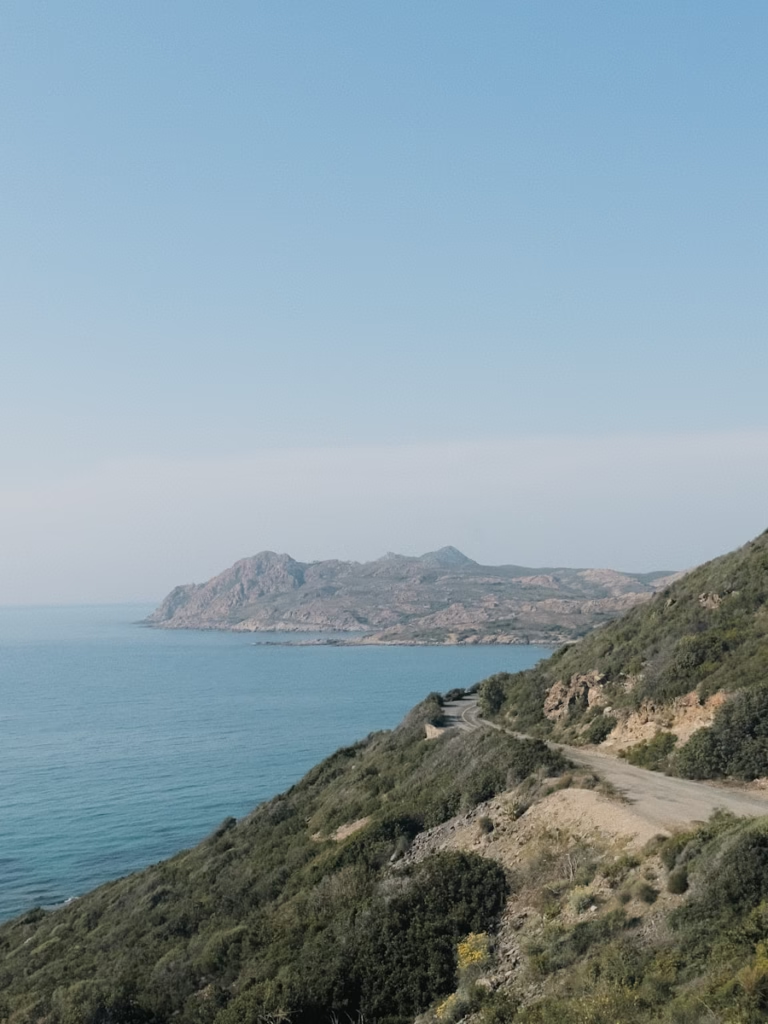
Quiet roads are one of Sardinia’s biggest strengths
One of the most convincing reasons to choose Sardinia is simply the amount of space available once you leave the bigger towns.
The island’s official cycling promotion repeatedly emphasises its quieter secondary roads, and the difference becomes obvious inland. Some stretches can go long periods without significant traffic, particularly away from the main tourist season.
For riders used to busy British roads, that changes the character of a day.
There is less time spent listening for traffic behind and more time concentrating on the road, scenery and other riders.
That does not mean every road is ideal. Main routes around Cagliari and Olbia can be busy, particularly at peak travel times, and summer traffic increases around popular resorts.
The advantage is that Sardinia normally gives you enough alternatives.
A little route planning can make a large difference.
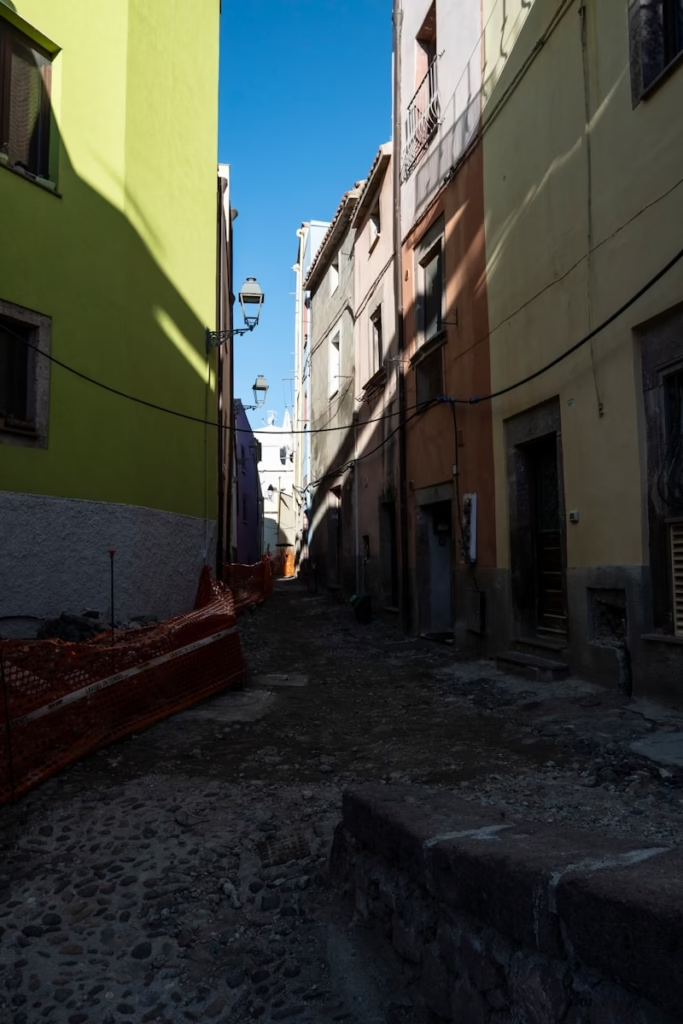
Road surfaces are part of the Sardinian experience
Sardinia is not an island of universally perfect tarmac.
Some main roads are excellent. Minor roads can be much more variable, particularly inland where patching, rough surfaces and occasional potholes are part of the experience.
That should influence equipment more than it influences the decision to go.
For most road riders, 28mm tyres would be the minimum sensible choice and 30-32mm will provide more comfort without making the bike feel slow. Lower pressures also give more confidence on rough descents and broken surfaces.
It is worth checking a route carefully before committing to obscure shortcuts.
The smallest road on the map may look like the perfect traffic-free connection.
It may also explain why nobody else is using it.
Gravel opens up another version of Sardinia
A gravel bike arguably gives the widest range of options on the island.
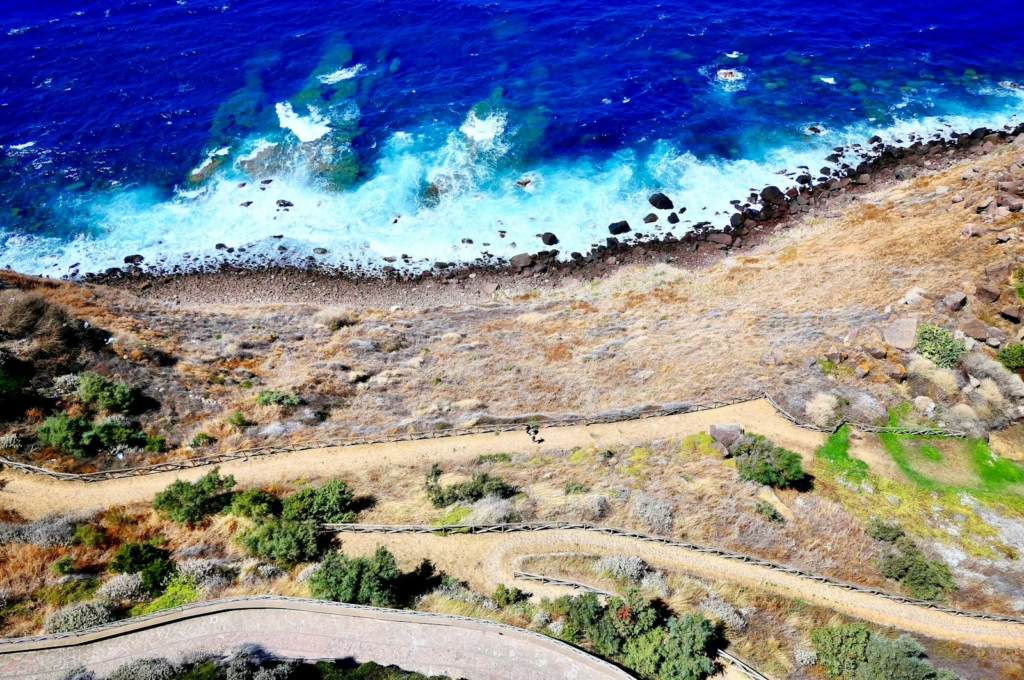
Sardinia contains forestry roads, coastal tracks, park routes and minor roads that gradually turn into something less road-like. Porto Conte and the wider Capo Caccia area already have official cycling itineraries away from conventional traffic, while the interior opens up much further once remaining on tarmac is no longer essential.
For that reason, a gravel bike with relatively quick tyres can make an excellent one-bike solution.
You can still ride the Alghero-Bosa road quickly enough, tackle long paved climbs and then follow tracks that a conventional road bike would force you to ignore.
The difference is freedom.
A promising line on the map no longer needs to end when the tarmac does.
Spring and autumn are the best riding seasons
For most cyclists, spring and autumn make more sense than the height of summer.
Sardinia’s own cycling guidance identifies those seasons as particularly suitable because temperatures are generally milder, while the roads and tourist areas are often quieter than during July and August.
April and May are strong choices. The island is greener, wildflowers add colour to the landscape and lower temperatures make long climbs much easier to manage.
Late September and October offer another excellent window. The strongest summer heat has usually eased, while sea temperatures remain warm enough for a swim after the ride if that forms part of the holiday.
Winter can also produce good riding conditions at lower altitude, but mountain weather becomes less predictable and the trip needs more flexibility.
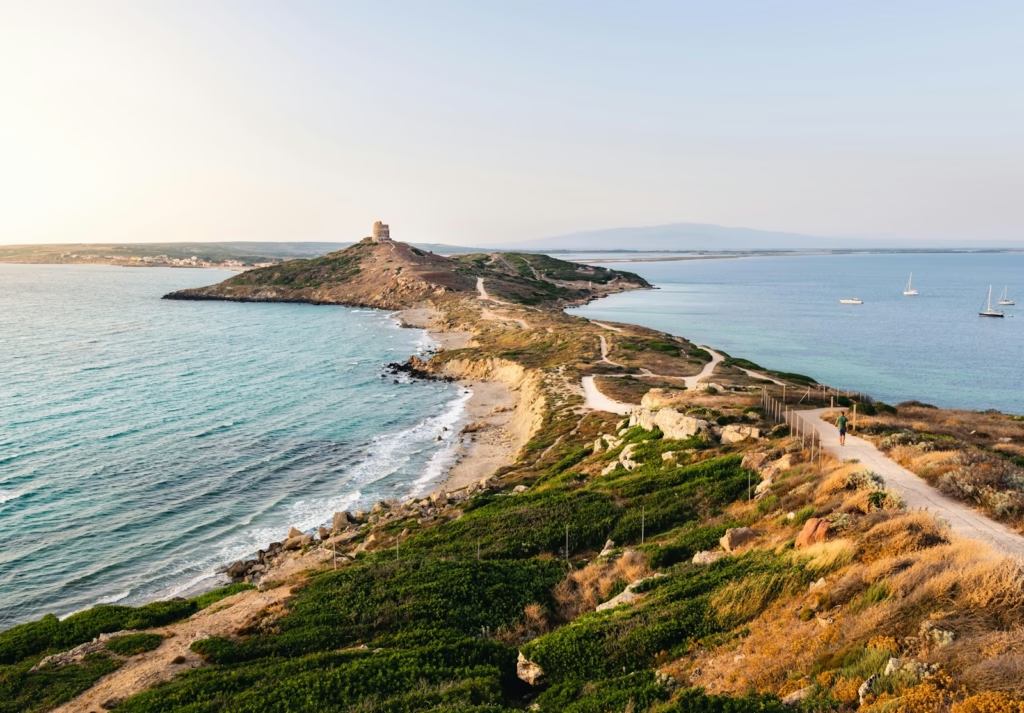
Summer can still work if the day starts early
July and August are not impossible.
They just require a different rhythm.
An early start gives several hours of riding before the strongest heat arrives, leaving the afternoon for recovery, the beach or a short café ride rather than a five-hour mountain expedition.
This is especially important inland, where shade and water can become limited between settlements.
Two bottles may be sufficient for a short spring loop.
They can be nowhere near enough for a major summer ride through the interior.
Planning water stops becomes part of route planning, and carrying more capacity than usual is sensible if the next village is a long way away.
Wind can decide which way you ride the coast
Sardinia’s exposed coastline means wind deserves attention before leaving the hotel.
The Mistral, generally arriving from the north-west, can be particularly influential. A scenic coastal ride with a strong tailwind can feel effortless, while the same road ridden into it may become a long endurance test.
That makes route direction important on point-to-point days.
If the forecast gives you a strong prevailing wind, using it rather than fighting it for hours can dramatically improve the ride.
Exposed headlands can also create gusty conditions, which matters for bike handling on fast descents and for riders using deeper wheels.
The coastline looks gentle from a beach.
It does not always feel gentle on a bike.
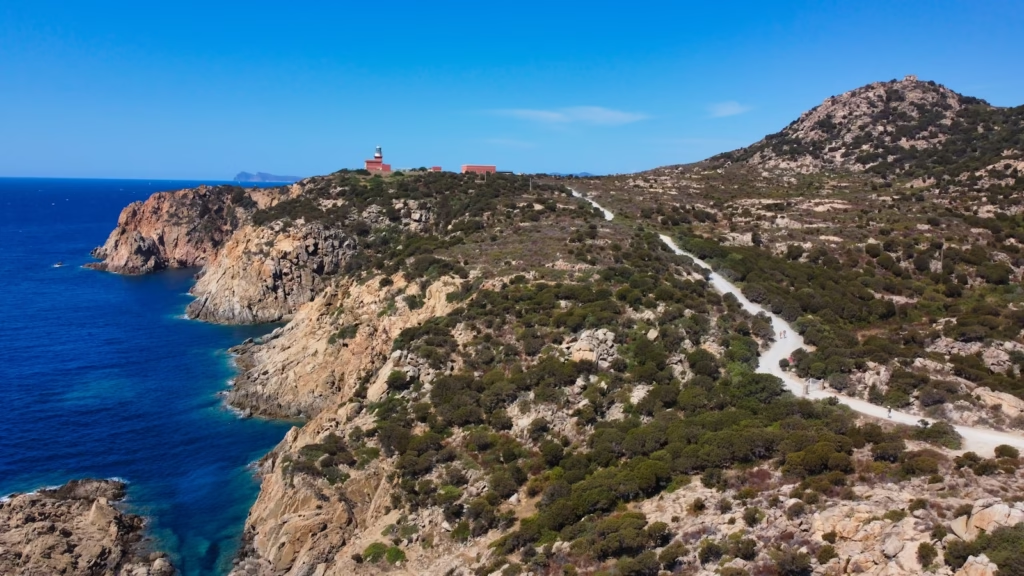
Alghero is probably the best first base
For a first Sardinian cycling trip, Alghero offers the strongest balance of riding and convenience.
The Bosa road starts almost immediately, Capo Caccia and Porto Conte sit to the north, and inland loops provide another option when you want to leave the coast behind.
Alghero also has enough accommodation, restaurants and transport infrastructure to avoid turning the whole trip into a logistical exercise.
A four or five-night stay can produce several genuinely different rides.
One day can head south to Bosa.
Another can explore Capo Caccia.
A third can move inland and concentrate on elevation.
That variety makes Alghero stronger as a base than somewhere that gives you one exceptional road but requires repeating it every time you ride.
Baunei, Cala Gonone and Dorgali suit climbers better
If climbing is the main reason for the trip, the east coast probably wins.
Baunei, Cala Gonone and Dorgali place you much closer to the dramatic limestone mountains of Ogliastra and the Gulf of Orosei.
The riding begins hard rather than requiring a long transfer towards the hills. Routes repeatedly combine sustained climbing, technical descents and views back towards the Mediterranean.
The trade-off is convenience.
These areas do not have the same simple airport-and-city setup as Alghero, Olbia or Cagliari, and reaching them can form a larger part of the travel day.
For a dedicated cycling trip, that is unlikely to matter.
The reward is waking up already surrounded by some of the most interesting terrain on the island.
Cagliari is better for combining cycling with a city break
Cagliari offers something different again.
As Sardinia’s largest city, it is not the base to choose if your priority is rolling directly onto empty mountain roads every morning. Leaving the urban area requires more planning and some routes are much busier than those found elsewhere on the island.
What Cagliari offers is flexibility.
There are restaurants, beaches, transport connections and plenty to do away from the bike, while quieter southern roads become accessible once you leave the city behind.
It also makes a natural start or finish for a longer journey down the western coast.
For anyone travelling with non-cyclists, Cagliari may make more sense than choosing the most remote possible mountain village simply because the riding is marginally better.
A cycling holiday still has to work as a holiday.
The food is part of why the island works so well
Sardinia is one of those destinations where long riding days and the rest of the trip fit together naturally.
Pasta, bread, seafood, cheese, meat and local pastries provide plenty of recovery food without needing to search for anything designed specifically for cyclists.
More importantly, different parts of the island retain their own food traditions, giving a point-to-point trip another layer of variety.
A café stop in a quiet village can become as memorable as the climb immediately before it.
That is part of what makes good cycling destinations different from simply good roads.
The day still works when you get off the bike.
Sardinia feels less packaged than the established cycling islands
Mallorca is one of Europe’s great cycling destinations partly because the entire process is so easy.
Bike shops are everywhere.
Routes are well known.
Cyclists fill the cafés.
Group rides leave from obvious places.
Sardinia offers something different.
There is a growing cycling tourism network, but the island does not feel as though it revolves around visiting riders. Most of its roads are simply roads connecting villages, farms, mountain communities and coastal towns.
That gives the riding a stronger sense of discovery.
You can complete an exceptional climb without passing a stream of cyclists going in the opposite direction.
There may be no famous viewpoint at the summit or queue outside a cycling café.
For riders who enjoy established cycling culture, that could be a disadvantage.
For those who want a trip to feel like an exploration, it is one of Sardinia’s biggest strengths.
Sardinia works for several different kinds of trip
A strong climber can spend a week around Ogliastra and Gennargentu.
A rider mainly looking for relaxed 60-100km days can base themselves around Alghero or Olbia.
A touring cyclist can travel down the west coast.
A gravel rider can use the paved road network simply to connect more remote tracks.
That adaptability is what makes Sardinia stronger than a destination built around one signature route.
You do not need to be chasing altitude records to justify bringing a bike.
You only need to enjoy moving through a landscape slowly enough to notice how much it changes.
The wider ProCyclingUK travel hub has the same approach to destinations across Europe and beyond, matching bases and terrain to the type of riding you actually want to do.
-
 Photo Credit: Cor Vos
A first Sardinia cycling week should use two bases
For a first trip, splitting the week between two parts of the island gives a better impression than trying to cover everything from one hotel.
Three nights in Alghero gives enough time for the Bosa coast road, Capo Caccia and an inland loop.
Then move east for another three or four nights around Baunei, Dorgali or Cala Gonone.
The character of the riding changes almost immediately.
The west gives you rolling coastal roads and easier logistics. The east delivers bigger climbing, more dramatic mountain terrain and routes that feel noticeably more remote.
Trying to see the whole island in one week would spend too much time travelling.
Two contrasting bases are enough to understand why Sardinia works.
Sardinia deserves to sit beside Europe’s better-known cycling destinations
Sardinia does not need to beat Mallorca at being Mallorca or the Alps at producing famous mountain passes.
Its appeal is different.
The roads can be quieter, the riding feels less organised around cycling tourism and the divide between coast and interior creates an exceptional amount of variety. You can spend the morning riding above the Mediterranean and the afternoon climbing through upland terrain that feels completely detached from the beaches below.
There are easier destinations. There are places with smoother roads, higher mountains and more established cycling infrastructure.
There are also fewer places where the riding changes character so quickly.
Come for the coastal roads and you may remember the interior.
Come for the climbing and you may remember the descent towards the sea.
For a rider looking beyond Europe’s familiar cycling bases, Sardinia deserves a place near the top of the list.

