
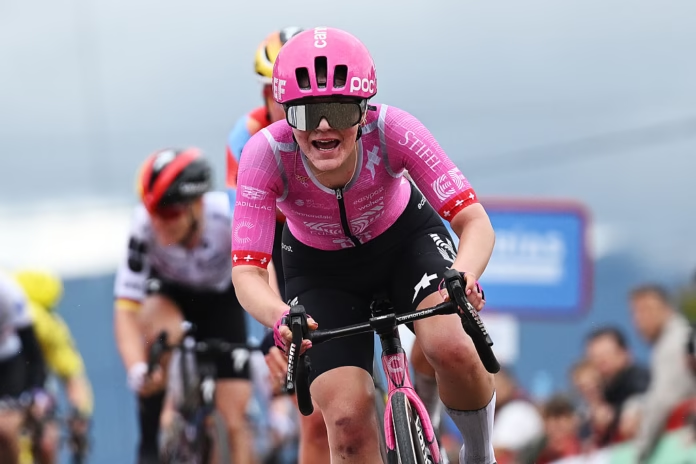
Noemi Rüegg starts the 2026 Tour de France Femmes with one of the more intriguing profiles in the race.
She is not a general classification favourite in the same category as Demi Vollering, Pauline Ferrand-Prévot or Paula Blasi. She is not a pure sprinter either.
What Rüegg offers EF Education-Oatly is something in between: a rider capable of surviving hard terrain, sprinting from reduced groups and exploiting exactly the sort of selective stages that appear repeatedly across the first half of this Tour.
That becomes especially significant because the race starts in Switzerland.
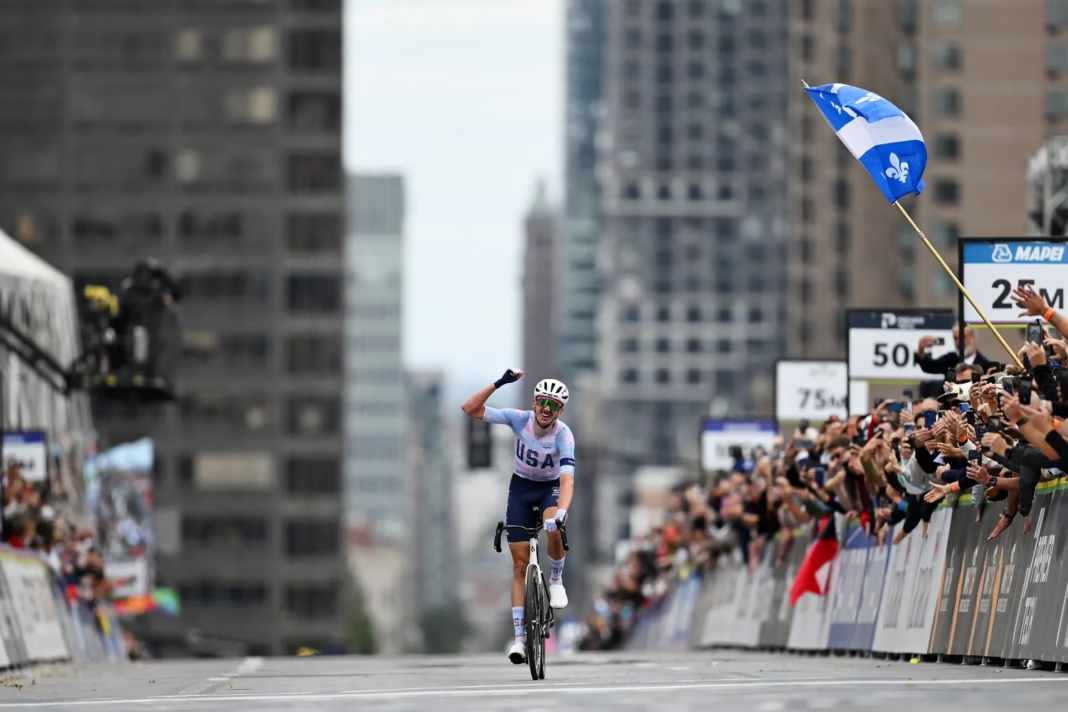
Rüegg will begin her Tour on home roads in Lausanne, on a stage that looks remarkably well suited to her strengths. After finishing second at Milano-Sanremo, fifth at Amstel Gold Race and winning the opening stage of La Vuelta Femenina earlier this season, she has enough evidence behind her to be treated as a genuine stage winner rather than simply a home rider receiving extra attention.
The bigger question is whether she has fully recovered from the crash that ended her Vuelta while she was wearing the race leader’s jersey.
If she has, the opening days of the 2026 Tour de France Femmes offer several opportunities.
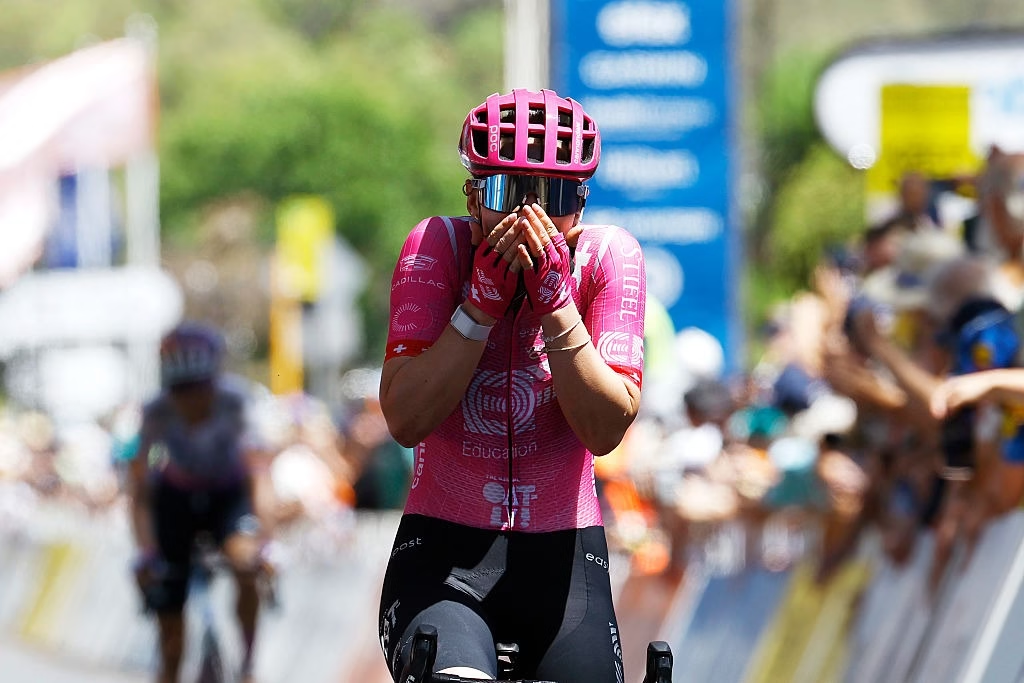
Rüegg has become much more than a promising Swiss rider
Rüegg’s rise has been gradual enough that it can be easy to overlook how far she has moved up the hierarchy.
At 25, she is now firmly established as one of the most versatile riders in the women’s peloton.
She can climb.
She has a strong sprint from a reduced group.
She can handle long, difficult one-day races.
And, increasingly, she has shown that she can win when the opportunity is there rather than simply collecting high finishes.
Her 2026 spring demonstrated that clearly.
Second at Milano-Sanremo was the first major signal. Rüegg then finished fifth at Amstel Gold Race after Paula Blasi’s winning attack, confirming that she could remain competitive deep into one of the most selective Classics of the spring.
Those results matter more for the Tour than a conventional bunch sprint win would.
The opening stages are built around exactly this type of terrain: enough climbing to reduce the field, but not always enough to leave only the GC contenders.
That middle ground is where Rüegg becomes dangerous.
Lausanne may be her best stage of the Tour
Stage 1 immediately stands out.
The Tour begins with a loop around Lausanne and finishes after a sequence of late climbs designed to weaken the pure sprinters without necessarily turning the stage into a mountain race.
That is close to Rüegg’s ideal scenario.
The Swiss Grand Départ begins with a Lausanne stage that is officially classed as flat but contains enough late climbing to make the first yellow jersey far less straightforward than a conventional bunch sprint.
If Lorena Wiebes survives comfortably, the finish becomes difficult for almost everyone else.
But if the final climbs reduce the group and remove some of the fastest pure sprinters, Rüegg’s chances improve dramatically.
She has enough climbing strength to stay near the front when the pace rises and enough speed to beat many of the riders likely to survive alongside her.
There is also the obvious emotional element.
A home Grand Départ gives Rüegg an opening stage with significance beyond an ordinary stage victory. EF Education-Oatly have every reason to treat Lausanne as a serious objective.
The first yellow jersey is available on Swiss roads, and they have one of the riders best suited to winning it.
The first yellow jersey is a realistic target
Rüegg does not need to arrive in Lausanne thinking about GC.
She can race Stage 1 almost entirely around the stage victory.
That tactical freedom matters.
The yellow jersey contenders have to think about positioning, time gaps and avoiding crashes. Rüegg can think about winning.
If the final group contains 20 or 30 riders, she should be among the fastest left.
If the race becomes slightly harder, she can still survive.
If it becomes substantially harder and starts turning into a GC selection, then the advantage moves towards Vollering, Ferrand-Prévot and the other elite climbers.
Rüegg therefore wants the stage selective, but not brutally selective.
That is a narrow tactical window, but Lausanne offers it.
Her Vuelta showed exactly what her sprint can do
The opening stage of La Vuelta Femenina provides perhaps the clearest clue to Rüegg’s Tour potential.
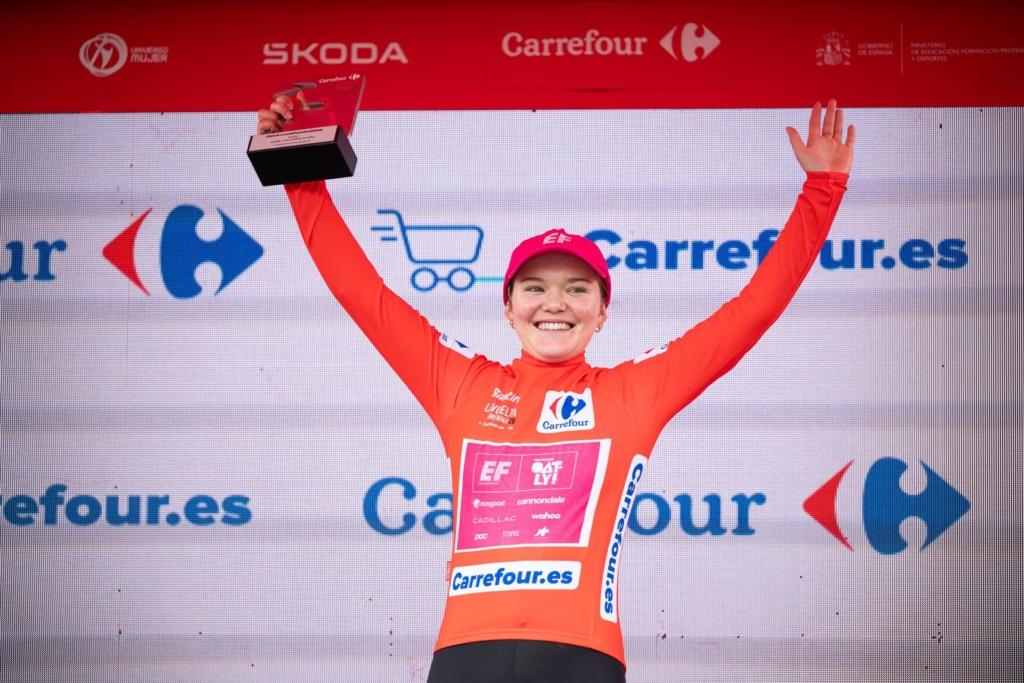
She won Stage 1 and took the race lead, showing that her finishing speed has become a genuine weapon rather than something she uses only when the field is heavily reduced.
That result mattered because it came against WorldTour opposition and because Rüegg did not need an unusual race situation to create the opportunity.
She simply finished the job.
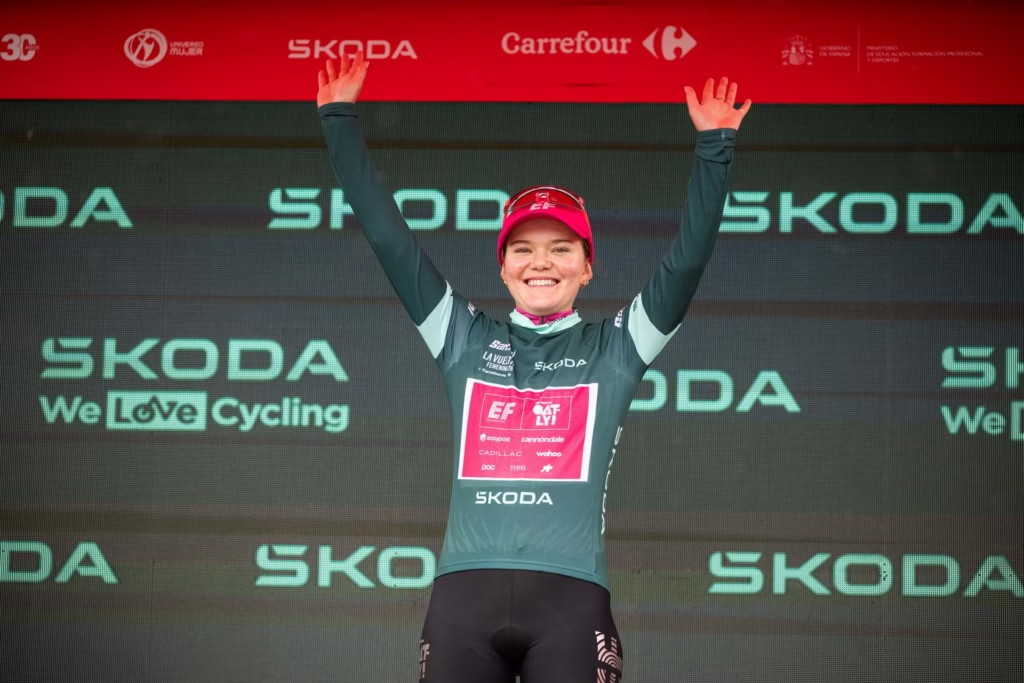
The following day, however, her Vuelta changed completely when she crashed out while wearing the leader’s jersey.
That is the complication hanging over her Tour.
Lausanne should tell us quickly how much of that form has returned.
EF Education-Oatly have several stage options
Rüegg is not arriving as the sole focus of EF Education-Oatly.
That may help her.
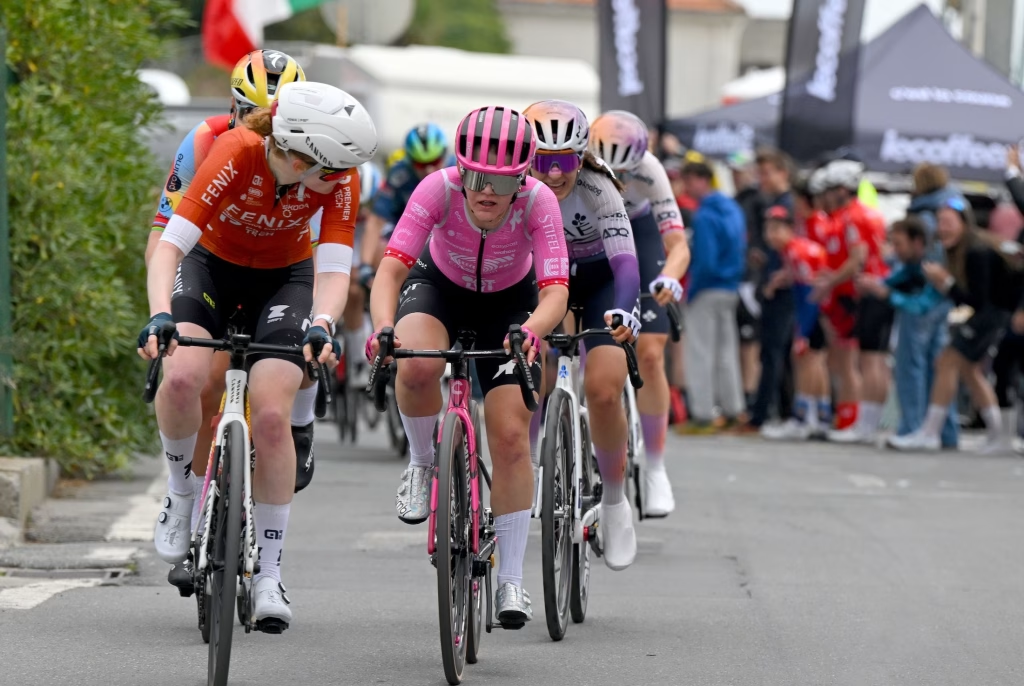
The team’s strength is that it does not have to force one rider into every role. Rüegg can be protected for selective finishes, while other riders can take responsibility on harder climbing days, through breakaways or in the broader classification picture.
That gives EF freedom across a route which changes character repeatedly.
The wider Tour de France Femmes 2026 riders to watch field contains specialist sprinters, GC leaders and aggressive stage hunters. Rüegg sits between those groups, and that is precisely what makes her useful.
She does not have to spend nine stages trying to protect a classification position.
If Lausanne suits her, race for the stage.
If another hilly finish suits her later, preserve energy for that.
If the terrain becomes too mountainous, switch towards support or target another opportunity.
That flexibility is one of her biggest strengths.
Stage 1 is not her only opportunity
The temptation is to treat Rüegg’s Tour almost entirely through the Swiss opener.
That would undersell her.
The route includes several days where the distinction between sprinter and climber becomes blurred.
Those are the stages to watch.
Rüegg is unlikely to beat the strongest pure sprinters on a completely flat finish.
She is also unlikely to beat Vollering or Ferrand-Prévot on Mont Ventoux.
Her sweet spot sits between those extremes.
A rolling stage with repeated climbs and a reduced finish can suit her.
A hilly stage where the peloton fragments but the GC favourites do not necessarily attack can suit her.
A late break containing strong all-rounders can suit her.
The 2026 route contains enough transitional terrain between the Swiss opener, Dijon and the decisive mountains to give riders like Rüegg more than one chance.
Milano-Sanremo showed how dangerous she has become
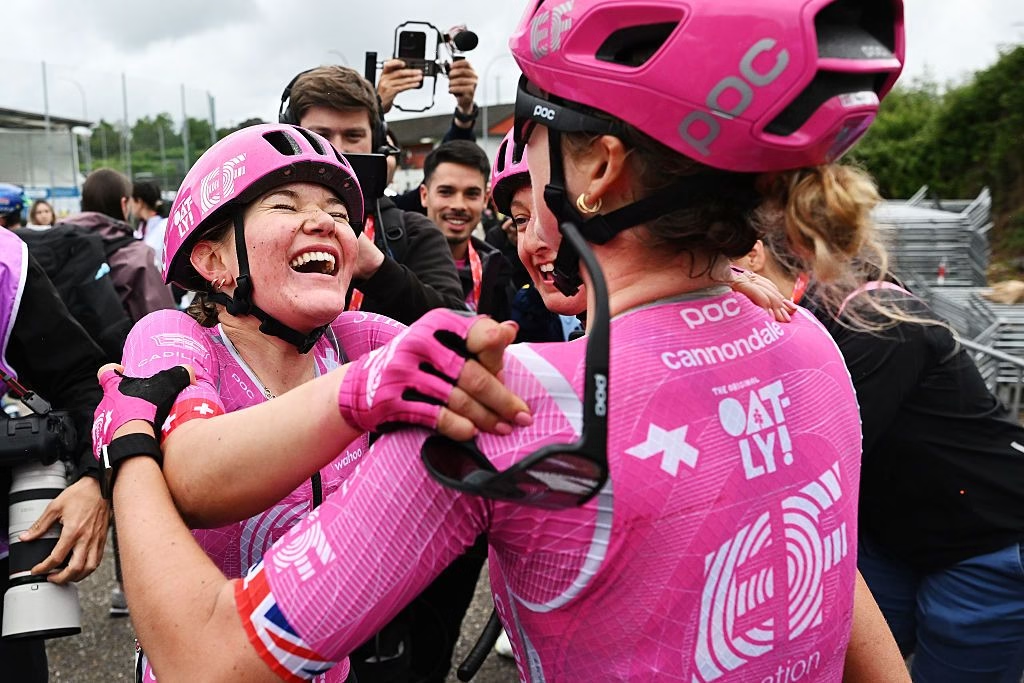
Rüegg’s second place at Milano-Sanremo deserves particular attention in that context.
Sanremo is not simply a sprint race.
The ability to survive the final climbs, position correctly and still produce a fast finish is exactly what separates contenders there.
Those same qualities translate well to several Tour stages.
Rüegg has become difficult to classify because she now sits in that valuable space between Classics rider and fast finisher.
On genuinely flat terrain, she may lack the final speed of Wiebes.
On major mountain terrain, she lacks the sustained climbing of the Tour favourites.
On the right intermediate terrain, she can beat both categories because the race removes their advantages.
That is what EF will try to exploit.
Amstel confirmed her climbing is good enough
Her fifth place at Amstel Gold Race reinforced the same point from another direction.
Paula Blasi won the race with a decisive attack, while Rüegg remained among the strongest riders behind and finished inside the top five.
Amstel is a useful reference because the race rarely rewards one-dimensional riders.
The climbing is frequent rather than enormous.
Positioning matters constantly.
The race becomes tactical and fragmented.
Rüegg handled all of it.
That is encouraging for Tour stages where the profile looks manageable on paper but repeated short climbs gradually reduce the peloton.
She does not need one specific climb to suit her.
She needs enough accumulated difficulty to make outright sprint speed less important.
The mountains should change her role
Rüegg’s Tour is unlikely to be built around Mont Ventoux.
Once the race reaches the major mountain stages, EF’s priorities should move elsewhere.
For Rüegg, that part of the race becomes more about support, breakaways or conserving enough energy to take another opportunity if the stage profile allows.
That is not a criticism of her climbing.
She climbs extremely well for someone with her finishing speed.
There is simply a large difference between surviving the Cauberg and competing with the strongest Grand Tour climbers on Ventoux.
The Tour de France Femmes 2026 mountain stages are built around exactly the terrain where the pure GC specialists should take over.
Rüegg’s value comes from not needing to beat them there to have a successful Tour.
One stage win would already make the race a major success.
Yellow in Lausanne would make it even bigger.
Could she challenge for GC?
It would be a surprise.
Rüegg has the versatility to remain relatively high on the classification through the opening stages, particularly if she avoids losing time in Switzerland and the other selective days.
The problem comes with the time trial and major mountains.
Stage 4 into Dijon rewards stronger specialists against the clock.
Ventoux then creates a much more severe climbing test than the terrain on which Rüegg normally produces her best results.
Trying to preserve GC there could actually reduce her stage-winning chances elsewhere.
If Rüegg ends the first few stages near the front overall, EF can enjoy the situation.
It does not need to become the objective.
The injury is the biggest unknown
The strongest version of Rüegg would be one of the most dangerous stage hunters in this Tour.
The question is whether that is the version arriving in Lausanne.
Her Vuelta ended almost immediately after she had taken the leader’s jersey, and a disrupted build towards the Tour is not ideal.
Race sharpness matters particularly for a rider like Rüegg.
Her victories are not based simply on holding a fixed climbing power for 40 minutes. She needs repeated accelerations, positioning, confidence in the bunch and the ability to sprint after several hard efforts.
Those are qualities that can take time to return after injury.
Stage 1 remains the first real test.
If she is still present comfortably when Lausanne starts getting difficult, the rest of the peloton will know very quickly that spring-form Rüegg is back.
-
 Photo Credit: Getty
What would a successful Tour look like?
For Rüegg, success should not be measured by GC.
The targets are much clearer.
A stage victory would be the main objective.
A spell in yellow, particularly after Stage 1 in Switzerland, would be one of the stories of the opening weekend.
Multiple top-five stage finishes would also represent a strong Tour, particularly given the interruption caused by her Vuelta crash.
Most importantly, she has enough form behind her that none of those outcomes should be described as a surprise.
Second at Milano-Sanremo.
Fifth at Amstel.
A Vuelta stage win and race lead.
Those are the results of a rider who belongs near the front when the right stage arrives.
Noemi Rüegg’s route to a Tour de France Femmes stage win
Rüegg’s best chance comes when the Tour becomes too hard for the pure sprinters but not hard enough for the GC favourites to take complete control.
That may happen immediately in Lausanne.
It could happen again on one of the race’s hilly stages.
EF Education-Oatly have enough tactical flexibility that they do not need to force Rüegg into one role, and that gives her licence to target the days that actually fit.
For Swiss fans, Stage 1 is the obvious focus.
A home Grand Départ, a selective finish and the first yellow jersey on offer gives Rüegg an opportunity that may never look quite the same again.
If she has recovered her spring legs, she will not simply be the local rider everyone wants to see.
She will be one of the riders everyone else has to beat.

