

The Tour de France Femmes commissaires issued several fines and sporting penalties after Stage 2, with vehicle drafting and two short-distance “sticky bottle” incidents dominating the jury report.
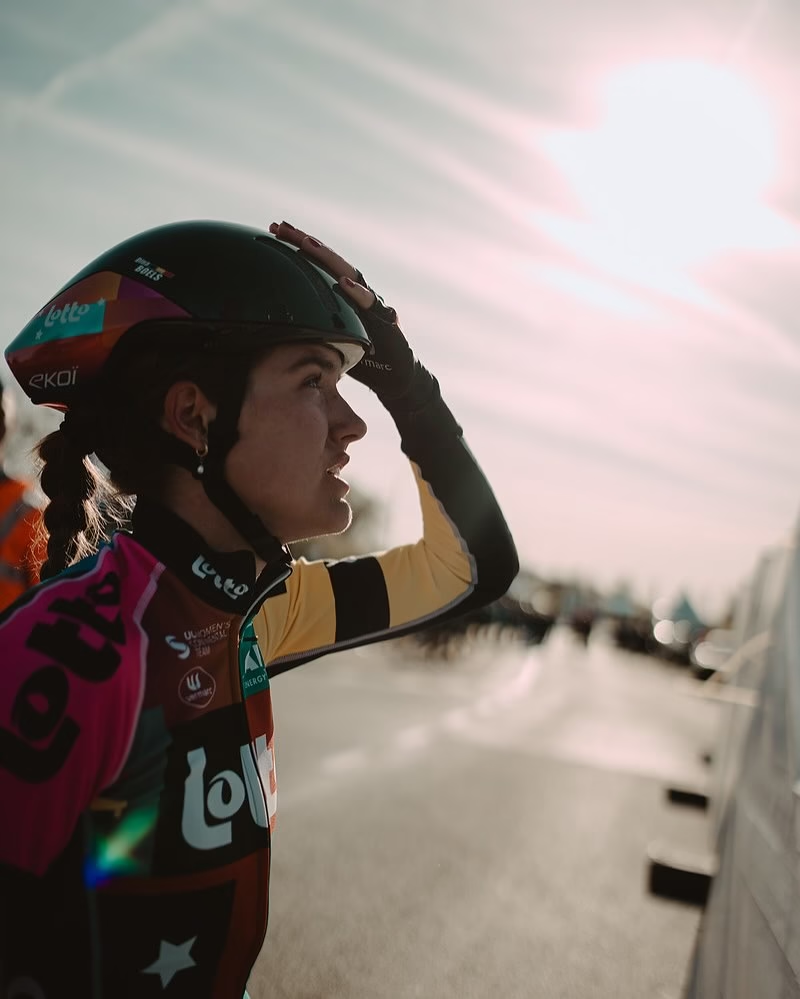
Dina Boels received the most significant punishment after being judged to have sheltered behind a vehicle. The Lotto-Intermarché rider was given a one-minute time penalty, fined CHF 100 and docked five UCI points.
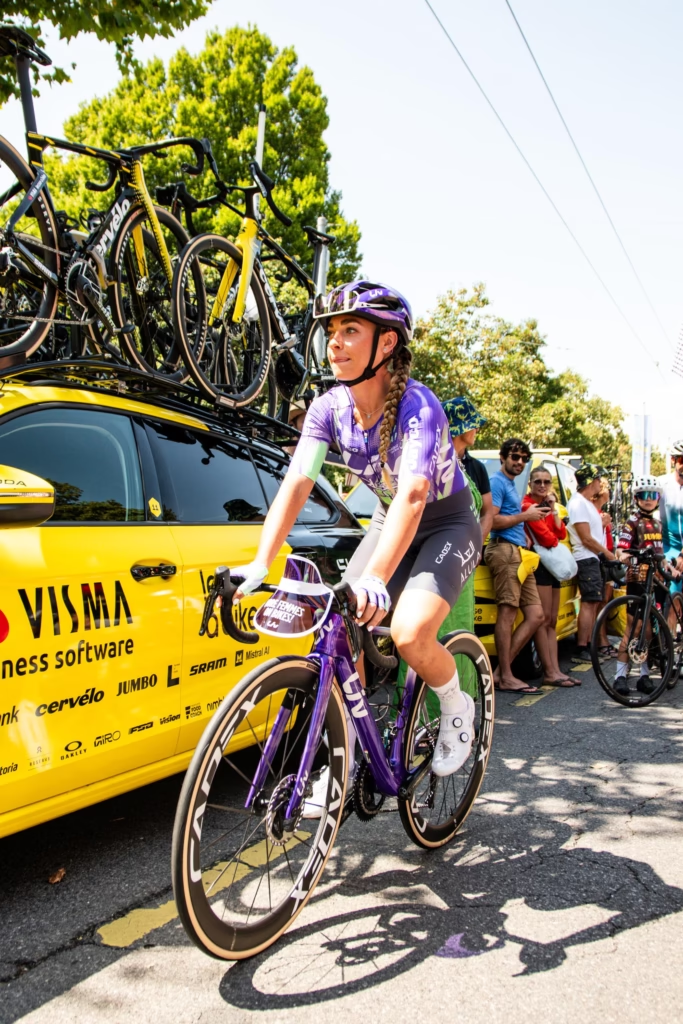
Francesca Barale of Movistar and Picnic PostNL’s Robyn Clay were each fined CHF 100 for irregular feeding, the offence more commonly known as taking a sticky bottle. Their sports directors, Kelvin Dekker and Callum Ferguson, were also fined.
None of the sanctions changed Lorena Wiebes’ Stage 2 victory or the leading positions in the general classification, but they illustrate where the commissaires draw the line between the unavoidable assistance created by the race convoy and an illegal tow.
 Photo Credit: A.S.O./Billy Ceusters
Tour de France Femmes Stage 2 penalties
| Rider or staff member | Team | Offence | Penalty |
|---|---|---|---|
| Dina Boels | Lotto-Intermarché | Sheltering behind a vehicle | CHF 100 fine, one-minute time penalty and five UCI points deducted |
| Grace Verbeke | Lotto-Intermarché sports director | Assistance connected to vehicle drafting | CHF 200 fine |
| Grace Verbeke | Lotto-Intermarché sports director | Failure to follow commissaires’ instructions | Additional CHF 500 fine |
| Francesca Barale | Movistar | Irregular feeding, described as a short-distance sticky bottle | CHF 100 fine |
| Kelvin Dekker | Movistar sports director | Involvement in irregular feeding | CHF 200 fine |
| Robyn Clay | Picnic PostNL | Irregular feeding, described as a short-distance sticky bottle | CHF 100 fine |
| Callum Ferguson | Picnic PostNL sports director | Involvement in irregular feeding | CHF 200 fine |
No rider was disqualified or issued with a yellow card for the Stage 2 offences.
What is a sticky bottle in cycling?
A sticky bottle occurs when a rider collects a bidon from a team car but remains in contact with the person handing it over for longer than is reasonably required.
A normal bottle handover inevitably involves brief contact. The offence begins when the rider continues holding one end of the bottle while someone inside the moving car retains the other, providing a short pull and helping the rider accelerate.
The bottle itself is not sticky. The name is cycling shorthand for a handover that lasts suspiciously longer than necessary.
Sticky bottles have traditionally occupied a grey area within professional cycling. Commissaires may tolerate a momentary delay, particularly when a rider is returning after a crash or mechanical problem, but an obvious tow is considered irregular assistance.
Barale and Clay were each penalised for a sticky bottle over a short distance. The financial sanctions, without additional time penalties, indicate that the jury considered the incidents limited rather than prolonged.
Why are sticky bottles banned?
The rule is intended to prevent riders receiving mechanical assistance from a moving vehicle.
Even a short tow can help a rider accelerate, conserve energy and return towards the peloton more quickly. That creates an advantage over someone who must complete the same chase entirely under her own power.
There is also a safety concern. A rider holding onto a moving vehicle has less control and is travelling inside a convoy containing cars, motorcycles and other competitors attempting to regain position.
The sports director is punished alongside the rider because the offence requires cooperation from inside the car. Dekker and Ferguson were therefore each fined CHF 200 for their involvement in the Barale and Clay incidents.
A similar form of irregular feeding also appeared during the men’s race, as covered in our report on the Tour de France 2026 Stage 2 commissaires’ decisions.
What is vehicle drafting?
Vehicle drafting does not require physical contact.
A rider following closely behind a car benefits from the reduced air resistance in its slipstream. That can make it substantially easier to maintain speed, especially when attempting to return after being dropped, delayed or involved in an incident.
Some aerodynamic assistance from vehicles is unavoidable. Riders regularly move through the convoy by passing from one team car to another, naturally entering each vehicle’s slipstream.
The offence occurs when a rider remains behind one car for too long or uses it as sustained assistance instead of progressing normally through the convoy.
Boels was judged to have sheltered behind a vehicle during Stage 2. The one-minute penalty shows that the commissaires considered the advantage more substantial than the brief sticky bottles involving Barale and Clay.
Why was Dina Boels punished more severely?
Sustained vehicle drafting can provide a much greater advantage than a short bottle handover.
A sticky bottle may offer a few seconds of assistance. Sitting behind a car can allow a rider to travel at high speed while using considerably less energy, potentially helping her regain contact or remain inside the stage time limit.
Boels received a CHF 100 fine, one additional minute on her stage time and the loss of five UCI points. Lotto-Intermarché sports director Grace Verbeke was fined CHF 200 in connection with the incident.
Verbeke received a further CHF 500 fine for failing to comply with the instructions of the commissaires, taking her total penalty to CHF 700.
The sanctions came during an exceptionally difficult day for Lotto-Intermarché. Marieke Meert, Elisabeth Ebras and Sterre Vervloet all abandoned, while Boels and Romina Hinojosa only narrowly completed the stage inside the time limit.
The full impact on the reduced squad is covered in our Tour de France Femmes abandons report after Stage 2.
Why can riders sometimes follow the team cars?
The convoy is one of the most difficult areas of professional cycling to regulate consistently.
A rider returning after a puncture or crash is normally allowed to move through the line of vehicles. She will inevitably gain some aerodynamic help, but she is expected to continue advancing rather than remain directly behind one car.
Commissaires consider the duration, position and apparent intent of the rider.
Someone moving progressively from one vehicle to the next is generally treated differently from a rider sitting behind her own team car for an extended period. The reason she lost contact and the speed of the race may provide context, but neither automatically makes prolonged sheltering legal.
The rule does not demand that riders avoid every vehicle slipstream. It prevents the convoy being used as a sustained means of propulsion.
Can a sticky bottle lead to disqualification?
A short sticky bottle normally produces financial penalties for the rider and team staff.
More serious assistance can lead to time penalties, UCI points deductions, yellow cards or disqualification. The sanction depends on the length and nature of the tow, whether the offence is repeated and how much competitive advantage is gained.
Holding directly onto a vehicle is treated more seriously than an overextended bottle handover. Persistent vehicle drafting can also attract a stronger response than briefly entering a car’s slipstream while moving through the convoy.
The yellow-card system adds another potential consequence. Certain dangerous or irregular assistance offences can count towards cumulative sanctions, with repeated cards capable of removing a rider or staff member from the race.
Stage 2 produced fines and one time penalty, but no new yellow cards.
Did the penalties change the Stage 2 result?
The sanctions did not affect the stage podium.
Wiebes remained the winner ahead of Elisa Balsamo and Marianne Vos after Riejanne Markus was caught 450 metres from the finish. The full account of the race is available in our Tour de France Femmes 2026 Stage 2 report.
Barale and Clay received financial penalties only. Neither was relegated, given additional time or removed from the race.
Boels’ one-minute sanction altered her individual time and general classification position but had no effect on the main contenders or jersey competitions. Wiebes retained yellow and green, with the updated standings detailed in our GC and jerseys after Tour de France Femmes Stage 2.
The jury report ultimately distinguished between two levels of assistance. Barale and Clay received short pulls during bottle handovers, while Boels was judged to have gained more sustained shelter behind a vehicle.
Stage 2 was physically punishing because of the heat, climbing and high race speed. Riders attempting to survive or regain contact had understandable reasons to seek every available advantage. The commissaires’ decisions made clear that difficult conditions do not alter where legal assistance ends and an illegal tow begins.

