

The Tour de France Femmes reaches Mont Ventoux this afternoon, with the decisive part of Stage 7 expected to begin at approximately 15:30 BST.
For anyone primarily interested in the battle between Marlen Reusser, Demi Vollering and Kasia Niewiadoma-Phinney for the yellow jersey, 15:20 BST is the safest time to switch on.
The riders should reach Bédoin between approximately 15:18 and 15:39 BST, before the road begins climbing towards the officially classified Mont Ventoux ascent. The 15.7km section at 8.8% starts around Saint-Estève, which the Tour timetable expects between 15:28 and 15:50 BST.
So the simple answer is:
Mont Ventoux should begin at around 15:30 BST, but tune in by 15:20 BST if you do not want to miss the first GC moves.
The climb itself, its gradients and its role in deciding the 2026 Tour are covered in our full Tour de France Femmes Mont Ventoux guide.
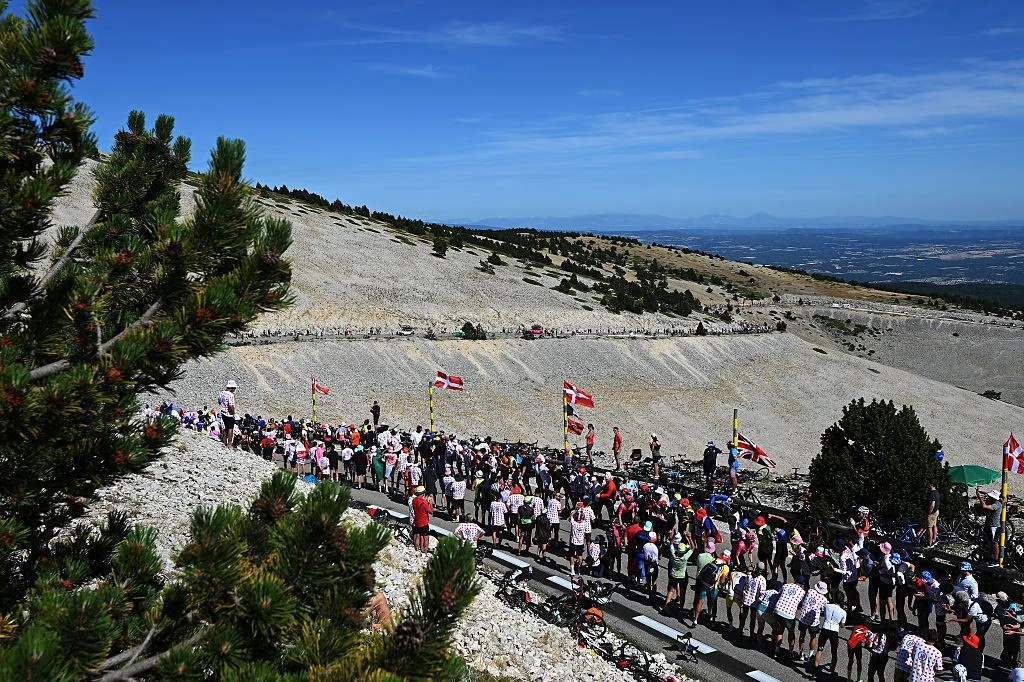
What time does Mont Ventoux start today?
| Point on the route | Approximate UK time |
|---|---|
| Bédoin | 15:18-15:39 BST |
| Start of classified Ventoux climb at Saint-Estève | 15:28-15:50 BST |
| Chalet Reynard | 15:57-16:27 BST |
| Mont Ventoux summit finish | 16:17-16:52 BST |
Those times vary depending on how quickly Stage 7 is raced.
The fastest schedule would put the leaders onto the serious Ventoux gradients shortly before 15:30 BST. A slower race could push that closer to 15:50.
That makes 15:20 BST the best single time to tune in.
UK viewers can watch the race live through TNT Sports and HBO Max, with the full broadcast situation covered in our guide to how to watch the Tour de France Femmes 2026 in the UK.
The decisive climb does not begin with 40km to go
There is an important distinction in today’s route.
The race reaches the Col de Suzette with 41.5km remaining. That is where the GC teams may begin tightening control, improving position and reducing the size of the peloton.
Mont Ventoux itself comes considerably later.
The riders descend towards Malaucène, cross more rolling terrain and then reach Bédoin with around 22 kilometres remaining.
The officially classified Ventoux climb begins near Saint-Estève with approximately 15.7km to go.
So viewers searching specifically for the Mont Ventoux ascent do not need to be watching three hours before the finish. The crucial climbing should occupy roughly the final 45 to 50 minutes of the stage.
The broader build-up and how the preceding climbs feed into Ventoux are detailed in our Tour de France Femmes 2026 route guide.
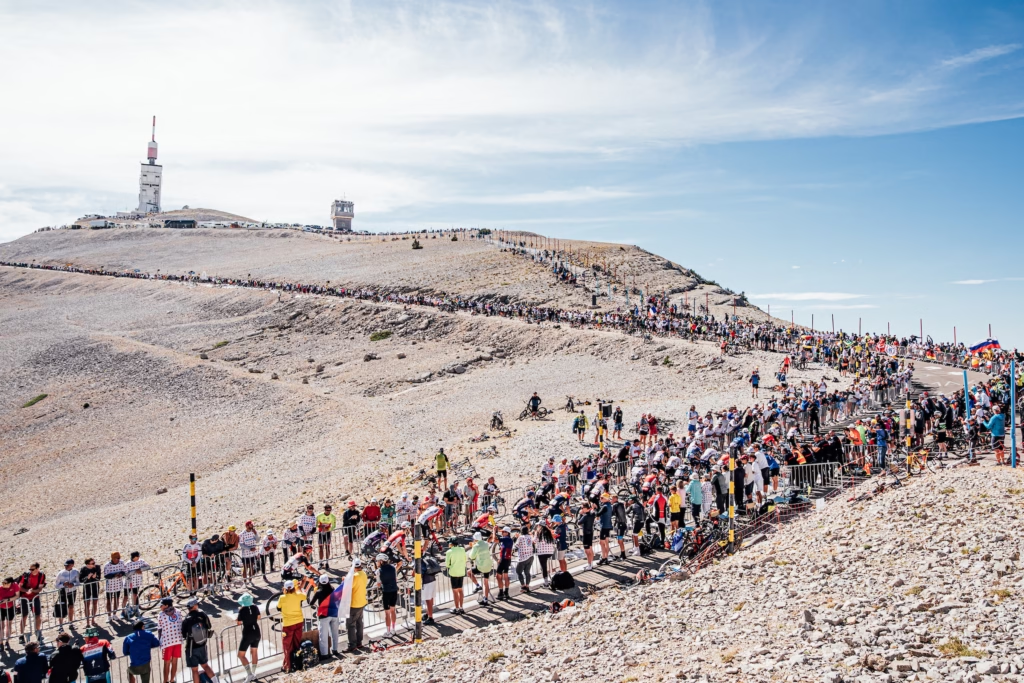
Why it is worth switching on before Saint-Estève
Waiting until the official start of the 15.7km climb carries some risk.
The road is already rising out of Bédoin and positioning will become increasingly important before Saint-Estève. FDJ United-Suez may begin lifting the pace before the gradient reaches its hardest section, particularly if Vollering wants to isolate Reusser early.
The first kilometres from Bédoin are relatively gentle compared with what follows, but they provide the last opportunity for teams to organise their leaders before the road turns sharply upwards.
Once the race passes Saint-Estève, the character of the stage changes.
The road enters the forest and settles close to 9% for kilometre after kilometre. This is the section where the yellow jersey group should begin breaking apart.
When could Vollering attack Reusser?
Probably sometime between 15:40 and 16:10 BST, depending on the speed of the race.
Reusser begins Stage 7 only 12 seconds ahead of Vollering. That margin is small enough that FDJ United-Suez do not need a spectacular long-range attack, but they do need to make the climb difficult enough to expose any weakness in the yellow jersey.
The steep forest section provides the obvious place.
If Vollering attacks with seven or eight kilometres remaining, there is enough climbing left to create a meaningful GC gap without leaving her exposed to the wind on Ventoux’s upper slopes for too long.
Reusser’s task is simply to remain close enough.
With only 12 seconds separating them, even a small physical gap combined with the summit bonuses could change the race lead. The importance of those seconds is explained in our Tour de France Femmes 2026 time bonuses guide.
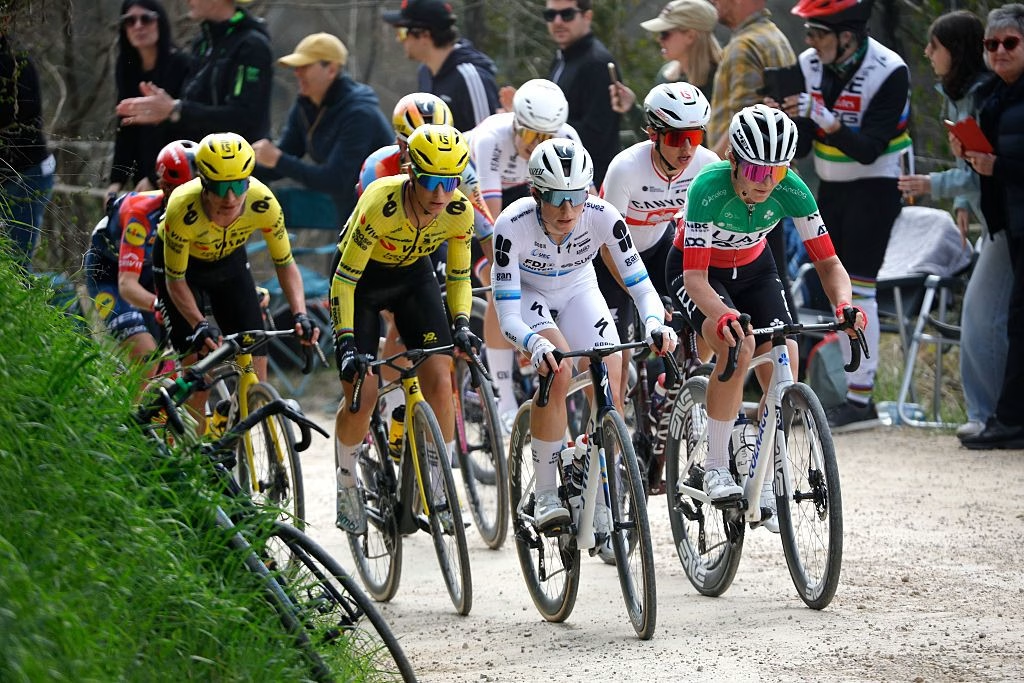


When will the riders reach Chalet Reynard?
The leaders are expected at Chalet Reynard, 6.2km from the finish, between approximately 15:57 and 16:27 BST.
This is where the scenery changes completely.
The riders leave the forest and emerge onto the exposed limestone slopes associated with the classic images of Mont Ventoux.
If Reusser and Vollering are still together at Chalet Reynard, the yellow jersey contest will remain exceptionally close.
If Vollering has already created separation in the forest, the final six kilometres become a question of how much time Reusser can recover or limit.
What time will Stage 7 finish?
The fastest schedule puts the winner on the summit at approximately 16:17 BST.
A more moderate race speed moves that towards the middle of the 16:00 hour, while the slowest schedule projects a finish at approximately 16:52 BST.
That creates a fairly broad finishing window, but the viewing advice is much simpler.
15:20 BST: switch on if you want the complete build-up to Ventoux.
15:30 BST: the first serious slopes should be approaching under the fastest schedule.
16:00 BST: the GC battle should be fully underway.
16:17 BST onwards: the stage could finish at any point.
Anyone waiting until the final half-hour risks missing the attack that decides the Tour.

