
Dubai is unlikely to be the first destination that comes to mind when planning a cycling trip. Mallorca has the Tramuntana mountains and established café culture. Tenerife has Mount Teide. Girona has become almost an extension of the professional peloton. The UAE is still more readily associated with skyscrapers, shopping centres and desert heat than road bikes.
That perception misses one of the more unusual combinations available for a winter cycling break.
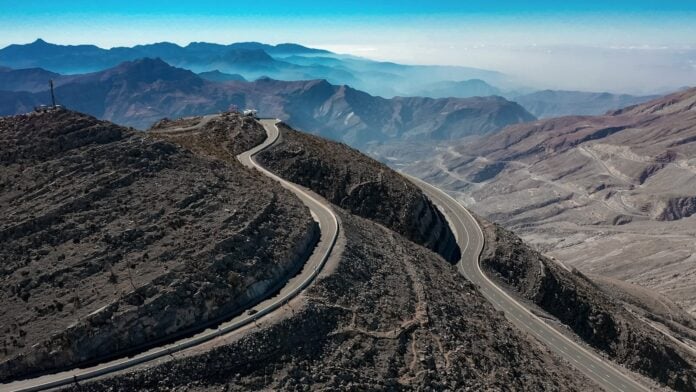
On the outskirts of Dubai, Al Qudra provides around 86km of purpose-built cycling through the desert, removing most of the traffic concerns that can complicate riding somewhere unfamiliar. Travel north to Ras Al Khaimah and the terrain changes completely, culminating in Jebel Jais, the UAE’s highest mountain and a climb regularly used by the professional peloton.
The contrast is the selling point. One day can be spent riding quickly in a paceline across almost completely flat desert roads. Another can involve an hour or more of continuous climbing through the barren Hajar Mountains.
For riders searching for somewhere genuinely different during the European winter, Dubai and Jebel Jais deserve more attention.
Dubai cycling at a glance
| Ride | Character | Typical distance | Main attraction |
|---|---|---|---|
| Al Qudra | Flat desert cycling | Up to around 86km | Traffic-free endurance riding |
| Al Qudra shorter loops | Flat | Flexible | Easy to tailor around fitness and time |
| Jebel Jais | Long mountain climb | Around 20km for the main upper climb | Steady gradient and mountain scenery |
| Longer Jebel Jais approach | Endurance climbing | Varies by start point | A much bigger day with substantial elevation |
The wider development of tracks such as Al Qudra is part of a much larger investment in the sport, explored in our guide to UAE cycling infrastructure.
Al Qudra is the Dubai ride you may not know exists
Leave central Dubai behind and the urban landscape disappears remarkably quickly.
Out towards the desert sits the Al Qudra Cycle Track, one of the UAE’s most useful pieces of cycling infrastructure. The wider network provides around 86km of dedicated riding, with different combinations allowing cyclists to shorten or extend the day.
That changes the experience immediately.
There are no cars repeatedly passing at speed.
There are few junctions interrupting your rhythm.
You do not have to spend an hour negotiating city traffic before reaching the roads you actually came to ride.
Instead, you can settle into a position and keep pedalling.
For anyone accustomed to British winter riding, where every session can involve wet roads, traffic and repeated stops, the simplicity is unexpectedly appealing.
The desert is less monotonous from a bike than it sounds
Eighty kilometres of largely flat desert riding might sound repetitive.
It rarely feels that way once you are out there.
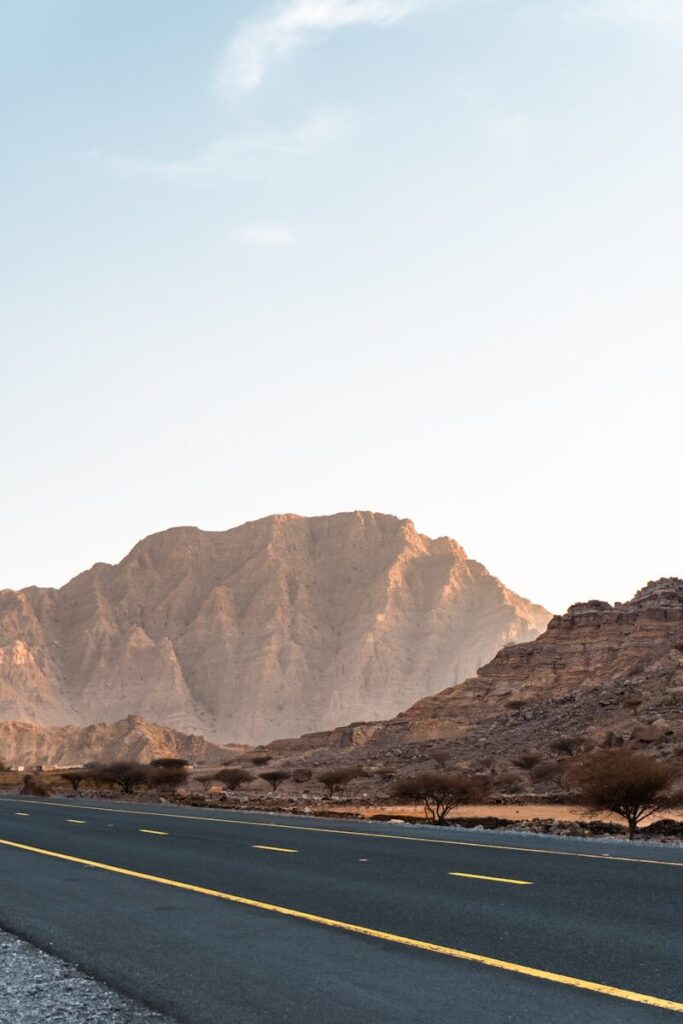
The road stretches between dunes and sparse vegetation with huge sightlines across an almost empty landscape. Riders hundreds of metres ahead can appear strangely close because there are so few buildings, trees or conventional reference points by which to judge distance.
There is also something unusual about riding somewhere so open.
The horizon dominates everything.
Groups become thin lines disappearing into the desert. Roads appear to continue almost indefinitely. Depending on where you ride, there is also the possibility of seeing some of the wildlife that lives around the wider Al Qudra area.
The lack of elevation does not necessarily make it easy either.
There are very few meaningful descents where you can freewheel and recover. If you want to average 30, 32 or 35km/h, you have to continue producing the power required to maintain it.
Then there is the wind.
A desert headwind can turn an apparently straightforward endurance loop into something considerably harder.
Al Qudra is made for fast group riding
This is probably where the route works best.
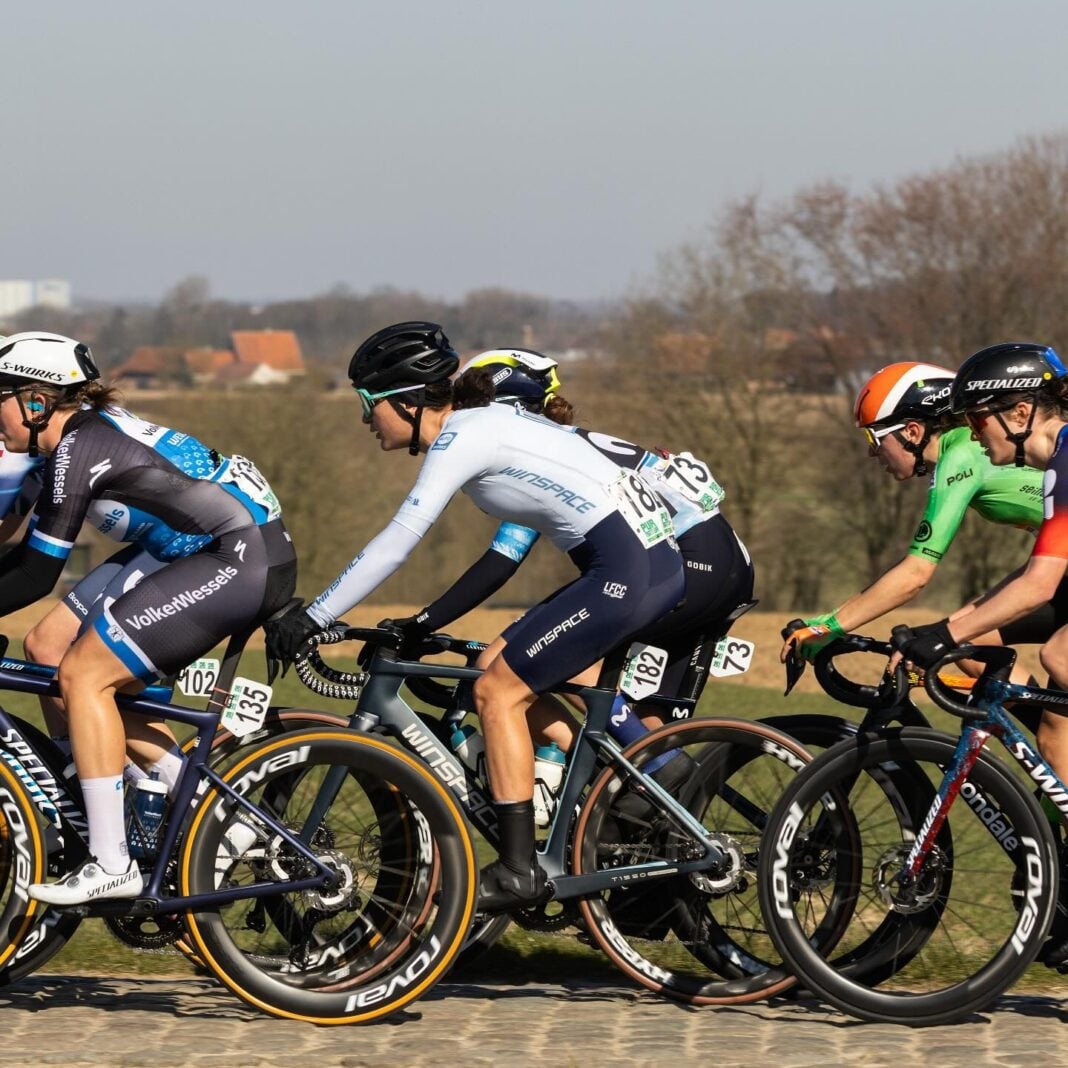
Flat roads naturally encourage paceline riding, with riders rotating through the wind and sheltering behind one another between turns.
A well-organised group can maintain surprisingly high speeds without the repeated accelerations required on rolling British roads.
For stronger riders, that can become a serious tempo session.
For a more relaxed group, the same infrastructure provides simple uninterrupted endurance mileage.
It is also a good place to appreciate just how much difference drafting makes.
Ride at the front and the desert wind feels substantial.
Move five or six wheels backwards and suddenly the same speed becomes much easier.
The UAE’s growing emphasis on dedicated cycling facilities has turned this sort of training into a normal part of the local scene rather than something visitors have to improvise. Our UAE cycling infrastructure guide looks more closely at how Al Qudra fits into that development.
Sunrise is the best time to ride Al Qudra
Timing matters in Dubai.
The obvious reason is temperature.
For most visitors, the cooler months from roughly October through March are the logical window for serious outdoor riding. Even then, early starts make sense.
Sunrise is also when the desert looks its best.
Low light creates long shadows across the dunes and softens a landscape that can look much harsher under a midday sun. Temperatures are lower, the roads can be quieter and it becomes much easier to complete a substantial ride before the heat begins building.
This is not somewhere to reproduce the relaxed European cycling-holiday routine of breakfast, another coffee and eventually leaving the hotel at 11am.
Ride early.
Enjoy the temperature.
Then spend the hottest part of the day doing something else.
That makes Dubai particularly attractive as a winter escape. When Britain is dark, damp and hovering just above freezing, an early morning desert ride suddenly becomes a convincing proposition.
Then there is Jebel Jais
Al Qudra proves that Dubai can provide excellent flat riding.
Jebel Jais proves a UAE cycling trip does not have to be flat at all.
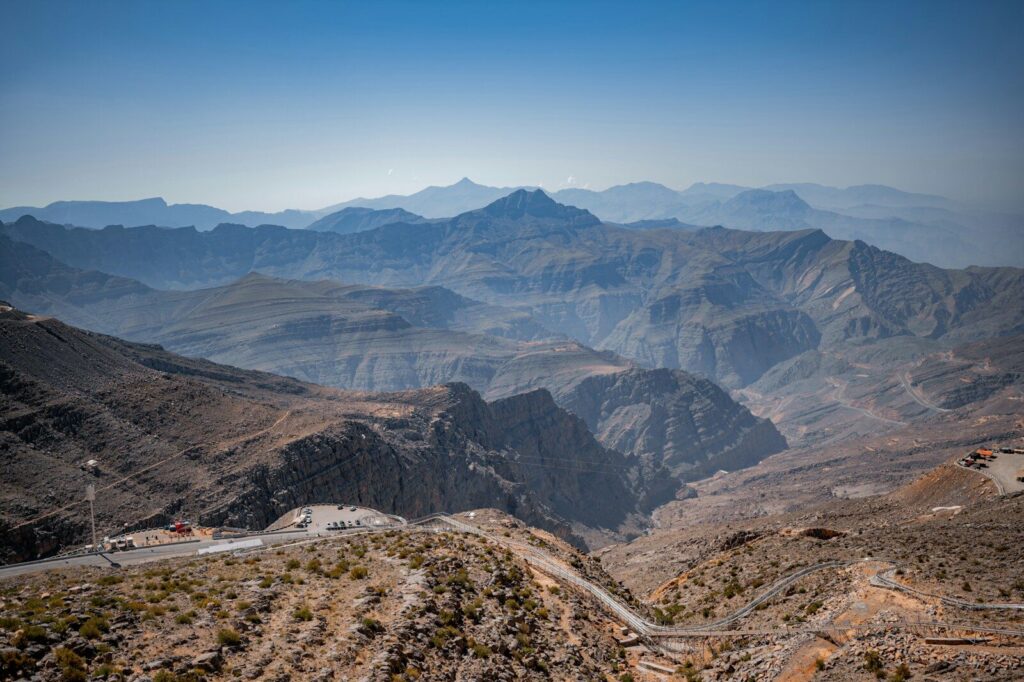
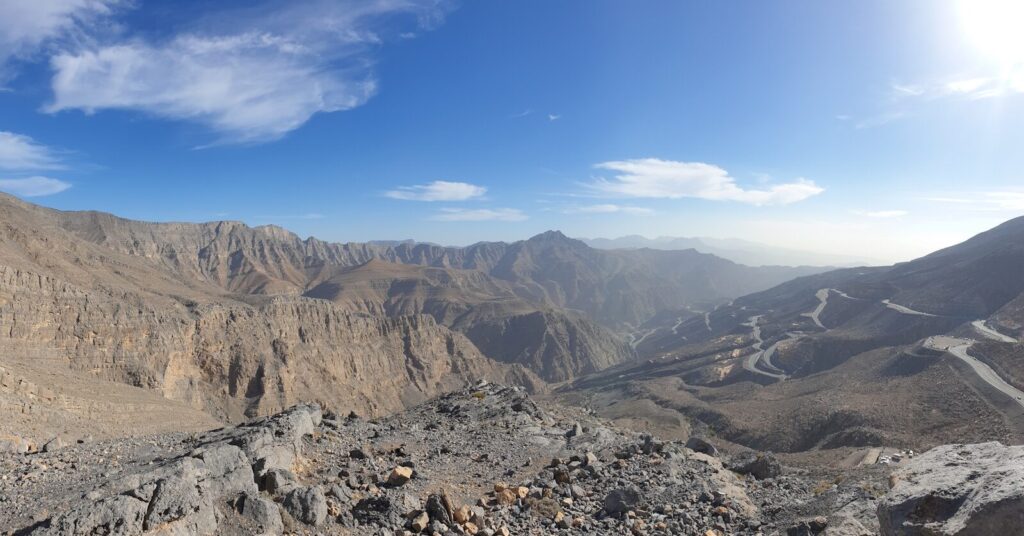
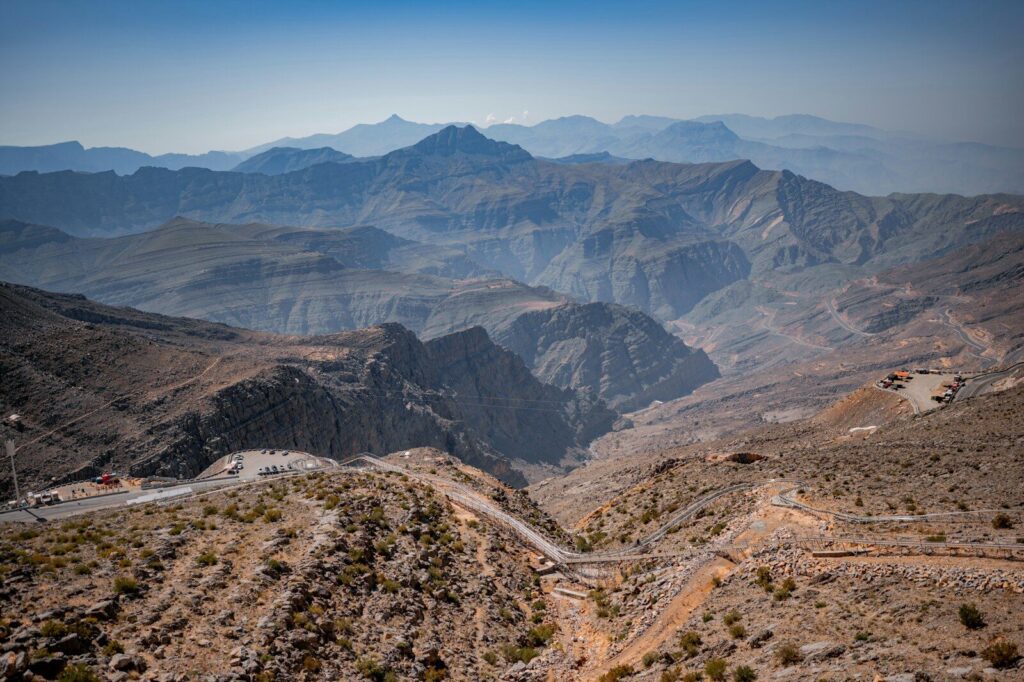
The mountain lies in Ras Al Khaimah, north of Dubai, within the Hajar Mountains. It is the highest mountain in the UAE and has become one of the country’s benchmark road-cycling climbs.
The upper ascent familiar from professional racing is around 20km at approximately 5%, although the total climbing day can be considerably longer depending on where you start.
That consistency defines Jebel Jais.
It is not a climb built around repeated 15% ramps.
There is no equivalent of the Angliru’s Cueña les Cabres waiting near the summit.
Instead, Jebel Jais simply keeps going.
Twenty kilometres at around 5% means most amateur riders will spend well over an hour climbing without any meaningful opportunity to hide.
The challenge is pacing.
Jebel Jais rewards riders who can find a rhythm
There is something particularly satisfying about a climb where the gradient allows you to settle into a gear and stay there.
Jebel Jais provides exactly that.
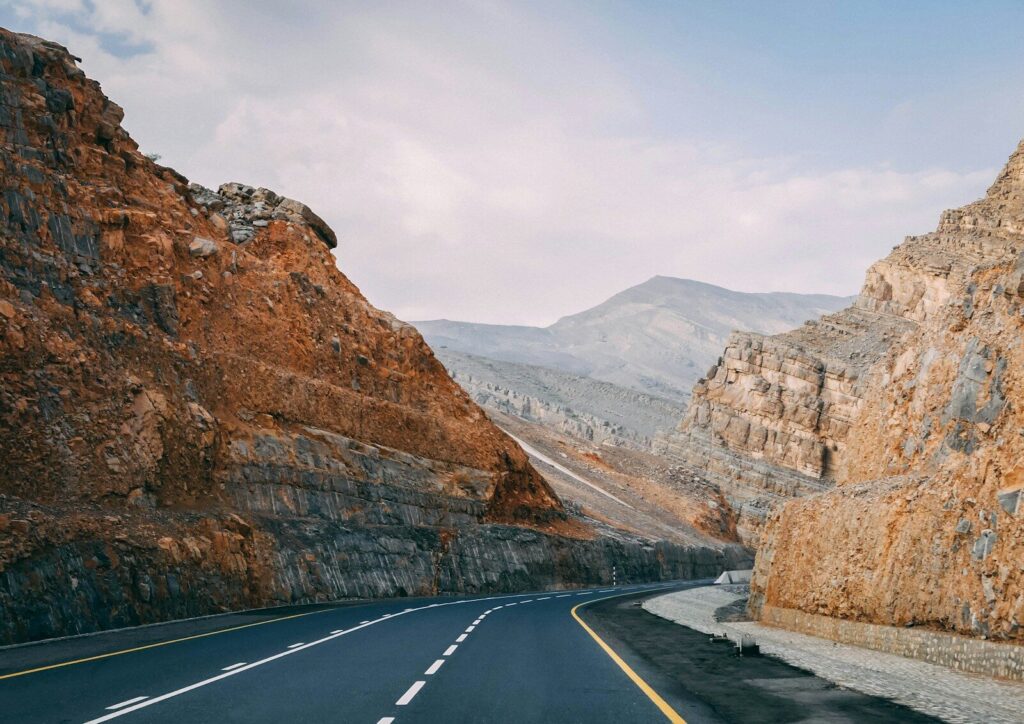
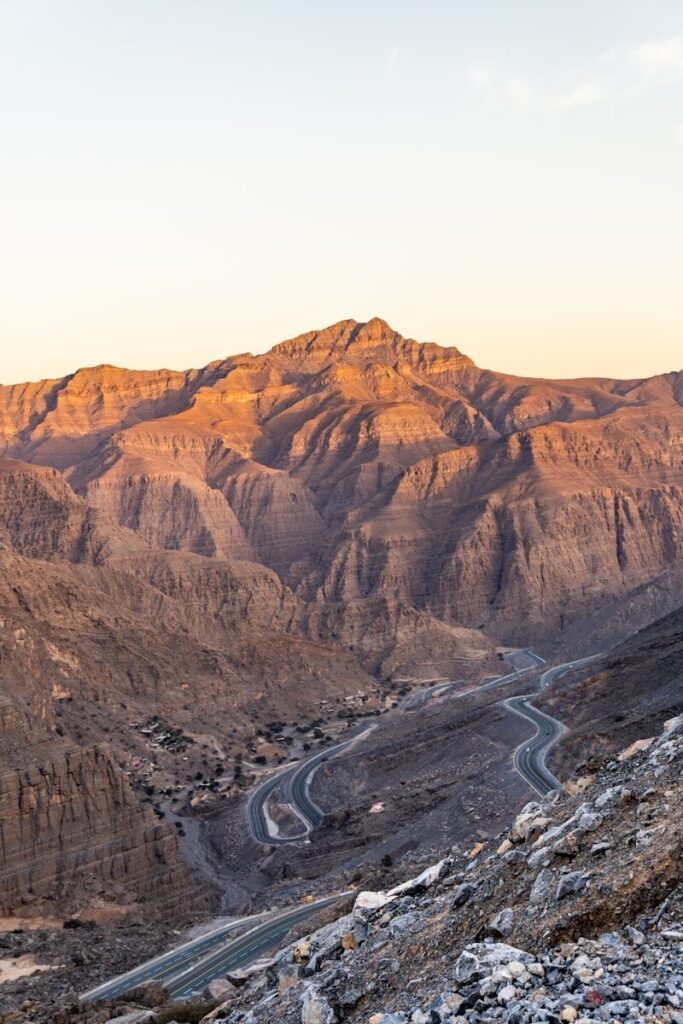
The road rises through broad bends and switchbacks on smooth tarmac, gradually opening views across an increasingly dramatic rocky landscape.
Starting further down towards Ras Al Khaimah can make the ride substantially bigger than the familiar 20km race ascent, with the approach adding considerable climbing before the upper mountain even begins.
That means visiting riders have options.
If you want a concentrated climbing effort, begin higher.
If Jebel Jais is intended to be the centrepiece of the trip, start lower and turn it into a proper endurance day.
Either way, this is a climb where restraint pays.
Start five or ten watts too hard and the final kilometres become uncomfortable.
Find the correct rhythm early and it becomes one of those climbs where you can simply settle in, watch the altitude increase and enjoy the landscape changing around you.
Professional racing has made Jebel Jais a benchmark climb
Jebel Jais has become familiar to cycling fans through the UAE Tour, where it has repeatedly been used as a summit finish.
The race has helped establish the mountain internationally and gives visiting riders an obvious professional reference point. The 2025 UAE Tour route again used a Jebel Jais summit finish as one of its principal GC stages.
Tadej Pogačar then provided a demonstration of how the climb behaves at professional speed when he won on Jebel Jais in the 2025 UAE Tour.
His comments afterwards were revealing. Jebel Jais is difficult, but its relatively steady gradient makes huge differences between elite climbers less common than on much steeper summit finishes.
That is almost ideal for amateur riders.
The same characteristic that makes it difficult for Pogačar to drop another WorldTour climber makes Jebel Jais comparatively approachable for someone simply trying to reach the top.
You do not need to be an exceptional climber.
You need to pace 20km sensibly.
Jebel Jais looks nothing like a European climb
This is perhaps the strongest argument for riding it.
Europe has hundreds of excellent mountain roads.
Very few look like Jebel Jais.
There are no Alpine meadows.
There are no forests covering the lower slopes.
No stone villages appear around every second hairpin.
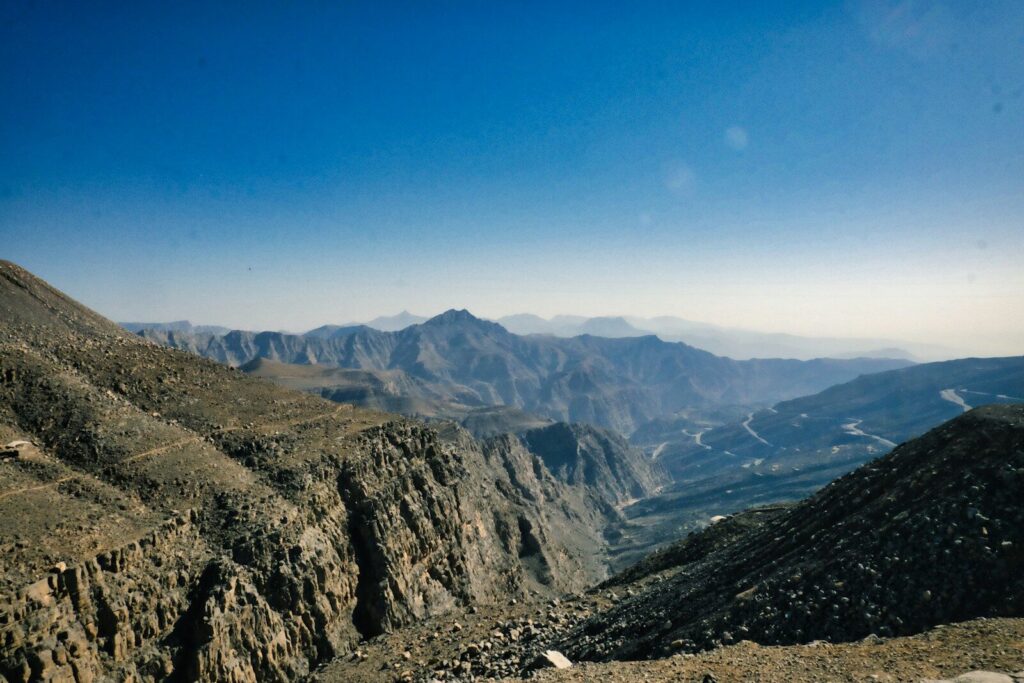
Instead, the road has been cut through an enormous landscape of exposed rock, with ridgelines stacked behind one another and sweeping bends carved across otherwise barren slopes.
It feels unmistakably Middle Eastern.
That matters.
The climbs cyclists remember are rarely defined purely by their Strava numbers. Average gradients blur together after enough trips.
What stays with you is the road disappearing around a mountainside, the landscape below and the sense that you have ridden somewhere unlike anywhere else.
Jebel Jais delivers that.
The descent deserves respect
The return is potentially one of the best parts of the ride.
Wide bends and good visibility can make Jebel Jais a hugely enjoyable descent.
They can also encourage speed to build remarkably quickly.
That demands some restraint.
Long mountain descents produce sustained loads on brakes, while exposure higher on Jebel Jais means wind can change the way the bike behaves through open bends.
Fatigue is another consideration. An hour or more of climbing does not necessarily leave concentration at its sharpest.
There is little point turning a memorable mountain ride into a risk-taking exercise for the sake of a descending personal best.
Enjoy the corners.
Use the visibility.
Stop for the view if you want to.
The mountain will still be there five minutes later.
Al Qudra and Jebel Jais work particularly well together
The two rides complement one another almost perfectly.
At Al Qudra, the challenge is aerodynamics, rhythm and sustaining speed.
At Jebel Jais, it is pacing and climbing.
One is virtually flat.
The other can turn into a substantial elevation day.
One produces huge horizontal views across sand.
The other puts you inside a rocky mountain landscape.
That gives a short cycling break much more variety than Dubai’s reputation suggests.
A simple riding week could look something like:
- an easier Al Qudra ride after arrival
- a longer or quicker desert group ride
- a recovery or sightseeing day
- a dedicated Jebel Jais day
- another shorter Al Qudra session before leaving
Ras Al Khaimah is close enough to Dubai for Jebel Jais to work as a day trip, although the transfer needs to be included in the planning.
For a cycling-specific holiday, spending a night closer to the mountain also makes sense.
You do not necessarily need to fly with your bike
This is another advantage.
Bike rental around Dubai’s established cycling areas means it is possible to add a genuine road ride to a normal holiday without transporting a bike box through the airport.
That makes Al Qudra particularly accessible.
Someone visiting Dubai for a week can realistically hire a bike for a morning, ride 50 or 80km and return to the rest of the trip without cycling becoming the entire purpose of the holiday.
For Jebel Jais, bringing your own bike becomes more attractive.
Saddle position, gearing, pedals and general familiarity matter more when you are climbing continuously for an hour or longer.
But the broader point remains: Dubai works both as a dedicated cycling destination and as somewhere cycling can be added to another type of trip.
That flexibility is one reason the UAE appears in our wider guide to cycling destinations outside Europe.
The biggest limitation is the heat
There is an obvious catch.
Dubai is often promoted as a year-round holiday destination. That does not make it a year-round road-cycling destination in quite the same way.
Summer temperatures can make substantial outdoor riding unrealistic or unsafe during much of the day.
The cooler European winter is the obvious period to target.
Even then, hydration matters more than many visiting riders expect.
Dry desert conditions mean sweat can evaporate quickly, making it easy to underestimate fluid loss. Sun exposure is substantial even when the air temperature feels comfortable.
Carry enough fluid.
Know where you can refill.
Do not wait until you feel thirsty before drinking.
Jebel Jais can also be noticeably cooler at altitude, particularly early in the morning or when the wind increases. A lightweight layer for the descent can therefore be worthwhile during the coolest months.
Do not simply ride out of central Dubai and hope for the best
Another important distinction is that Dubai’s good cycling infrastructure does not mean every road is pleasant or appropriate for cycling.
Major urban highways are built around fast motor traffic.
The sensible approach for a visitor is to use established cycling locations rather than trying to improvise a route from a city-centre hotel.
Al Qudra exists precisely because it removes much of that problem.
A taxi, hire car or organised transfer to the cycling track is likely to produce a considerably better ride than spending an hour navigating unfamiliar city roads.
This separation between urban traffic and dedicated recreational infrastructure is part of what makes the UAE’s investment in cycling interesting, and is covered more broadly in UAE cycling infrastructure for sport.
What bike should you use?
A conventional road bike is ideal for both headline rides.
Despite being in the desert, Al Qudra is paved. There is no need to arrive with a gravel bike simply because there is sand on either side of the road.
The same applies to Jebel Jais.
For the desert, reasonably fast road tyres and a comfortable endurance position are useful.
For the mountain, sensible climbing gearing matters more.
A compact chainset with a 32 or 34-tooth largest sprocket gives most recreational riders plenty of insurance. Stronger climbers can comfortably use harder gearing because the upper Jebel Jais climb is so consistent.
There is no prize for carrying unnecessarily large gears up a mountain.
Take gearing that allows you to sit down, find your cadence and enjoy the climb.
-
 Photo Credit: quentinphotographiebe
 -
 Photo Credit: Getty
Who will enjoy riding in Dubai most?
Dubai will appeal particularly strongly to several types of cyclist.
Winter-mile riders get dependable opportunities to ride outdoors while northern Europe is at its least inviting.
Performance-focused cyclists can use Al Qudra for long tempo work and Jebel Jais as a sustained climbing session.
Travelling cyclists can incorporate proper road riding into a holiday without structuring every day around the bike.
Collectors of professional climbs get a UAE Tour summit finish with a genuine connection to riders such as Pogačar.
It is less obvious for someone whose perfect cycling holiday involves rolling from one old village café to another across quiet European lanes.
The UAE cycling experience is different.
There may be transfers before the ride. The cycling infrastructure can feel deliberately engineered rather than organically developed over centuries. Café culture is not the central attraction.
That is not necessarily a weakness.
It is precisely why the experience feels different from another week in Mallorca.
Why Dubai deserves a place on your winter riding list
The argument for cycling in Dubai is not that it replaces Mallorca, Girona, Calpe or Tenerife.
Those destinations have deeper cycling cultures and more route variety.
Dubai offers something else.
Al Qudra provides kilometre after kilometre of smooth road disappearing through an open desert landscape. Jebel Jais provides a proper mountain, a professional racing connection and a long climb that is challenging without being brutally steep.
Within a few days you can ride a fast paceline across almost completely flat desert roads and then spend an hour climbing through the Hajar Mountains.
Those two rides barely feel as though they belong in the same cycling destination.
That is exactly why they work so well together.
Go to Dubai for the winter sun if you like.
Take the bike because the riding is considerably better than you might expect.

