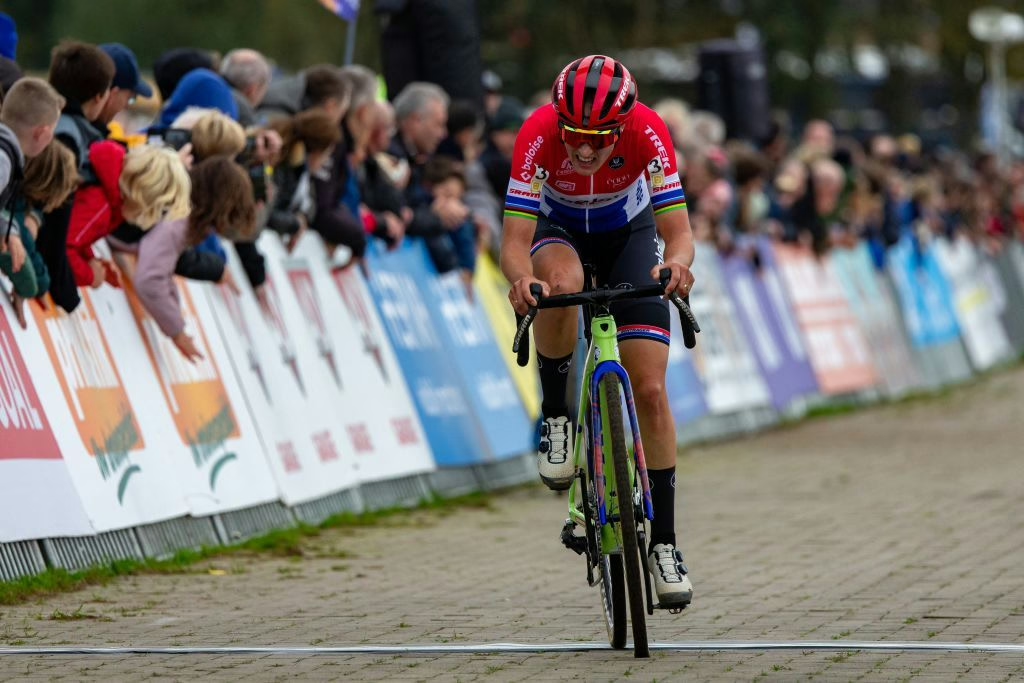
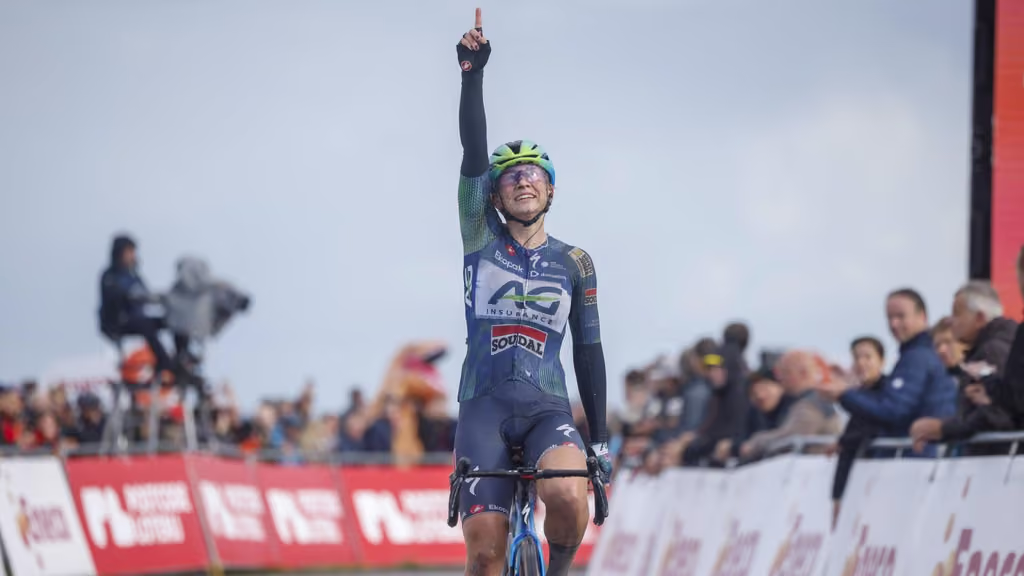
Felipe Orts returns to the Foodera Nacht van Woerden on Tuesday 20 October as the defending men’s champion, a year after ending Lars van der Haar’s eight-win run. The race starts at 20:40 CEST, or 19:40 BST, with about an hour of racing under floodlights on a three-kilometre town-centre circuit.
Orts’s victory in 2025 came ahead of Pim Ronhaar and Jente Michels, both named on this year’s provisional entry list. The Spaniard produced a decisive ride on a circuit that Van der Haar had made his own for years, but defending the title will require more than another fast start. The bridges, narrow grassy sections and repeated turns leave plenty of opportunities for a rider to lose momentum or get caught behind an error.
The strongest opposition may come from Lander Loockx and Niels Vandeputte, with Joris Nieuwenhuis, Ryan Kamp, Yordi Corsus and Laurens Sweeck also among the early entries. Ronhaar’s second place last season gives him a clear course reference. Loockx and Vandeputte bring current form and the ability to sustain hard efforts through repeated technical sections; the final starters still need confirming closer to Tuesday.
Woerden is a standalone UCI C2 race, rather than a round of the World Cup, Superprestige or X²O Trophy. Its timing on the eve of the town’s traditional autumn festivities and the floodlit circuit help it attract a strong field despite being outside those major series. The elite women start an hour before the men, so spectators can watch both races without moving venue.
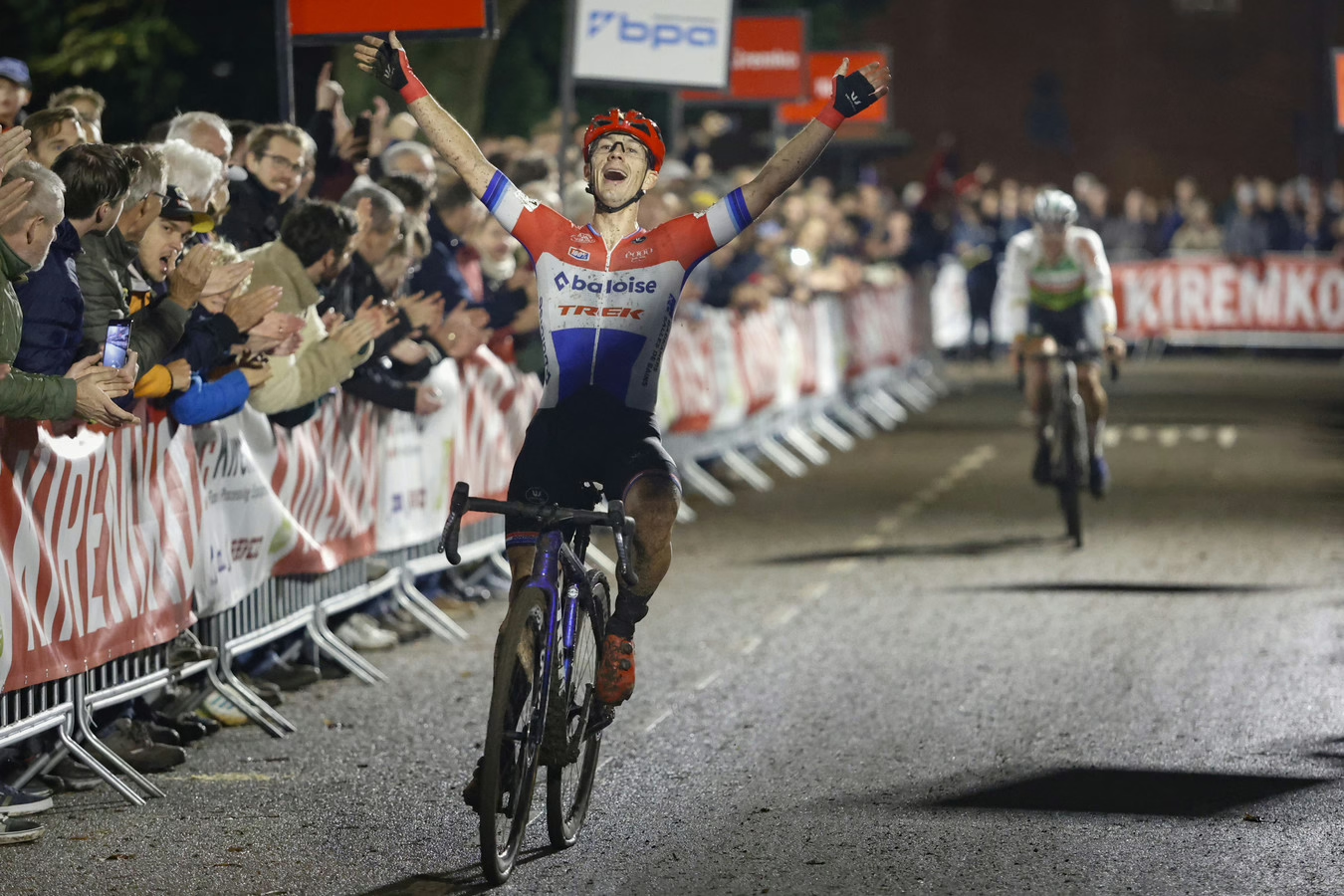
Previous men’s winners at Nacht van Woerden
Van der Haar won eight editions, sweeping every race held from 2015 to 2019 and then winning again in 2022, 2023 and 2024. There were no editions in 2020 or 2021, so this was eight successive victories in races actually held, rather than ten consecutive annual victories. Orts ended the sequence in 2025, beating Ronhaar and Michels.
| Year | Winner | Second | Third |
|---|---|---|---|
| 2025 | Felipe Orts | Pim Ronhaar | Jente Michels |
| 2024 | Lars van der Haar | Michael Vanthourenhout | David Haverdings |
| 2023 | Lars van der Haar | Laurens Sweeck | Pim Ronhaar |
The Dutchman repeatedly found the quickest way through the changes between grass, bridges and town streets. His dominance was less about one exceptional obstacle than avoiding wasted braking and accelerating over the course of an hour. Orts’s win showed that the same circuit can reward another rider able to handle those constant interruptions.
Van der Haar does not appear on the provisional 2026 start list available at the time of writing, so there is no immediate rematch with the rider Orts displaced. Ronhaar and Michels, however, are expected to be back, making the 2025 podium more useful for previewing Tuesday than the much older results.
The 2026 Woerden circuit and its technical points
The official course measures roughly 3km per lap, from the start on Oostlaan to the finish on Plantsoen. Riders pass the Exercitieveld and head along the grass by Oostsingel before crossing the Parijsebrug towards H.G. van Kempensingel, where a double equipment pit allows bike changes. The mixture of road and short grassy sections encourages high speeds, but it also leaves little space to move up when the field stretches out.
The circuit crosses the Singel on a pontoon bridge, turns around the water tower and runs through Torenwal and Hoge Wal before dropping towards the finish. On the return, the riders approach the same landmarks from the other side and cross both bridges again. Accelerating out of these corners repeatedly can cost as much energy as the visible climbs at more conventional cyclocross races.
Two regulation barriers on the Exercitieveld force riders to consider their technique and line. A clean dismount and remount may be quicker than an ambitious bunny-hop that goes wrong, especially late in a race when fatigue affects timing. More importantly, riders behind someone who stalls or slips can be delayed even when they make no error of their own.
Woerden is not a course built around one long sandpit or a sustained climb. It is a chain of sharp decisions: which side of a corner to enter, how much speed to carry onto the bridge and when to accelerate on the grass. Losing a bike length repeatedly can leave a rider chasing alone despite having the same underlying strength as the leaders.
Floodlights alter how the circuit feels. A rider travels from brighter asphalt into patches of grass where the surface is more difficult to read, and dampness can change the braking point before a turn. Mechanics may have extra work if it becomes muddy, but the double pit is not automatically decisive on a dry, fast evening.
Men’s contenders: Orts, Loockx, Vandeputte and Ronhaar
Orts has the clearest course-specific form. He won here in 2025 and knows how to negotiate the narrow sections without turning every acceleration into a chase. He is not necessarily the fastest starter in this year’s field, so reaching the first bridge close to the front will matter more than relying on a late surge from a poor position.
Loockx is a serious challenger on the provisional list. His sustained pace suits the stretches of grass between corners, particularly if the group begins to break apart after the first few laps. He will want to use those sections to force the others to respond rather than leave the race to be decided by positioning at the barriers.
Vandeputte won the 2025–26 Superprestige overall and has the consistency to recover quickly from the small setbacks that tend to accumulate on technical courses. Woerden’s quick laps could work in his favour if he keeps contact early; losing ground behind slower starters would instead oblige him to spend energy passing rivals before he can attack.
Ronhaar has a particular reason to return. He finished second to Orts in 2025, and the familiarity of the circuit should help him judge when to take a risk. His best chance is likely to come from riding at the front through the bridge approaches, leaving himself free to accelerate on the next grassy stretch.
Michels was third in 2025, which makes him a contender worth following if he can stay with the leading group. Nieuwenhuis generally benefits when sustained pressure begins to expose weaker riders, while Kamp and Corsus could make the fight for position more difficult. This is not an entry list where Orts can assume he will ride away against just one challenger.
Other provisional names include Laurens Sweeck, Mees Hendrikx, Yordi Corsus, Ryan Kamp and Wies Nuyens. Sweeck has had illness disrupt his early-season programme, so his final participation should be checked. With several experienced riders capable of a strong opening, the first lap may leave some recognised favourites chasing before the race has properly settled.
Where the men’s race may be won
A clean start helps here. After the first sprint along Oostlaan the field soon reaches the grass and bridge approaches, where braking behind another rider can create an immediate gap. Someone starting on the second or third row can still make the front group, but only if the opening corners are free of delays.
The barriers on Exercitieveld become a test of consistency. Each clean dismount, jump or remount saves little on its own, but the rider behind a mistake might suddenly lose several seconds. With the lap repeated for roughly an hour, the risk of accumulating small losses is greater than on a circuit with long open straights.
An attack before the pontoon bridge could be effective if the leader reaches the corner first and forces the following riders into single file. But a move launched too early may simply give the chasers a wheel to follow. Watch whether Loockx or Vandeputte try to use the open grass to build speed before turning towards the water tower.
A small-group sprint is possible, although positioning into the final technical sections may matter more than the finishing straight itself. Orts and Ronhaar both know the run-in from last season. A rider who enters the last lap a few bike lengths back could struggle to make those places up without taking an unusually ambitious line.
UK start time and spectator information
Men’s elite start: Tuesday 20 October at 20:40 CEST / 19:40 BST. The organiser expects the finish around 21:40 local time (20:40 BST). The women’s elite race begins at 19:40 CEST (18:40 BST), making it possible to see both races in one evening.
Admission is free. The circuit runs around Woerden’s central streets and Exercitieveld, and Kalsbeek College provides event facilities. Several roads and approaches will be restricted around the race, so spectators should follow the organiser’s parking and access guidance rather than drive towards the finish on Plantsoen.
There is no independently confirmed live UK television slot for the 2026 Nacht van Woerden at the time of this preview. The event’s UCI C2 classification does not give it automatic coverage on the services showing the World Cup or Superprestige. Check the organiser’s official updates closer to Tuesday for any livestream announcement.
The cyclocross beginner’s guide explains the barriers, pits and lap rules. For this season’s form, read the Dendermonde and Ardooie men’s reports. The 2024 Woerden report records Van der Haar’s last victory at the event, and the Overijse history guide covers the Superprestige opener on 25 October.