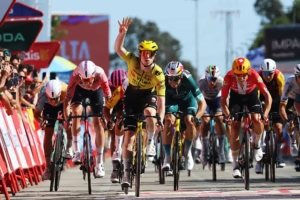
The Tre Valli Varesine Women 2026 takes place on Tuesday 6 October, bringing one of Italy’s most selective late-season one-day races back to the roads around Varese. The women’s event is part of the UCI Women’s ProSeries and has quickly built a reputation for producing aggressive racing on a course where repeated short climbs matter more than one decisive mountain.
It is also a relatively young race. The women’s Tre Valli Varesine was first held in 2021, but its winners already include Elisa Longo Borghini, Liane Lippert and Cédrine Kerbaol. Longo Borghini returned to win again in 2025 after a late duel with Demi Vollering, underlining the level the race can attract despite sitting outside the Women’s WorldTour.
The detailed 2026 women’s route and roadbook have not yet been published. The organiser has confirmed the date and UCI Women’s ProSeries status, however, and recent editions give a very clear idea of what makes this race distinctive.
Tre Valli Varesine Women 2026 at a glance
Date: Tuesday 6 October 2026
Country: Italy
Region: Lombardy
Race type: Women’s one-day race
UCI level: UCI Women’s ProSeries, 1.Pro
Organiser: Società Ciclistica Alfredo Binda
2026 route: Detailed route to be confirmed
First edition: 2021
2025 winner: Elisa Longo Borghini
What is Tre Valli Varesine Women?
Tre Valli Varesine Women is the women’s counterpart to the long-running men’s Tre Valli Varesine, one of the traditional autumn races of northern Italy. The name translates as the Three Valleys of Varese and the event is closely associated with the city of Varese and the surrounding hills in Lombardy.
The men’s race dates back to 1919, but the women’s version only arrived in 2021. It immediately gave the region another high-level women’s event and has since moved up the UCI hierarchy, becoming part of the Women’s ProSeries from 2024.
That status places it one level below the UCI Women’s WorldTour, but the distinction does not make the racing second-rate. Recent editions have attracted leading WorldTour teams and riders, particularly because the race sits in a valuable autumn slot and rewards the same mix of climbing strength, acceleration and tactical judgement needed in many major one-day races.
What is the route usually like?
The full 2026 women’s course has not yet been released, so exact distance, circuit numbers and climb details remain to be confirmed. Recent editions have followed a recognisable pattern: an opening section before the race reaches Varese, followed by repeated laps of a hilly finishing circuit.
In 2025 the women raced 136.3 kilometres, with the finale repeatedly using the short climbs around Varese. Montello was particularly important, providing the launch pad for the decisive move that eventually left Longo Borghini and Vollering alone at the front.
That circuit-based format changes the rhythm of the race. There is rarely a single long climb where everyone waits for the obvious attack. Instead, riders have to absorb repeated accelerations, stay near the front before narrow or technical sections and judge when a move is serious enough to follow.
What type of rider wins Tre Valli Varesine Women?
The race suits strong climbers and punchy all-rounders rather than pure sprinters. The ideal winner needs enough climbing ability to stay with repeated attacks on short ascents, but also enough speed or tactical sharpness to finish the job if a small group reaches Varese together.
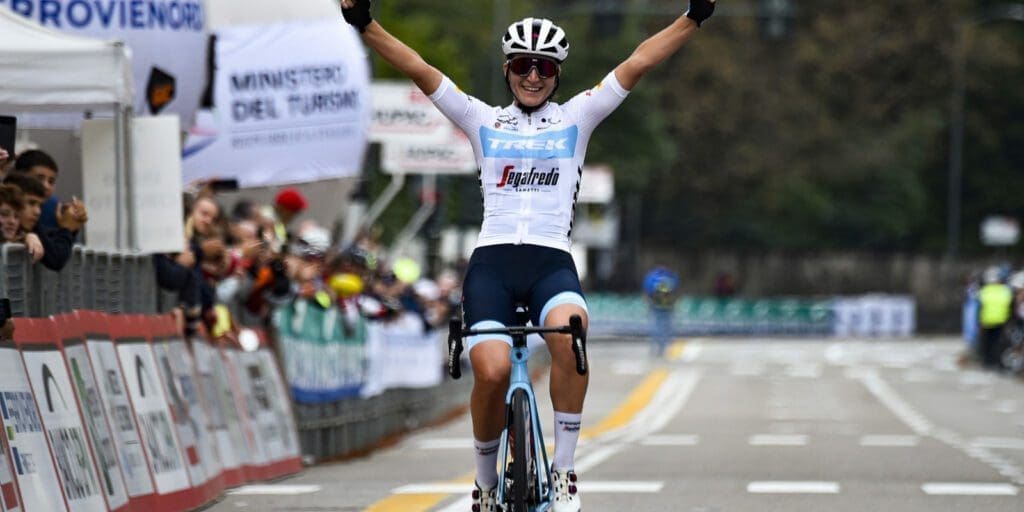
Longo Borghini is a good example. She has the endurance to make a hard race selective, the acceleration to respond to attacks and enough finishing speed to win from a small group. Her 2025 victory over Demi Vollering came after the pair broke clear late and then settled the race in a two-rider sprint.
Cédrine Kerbaol showed another route to victory in 2024. Her success came in difficult weather and from a solo move, demonstrating why riders cannot simply wait for a reduced sprint. ProCyclingUK’s report on Kerbaol’s rain-soaked 2024 win is a useful example of how quickly the race can become an attritional contest.
Recent winners
2025: Elisa Longo Borghini
2024: Cédrine Kerbaol
2023: Liane Lippert
2022: Elisa Longo Borghini
2021: Arlenis Sierra
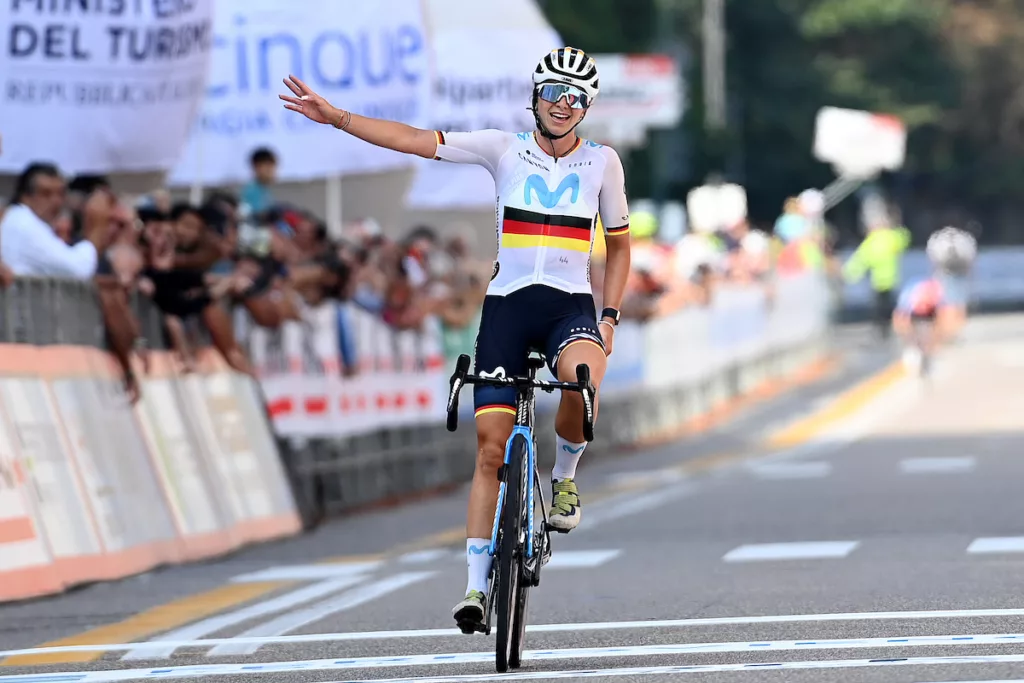
That list already tells much of the story. Sierra won the inaugural edition from a breakaway, Longo Borghini has twice used her all-round strength to win, Lippert attacked late to take the 2023 race and Kerbaol turned the 2024 edition into a solo test in grim conditions.
Why is Elisa Longo Borghini so successful here?
Longo Borghini is the only multiple winner of the women’s race so far, with victories in 2022 and 2025. The course rewards several of her strongest qualities at once: repeatable climbing power, comfort in aggressive one-day racing and the ability to make tactical decisions when a race is already fragmented.
Her 2022 win came through a solo attack, while the 2025 victory was tactically very different. Vollering did much of the work after the pair escaped, with Longo Borghini staying on the Dutch rider’s wheel before launching her sprint in the final few hundred metres. Winning the same race in different ways is a good indication of why versatility matters so much around Varese.
Where does the race fit in the season?
Tre Valli Varesine Women is an October race, long after the major spring Classics and summer stage races have been completed. That gives it a different feel from the early-season one-day calendar.
Some riders arrive still carrying form from the World Championships and European Championships, while others are making one of their final starts before ending the season. Teams may also use the race to chase late UCI points, give opportunities to riders whose seasons have been interrupted or build towards other Italian autumn races.
The result is often an open race. There is still enough prestige to attract major names, but the late-season timing can make team control less predictable than it would be at a spring monument.
How important is the UCI Women’s ProSeries status?
The Women’s ProSeries sits directly below the Women’s WorldTour in the UCI hierarchy. For Tre Valli Varesine, that means the race can attract a mixture of Women’s WorldTeams, Women’s ProTeams and other invited squads while offering a significant number of ranking points.
It also gives teams a reason to take the race seriously even when their biggest season targets have already passed. For riders outside the headline names, a strong result in Varese can be one of the most valuable performances available in the final weeks of the European road season.
What should you watch for in the 2026 edition?
The first thing to watch is the final route announcement. The number of finishing laps and the exact placement of the climbs will shape whether the race favours repeated attacks or gives a larger group a realistic chance of surviving to the finish.
Once racing begins, positioning will matter almost as much as outright climbing strength. Riders who repeatedly start the short climbs too far back can spend valuable energy closing gaps, while teams with numbers near the front can attack in sequence and force rivals to chase.
The final kilometres are rarely straightforward. A rider who looks strongest on the climbs can still lose the race through hesitation, while a fast finisher who survives the hardest accelerations suddenly becomes dangerous. That combination of physical selection and tactical uncertainty is what has allowed Tre Valli Varesine Women to establish itself so quickly.